
Review · BALI
Ubud: Balinese Cooking Class at an Organic Farm
The best part of this Ubud cooking class happens before you touch a knife: you walk through a local market, pick vegetables on an organic farm, and learn why Balinese food depends so heavily on fresh spices, coconut, and herbs. Then you cook six dishes in an open-air kitchen and sit down to eat them.
I like the market-to-plate progression and the peaceful farm setting. I also like that the vegetarian menu is a real menu, not a last-minute substitute. The main drawback is time: the session lasts from 330 minutes to eight hours, and the farm transfer can take about an hour from Ubud, with traffic adding more time on the return.
Key points
- Morning market visit: Choose the early session to see local buying and selling, taste fruit, and learn about unfamiliar vegetables and spices.
- Farm-picked ingredients: Walk the organic property and harvest produce used in your own meal.
- Six Balinese dishes: Cook a full menu with spice paste, vegetables, mains, and dessert.
- Two useful menus: Pick the regular menu or a vegetarian menu featuring gado gado, tempe, corn fritters, and vegan sate lilit.
- Small-group format: Groups can have up to 14 people, with cooking stations shared by two people.
- Take-home value: You receive a recipe book and a downloadable PDF of the latest recipes.
Why this farm class feels different from a standard cooking lesson
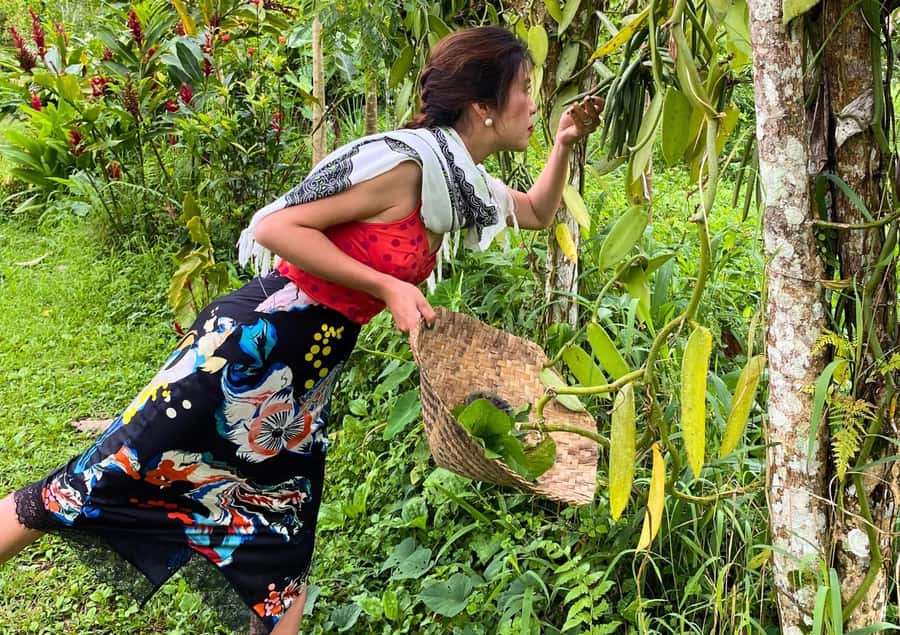
Many cooking classes begin with ingredients already measured and waiting on a table. Here, the food story starts earlier. You see produce at a local market, learn about the plants at the farm, pick some of your own vegetables, and then use them in the kitchen.
That order matters. A spice paste is easier to understand when you have just seen the ingredients in their raw form. A leafy vegetable feels less anonymous after you have learned where it grows. The class connects Balinese cooking to daily life instead of treating it as a list of recipes.
The setting also changes the mood. The kitchen is open air, and the farm provides a quiet break from central Ubud. Several sessions include time among trees, spices, and garden plants, so this is part food lesson and part countryside outing.
You should still know what this is not. It is not a private class for one household. The maximum group size is 14, and each cooking station is shared by two people. That arrangement works well for couples and friends, but solo participants should expect to share tasks and counter space.
More Farm Cooking Classes in Indonesia
- Balinese Farm Cooking Class by Pemulan Bali
★ 5.0 · 410 reviews - Balinese Vegan Cooking Class with Fresh Harvesting & Garden Tour
★ 5.0 · 86 reviews - Balinese Cooking Class at Organic Farm
★ 5.0 · 51 reviews
Start early for the market and local food lesson
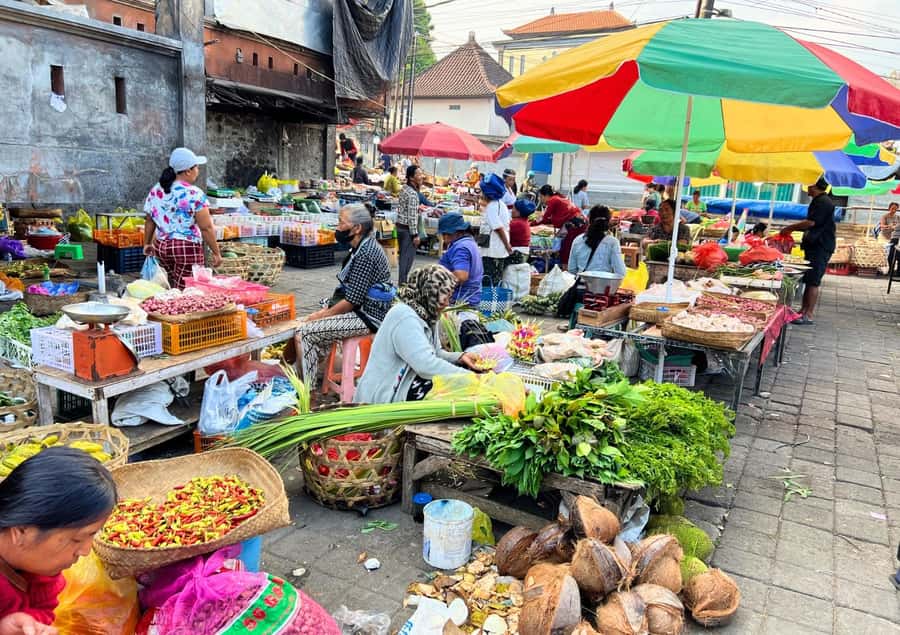
The morning option is the one I would choose. It includes a visit to a local market, where your guide explains fruit, vegetables, spices, and everyday ingredients. You may also taste local fruit, which gives the stop a practical purpose beyond taking photographs.
The market visit is especially useful if this is your first time in Bali. It helps you recognize foods that often appear on menus without much explanation. You get a clearer sense of what Balinese households buy and how early the day begins for market sellers and shoppers.
The market is not included with every session. It is specifically part of the morning class, so check the start time before booking if this is important to you. The early departure also makes the outing longer, but that extra time brings the most local context.
Transport begins at a Ubud meeting point, with the exact location depending on the option you book. Several sessions include a shuttle from Ubud, and the return transfer is included. One practical warning: the farm can be about an hour from the meeting point, and heavy traffic may slow the trip back. Build some breathing room into your day.
Walking the organic farm before cooking
At the farm, you receive coffee or tea and a light breakfast. Fresh fruit and small bites may be part of this welcome, giving you something to eat before the longer cooking session begins.
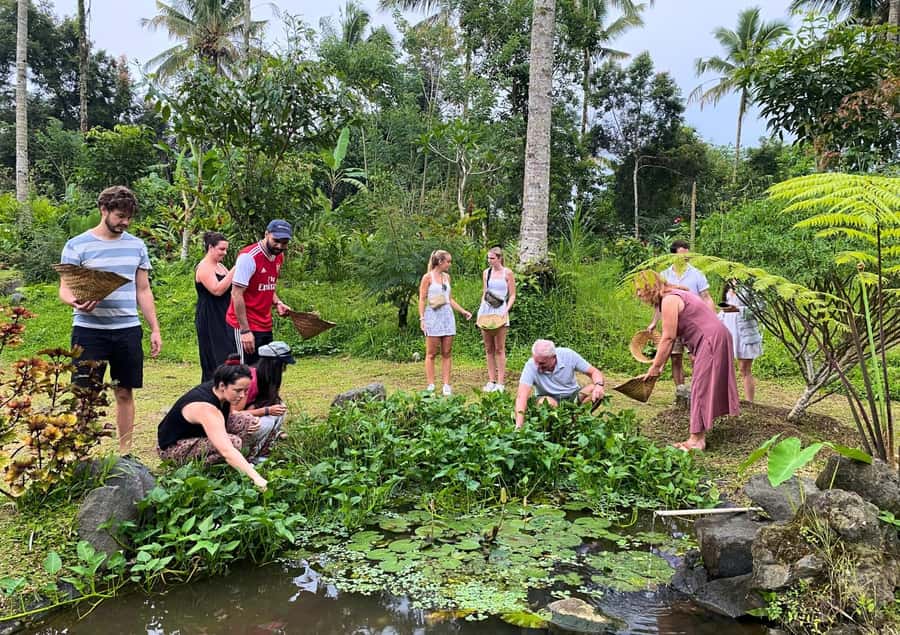
The farm tour is more than a quick walk past a few herbs. You see how a Balinese family uses nearby natural resources and how the property grows produce for the kitchen. You then help collect vegetables for the class.
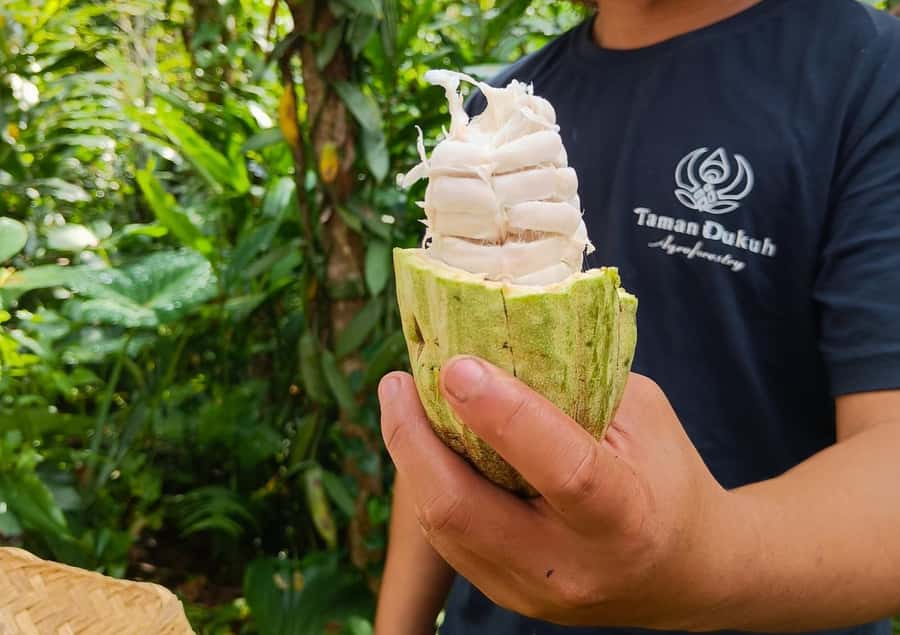
This is one of the strongest parts of the outing if you enjoy gardens or want more than a demonstration. You are not simply told that an ingredient is fresh. You see where it grows and pick some of it yourself. Depending on the season, you might encounter unusual fruits or plants, including cacao, which one session included as a tasting.
The farm is also a good reason to wear practical clothes and shoes. You will be walking outdoors, and rain is possible. Umbrellas may be available, but light clothing that can handle a little mud or wet weather is the sensible choice.
The garden tour takes time away from cooking, but I consider that a benefit. You learn why ingredients matter before the chef asks you to crush, slice, pound, or mix them. If your main aim is a fast lesson with maximum kitchen time, this format may feel leisurely.
What you cook on the regular menu
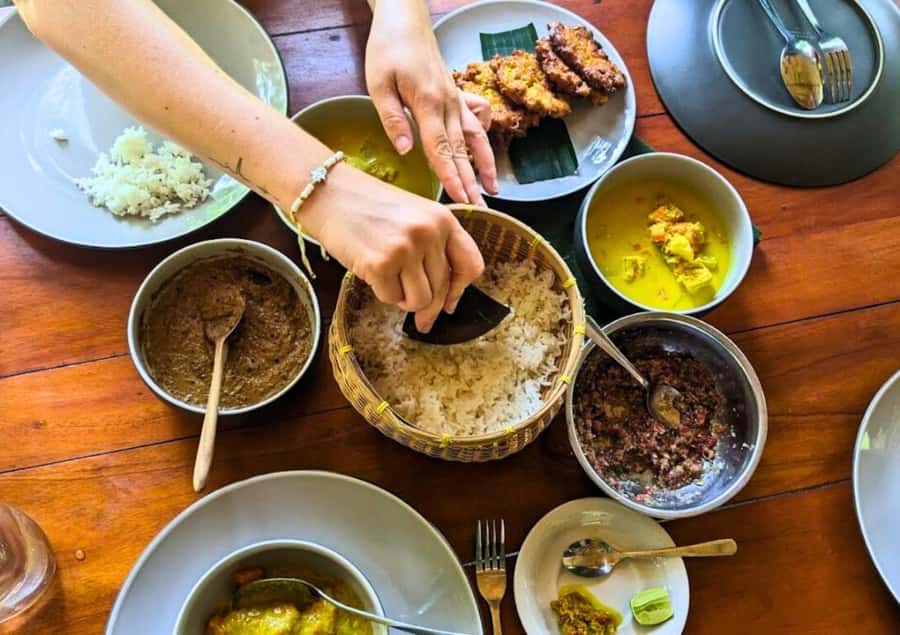
The regular menu gives you a broad introduction to Balinese flavors. You begin with Base Gede, a traditional spice paste that forms the foundation for several dishes. Learning this mixture is one of the most useful parts of the class because it shows how Balinese cooking builds flavor before meat or vegetables enter the pan.
You also prepare Sayur Urab, a mixed green salad with coconut and spices. It is a good counterpoint to the richer dishes, and it shows how coconut is used in a fresh vegetable preparation rather than only in a curry or dessert.
The main dishes include Opor Ayam, a Balinese chicken curry, and sate lilit, a traditional kebab made with meat, coconut, and spice paste. Sate lilit differs from the familiar skewered chunks found in many Southeast Asian dishes. The mixture is formed around a skewer, giving you a hands-on job and a better feel for the texture of the finished food.
You also prepare pindang base tomat, fish with tomato sauce, and tempe asam manis, sweet and sour tempe. Together, these dishes cover curry, grilled food, fish, fermented soybean, vegetables, and dessert. You are not cooking one isolated recipe. You are building a complete meal with different flavors and textures.
Dessert is either pisang goreng, banana fritters with coconut and palm sugar syrup, or bubur injin, black rice pudding. Both use familiar Balinese ingredients in a sweet finish. The class is generous with food, so arrive ready for a substantial meal.
More Organic Farm Tours in Bali:
- Half-Day Thai Cooking Class at Organic Farm in Chiang Mai
★ 5.0 · 19,087 reviews - 5 tours in 1 (Eco Farm/Horseback/City Tour/Buggy/Zipline)
★ 4.5 · 1,443 reviews - Buggy Tour to Macao Beach and Water Cave with Organic Farm
★ 5.0 · 1,201 reviews - Chiang Mai: Cooking Class with Organic Farm at Mama Noi
★ 4.9 · 1,151 reviews
The vegetarian menu is a serious alternative
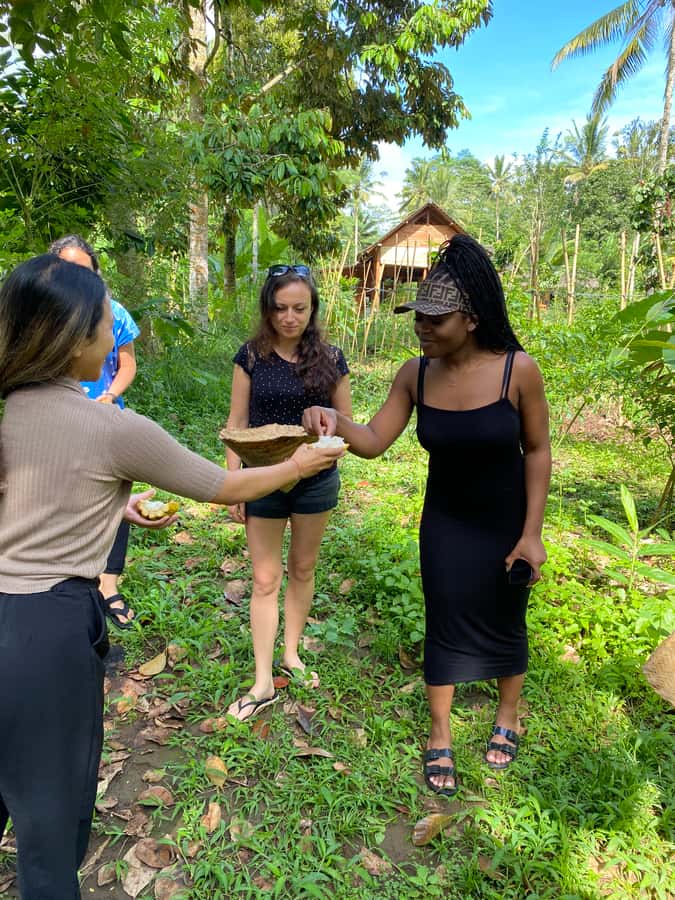
The vegetarian menu deserves special attention. It does not simply remove chicken and fish from the regular menu. It gives you a different set of dishes designed around vegetables, tempe, corn, peanuts, jackfruit, and spices.
You begin with Base Gede and then make gado gado, blanched vegetables with traditional peanut sauce. This is an important Indonesian dish because the sauce does much of the work. You learn how a simple combination of vegetables becomes a satisfying main course when paired with the right seasoning.
Opor tempe provides the curry element, while bergedel uses corn and Balinese spices in a fried preparation. Tempe asam manis adds the sweet and sour course, and vegan sate lilit uses jackfruit and spice paste in place of meat.
The class also makes an effort to keep non-vegan ingredients separate. That matters if you follow a vegan diet rather than simply prefer vegetables. Still, tell the staff about your dietary needs when booking or on arrival, and ask questions during preparation.
The dessert choices remain pisang goreng or bubur injin. You get the same sense of a full meal rather than a reduced version of the regular class.
Six dishes, shared stations, and a hands-on pace
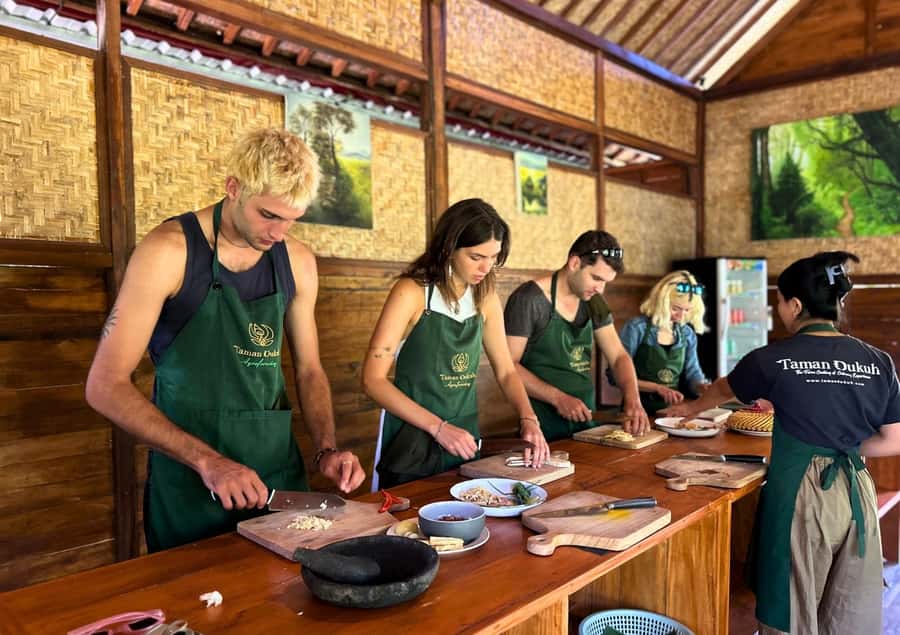
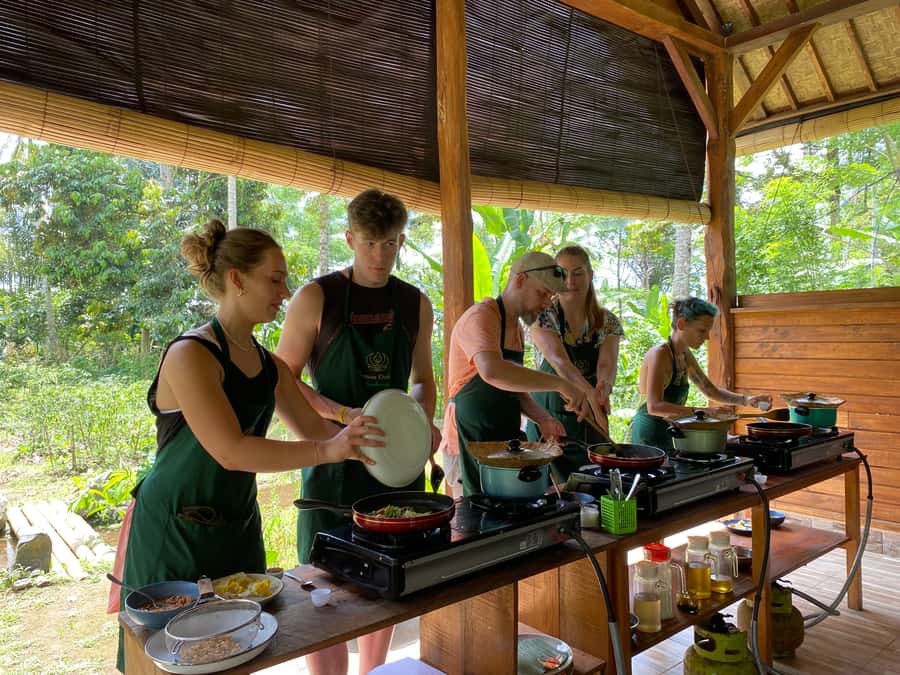
The chef demonstrates each preparation and guides you through the work. Instructors including Buda, Depi, and Wayan have led sessions, and the teaching style is friendly, clear, and informal. You can expect explanations of ingredients, cooking methods, and Balinese food customs rather than a silent recipe demonstration.
Each station is shared by two people. That makes the class a natural fit for couples or friends, since you can divide chopping and mixing. Solo participants may need to speak up if they want a particular task. The staff keeps the class moving, but you are still involved in the cooking.
The dishes may be eaten as they are completed rather than held until every course is finished. That is a smart approach with six dishes because you can taste the results while the meal is fresh. It also breaks up a long lesson and keeps the food from sitting too long.
You will not necessarily handle every fiddly job from beginning to end. Staff may take care of some of the more repetitive preparation, while you take part in the main cooking and seasoning. That balance suits beginners, who get a real lesson without being overwhelmed by hours of chopping.
Experienced home cooks should not expect advanced restaurant training. The value is in learning the flavor base, seeing local ingredients, and understanding the structure of a Balinese meal.
The farm setting is part of the value
At $32 per person, this includes much more than a recipe demonstration. You receive the shuttle from the Ubud meeting point, the organic farm tour, ingredient harvesting, the cooking class, your meal, water, coffee or tea, and a recipe book with a downloadable PDF of newer recipes.
The morning option adds the market visit. Soft drinks and beer cost extra, but that is a minor point when the main meal and nonalcoholic drinks are included.
I see this as good value for a half-day or longer outing, especially if you would otherwise book a separate market tour and cooking lesson. The price is less compelling if you want only a short, highly focused class and have no interest in gardens, transport time, or a shared group setting.
The recipe book is a useful part of the package. It gives the class a life beyond Bali, and the dishes are realistic enough to attempt at home if you can find the required spices and produce. The downloadable PDF is helpful because recipes can change and digital copies are easier to keep while traveling.
How long to allow, and who should book
The listed duration ranges from 330 minutes to eight hours, depending on the option and timing. The morning class takes longer because of the market stop. You should allow most of the day if you want a relaxed schedule around the activity.
This suits you best if you enjoy food, gardens, local markets, and meeting people in a small group. Families can enjoy it, and several sessions have been described as good full-day activities for parents and children. Beginners are welcome, and the class does not require advanced cooking skills.
It is less suitable for anyone who dislikes shared workspaces, outdoor walking, long transfers, or a substantial meal. The farm is not wheelchair accessible, and the activity is not suitable for wheelchair users.
Pets are not allowed. The live instruction is in English or Indonesian, so choose the English option if you need the cooking steps explained in English.
Booking advice for the best version of the day
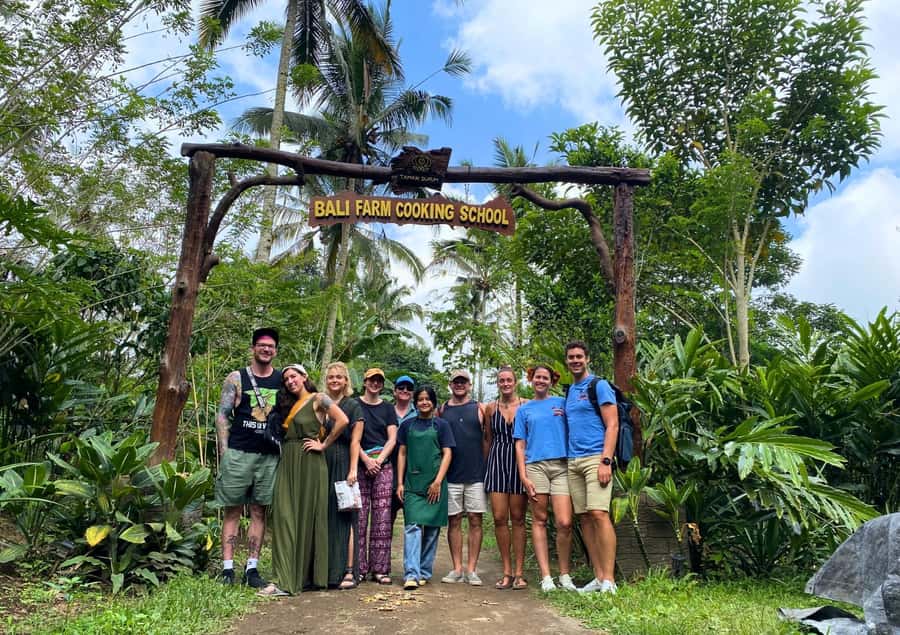
Choose the morning class if you want the market. It adds the clearest link to daily Balinese life and gives you more to see before reaching the farm.
Allow extra time for traffic, especially when returning to Ubud. The transfer is convenient, but convenience does not mean speed on Bali roads. Do not schedule a tight appointment immediately after the class.
If you are vegan or vegetarian, select the correct menu when booking. The vegetarian dishes are varied enough to make the choice worthwhile, and separate preparation has been appreciated by vegan participants.
Wear comfortable clothing for an outdoor farm walk. Bring patience for a longer shared activity, and expect the day to be social. The group limit of 14 keeps it from becoming a huge workshop, but the stations are still shared by two people.
Free cancellation is available up to 24 hours before the activity, and you can reserve now and pay later. Those terms are useful if your Bali plans are still shifting, but the more important choice is the session time and menu.
Should you book the Bali Farm Cooking School?
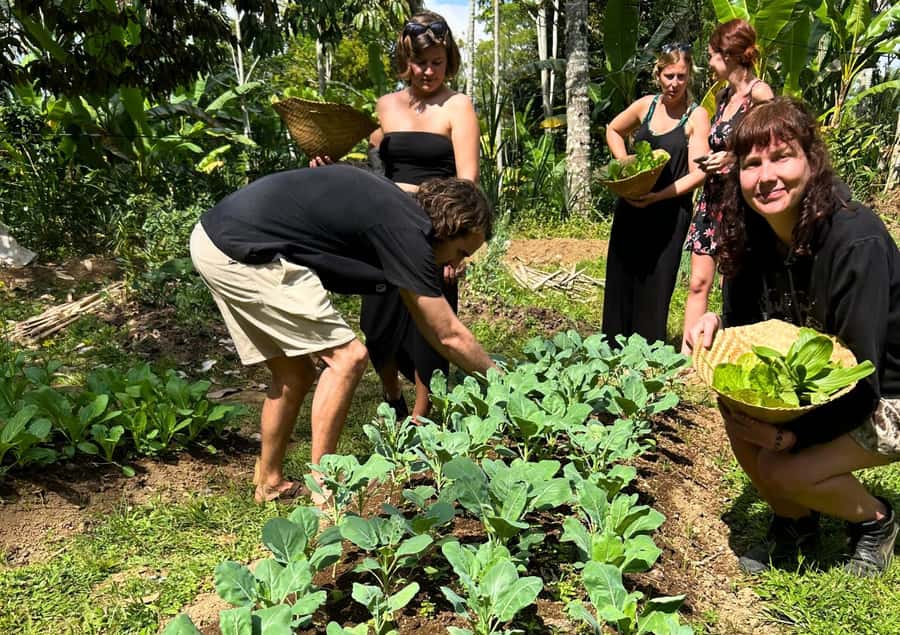
I would book this if you want a full food day rather than a quick cooking lesson. The combination of market, farm, ingredient picking, six dishes, and a sit-down meal gives you a better sense of Balinese food than a class that begins with prepared ingredients.
The strongest reasons to go are the farm setting, the clear instruction, the generous meal, and the vegetarian menu. Buda, Depi, and Wayan are among the guides associated with especially warm and effective sessions, though the assigned instructor can vary.
Skip it if your schedule is tight, you need wheelchair access, or you dislike group cooking. For everyone else, $32 buys a substantial and practical introduction to Balinese cuisine, with recipes you can carry home instead of only photographs.
FAQ
How much does the Balinese cooking class cost?
The listed price is $32 per person.
How long does the activity last?
The duration ranges from 330 minutes to eight hours, depending on the option booked and its starting time.
Does every class include a local market visit?
No. The local market tour is included with the morning class only.
What meals are included?
You eat the dishes prepared during the class. The regular menu includes Base Gede, Sayur Urab, Opor Ayam, sate lilit, fish with tomato sauce, sweet and sour tempe, and a dessert. The vegetarian menu includes gado gado, tempe curry, corn fritters, sweet and sour tempe, vegan sate lilit, and a dessert.
Is a vegetarian or vegan menu available?
Yes. A vegetarian menu is available and includes vegan sate lilit. Non-vegan dishes are cooked separately during the class.
How many people are in each group?
The maximum group size is 14 people. Each cooking station is shared by two people, and there may be two or three groups at the farm during a session.
What is included in the price?
The price includes the shuttle from the Ubud meeting point, the morning market tour when applicable, the organic farm tour, ingredient harvesting, the hands-on cooking class, the meals you prepare, mineral water, coffee or tea, a recipe book, and a downloadable PDF of the latest recipes. Soft drinks and beer cost extra.
Is the activity suitable for wheelchair users?
No. The activity is not suitable for wheelchair users.
More Hands-On Workshops in Bali
- Florence Pizza or Pasta Class with Gelato Making at a Tuscan Farm
★ 5.0 · 6,801 reviews - Sorrento: Pizza Lesson, Wine, and Limoncello at a Local Farm
★ 5.0 · 1,513 reviews - Florence: Pizza or Pasta Class with Gelato at a Tuscan Farm
★ 4.9 · 1,181 reviews - Sorrento Farm by Tuk Tuk: Cheese, Limoncello & Hands-On Pizza
★ 5.0 · 628 reviews
More Farm Cooking Classes in Bali
- Cooking Class and Lunch at a Tuscan Farmhouse with Local Market Tour from Florence
★ 5.0 · 4,831 reviews - Chiang Mai: Authentic Cooking Class with Market & Farm Visit
★ 4.9 · 4,546 reviews - Hands-On Cooking Class & Farmhouse Tour on the Amalfi Coast
★ 5.0 · 956 reviews - Chiang Mai: HALF-DAY COOKING COURSE at a Thai Cooking Farm
★ 4.9 · 705 reviews
Just added around Bali
- Monkey Forest, Ubud, Waterfall and Rice Terrace★ 4.5 · 53 reviews
- Private tour- UNESCO rice terraces, Ulundanu Beratan, Batukaru, Tanah lot temple★ 5.0 · 2 reviews
- Bali ATV Ride On the Beach, Rice Field and Village Tour 2 Hour★ 5.0 · 15 reviews
- Bali: Jatiluwih Rice Terraces 1 Hour Electric Bike Tour★ 4.7 · 41 reviews
- Ubud: Hidden Waterfall, Monkey Forest, Rice Terrace & Swing★ 5.0 · 3 reviews
- Bali: Rice Terraces, Mount Batur Geopark and more – Day Tour★ 4.9 · 7 reviews
- Bali: Cliff Jumping Gitgit Waterfalls & Rice Terrace Tour★ 4.9 · 35 reviews
- Bali: Discover Jungle Waterfalls and Rice Terraces★ 4.9 · 56 reviews
Bali Farm Tours, compared.

Waterfall, Rice Terraces & Monkey Forest Private Tour
Read our review →

Private Scenic Waterfalls and Rice Terraces Tour
Read our review →

Swing with Falls, Rice Terrace, & Monkey Forest Option
Read our review →
Full-Day Eat Pray Love Tour with Rice Terraces & Yoga
Read our review →
Tegalalang Rice Terrace Photos Tour with Swing Ticket
Read our review →Browse the lists this tour appears in