Review · CHIANG MAI
Chiang Mai: Authentic Cooking Class with Market & Farm Visit
The best part of this Chiang Mai cooking class happens before you touch a wok. You visit a local market, walk through Grandma’s organic farm, smell Thai herbs, pick mushrooms, collect eggs, and see the ingredients in their natural setting. Then you cook at your own station, which makes the lesson feel practical rather than like a demonstration.
I like the farm activities, especially the chance to feed and gently hug the chickens, and I like the way the class connects everyday ingredients with the food on your plate. Guides such as Kiki, Jimmie, Patty, Roger, and Joyzaa bring plenty of energy, humor, and clear instruction. The main consideration is timing: the full-day option can last up to seven hours, and the shared van may feel snug when full.
What makes this Chiang Mai cooking class special
- A market-to-table introduction: Morning, afternoon, and full-day sessions begin with a local market visit, where you learn what Thai herbs, vegetables, sauces, and spices look like before cooking.
- A real farm visit: You walk among rice fields, herbs, fruit, vegetables, chickens, and a mushroom hut rather than simply sitting in a kitchen.
- Your own cooking station: You prepare each dish yourself, with step-by-step help from an English-speaking instructor.
- Northern Thai cooking included: Khao Soi, Chiang Mai’s signature curry noodle soup, is one of the most memorable dishes on the menu.
- A generous meal: You eat the food you make, often preparing three or four dishes plus mango sticky rice.
- Good dietary flexibility: Vegetarian, Halal, gluten-free, allergy-sensitive, and other special menus can be arranged if you explain your needs before class.
From Chiang Mai hotel to countryside kitchen
The day starts with hotel pickup in an air-conditioned van. Free pickup and return cover hotels within five kilometers of Chiang Mai city center. If you stay farther out, the school can arrange a nearby meeting point or apply a small extra charge.
Pickup times depend on the session. The evening option generally collects people around 3:30 to 4:00 PM, while morning and afternoon departures vary. I would confirm the exact time before the day of the class, since one otherwise excellent experience had a little confusion about hotel pickup communication.
The ride takes you away from the central streets toward the school’s farm setting. Transport receives very strong marks overall, and several people found the driver prompt and the return ride easy. Still, the van is shared, and one person found it a little tight when the vehicle was full. If you value extra personal space, that is worth keeping in mind.
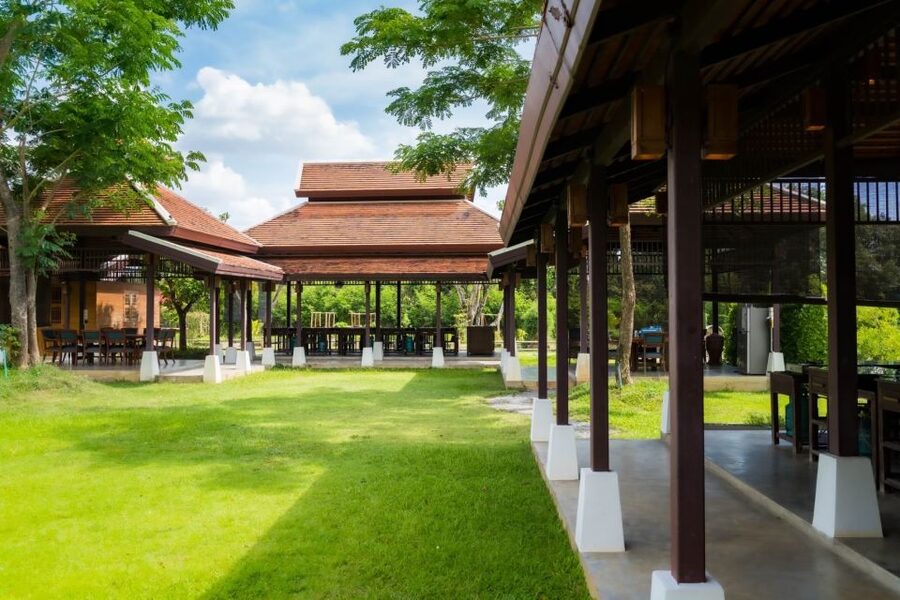
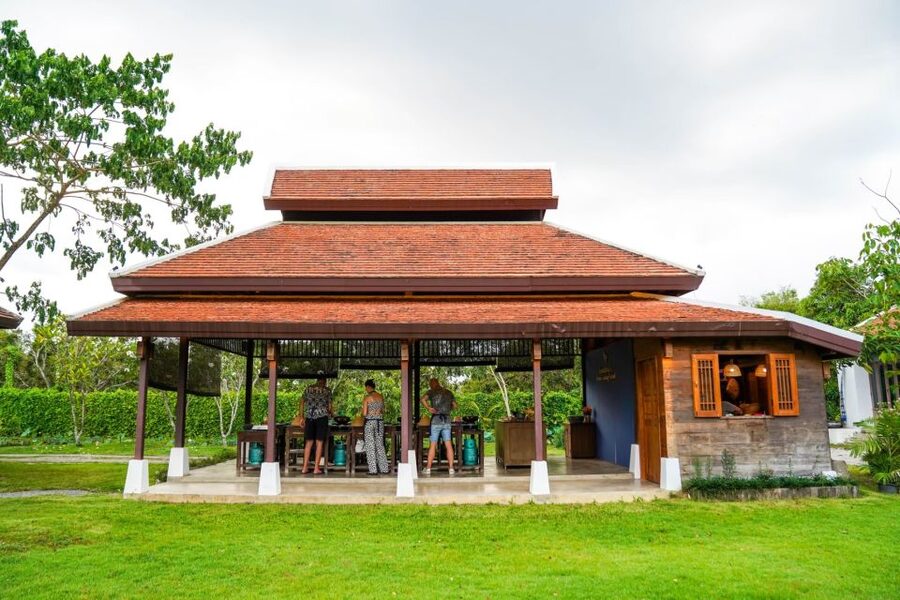
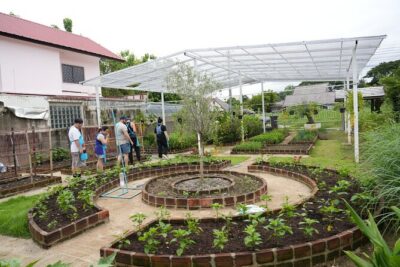
The operation is polished and well organized. This is not a tiny family kitchen with one cook and two stools. The property has several kitchen areas or bungalows, each able to accommodate about ten people, with staff moving between stations. You get the charm of a family-style setting with the efficiency of a larger cooking school.
More Farm Cooking Classes in Chiang Mai
- Half-Day Thai Cooking Class at Organic Farm in Chiang Mai
★ 5.0 · 19,087 reviews - Chiang Mai: Cooking Class with Organic Farm at Mama Noi
★ 4.9 · 1,151 reviews - Chiang Mai: HALF-DAY COOKING COURSE at a Thai Cooking Farm
★ 4.9 · 705 reviews
The market visit gives Thai ingredients a name and a face
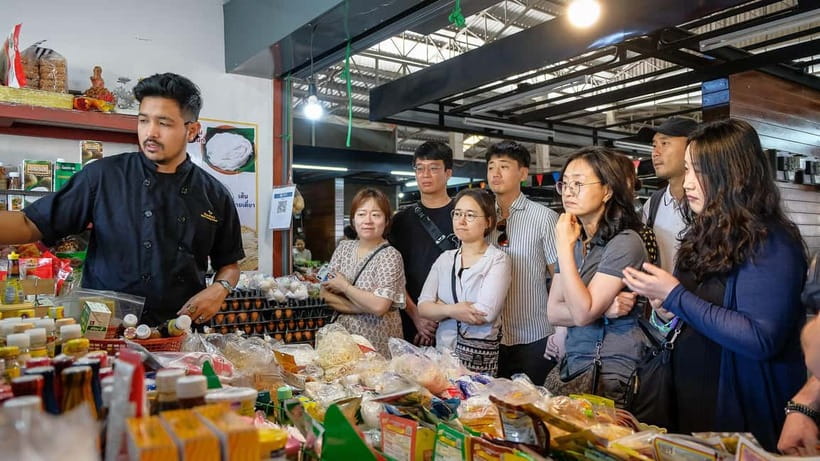
Morning, afternoon, and full-day classes include a stop at a local market. This is one of the most useful parts of the experience because Thai cooking can be difficult to reproduce when you do not know what the ingredients look like.
Your instructor points out herbs, vegetables, spices, sauces, and other items used later in class. Instead of hearing only that a dish contains lemongrass or Thai basil, you can see, smell, and compare the ingredients before they are chopped and cooked.
That small step matters when you return home. It helps you recognize what to buy at an Asian grocery store, and it gives you a better sense of how Thai cooks build flavor. The market also adds an everyday local setting to the day, rather than keeping the experience inside a purpose-built tourist kitchen.
The market is not part of the evening-only session. If seeing local produce is a major reason for booking, choose the morning, afternoon, or full-day option. The evening class still includes the farm and cooking, but its schedule focuses more directly on the lesson and dinner.
Grandma’s farm brings the ingredients to life
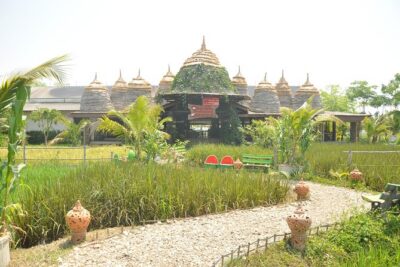
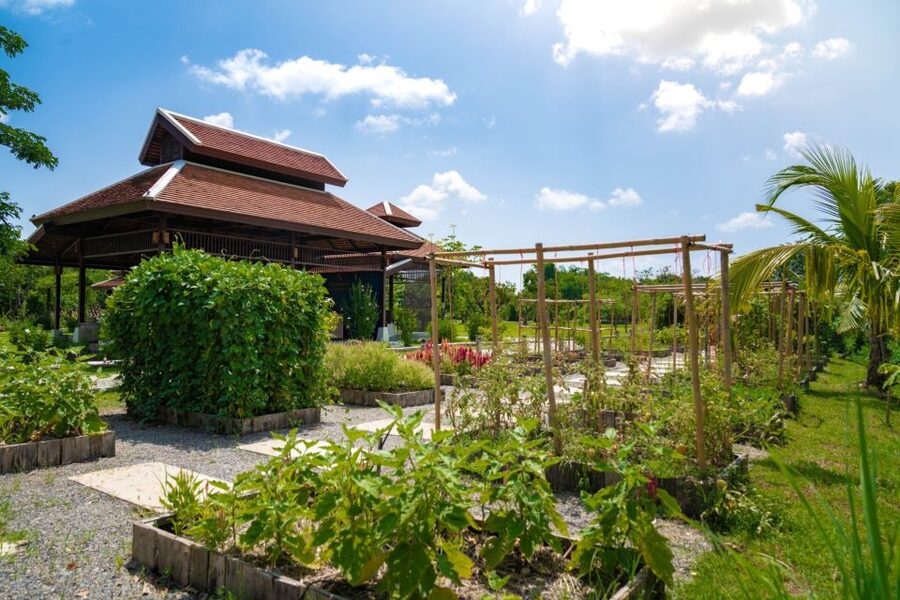
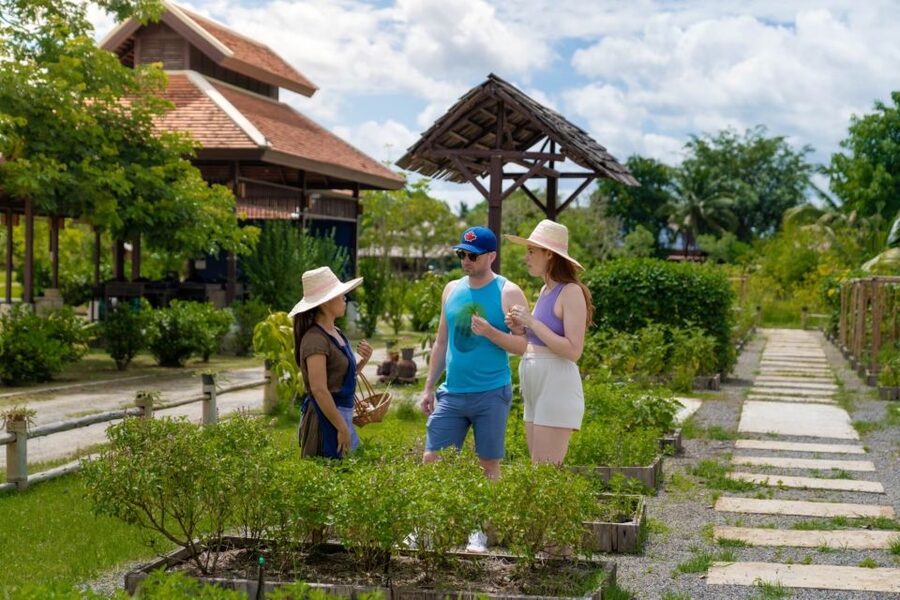
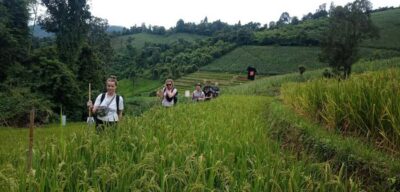
At the school, you walk through a large organic farm surrounded by rice fields. The grounds are one of the strongest reasons to choose this experience over a basic indoor cooking lesson. There is room to pause, take photographs, and see herbs and vegetables growing rather than lined up in plastic bowls.
The farm visit includes several hands-on activities:
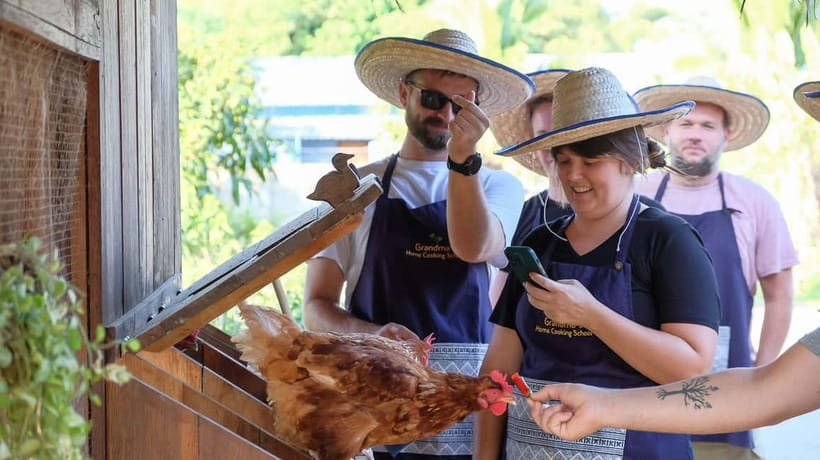
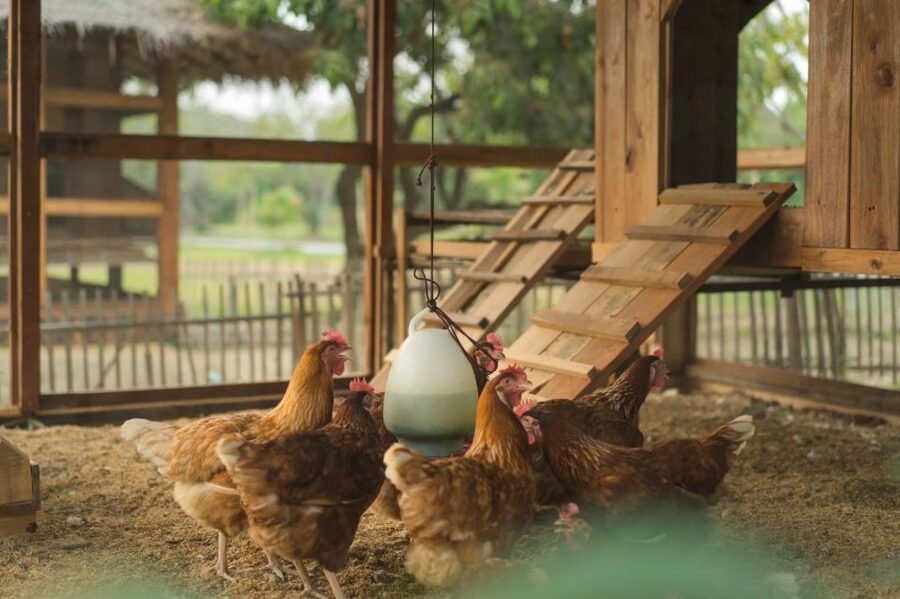
- Feed the chickens and give them a gentle hug.
- Collect fresh eggs.
- Visit the mushroom hut and pick mushrooms when they are ready.
- Smell Thai herbs and fruits.
- Learn about vegetables and seasonings used in the cooking class.
- Pick vegetables when the harvest is available.
The chicken activity is available, but vegetable picking depends on what is ready that day. That distinction is useful. You should expect a farm walk and ingredient lesson, but not assume that every listed vegetable will be available for harvesting.
The mushroom hut is a particularly nice touch. It gives you a quick lesson in how a familiar ingredient is grown, and it breaks up the usual pattern of guide talks followed by photographs. The chickens add a gentle, family-friendly element, though children under ten are treated as visitors and do not receive their own cooking station unless booked at the adult rate.
Wear comfortable shoes and bring a sun hat. The paths and farm areas are outdoors, and the day combines walking with cooking. You do not need prior kitchen experience, but you should be ready to move around, handle ingredients, and spend several hours on your feet.
Your own station keeps the cooking hands-on
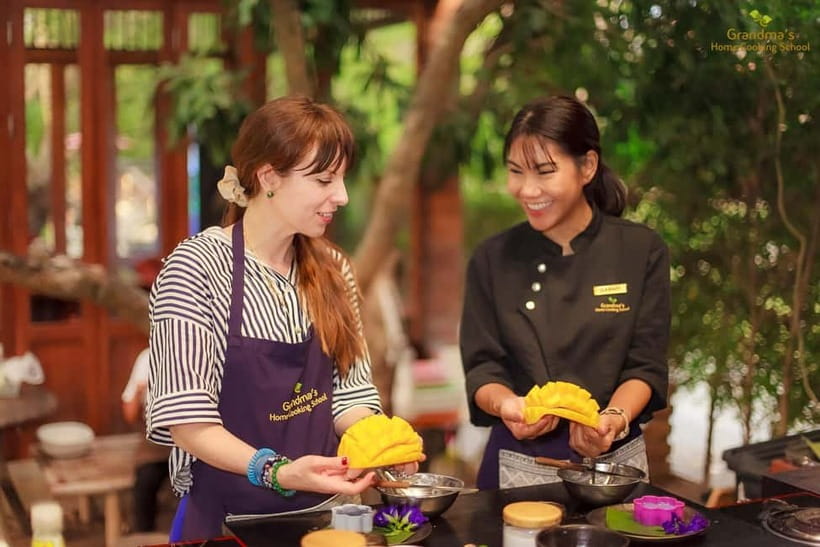
After the market and farm, you move to an open-air kitchen. Each person has an individual station, which is a major advantage. You are not simply watching an instructor prepare a dish at the front of the room.
Your instructor explains each step, then gives you time to chop, pound, mix, season, and cook. Assistants keep ingredients moving and clear used plates and utensils, so the process stays orderly even when several groups are cooking at once.
The class is designed for beginners. Guides such as Kiki, Jimmie, Patty, Roger, Bryan, Best, and Joyzaa are praised for being clear, funny, and encouraging. The tone can be energetic, and some instructors use a lot of humor. Most people will find that adds fun, though if you prefer a quiet, highly technical lesson, the lively style may feel a little much at times.
One especially useful feature is menu choice. At the start, you choose your dishes from the available options. That lets you focus on foods you actually want to learn, rather than cooking a fixed menu that may not suit your taste.
More Farm Cooking Classes in Thailand
- Cooking Class with Organic Farm in Chiang Mai at Mama Noi
★ 5.0 · 502 reviews - Evening Cooking Class in Organic Farm with Local Market Tour
★ 5.0 · 394 reviews - Morning Cooking Class in Organic Farm with Local Market Tour
★ 5.0 · 157 reviews - Chiang Mai: Half Day Cooking Class at Organic Farm
★ 4.8 · 96 reviews
Curry paste and Khao Soi are the highlights
The menu includes familiar Thai favorites and northern Thai specialties. Depending on your session and choices, you may cook:
- Pad Thai
- Pad Kra Prao
- Green Curry
- Red Curry
- Panang Curry
- Tom Yum
- Tom Kha
- Som Tam
- Spring rolls
- Khao Soi
- Mango sticky rice
The curry lesson is especially worthwhile because you make curry paste from scratch with a mortar and pestle. This gives you a better feel for the balance of chilies, herbs, aromatics, and spices than opening a prepared jar at home.
Khao Soi is the signature dish to watch for. This curry noodle soup is closely tied to Chiang Mai, and several people considered it the best dish of the class. It is a useful reason to choose this school if you want more than the standard Pad Thai lesson found across Thailand.
The exact number of dishes changes by class. A half-day session may include three dishes, such as soup, Pad Thai, and a curry. Evening classes often produce four dishes. Full-day classes cover more food and more preparation methods.
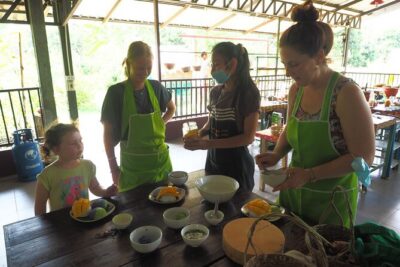
The food portions are not token samples. You eat what you prepare, and several people found the meal large enough that skipping breakfast or eating lightly beforehand was wise. You also receive unlimited drinking water and a herbal drink during the class, along with a welcome choice of Thai milk tea, Thai lemon tea, or butterfly pea flower tea.
Mango sticky rice and traditional coconut milk
Mango sticky rice is included in the morning and afternoon sessions, usually as a prepared dessert. In the full-day and evening classes, you take a more active role in making it.
The full-day class adds a traditional coconut milk demonstration and preparation session using a wooden coconut grater. This is a small detail, but it gives the longer option a stronger cultural and hands-on focus. You see how coconut milk was traditionally made rather than relying only on packaged coconut milk.
The full-day schedule can last as long as seven hours, so it suits people who want cooking to be a main event of the day. It is less suitable if you have a packed Chiang Mai itinerary or tire easily in the heat. The shorter sessions are a better fit if you want a satisfying meal and farm visit without giving up most of the day.
Choosing morning, afternoon, evening, or full day
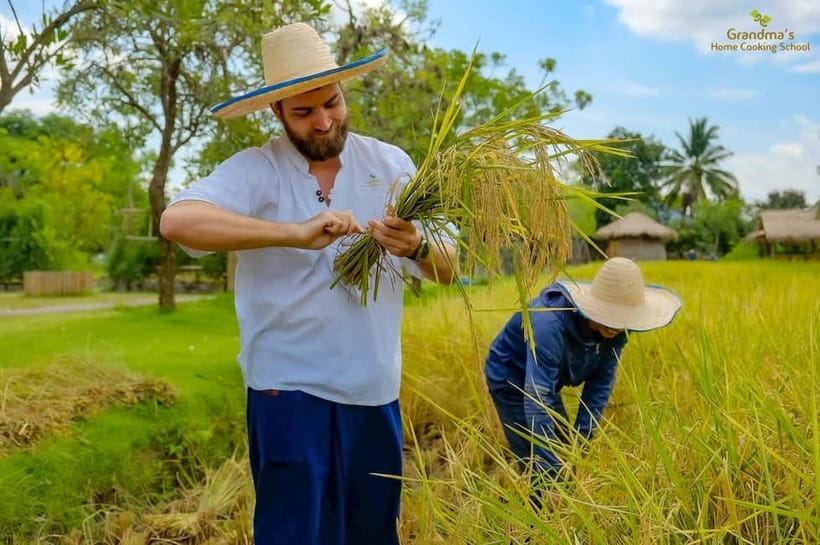
The class is offered in four formats, and the choice affects the mood as much as the length.
Morning: This is a good choice if you want the market visit, farm activities, and mango sticky rice early in the day. It leaves your afternoon free for temples, massage, or a walk through Chiang Mai.
Afternoon: This gives you a slower start and still includes the market, farm, and cooking. It suits anyone who prefers not to rush out of the hotel in the morning.
Evening: This works especially well as both an activity and dinner. You cook as the light changes around the farm, then eat the dishes you made. It does not include the market tour, but you still get the farm and open-air kitchen.
Full day: This offers the fullest program, including the market, extended farm time, more dishes, mango sticky rice preparation, and traditional coconut milk making. It is the best pick for serious food lovers, but it is also the biggest time commitment.
The listed duration ranges from 210 minutes to seven hours. Check the schedule carefully before booking, since the class name alone does not tell you how long you will be at the school.
Value at $34 per person
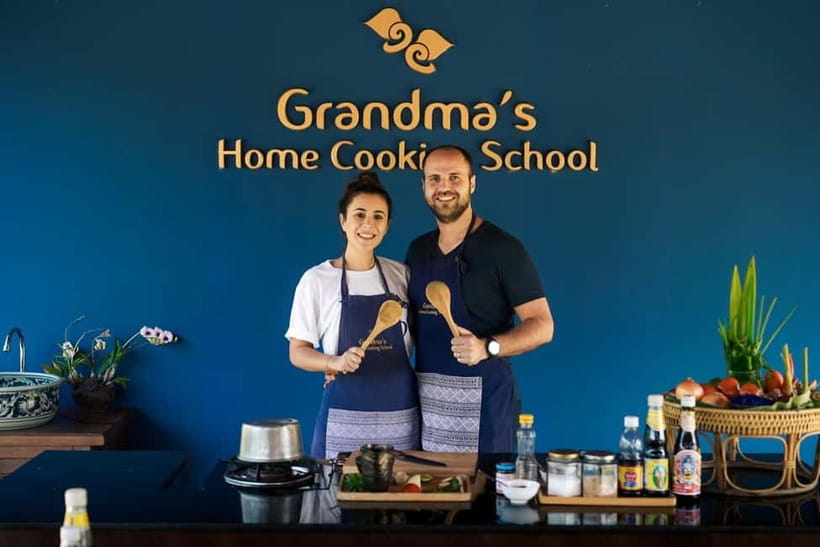
At $34 per person, this is strong value if you make use of the full package. The price includes hotel transport within the central pickup zone, the market visit on eligible sessions, the farm tour, all cooking instruction, your own station, drinks, the meal, and a digital recipe ebook.
You are not paying only for a cooking demonstration. You are also paying for transport, a farm visit, ingredient education, and several substantial dishes. The food itself could cover a large part of the cost of a restaurant meal, though the real value is taking the techniques home.
The digital recipe book makes the class more useful after your holiday. One person had trouble accessing the recipes through the QR code, so save the information before leaving or ask the staff for help if the link does not work. This is a minor practical point, but it matters if the recipes are one of your main reasons for booking.
Alcohol is not included, though it can be purchased. Travel insurance is also not included. Those are ordinary exclusions, but the important point is that you do not need to budget separately for water, tea, or the meal.
Dietary needs and family suitability
Tell the school about dietary restrictions before the class starts. Vegetarian and Halal menus are available, and the kitchen can adjust for gluten intolerance, allergies, and other special needs.
The kitchen has handled gluten-free soy sauce and oyster sauce, and gluten-free spring rolls can be arranged. This is encouraging, but you should still communicate clearly before arrival rather than waiting until ingredients are laid out.
Families can enjoy the farm, chickens, and outdoor setting. Children under ten may join a parent’s cooking station, but they do not receive an individual station unless booked at the adult price. That rule makes the cost structure clear and helps you decide how independent your child needs to be during the lesson.
The class is also a good match for couples, solo visitors, and small groups. The structure gives solo participants a defined place to work, while the shared meal creates an easy social setting without requiring you to arrive with a large party.
What I would bring and what I would skip
Bring comfortable shoes for the farm walk and a sun hat for the outdoor areas. You will have access to water throughout the day, so staying hydrated is straightforward.
I would eat lightly before arriving. The class can produce three or four dishes, plus dessert, and you eat as you go. Arriving hungry makes sense, but arriving completely empty may be uncomfortable if you are not used to several courses of Thai food.
Do not bring pets. Alcohol is available for purchase, but it is not part of the included program. Most people will get more from the experience by focusing on the food, ingredients, and farm rather than treating it as a drinking outing.
Is Grandma’s Home Cooking School worth booking?
Yes, especially if you want a cooking class that feels broader than a kitchen lesson. The market gives you useful ingredient knowledge, the farm adds a calm rural setting, and the individual station means you actually prepare the food yourself.
Choose the full-day option if Khao Soi, curry paste, coconut milk, and a large menu matter most to you. Choose the evening class if you want a relaxed dinner activity with sunset light and no need to plan another meal. The morning or afternoon sessions offer the best balance for a shorter Chiang Mai stay.
I would hesitate only if you dislike organized group activities, need a very quiet teaching style, or have no interest in eating several dishes. The school is well run and friendly, but it is a sizable operation rather than an intimate private lesson.
For most people, the combination of farm activities, useful instruction, generous food, central pickup, and a $34 price makes this one of the better-value food experiences in Chiang Mai. Book it if you want to understand Thai cooking with your hands, not just taste it at a restaurant.
FAQ
How much does the Chiang Mai cooking class cost?
The price is $34 per person.
How long does the experience last?
The duration ranges from 210 minutes to seven hours, depending on whether you choose the morning, afternoon, evening, or full-day session.
Is hotel pickup included?
Yes. Free pickup and drop-off are available for hotels within five kilometers of Chiang Mai city center. Hotels outside that area may require a nearby meeting point or a small extra charge.
Does every class include a market visit?
Morning, afternoon, and full-day classes include the market tour. The evening class does not include the market visit.
What dishes can I cook?
Menu choices include Pad Thai, Pad Kra Prao, Green Curry, Red Curry, Panang Curry, Tom Yum, Tom Kha, Som Tam, spring rolls, and Khao Soi. You choose your menu at the start of class.
Is mango sticky rice included?
Yes. Mango sticky rice is served in the morning and afternoon classes. It is taught as part of the cooking in the full-day and evening classes.
Which class includes traditional coconut milk preparation?
The full-day option includes making coconut milk with a traditional wooden coconut grater.
Can the class accommodate dietary restrictions?
Yes. Vegetarian and Halal options are available, and adjustments can be made for gluten-free diets, allergies, and other special needs. Tell the school before the class begins.
Do children receive their own cooking station?
Children under ten are considered visitors and can cook with their parents, but they do not receive their own station unless booked at the adult price.
More Shopping Tours in Chiang Mai
- Cooking Class and Lunch at a Tuscan Farmhouse with Local Market Tour from Florence
★ 5.0 · 4,831 reviews - Floating & Railway Market and Coconut Farm Tour [Optional Luxury]
★ 5.0 · 835 reviews - Active Volcano, Rice Field, Hot Spring, Fruit market, Tea Plantation with Lunch
★ 5.0 · 513 reviews - Florence: Cooking Class at a Tuscan Farm & Local Market Tour
★ 4.9 · 354 reviews
More Market Trips in Chiang Mai
- Morning Thai Cooking with Grandma – Market Visit & Farm Tour
★ 5.0 · 148 reviews - Full-Day Thai Cooking Class with Grandma – Market and Farm Tour
★ 5.0 · 48 reviews - Chiang Mai : Cook in Farm, Market tour & Go by a Local Train
★ 4.8 · 6 reviews - Full Day Thai Cooking Class in Organic Farm and Market
★ 5.0 · 3 reviews
Just added around Chiang Mai
- One Day Tour Doi Suthep Temple, Palad Temple, Orchid Farm, Longneck hill tribe village (Private tour)★ 5.0 · 7 reviews
- Aroidee’s Farm-Fresh Thai Cooking Experience★ 5.0 · 8 reviews
- Doi Inthanon Day Trip:Twin Pagodas,Soft Hiking,Coffee Plantation★ 4.5 · 22 reviews
- Local Farming Experience in Chiang Mai, Thailand★ 5.0 · 3 reviews
- Full-Day Thai Cooking Class with Grandma – Market and Farm Tour★ 5.0 · 48 reviews
- Cooking Class with Organic Farm in Chiang Mai★ 5.0 · 4 reviews
- Doi Inthanon Waterfalls Rice Fields Tour from Chiang Mai★ 4.5 · 2 reviews
- Doi Suthep Temple, Pha Lat Temple, Sticky Waterfall, Orchid farm★ 5.0 · 31 reviews
Chiang Mai Farm Tours, compared.
Half-Day Thai Cooking Class at Organic Farm in Chiang Mai
Read our review →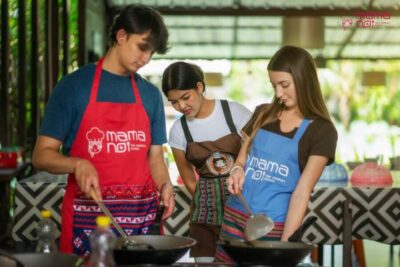
2-Day Jungle Trek with Elephant Farm & Raft Ride
Read our review →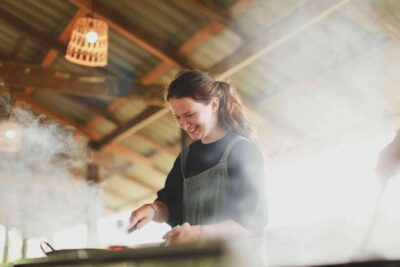
Cooking Class with Organic Farm in Chiang Mai at Mama Noi
Read our review →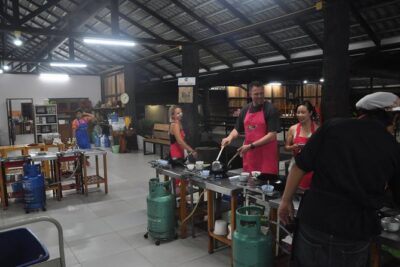
Evening Cooking Class in Organic Farm with Local Market Tour
Read our review →