
Review · BALI
From Ubud: Downhill Bike Tour with Rice Terraces and Meal
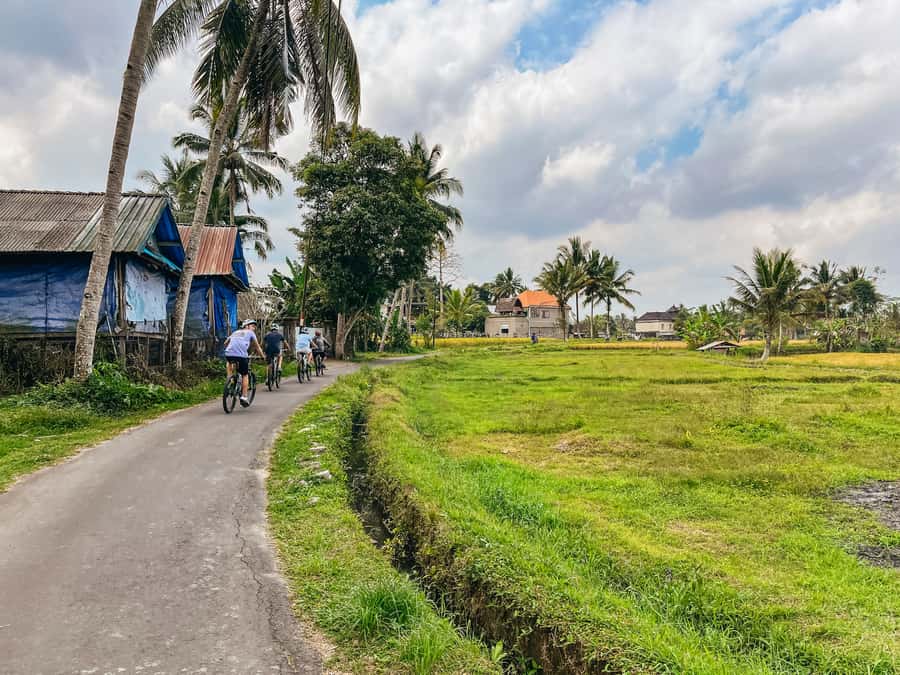
From the slopes of Kintamani volcano, you roll downhill through Bali’s countryside toward Ubud, passing rice terraces, family compounds, temples, schools, and craft villages. It is a clever way to see rural Bali without spending the day fighting Ubud traffic.
I like the easy downhill route and the guides’ personal approach to Balinese life. Guides such as Agus and Wayan explain homes, religion, farming, and family customs in a way that turns a pleasant bike ride into a useful introduction to the island. The main consideration is traffic: most of the route is calm, but some paved roads share space with cars and motorbikes.
Key points to know before booking
- A 23-kilometer downhill ride: You do most of the work with your brakes, not your legs.
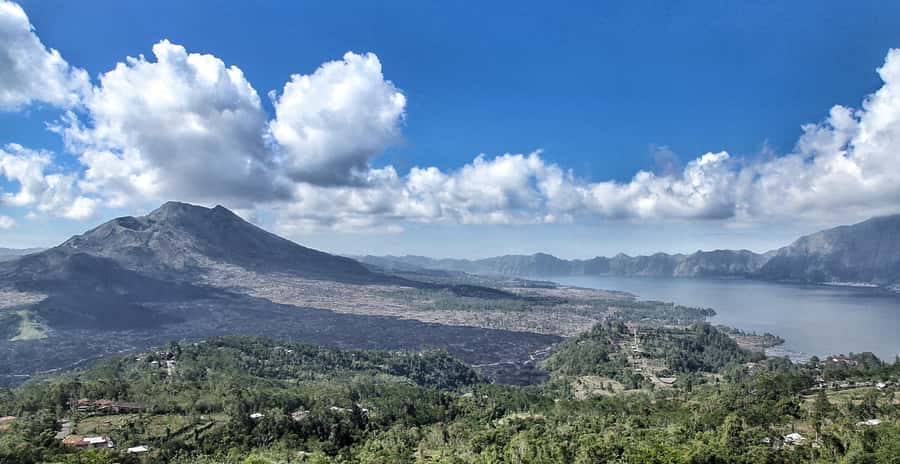
- Kintamani views first: The tour begins high above Ubud, with views toward Mount Batur and Lake Batur.
- Coffee, breakfast, and lunch included: You visit an organic plantation, taste local drinks, and eat at local restaurants.
- Culture comes with the cycling: Expect stops at villages, rice terraces, temples, a school, or a traditional family home.
- Paved roads, not mountain biking: This suits casual cyclists and families more than serious off-road riders.
- Strong guide-led experience: English, Indonesian, French, Italian, and Spanish are available.
Why this downhill bike tour works so well
The best part of this trip is the change in pace. Ubud can feel crowded, noisy, and tightly packed with traffic. A short drive takes you up toward Kintamani, where the air is cooler and the views open out. From there, you coast down through rural roads and rice-growing villages.
I like that the bike ride is not treated as a stand-alone sport. The route gives you a look at daily Balinese life. You may stop to see a school, a family compound, a temple site, or artisans at work. The guide explains what you are seeing, so the rice terraces become more than a pretty photo stop.
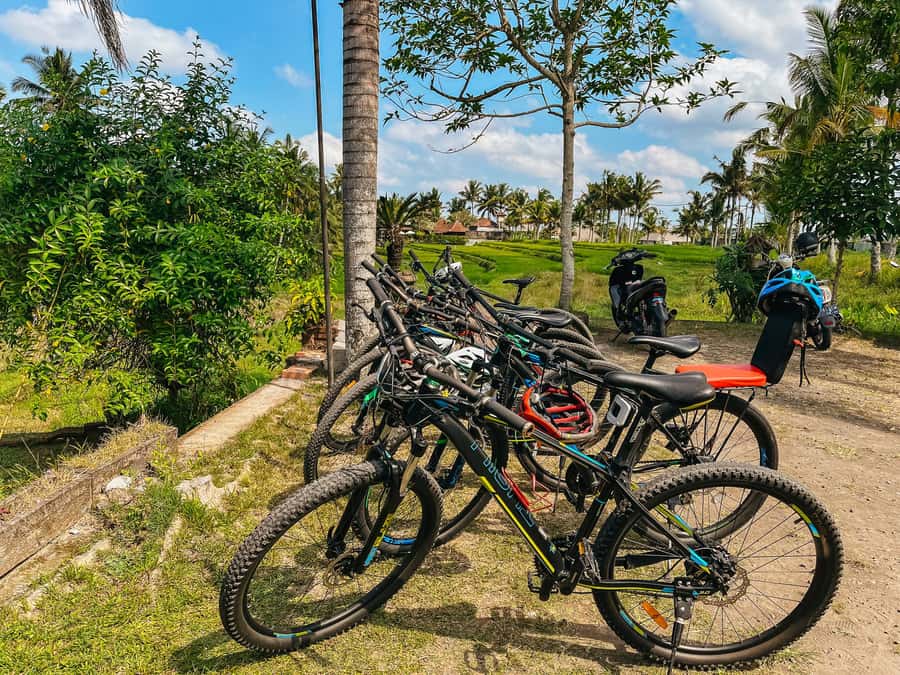
The second strength is the balance between activity and comfort. You get hotel pickup in Ubud, an air-conditioned minivan, a bicycle, a helmet, breakfast, lunch or dinner, and entrance fees. At $40 per person, that is good value if you want several parts of a Bali day handled in one booking.
There is one important catch. This is not an off-road mountain-bike tour. The ride is mainly on paved roads, and most of it is downhill. If you want steep trails, technical turns, or a hard workout, you may find it too gentle. If you want a scenic ride with plenty of explanation and very little climbing, that is exactly the point.
More Rice Terrace Tours in Bali
- Ubud: Waterfall, Rice Terraces & Monkey Forest Private Tour
★ 4.9 · 4,894 reviews - Ubud: Rice Terrace, Waterfall, & Elephant Cave
★ 4.9 · 862 reviews - Ubud: Private Scenic Waterfalls and Rice Terraces Tour
★ 4.9 · 719 reviews
From Ubud to Kintamani by air-conditioned minivan
Pickup is included from hotels in the Ubud area. The drive to the starting point takes you out of town and up toward Kintamani. Depending on hotel pickups and road conditions, the transport can take a sizeable part of the six-hour day.
That time is useful because you begin far above Ubud rather than cycling through its busy streets. At the top, you can take in views around the volcano area, including Mount Batur and Lake Batur. Clear weather gives you the best chance of seeing the mountain and lake, but conditions can change quickly at this altitude.
The minivan is also where you leave bags and extra clothing. One group had a support car follow the ride, which allowed people to store belongings and made the day easier in wet weather. Exact arrangements can vary, but the tour includes transportation and a driver or guide.
Pickup outside Ubud may be possible for an extra charge. If you are staying beyond the usual pickup area, confirm that cost before booking.
Coffee tasting and breakfast at an organic plantation
Before cycling, the group visits a coffee plantation. This is more than a quick drink stop. You can walk around the plantation, see local crops, and taste several coffees and teas. Breakfast is included, and the food has been described as pancakes and fruit on some departures.
This stop gives the day a gentle start. You are not expected to jump straight from a hotel minivan into a long ride. It also introduces one of Bali’s familiar agricultural products in a setting where you can ask questions and compare different drinks.
You can buy coffee, tea, cocoa, and related products at the plantation. That purchase is optional, and alcoholic drinks are not included anywhere in the tour. If you prefer to avoid shopping stops, keep in mind that the plantation is part of the planned morning rather than an accidental detour.
The timing of breakfast matters. Lunch may not arrive until around 2 p.m., especially when pickup and early stops run long. I would eat something before leaving your hotel if you tend to get hungry between meals, even though breakfast is supplied.
The 23-kilometer ride toward Ubud
After the bike fitting and safety briefing, you set off downhill. Guides explain hand signals and manage the pace, with one guide often leading and another riding at the back. This arrangement helps keep the group together and gives slower riders room to ride without pressure.
The route is reported as roughly 23 kilometers, with very little pedaling for long stretches. That sounds effortless, but downhill cycling has its own demands. You need to watch the road, control your speed, and use the brakes often. Several people found that gripping the brakes for a long time was harder than pedaling.
The bikes and brakes have generally been well suited to this route. Still, ask for a bike that fits you properly before leaving. A good saddle height and easy-to-reach brake levers make a bigger difference than speed.
Most roads are paved, and some sections pass through busier areas with cars and motorbikes close by. Guides help riders negotiate these sections, but you should be comfortable cycling on public roads. Keep your eyes ahead, leave space, and follow the hand signals.
Rain is possible. The tropics do not always follow the forecast, and one group rode through steady rain while still enjoying the day. Ponchos have been provided on some departures, but bring light rain protection if you have room. Wet roads can make downhill braking more demanding.
More Rice Terrace Tours in Indonesia
- Ubud: Monkey Forest and Rice Terrace Private Tour
★ 4.8 · 631 reviews - Bali: Swing with Falls, Rice Terrace, & Monkey Forest Option
★ 4.8 · 509 reviews - Bali: Full-Day Eat Pray Love Tour with Rice Terraces & Yoga
★ 4.9 · 349 reviews - Ubud: Tegalalang Rice Terrace Photos Tour with Swing Ticket
★ 4.7 · 177 reviews
Rice terraces and the subak irrigation system
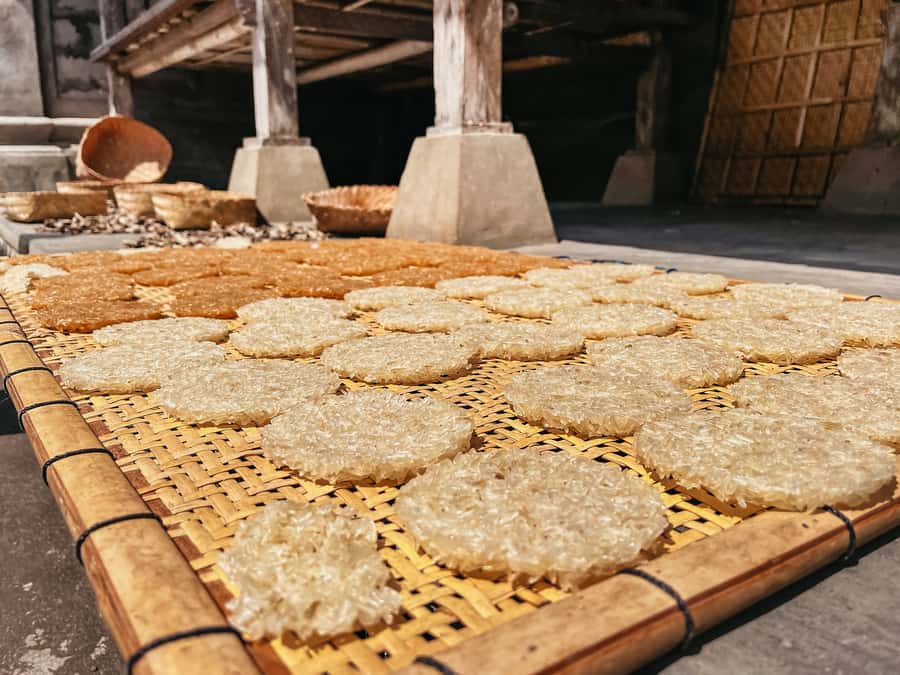
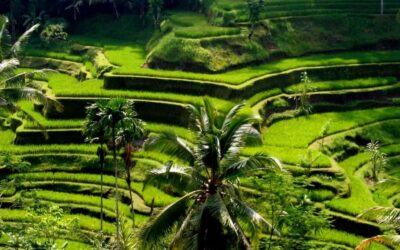
The rice terraces are the visual heart of the tour. You do not simply stop at a viewpoint, take a picture, and leave. The itinerary includes a walk through the terraces, where the guide explains the subak irrigation system.
Subak is the traditional cooperative system that channels water to rice fields and helps farming communities manage shared resources. Learning about it gives you a better sense of why the terraces exist and how much community organization lies behind their appearance.
The walking portion is worth noting. This is a bike tour, but you will get off the bike for stops and short walks. Paths around rice fields can be uneven or slippery after rain, so shoes with a secure sole are a sensible choice.
The terraces also show why the ride feels different from a standard sightseeing loop. You are moving through working countryside, not just between major attractions. Farmers, homes, shrines, and small roads appear at a human scale. Your guide can explain details you might otherwise miss, such as the layout of a Balinese family compound or the role of religious offerings.
Villages, schools, temples, and local families
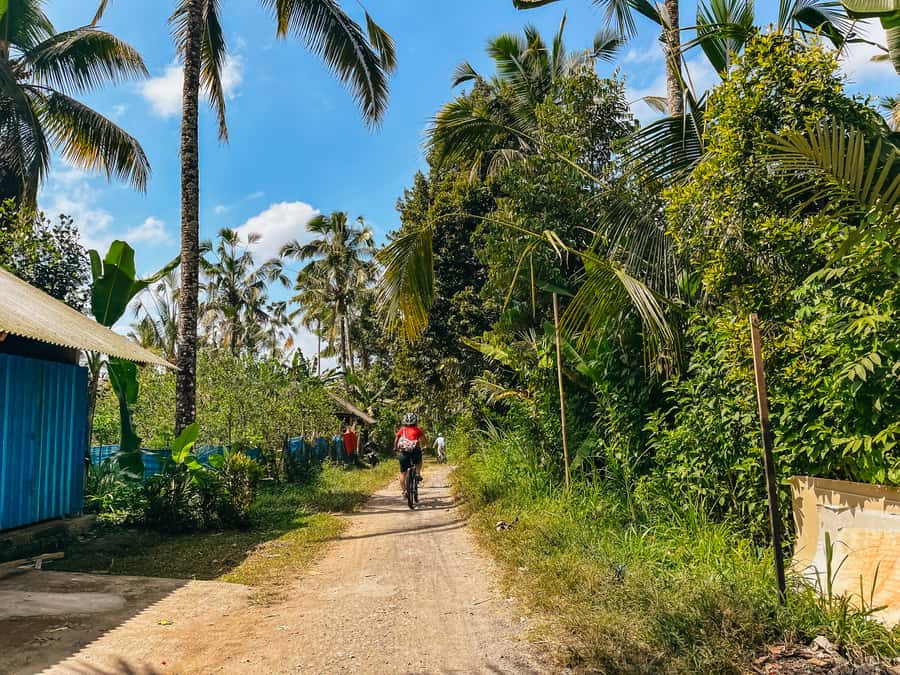
The tour’s cultural stops vary, but the route can include craft villages in the Ubud area. Artisans make wood carvings, silver jewelry, and woven textiles using traditional methods. These villages connect the scenery with the local economy. Bali’s crafts are not just souvenirs in a shop window; they are part of how families earn a living and pass skills between generations.
Some departures include a stop at the guide’s former primary school or another local school. This can be one of the most revealing parts of the day because it gives you a look at ordinary community life rather than a polished attraction.
You may also visit a traditional family home. A guide such as Wayan or Agus can explain family life, household design, ceremonies, and religious practice from personal experience. That direct explanation is a major reason to choose this tour over simply renting a bicycle and following a map.
The guide quality is central here. Agus, Wayan, Ari, and other guides are praised for clear explanations, friendly manners, humor, and careful attention to safety. Language options include English, Indonesian, French, Italian, and Spanish. If cultural interpretation is your main reason for booking, note your preferred language when reserving.
Lunch in Ubud and what the food adds
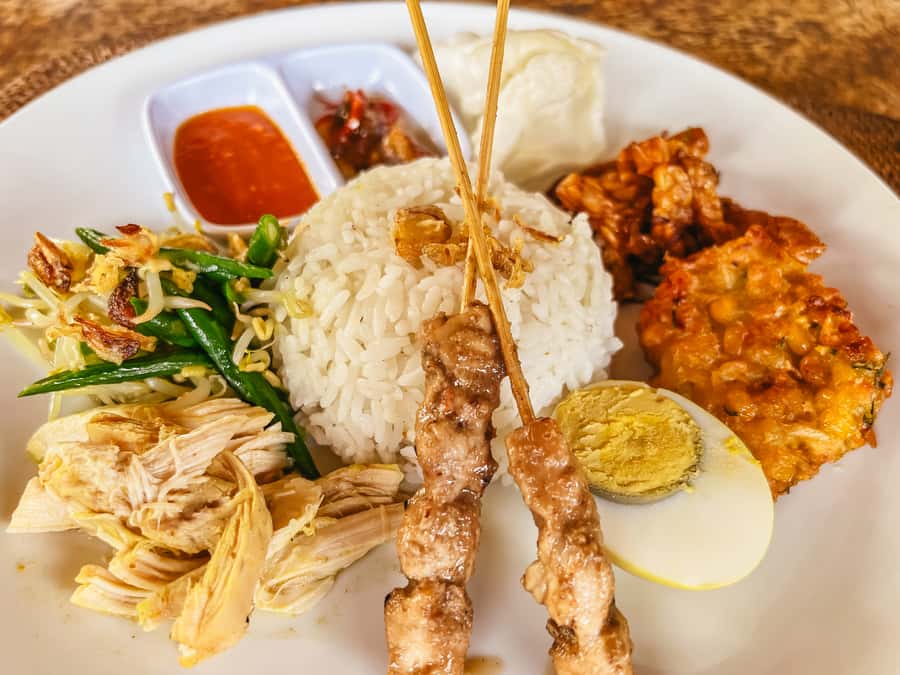
The day ends with a local meal in or near Ubud. Lunch is included, and dietary needs have been accommodated on some departures. The food is described as good local fare rather than a formal dining event, which suits the tone of the day.
Some groups have eaten beside rice fields, while the general plan places the meal at a local restaurant in Ubud. Either way, lunch gives you time to sit down after the ride and talk through what you have seen.
The meal also improves the value of the tour. You are not paying only for a bicycle and a guide. The price includes breakfast, plantation tastings, transport, entrance fees, the bike, and a substantial meal. At $40, the package compares well with arranging separate transport, a rental bike, meals, and a cultural guide yourself.
The one practical issue is timing. Since lunch may be served later in the afternoon, bring a small snack if you need regular food. Alcoholic drinks are not included, though they can be purchased separately.
Who should book this Bali bike ride
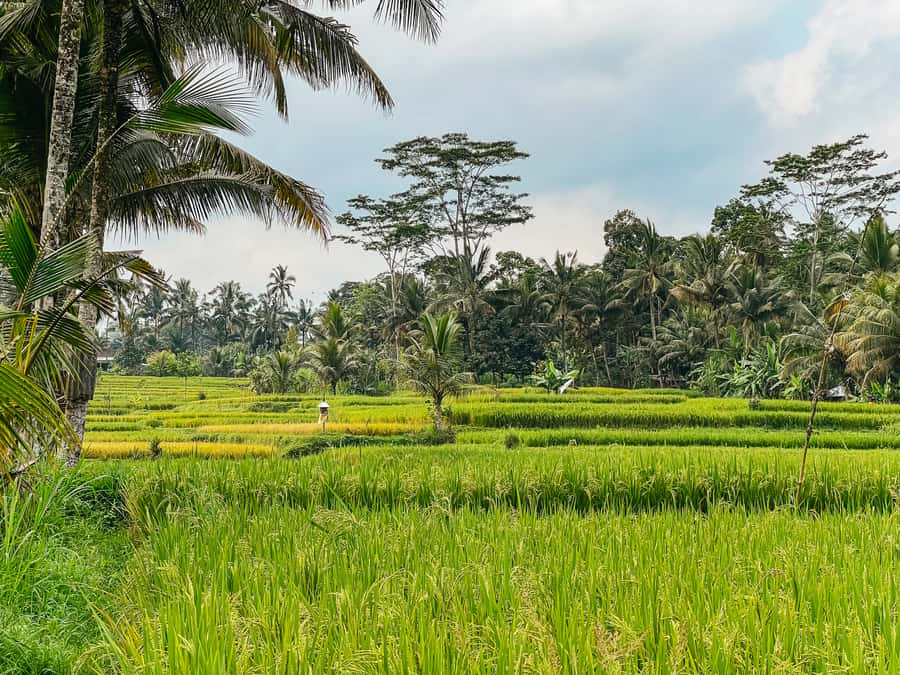
This tour is a good fit for you if you want:
- A gentle way to see the countryside beyond central Ubud
- A bike ride with almost no climbing
- Cultural explanations from a local guide
- Rice terraces, villages, and mountain views in one half-day
- A family-friendly activity that does not require strong cycling fitness
- A planned day with pickup, meals, equipment, and transport included
It can work well for teenagers too. The ride is active without being exhausting, and the village stops give the day more variety than a long road ride.
You may want another tour if you are looking for serious exercise or off-road riding. The route is mostly downhill on paved roads, and the main challenge is speed control and traffic awareness. Strong cyclists may wish the ride were longer or more demanding.
The tour is also less suitable if you dislike group pickups or sitting in a vehicle before the ride begins. The drive from Ubud to Kintamani is necessary to reach the high starting point, and delays can happen when several hotels are involved.
What to bring and how to prepare
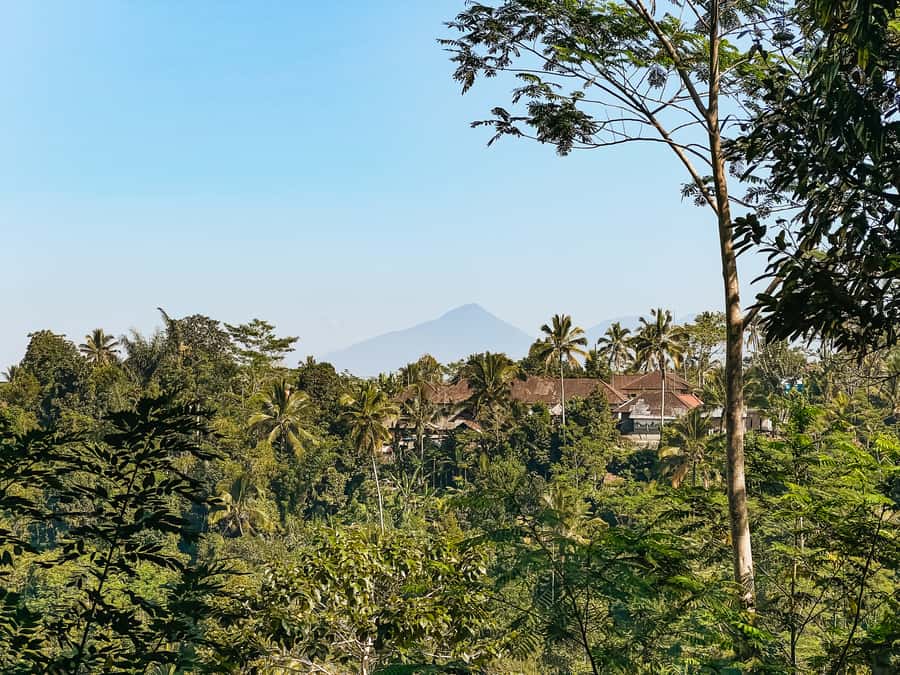
Wear light clothing that covers your shoulders and legs comfortably for village and temple visits. Bring sunscreen and apply it to your hands and ears as well as your face. On a downhill route, exposed hands can take more sun than you expect.
Use sturdy shoes with a good grip. You will ride on paved roads, but the terrace walk may involve uneven ground. Bring a small amount of cash if you may want coffee or tea from the plantation, since those purchases are separate.
Pack sunglasses, water, and a light rain layer. Water has been provided on some departures, but carrying your own bottle is still sensible. If you have not ridden a bicycle for years, do not assume you need special fitness. The route is generally easy, but you should be comfortable steering and braking for several hours.
The tour lasts about six hours, though pickup outside the normal Ubud area can make it longer. Free cancellation is available up to 24 hours before the start, and you can reserve without paying immediately if that option is offered at booking.
Should you book this Kintamani to Ubud bike tour?
Book it if your idea of a great Bali day includes scenery, food, and conversation rather than speed. The route gives you volcano views at the start, rice terraces in the middle, and villages, schools, homes, crafts, and local food along the way.
I especially recommend it for first-time visitors who want context for what they are seeing. A rental bike can take you past a rice field, but a good guide can explain the irrigation system, the family compound, the temple customs, and the work behind the crafts.
Skip it if you want a true mountain-bike challenge. This is a relaxed downhill cultural ride, with some traffic and plenty of stops. For most people looking for an easy, well-priced way out of Ubud’s traffic, that mix is the tour’s greatest strength.
FAQ
How long does the downhill bike tour last?
The activity lasts about six hours, including hotel pickup, transport to Kintamani, the plantation visit, cycling, cultural stops, and the meal.
Where does the bike ride begin?
The ride begins high on the slopes of Kintamani volcano and continues downhill toward Ubud.
Is the cycling route difficult?
The route is mostly downhill, with very little pedaling for long stretches. You should still be comfortable steering and using the brakes, especially on roads shared with cars and motorbikes.
Is this an off-road mountain-bike tour?
No. The ride is mainly on paved roads and is designed as a relaxed cultural bike tour rather than a technical off-road cycling trip.
What food is included?
Breakfast and lunch or dinner are included. Breakfast is served at the coffee plantation, and the final meal is served at a local restaurant in or near Ubud.
Is coffee tasting included?
Yes. The tour visits an organic coffee plantation where you can sample different coffees and teas. Coffee, tea, and cocoa products may also be available to buy.
Which languages are available?
Live guides are available in English, Indonesian, French, Italian, and Spanish.
Can I be picked up outside Ubud?
Pickup outside the Ubud area may be possible for an additional fee. Confirm the extra charge before booking.
More Downhill in Bali
- Ubud: Downhill Bike Tour with Rice Fields, Volcano and Meal
★ 5.0 · 267 reviews - Ubud: Downhill Cycling with Volcano, Rice Terraces, and Meal
★ 4.9 · 189 reviews
More Cycling Trips in Bali
- Bali: Jatiluwih Rice Terraces 1 Hour Electric Bike Tour
★ 4.7 · 41 reviews - Ubud: Rice Terraces & Villages Half-Day Fat Tire E-Bike Tour
★ 4.9 · 602 reviews - Ubud: Downhill Cycling with Volcano, Rice Terraces and Meal
★ 5.0 · 536 reviews - Ubud eBikes Tour to Tegallalang Rice Terrace
★ 5.0 · 507 reviews
Just added around Bali
- Monkey Forest, Ubud, Waterfall and Rice Terrace★ 4.5 · 53 reviews
- Private tour- UNESCO rice terraces, Ulundanu Beratan, Batukaru, Tanah lot temple★ 5.0 · 2 reviews
- Bali ATV Ride On the Beach, Rice Field and Village Tour 2 Hour★ 5.0 · 15 reviews
- Bali: Jatiluwih Rice Terraces 1 Hour Electric Bike Tour★ 4.7 · 41 reviews
- Ubud: Hidden Waterfall, Monkey Forest, Rice Terrace & Swing★ 5.0 · 3 reviews
- Bali: Rice Terraces, Mount Batur Geopark and more – Day Tour★ 4.9 · 7 reviews
- Bali: Cliff Jumping Gitgit Waterfalls & Rice Terrace Tour★ 4.9 · 35 reviews
- Bali: Discover Jungle Waterfalls and Rice Terraces★ 4.9 · 56 reviews
Bali Farm Tours, compared.

Waterfall, Rice Terraces & Monkey Forest Private Tour
Read our review →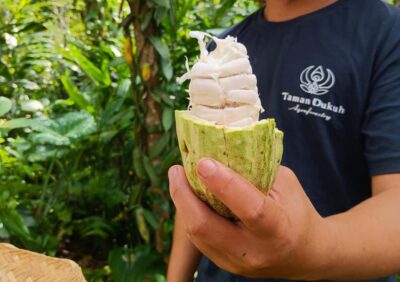
Private Scenic Waterfalls and Rice Terraces Tour
Read our review →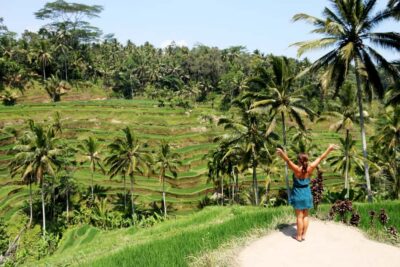

Swing with Falls, Rice Terrace, & Monkey Forest Option
Read our review →
Full-Day Eat Pray Love Tour with Rice Terraces & Yoga
Read our review →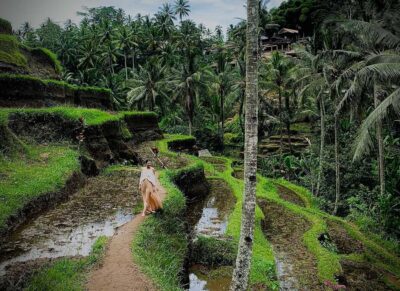
Tegalalang Rice Terrace Photos Tour with Swing Ticket
Read our review →Browse the lists this tour appears in