
Review · COFFEE
Women-led Coffee Farm Trek
Rwanda’s coffee story comes alive on a women-run farm outside Kigali, where you can follow the bean from cultivation and washing to roasting. The welcome is warm and lively: expect song, dance, laughter, and a morning coffee or tea before the working part of the visit begins.
I like the small group limit of 15 and the chance to meet women whose work supports both coffee production and local opportunity. Lunch is included, and the visit to the Women’s Opportunity Center adds handicrafts and a wider look at the cooperative’s work. The main drawback is the long eight-hour commitment, and the exact travel time between Kigali and the farm is not provided.
Key points at a glance
- Coffee from plant to cup: Follow harvesting, washing, preparation, and roasting rather than simply sitting down for a tasting.
- Women-led agricultural work: Meet the farmers and learn how the cooperative connects coffee with economic growth and women’s opportunity.
- A lively welcome: Song, dance, laughter, and shared coffee or tea set the tone before the farm lesson begins.
- Lunch at Urugo Eco-Lodge: The meal is included, with one hour listed at the lodge inside the Women’s Opportunity Center.
- Small-group format: A maximum of 15 people makes it easier to ask questions and take part.
- A full Kigali day: The tour starts at 8:00 a.m. at Question Coffee Gishushu and returns there after about eight hours.
Why this coffee day is more than a tasting
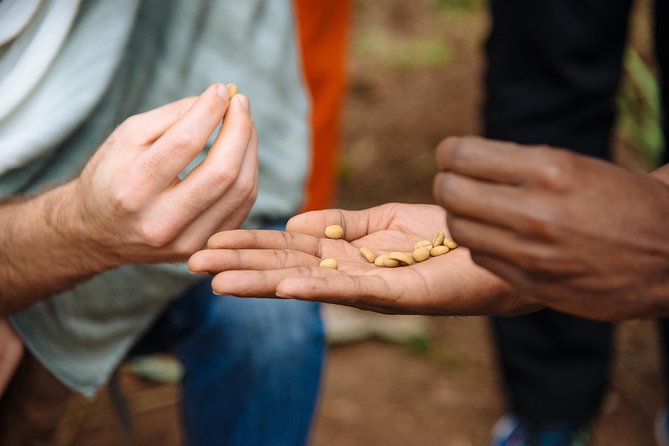
Many coffee outings stop with a cup and a few polished facts. This one takes you behind the cup. You see how coffee is grown, harvested, washed, prepared, and roasted, then connect that work with the women’s cooperative that produces it.
That matters in Rwanda, where coffee is an important part of the economy. You are not just learning flavor notes. You are seeing the labor, organization, and care required before coffee reaches a café or kitchen.
The experience also gives you a closer look at women’s economic opportunity. The farm visit, cooperative setting, and Women’s Opportunity Center are linked parts of the day. Together, they show how agricultural work, craft sales, and shared community projects can support one another.
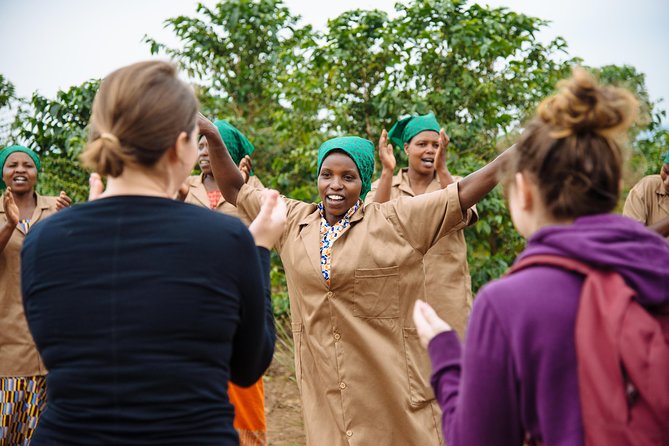
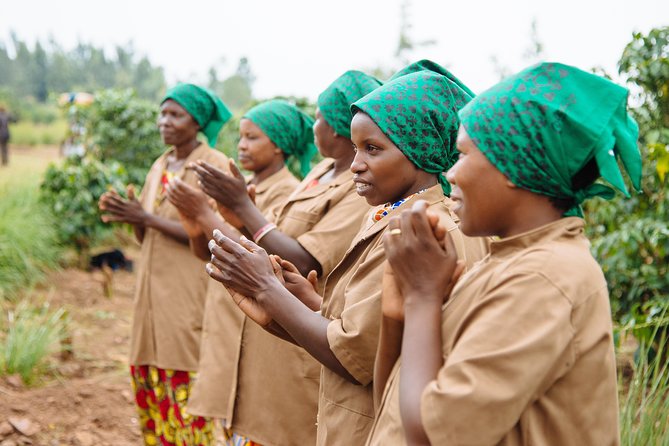
I especially like that the welcome is not stiff or overly formal. The women greet you with song, dance, and laughter, and you are encouraged to join in. If you prefer a quiet, technical coffee lesson, this may feel more social than expected. If you enjoy meeting people through music and shared activity, it adds real character.
More Coffee Farm Tours in the world:
- La Herradura Coffee Farm: tour in Europe’s only plantation
★ 4.8 · 430 reviews - Big Island: Volcanoes, Waterfalls, & Coffee Farm Day-Trip
★ 4.9 · 414 reviews - Small-Group Big Island Tour: Hawaii Volcanoes National Park and Kona Coffee Farm
★ 5.0 · 343 reviews
Starting at Question Coffee Gishushu at 8:00 a.m.
Your day begins at Question Coffee Gishushu, at 8 KG 8 Ave in Kigali. The listed start time is 8:00 a.m., so plan for a prompt beginning and allow time to arrive before the group sets off.
A coffee or tea starts the morning. That small detail fits the subject nicely: you get your bearings with a drink before tracing how coffee is produced. Since the experience lasts about eight hours, an early start also leaves room for the farm visit, lunch, and the Women’s Opportunity Center without turning the day into a late-night outing.
The drive takes you out from Kigali toward the coffee-growing area near Akagera National Park. The exact drive time is not specified, so I would avoid scheduling a tight afternoon appointment. This is a full-day outing, not a quick city stop with a short farm add-on.
The group can include up to 15 people. That is large enough to create a friendly social setting but still small enough for questions and direct contact with the guide. Patty is one named guide associated with the experience, and her role includes joining in with the activities and helping explain what you are seeing.
Meeting the women behind the crop
The welcome is one of the day’s most memorable parts. You may be greeted with song and invited to dance before the more practical farm lesson begins. This is not simply entertainment added between activities. It gives you a direct, human introduction to the cooperative and sets a relaxed tone.
From there, the focus turns to the coffee itself. You learn how the beans are cultivated and harvested, then follow the work involved in washing and preparing them. The point is to show the chain of tasks clearly, rather than treat the finished drink as something that appears by magic.
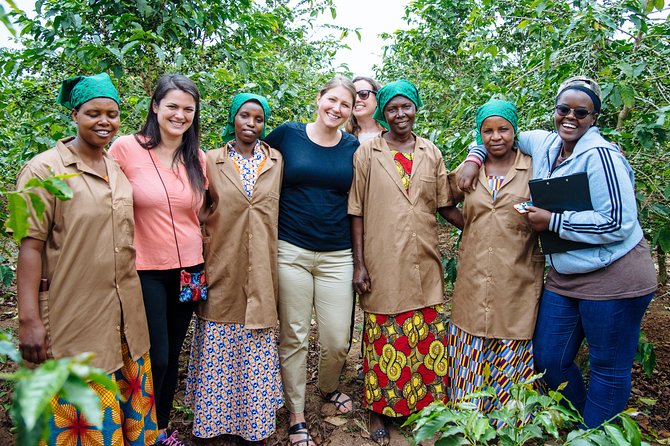
The women farmers are central to the experience. Their work connects farming with household income, cooperative activity, sustainability, and broader economic growth. You are given a chance to see the people involved in production, not just the machinery or the final product.
The visit suits curious coffee drinkers who want context. You do not need to be an expert in beans, brewing, or roasting. The guide-led format is designed to explain the process in accessible terms, and the small group gives you room to ask about the stages that interest you most.
One practical point: the provided details do not list a separate farm admission fee, exact walking distance, or the amount of time spent outdoors. Most people can participate, but you should be prepared for an active day around a working agricultural site rather than a polished café-only visit.
Following the bean through cultivation, washing, and preparation
The strongest part of the experience is its full production story. You can see how coffee is cultivated and harvested, then learn what happens during washing and preparation. This gives you a better sense of why coffee from the same country can still have many different tastes.
Rwandan coffee is known for delicate flavors. The tour gives that description a practical setting. Instead of only being told that the coffee is delicate, you can connect the taste in your cup with the farming and processing methods used before roasting.
The sequence also helps you understand how much work comes before brewing. Harvesting is one step. Washing, sorting, preparing, and roasting shape the final result as well. I like tours that make this chain visible because you leave with a better eye for the work behind an everyday drink.
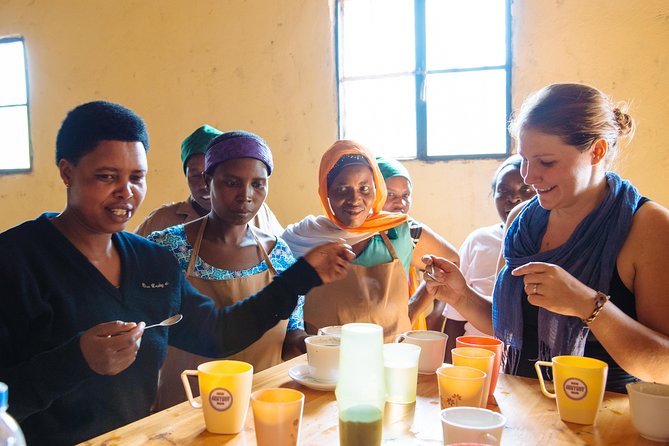
The experience includes coffee and tea at the start, but the supplied information does not promise a specific number of tastings or a formal cupping session. If you are booking mainly for a highly technical tasting, check the current details with the provider before paying. If your aim is to understand the complete journey from farm to cup, the format is a better match.
More Walking and Hiking Trips in the world:
- Chiang Mai: 2-Day Jungle Trek with Elephant Farm & Raft Ride
★ 4.7 · 881 reviews - From Ho Chi Minh: Can Gio Trek – Monkey Island & Crocodile Farm
★ 5.0 · 353 reviews - Selogriyo Temple and Trekking Java Rice Terraces, hidden waterfall -Nature Java
★ 5.0 · 179 reviews - Yogyakarta: Selogriyo Temple Tour & Java Rice Terrace Trek
★ 5.0 · 175 reviews
Lunch at Urugo Eco-Lodge and time for local crafts
Lunch is provided at Urugo Eco-Lodge at the Women’s Opportunity Center. The listed stop lasts one hour and includes admission, giving you a clear pause in the middle of the day.
This break matters. Eight hours of driving, walking, demonstrations, and conversation can feel long if there is no proper rest. A planned meal keeps the schedule comfortable and gives you time to take in the setting rather than rushing from one activity to the next.
The Women’s Opportunity Center also features handicrafts and other work. That broadens the visit beyond coffee. You can see how the center supports skills and products connected with women’s opportunity, not just agriculture.
I would allow some budget and attention for the handicrafts, even though the supplied details do not state that purchases are required or included. Buying something may be a useful way to support the work, but you should treat any shopping as optional and confirm current prices locally.
The stop also gives the day a useful balance. The farm portion explains production in the field, while the center shows another side of cooperative activity. You get coffee, food, craftwork, and conversation rather than one narrow demonstration repeated for several hours.
What the $150 price includes in practical terms
At $150 per person, this is not a budget coffee walk. The value comes from the fact that it is an approximately eight-hour experience with a guide, transport from a central Kigali meeting point as part of the organized outing, lunch, farm access, and the Women’s Opportunity Center visit.
The price makes the most sense if you want a planned day outside Kigali and would otherwise need to arrange several pieces yourself. You are paying for the farm connection, the cooperative setting, the guide’s explanations, the meal, and the structure of the day.
It is also a good fit for people who care about the social meaning of the visit. The women-led focus is not a decorative theme. It is the reason this tour feels different from a standard plantation stop or café tasting.
Still, value depends on your priorities. If you only want to drink excellent coffee, $150 may feel high. Kigali has less expensive ways to enjoy a cup. If you want to see production, meet farmers, learn about processing, eat lunch, and visit a women’s center in one organized day, the cost is easier to justify.
Group discounts are available, which may help families, colleagues, or friends traveling together. The maximum group size is 15, so the experience is not private unless you arrange that separately with the provider.
How the small group affects the day
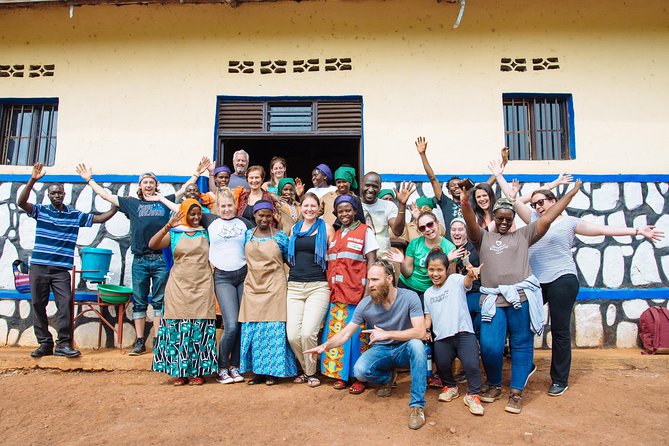
A maximum of 15 people is a useful middle ground. You get the energy of a shared outing without the feeling of being moved through a large crowd. It should also be easier to hear the guide, ask questions, and take part in the welcome.
The group format is especially helpful during the coffee explanation. Farm work can be hard to understand when a guide is speaking to too many people at once. A smaller group gives you a better chance to see the process and follow up when something catches your interest.
The social side is part of the experience too. Song, dance, coffee, and lunch all work better when the group is willing to participate. You do not have to be a confident dancer, but a closed-off approach may make the day feel less comfortable. Come ready to join in at least a little.
The tour has received a five-star rating from 19 reviews, with 100 percent recommending it. That is a strong record, and the praise centers on the warm welcome, guide support, coffee education, and women’s cooperative work. I would still read the format honestly: the experience is active, social, and long enough to fill most of your day.
Who will enjoy this experience most
I would recommend this tour to:
- Coffee drinkers who want to understand production rather than only taste the finished drink
- Visitors interested in women-led business and cooperative work
- People who enjoy music, dancing, shared meals, and direct cultural contact
- Small groups of colleagues or friends who can use the group discount
- Anyone with a free full day in Kigali who wants an organized outing beyond the city
It may be less suitable if you have limited time in Kigali, dislike group activities, or want a short tasting close to your hotel. It is also not the right choice if you need a precise, technical coffee curriculum with every tasting detail listed in advance. The experience is broader and more personal than that.
Most people can participate, and service animals are allowed. The stated health conditions require a negative COVID-19 test result and a mask, so check the current rules before booking. Since the tour requires good weather, poor conditions can lead to a different date or a full refund.
Booking timing and useful planning advice
The experience is booked an average of 27 days in advance. That suggests you should not leave it until the last morning if it is important to your Rwanda plans. Confirmation is sent within 48 hours of booking, subject to availability.
The meeting point is Question Coffee Gishushu, and the activity ends back there. Since the start is at 8:00 a.m. and the day lasts about eight hours, keep your evening schedule flexible. I would also avoid placing an important flight, business meeting, or fixed dinner immediately afterward.
Free cancellation is available until 24 hours before the start time for a full refund. Changes or cancellations made less than 24 hours before departure are not accepted for a refund, and the local time controls the cut-off.
Wear clothes you can use comfortably for a full day and be ready for both social activities and farm-related demonstrations. The supplied information does not specify a dress code, footwear requirements, or weather equipment, so ask Question Coffee about current conditions if you have mobility or clothing concerns.
Should you book the Women-led Coffee Farm Trek?
Book it if you want a full day that connects Rwandan coffee with women’s economic opportunity, not just a good drink. The warm welcome, farm-to-cup explanation, included lunch, and Women’s Opportunity Center make the experience feel personal and purposeful.
I would be more cautious if your schedule is tight or your main goal is a quick café tasting. At $150, this is a substantial purchase, and the eight-hour format requires a real commitment. For coffee lovers, socially minded visitors, and anyone looking for a well-organized day outside Kigali, it is a strong choice. Just reserve ahead, leave your afternoon open, and arrive ready to take part.
FAQ
Where does the Women-led Coffee Farm Trek start?
It starts at Question Coffee Gishushu, located at 8 KG 8 Ave in Kigali, Rwanda.
What time does the tour begin?
The listed start time is 8:00 a.m.
How long does the experience last?
The tour lasts approximately eight hours.
Where does the tour end?
The activity ends back at the meeting point at Question Coffee Gishushu.
Is lunch included?
Yes. Lunch is provided during a one-hour stop at Urugo Eco-Lodge at the Women’s Opportunity Center.
How many people can join the tour?
The experience has a maximum of 15 travelers.
Is cancellation free?
Yes. You can cancel at least 24 hours before the start time for a full refund. Cancellations made less than 24 hours before the start time are not refunded.
What happens if bad weather cancels the tour?
Because the experience requires good weather, you will be offered a different date or a full refund if it is canceled for that reason.
Just added around the world
- Ubud Rice terrace,Zip-line and waterfall★ 5.0 · 4 reviews
- Full Day Tour to Water Temples UNESCO Rice Terraces in Bali★ 5.0 · 4 reviews
- Explore Ubud Art Market, Monkey Forest and Rice Terraces★ 5.0 · 16 reviews
- Exploring Munduk Village (Waterfalls, rice terrace, Traditional local house)★ 4.5 · 2 reviews
- Ubud Monkey Forest Rice Terrace Temple Waterfall Private Tour★ 5.0 · 7 reviews
- Jatiluwih Spiritual Journey of Melukat with Rice Terrace View★ 5.0 · 9 reviews
- Private Tour to Sumampan Waterfall, Monkey forest, Rice terraces and Swing★ 5.0 · 30 reviews
- Discover Hidden Waterfall, Unesco Rice Terraces and Mountain Temple★ 5.0 · 17 reviews
Coffee Farm Tours, compared.
La Herradura Coffee Farm: tour in Europe’s only plantation
Read our review →

Small-Group Big Island Tour: Hawaii Volcanoes National Park and Kona Coffee Farm
Read our review →
Medellín Coffee Farm Tour with Trolley and Cable Car Ride
Read our review →
Salento: Private Cocora Valley, Salento & Coffee Farm Tour
Read our review →
Liamuiga Natural Farm Tour – St.Kitts’ Coffee Farm
Read our review →
Browse the lists this tour appears in