
Review · MEDELLIN
Medellín Coffee Farm Tour with Trolley and Cable Car Ride
Medellín’s most unusual coffee outing begins not in the countryside, but on public transport. You ride the electric trolley and cable car into Barrio La Sierra, then walk uphill to a working family farm where you pick coffee berries and follow them through cleaning, drying, roasting, grinding, and brewing.
I like two things right away: the tour gives you a close look at Comuna 8’s transformation, and it puts you to work instead of keeping you behind a display case. The biggest consideration is the physical effort. Expect hills, steps, and a long walking stretch, so this is not a good fit for anyone with limited mobility.
Key points at a glance
- Ride Medellín’s electric trolley and cable car: The transport is part of the experience, with broad views over the city and hillside neighborhoods.
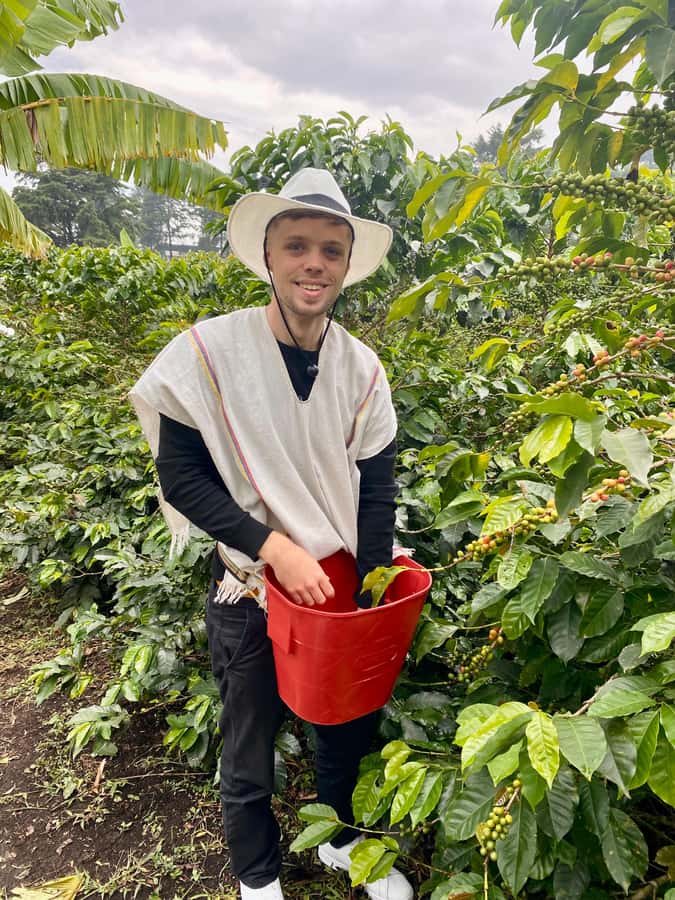
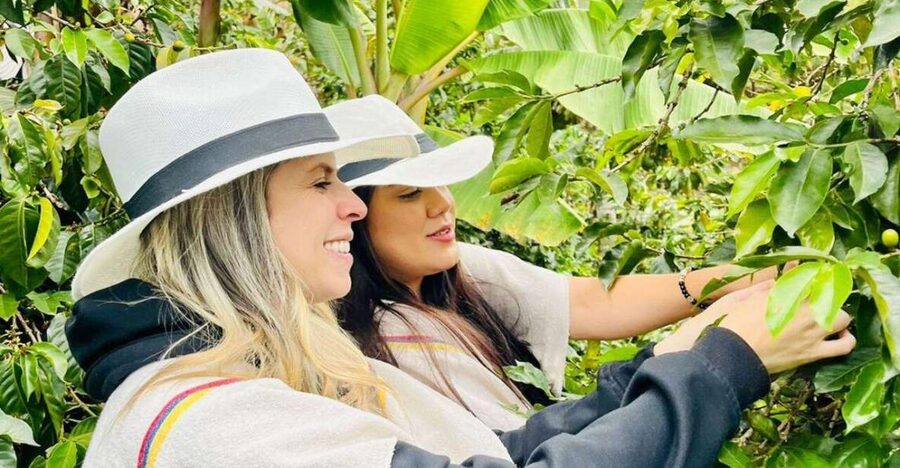
- Pick coffee berries yourself: You do not just hear about harvesting. You walk into the coffee fields and collect the ripe fruit by hand.
- Follow coffee from seed to cup: The family explains the stages of cleaning, fermenting, drying, roasting, grinding, and brewing.
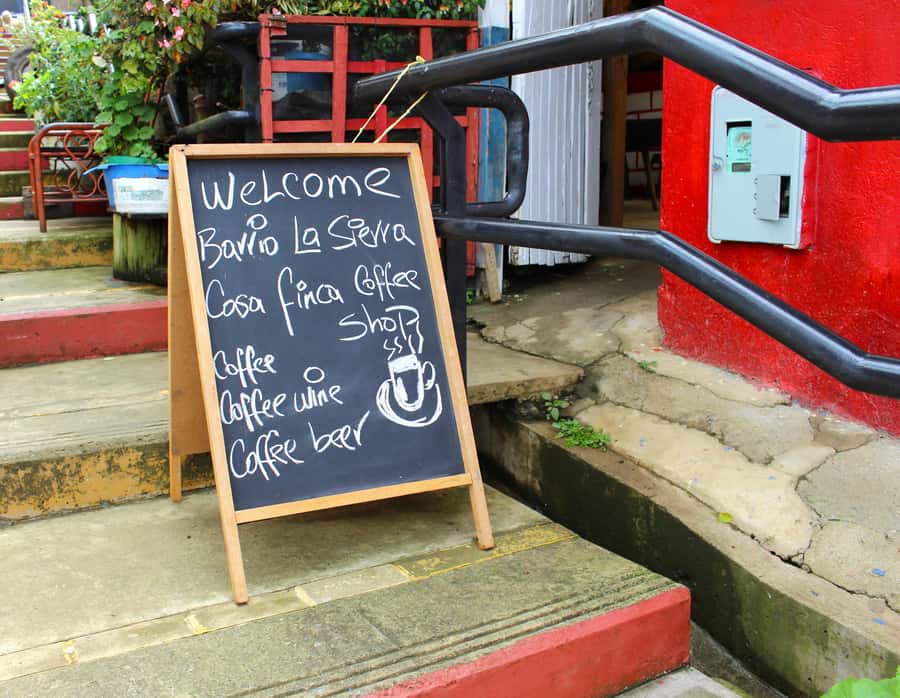
- Visit a local family in Barrio La Sierra: Casa Finca de La Sierra and its small museum connect coffee production with family and community life.
- See a different side of Comuna 8: The walk offers context about a neighborhood that has worked through years of hardship and change.
- Plan for steep walking: The route includes hills and many steps. Closed shoes, comfortable clothes, and insect repellent for the farm are smart choices.
From San Antonio station to the hills of La Sierra
You meet your guide at street level in front of the main entrance to the San Antonio Tranvia station, beneath the San Antonio Metro station. Look for the San Antonio Tranvia sign. This central meeting point makes the tour easy to reach if you are staying in Medellín.
The first ride is the electric trolley, which takes about 30 minutes. Then you transfer to the cable car for about 12 minutes. I like this opening because the transport is not just a way to save time. The view changes as you climb, and you begin to see how Medellín’s public transit connects the valley with steep hillside communities.
The cable car also helps set up the story of the tour. You are moving from the city center toward a part of Medellín that many visitors never see, but you are not being whisked straight to an isolated farm. You are entering a lived-in neighborhood first.
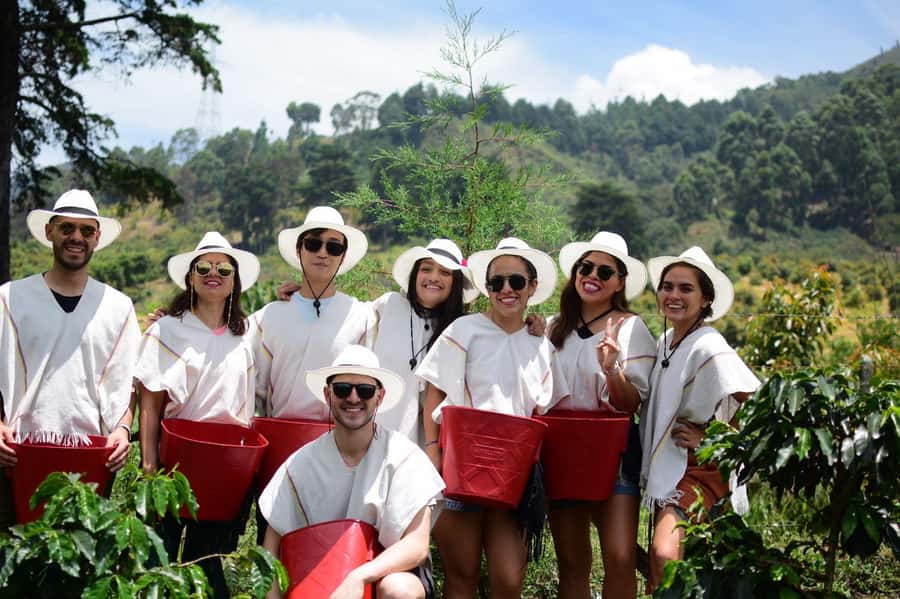
The group sizes are often small, sometimes only a few people. That matters here. You can ask questions during the ride and the walking tour without shouting across a crowd. Guides such as Melissa, Carolina, David, Arturo, Valentina, Christian, Camilo, and Felipe have been praised for clear English or Spanish explanations, patient translation, and a friendly style.
More Coffee Farm Tours in Colombia
- Coffee Tour at the Finca del Café
★ 5.0 · 213 reviews - Salento: Private Cocora Valley, Salento & Coffee Farm Tour
★ 4.9 · 202 reviews - Medellin: Horseback Riding Coffee Farm Tour with Coffee Spa
★ 4.8 · 151 reviews
Walking through Comuna 8 and Barrio La Sierra
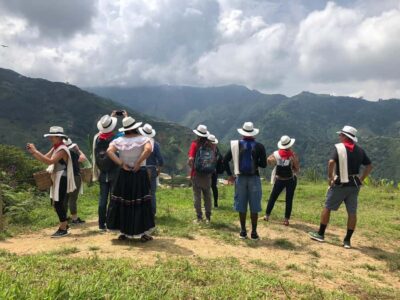
Once you arrive, the tour becomes a walking visit through Barrio La Sierra. This is not a polished tourist district, and that is part of its value. You walk through a real community on the way to the farm, seeing the neighborhood as a place where people live, work, and build new opportunities.
Your guide explains the story of Comuna 8 and the changes that have taken place there. The community’s past includes serious hardship, while the present includes local projects and families trying to create a stronger future. The coffee farm is connected to that effort, so the visit feels like more than a standard tasting stop.
I would listen closely during this section. The coffee is the hook, but the neighborhood gives the tour its purpose. Guides often add local context, explain what you are seeing, and help translate conversations with the family at the farm.
The route is uphill and includes steps. One detailed account described about 500 stairs, and several people specifically warned about the amount of walking. You do not need to be an athlete, but you should be comfortable walking on steep streets and climbing repeatedly for several hours.
Casa Finca de La Sierra and the family behind the coffee
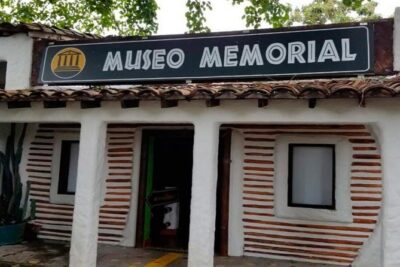
At Casa Finca de La Sierra, you visit the farm and museum and meet the family involved in the coffee project. The setting helps explain how coffee can be grown surprisingly close to a major city.
The family shares its own connection to coffee, including how the farm began and how the work has developed. Rosa and her family have been singled out for their warm welcome and for explaining the family story. The visit has a personal feel because the people producing the coffee are present to show you their methods and answer questions.
This is also where the tour’s community angle becomes easier to understand. The coffee project involves local families, and some younger members help with the visit and learn about the work. Supporting the tour helps direct attention and income toward a local family and a community effort rather than only toward a large commercial attraction.
You receive a welcome drink and local snack during the experience, and coffee is served more than once. Do not treat this as a full meal, though. Food for purchase is not available along the tour route, so eat beforehand and bring anything you may need.
Picking coffee berries in the field
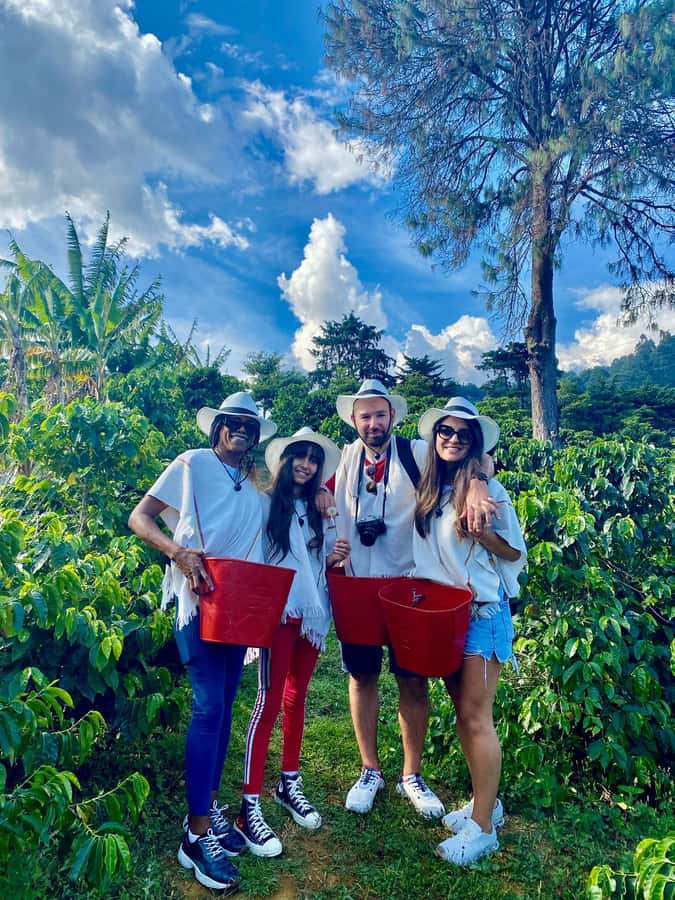
The hands-on harvest is the part I would most want to explain before you book. You walk into the coffee fields and pick the fruit yourself. The fruit is commonly called a coffee cherry or berry, and it does not look like the roasted beans you see in a café.
This simple task changes how you understand coffee. Picking is repetitive, careful work, and the fruit must be handled at the right stage. After a few minutes in the field, a cup of coffee feels less like an automatic daily habit and more like the final result of a long chain of labor.
You may also get a little friendly competition going over who can pick the most. The mood is informal, and the small group setting gives you time to ask questions rather than being rushed through a photo stop.
Wear closed shoes. The ground and paths can be uneven, and the tour includes farm walking as well as steep neighborhood streets. If you wear shorts, insect repellent is a sensible extra, especially once you reach the growing area.
Same fields, a different sort of day out:
- From Bogotá: Coffee Farm and Tequendama Falls Tour
★ 4.5 · 130 reviews - Coffee Tour at Finca El Ocaso Salento: Traditional Spanish Farm
★ 4.8 · 89 reviews - Coffee Tour Salento-Ocaso Farm- English Tour
★ 4.6 · 88 reviews - Coffee Farm Experience Private Day Tour
★ 5.0 · 81 reviews
From berry to cup, with plenty of tasting
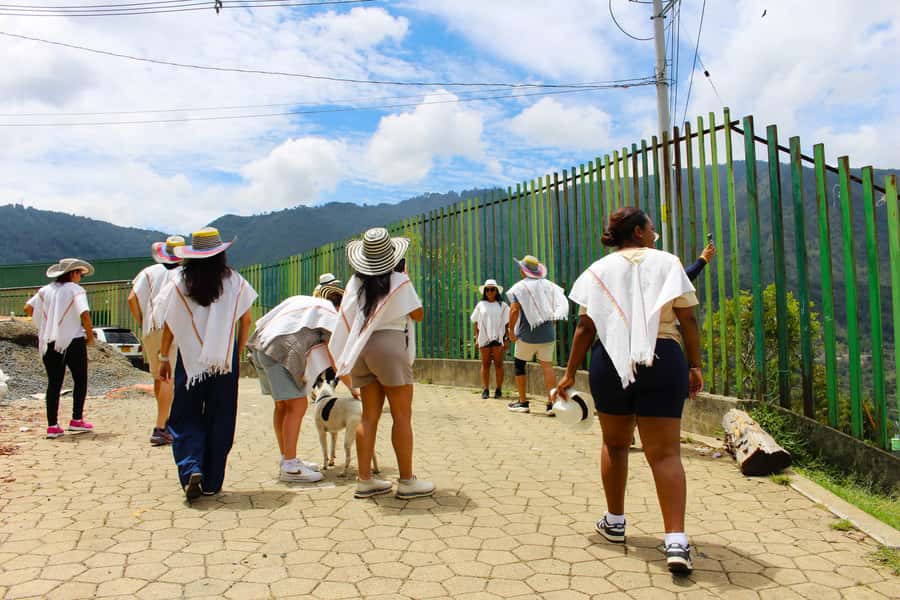
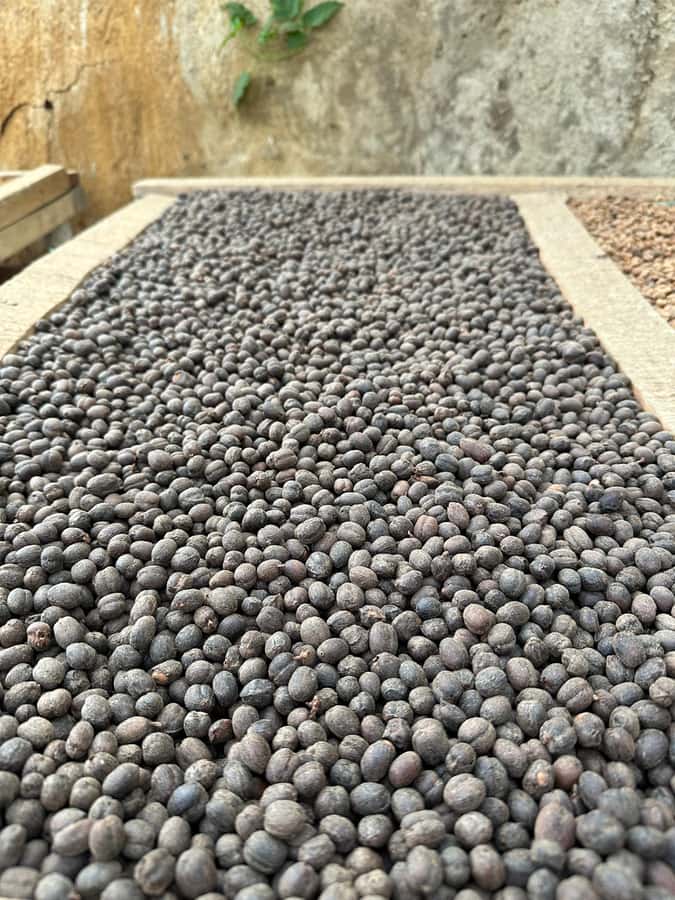
After harvesting, you learn the production process step by step. The exact amount of each demonstration can vary, but the experience covers the key stages from the crop to the drink: cleaning, fermenting, drying, roasting, grinding, and brewing.
That sequence is the tour’s strongest teaching point. You can see that coffee production is not simply a matter of roasting a dried seed. Every stage changes the final taste, and much of the work is done by hand.
The family prepares coffee for you to taste, including coffee connected to the harvest and farm. Several guides have made the coffee process easy to follow through translation and clear explanations. English and Spanish are available, and a strong guide is especially useful when the family is speaking Spanish and you want to catch the details.
This is not presented as a formal comparative tasting with several coffees lined up side by side. If you want a detailed lesson in regional varieties, processing methods, or professional cupping, you may find a specialist coffee lab more focused. Here, the goal is broader: connect the drink to the people, place, and labor behind it.
The coffee itself receives heavy praise, and you can buy coffee to take home, although coffee bags are not included in the $56 price. That purchase is optional, with no reported pressure to spend more.
What the four-and-a-half-hour schedule feels like
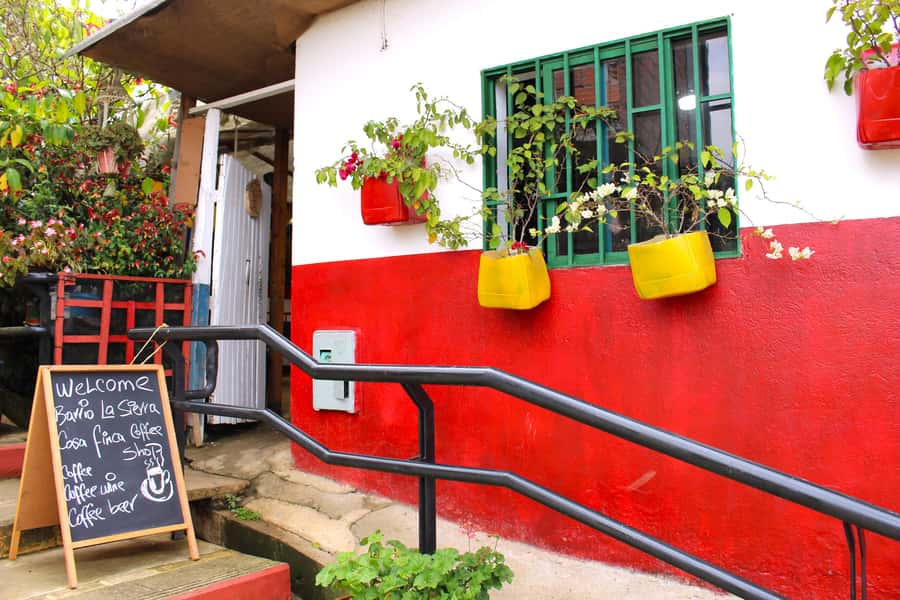
The full experience lasts about 270 minutes, or four and a half hours. The time is divided among the trolley, cable car, community walk, farm visit, harvesting, coffee education, and tasting.
The first hour at the coffee project includes a visit, guided walking, local snacks, refreshments, scenic views, and tasting. Another hour and a half is set aside for the farm and community walk. The final hour focuses on coffee and tasting before you return to San Antonio station.
That sounds neatly arranged on paper, but the real pace depends on the group and the walking conditions. Small groups can ask more questions and spend longer in the fields. Rain may slow the route, though one account found the experience worthwhile even in wet weather.
You return to the original meeting point at San Antonio station. There is no separate hotel pickup listed, so plan your way to the station and give yourself a few extra minutes to find the street-level entrance.
Is $56 a fair price?
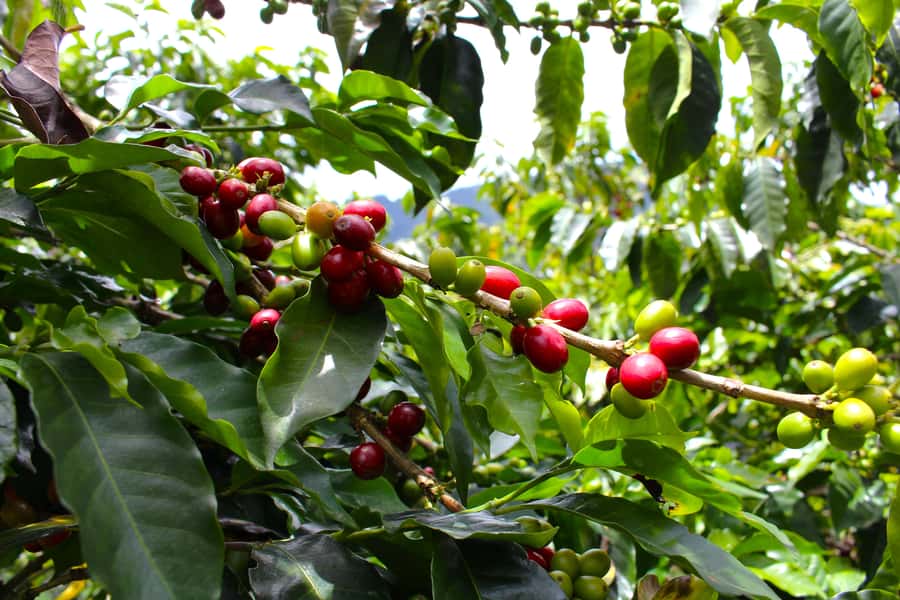
At $56 per person, this is not the cheapest coffee stop in Medellín. You are paying for a half-day experience that combines public transit, a local guide, translation when needed, community interpretation, farm access, harvesting, museum time, and multiple tastings.
I consider the price reasonable if you value personal contact and hands-on learning. A standard café visit might cost far less, but it would not include the cable-car views, the walk through Comuna 8, or the chance to pick the fruit yourself.
The value is also tied to the local connection. The experience supports a family and a community project, which gives your spending a clearer purpose than a generic tasting arranged solely for tourists. That does not mean you should ignore the physical demands or expect a luxury food tour. This is a working neighborhood and family farm visit, not a polished resort attraction.
Coffee bags are extra. Food for sale is not available during the route, so the $56 should not be treated as covering lunch.
Who will enjoy this, and who should skip it?
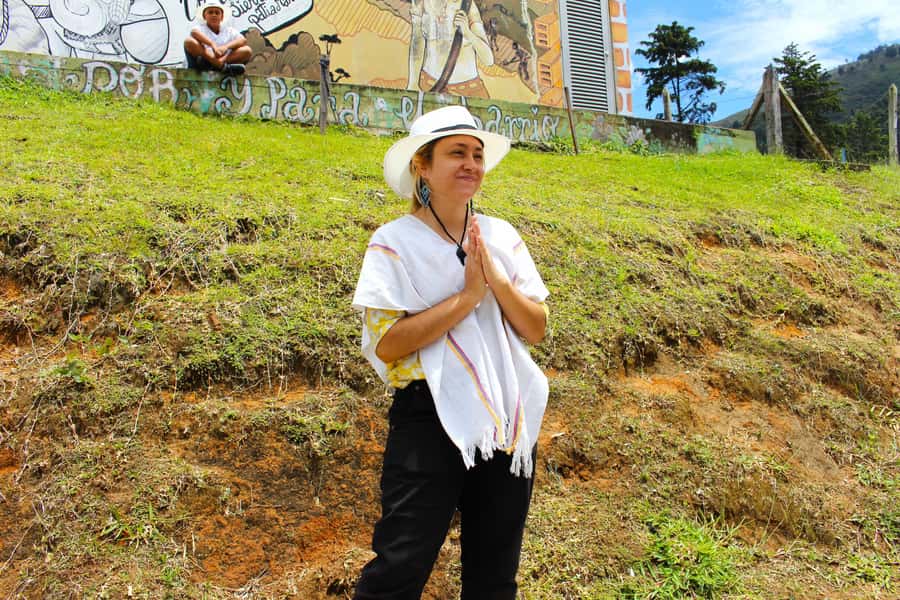
I would choose this tour if you want to connect coffee with Medellín’s people and neighborhoods rather than simply visit a plantation outside the city. It suits curious coffee drinkers, photographers, public-transit fans, and anyone who wants a more local experience.
You do not need to be a serious coffee expert. One person who did not even drink much coffee still appreciated the community story and the farm work. The tour also works well for people who enjoy asking questions and meeting a family directly.
You should think twice if you need flat paths, frequent seated breaks, or easy access. The route includes uphill walking and many steps, and the activity is specifically not suitable for people with mobility impairments.
Closed shoes are important. Comfortable clothing is more useful than stylish clothing, and repellent is worth carrying if you plan to wear shorts. Since the tour lasts most of an afternoon, eat before you meet the guide.
Practical booking details that matter
English and Spanish guides are available. The guide names have included Melissa, Melisa, Carolina, Valentina, Arturo, David, Emily, Christian, Camilo, Felipe, Anna, and Annie. The quality of the experience depends partly on how well the guide handles translation and explains the neighborhood, so a patient bilingual guide adds real value.
You must provide your full name and passport number when booking, but you should not bring your passport on the tour. Bring only what you need for the walk, transport, and farm visit.
The activity allows free cancellation up to 24 hours before departure for a full refund. You can also reserve now and pay later, which helps if your Medellín schedule is still shifting. Starting times vary, so check availability for your chosen date.
The overall rating is 4.9 from 277 ratings, and the repeated praise centers on the same things: warm family hospitality, guides who explain and translate well, the chance to harvest coffee, and the meaning behind the Comuna 8 visit. Those are the parts I would use to judge the tour, not the promise of a fancy tasting room.
Should you book the Barrio La Sierra coffee tour?
Yes, if you want a hands-on coffee lesson tied to local life. The cable car ride gives you city views, but the real payoff comes after you leave the transport: walking through La Sierra, meeting the family, picking berries, and seeing how much work leads to one cup.
Book it with realistic expectations. You will climb, sweat, and walk through a working community. You will not get a full meal or a formal multi-coffee tasting. If those tradeoffs sound fine, $56 buys a rare combination of coffee education, public transit, neighborhood history, and direct support for a local family.
FAQ
Where does the Medellín coffee farm tour begin?
The guide meets you in front of the main entrance to the San Antonio Tranvia station, at street level beneath the San Antonio Metro station.
How long does the tour last?
The tour lasts 270 minutes, or about four and a half hours.
What transport is included?
The experience includes an electric trolley ride of about 30 minutes and a cable car ride of about 12 minutes. The cable car is specifically included in the activity details.
What languages are available?
Live guides are available in English and Spanish.
Will I pick coffee myself?
Yes. You walk through the farm and harvest coffee berries by hand.
What stages of coffee production will I learn about?
You learn about the process from seed to cup, including cleaning, fermenting, drying, roasting, grinding, and brewing.
Will I taste coffee?
Yes. Welcome refreshments and several coffee tastings are part of the experience.
Are coffee bags included?
No. Coffee bags are not included, though coffee may be available to purchase at the farm.
Do I need to bring my passport?
No. You must provide your full name and passport number, but you should not bring your passport with you.
Is the tour suitable for people with mobility impairments?
No. The route includes substantial uphill walking and many steps, and the activity is not suitable for people with mobility impairments.
Just added around Colombia
- Cocora Valley Tour and Coffee Farms★ 4.5 · 40 reviews
- Coffee Farm and Salento Walking Tour★ 5.0 · 47 reviews
- Salento and Cócora Tour plus Coffee Farm from Pereira or Armenia★ 5.0 · 40 reviews
- Tour to the Hacienda Nápoles Theme Park★ 4.0 · 22 reviews
- Exclusive Coffee Experience:Tour from Bogotá★ 4.5 · 45 reviews
- Tour Guatapé con visita a Granja de las Llamas y las Alpacas★ 3.5 · 11 reviews
- Medellín: Flower Farm & Silletero History Tour★ 4.3 · 23 reviews
- Salento: Coffee Farm Tour with Tasting★ 4.9 · 41 reviews
Medellin Farm Tours, compared.
Horseback Riding Coffee Farm Tour with Coffee Spa
Read our review →
Comuna 13 & Coffee Farm Private Tour in Medellin | The Best Combo
Read our review →
Coffee Farm & ATVs Private Tour in Medellin: Stunning Views & Fun
Read our review →

Guatapé Tour by Chiva + Visit to Pablo Escobar’s Hacienda
Read our review →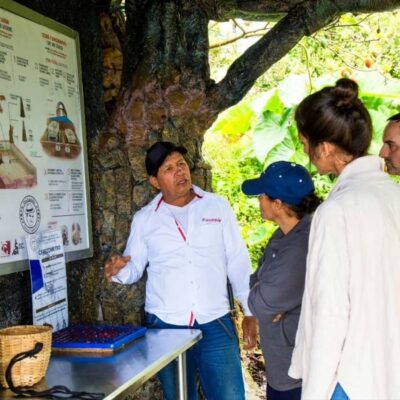
Browse the lists this tour appears in