
Review · INDONESIA
Yogyakarta: Selogriyo Temple Tour & Java Rice Terrace Trek
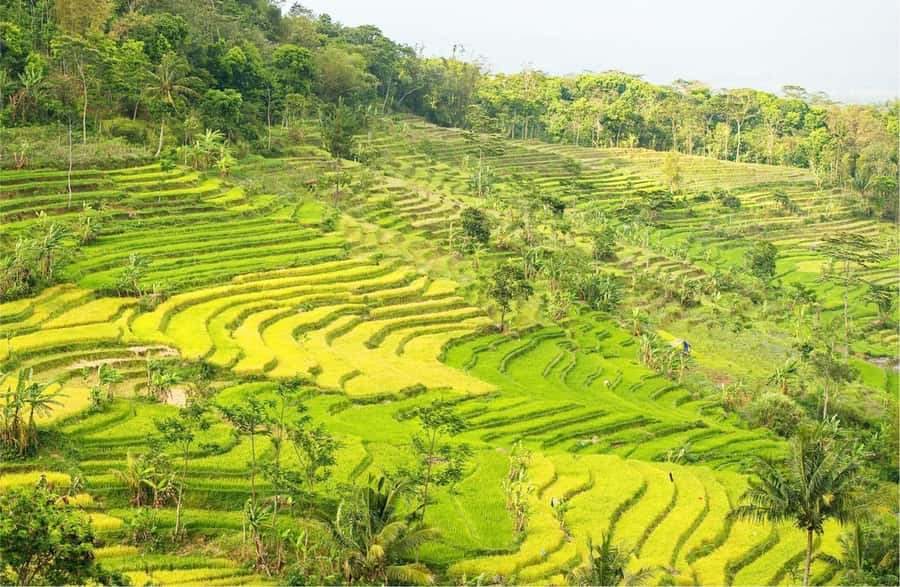
Selogriyo Temple is the reward at the end of a beautiful walk, but the walk itself is the real event. You follow hillside paths through working rice terraces, pass crops and village farms, and climb toward a small Hindu shrine with very few other visitors around. I especially like the quiet setting and the chance to see how Java’s farmers use the land, not just photograph it. Guides such as Yuni, Haidar, and Atok add useful stories about plants, farming, and daily life.
I also like the simple logistics: pickup at your Yogyakarta or Borobudur accommodation, entrance fees included, and a six-hour schedule that leaves room for a relaxed pace. The tradeoff is the journey, about two hours from Yogyakarta city or one hour from Borobudur, followed by moderate walking that can feel like a proper hill hike in heat or rain.
Key points at a glance
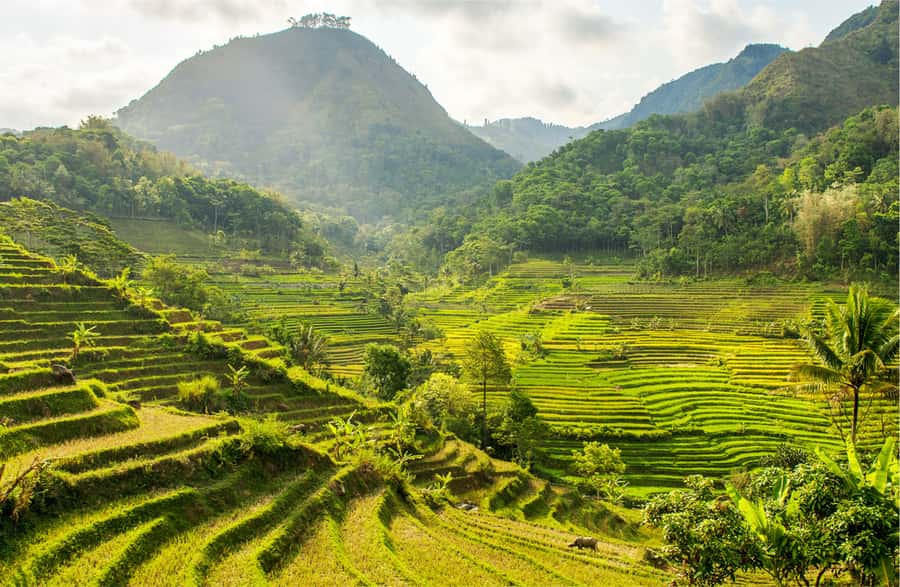
- Rice terraces before the temple: The route passes fields growing rice, beans, corn, tobacco, ginger, papaya, coffee, and other crops.
- A quiet hilltop shrine: Selogriyo is small, peaceful, and far less visited than Java’s major temple sites.
- Guides who add real context: Yuni, Haidar, Atok, Aulion, Arief, and others are praised for explaining farming, plants, culture, and local stories.
- A flexible walk: You may follow an easier route or take a more adventurous path through the terraces, depending on conditions and your guide.
- Useful door-to-door transport: Hotel pickup, return transport, parking, entrance, and donation fees are included.
- Plan for mud and sun: Comfortable shoes, sunscreen, comfortable clothes, and some cash are sensible choices.
Why Selogriyo feels different from Yogyakarta’s major temples
Yogyakarta is famous for Borobudur and Prambanan, and those sites deserve their place on a Java itinerary. Selogriyo offers something else. It is not a grand monument spread across a large complex. It is a small Hindu temple set high in a quiet rural area, reached by walking through the countryside.
That difference matters. At a major temple, you focus on carved stone, formal paths, and crowds. Here, the approach gives you time to notice the farming system, hillside vegetation, and small signs of village life. The temple feels connected to its setting rather than separated from it.
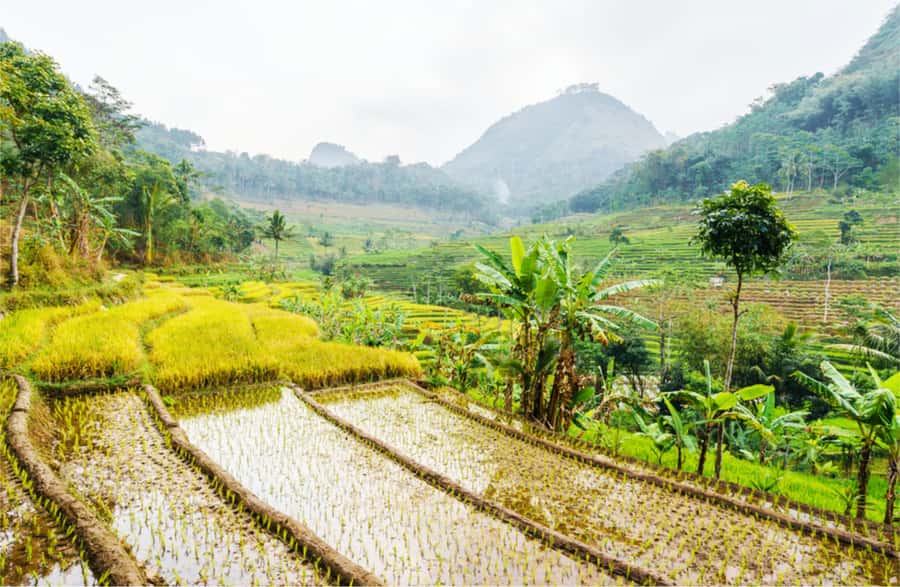
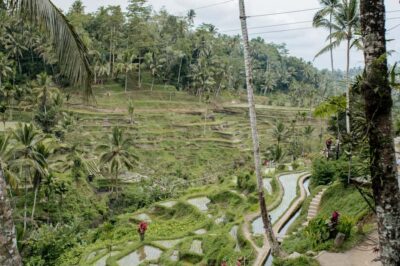
The setting is also the main reason to book this trip. The fields rise across the slopes, and the route gives you broad views of Java’s green hills. On a clear day, you may see far across the countryside. In the rainy season, cloud and mist can limit the views, but the walk can still feel calm and atmospheric.
This is a good choice if you want a quieter day between bigger sightseeing stops. It is also a useful match for anyone curious about how food is grown in Java. The experience is not just a temple visit with a short walk attached. The farming is part of the story.
More Rice Terrace Tours in Indonesia
- Ubud: Monkey Forest, Jungle Swing, Rice Terrace, and Water Temple
★ 5.0 · 7,160 reviews - Ubud: Waterfalls, Water Temple & Rice Terraces Private Tour
★ 5.0 · 5,484 reviews - Ubud: Waterfall, Rice Terraces & Monkey Forest Private Tour
★ 4.9 · 4,894 reviews
The two-hour ride from Yogyakarta
Pickup is included from your accommodation in Yogyakarta. From the city, allow about two hours each way for the drive to Selogriyo. If you are staying around Borobudur, the journey is shorter, at roughly one hour.
That travel time is worth considering before you book. Six hours is the stated duration, so the drive takes a meaningful part of the day. The upside is that you do not need to arrange a separate driver, work out rural directions, or negotiate transport at the temple. Your driver takes care of the route, parking, and return trip.
The ride can also become part of the cultural side of the outing. Guides and drivers such as Yuni, Haidar, and Atok are often praised for chatting about Java, local customs, politics, food, and personal experiences. If you prefer to rest, you can simply enjoy the car ride. One guide even allowed a tired solo participant to sleep on the way out.
The activity is advertised as a small group of no more than 15 people. In quieter periods, it may operate as a private outing or with only a few participants. That gives you more room to ask questions and set the walking pace, although you should not assume a private tour every time.
Walking through Java’s working rice terraces
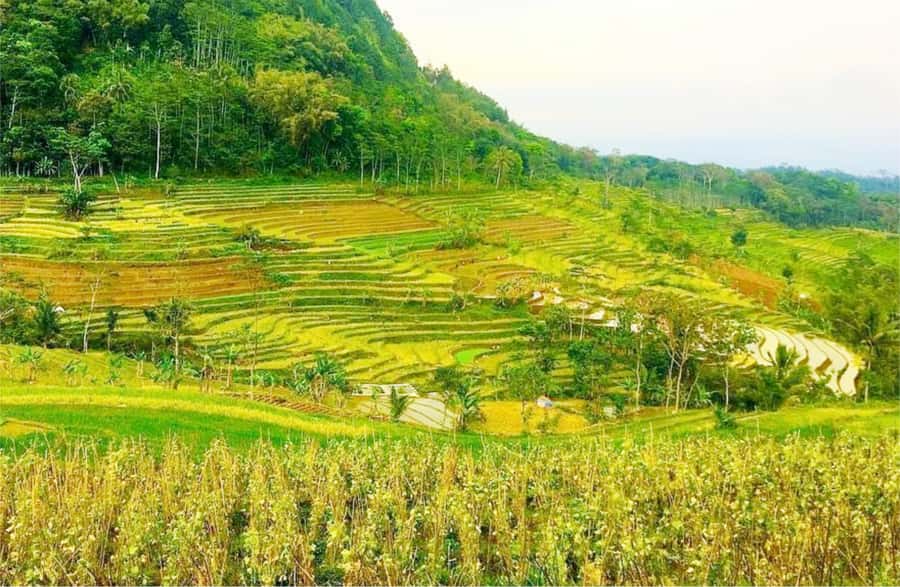
The trek starts near the rural area below the temple. From there, you walk uphill through terraces and farm paths. The route is scenic, but it is also a working agricultural area, not a landscaped park.
Depending on the season, you may see rice at different stages of growth. Guides have pointed out the process from planting through harvest, along with crops such as beans, corn, tobacco, ginger, papaya, coconut, and coffee. The variety helps you understand that these slopes support more than one crop and that farming changes with the season.
This is where a good guide makes a real difference. Yuni has been especially appreciated for identifying plants and sharing stories from growing up in the area. Haidar has explained village life, farming methods, and local customs. Atok has been praised for spotting unusual plants and making the walk both informative and lighthearted.
You are not simply walking past green fields. You can ask how the terraces are used, what farmers grow during drier months, and how local people work the slopes. Some guides also point out small animals and wild plants along the way. The information is practical and tied to what you can see under your feet.
The route is described as moderate, but the effort will depend on weather, fitness, and which path your guide chooses. One participant found the walk very easy, while another described the climb as a proper hike. That is a fair warning. You do not need technical hiking skills, but comfortable shoes and a willingness to walk uphill are important.
Mud is possible, especially during the rainy season. Wear shoes that can handle wet or uneven ground, and do not choose this excursion in delicate sandals simply because the distance sounds manageable.
Reaching the small Hindu temple
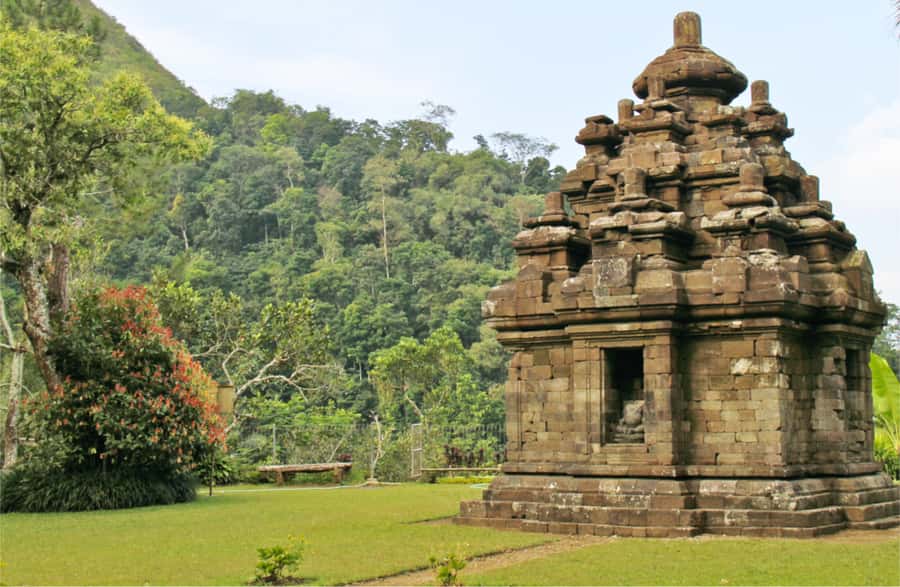
Selogriyo Temple, also called Candi Selogriyo, sits at the end of the uphill approach. It is a compact Hindu site rather than a vast complex, so you may spend less time examining buildings than you would at Borobudur or Prambanan.
Its strength is the setting. The temple sits in a secluded hilltop environment, surrounded by gardens, trees, and views over the volcanic countryside. The quiet gives you time to look closely at its structure and Hindu sculptures without being hurried through a crowd.
Your guide explains the temple’s distinctive design and offers context about its religious and historical role. The exact amount of detail depends on your guide, but the best part is the connection between the stone shrine and the surrounding community. The temple is not presented as an isolated object. It is part of a rural area where people still farm, walk, and live nearby.
The small scale may disappoint you if you expect another Borobudur. I would not book this trip for monumental architecture alone. Book it for the combination of a peaceful shrine, a scenic climb, and a close look at rural Java.
Photography is another strong point. The temple, terraces, paths, and hillside views offer plenty of subjects, and several guides are happy to take photos for you. Yuni and Arief have been singled out for their photography skills. Still, bring your own phone or camera, and leave enough time to enjoy the view without turning the entire walk into a photo stop.
Same fields, a different sort of day out:
- Ubud: Full-Day Rice Terrace, Monkey Forest & Waterfall
★ 5.0 · 2,634 reviews - Full-Day Tour to Water Temples and UNESCO Rice Terraces in Bali
★ 5.0 · 2,539 reviews - Ubud: Balinese Cooking Class at an Organic Farm
★ 5.0 · 1,786 reviews - Ubud: Monkey Forest, Ceking Rice Terraces and More– Full Day
★ 4.7 · 917 reviews
Meeting local people without a staged village show
One of the most appealing parts of this tour is the contact with local life. You may see farmers working in the fields and meet residents along the route. The setting feels lived in, rather than built for sightseeing.
That does not mean every departure will produce a long conversation with local families. The experience depends on the day, the farming season, and who is out working. But your guide can explain what you are seeing and help you understand the area without turning the visit into a performance.
Guides have shared stories about childhood games, local food, farming routines, and village customs. Some have introduced visitors to local snacks or helped them try cassava prepared in different ways. These small moments can be more memorable than another formal monument explanation.
Be polite around farms and homes. Stay on the route your guide uses, ask before photographing people, and remember that the terraces are someone’s workplace. The value of the trip comes partly from seeing ordinary life, so it deserves a light touch.
The possible coffee and tea stop
Several departures have included a stop at a small local coffee place on the way back. This is not listed as a core included feature in the activity details, so treat it as a possible extra rather than a guarantee.
When it happens, the stop adds a pleasant finish to the walk. You might try local coffee, ginger tea, redwood tea, lemongrass tea, or blue pea tea, sometimes with fried cassava. One guide arranged for a visitor to learn how to pour coffee, while another brought local food for the ride.
Some people may recognize the coffee stop as a civet coffee experience. If that interests you, ask your guide what is being served and how it is produced before ordering. The main value of the stop is the chance to sit in a rural setting and cool down after the climb, not simply the drink itself.
Because the stop can vary, do not book this trip mainly for a tasting. The rice terraces and temple are the dependable parts of the experience.
Is $55 a fair price?
At $55 per person, this is not the cheapest way to see countryside near Yogyakarta. You are paying for more than admission to a small temple. The price includes hotel pickup and drop-off, a driver, an English-speaking guide, parking, entrance, and a donation fee.
The transport is especially useful. Selogriyo is remote, and arranging a private car for a long rural drive can cost a substantial amount on its own. You also receive guidance on the walking route and local context that you would miss by arriving independently.
The value improves if you are traveling alone or as a couple and want a dependable half-day outing without organizing each part yourself. It can also be good value for a small group, since the transport and guiding are already bundled.
The value is weaker if you only want to see a large temple or dislike long car rides. In that case, Borobudur or Prambanan may be a better use of your day. Selogriyo rewards curiosity about rural life and a willingness to walk.
The activity has a perfect overall rating from 175 reviews, and transport received a perfect score from 97 percent of participants. Those figures suggest consistent satisfaction, but they do not change the basic facts: the temple is small, the drive is long from Yogyakarta, and the walk is not fully flat.
Who should book this six-hour outing?
I would recommend it to you if you want:
- A quiet alternative to Java’s busiest temple sites
- Rice terraces that are still part of everyday farming
- A guide-led walk with plenty of local explanation
- Scenic views and rural photography
- A flexible pace in a small group
- A day outside Yogyakarta without arranging transport yourself
It suits solo visitors particularly well because pickup and guiding remove much of the effort of reaching a remote site. It is also a good option for couples and families who can manage moderate walking. Guides have adapted the route for different preferences, including easier paths and more adventurous walks.
I would think twice if you have difficulty with uphill walking, strongly dislike muddy paths, or have only a short time in Java. The activity involves a lot of time in the car, especially from Yogyakarta city. You should also expect weather to affect the views. A rainy day can make the trail slippery and hide the distant hills.
Bring comfortable shoes, sunscreen, comfortable clothes, and cash. The official information specifically recommends these items. A small bag, water, and protection for your phone would also be sensible, although the listed essentials are the ones you should prioritize.
Guide quality matters here
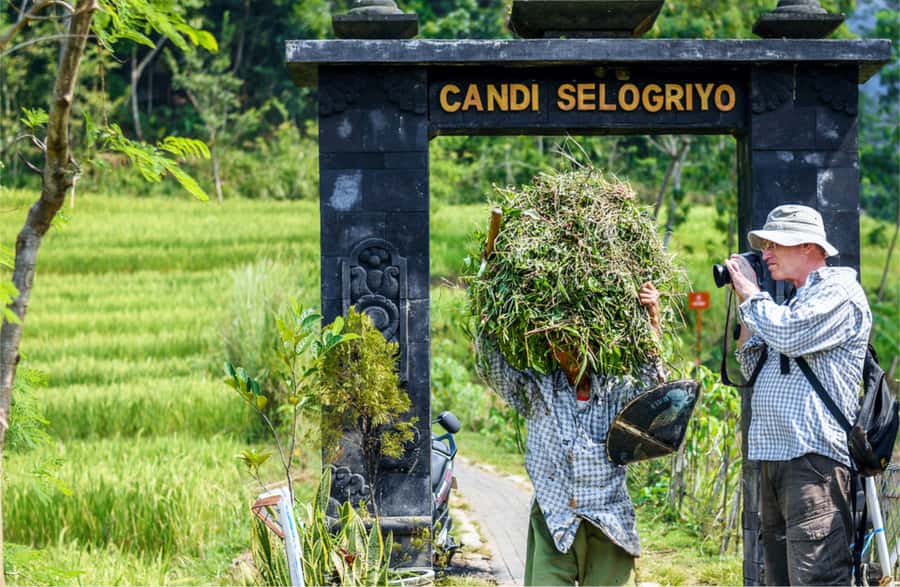
The scenery carries the tour, but the guide shapes how much you understand. This is not a place where you simply follow a marked path, take a few pictures, and leave. The agricultural details can be easy to miss without someone explaining them.
Yuni has been praised for his English, plant knowledge, local stories, careful driving, and photography. Haidar has been valued for his calm company and explanations of farming, religion, culture, and village life. Atok is known for warmth, humor, plant spotting, and adapting the route. Aulion has been appreciated for strong English, food knowledge, and a friendly approach.
Other guides named during the experience include Arief, Kin, Febrian, Thomas, Nasir, Ipung, and Arian. Guide assignment can vary, so you may not receive a particular person. If a named guide is important to you, ask when booking, but do not treat a request as a guarantee.
The best guides do not rush the climb. They stop to answer questions, point out crops, adjust to your interests, and give you time for photos. That is worth remembering when comparing this with a basic driver-only transfer.
Should you book the Selogriyo Temple trek?
Book it if you want a peaceful, nature-focused day that connects a small Hindu temple with real farming life. The quiet terraces, local stories, and low visitor numbers make this more personal than a standard temple transfer.
Skip it if your priority is grand architecture, a short drive, or a completely easy stroll. Selogriyo is modest in size, and the route from Yogyakarta takes time. But if you can accept the long ride and moderate climb, $55 is a fair package for transport, entrance, guiding, and a rare chance to see Java away from its major sights.
FAQ
How long does the Selogriyo Temple tour last?
The activity lasts six hours, including pickup and return transport. The drive takes about two hours each way from Yogyakarta city and about one hour from the Borobudur area.
Is hotel pickup included?
Yes. Roundtrip pickup and drop-off from your accommodation are included. Pickup is available from accommodations in Yogyakarta, with the activity information also giving a shorter travel time from the Borobudur area.
How difficult is the walk?
The walk involves a moderate amount of walking through rice terraces and uphill paths. Some people find it easy, while others describe it as a proper hike. Comfortable shoes are recommended.
What crops might I see?
The terraces may grow rice, beans, corn, tobacco, ginger, papaya, coffee, coconut, and other plants. The exact crops depend on the season.
Is the tour suitable for a small group?
Yes. The group is limited to 15 participants. During quieter periods, the outing may operate with only a few people or as a private tour.
What is included in the $55 price?
The price includes hotel pickup and drop-off, the entrance fee, an English-speaking guide, parking, and a donation fee. Bring cash for any optional purchases, such as drinks or local food.
More Walking and Hiking Trips in Indonesia
- Selogriyo Temple and Trekking Java Rice Terraces, hidden waterfall -Nature Java
★ 5.0 · 179 reviews - Ubud: Rice Terrace, Holy Water Temple & Waterfalls Trek Tour
★ 4.9 · 115 reviews - Mount Batur Sunrise Trekking and Rice Terrace Adventure
★ 5.0 · 111 reviews - Sidemen rice terraces trek and local village walk
★ 5.0 · 41 reviews
Just added around Indonesia
- Ubud Rice terrace,Zip-line and waterfall★ 5.0 · 4 reviews
- Full Day Tour to Water Temples UNESCO Rice Terraces in Bali★ 5.0 · 4 reviews
- Explore Ubud Art Market, Monkey Forest and Rice Terraces★ 5.0 · 16 reviews
- Exploring Munduk Village (Waterfalls, rice terrace, Traditional local house)★ 4.5 · 2 reviews
- Ubud Monkey Forest Rice Terrace Temple Waterfall Private Tour★ 5.0 · 7 reviews
- Jatiluwih Spiritual Journey of Melukat with Rice Terrace View★ 5.0 · 9 reviews
- Private Tour to Sumampan Waterfall, Monkey forest, Rice terraces and Swing★ 5.0 · 30 reviews
- Discover Hidden Waterfall, Unesco Rice Terraces and Mountain Temple★ 5.0 · 17 reviews
Indonesia Farm Tours, compared.
Monkey Forest, Jungle Swing, Rice Terrace, and Water Temple
Read our review →
Waterfalls, Water Temple & Rice Terraces Private Tour
Read our review →
Waterfall, Rice Terraces & Monkey Forest Private Tour
Read our review →
Full-Day Rice Terrace, Monkey Forest & Waterfall
Read our review →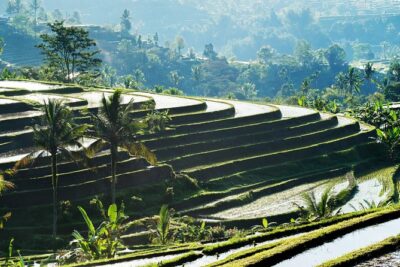
Full-Day Tour to Water Temples and UNESCO Rice Terraces in Bali
Read our review →
Monkey Forest, Ceking Rice Terraces and More– Full Day
Read our review →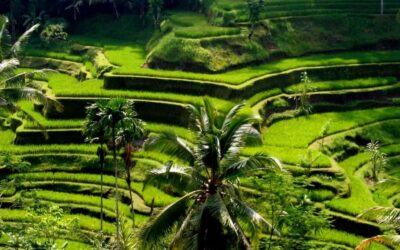
Browse the lists this tour appears in