
Review · USA
Big Island Hawaii: Craft Chocolate Tasting and Farm Tour
The best part of this Big Island experience is that it treats chocolate as an agricultural product, not just a sweet snack. At Honolii Orchards, you follow cacao from tree to fermented bean, then taste how soil, climate, and genetics change the finished bar.
I like the small-farm setting and the striking views from the tasting room. I also like that the tasting goes beyond chocolate bars, with fresh cacao juice, roasted beans, cacao tea, chocolate-covered macadamias, and seasonal fruit. The main drawback is the remote-feeling final approach. Even though the farm is only about five minutes from Hilo, the last 1.7 miles can confuse drivers, and ride-hailing pickup may be slow.
Key points at a glance
- Taste at least 10 Hawaiian single-origin bars: Compare cacao from farms across the Hawaiian Islands and learn to notice differences in flavor.
- Walk a working cacao orchard: See the trees, pods, and growing conditions before tasting the finished product.
- Visit the fermentation room: Learn why post-harvest treatment can make or break fine chocolate.
- Meet guides Wren and Jude: Wren leads the farm and cacao lessons, while Jude helps host the tasting and serves the farm-made drinks and treats.
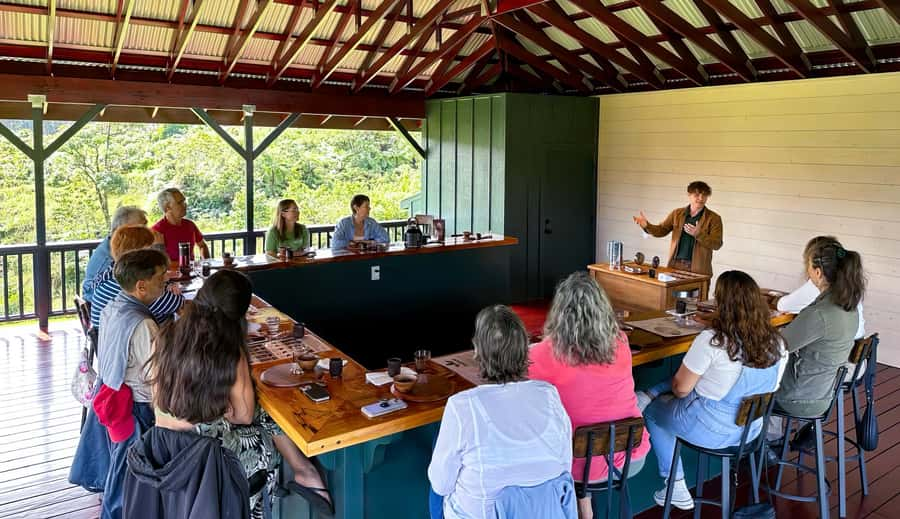
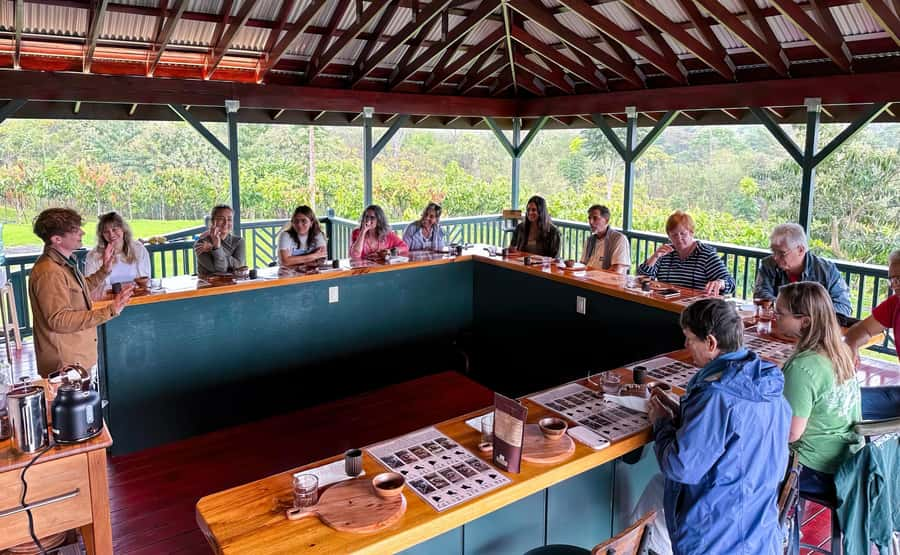
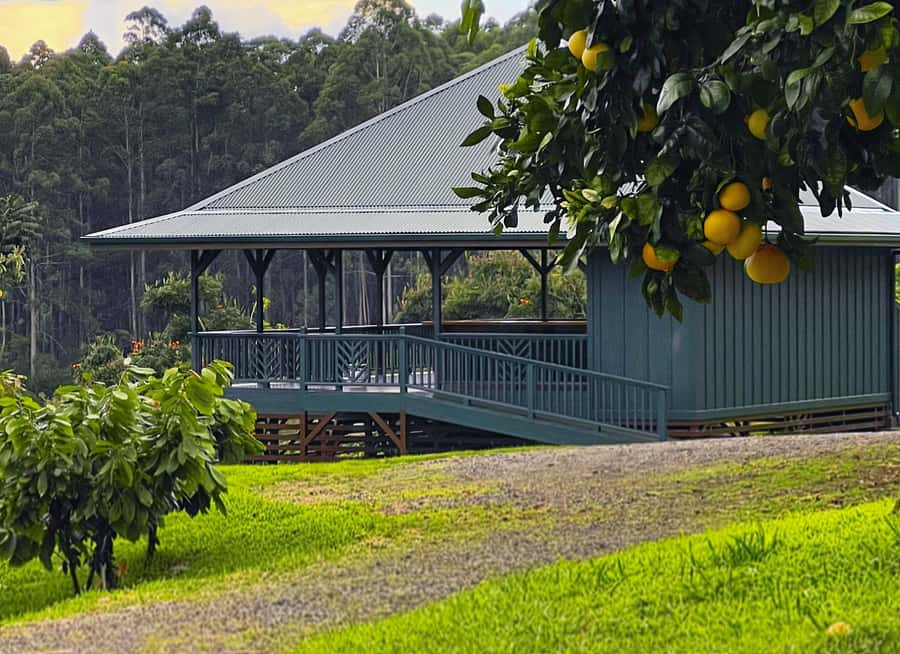
- Enjoy wide ocean and valley views: The tasting room sits above the orchard canopy, making the setting part of the experience.
- Plan around the location: Use the supplied Google Maps pin, ignore misleading private-road signs, and allow time to find your way back to Hilo.
A working cacao farm five minutes from Hilo
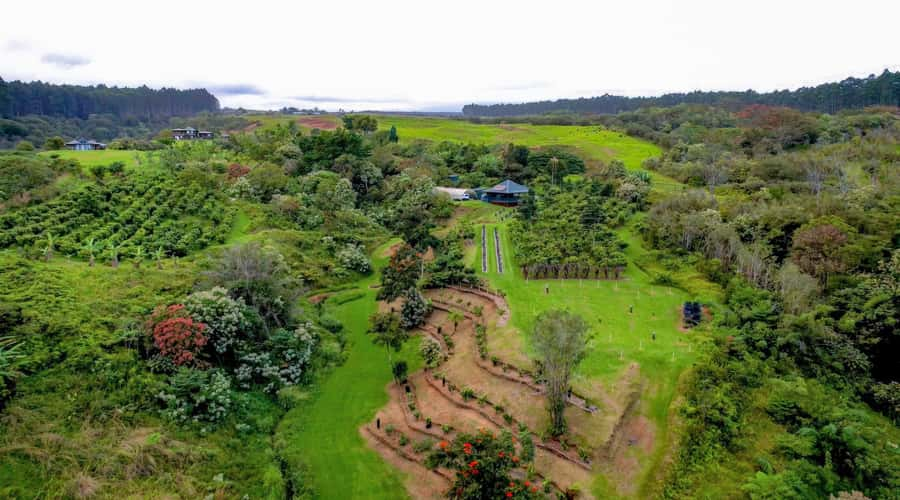
Honolii Orchards sits up Puia Road in Paukaa, just outside Hilo. The drive takes you away from the main highway and into an older agricultural area associated with breadfruit, sugarcane, macadamia, and cattle land.
That change of scenery matters. This is not a polished chocolate shop placed in a tourist district. You arrive at a family-owned farm where cacao is grown, processed, and used as the subject of the tour. The setting gives the lesson more meaning because you can see the plants and processing spaces instead of hearing only a general talk.
The meeting point is 1533 Puia Road. For the least hassle, use the exact Google Maps pin supplied with your booking. Turn from Mamalahoa Highway onto Kulana Street, pass through Paukaa Town, and turn onto Puia Road near the Paukaa Kingdom Hall of Jehovah’s Witnesses.
One useful warning: Puia Road is mislabeled as Woa Road in some directions. Follow Google Maps rather than the street name you may see along the way. After about 1.7 miles, look for the open green gate and large sign on the left.
A few more farm days around the USA worth a look
- Kauai Chocolate Farm Tasting Tour
★ 5.0 · 666 reviews - Award Winning Farm Tour: Coffee, Chocolate and Unique Gifts
★ 5.0 · 484 reviews - Craft Chocolate Tasting and Farm Experience on the Big Island
★ 5.0 · 95 reviews
The tasting room sets the tone
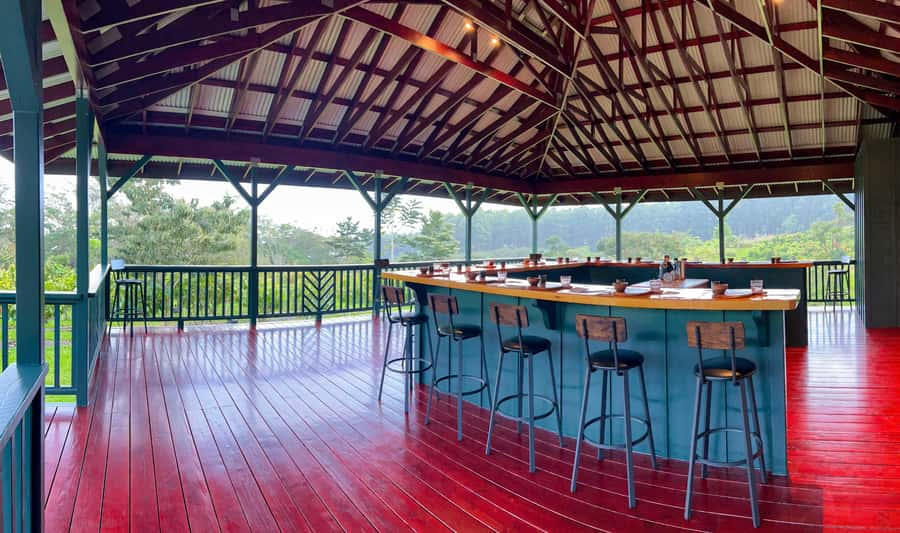
The tour begins in a tasting room above the orchard canopy. You get ocean and valley views, along with time for a relaxed introduction before heading outside.
That opening conversation is useful because the subject can become technical quickly. Cacao farming involves genetics, climate, pruning, harvest timing, fermentation, drying, roasting, and grinding. A calm start helps you understand how those pieces fit together before the walk begins.
The room is also where the experience finishes, so the tour has a pleasant rhythm: welcome, orchard, fermentation room, then a longer chocolate lesson and tasting. You are not rushed from one station to another.
The setting has one practical tradeoff. The activity lasts about 210 minutes, and much of it takes place on a farm rather than in an indoor museum. If standing or walking for extended periods is difficult, contact the operator before booking. Mobility concerns may affect how comfortably you can take part.
Walking among cacao trees
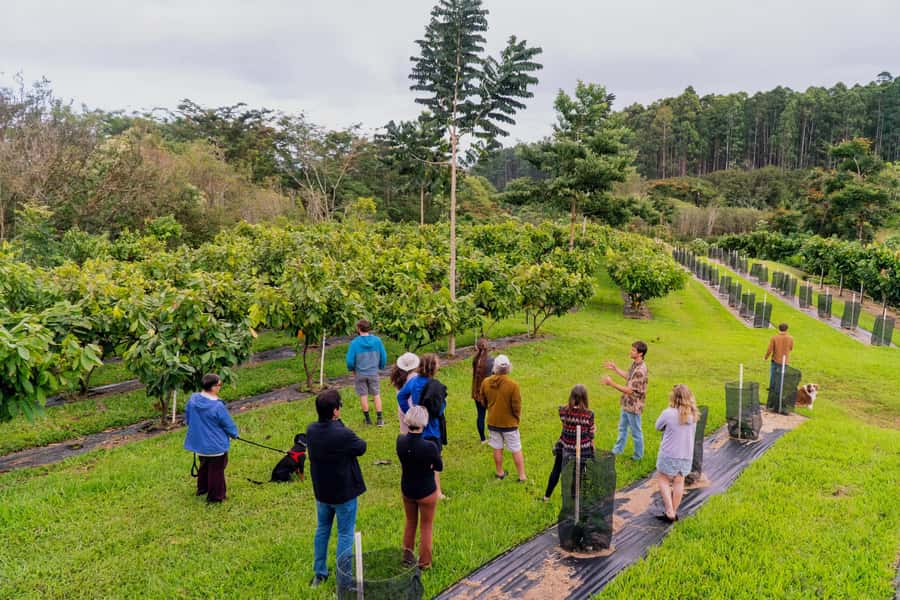
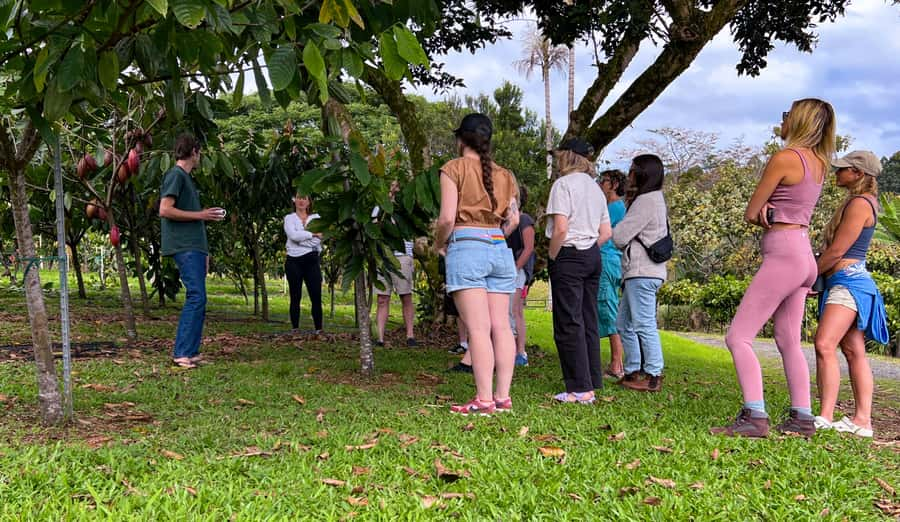
The orchard walk introduces you to the cacao tree and the early stages of chocolate production. You learn how cacao is cultivated, when its fruit is harvested, and how the beans inside each pod eventually become chocolate.
This is where the tour earns its price. A chocolate tasting alone can tell you what a bar tastes like. A farm walk helps explain why it tastes that way. The guide connects the plant to the finished product, so terms such as origin, fermentation, and terroir become practical rather than abstract.
The broader farming story adds another useful layer. The tour touches on the sugarcane industry that once shaped the Hamakua Coast. You get a sense of how one crop can influence roads, communities, land use, and the identity of an entire part of the island.
Guides Wren and Jude have different strengths. Wren is described as especially passionate about cacao agriculture and the science behind better growing and processing. His explanations cover the technical side without requiring you to already know chocolate vocabulary. Jude helps create an easygoing tasting-room atmosphere and serves the drinks and food with care.
You should feel free to ask questions during the orchard visit. The format is designed for curiosity, and the guides explain details in plain language when the science gets complex.
Why the fermentation room matters
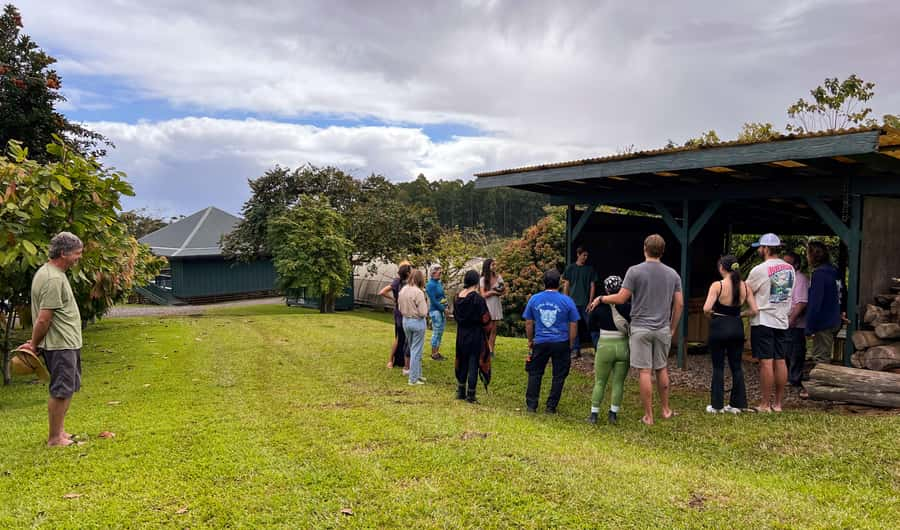
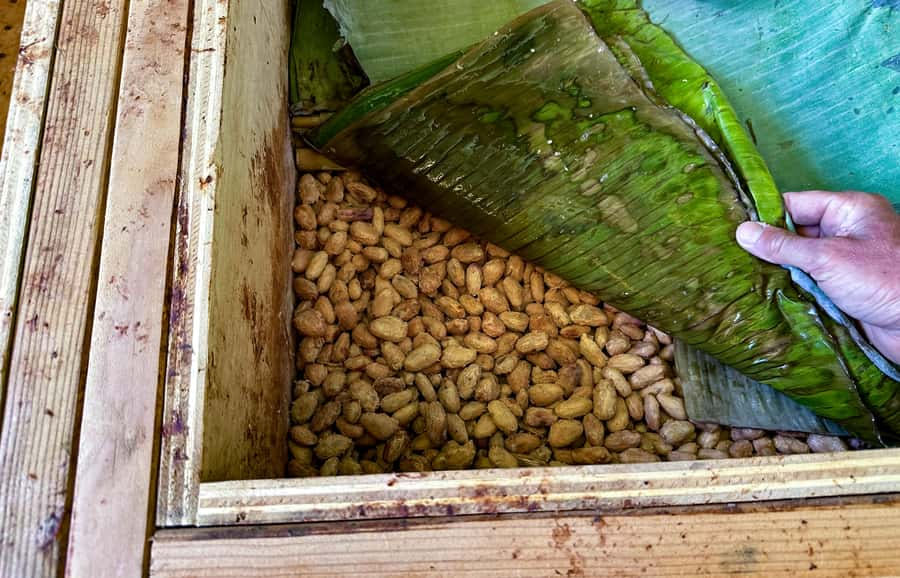
After the orchard, you visit the Honolii Orchards fermentation room. This may be the least familiar part of the tour, but it is one of the most important.
Cacao beans do not come from the tree tasting like a finished chocolate bar. After harvest, they go through post-harvest treatment, including fermentation. This stage changes the beans and helps create the flavors that later appear after roasting and grinding.
The tour explains the science behind that process and shows how careful handling affects quality. For anyone who has tasted chocolate and wondered why one bar tastes fruity, nutty, earthy, bitter, or pleasantly sharp, this section gives you useful answers.
It also helps you understand why craft chocolate costs more than a basic supermarket bar. Small producers may work with limited batches, careful fermentation, specific cacao origins, and more hands-on processing. You are paying for more than a sweet product. You are also paying for farm work, processing choices, and a flavor-focused approach.
Do not expect the fermentation room to be a flashy attraction. Its value comes from seeing a working step that most chocolate shops skip. The setting is practical, and the subject rewards attention.
More Food and Drink Trips in the USA:
- Lahaina: Maui Ku’ia Estate Guided Cacao Farm Tour and Tasting
★ 5.0 · 1,103 reviews - Lahaina: Maui Ku’ia Estate Guided Cacao Farm Tour & Tasting
★ 4.8 · 137 reviews - Charleston Farm-to-Table Food Tour and Chef’s Challenge
★ 5.0 · 110 reviews - Farm and Food Experience in Kilauea
★ 4.5 · 101 reviews
Chocolate history from Mesoamerica to Hawaii
Back in the tasting room, the discussion broadens to chocolate’s history, beginning with ancient Mesoamerica and continuing into modern craft production.
This section places Hawaiian cacao in a wider context. Chocolate has a long history before it becomes the familiar bar in your hotel room or grocery basket. Understanding those origins makes the modern craft movement easier to follow.
You also learn how craft chocolate differs from mass-produced chocolate. The distinction is not simply that one costs more. The guide explains how origin, cacao genetics, farming conditions, fermentation, roasting, ingredients, and production methods affect what you taste.
The discussion introduces terroir, the idea that place influences flavor. In cacao, that can include soil, rainfall, temperature, elevation, farm practices, and plant genetics. You do not need a trained palate to notice the difference. The tasting gives you a chance to compare bars side by side and form your own preferences.
That personal element is important. You are not told that one flavor is correct. You are encouraged to decide which styles you enjoy, from bright and fruity to darker, nuttier, or more robust examples.
Ten or more bars from across Hawaii
The centerpiece is a tasting of at least 10 single-origin craft chocolate bars sourced from farms across the Hawaiian Islands. Some participants have tasted 11 or even 15 types during their visit, so the exact number may vary.
This is not one large dessert serving. It is a comparative tasting. The point is to sample small amounts, pause, and notice how each bar differs. You may find that some suit your taste more than others. That is part of the value. The session helps you identify what you like instead of assuming that the most expensive or darkest bar is automatically best.
The tasting also gives you a better feel for Hawaii as a cacao-growing region. The islands have different growing conditions, and the bars show how those conditions can shape flavor. The guides connect the samples to their origins and explain what to look for.
You will want to pace yourself. Ten or more samples, plus the additional cacao products, can become a lot of flavor in one sitting. Pay attention to the order of the tasting and drink water if it is available, though the supplied information does not specify a formal palate-cleansing routine.
At the end, you can purchase the chocolates you tasted, along with chocolate tea and brewing chocolate. Those purchases are extra, but buying a favorite gives you a practical way to continue the comparison at home.
Cacao juice, roasted beans, and farm treats
The food portion is broader than a standard bar tasting. You sample fresh cacao juice, roasted cacao beans, cacao tea, chocolate-covered macadamias, seasonal fruit, and other farm-fresh treats.
Fresh cacao juice is especially useful for understanding the whole fruit. Most people encounter cacao only after the beans have been roasted and processed. Tasting the juice shows that the fruit has flavors beyond the chocolate profile you expect.
Roasted cacao beans offer another point of comparison. They are closer to the raw agricultural product than a finished bar, so you can think about how roasting and grinding transform texture and flavor.
The cacao tea and chocolate drink add a gentler finish. One participant particularly enjoyed the chocolate drink served during the tasting. Since seasonal items can change, you should treat the extra samples as part of the farm’s current offering rather than a fixed menu.
Is $130 a fair price?
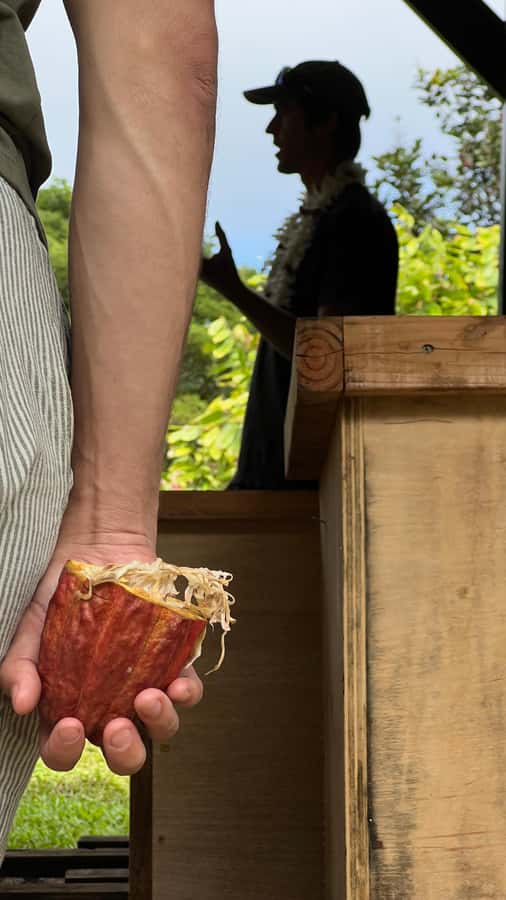
At $130 per person, this is not a casual stop for a quick sample. It is a three-and-a-half-hour guided experience that combines a farm tour, a processing lesson, a history class, scenic views, and a substantial tasting.
I think the price makes sense for someone who wants a full explanation of cacao rather than a souvenir bite. You are getting access to a working orchard and fermentation room, plus at least 10 single-origin bars and several other cacao products. The length also allows time for questions, which is hard to provide in a short tasting counter visit.
The value is weaker if you only want to buy chocolate or take a few photos. Hilo has less expensive ways to enjoy local food, and this tour spends real time on agriculture and processing. You should book it because you want to learn, not simply because you like sweets.
The included items are the guided orchard tour, fermentation-room visit, chocolate tasting, cacao juice, roasted beans, cacao tea, and seasonal fruit. Chocolates, tea, and brewing chocolate bought after the tour are not included.
Timing, age limits, and practical planning
The experience is conducted in English and lasts 210 minutes. Children under nine are not permitted, so this is better suited to older children, teenagers, and adults who can stay engaged through a detailed farm lesson.
Bring yourself to the farm rather than relying on a simple walk-up visit. The final road can be confusing, and one rider had trouble getting a ride-hailing driver to locate the farm afterward. If you plan to use a car service, arrange your return carefully or ask about the best pickup plan before the tour ends.
Large bags, luggage, coolers, strollers, bikes, handcarts, scooters, and baby carriages are not allowed. Smoking is prohibited indoors, outdoors, and in vehicles, and alcohol, drugs, weapons, sharp objects, and speakers are also not permitted.
The farm is scenic, but the experience is not designed as an unstructured stroll. Climbing is not allowed, and unaccompanied minors cannot attend. Wear something suitable for walking around an agricultural property, though no specific clothing requirement is given.
Cancellation is flexible up to 24 hours before the start time for a full refund. You can also reserve now and pay later, which helps if your Big Island schedule is still shifting.
Who should book this cacao tour?
I would choose this experience if you enjoy food with a story behind it. It suits chocolate fans, gardeners, farmers, cooks, and anyone curious about how a tropical crop becomes a carefully made product.
It is also a good choice for people who want something different from beaches, volcano viewpoints, and standard sightseeing. The orchard gives you a closer look at the Big Island’s agricultural side, while the tasting room adds comfort and scenery.
I would think twice if your group includes young children, anyone who dislikes standing or walking, or people who want a short and simple tasting. The agricultural lesson is central, and the price reflects the time and expertise involved.
Should you book Honolii Orchards?
Book it if you want to understand chocolate from the tree through fermentation and into the finished bar. The strongest features are the personal instruction from Wren and Jude, the chance to compare cacao from across Hawaii, and the honest look at the work behind craft production.
Skip it if you are mainly seeking a quick sweet treat or an easy pickup from central Hilo. The road requires attention, the visit takes three and a half hours, and the farm setting calls for some walking.
For the right person, this is one of the Big Island’s more thoughtful food experiences. You leave with a better sense of cacao agriculture, a clearer idea of your own chocolate preferences, and perhaps a few favorite bars to take home.
FAQ
How long does the Honolii Orchards tour last?
The tour lasts 210 minutes, or about three and a half hours.
How much does the experience cost?
The listed price is $130 per person.
Where does the tour meet?
It meets at 1533 Puia Road in Paukaa, Hawaii, near Hilo.
How do I find the farm?
Use the supplied Google Maps pin. Turn onto Kulana Street from Mamalahoa Highway, continue through Paukaa Town, then take Puia Road for about 1.7 miles. Puia Road may be mislabeled as Woa Road, so follow Google Maps.
What will I taste?
You will taste at least 10 single-origin Hawaiian craft chocolate bars, plus fresh cacao juice, roasted cacao beans, cacao tea, seasonal fruit, chocolate-covered macadamias, and other farm-fresh treats.
Is the chocolate included in the price?
The tasting is included. Additional chocolate bars, chocolate tea, and brewing chocolate purchased after the tour cost extra.
Will I visit a working cacao orchard?
Yes. The experience includes a guided tour of the Honolii Cacao Orchards and an explanation of cacao cultivation and harvesting.
Will I see how cacao is fermented?
Yes. The tour includes a guided visit to the Honolii Orchards fermentation room, where you learn about post-harvest processing.
Is the tour offered in English?
Yes. The live tour guide speaks English.
Are children allowed?
Children under nine are not permitted, and unaccompanied minors cannot attend.
Can I cancel the booking?
You can cancel up to 24 hours in advance for a full refund. Reserve now and pay later is also available.
Just added around the USA
- Connect with Rescue Animals on a Private Farm Tour in Catskills★ 5.0 · 27 reviews
- Cozy Farm Experience with Wagon Wheels and Acoustic Meal★ 5.0 · 2 reviews
- Farm Tour at Clover Brooke Llama/Alpaca/Goat Farm★ 4.5 · 6 reviews
- Gourmet Mushroom Farm Tour in Tennessee★ 5.0 · 5 reviews
- Farms, Flights: Finger Lakes Brewery Tour★ 4.5 · 25 reviews
- Horse Country Estate and Vineyard Wine Tasting Tour★ 5.0 · 2 reviews
- Scottsdale Horseback Riding and Horse Country Estate Tour★ 5.0 · 2 reviews
- Scenic Scottsdale E-Bike Tour – 2 Hours★ 5.0 · 47 reviews
USA Farm Tours, compared.
Swamp Boat Ride and Oak Alley Plantation Tour from New Orleans
Read our review →

Half-Day Thoroughbred Horse Farm Tour in Kentucky
Read our review →
Oak Alley Plantation Tour with Transportation from New Orleans
Read our review →
Boone Hall Plantation All-Access Admission Ticket
Read our review →

Whitney Plantation Tour with Transportation from New Orleans
Read our review →Browse the lists this tour appears in