
Review · BIG ISLAND
Craft Chocolate Tasting and Farm Experience on the Big Island
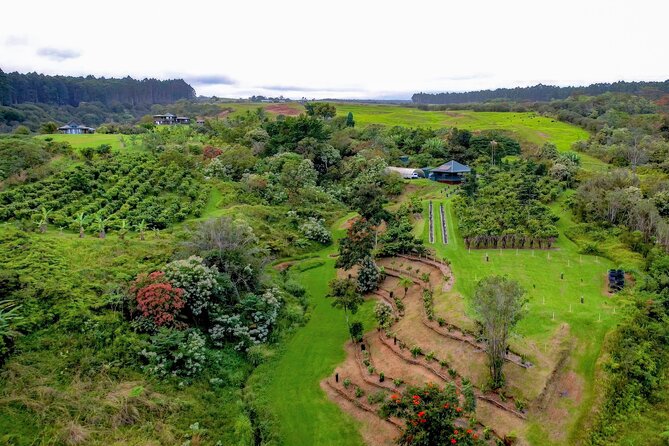
Cacao is the star here, but the setting makes the experience memorable. Five minutes from Hilo, you head up Puia Road into old ulu, sugarcane, macadamia, and cattle country, then settle above the trees at Honolii Orchards with views toward the ocean and valley. From there, you follow cacao from flower and pod to fermented bean and finished chocolate.
I like two things right away: the farm visit comes before the tasting, so the chocolate has a useful backstory, and the sampling goes well beyond a few candy squares. You may taste fresh cacao pulp, cacao juice, roasted beans, cacao tea, drinking chocolate, seasonal fruit, and roughly 10 to 12 craft chocolates. The one drawback is the location. If you stay near Kona, the drive to Hilo can take about two hours each way, so this works best as a planned east-side outing rather than a quick stop.
Key points to know before booking
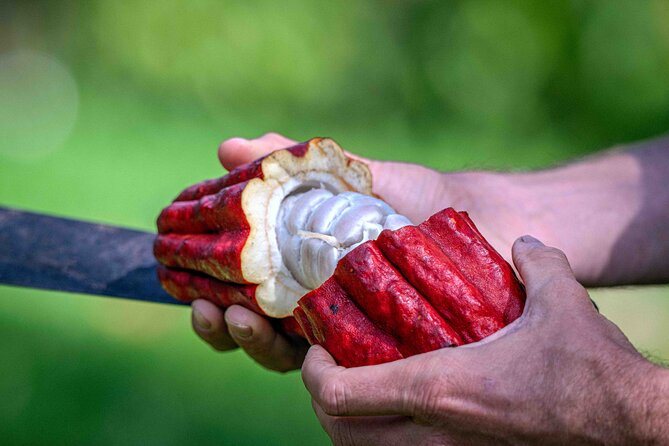
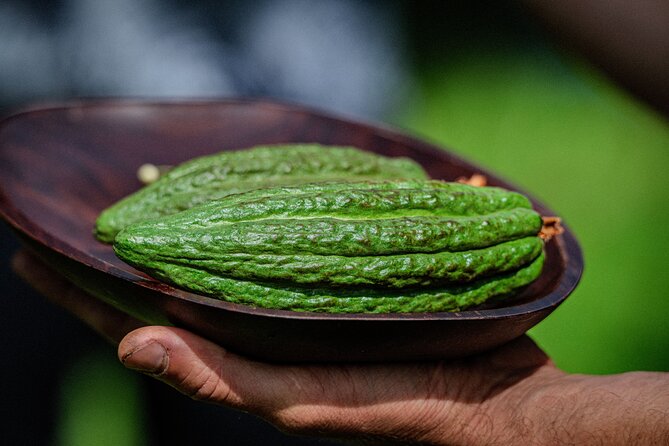
- Fresh cacao is part of the lesson: Taste the sweet pulp inside a cacao pod before learning how the beans are fermented and dried.
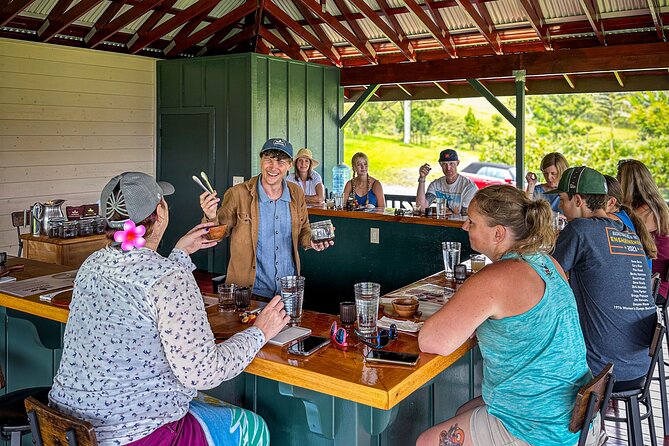
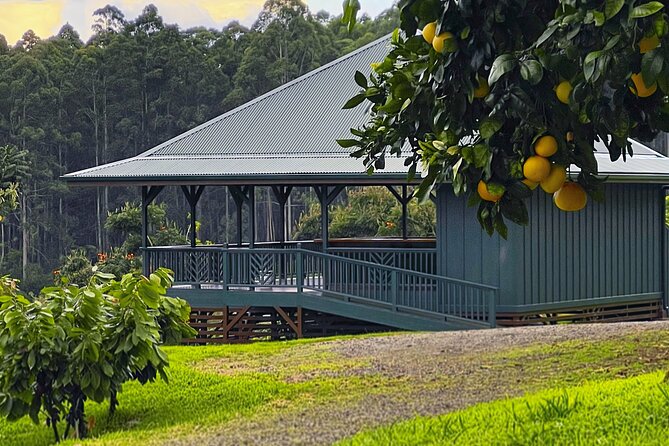
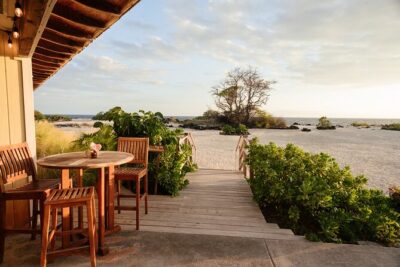
- The tasting room has ocean and valley views: You spend much of the chocolate portion at Honolii Orchards above the canopy.
- Wrenn, Colin, Ren, and Jude bring different strengths: The guides cover farming, chocolate history, tasting technique, and the local craft industry.
- This is a small-group outing: The maximum is 15 people, which allows for questions and a relaxed pace.
- Plan on more than three hours: The advertised duration is about 3 hours and 30 minutes, and the discussion and tasting can make the time pass quickly.
- The value depends on your route: At $135 per person, it is a specialty experience worth considering if you already plan to spend time around Hilo.
A back-road approach to Honolii Orchards
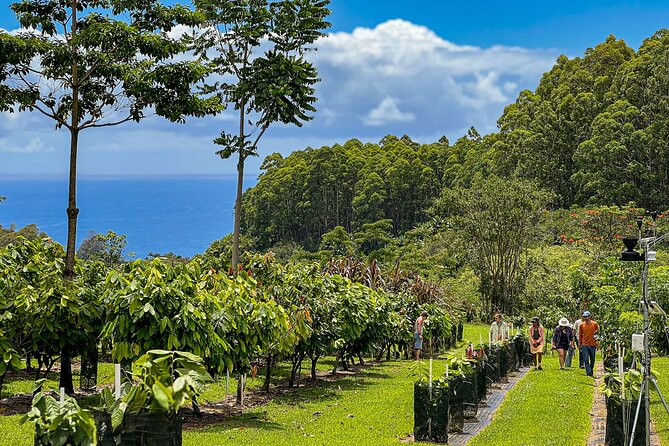
The experience starts at 10:00 a.m. at 1533 Puia Road in Hilo. You are responsible for reaching the farm, but the final approach takes you away from the main tourist routes and through an agricultural part of the Big Island that many visitors never see.
The farm is about 1.7 miles up Puia Road and only a few minutes from Hilo. That makes it easy to pair with other Hilo-area plans, but the road setting also means you should allow enough time to find the meeting point without rushing. The activity ends at the same location, so you do not need to arrange a separate drop-off.
The surroundings matter. This is not a tasting held in a generic shop. You are visiting an operating orchard in an area shaped by older crops and ranching. The views from the Honolii Orchards Tasting Room give you a sense of place before anyone starts talking about chocolate.
A few more farm days around Big Island worth a look
- Award Winning Farm Tour: Coffee, Chocolate and Unique Gifts
★ 5.0 · 484 reviews - Amazing Yarra Valley Wine Tour + Chocolate, Farm Fresh, Gin
★ 5.0 · 1,566 reviews - Kauai Chocolate Farm Tasting Tour
★ 5.0 · 666 reviews
The orchard walk explains what chocolate really is
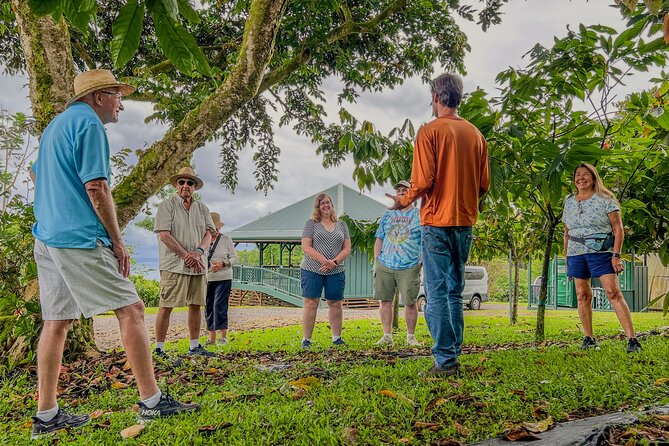
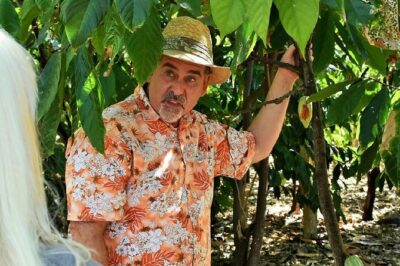
Many people know chocolate only after it has been roasted, ground, sweetened, and molded. The farm portion corrects that narrow view. Your guide takes you among the cacao trees and explains how the crop grows, how the pods change, and how farmers manage the plants.
The tour can cover seedlings, grafting, the lifespan of a tree, disease, low production, cacao varieties, and the life cycle of the pods. You may also see different stages of the crop and taste cacao beans straight from the pods. The pale fruit pulp is one of the most useful surprises because it tastes nothing like a finished chocolate bar.
Seasonal produce adds to the walk. Depending on what is available, you may taste apple bananas, lychee, raw sugarcane, or other fruit from the farm. This part gives the outing a local agricultural feel rather than making it just a lesson about imported sweets.
Colin’s role is closely tied to farming and research at the orchard. He explains cultivation and the practical work behind producing good cacao in Hawaii. Wrenn, also called Ren in some of the tour details, brings energy to the history and tasting portions. The combination keeps the farm walk from becoming either too technical or too casual.
You should expect some walking outdoors, with weather affecting the plan. The company notes that good weather is required, and guides have paid attention to conditions and mobility during tours. Still, this is a farm visit, not a fully indoor activity, so wear clothing suited to a warm, changeable day.
Fermentation is where the story gets surprising
Cacao beans do not become chocolate simply by drying them in the sun. Fermentation is a key step, and the guides explain why it changes the beans’ flavor and prepares them for later roasting.
This is one of the strongest parts of the experience for anyone who likes to understand how food is made. You see the connection between farming choices and the final taste. Genetics, soil, weather, growing conditions, fermentation, drying, and roasting all affect what reaches the chocolate maker.
The idea of terroir, borrowed from wine, helps explain why cacao from different places can taste so different. Hawaiian cacao is still part of an emerging craft industry, and the farm visit shows the amount of care and experimentation required to produce distinctive beans on a small scale.
The discussion may also touch on research taking place at the farm. That gives the outing a sense of a working project rather than a finished museum display. If you prefer a quick tour with a few facts, the amount of detail may feel like a lot. If you like food production, farming, or science, it adds real value.
Chocolate history, from Mesoamerica to Hawaii
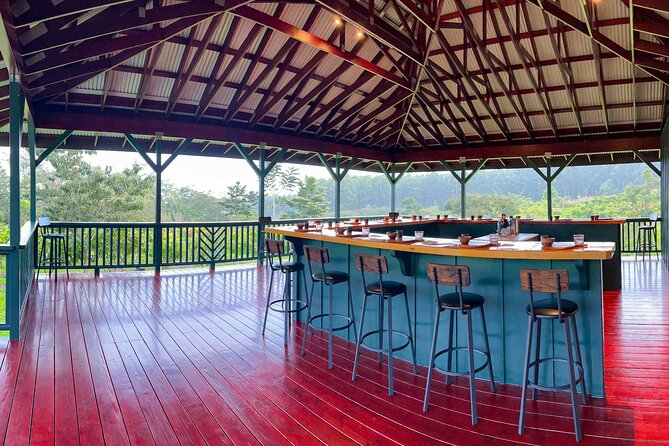
Back in the tasting room, the focus shifts from plants and fermentation to the long story of cacao. The guides trace chocolate from ancient Mesoamerica to modern craft production and explain how Hawaii fits into that story.
This section helps place local chocolate in a wider setting. Cacao is not simply a tropical crop that happens to produce candy. It has longstanding cultural importance, a complicated production process, and a modern specialty movement built around origin, genetics, farming methods, and careful processing.
Wrenn or Ren leads much of the tasting education, explaining how to slow down and notice aroma, texture, acidity, bitterness, sweetness, and fruit or spice notes. If you normally eat chocolate in a few bites, this changes the way you approach it.
The guides compare craft chocolate to the growth of small-scale wine production. You taste samples from different Hawaiian makers and notice how one bar can differ sharply from the next. Some may be bold and bitter, others lighter, fruitier, or more rounded. The point is not to declare one style best. It is to show how place and technique shape flavor.
More Food and Drink Trips in Big Island:
- Kona Coffee Farm Tour from Tree to Tasting Room
★ 5.0 · 36 reviews - Hamakua Coast Farm Small-Group Walking and Tasting Tour
★ 5.0 · 4 reviews - Sorrento Farm and Food Experience including Olive Oil, Limoncello, Wine tasting
★ 5.0 · 2,524 reviews - Lahaina: Maui Ku’ia Estate Guided Cacao Farm Tour and Tasting
★ 5.0 · 1,103 reviews
A tasting that goes far beyond chocolate bars
The tasting is generous and varied. Exact selections can change with the season, but the experience includes coffee or tea, bottled water, chocolate, and a broad range of cacao products.
You may start with fresh cacao fruit or pulp, then try cacao juice, roasted beans, and cacao tea. Drinking chocolate adds another texture and style. From there, the chocolate samples may number around 10 to 12, giving you enough comparison to understand the guide’s points.
The fresh cacao juice deserves special attention. It lets you taste the fruit in a form that most visitors have never tried, and it makes clear that cacao pods contain more than beans. Roasted cacao beans offer another useful contrast: they are closer to the source, less sweet, and more about aroma and texture.
The sampling feels more like a guided tasting than an open snack table. You are encouraged to notice differences instead of simply eating the next piece. That makes the $135 price easier to understand. You are paying for the farm access, the instruction, the time with the guides, the setting, and the amount of food and drink, not just for a box of chocolate.
Still, the price is not a bargain outing. If you are only looking for a quick chocolate sample, it will seem expensive. I would reserve it for someone who enjoys food education, local agriculture, small producers, or a slow half-day experience.
Why the small group matters
The maximum group size is 15 people. That is not private, but it is small enough to keep the session from feeling like a large bus tour.
A smaller group helps during the orchard walk because you can hear the guide and ask questions. It also matters at the tasting table, where the experience depends on discussion. The guides can explain a flavor, repeat a point, or respond to your questions without turning the session into a formal lecture.
The tone is relaxed and personal. Colin, Wrenn, Ren, and Jude are described as welcoming and enthusiastic, and the experience includes plenty of time for conversation. That warmth is important here because chocolate tasting can feel stiff if the guide focuses only on technical language.
Families can make it work, too. Older children and teenagers may enjoy the hands-on farm details, fruit tasting, and broad range of chocolate. One family brought a 10-year-old who stayed engaged, while another found that two young adults remained interested through the full three-plus hours. Very young children may not have the patience for the history and fermentation discussion, but the fruit and chocolate provide natural breaks.
Solo visitors and couples also fit comfortably into the format. The small group gives you a chance to talk with others without making the activity feel like a social obligation.
The Hilo location is the main planning issue
The biggest practical question is where you are staying. From Hilo, this is an easy addition to a day in town or along the Hamakua Coast. From Kona, the drive can take about two hours, depending on conditions and your exact starting point.
That distance does not make the tour a bad choice, but it changes the value calculation. If you are staying on the west side and have limited time, spending roughly four hours on the road for a 3.5-hour experience may not suit your schedule. If you already want to see Hilo, waterfalls, gardens, or the Hamakua area, the farm can fit naturally into that day.
The start time is 10:00 a.m., and the activity returns to the farm by the end. It is smart to avoid scheduling a tight afternoon commitment, since the experience is designed to move at an unhurried pace. The advertised duration is approximate, and the tasting and conversation may run longer than a simple 90-minute attraction.
The farm requires good weather. If conditions cancel the activity, you are offered another date or a full refund. The same applies if the minimum number of participants is not met. Otherwise, you can cancel for a full refund up to 24 hours before the start time. Within 24 hours, the payment is not refunded, and late changes are not accepted.
How this compares with a standard chocolate tasting
A store tasting usually concentrates on the finished product. You may learn about percentages, ingredients, and flavor notes, then buy a bar and leave. This experience spends equal attention on the farm and the people who produce the cacao.
That difference is the reason to choose it. You see the tree, pod, pulp, bean, fermentation process, and finished chocolate as parts of one chain. The history section adds context, while the tasting teaches you how to compare samples from different Hawaiian sources.
It is also more grounded in Hawaii than a generic dessert activity. The setting, agricultural history, fruit, sugarcane, and local craft makers connect the chocolate to the Big Island. You are not just sampling a product with a Hawaiian label.
The limitation is that the tour is not centered on making your own chocolate. The supplied information describes learning and tasting rather than a hands-on bar-making class. If you want to temper, mold, or take part in a workshop, confirm that before booking because this experience focuses on farm education and guided sampling.
Who will get the most from this experience
I would choose this tour for you if you:
- Like to know how food is grown and processed
- Enjoy wine-style tasting and comparing subtle flavor differences
- Want a local Hilo-area activity outside the usual sightseeing stops
- Appreciate small groups and plenty of conversation
- Are willing to spend a half-day on one focused subject
- Enjoy chocolate but also want farm, history, and science
It may be less suitable if you want a fast attraction, dislike outdoor walking, or have a packed Big Island schedule. The $135 cost also deserves thought. For a casual sweet tooth, it is a splurge. For someone who values a rare agricultural visit and an extensive tasting, it is a fair specialty outing.
Service animals are allowed. No broader accessibility details are provided, so if you have specific mobility needs, contact Honolii Orchards before booking and ask about the orchard route and current conditions.
Should you book the Honolii Orchards cacao tour?
Book it if you are staying near Hilo, or if you can make the east-side drive part of your Big Island plan. The best reasons are the farm access, the fresh cacao fruit, the clear explanation of fermentation, the ocean view tasting room, and the chance to compare many Hawaiian craft chocolates in one sitting.
I would hesitate only if Kona is your base and your schedule is tight. For everyone else, this is an unusually focused and personal way to understand Hawaiian agriculture. You leave with more than a sugar rush: you understand why cacao flavor changes, how difficult the crop can be, and how a small Hawaiian industry is finding its voice.
FAQ
Where does the cacao farm experience begin?
It begins at 1533 Puia Road, Hilo, Hawaii 96720. The farm is about 1.7 miles up Puia Road and roughly five minutes from Hilo.
What time does the tour start?
The tour starts at 10:00 a.m.
How long does the experience last?
The expected duration is approximately 3 hours and 30 minutes.
How much does the experience cost?
The listed price is $135 per person.
How many people can join the tour?
The activity has a maximum of 15 travelers.
What is included in the price?
Coffee or tea, bottled water, and chocolate are included. The experience also includes the farm visit and guided tastings such as cacao products and seasonal fruit.
Does the activity end at the farm?
Yes. The activity ends back at the meeting point on Puia Road.
Can I cancel for a full refund?
Yes, if you cancel at least 24 hours before the experience start time. Cancellations made within 24 hours are not refunded.
What happens if the weather is poor or the minimum group size is not met?
If poor weather or an insufficient number of participants causes cancellation, you are offered another date or experience, or a full refund.
Just added around Big Island
- Private 2-Hour Beekeeping Classroom Tour in Honokaa★ 5.0 · 2 reviews
- Farm to Table Cooking Class at Kulaniapia Falls★ 4.5 · 36 reviews
- Edible Hibiscus Guided Farm Tour (Big Island)★ 5.0 · 31 reviews
- Sunset Kona Salt Farm Tour★ 5.0 · 55 reviews
- Hamakua Coast Farm Small-Group Walking and Tasting Tour★ 5.0 · 4 reviews
- Hala Tree Coffee Farm Tour★ 5.0 · 44 reviews
- Bottle Feed & Cuddle Baby Goats at Ohana Ranch (Big Island)★ 5.0 · 29 reviews
- Big Island Family Off Road Farm Adventure at Ohana Ranch★ 5.0 · 43 reviews
Big Island Farm Tours, compared.
Award Winning Farm Tour: Coffee, Chocolate and Unique Gifts
Read our review →
Small-Group Big Island Tour: Hawaii Volcanoes National Park and Kona Coffee Farm
Read our review →
Waipi’o on Horseback: Mountain Ocean Views Working Cattle Ranch
Read our review →
Browse the lists this tour appears in