
Review · SIEM REAP
Banteay Chhmar Temple & Silk Farm Private Day Trip from Siem Reap
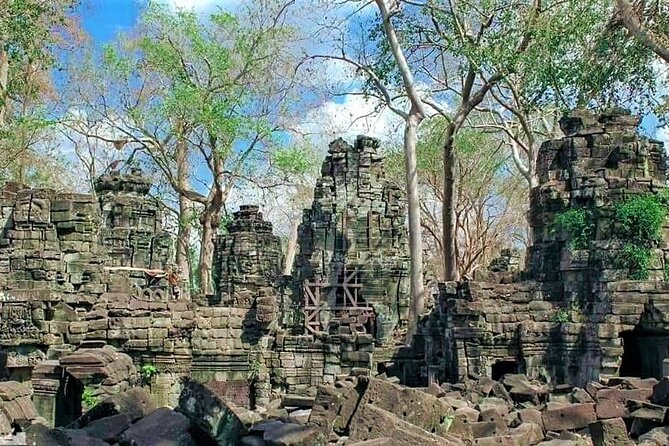
Banteay Chhmar is the reason to make this long day trip. About three hours from Siem Reap, this vast Angkorian complex gives you collapsed galleries, jungle edges, and Bayon-style stone faces without the usual crowds. You also visit Banteay Toap, a temple linked to Khmer soldiers, before seeing silk made from mulberry trees and silkworms.
I like the private transport, which lets you travel at your group’s pace in an air-conditioned SUV or van. I also like the mix of ruins, countryside, local worship, and craft production. The main drawback is the road time: you spend a large part of an 8 to 9 hour day in transit, and Banteay Chhmar is best for people who want a remote temple rather than a quick add-on to Angkor Wat.
Key points at a glance
- Banteay Chhmar takes center stage: Allow about five hours to explore one of Jayavarman VII’s largest temple projects.
- Banteay Toap adds a quieter second ruin: The Fortress of the Army sits near a large water reservoir and offers a useful companion to Banteay Chhmar.
- The countryside is part of the experience: The drive passes villages and open rural scenery, giving you a look beyond central Siem Reap.
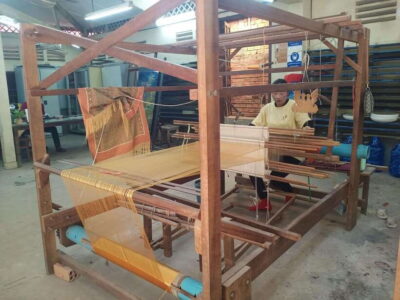
- Silk production is shown step by step: At Angkor Silk Farm, you see mulberry cultivation, silkworm care, dyeing, and weaving.
- The tour is genuinely private: Your group has its own guide, driver, and air-conditioned vehicle.
- Budget for lunch: Food is not included, with local restaurant dishes generally priced from $3 to $10.
Why Banteay Chhmar is worth the three-hour drive
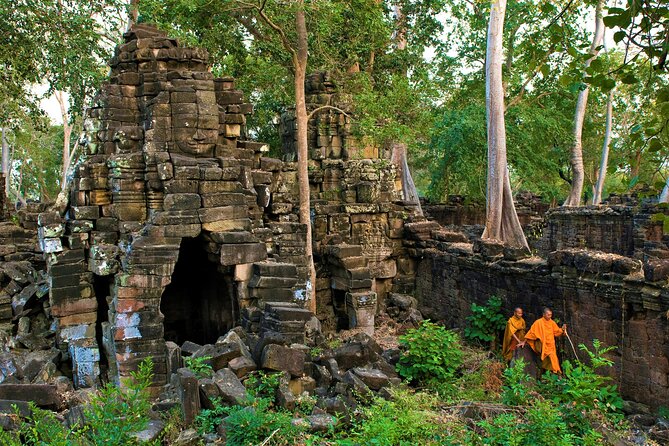
Banteay Chhmar is not a small temple stop. It was one of the largest building projects commissioned by Jayavarman VII, created in a politically sensitive part of the Khmer Empire near the final years of his reign. The scale helps explain the long visit: you need time to take in the walls, galleries, carvings, and fallen stone.
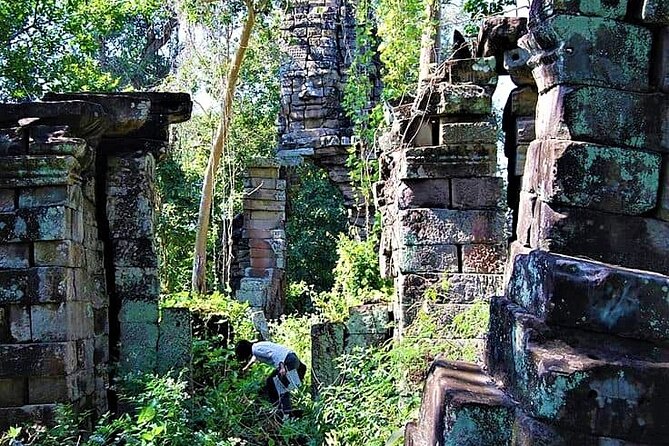
The site has a different mood from the better-known temples around Siem Reap. Instead of moving from one busy monument to another, you spend hours with a sprawling ruin where collapsed sections and trees are part of the view. The sense of age is easy to read in the broken galleries and weathered carvings.
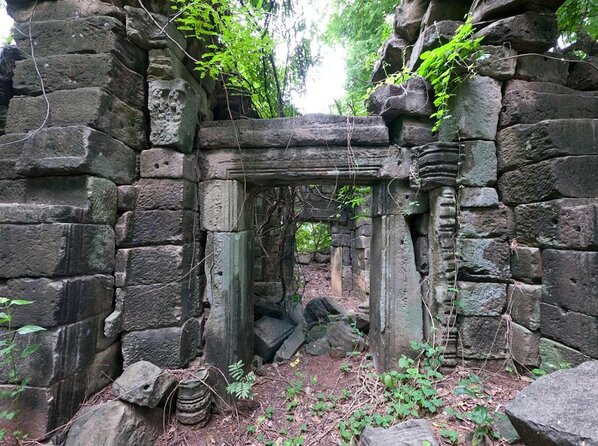
The architecture has links to the Bayon style, especially in its carved faces and narrative stonework. A good guide can help you notice what you would otherwise walk past: a figure tucked into a wall, a damaged relief, or the way a gallery once connected different parts of the complex.
The construction also shows signs of haste. That detail matters because it gives you a more realistic picture of Angkorian building projects. This was not a perfect monument finished in one smooth campaign. Parts were completed carefully, while other sections feel incomplete or altered.
You receive admission to the temple, and the five-hour allocation gives the guide time to explain the site instead of rushing you through a short photo stop. If temple architecture interests you, this is the heart of the day.
More Day Tours in Siem Reap:
- Half Day Trip: Silk Farm, Satcha, and Senteur d’Angkor Tour
★ 4.7 · 10 reviews - Mekong Day Trip Explore Village Bicycle CookingClass Group 12 Pax
★ 5.0 · 705 reviews - Seoul: Gangwon-do Day Trip with Alpaca World & Nami Island
★ 4.7 · 581 reviews
What the Banteay Chhmar visit feels like
You should expect a large archaeological area rather than a single compact shrine. The visit involves moving through stone corridors, open sections, and areas where galleries have fallen down. The jungle setting adds atmosphere, but it also means you should be ready for uneven ground and a full morning or afternoon on foot.
Signage at the temple is described as clear, which helps you orient yourself. Still, the guide makes a major difference here. Guides named Leap and Danut have led this experience, and the strongest part of the guiding is the explanation of the carvings and Cambodia’s past in plain English.
Leap has also been noted for taking photographs, a useful touch during a long private visit. You can ask your guide to slow down at the sections that interest you, rather than following a fixed group schedule.
The temple is especially well suited to you if you have already seen the main Angkor sites and want something less familiar. If this is your first Cambodian temple visit, the scale may be impressive, but you may find the site harder to read without some background.
Banteay Toap and the Fortress of the Army
The second temple stop takes about two hours. Banteay Toap is thought to mean Fortress of the Army, and it was built during the same period as Banteay Chhmar. It is believed to honor Khmer soldiers, giving the visit a clear connection to the military and political world behind the empire’s monuments.
The setting beside a water reservoir gives this stop a more open feel than the enclosed galleries at Banteay Chhmar. You get another look at the period’s building style without simply repeating the first temple visit.
Banteay Toap is not likely to provide the same scale as Banteay Chhmar, and that is part of its value. After several hours at the main complex, the smaller site offers a change of pace. The guide can place both temples in the same period and explain how they fit into the wider program of Jayavarman VII.
Two hours is generous for a quiet temple site. That may appeal to you if you prefer time for photographs and questions. If you want a packed schedule of major monuments, you may find this stop less essential than the main temple.
A working silk farm, from mulberry tree to finished cloth
Angkor Silk Farm gives the day a useful change of subject. Instead of more stone, you see how Cambodian silk is produced. The process begins with mulberry trees, which support the silkworms. From there, you can follow the stages through silkworm care, thread production, dyeing, and weaving.
This stop lasts about one hour. That is enough time to understand the sequence without turning the craft visit into another long tour. It also adds a practical side to the day: you see how a traditional Cambodian product moves from a living crop to a finished textile.
I like this inclusion because it prevents the trip from becoming five straight hours of temple interpretation. It also gives you a closer look at skilled handwork and local production. You can ask the guide to explain the stages as you go, especially if you are unfamiliar with how silk is made.
The stop is informative rather than a major shopping excursion in the information provided. If you are mainly interested in temples, treat it as a pleasant change of rhythm. If you enjoy crafts, textiles, or Cambodian traditions, it may be one of the most memorable parts of the day.
A few more farm days around Siem Reap worth a look
- Ubud: Waterfalls, Water Temple & Rice Terraces Private Tour
★ 5.0 · 5,484 reviews - Ubud: Waterfall, Rice Terraces & Monkey Forest Private Tour
★ 4.9 · 4,894 reviews - Unique Horse Farm Tours with Insider Access to Private Farms
★ 5.0 · 1,192 reviews - Ubud: Private Scenic Waterfalls and Rice Terraces Tour
★ 4.9 · 719 reviews
West Baray and Svay Romiet Pagoda
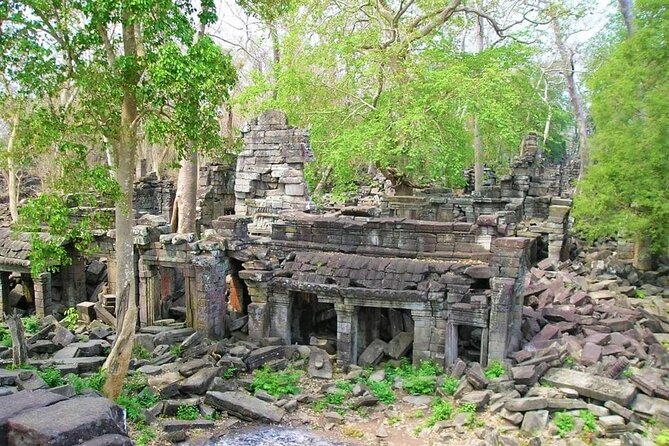
The return route includes West Baray, a huge Khmer-era reservoir measuring about 8 kilometers long and 2.1 kilometers wide. Its original purpose is still not fully clear. Irrigation was once the main theory, but the reservoir’s role remains open to interpretation.
You have about 30 minutes here. That is enough for a short look at the scale of the waterworks and a pause after the temple visits. The size is difficult to grasp from a single viewpoint, so the stop works best as a brief geographical and historical counterpoint to the ruins.
Another 30-minute stop brings you to Svay Romiet Pagoda, directly on the banks of West Baray. The pagoda is tied to family observances. People go there on an ancestor’s anniversary or a birthday as a way of showing respect.
This stop gives you a glimpse of religious life that is not limited to ancient stone temples. You are seeing a living place connected to family practice and remembrance. The short visit will not explain every aspect of Cambodian Buddhism, but it adds a human scale to a day otherwise centered on imperial monuments.
The long ride from Siem Reap
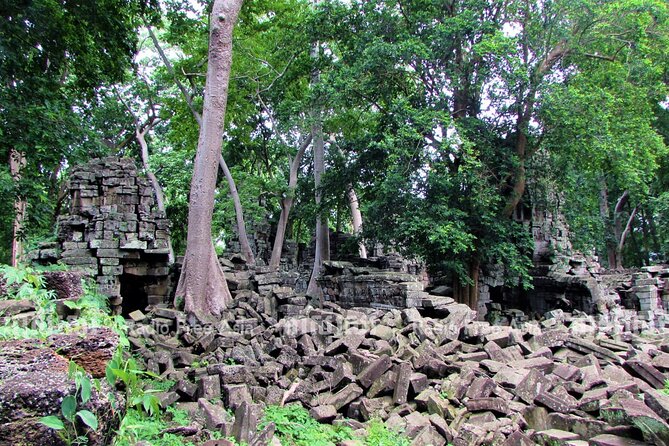
The drive is a major part of the experience, not a minor transfer between stops. Banteay Chhmar is roughly three hours from Siem Reap, and the route passes through villages and countryside. You trade central Siem Reap’s concentration of hotels and restaurants for a quieter view of rural Cambodia.
Private air-conditioned transport matters on this route. The package includes an SUV or van, hotel pickup and drop-off, and a driver dedicated to your group. Drivers named Art and La have been associated with the experience, with La praised for smooth driving and making good time.
Your guide travels with you and provides the historical context along the way. Names associated with the tour include Leap and Danut. You should confirm your pickup details by providing your hotel name when booking.
The distance means you should start with realistic expectations. This is not a relaxed half-day outing. It is a full day with a substantial road component, and the remote location is precisely why the temple feels different from the main Angkor circuit.
How the private format affects the day
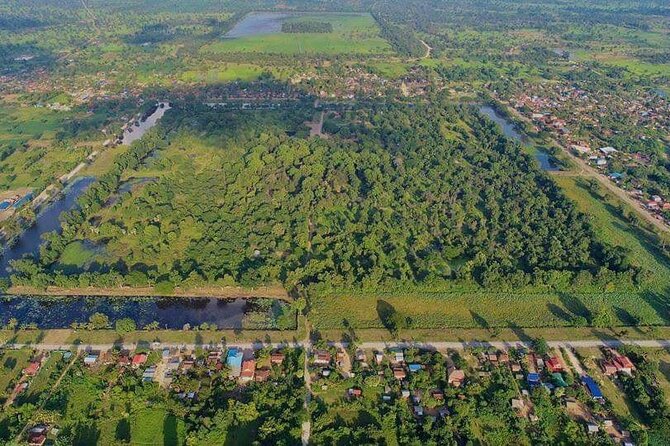
A private tour gives you more control than a large scheduled group. You can ask for extra explanation at a carving, take a longer photo stop, or move on when you have had enough. That flexibility is particularly useful at Banteay Chhmar, where the complex is large and different people in your group may have different levels of interest.
You also avoid sharing the vehicle with strangers. That makes the long drive more comfortable and lets you talk directly with the guide about Cambodian history, temple design, or village life along the route.
The English-speaking licensed guide is included, as are entrance fees and current government VAT. This makes the quoted price of $137.75 per person easier to assess. You are paying not only for transport, but also for a full private vehicle, a guide, site admissions, and hotel transfers.
The value depends on group size. For two people, it is a fairly substantial day-trip cost, but the private arrangement and remote distance explain much of the price. For a larger private group, the per-person value improves. Group discounts are available, though the exact reduction is not stated.
Lunch, timing, and what to plan for
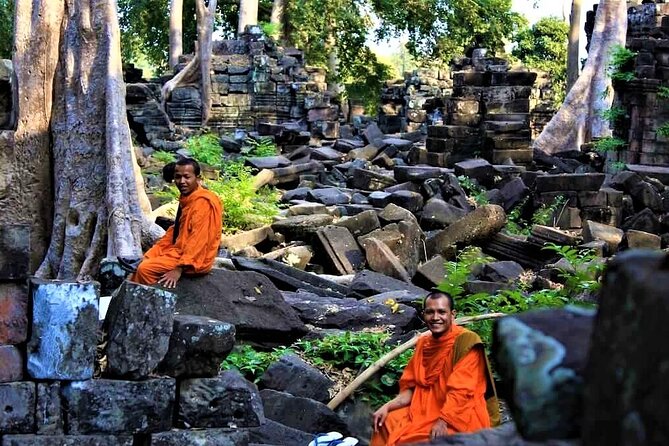
Lunch is not included. You can eat at a local restaurant, with vegetarian and non-vegetarian choices available. Individual dishes generally cost between $3 and $10, so you should carry enough cash or confirm accepted payment methods with your guide.
Because the day lasts around eight to nine hours, breakfast matters. The information provided does not specify a departure time, so confirm the pickup hour with the operator. A long drive, several temple walks, and the heat of Cambodia can make the day tiring even when the schedule feels manageable on paper.
Wear practical walking shoes and bring water. The tour data does not specify a dress code, but respectful clothing is a sensible choice for temple grounds and Svay Romiet Pagoda.
The vehicle is air-conditioned, which gives you a welcome break between outdoor stops. You may still want a hat and sun protection for the open sections of the temple complex and the reservoir.
Who should book this Banteay Chhmar day trip?
I would choose this tour if you have a strong interest in Khmer architecture and want to go beyond the standard Siem Reap circuit. It suits you especially well if you like ruins with broken walls, forest surroundings, and fewer people around you.
It is also a good match if you want variety. You get an ancient temple, a second military-linked site, silk production, a vast reservoir, and a living pagoda in one day. The private format works well for couples, families, or small groups who do not want to follow a fixed large-group pace.
I would hesitate if you have only one short day in Siem Reap and have not yet seen Angkor Wat, Bayon, or Ta Prohm. The three-hour drive each way uses time that could otherwise cover the major temples closer to town.
I would also think twice if you dislike long vehicle journeys or prefer a light sightseeing schedule. Banteay Chhmar rewards patience, but it does not offer instant access.
Is the $137.75 price fair?
For a private 8 to 9 hour outing, the price is reasonable if you value comfort and a guide who can explain what you are seeing. Hotel transfers, private air-conditioned transport, entrance fees, and an English-speaking licensed guide are included.
Lunch and tips are extra, so add those to your budget. The lunch cost is modest compared with the tour price, but it is still worth knowing that the advertised amount is not the complete spend for the day.
The strongest value comes from the destination. Banteay Chhmar is far enough from Siem Reap that arranging transport independently may take effort, and the guide adds context that can be hard to get from signs alone. The tour makes the remote visit straightforward without turning it into a rushed stop.
Should you book it?
Book this tour if you want one of Cambodia’s less-visited major temple complexes and are happy to give up much of a day to reach it. The combination of Banteay Chhmar’s scale, Banteay Toap’s military connection, the silk farm, and West Baray gives you more range than a simple temple transfer.
Skip it for now if your priority is seeing the central Angkor temples, or if a three-hour drive each way sounds exhausting. For the right person, though, the distance is the point. You get a quieter, more spacious side of Cambodia, with enough time to look closely rather than simply collect another temple photograph.
FAQ
How long does the Banteay Chhmar tour last?
The experience lasts approximately 8 to 9 hours, including the drive from Siem Reap and the scheduled stops.
Is hotel pickup included?
Yes. Pickup and drop-off at your hotel are included. You need to provide the hotel name for pickup arrangements.
Is this a private tour?
Yes. Only your group participates in the activity, with private transport in an air-conditioned SUV or van.
What is included in the tour price?
The price includes hotel pickup and drop-off, a professional English-speaking licensed guide, entrance fees, private air-conditioned transfers, service charges, and current government VAT.
Is lunch included?
No. Lunch is paid separately at a local restaurant. Vegetarian and non-vegetarian dishes are available, with menu prices listed at about $3 to $10 per dish.
Can I cancel for a full refund?
Yes. You can cancel at least 24 hours before the local start time for a full refund. Cancellations or changes made less than 24 hours before the start time are not refunded or accepted.
Just added around Siem Reap
- Rice Fields & Rural Villages Tour★ 5.0 · 11 reviews
- Traditional Khmer Water Blessing by Monk and Lotus Farm Visit★ 5.0 · 10 reviews
- Full Day Siem Reap Farm Tour with Cooking Class and Monk Blessing★ 5.0 · 6 reviews
- Sunset Dinner at Rice Paddy Fields★ 3.5 · 3 reviews
- Floating Kompong Pluk Car+Tour Guide + Boat ticket ( Shear Tour )★ 4.0 · 2 reviews
- Tuk Tuk Journey: Exploring Rural Life and Silk Farm Craftsmanship★ 5.0 · 4 reviews
- Siem Reap: Silk Farm & Countryside Offbeat Jeep Tour★ 4.5 · 11 reviews
- Siem Reap: Scenic Countryside & Silk Farm Jeep Tour★ 5.0 · 2 reviews
Siem Reap Farm Tours, compared.

Siem Reap Lotus Silk Farm Discovery tour & Lake experience
Read our review →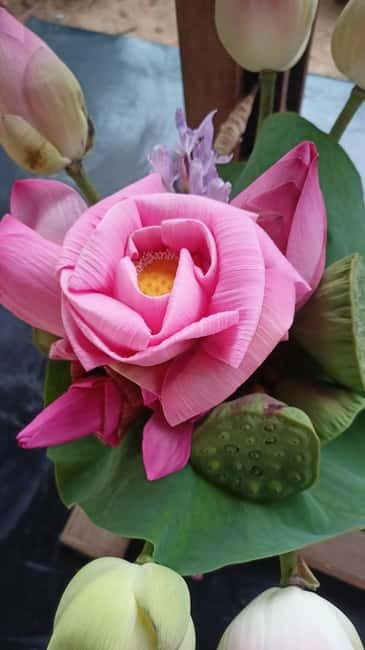
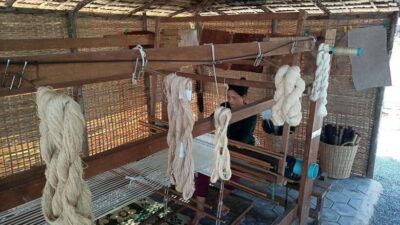
Angkor Silk Farm & Lotus Silk Farm: Siem Reap Discovery Tour
Read our review →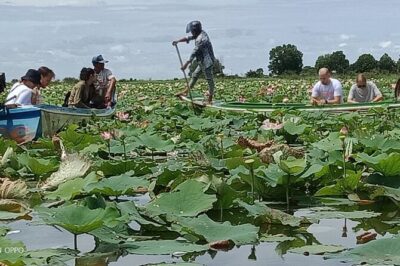
Lotus Silk Farm: Discover Learn and Experiment the Lotus Flower
Read our review →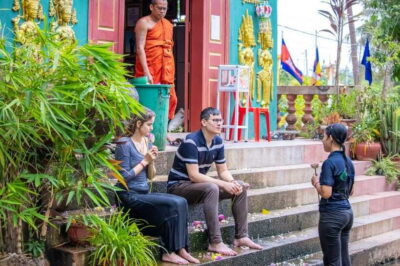
Khmer Water Blessing by Monk and Lotus Farm Visit
Read our review →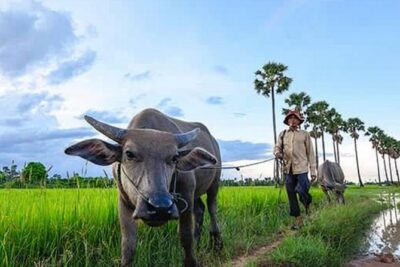
Half Day Trip: Silk Farm, Satcha, and Senteur d’Angkor Tour
Read our review →Browse the lists this tour appears in