
Review · SIEM REAP
Lotus Silk Farm: Discover Learn and Experiment the Lotus Flower
The most unusual part of this Siem Reap outing is also its simplest: you learn how one lotus plant can become tea, paper, thread, jewelry, and incense. At the farm, you work with the material yourself rather than just looking at finished goods in a shop.
I like the hands-on format, especially making a seed-pod bracelet and pulling silk fibers from lotus stalks. I also like the calm boat ride through the lotus field, a welcome change from temple crowds and hot stone corridors. The main consideration is weather: the activity needs good conditions, so a rainy day can mean a new date or cancellation.
Key points to know before you book
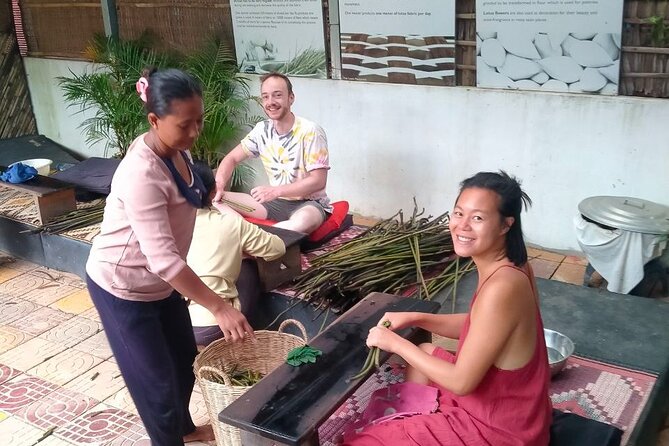
- Six lotus-based workshops: Make and experiment with items such as paper, yarn, incense sticks, bracelets, and necklaces.
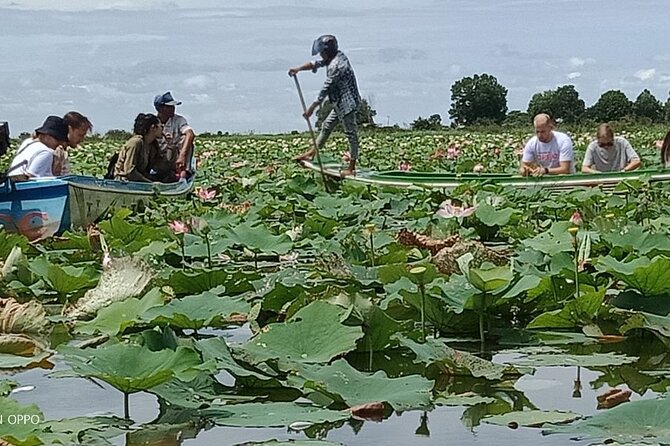
- A boat ride through the lotus field: Finish the visit on the water among lotus flowers and water lilies.
- A small group of up to 15 people: The size should make it easier to follow demonstrations and ask questions.
- Practical, handmade souvenirs: Take home crafts you make yourself, rather than buying only a finished product.
- A look at artisan work: Learn how lotus fibers, seed pods, petals, and other plant parts are used.
- About three hours for $47: The cost covers a full workshop and boat outing, not just a short farm visit.
Why the lotus makes a good Siem Reap workshop
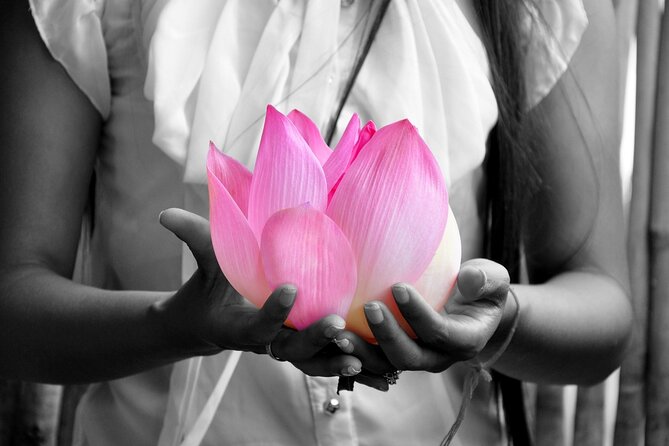
The lotus is more than a pretty flower here. Different parts of the plant serve different purposes, and the workshop lets you test several of them with your own hands.
You begin with lotus tea, which sets the tone for the visit. From there, the activities connect the plant to textiles, sustainable fashion, botanical products, jewelry, and crafts. This gives the outing more substance than a quick photo stop. You are not only seeing a lotus pond. You are learning how local makers turn a natural material into useful objects.
The subject also fits Siem Reap well. After spending time around Angkor’s grand stone temples, a farm visit offers a smaller and more direct look at everyday creative work. The focus is not on ancient monuments. It is on plants, tools, handwork, and the people who make products from them.
I would not book this expecting a formal lecture on Cambodian agriculture. The information provided points to a practical workshop with demonstrations and experiments. That is its strength. You learn by making, touching, folding, pulling, and assembling.
A few more farm days around Siem Reap worth a look
- Siem Reap Lotus Silk Farm Discovery tour & Lake experience
★ 4.7 · 291 reviews - Siem Reap: Lotus Silk Farm- Tour, Lake & Masterclass
★ 4.9 · 77 reviews - Angkor Silk Farm & Lotus Silk Farm: Siem Reap Discovery Tour
★ 4.8 · 68 reviews
Starting with lotus tea and the farm setting
The meeting point is Lotus Silk Farm on Road 63 in Phnom Kraom, Siem Reap. The activity begins and ends at the same location, and the site is near public transportation.
The first cup of lotus tea gives you time to settle in and understand the idea behind the farm. Tea is one of the plant’s simpler uses, while the later activities show more specialized forms of handwork. That gradual progression helps the morning feel connected rather than like a collection of unrelated craft stations.
You will also get an introduction to the lives of the artisans and the way the lotus is cultivated for different purposes. The available details do not identify individual guides by name, so you should not expect a named guide experience when booking. The focus is on the farm team, the craft process, and direct participation.
Because the group is limited to 15 people, you should have a better chance of seeing the demonstrations clearly than you would in a large class. A small group also matters when you are working with delicate fibers or making small objects. You can take your time instead of rushing through a crowded table.
Six workshops, from stalk fibers to handmade paper
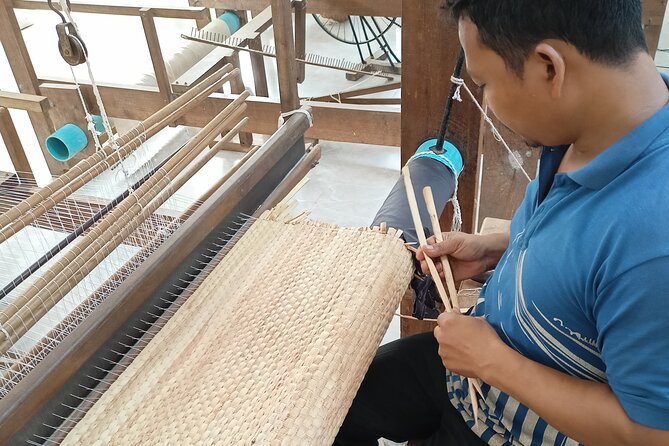
The workshop portion is the heart of the visit. You take part in six handicraft activities using parts of the lotus flower and plant. The exact order can vary, but the available activities include making a bracelet, yarn, paper, incense sticks, and jewelry.
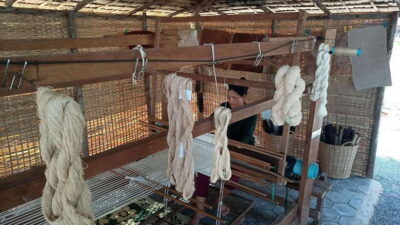
One of the most interesting tasks is extracting silk fiber strands from lotus stalks. This shows why lotus fiber has a very different feel from ordinary craft materials. The process is delicate, and the strands are easy to break, so the activity rewards patience more than speed.
You also work with lotus seed pods to make a bracelet or necklace. Seed pods have a natural shape that already looks decorative, so this craft connects the plant’s biology with simple jewelry design. It is an easy souvenir to understand later: you can look at it and remember the part of the farm where you made it.
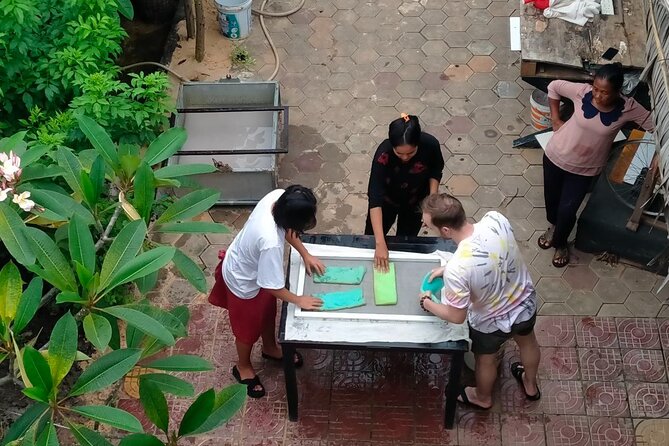
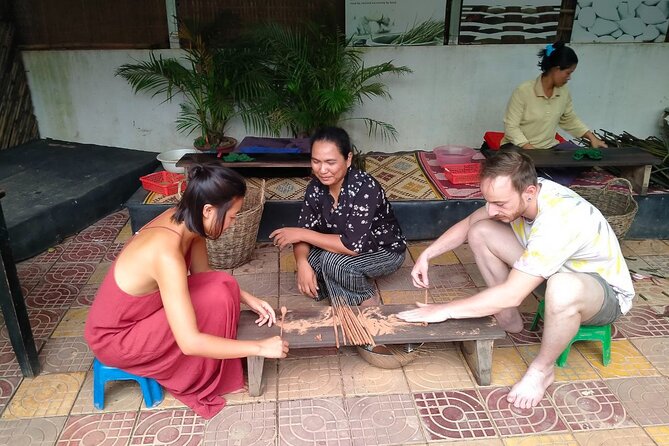
Making paper gives you another way to see the plant. Instead of treating lotus as something that belongs only in a pond or vase, the workshop presents it as a material that can be processed and reshaped. The same idea applies to incense sticks, which turn plant-based ingredients into something used in homes and spiritual settings.
The activities cover more than one skill. Some involve pulling fibers. Others involve assembling, folding, shaping, or drying. That variety keeps the three-hour visit moving and makes the class suitable for people who do not usually take craft workshops.
You should expect the finished objects to look handmade. That is part of the appeal. This is not a factory lesson designed to produce perfect souvenirs. You are making small items with natural materials, and the uneven details are part of the memory.
Why the artisan side adds value
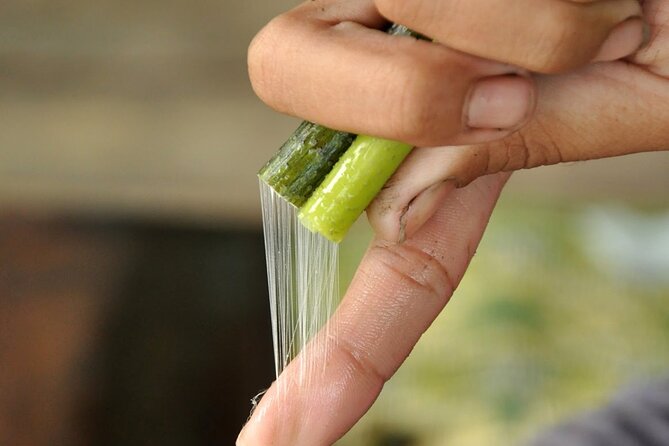
The farm visit gives you a direct connection to local work. You see how the lotus can support products in textiles, fashion, jewelry, tea, and botanical crafts.
That matters when you are choosing between a shopping stop and a workshop. In a shop, you can admire the products and perhaps buy one. Here, you gain a little understanding of how they are made. You also leave with objects that carry your own effort.
The outing supports the farm’s products and artisan work, which gives the $47 price more meaning than a simple entrance fee. You are paying for staff time, materials, six workshop activities, instruction, and the boat portion of the visit.
Still, value depends on your interests. If you want a cheap sightseeing stop or a quick look at lotus flowers, this may feel expensive. If you enjoy making things and want a slower cultural activity between temple visits, the price is easier to justify.
I would especially consider it for couples, families with older children, craft lovers, and anyone who wants a quieter morning in Siem Reap. The workshop format also suits people who prefer doing something active over sitting through a long presentation.
Same fields, a different sort of day out:
- Siem Reap: Khmer Water Blessing by Monk and Lotus Farm Visit
★ 5.0 · 15 reviews - Rice Fields & Rural Villages Tour
★ 5.0 · 11 reviews - Siem Reap: Silk Farm & Countryside Offbeat Jeep Tour
★ 4.5 · 11 reviews - Traditional Khmer Water Blessing by Monk and Lotus Farm Visit
★ 5.0 · 10 reviews
The lotus field boat ride
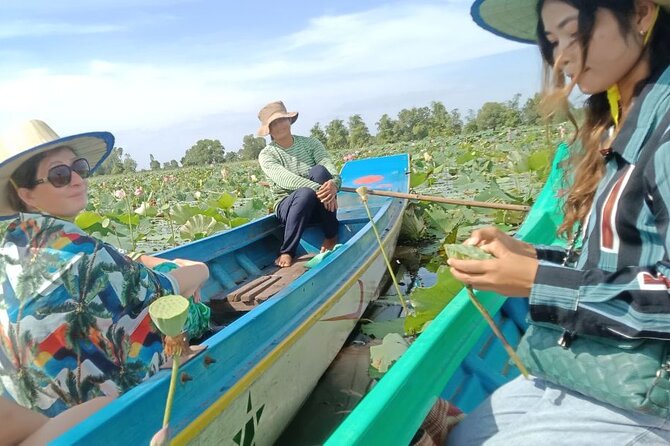
The boat ride comes at the end, giving you a peaceful finish after the table work. You travel through the lotus field and water lilies, with the flowers viewed from water level rather than from a path or platform.
This is the part to save room for mentally. The workshop is busy in a pleasant way, with several crafts to try. The boat ride changes the pace completely. It gives you time to look across the water, take photographs, and enjoy the plant in its natural setting.
You may also learn how to fold a lotus flower during this part of the visit, then make another necklace or floral item. The exact activity details can vary, but the boat portion is not only transport. It is another chance to work with the flower and see the setting that supplies the raw material.
Good weather matters here. The activity requires suitable conditions, and a boat ride is naturally more enjoyable when the sky cooperates. If poor weather causes a cancellation, you can receive a full refund or take a different date.
How the three-hour schedule feels
About three hours gives the visit enough time to feel worthwhile without taking up an entire day. You can fit it around other Siem Reap plans, including temple visits, provided you allow time to reach the meeting point on Road 63.
The timing also suits the pace of the activities. Six workshops in a short period could feel rushed in a large group, but the 15-person limit should help keep the class manageable. You will still need to accept that each craft receives only part of the morning. This is an introduction to several techniques, not a full professional course in lotus textiles.
The strongest rhythm is the change between indoor or farm-based handwork and the open-air boat outing. If you like variety, the schedule works well. If you prefer to spend hours mastering one craft, you may find the format too broad.
A mobile ticket makes entry simple, and confirmation is provided when you book. Since the meeting and ending point are the same, you do not need to figure out a separate return location.
Is $47 a fair price?
At $47, this is not the lowest-cost activity in Siem Reap. Its value comes from the combination of elements: a guided farm visit, six craft activities, materials, handmade souvenirs, lotus tea, and a boat ride.
A short boat trip alone might not justify the price. A simple craft class alone might also feel limited. Put together, the outing offers a full three-hour program with both learning and sightseeing.
The souvenirs also matter. You do not simply receive a mass-produced item at the end. You make items such as a seed-pod bracelet, paper, incense sticks, yarn, or a necklace. Some may be small, but they are personal and easy to pack.
I would call the price fair for someone who values local production and hands-on activities. I would be less quick to recommend it to someone focused only on famous sights or trying to keep every outing as inexpensive as possible.
Who should book this farm visit?
You should consider booking if you want:
- A creative activity after or between temple visits
- A small group rather than a large bus outing
- A closer look at artisan work in Siem Reap
- Souvenirs you make yourself
- A quiet boat ride through lotus flowers and water lilies
- An activity suitable for people who enjoy textiles, plants, jewelry, or sustainable products
Families may like the mix of short activities, though the information provided does not specify a minimum age. Anyone who has trouble with fine handwork should know that some tasks involve delicate fibers and small materials.
Photographers will find two different subjects here: close-up details of lotus-based crafts and wider views from the boat. The outing also suits people who have already seen Angkor Wat and want to give the rest of their day a different mood.
You may want to skip it if you dislike craft workshops, want a packed sightseeing schedule, or are visiting during a period of uncertain weather and cannot spare flexibility.
Booking, weather, and cancellation details
You can cancel for a full refund if you do so at least 24 hours before the scheduled start time. Cancellations or changes made within 24 hours are not refunded or accepted.
The cut-off uses local time. Since the activity needs good weather, a cancellation caused by poor conditions gives you the choice of another date or a full refund.
The maximum group size is 15 people. The activity ends where it begins, and the meeting point is near public transportation. Those details make it easier to fit the farm into a self-planned Siem Reap day.
Should you book the Lotus Silk Farm?
Book this if you want more than photographs of lotus flowers. The strongest reason to go is the chance to learn how the plant becomes fiber, paper, incense, tea, and jewelry, then make several items yourself.
The boat ride adds the quiet finish, while the small group keeps the workshop from feeling like a production line. The only real cautions are the $47 price, the broad rather than deeply specialized craft instruction, and the need for good weather.
For an active, thoughtful morning away from the temples, I think it earns its place in a Siem Reap itinerary. It is especially good for anyone who likes handmade objects and wants a souvenir with a story attached.
FAQ
Where does the Lotus Silk Farm activity start?
It starts at Lotus Silk Farm Siem Reap, on Road 63 in Phnom Kraom, Siem Reap, Cambodia.
Where does the activity end?
The activity ends back at the meeting point.
How long does the activity last?
It lasts approximately three hours.
How much does the activity cost?
The listed price is $47.
How many people can join the activity?
The activity has a maximum of 15 participants.
What will I make during the workshops?
The workshops use parts of the lotus plant to make items such as a bracelet, yarn, paper, incense sticks, and jewelry.
Is there a boat ride?
Yes. The activity includes a boat ride through the lotus field and water lilies.
Can I cancel for a refund?
Yes. You can receive a full refund if you cancel at least 24 hours before the start time. Cancellations within 24 hours are not refunded. If poor weather causes the activity to be canceled, you will be offered another date or a full refund.
Just added around Siem Reap
- Rice Fields & Rural Villages Tour★ 5.0 · 11 reviews
- Traditional Khmer Water Blessing by Monk and Lotus Farm Visit★ 5.0 · 10 reviews
- Full Day Siem Reap Farm Tour with Cooking Class and Monk Blessing★ 5.0 · 6 reviews
- Sunset Dinner at Rice Paddy Fields★ 3.5 · 3 reviews
- Floating Kompong Pluk Car+Tour Guide + Boat ticket ( Shear Tour )★ 4.0 · 2 reviews
- Banteay Chhmar Temple & Silk Farm Private Day Trip from Siem Reap★ 5.0 · 6 reviews
- Tuk Tuk Journey: Exploring Rural Life and Silk Farm Craftsmanship★ 5.0 · 4 reviews
- Siem Reap: Silk Farm & Countryside Offbeat Jeep Tour★ 4.5 · 11 reviews
Siem Reap Farm Tours, compared.
Siem Reap Lotus Silk Farm Discovery tour & Lake experience
Read our review →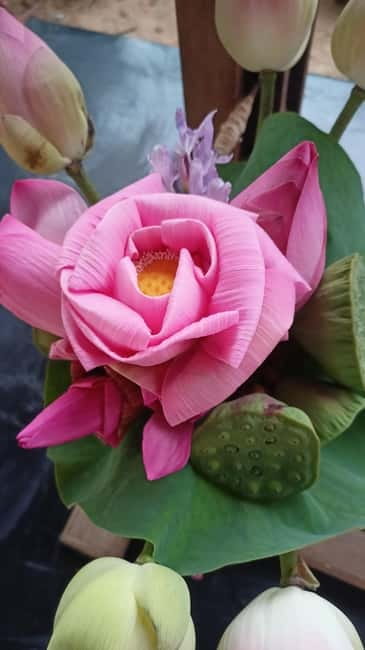
Angkor Silk Farm & Lotus Silk Farm: Siem Reap Discovery Tour
Read our review →
Khmer Water Blessing by Monk and Lotus Farm Visit
Read our review →

Half Day Trip: Silk Farm, Satcha, and Senteur d’Angkor Tour
Read our review →
Traditional Khmer Water Blessing by Monk and Lotus Farm Visit
Read our review →Browse the lists this tour appears in