
Review · NEW ZEALAND
Tekapo: Merino Sheep Shearing and Sheepdog Demonstration
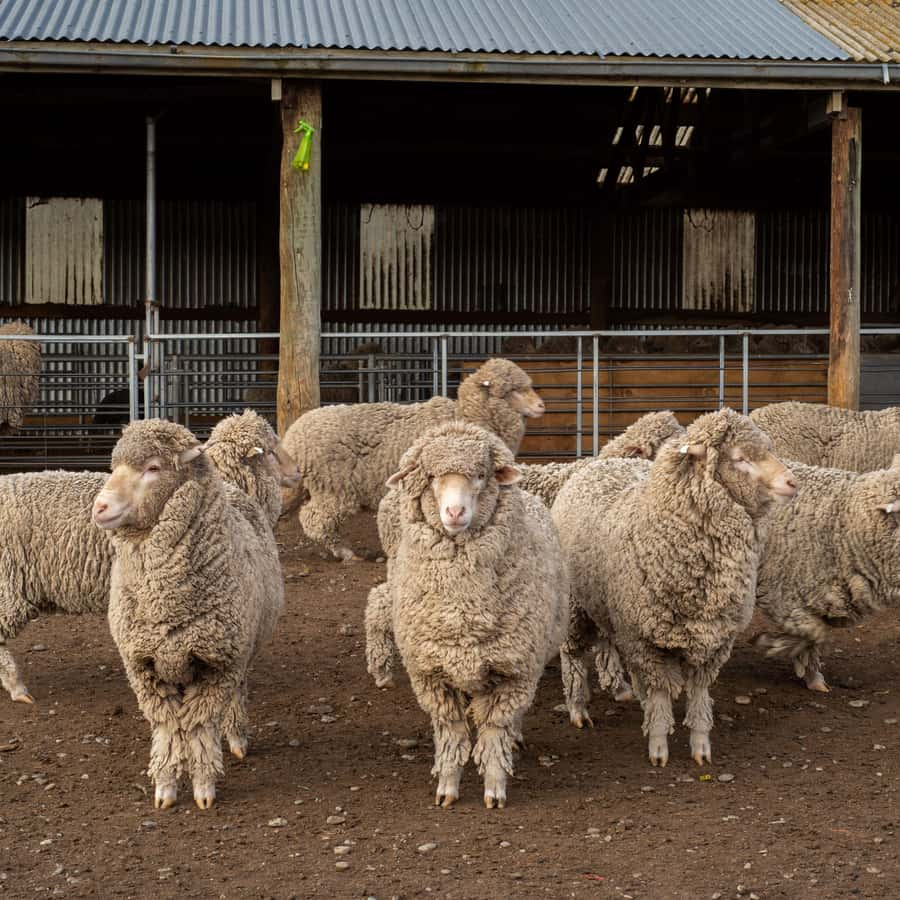
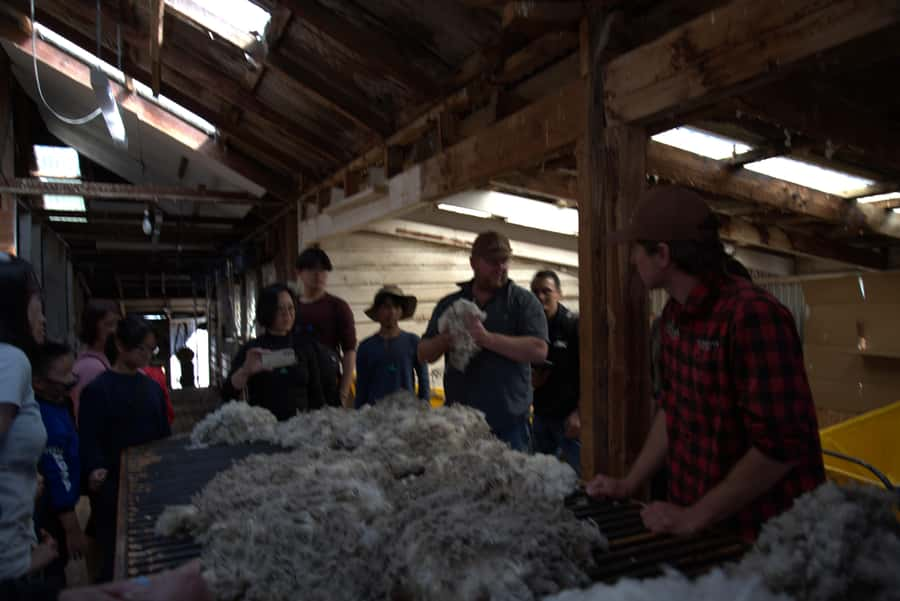
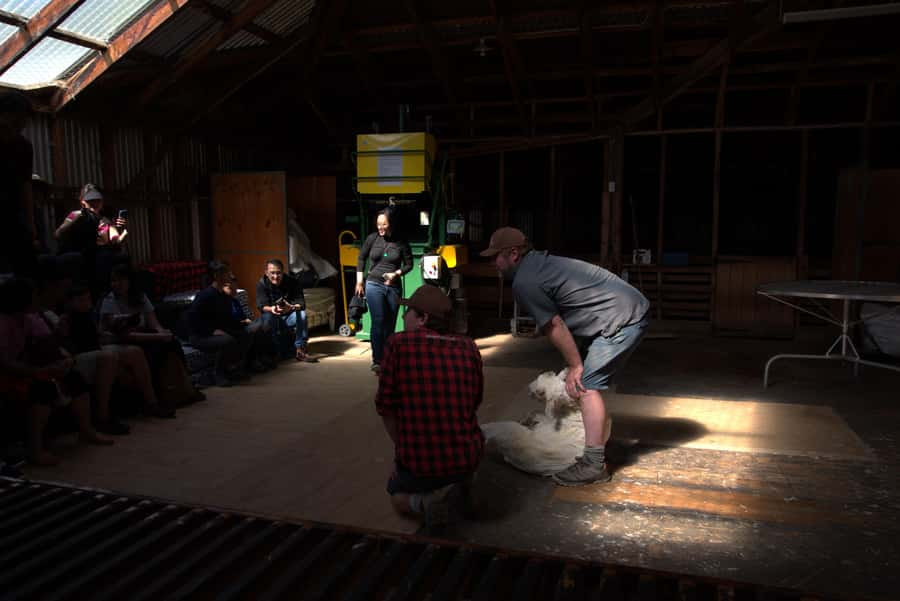
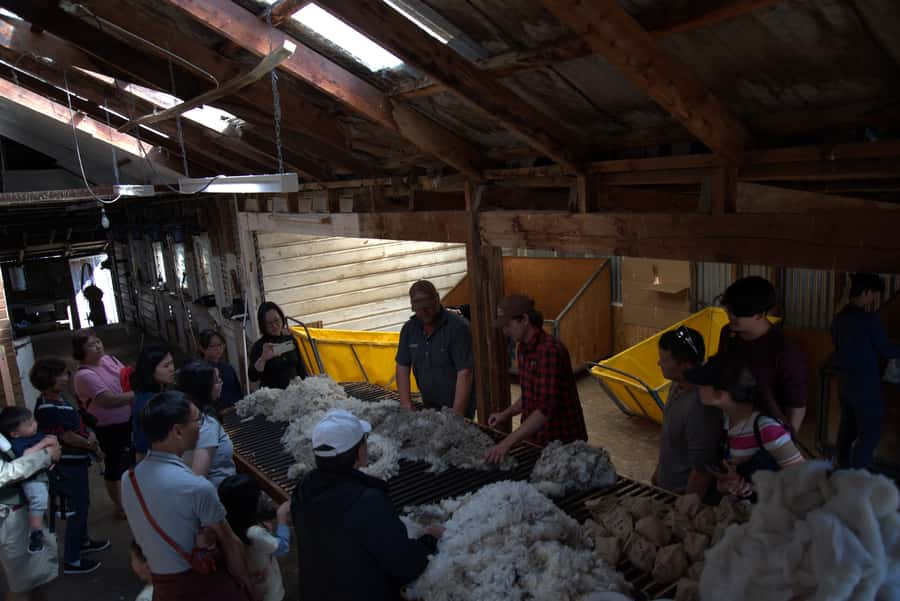
Watching a fleece come off a Merino sheep in one piece is the heart of this Lake Tekapo farm experience. You see the shearer work with speed and care, then learn what happens to the wool before it is packaged for further processing. The sheepdog display adds a lively second act, with trained dogs responding to whistles and commands.
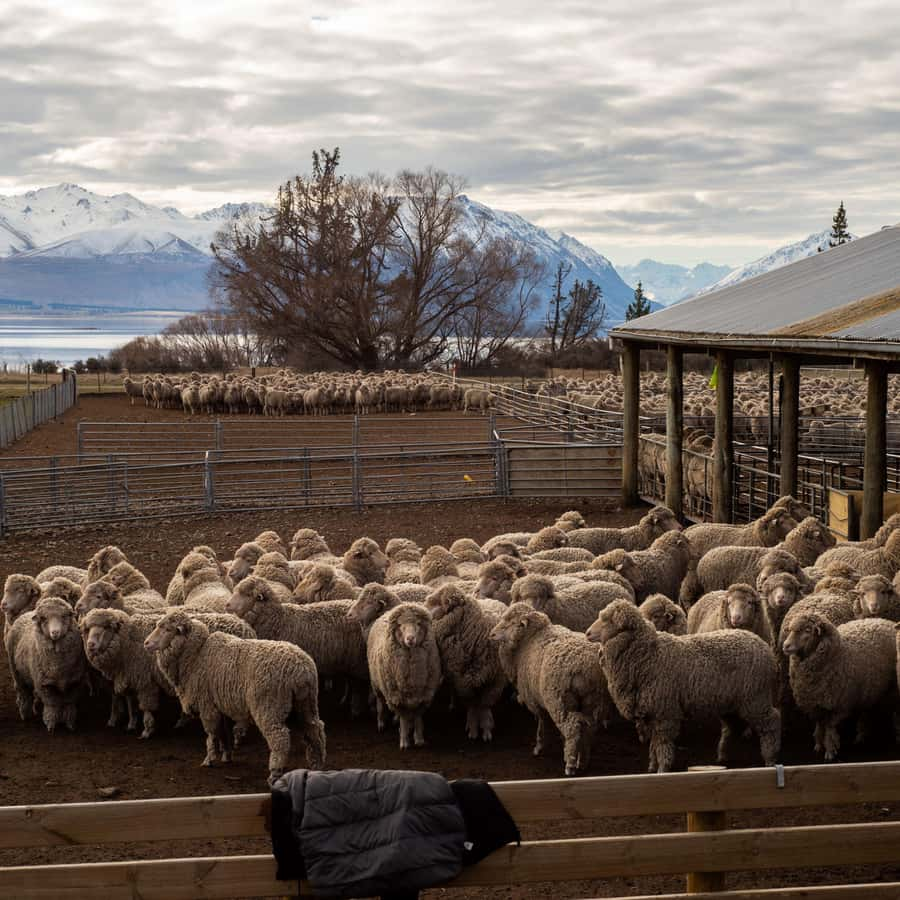
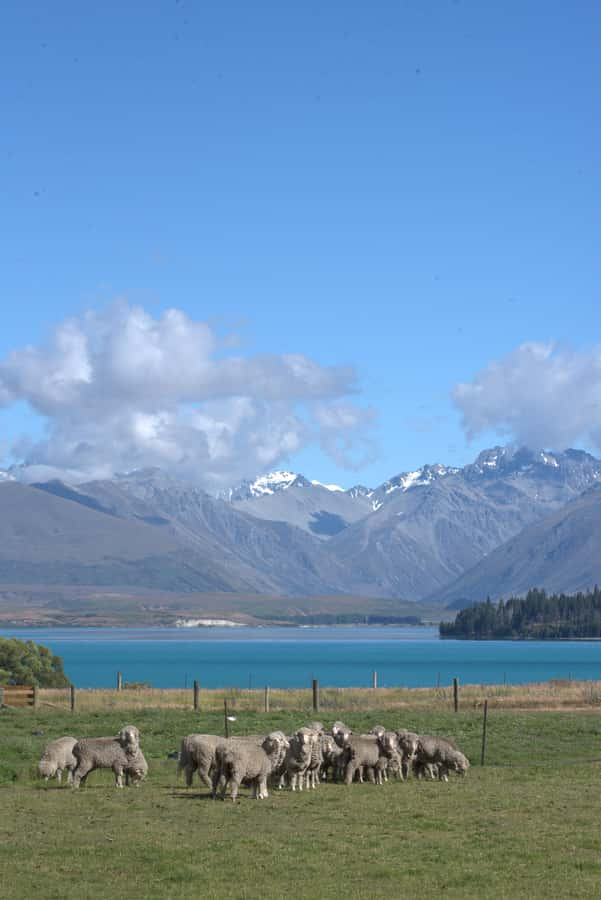
I like the honest look at farm life, especially the way guide Ethan connects sheep care, wool quality, shearing skills, and day-to-day farm management. I also like the setting: Mt Hay Station gives you broad views toward Lake Tekapo and the Southern Alps while sheep race, dogs work, and the farm carries on around you.
The main drawback is practical rather than cultural: you must make your own way to the station, and the access directions may need care. One visitor found the directions unclear and arrived just in time, so allow room for a slow approach on the gravel road. The one-hour visit also moves quickly if you want both a close look at shearing and plenty of time for questions.
Key points to know before booking
- A real Merino shearing demonstration: Watch a professional shearer remove the fleece in one piece using traditional methods and specialist tools.
- Ethan brings the farm story together: Expect clear explanations about sheep behavior, wool quality, packaging, dog training, and farm management.
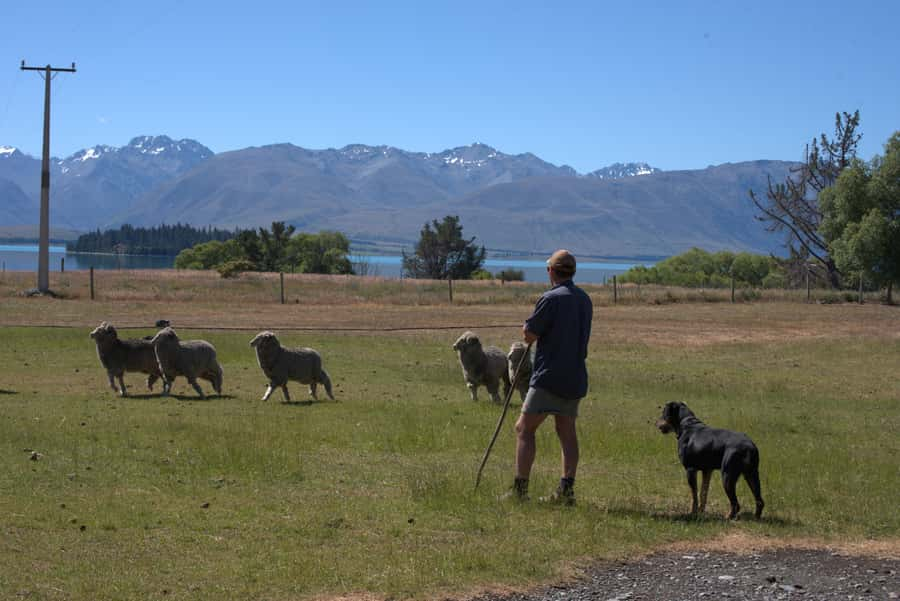
- Sheepdogs work with whistles and commands: The demonstration shows the dogs’ speed, control, and close partnership with their handlers.
- The scenery is part of the experience: Mt Hay Station sits near Lake Tekapo, with views toward the Southern Alps.
- Sheep racing keeps the hour lively: This is not only a talk about agriculture. You also get a playful, active farm display.
- Plan for outdoor conditions: Bring water, sunscreen, a hat, and comfortable clothing suited to sun and changing weather.
Seeing Merino wool come off in one piece
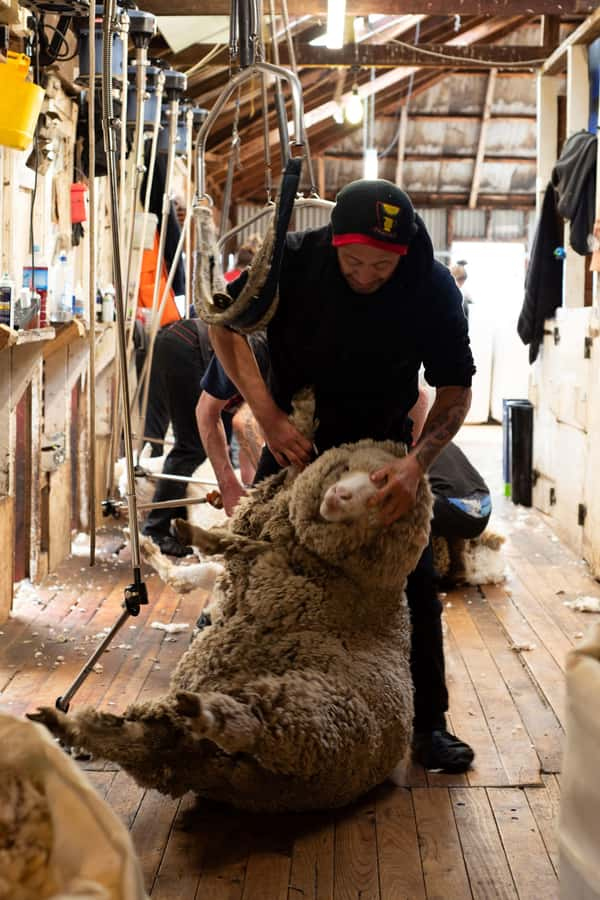
The shearing demonstration gives you a useful look at a job most people only see in finished form. Instead of meeting wool as a sweater or a soft scarf in a shop, you watch the first major step in its production.
A professional shearer uses traditional techniques and specialist equipment to remove the fleece as one piece. That sounds simple until you watch the pace and precision involved. The sheep must be handled gently, the wool needs to stay in good condition, and the shearer must work efficiently. It is skilled physical work, not a quick trim.
Ethan explains how sheep behave and what they need, which helps you understand why careful handling matters. You also learn about differences in wool quality, giving you a better sense of why one fleece can have greater value than another.
The session is not presented as a polished stage show. It has a personal, working-farm feel. That is a strength if you want to see an agricultural operation rather than a museum display. You are there to watch a real craft and hear how it fits into the wider running of a high country farm.
A few more farm days around New Zealand worth a look
- Queenstown: Queenstown Lake Cruise and Walter Peak Farm Tour
★ 4.8 · 950 reviews - Dinner at Walter Peak High Country Farm and Cruise from Queenstown
★ 4.5 · 576 reviews - Queenstown Lake Cruise and Walter Peak Farm Adventure
★ 4.5 · 439 reviews
From fleece to packaged wool
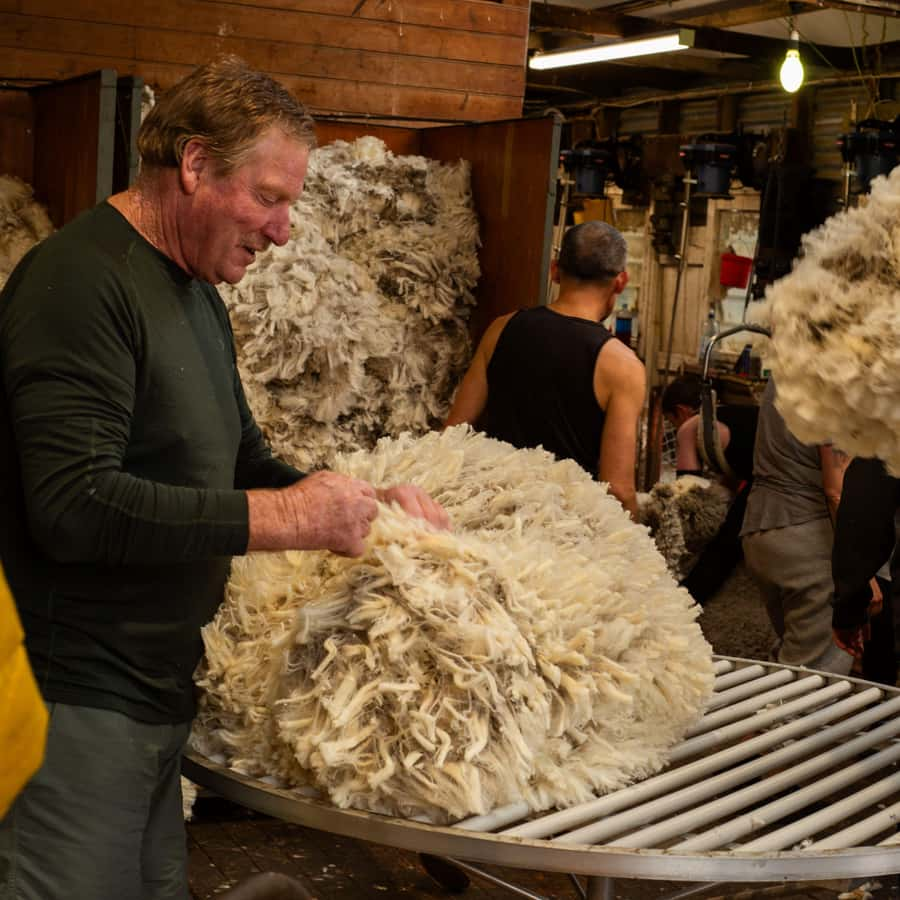
The useful part of this experience is that it follows wool beyond the shearing stand. You learn about the process from the first cut through to packaging for further processing.
That wider explanation gives the demonstration some purpose. You are not just watching wool fall to the ground. You begin to see the chain of work behind New Zealand’s wool industry, including the care of the animals, the skill of the shearers, the sorting of wool, and the steps needed before it reaches the global market.
Merino wool has an important place in that market because its quality is closely linked to the fineness and feel of the fiber. The tour also covers sustainable practices used in wool production. The information is useful for anyone curious about how a natural fiber is produced and why wool remains part of New Zealand’s agricultural identity.
You should keep your expectations sensible. This is a one-hour introduction, not a full technical course in wool grading or farm economics. Still, the combination of live shearing and practical explanation gives you more substance than a quick photo stop.
Sheepdogs, whistles, and controlled movement
The sheepdog demonstration changes the pace. After the careful, close work of shearing, you watch the dogs move sheep across open ground.
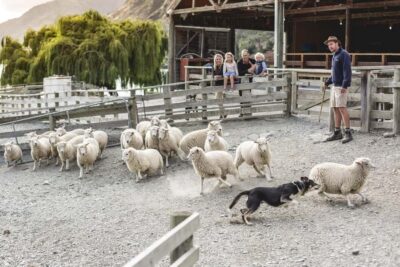
The dogs’ agility is impressive, but the real lesson is control. Ethan explains how handlers train the dogs and use whistles to direct them. The display shows that good herding depends on communication between dog, handler, and flock. The dogs are not simply chasing sheep. They are responding to signals and guiding movement.
This part works well for families and for anyone who enjoys working animals. It also gives you a clearer picture of how a high country farm operates. Sheepdogs are practical partners, not just an entertaining extra.
You may find the dog demonstration more exciting than the shearing because it covers more space and has a quicker rhythm. The two parts balance each other well. One shows close technical skill, while the other shows speed, training, and teamwork.
The sheep race adds a bit of farm fun
The sheep race is the least formal part of the visit, and that is exactly why it works. You get to watch sheep race against each other, bringing some humor and movement to a subject that could otherwise become quite technical.
It also helps keep the experience from feeling like a lecture. You can learn about wool quality and sustainable farming, then enjoy a simple farm spectacle. The race is not the main reason to book, but it gives the hour a light finish and makes the visit easier to enjoy with children.
This mix of information and entertainment is one of the tour’s better choices. The farm work remains the focus, but you are not expected to stand still and absorb facts for the entire hour.
Same fields, a different sort of day out:
- Rotorua: Authentic Kiwi Farm Experience at the Agrodome
★ 4.8 · 270 reviews - Agrodome Farm Experience including Farm Show and Farm Tour – Rotorua
★ 4.5 · 197 reviews - Llama Trek (Half-day) – Kaikoura Bay, Beaches & Seal Colony
★ 5.0 · 157 reviews - Shamarra Alpaca Farm Tours
★ 5.0 · 117 reviews
Mt Hay Station and the Lake Tekapo setting
The station is reached at Mt Hay Station, on the right-hand side, where you should see a large sign and arrows directing you onward. The location puts you in a real farm setting rather than a town-based demonstration space.
The backdrop matters. Lake Tekapo and the Southern Alps give the visit a strong sense of place, and the open setting helps you understand the scale of high country farming. You can take photographs, but bring your camera with care because this is an outdoor working environment, not a controlled indoor display.
Access is the part that needs the most attention. Transportation to the farm is not included, so you need to arrange your own way there. One account of the visit described unclear directions, including an incorrect reference to turning after a railway station that was not there. Use the Mt Hay Station sign and arrows as your main guide, and give yourself extra time.
The access road includes gravel. If you are driving a large camper, check the arrangement before setting out. A shuttle from Tekapo has been recommended for large campers, but the supplied information does not confirm a standard shuttle included with every booking. Treat transport as something to clarify in advance rather than something to assume.
What the one-hour format gives you
An hour is enough to cover the main elements without turning the visit into a half-day commitment. You see the shearing, hear about Merino wool and farm work, watch the sheepdogs, and enjoy the sheep race.
The short format suits a Tekapo schedule packed with lake views, walks, and other South Island stops. You can fit it into a morning or afternoon without giving up most of your day. It also makes the $59 price easier to assess: you are paying for a focused, guided farm visit with several different elements, not a long meal or a full farm stay.
The tradeoff is limited time for lingering. If you have many questions about wool production, you may need to keep them focused. The experience moves from one part to the next, so arrive ready to listen and make the most of the guide’s explanations.
Starting times vary, so check availability when booking. The live guide speaks English, and the experience is best suited to people who can follow spoken explanations while watching demonstrations outdoors.
Is $59 a fair price?
At $59 per person, I see this as a reasonable price if you want more than a quick photograph with sheep. You get a live shearing display, a sheepdog demonstration, an explanation of Merino wool production, information about sustainable farm practices, and a sheep race. The complimentary unique merchandise adds a small extra touch.
The value depends on your interest. If you already plan to visit a farm or you want to understand where wool comes from, the hour offers a useful introduction. If you only want scenic views, the price may feel less compelling because the scenery is a setting rather than the whole product.
Transportation and food are not included. There are no meals or drinks, so bring water and plan any food stop separately. The price also does not remove the need to get to Mt Hay Station yourself.
I would compare this with the cost of other guided activities in Tekapo by asking a simple question: do you want an active explanation of local farming, or only a scenic stop? For the former, the mix of demonstrations and guide commentary gives the fee solid value.
What to wear and bring to the station
Treat this as an outdoor farm visit. Bring:
- A sun hat
- Sunscreen
- Water
- A camera
- Comfortable clothing
- Outdoor clothing suited to the weather
You should wear shoes and avoid bare feet. Smoking, alcohol, and drugs are not allowed.
The advice about weather is important. Even a short visit can feel exposed in an open farm setting. Sun protection is sensible, and a layer of outdoor clothing gives you more comfort if conditions change.
People with animal allergies should think carefully before booking. The activity involves sheep and working dogs, so close contact with animals and wool is part of the setting. It is also not suitable for people with back problems, given the outdoor farm environment and the physical demands of getting around the site.
Who will enjoy this farm experience most?
I would recommend it to anyone curious about New Zealand agriculture, especially if you have never seen sheep shearing in person. It suits families, photographers, wool fans, and people who want a short activity with a strong local connection.
Children may enjoy the sheepdogs and sheep race most, while adults may take more from the wool grading, packaging, and farm management discussion. The visit also works well for people who prefer a personal guide and a working setting over a large commercial attraction.
It may be less suitable if you have back problems, animal allergies, or little interest in farm animals. It is also not the best choice if you want a long, slow activity with a meal included. The visit is brief, outdoors, and built around demonstrations.
A personal look at farm work, not a staged spectacle
The tone of the experience is one of its strongest features. Ethan explains the sheep, their needs, the wool, herding, dog training, and farm management in a direct way. The focus is not only on making the visit entertaining. You also get a look at the skill and effort behind the finished wool product.
I especially like that the shearing is linked to the people who do the work. The tour covers the shearers’ lifestyle and training, helping you see shearing as a craft that requires practice and stamina. That adds human detail to what could otherwise be a simple demonstration.
The setting also keeps the experience grounded. You are not watching a video or handling a sample in a city shop. You are at a farm near Lake Tekapo, with sheep, dogs, gravel, weather, and open views around you.
Should you book the Merino sheep shearing tour?
Book it if you want a short, informative look at real New Zealand farm life and you enjoy seeing skilled people and trained animals at work. The strongest reasons are the one-piece fleece demonstration, Ethan’s broad explanations, the sheepdogs responding to whistles, and the Lake Tekapo setting.
Think twice if you have animal allergies, back problems, or no easy way to reach Mt Hay Station. Confirm your route, allow extra time for the gravel-road approach, and ask about transport if you are driving a large camper.
For $59, this is a good pick for a focused one-hour activity that combines agriculture, scenery, and light-hearted farm fun. It gives you something more meaningful than a quick sheep photograph, without taking half a day from your Tekapo plans.
FAQ
Where does the sheep shearing experience take place?
It takes place at Mt Hay Station near Lake Tekapo in New Zealand’s South Island. Look for a large sign on the right and follow the arrows.
How long does the experience last?
The experience lasts one hour.
How much does it cost?
The listed price is $59 per person.
What language is the tour conducted in?
The live tour guide speaks English.
Is transportation to the farm included?
No. Transportation to the farm is not included, so you need to arrange your own way to Mt Hay Station.
What will I see during the experience?
You will see a Merino sheep shearing demonstration, a sheepdog demonstration, and sheep racing. You will also hear about Merino wool production and sustainable farming practices.
Is food or drink included?
No. Meals and drinks are not included. Bring water with you.
What should I bring?
Bring a sun hat, sunscreen, water, a camera, comfortable clothes, and suitable outdoor clothing.
Can I cancel for a full refund?
Yes. You can cancel up to 24 hours in advance for a full refund.
Who should not take this experience?
It is not suitable for people with back problems or animal allergies. Bare feet, smoking, alcohol, and drugs are not allowed.
Just added around New Zealand
- Private, via beaches, Kiwi farm to Rotorua 8 lakes & Geothermal★ 5.0 · 20 reviews
- Boutique tour , Mt Maunganui, NZ farm, Rotorua lakes/geothermal★ 4.5 · 50 reviews
- Queenstown Lake Cruise to Walter Peak Farm with BBQ Buffet★ 4.5 · 25 reviews
- Queenstown: Walter Peak Farm Tour and Lake Cruise★ 5.0 · 5 reviews
- Bullswool Heritage Farm General Entry Ticket★ 5.0 · 6 reviews
- Wool Sheep Farm Experience with Handmade Wool Hat in New Zealand★ 5.0 · 9 reviews
- Mt. Hay Farm Experience Genuine Country Farming(Carbon Positive)★ 4.0 · 2 reviews
- Lyttelton Cruise Excursions: Christchurch Sightseeing with Sheep Farm★ 3.5 · 20 reviews
New Zealand Farm Tours, compared.
Queenstown Lake Cruise and Walter Peak Farm Tour
Read our review →
Dinner at Walter Peak High Country Farm and Cruise from Queenstown
Read our review →
Queenstown Lake Cruise and Walter Peak Farm Adventure
Read our review →
Rotorua: Authentic Kiwi Farm Experience at the Agrodome
Read our review →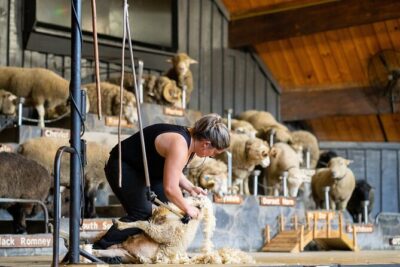
Agrodome Farm Experience including Farm Show and Farm Tour – Rotorua
Read our review →
Llama Trek (Half-day) – Kaikoura Bay, Beaches & Seal Colony
Read our review →
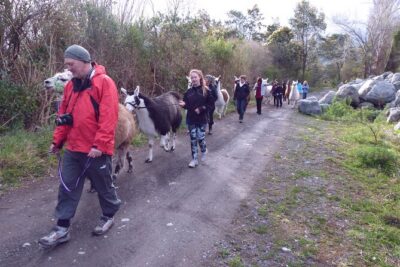
Llama Trek (Taster) – Kowhai River Valley and Native Woodland Tour
Read our review →Browse the lists this tour appears in