
Review · NEW ZEALAND
Llama Trek (Half-day) – Kaikoura Bay, Beaches & Seal Colony
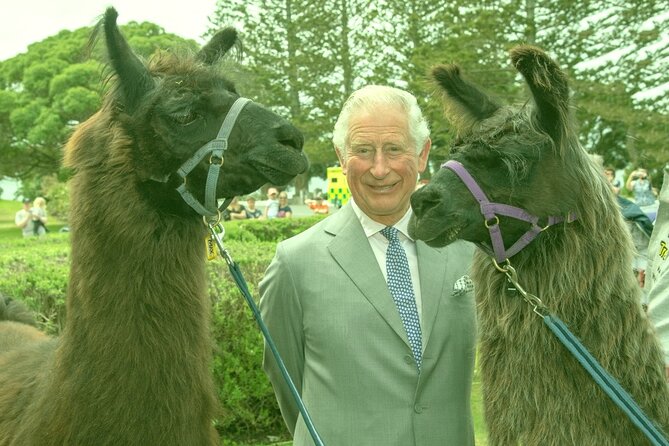
Kaikoura’s most unusual coastal walk pairs your own llama with beaches, mountain views, and New Zealand fur seals. Kevin, the guide, starts by showing you how to handle and read your woolly companion, then leads a small group along the bay and peninsula coast. The llama can carry your belongings in saddle bags, which is both useful and a fine excuse to let an animal do the packing.
I like the careful introduction to the llamas and the way this tour adds real local context. You hear about Kaikoura’s whaling past and the major changes caused by the 2016 earthquake, rather than simply walking past the scenery. I also like the small maximum of eight people, though the rocky beach sections mean this is not a perfectly smooth stroll for everyone.
- Your llama carries your belongings: Saddle bags make the walk practical, not just photogenic.
- Kevin leads the trek: Expect guidance on llama behavior, handling, and the area’s past.
- Ohau Point adds wildlife: You get about 20 minutes to watch New Zealand fur seals in their natural setting.
- Kaikoura supplies the scenery: Beaches, boardwalks, the bay, and mountains fill the route.
- Cake and a drink are included: A small but welcome finish to a three-and-a-half-hour outing.
- The group stays small: A maximum of eight people gives the animals and guide room to work with you.
Why a llama walk works so well in Kaikoura
Kaikoura is famous for wildlife and dramatic coastal views, but you do not need a boat or a long hike to experience its character. This tour gives you a slower way to see the area. You walk beside a llama, stop to watch seals, and learn how the coast and town changed over time.
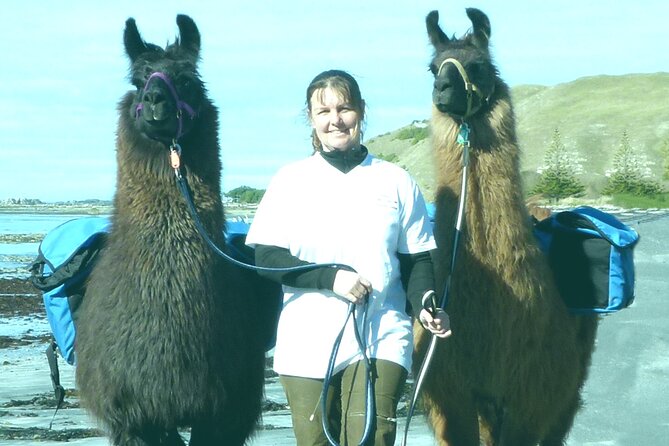
The llama is not a decorative prop. You are assigned your own animal and learn how to build trust and communicate through basic handling. That makes the experience more involved than a standard guided walk. You are not simply following a guide while taking pictures. You have a calm, woolly companion to care for along the route.
The llamas also carry your belongings in saddle bags. Keep your load sensible, but this means you can bring small personal items without wearing a full pack. It adds a practical working-animal element to the outing and helps you understand why llamas are useful beyond their famous faces.
Meeting Kevin and getting ready with your llama
The tour begins at the ChargeNet Charging Station at 51 West End, Kaikoura. The activity returns to this same meeting point, so plan around that rather than expecting a one-way walk or transport to another part of town.
Kevin’s introduction is an important part of the experience. You learn about llama behavior and how to handle your animal before heading out. That early lesson matters because the tour is built around a respectful relationship between you and the llama, not just a lead rope and a photo opportunity.
I appreciate that the preparation is treated as part of the outing. It gives you a chance to settle in and understand what your llama is communicating. It also helps keep the pace comfortable for both people and animals. Names such as Archie, Harry, Hero, and Joey have been associated with memorable treks, though your assigned llama will depend on the day.
The group size is capped at eight people. That is a strong feature here. A small group makes it easier for Kevin to answer questions, notice how each person is managing their llama, and share stories without turning the walk into a lecture from a distance.
More Alpaca and Llama Farms in New Zealand:
- Shamarra Alpaca Farm Tours
★ 5.0 · 117 reviews - Llama Trek (Taster) – Kowhai River Valley and Native Woodland Tour
★ 5.0 · 76 reviews - Christchurch Alpaca Farm Tour From Kaiapoi
★ 5.0 · 2 reviews
Along Kaikoura Bay and the peninsula coast
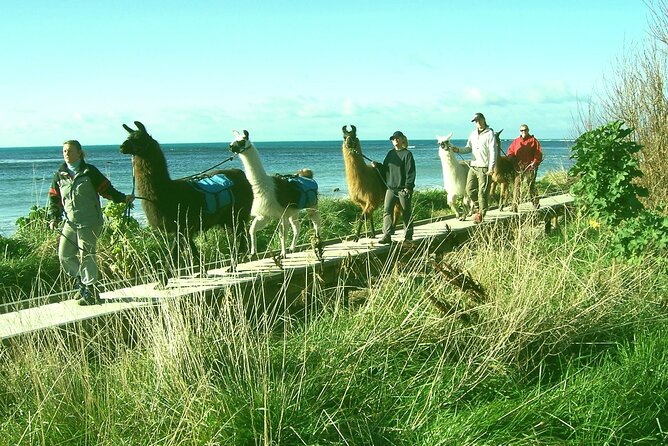
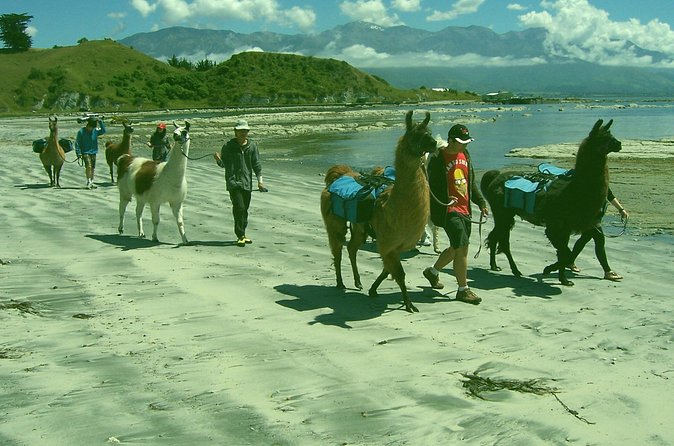
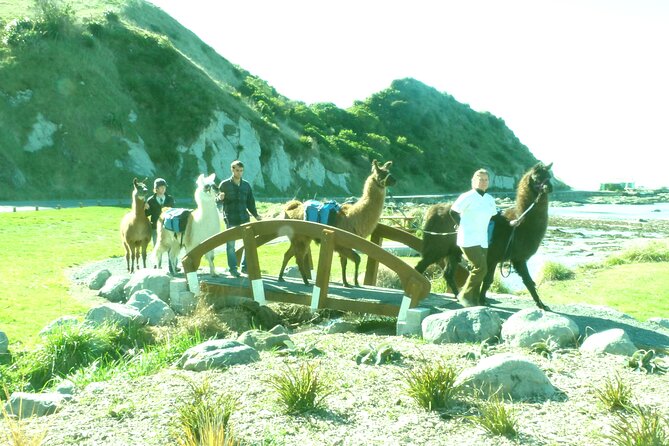
Once you are ready, the walk follows Kaikoura Bay and the peninsula coastline. The route includes beaches, boardwalk sections, and the main Kaikoura beaches, with mountains rising behind the coast. The combination keeps the setting varied without turning the tour into a demanding hike.
The beaches are fairly flat, but you should expect some rocky patches. Wear sturdy, comfortable shoes and do not treat this as a polished footpath walk. The route is accessible for most people, but uneven ground can affect your comfort, especially if you are less steady on your feet.
The coastal setting gives the llama trek a sense of place. You are not walking in an enclosed farmyard or a generic rural field. You are moving through the same coastal area that shapes Kaikoura’s daily life, with the bay on one side and the mountains nearby.
Kevin adds local stories as you go. The town’s whaling past helps explain Kaikoura’s older identity, while the 2016 earthquake shows how quickly a coastal region can change. The earthquake produced major effects in and around Kaikoura, and hearing about those changes while walking the coast gives the information a physical setting.
I like this balance of animal facts and local information. You learn about llamas through direct contact, then connect the walk to the town’s human and geological story. That makes the outing feel more substantial than a short animal encounter.
Ohau Point Seal Colony and the wildlife stop
A stop at Ohau Point Seal Colony gives the tour its clearest wildlife moment. You have about 20 minutes to watch New Zealand fur seals in their natural habitat, with no admission charge for this stop.
The seal colony is a different kind of encounter from the llama walk. The llamas are calm, guided, and close to you. The seals remain wild animals, so the experience is about watching rather than touching or feeding. That contrast is useful for families and anyone interested in seeing local wildlife without turning every animal into an interactive attraction.
Keep your expectations sensible. This is a 20-minute stop, not a long wildlife session, and the tour does not promise a set number of seals or a particular behavior. You may find the stop especially rewarding if you enjoy observing animals in their own setting, but the main focus remains the llama trek.
The coastal views also give the stop value beyond the seals. Ohau Point adds another angle on Kaikoura’s shore, and it breaks up the walking with a focused wildlife pause.
The small comforts that improve the half-day
The tour lasts about three hours and 30 minutes. That is long enough to make the outing feel like a proper half-day activity, but short enough to fit around other plans in Kaikoura.
A free hot or cold drink and cake are included. This is not the main reason to book, but it is a useful touch after walking along beaches and boardwalks. The refreshment also gives the experience a more relaxed rhythm. You get time to pause, talk with the guide, and enjoy the setting instead of rushing from one point to the next.
The tour is listed at $154.52 per person. That is not a cheap casual walk, so the value depends on what you want from it. You are paying for a small-group experience, an individual llama, a guide-led introduction to llama handling, local interpretation, a coastal route, the seal stop, and refreshments. Compared with a simple viewpoint visit, the price is high. Compared with a private animal encounter plus a guided local walk, it is easier to justify.
The maximum group of eight strengthens the value. A larger group could make it harder to work with your llama or ask questions. Here, the limited numbers support the personal side of the experience, which is the main reason to choose it over a standard sightseeing stop.
More Walking and Hiking Trips in New Zealand:
- Chiang Mai: 2-Day Jungle Trek with Elephant Farm & Raft Ride
★ 4.7 · 881 reviews - From Ho Chi Minh: Can Gio Trek – Monkey Island & Crocodile Farm
★ 5.0 · 353 reviews - Selogriyo Temple and Trekking Java Rice Terraces, hidden waterfall -Nature Java
★ 5.0 · 179 reviews - Yogyakarta: Selogriyo Temple Tour & Java Rice Terrace Trek
★ 5.0 · 175 reviews
Who will enjoy this trek most
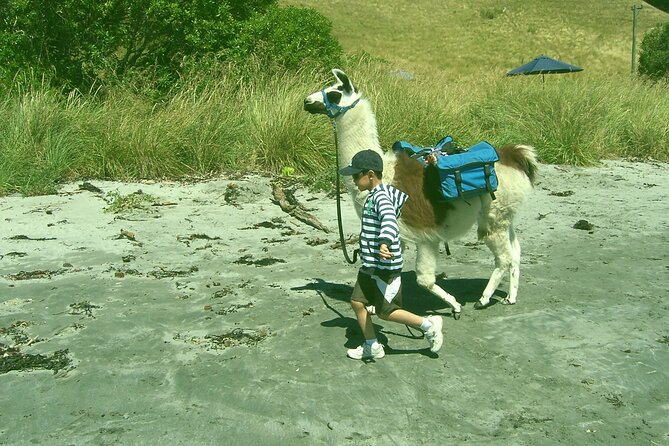
This tour suits animal lovers who want more than a quick photo. You get time to learn how llamas behave, handle one with guidance, and understand the care involved in working with these animals.
It is also a strong choice for families. Children under four can join free, but they must be carried in a backpack. The operator can supply one, but you need to request it when booking. Older children may enjoy the novelty of walking with a llama, while adults get the added benefit of local stories and the seal colony.
Couples and solo visitors can also fit comfortably into the small-group format. The outing has enough structure to feel easy to join, but enough interaction to avoid feeling like a passive sightseeing ride.
Most people can take part, and service animals are allowed. Still, remember that the route includes a few rocky sections. If you need a completely level, paved walk, ask yourself if this type of beach route is suitable before booking.
What makes the guide’s approach different
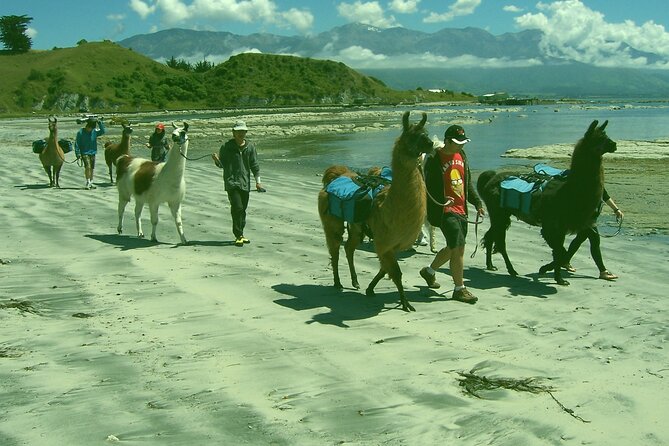
Kevin’s role is more than pointing out the route. He explains llama behavior and encourages you to observe how the animal responds. That approach gives you a better chance of understanding the llama as an individual rather than treating it as a prop.
The animal care also shapes the pace. A llama trek cannot be run like a timed city tour with every minute tightly packed. You need to allow room for the animals to settle and for the group to learn. I see that as a benefit, especially if you prefer experiences built around attention rather than speed.
Kevin also connects the walk to Kaikoura. His stories cover the whaling industry, the earthquake, geological changes, and coastal life. The information is woven into the route, so you gain a stronger sense of why the area looks and feels the way it does.
That mix of animal handling and local interpretation is the tour’s strongest feature. If you only want a scenic walk, you may find the llama instruction more than you need. If you want an activity with a clear human, animal, and local connection, it earns its place in your Kaikoura plans.
Practical details before you book
The tour uses mobile tickets, and confirmation is normally sent at booking. If you book within four hours of departure, confirmation comes as soon as possible and depends on availability.
Free cancellation is available if you cancel at least 24 hours before the start time. Changes or cancellations inside that window are not accepted for a refund. The activity also needs a minimum number of participants, so if the operator cancels for that reason, you can choose another date or experience or receive a full refund.
Because this is a coastal walk, dress for changing outdoor conditions and wear shoes that can handle sand and rocks. The supplied details do not promise hotel pickup, so make your way to the West End meeting point independently.
The route ends back where it begins. That makes planning easier if you have a car, a rental vehicle, or another activity later in the day.
Should you book the Kaikoura Llama Trek?
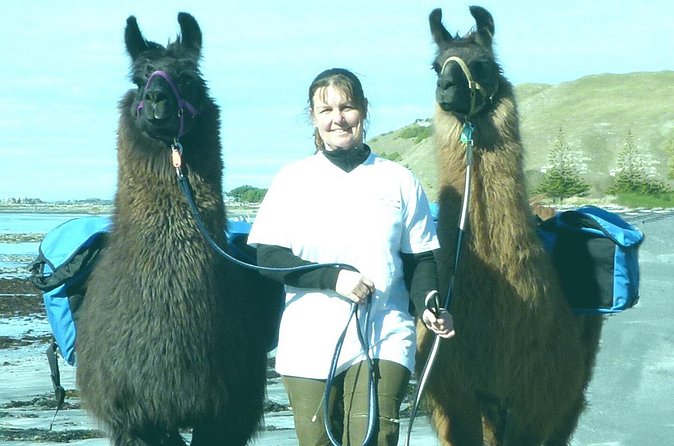
Book it if you want an unusual, personal way to see Kaikoura. The best reasons are the one-llama-per-person format, Kevin’s clear interest in animal care, the small group, and the blend of beaches, seals, mountain views, and local stories.
Think twice if you want a fast sightseeing tour, a fully paved route, or a low-cost walk. The price is significant, the beaches have rocky sections, and the experience depends on being willing to slow down and work with an animal.
For families, animal lovers, and visitors who value a hands-on activity with local meaning, I think the trek is a strong choice. The cake and drink are a pleasant extra, but the real value is the time spent learning how to see Kaikoura through both the llama’s behavior and the coast around you.
FAQ
How long does the Kaikoura Llama Trek last?
The experience lasts approximately three hours and 30 minutes.
Where does the tour begin?
It begins at the ChargeNet Charging Station, 51 West End, Kaikoura 7300, New Zealand.
Where does the tour finish?
The activity ends back at the meeting point.
Is the seal colony included?
Yes. The route includes a stop at Ohau Point Seal Colony, where you have about 20 minutes to watch New Zealand fur seals in their natural habitat.
Is food or a drink included?
Yes. A free hot or cold drink and cake are included.
How many people can join the tour?
The maximum group size is eight people.
Can children under four take part?
Children under four are free, but they must be carried in a backpack. The operator can supply a backpack if you request one when booking.
Can I cancel for a refund?
You can cancel up to 24 hours before the experience start time for a full refund. Cancellations or changes made less than 24 hours before the start time are not accepted for a refund.
More Half-Day Trips in New Zealand
- Half-Day Thai Cooking Class at Organic Farm in Chiang Mai
★ 5.0 · 19,087 reviews - Half-Day Thoroughbred Horse Farm Tour in Kentucky
★ 5.0 · 1,924 reviews - Punta Cana: Monkey Land Half-Day Safari and Plantation
★ 4.6 · 1,205 reviews - Chiang Mai: HALF-DAY COOKING COURSE at a Thai Cooking Farm
★ 4.9 · 705 reviews
Just added around New Zealand
- Private, via beaches, Kiwi farm to Rotorua 8 lakes & Geothermal★ 5.0 · 20 reviews
- Boutique tour , Mt Maunganui, NZ farm, Rotorua lakes/geothermal★ 4.5 · 50 reviews
- Queenstown Lake Cruise to Walter Peak Farm with BBQ Buffet★ 4.5 · 25 reviews
- Queenstown: Walter Peak Farm Tour and Lake Cruise★ 5.0 · 5 reviews
- Bullswool Heritage Farm General Entry Ticket★ 5.0 · 6 reviews
- Wool Sheep Farm Experience with Handmade Wool Hat in New Zealand★ 5.0 · 9 reviews
- Mt. Hay Farm Experience Genuine Country Farming(Carbon Positive)★ 4.0 · 2 reviews
- Lyttelton Cruise Excursions: Christchurch Sightseeing with Sheep Farm★ 3.5 · 20 reviews
New Zealand Farm Tours, compared.
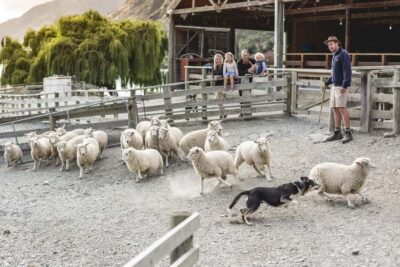
Queenstown Lake Cruise and Walter Peak Farm Tour
Read our review →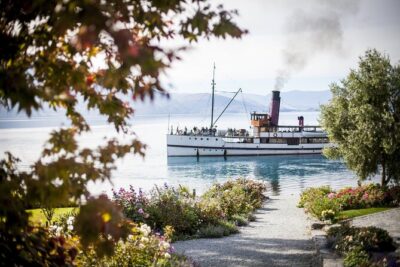
Dinner at Walter Peak High Country Farm and Cruise from Queenstown
Read our review →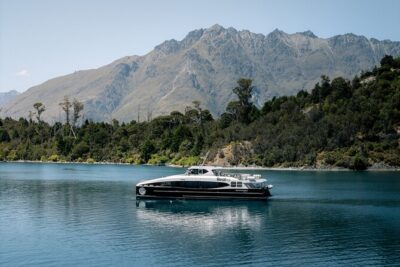
Queenstown Lake Cruise and Walter Peak Farm Adventure
Read our review →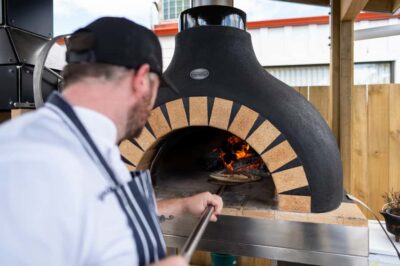
Rotorua: Authentic Kiwi Farm Experience at the Agrodome
Read our review →
Agrodome Farm Experience including Farm Show and Farm Tour – Rotorua
Read our review →
Llama Trek (Taster) – Kowhai River Valley and Native Woodland Tour
Read our review →
Browse the lists this tour appears in