
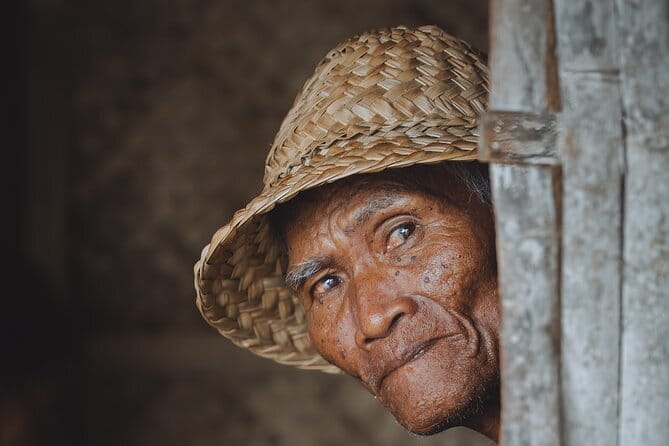
Review · INDONESIA
Seaweed Farming Activity and Sightseeing at Diamond Beach
Nusa Penida’s seaweed farms offer something most island excursions miss: a look at ordinary coastal work, not just a quick photo stop. You’ll begin with a short presentation, then head into the water with local farmers to learn how seaweed is grown and handled.
I like the hands-on format, and I like that your spending helps local families facing an uncertain market. The small group, air-conditioned vehicle, local lunch, and photos from the day add useful value.
The main catch is the tide. Seaweed farming may not be possible at every departure, as one outing had to skip the farm work because of water conditions. You’ll still visit beautiful Atuh and Diamond beaches, but book with some flexibility.
Key points to know before booking

- Seaweed farming is tide-dependent: The practical farm work may be changed or canceled if conditions make it unsafe or unsuitable.
- You work with local farmers: The activity explains traditional methods and gives you a chance to try them yourself.
- The group is limited to six people: That makes it easier to ask questions and follow instructions in the water.
- Atuh Beach and Diamond Beach are included: You get cultural activity and classic Nusa Penida scenery in one half-day outing.
- Lunch, transport, and photos are included: You can borrow water boots, and the team can share pictures and videos afterward.
- Ayu has made a strong impression: Her friendly storytelling and knowledge of Indonesian culture added warmth to one reported outing.
Seaweed farming before the beach stops
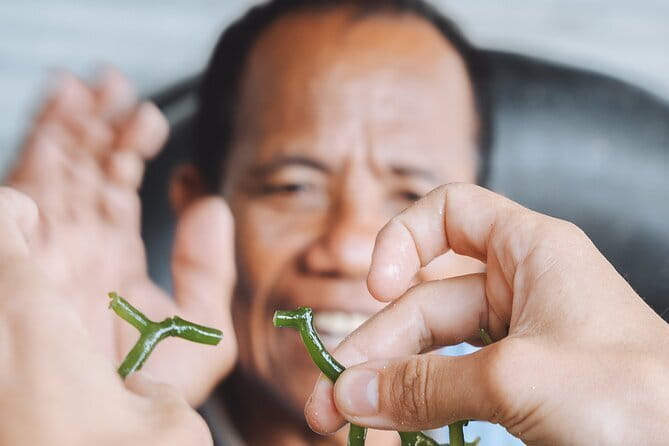
The best reason to book this experience is that it puts you beside a working community rather than treating Nusa Penida as a string of viewpoints. At the basecamp below Coral Cafe, you begin with a presentation about seaweed, its place in coastal ecosystems, and its role in the island economy.
This opening matters. Without it, tying or tending seaweed might feel like a novelty activity. With the background, you understand why the work supports local households and why a shifting market can make life difficult for farming families.
You’ll also receive an orientation before the practical part begins. Water boots are available to borrow, which is a useful touch since the activity takes place in the sea and may involve walking on uneven or wet ground.
The team then drives you to the farm in a maintained, air-conditioned vehicle. That matters on Nusa Penida, where a six-and-a-half-hour day can feel long if you spend every transfer in heat. The vehicle also keeps the schedule practical as you move between the farm and the beaches.
At the farm, local partners show you how the work is done. You are not simply watching from shore. You’ll learn the traditional techniques and try them with guidance from the team and farmers.
The precise work will depend on the conditions that day. Tides affect access and safety, so the farm activity cannot be treated as a guaranteed performance. One outing had to skip the seaweed work because of the tide, which is the clearest warning to keep your expectations flexible.
That limitation does not make the program poor value, but it does change what you are buying. You are paying for a cultural experience built around real coastal work, not a staged show that runs exactly the same way in every weather condition.
A few more farm days around Indonesia worth a look
- Ubud: Monkey Forest, Jungle Swing, Rice Terrace, and Water Temple
★ 5.0 · 7,160 reviews - Ubud: Waterfalls, Water Temple & Rice Terraces Private Tour
★ 5.0 · 5,484 reviews - Ubud: Waterfall, Rice Terraces & Monkey Forest Private Tour
★ 4.9 · 4,894 reviews
What the seaweed activity means for local families
Seaweed farming can look simple from a distance. The value of this tour is that it explains the work behind the finished product and connects that work to local income.
Your participation helps support families who depend on seaweed farming. The program also gives you a better sense of how coastal communities use the sea without turning every visit into a resort activity.
I appreciate this direct link between the excursion and the people who live there. The experience is still a paid tour, but its focus is not limited to scenery. You learn about a working tradition and put money into a small local operation.
The guides also place seaweed in a wider context, including its global relevance and role in coastal ecosystems. The information is designed to be accessible, so you do not need prior knowledge of farming or marine science.
The group limit of six is especially helpful here. A large bus group would make a hands-on activity awkward. With fewer people, you should have more room to hear instructions, ask questions, and watch the local farmers at work.
The operator, Ecotourism Nusa Penida, says it is licensed and insured. That does not remove the need to follow instructions or judge your own comfort in the water, but it is reassuring for an activity that involves practical work at the coast.
Atuh Beach, a scenic payoff after the farm
The listed route includes Atuh Beach, one of the day’s major scenery stops. It gives the schedule a useful change of pace after the educational and physical part of the seaweed activity.
You can expect dramatic coastal views and time to take in the setting. The exact length of the stop is not specified, so ask your guide how much time is planned if you care about walking, sitting, or taking photographs.
The most useful clue comes from an outing where the seaweed work could not go ahead. Even with that change, Atuh Beach was described as one of the most beautiful places on the island, and guide Ayu helped make the day enjoyable with stories about Indonesia.
That gives you a practical way to think about the itinerary. Atuh is not merely a backup location. It is a worthwhile part of the day in its own right, especially if you want scenery to balance the community focus of the farm.
Still, this is not a beach day designed around long swimming time. The experience is built around seaweed farming and sightseeing, so you should not book it expecting a leisurely resort-style beach stay.
Diamond Beach and the choice to walk down

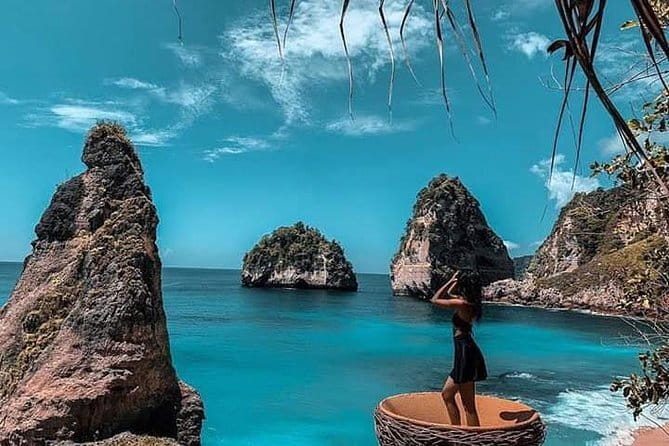
The second major stop is Diamond Beach, known for its striking views from above and its famous Bali swing. Here you can choose how active you want to be.
You may walk down toward the beach, try the swing, or stay above and enjoy the wide view. This flexibility is useful because people in the same small group may have different energy levels and comfort with steep or uneven paths.
The description does not give a precise walking time, path condition, or swing fee. Ask about those details on the day before committing to the descent or the swing. Your guide can also help you judge how the stop fits within the schedule.
I like that the beach stop is not presented as an all-or-nothing challenge. You do not have to walk down to appreciate Diamond Beach. The viewpoint itself is part of the attraction, and staying above may be the sensible choice if you are tired after the farm activity.
Atuh and Diamond also make the tour appealing to people who want more than one type of Nusa Penida experience. You get a working coastal community, then two scenic stops that show why the island is popular.
The tradeoff is time. A six-and-a-half-hour tour cannot provide endless time at each place, especially when it includes a presentation, transport, farm instruction, lunch, and two beach visits. If you want long beach walks and extended photography sessions, a dedicated beach tour may suit you better.
Same fields, a different sort of day out:
- Ubud: Full-Day Rice Terrace, Monkey Forest & Waterfall
★ 5.0 · 2,634 reviews - Full-Day Tour to Water Temples and UNESCO Rice Terraces in Bali
★ 5.0 · 2,539 reviews - Ubud: Balinese Cooking Class at an Organic Farm
★ 5.0 · 1,786 reviews - Ubud: Monkey Forest, Ceking Rice Terraces and More– Full Day
★ 4.7 · 917 reviews
Lunch, photos, and the small-group advantage
A local lunch is included, which makes the day easier to manage. You do not have to arrange a separate meal during the excursion, and the food adds another local element to a program already focused on island life.
The meal is described as local, but no specific dishes are listed. If you have dietary needs, ask the operator before booking rather than assuming the menu will fit your requirements.
The team also takes photos and videos during the day and will share them afterward. This is a practical bonus for an activity where your hands may be busy and your attention is on the farmers, the water, or the scenery.
You should still treat this as an added service, not a formal photography session. The supplied information does not promise a set number of images, editing, or delivery time.
The six-person maximum is one of the strongest features. A small group makes the farm work more personal and keeps the vehicle experience less crowded. It also gives you a better chance to speak with your guide and local partners.
Ayu is specifically associated with a warm outing, sharing stories about Indonesia and helping create a friendly mood. Guide assignments can change, so do not assume she will lead every departure, but her presence shows the kind of personal exchange this activity aims to offer.
Is $74.19 good value?
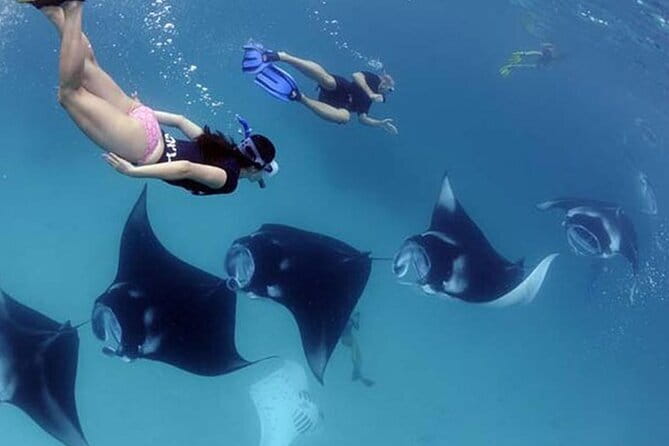
At $74.19 per person, this is not the cheapest way to see a couple of Nusa Penida beaches. The price makes more sense when you count the full package: roughly six and a half hours, transport in an air-conditioned vehicle, a presentation, local guides, hands-on farm instruction, lunch, beach sightseeing, and photos or videos.
The cultural focus is the key value. If you only want a viewpoint and a beach, you may find simpler and less expensive options. If you want to understand a local livelihood and take part in it, this tour offers something harder to arrange independently.
The small maximum also supports the price. You are not being moved through the day as part of a large coach group. The limited size should make the teaching more direct and the transfers more comfortable.
Hotel pickup and drop-off may be arranged if you ask at least 12 hours ahead. The standard meeting point is Ecotourism Nusa PenidaBuyuk on Jalan, Ped, with the activity ending back there.
The advertised opening period runs from April 15, 2024 through December 7, 2026, from 10 a.m. to 4 p.m. daily. Confirm your exact start details when booking, since the listed duration is approximately six hours and 30 minutes rather than a promise of a fixed minute-by-minute schedule.
Who will enjoy this day most

I would recommend this experience to you if you want a closer look at island life and are happy to trade some sightseeing efficiency for personal contact. It suits people who enjoy learning by doing, small groups, and activities with a direct benefit to local families.
It is also a good fit if you want a gentle cultural introduction rather than a full-day adventure. The farm work is hands-on, but the schedule includes transport, lunch, and viewpoints, so the day is not built entirely around physical exertion.
You should have a moderate level of physical fitness. The seaweed work may involve wet ground and movement around the shore, while Diamond Beach offers an optional walk down. Service animals are allowed.
I would be more cautious about booking if your main goal is guaranteed seaweed farming. Tides may prevent the activity, and the program cannot control that. In that case, think of the farm work as the central aim but Atuh and Diamond Beach as important alternatives.
The tour also suits first-time visitors who want a well-organized introduction to Nusa Penida. The presentation gives you context, the guide handles the movement between stops, and the local lunch removes one small planning task.
Booking flexibility and practical planning
Free cancellation is available if you cancel at least 24 hours before the start time. Changes or cancellations made within 24 hours are not accepted for a refund, and the cut-off follows local time.
The experience is often booked about 33 days ahead. That suggests you should reserve early if your dates are fixed, particularly if you want a small group and need hotel pickup.
Wear clothing and footwear you are comfortable getting wet. The operator provides water boots to borrow, but you should still plan for a practical day rather than a polished sightseeing outing.
Bring the usual essentials for coastal stops, including sun protection and anything you need for personal comfort. The provided details do not specify what refreshments are included beyond lunch, so do not assume extra food and drinks are supplied.
Tell the operator about hotel pickup at least 12 hours in advance. If you are meeting at the basecamp, allow enough time to arrive before the 10 a.m. opening time and confirm the meeting instructions after booking.
Should you book the seaweed farming tour?
Book this experience if you want local contact, a small group, and a real working activity alongside Nusa Penida’s best-known beach views. The chance to meet farmers and try traditional methods gives the day more meaning than a standard photo tour.
Book it with an open mind about the tide. If seaweed farming is unavailable, you will still have the presentation, lunch, transport, and visits to Atuh and Diamond beaches, but the main cultural activity may be shortened or removed.
At $74.19, I see fair value for a carefully planned half-day that combines education, community support, scenery, and practical extras. I would not choose it for a long beach stay or a guaranteed farm session. I would choose it for a more personal look at Nusa Penida, with Ayu-style storytelling, local food, and the chance to see how coastal families make a living.
FAQ
How long does the seaweed farming and beach tour last?
The experience lasts approximately six hours and 30 minutes.
Where does the activity start and finish?
It starts at Ecotourism Nusa PenidaBuyuk on Jalan, Ped, Nusa Penida, and ends back at the same meeting point.
Which beaches are included?
The itinerary includes Atuh Beach and Diamond Beach, also listed as Pantai Diamond.
Is seaweed farming guaranteed?
No. The activity depends on tide conditions, and seaweed farming may not be possible if the water conditions are unsuitable.
How many people can join the tour?
The maximum group size is six travelers.
Is hotel pickup available?
Yes. Hotel pickup and drop-off can be arranged if you notify the operator at least 12 hours in advance.
Just added around Indonesia
- Ubud Rice terrace,Zip-line and waterfall★ 5.0 · 4 reviews
- Full Day Tour to Water Temples UNESCO Rice Terraces in Bali★ 5.0 · 4 reviews
- Explore Ubud Art Market, Monkey Forest and Rice Terraces★ 5.0 · 16 reviews
- Exploring Munduk Village (Waterfalls, rice terrace, Traditional local house)★ 4.5 · 2 reviews
- Ubud Monkey Forest Rice Terrace Temple Waterfall Private Tour★ 5.0 · 7 reviews
- Private Tour to Sumampan Waterfall, Monkey forest, Rice terraces and Swing★ 5.0 · 30 reviews
- Discover Hidden Waterfall, Unesco Rice Terraces and Mountain Temple★ 5.0 · 17 reviews
- Jatiluwih Spiritual Journey of Melukat with Rice Terrace View★ 5.0 · 9 reviews
Indonesia Farm Tours, compared.
Monkey Forest, Jungle Swing, Rice Terrace, and Water Temple
Read our review →
Waterfalls, Water Temple & Rice Terraces Private Tour
Read our review →
Waterfall, Rice Terraces & Monkey Forest Private Tour
Read our review →
Full-Day Rice Terrace, Monkey Forest & Waterfall
Read our review →
Full-Day Tour to Water Temples and UNESCO Rice Terraces in Bali
Read our review →
Monkey Forest, Ceking Rice Terraces and More– Full Day
Read our review →
Browse the lists this tour appears in