Review · HOI AN
Cooking Class Hoi An – Organic Garden – Farming Tour-Handicrafts
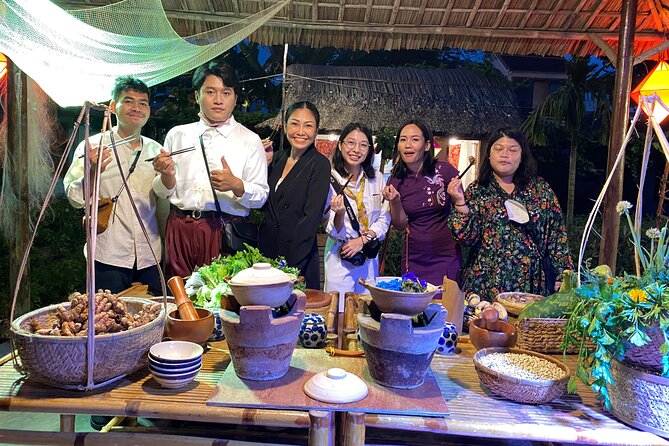
Rice paper making is the surprise here. At Caman Village, you do more than follow a recipe. You walk through an organic garden, cut herbs for your meal, mix a garden-fresh drink, and learn how Vietnamese dishes begin before they reach the kitchen. The setting is open, airy, and arranged like a small local village.
I like the personal scale of the class and the chance to learn about plants as well as food. I also like that rice paper making and herbal drinks add something different from the usual spring-roll lesson. The main consideration is transport: getting to the meeting point at 01 Nguyễn Thành Ý is your responsibility, and extra food or drinks cost more.
Key points to know before booking
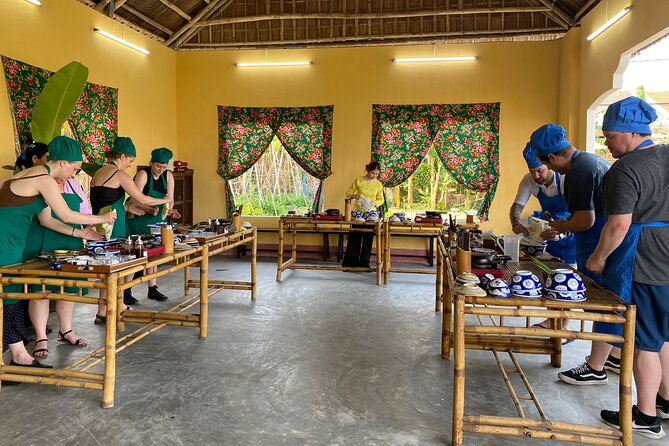
- Rice paper is part of the lesson: You get a less common cooking-class activity rather than only chopping and assembling dishes.
- The garden supplies the class: You can collect vegetables and herbs, then learn how local plants are used.
- The experience lasts about 3 to 4 hours: The main Caman Village program is listed at about 2 hours and 30 minutes, with the full activity taking longer.
- Your group has the class to itself: This is a private activity, not a large shared demonstration.
- The price is $33.63 per person: That includes the garden visit, welcome drink, herbal drink activity, cooking lesson, apron, hat, book, and certificate.
- You return to the starting point: There is no private transportation included, so plan your route to and from Caman Village.
What makes Caman Village different from a standard Hoi An cooking class
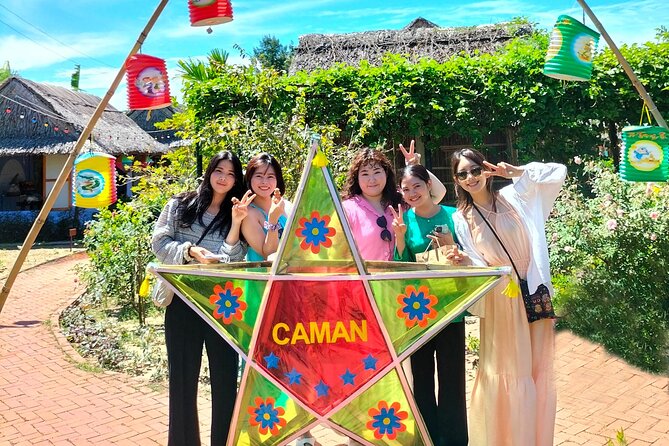
Many cooking classes begin with a market visit or a demonstration in a restaurant kitchen. Caman Village takes a different route. The first part happens among vegetables and herbs grown by local people, so you see ingredients in the soil before they appear on your plate.
That matters because Vietnamese cooking depends on fresh herbs, leafy greens, and sharp contrasts in flavor. You get a better sense of why a dish tastes the way it does when you have seen the plants, handled them, and heard how they are used.
The site is described as a small village with houses, tools, and equipment arranged much like a local home. That should make the class feel less like a staged cooking show and more like a visit to a working household garden. The open space is also a welcome break from Hoi An’s narrow streets and busy central lanes.
The class is conducted in English and Vietnamese. No individual instructor names are provided, but the Caman team leads you through the garden, drinks, games, and cooking. The focus is not just on getting the recipe right. You also learn about the taste, use, and cultural place of Vietnamese dishes.
More Farm Cooking Classes in Hoi An
- Cocolocal Farm Cooking Class with market tour and basket boat
★ 5.0 · 231 reviews - Rural Hoi An Cycling, Cooking Class at Organic Farm
★ 5.0 · 72 reviews - Farming & Cooking Class in Hoi An – Small Group Tour
★ 5.0 · 71 reviews
Starting with plants, herbs, and a welcome drink
Your visit begins at 01 Nguyễn Thành Ý in Cẩm An, Hội An. The activity ends at the same meeting point, which keeps the logistics simple once you arrive. Since transportation is not included, you need to arrange your own way there and back.
A welcome drink is included. From there, the garden visit gives the class its sense of place. You walk around the organic growing area and learn about local herbs and plants, including their uses and benefits.
This is a useful part of the experience even if you already know your way around a kitchen. Vietnamese meals often rely on fresh leaves and herbs that may be unfamiliar to you. Seeing them growing, then using them later, gives you a practical memory that a printed recipe alone cannot provide.
You can also cut vegetables and herbs for your cooking lesson. That small task changes the rhythm of the class. Instead of receiving every ingredient in a neat bowl, you take part in preparing the raw materials.
The garden may be especially appealing if you want a quieter Hoi An activity. The setting is designed to feel peaceful, with room to walk and pause. It is not simply a cooking room with a few potted plants near the door.
Making a herbal drink from garden ingredients
One included activity is preparing a herbal drink with organic ingredients collected from the garden. This is a good bridge between the garden tour and the cooking lesson.
You learn which plants can be used in a drink and how they fit into everyday Vietnamese food culture. The task also gives you something to do before the main cooking begins, rather than leaving you waiting for the chef’s demonstration.
The drink activity received particular praise from the supplied feedback, along with the garden walk and plant explanations. That makes sense: it is a simple, low-pressure activity that lets you handle local ingredients without needing advanced cooking skills.
Do not expect a full beverage workshop with a long list of recipes. The information provided points to one herbal drink activity using ingredients from the garden. Its value is the connection between plant, preparation, and taste.
Cooking 3 to 4 Vietnamese dishes
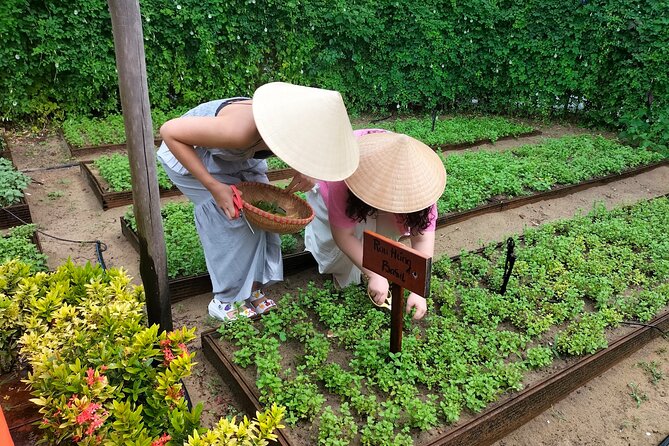
The central lesson teaches you to cook three or four local dishes under the chef’s instruction. The exact dishes are not specified, so you should not book expecting a named menu unless Caman confirms it before your visit.
You do receive a chef’s hat and apron. These are practical for the class and make the activity feel more hands-on, especially for families and small private groups. A cooking book and certificate of participation are also included at the end.
The class is suitable even if cooking is not your hobby. The supplied feedback describes the staff as welcoming and says the lesson helped connect Vietnamese cuisine with daily life in Vietnam. That points to a class built around participation and explanation, not a test of speed or technique.
You can expect to cut vegetables, work with herbs, and follow the chef’s steps as you prepare the dishes. Because the class is private, your group can take its time with questions and tasks. That is a useful advantage over a large class where everyone must move on at the same signal.
The lesson may also be a good choice for a mixed group. One person can be interested in food, another in gardening, and another in Vietnamese culture. The garden, games, drink preparation, and cooking give each person a different way to take part.
More Farm Cooking Classes in Vietnam
- From Hoi An: Cooking Class at Organic Farm
★ 5.0 · 40 reviews - Farmer & cooking class package
★ 5.0 · 18 reviews - Private Biking, Farming, & Cooking Class in Hoi An
★ 5.0 · 15 reviews - Cooking Class with Tra Que Eco Farm & Local Market Discovery
★ 5.0 · 5 reviews
The rice paper lesson is worth your time
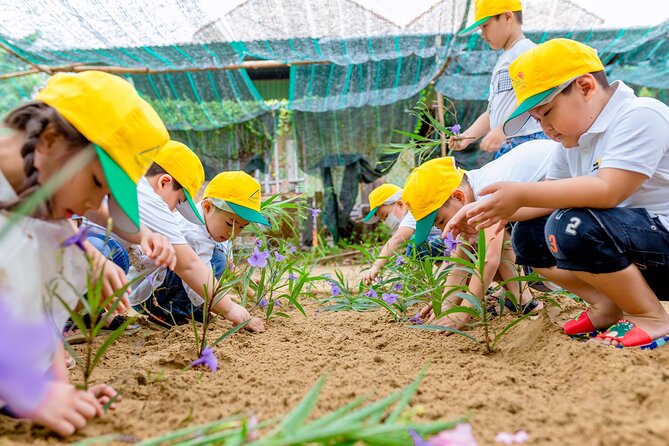
Rice paper making is one of the more unusual parts of this experience. The available description does not name the exact dish made with the rice paper, but the activity clearly includes making rice paper during the class.
You should expect this to be a process lesson rather than a quick demonstration. Rice paper is a basic part of many Vietnamese dishes, yet it is easy to treat it as something that simply comes from a packet. Making it yourself shows the work behind a familiar ingredient.
This is also a good reason to choose Caman Village if you have already taken a general Vietnamese cooking class elsewhere in Southeast Asia. The rice paper activity adds variety and gives you a skill that is less commonly included in a standard menu.
Since the class includes three or four dishes, the rice paper work is only one part of the session. You still get the broader lesson in vegetables, herbs, drinks, and local cooking methods.
Folk games add a welcome change of pace
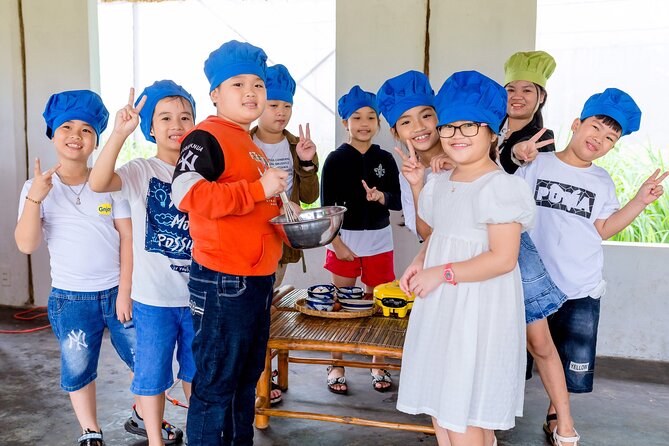
Traditional folk games are included. This may sound like a small extra, but it helps keep the activity from becoming a long stretch of standing at a counter.
The games offer a glimpse of a different side of local culture. They are also useful for groups with children or for anyone who wants more than a food lesson. The information provided does not identify the games, so you should treat this as a general cultural activity rather than expect a specific game by name.
The mix of walking, gardening, making a drink, playing, and cooking also helps the three-to-four-hour session feel varied. If you prefer a tightly focused lesson with little conversation or movement, this class may feel more relaxed than you want.
A private class with a small-village feel
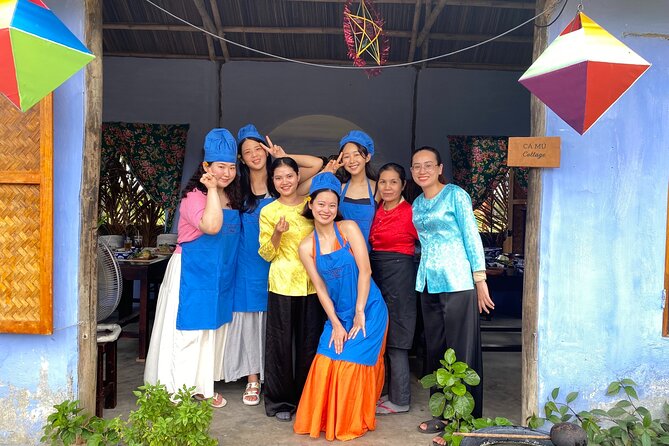
This is a private activity, so only your group participates. That is one of the strongest practical reasons to consider it.
A private format gives you more control over the pace. You can spend extra time asking about plants, repeat a cooking step, or let a child take part without worrying about holding up a large class. It also makes the experience better suited to couples, families, and friends who want to share one kitchen activity.
The private format does not mean private transportation is included. You still need to get to Caman Village independently, and the activity returns to the meeting point rather than dropping you at your hotel.
The village setting is furnished with houses, tools, and equipment similar to those found in a local home. That should appeal to you if you prefer a lived-in setting over a formal cooking school. At the same time, anyone expecting a polished restaurant kitchen may find the surroundings more basic and home-style.
The nearby resort stop is optional, not part of the price
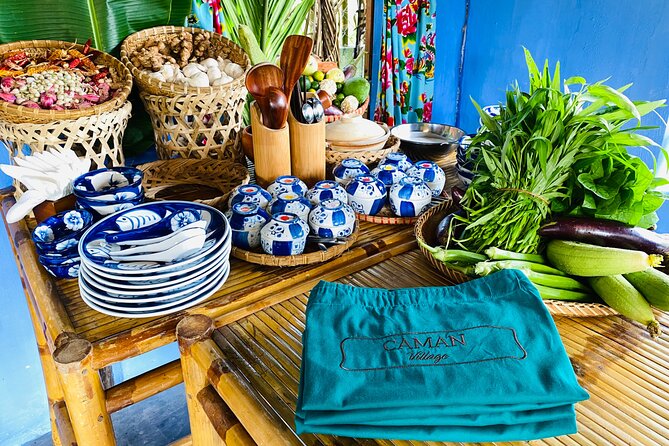
A five-star resort next to Caman Village and by the river is noted as a possible place to visit for a snack or cold beer by the pool. This is not part of the included cooking package, and additional food and drinks are not included.
Think of it as an optional add-on rather than a planned part of the class. If you want to make an afternoon of the outing, the location may give you another place to sit after cooking. If you are watching your spending, simply finish at Caman Village and return to the meeting point as planned.
The resort mention should not lead you to assume pool access, a meal, or a drink is included. Those items are extra.
Is $33.63 a fair price?
At $33.63 per person, the value is good if you want several activities in one outing rather than only a cooking demonstration.
Your price includes:
- A welcome drink
- A visit to the organic garden
- Information about local herbs and plants
- Vegetable and herb gathering for the class
- A folk-game activity
- Herbal drink making
- Chef’s hat and apron
- Cooking three or four local dishes
- A cooking book
- A certificate of participation
The price does not include private transportation, extra food, drinks, or optional purchases. That means your final cost depends partly on how you reach the village and whether you add anything afterward.
The class also has a strong value advantage for small private groups. You are paying for a multi-part activity with direct instruction, not only a meal. The cooking book gives you something to use later, although the supplied information does not say which exact recipes it contains.
The class usually fills bookings about 18 days ahead, so you should not assume you can always arrange it at the last minute. Booking ahead is sensible if your Hoi An schedule is tight.
Timing, weather, and who should book
Allow three to four hours for the full experience. The main Caman Village stop is listed at about two hours and 30 minutes, but the overall tour duration is longer. Avoid scheduling a tight transfer or another fixed activity immediately afterward.
The activity requires good weather. If poor weather forces cancellation, you can receive a different date or a full refund. You can also cancel for a full refund up to 24 hours before the local start time. Changes or cancellations made inside that window are not accepted for a refund.
Most people can participate, and the activity is near public transportation. Still, you should plan your own route because private transport is not included.
I would recommend this experience to you if:
- You want food, gardening, and culture in one outing
- You like small private activities
- You are interested in herbs and fresh ingredients
- You are traveling with children or a mixed-interest group
- You have already done a basic cooking class and want rice paper making
- You prefer a quiet village setting to a busy city kitchen
I would think twice if you only want a short, highly structured cooking lesson, or if you need transportation arranged from your hotel. The garden and cultural parts are central to the experience, so they are not extras to skip.
Should you book Caman Village?
Book it if you want a relaxed Hoi An activity that connects the garden to the plate. The best reasons are the organic garden, rice paper making, herbal drink preparation, and private instruction. You also get a cooking book, certificate, and a lesson in three or four local dishes for a moderate price.
Skip it if your main goal is a famous restaurant-style meal, a named menu, or included hotel transfers. The class is home-style and activity-filled, not a quick gourmet workshop.
For most visitors who want a personal introduction to Vietnamese food and plants, Caman Village is a well-rounded choice. Set aside half a day, arrange your own transport, and treat the garden and rice paper work as equal parts of the experience.
FAQ
Where does the cooking class begin?
The activity begins at 01 Nguyễn Thành Ý, Cẩm An, Hội An, Quảng Nam, Vietnam.
Where does the activity end?
The activity ends back at the meeting point.
How long does the experience last?
The full experience lasts approximately 3 to 4 hours. The main Caman Village program is listed at about 2 hours and 30 minutes.
How much does the activity cost?
The listed price is $33.63 per person.
Is transportation included?
No. Private transportation is not included, so you must arrange your own transportation to and from the meeting point.
Is this a private activity?
Yes. Only your group participates in the activity.
What food activities are included?
You learn to cook three or four local dishes, collect vegetables and herbs, and make a herbal drink with organic garden ingredients. Rice paper making is also part of the cooking experience.
What other activities are included?
The experience includes an organic garden visit, information about local plants and herbs, a gardening activity, and traditional folk games.
Can I cancel for a refund?
Yes. You can cancel at least 24 hours before the local start time for a full refund. Cancellations or changes made less than 24 hours before the start time are not accepted for a refund. If poor weather causes the activity to be canceled, you can receive a different date or a full refund.
More Organic Farm Tours in Hoi An
- Half-Day Thai Cooking Class at Organic Farm in Chiang Mai
★ 5.0 · 19,087 reviews - Ubud: Balinese Cooking Class at an Organic Farm
★ 5.0 · 1,786 reviews - 5 tours in 1 (Eco Farm/Horseback/City Tour/Buggy/Zipline)
★ 4.5 · 1,443 reviews - Buggy Tour to Macao Beach and Water Cave with Organic Farm
★ 5.0 · 1,201 reviews
More Organic Farm Tours in Vietnam
- Rural Cycle, Market Tour, Basket Boat & Organic Farm Cooking
★ 5.0 · 64 reviews - Hoi An Rural Life And Cooking At Organic Farm
★ 5.0 · 7 reviews - Exploring organic farm & Vietnamese Culinary with Master chef
★ 5.0 · 35 reviews - Hue Organic Farm Visit and Traditional Cooking Class
★ 5.0 · 4 reviews
Just added around Hoi An
- Sunset photo tour with the farmers★ 4.5 · 7 reviews
- Tra Que Village Cycling And Farming★ 5.0 · 15 reviews
- Experience Buffalo Ride and Farmer in Hoi An★ 5.0 · 3 reviews
- Hoi An Rural Life And Cooking At Organic Farm★ 5.0 · 7 reviews
- Hoi An Home Hosted Meal in Rice Farmer Home★ 5.0 · 3 reviews
- Hoi An Farming and Fishing life Experience Tour★ 5.0 · 17 reviews
- Hoi An Rice Farm Tour and Buffalo Riding with Local Home Meal★ 5.0 · 6 reviews
- Half Day Ride Bike To The Farm and Cooking Activity with Foot Massage★ 5.0 · 2 reviews
Hoi An Farm Tours, compared.
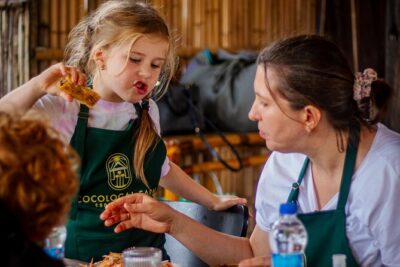
Cocolocal Farm Cooking Class with market tour and basket boat
Read our review →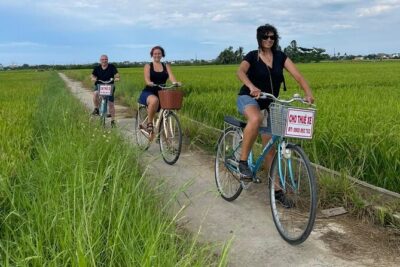
Rural Hoi An Cycling, Cooking Class at Organic Farm
Read our review →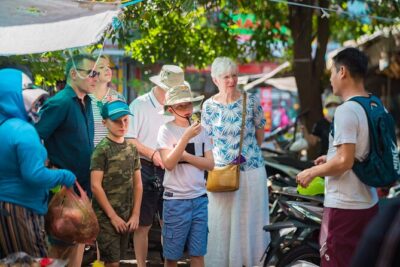
Farming & Cooking Class in Hoi An – Small Group Tour
Read our review →
Rural Cycle, Market Tour, Basket Boat & Organic Farm Cooking
Read our review →
Funny day Biking, Farming, Buffalo riding and Basket boat
Read our review →