
Review · KAMPOT
Kampot: Pepper Farm Tour, Salt Field, Cave & Secret Lake
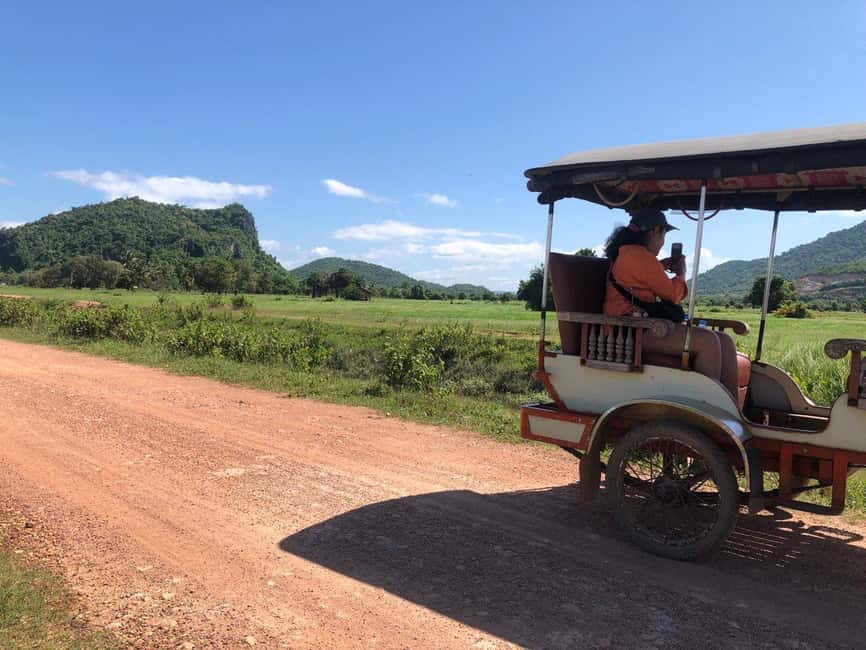
Kampot’s countryside comes alive on this practical, varied outing: one stop shows you how sea salt is made, another leads into a limestone cave with a 7th-century Hindu temple, and La Plantation lets you taste the pepper that made this province famous. You also get a quiet lake, local stories, drinks, and hotel transport for $23.
I like the local guides and drivers, especially Micki, Vandy, Seth, and the other guides praised for safe driving, good English, humor, and personal stories about growing up in Kampot. I also like the range of the day: farmers, salt workers, fishermen, village life, history, and food all appear in one trip.
The main consideration is seasonal change. Salt fields may be dry or inactive outside the working season, and heavy rain can alter the route. The cave also involves walking on uneven ground, so this is not a good fit for anyone over 70 or anyone needing a stroller.
Key points to know before booking
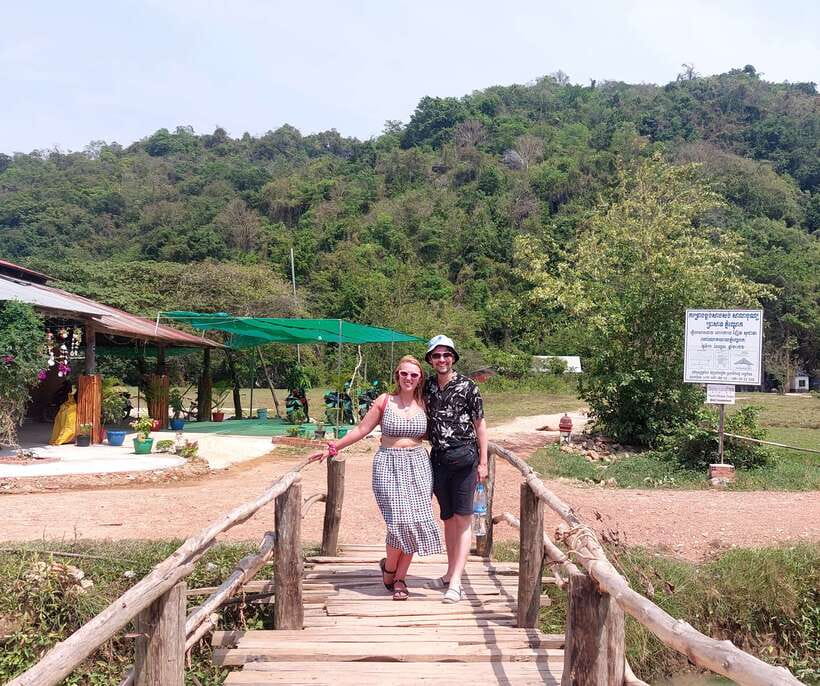
- Taste several kinds of Kampot pepper: The pepper farm visit includes an explanation of growing and processing, plus tastings of pepper, curry, and unusual treats such as pepper ice cream.
- Enter a real limestone cave: You can explore underground passages and see the Hindu temple built inside the cave.
- See salt production up close: In the dry season, you can walk into the salt fields, meet workers, and learn how seawater becomes salt.
- Meet guides with local roots: Micki, Vandy, Seth, Nak, Roy, and others are praised for safe driving, clear English, patience, and stories about rural Cambodia.
- Visit a quiet lake with a difficult past: Secret Lake offers a peaceful break, while the guide explains its connection to Cambodia’s Khmer Rouge period.
- Good value at $23: The price includes the guide, entrance fees, drinking water, soft drinks, and pickup within 3 kilometers of central Kampot.
A countryside day built around Kampot’s working life
This is not simply a circuit of scenic stops. The best part is the contrast between the places. You move from salt production to farming, from a cave temple to a lake tied to painful Cambodian history, then finish with one of the province’s best-known food products.
At $23 per person, the tour offers a lot for the money. Your guide, entrance fees, water, soft drinks, and hotel pickup and drop-off within 3 kilometers of Kampot’s center are included. Meals are not included, though some guides have added small local snacks, traditional pancakes, coconuts, or a market stop when conditions and timing allowed.
The exact pace can vary. Some outings are described as half-day trips, while others fill much of a day. Weather, road conditions, the salt season, and the time spent at the pepper farm all affect the schedule. That flexibility is useful, but you should not book this expecting a tightly fixed timetable.
More Pepper Farm Tours in Kampot:
- Kampot: Full-day Countryside Tour with Pepper Farm and Kep
★ 4.9 · 245 reviews - Kampot: Tuk Tuk Trip to Pepper Farm, Kep, Crab Market & More
★ 4.9 · 143 reviews - Kampot Countryside include Pepper farm, Salt field & Lake
★ 4.9 · 100 reviews
Salt fields: best in the dry season
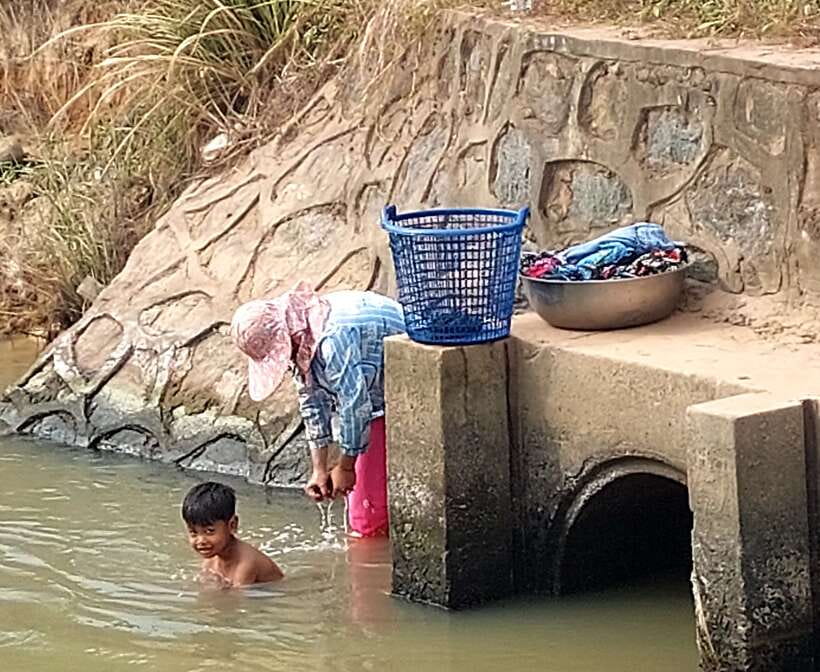
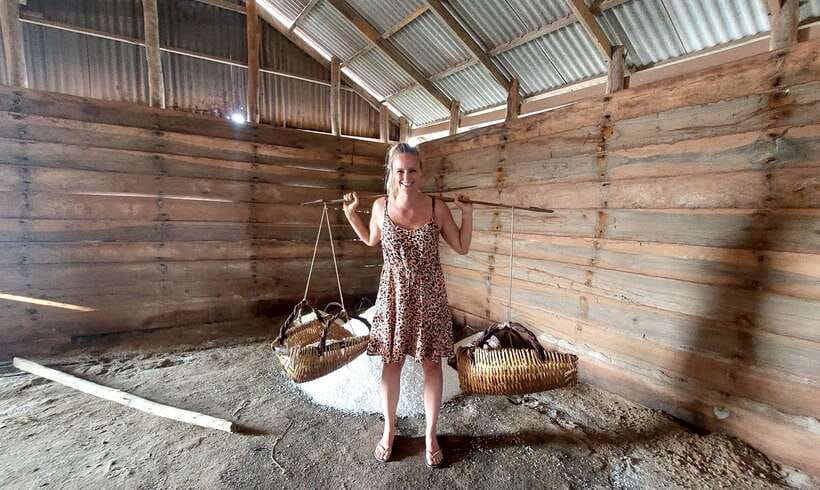
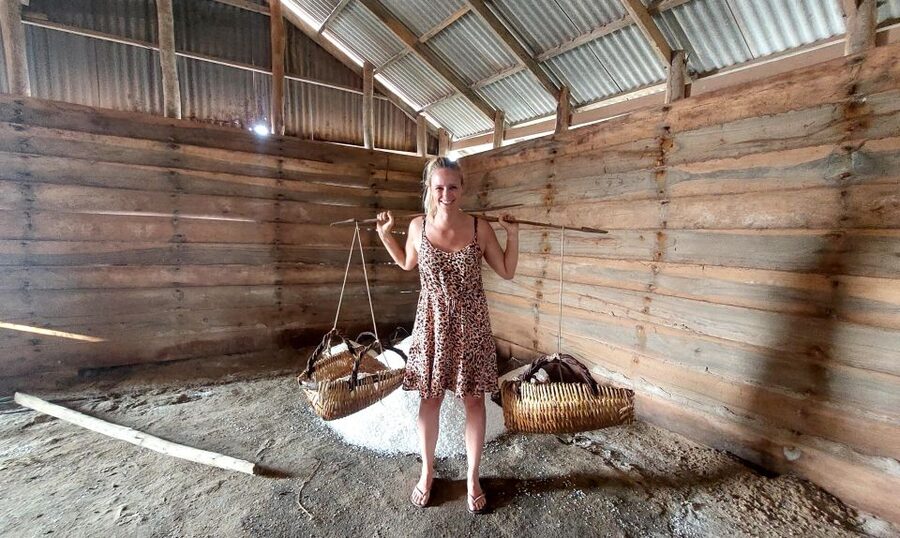
The salt fields are usually the first stop. During the dry season, seawater is spread across shallow pans and left to evaporate under the sun. The remaining salt is gathered and prepared for use. This gives you a direct look at a basic industry that is easy to miss if you only visit Kampot’s restaurants and riverfront.
You can walk into the fields, get close to the workers, take pictures, and ask questions through your guide. The stop is planned for about 30 minutes, enough time to understand the process without turning the morning into a technical lesson.
Timing matters here. During the rainy season, the pans may be wet, empty, or inactive. Heavy rain can stop the work altogether. That does not make the visit worthless, but it changes what you see. In those conditions, guides have explained the process with videos and local stories instead of showing active production.
The salt fields can also be a strong sunset location. One outing ended there in time for the evening light, though the route order can change. If you want a working agricultural scene, book in the dry season. If you mainly want a countryside drive and local explanation, the stop can still work outside it.
The cave and its old temple
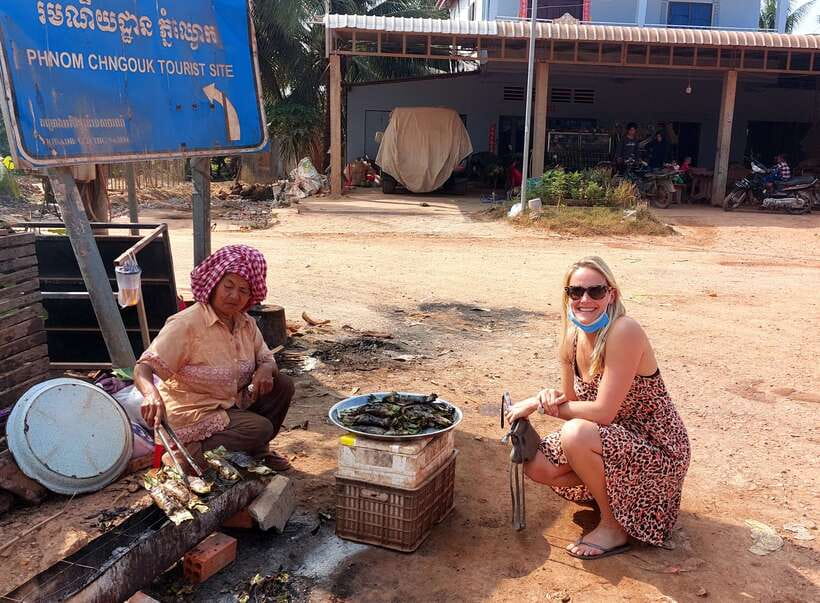
The limestone cave is the most physical part of the experience. You will walk into a natural cave, pass through uneven sections, and explore the space with your guide. The cave contains a 7th-century Hindu temple, which gives the visit more weight than a quick look at rocks and bats.
The guides help you move through the cave, point out features, and suggest good places for photos. Some have shown bats along the way. Their help matters because the cave is not just a place to wander without context. The stories about the temple and the surrounding area make the stop easier to understand.
Wear practical shoes and expect a little mud or slippery ground if it has rained. The tour information does not promise special cave equipment, so do not arrive expecting a formal climbing trip or a fully developed visitor center. This is a straightforward local excursion into a natural site.
The cave suits curious adults and older children who can manage uneven walking. It does not suit baby strollers or carriages, both of which are specifically not allowed. Anyone with limited mobility should ask before booking, since the activity includes cave exploration rather than a simple viewpoint.
Secret Lake, a peaceful stop with a serious story
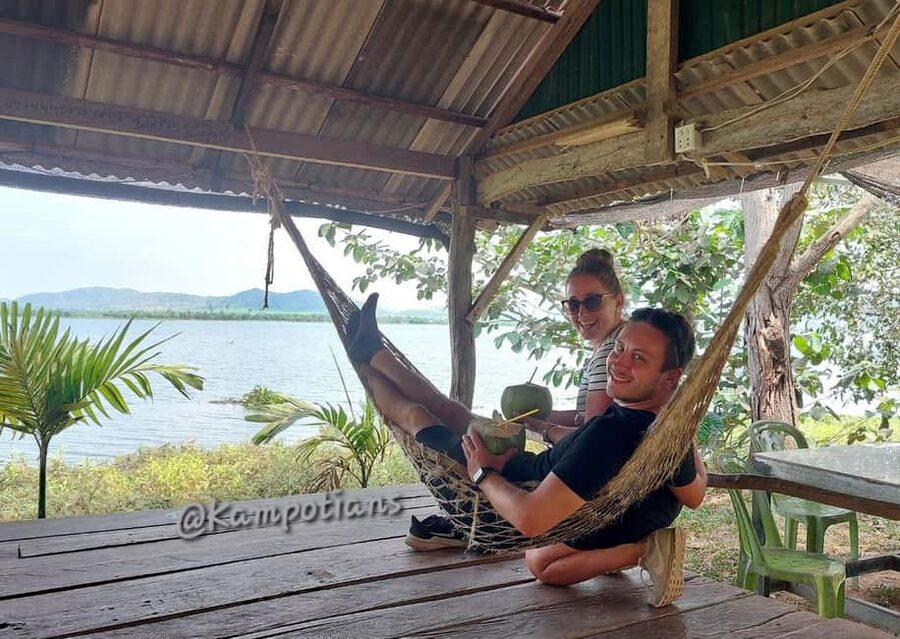
Secret Lake is the quietest part of the route. You can pause here with a soft drink, and some guides have offered coconut water as well. Hammocks and the calm setting make it a useful break after the cave and the road sections.
The lake is not only about scenery. Guides explain its connection to the Khmer Rouge period and Cambodia’s difficult recent past. That conversation adds context to the countryside. You begin to see that rural places can carry stories that are not obvious from the road.
The stop works especially well when the weather is warm or the earlier visits have been active. On rainy days, it can feel even more secluded, with fewer people around. At the same time, the word secret should not make you expect an untouched wilderness site. Its value comes from the peaceful pause and the story your guide provides, not from a major attraction with many facilities.
A few more farm days around Kampot worth a look
- Kampot’s Countryside & Kayak Tour, Pepper Farm include Lunch
★ 4.8 · 74 reviews - Kampot Private Tour: Pepper Farm, Salt Field & Secret Lake
★ 5.0 · 27 reviews - Kampot Pepper Farm, Salt Fields, Crab Market from Phnom Penh
★ 4.8 · 21 reviews - Kampot Pepper Farm Tour: Salt Fields, La Plantation & Cave
★ 4.8 · 18 reviews
La Plantation and the pepper tasting
For many people, the pepper farm is the highlight. Kampot pepper has a strong reputation, and the visit gives you a chance to see how pepper is grown and processed rather than treating it as a souvenir label.
The farm guide explains the plants and production methods. You can taste several types of Kampot pepper and learn how their flavors differ. The tasting may include pepper and curry products, and pepper ice cream has been a memorable part of the visit for some people. It sounds odd until you try it, and it gives the stop a playful finish.
The farm visit is also useful if you plan to buy pepper later. You will have a better idea of what you are tasting and why the products differ. I would give this stop your full attention rather than rushing through it for photographs.
There may be a separate farm guide in addition to your Kampot guide. Your main guide still helps explain the wider setting and handles the transport, while the plantation staff focus on the pepper itself. This division works well because the farm can provide detailed information about its own products.
Guides make the difference
The most consistently praised feature is the human side of the trip. Micki is repeatedly described as warm, funny, patient, and highly informed about the area. Vandy is praised for friendly explanations, safe driving, and good timing. Seth is noted for personal stories, careful driving, and a welcoming manner.
Other guides named in the feedback include Nak, Fi, Roy, Jason, Chet, Sath, Ali, Ranny, and Mat. The names suggest that several local guides and drivers operate the experience, so you may not receive a particular person unless you request one and the provider can arrange it.
The useful thing is not simply that the guides speak English. They connect the stops to local life. You can ask about farming, salt work, fishing, village customs, Cambodian history, and the guide’s own experience of growing up in the province. That makes the road time worthwhile instead of just filling gaps between attractions.
Driving quality matters on a rural route. The guides are praised for being safe and adaptable, including changing the order of stops during heavy rain. That flexibility can protect your day from bad weather, though it also means the exact sequence is not guaranteed.
What the $23 price really covers
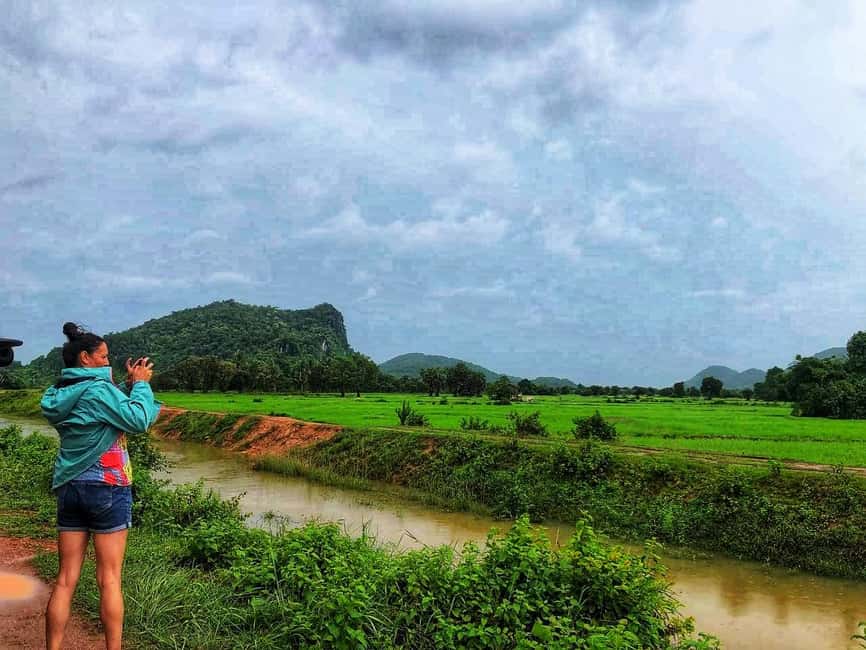
The low price is one of this tour’s strongest points. At $23 per person, you receive a guide, transportation from a hotel within 3 kilometers of central Kampot, entrance fees, drinking water, and soft drinks. Those inclusions remove many small expenses that can add up during an independent day out.
You still need to budget for food. Meals are not included. Some guides have arranged or offered local snacks, pancakes, market food, or coconuts, but you should treat those as occasional additions rather than guaranteed parts of the package.
Pickup beyond 3 kilometers from the center costs extra, starting at $2 or more. Confirm the fee before booking if your hotel sits farther out. The tour is available in English, and payment can be made later under the flexible booking option. You can cancel up to 24 hours ahead for a full refund.
For the price, the mix is stronger than a simple tuk-tuk ride to one attraction. You get several entrance stops, a food tasting, local interpretation, and countryside transport. The value is lower only if you want a slow, specialist visit to one site or dislike changing locations during the day.
What to bring and how to prepare
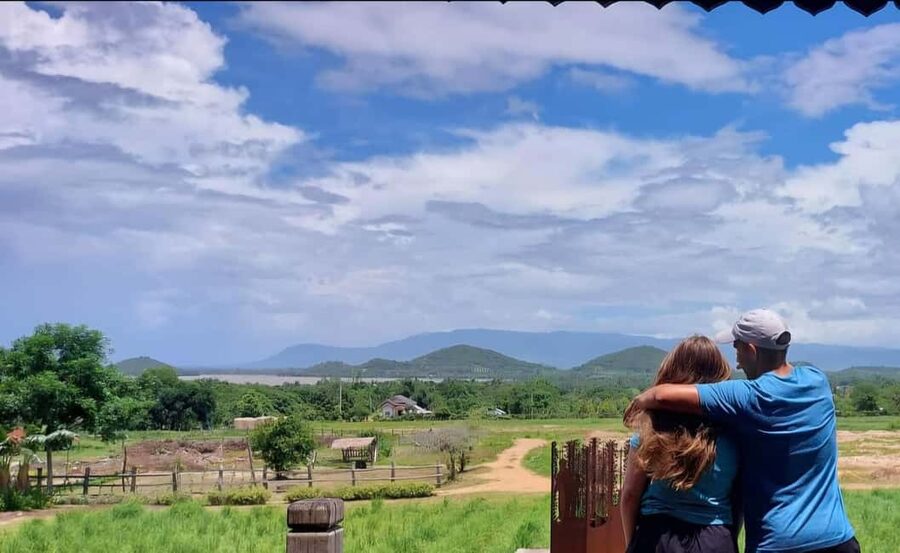
Bring sunscreen. Much of the appeal is outdoors, and the salt fields offer little shade.
Wear shoes you can walk in confidently. The cave is the only stop that clearly calls for extra care, but rural paths and field edges may also be uneven. Keep your camera protected if rain is forecast, since the schedule can change quickly in wet weather.
Do not bring alcohol or drugs. Baby strollers and baby carriages are not allowed. The experience is not suitable for people over 70, according to the booking information.
Rain does not always ruin the day. Guides have adjusted routes, used videos to explain inactive salt production, and continued with the cave, lake, or pepper farm when possible. Still, expect the salt fields to look different after rain, and accept that the route may not follow the advertised order.
Who will enjoy this tour most?
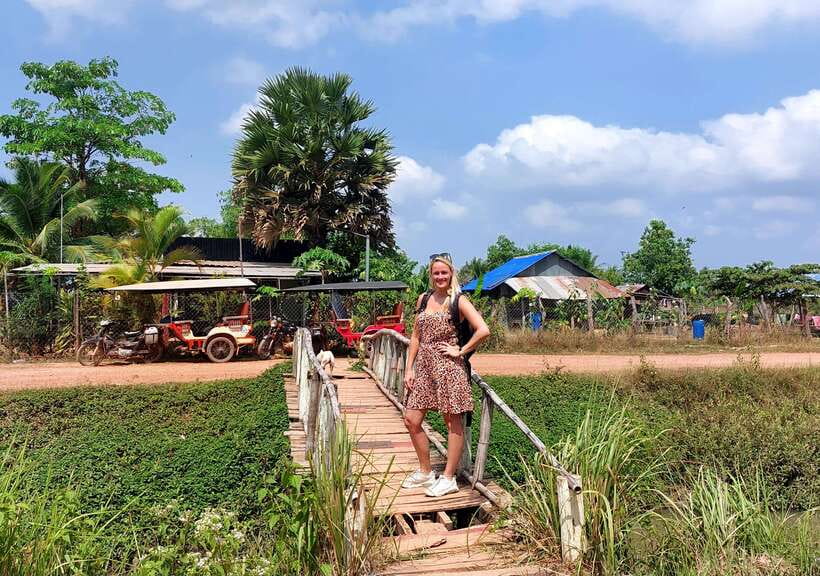
I would recommend it to first-time visitors who want an introduction to Kampot Province beyond town. It suits you if you like food, farming, short walks, local history, and conversation with a guide.
It is also a good choice for couples, friends, and families with older children. The cave gives the day some adventure, the pepper tasting adds a food angle, and the lake offers a restful pause. Teenagers may especially enjoy the cave and the unusual pepper ice cream.
You may want a different outing if you need wheelchair-friendly access, are traveling with a stroller, or want a long, quiet afternoon at one place. The route includes several stops and some walking, with conditions that change by season.
Should you book the Kampot countryside tour?
Book it if you want variety and local explanation for a modest price. The pepper farm is the strongest food stop, the cave is the most memorable physical activity, and Secret Lake gives the route a calm and thoughtful middle section. The salt fields are most rewarding in the dry season, but the guide can still explain the process when production is paused.
I would choose this over hiring transport alone because the stories connect the stops. Ask about the current salt-field conditions, pickup charge, route length, and available guide before confirming. If you are lucky enough to travel with Micki, Vandy, Seth, or another guide with strong local roots, the conversation may become as memorable as the places themselves.
FAQ
How much does the Kampot tour cost?
The tour costs $23 per person.
What is included in the price?
The price includes a guide, entrance fees, drinking water, soft drinks, and hotel pickup and drop-off within 3 kilometers of Kampot city center.
Is hotel pickup included?
Yes, pickup and drop-off are included for hotels within 3 kilometers of Kampot city center. Pickup farther away costs extra, starting at $2 or more.
Are meals included?
No. Meals are not included, though some guides may offer or arrange local snacks, pancakes, coconuts, or market food.
What places does the tour visit?
The route includes salt fields, a limestone cave with a 7th-century Hindu temple, Secret Lake, and a pepper farm such as La Plantation.
Can I taste Kampot pepper?
Yes. The pepper farm visit includes tastings of different types of Kampot pepper. Pepper, curry, and pepper ice cream may also be part of the tasting experience.
Are the salt fields active all year?
No. Salt production takes place in the dry season. Rain can leave the fields inactive, though the guide can explain the process and may use video to show how it works.
Is the cave suitable for everyone?
The cave involves exploration and walking on uneven ground. Baby strollers and baby carriages are not allowed, and the tour is not suitable for people over 70.
What language is the tour offered in?
The tour is offered in English.
Can I cancel the booking?
Yes. You can cancel up to 24 hours in advance for a full refund.
Just added around Kampot
- Pepper farm guided tour, Kep/Crab Market, salt & secret lake★ 4.9 · 16 reviews
- La Plantation Enjoy Pepper Tour & Testing our process 4 free★ 4.8 · 5 reviews
- Kep town: Local tuk tuk to Countryside & Pepper farm★ 4.6 · 8 reviews
- Kampot Private Tour: Pepper Farm, Salt Field & Secret Lake★ 5.0 · 27 reviews
- Kampot Pepper farm & Kayak trip around Green cathedral Sunse★ 5.0 · 2 reviews
- Kampot Pepper Farm, Salt Fields, Crab Market from Phnom Penh★ 4.8 · 21 reviews
- Kampot Countryside include Pepper farm,Kep crab market beach★ 5.0 · 4 reviews
- Discover half day country side tours ;cave;salt; pepper farm★ 5.0 · 2 reviews
Kampot Farm Tours, compared.
Full-day Countryside Tour with Pepper Farm and Kep
Read our review →
Tuk Tuk Trip to Pepper Farm, Kep, Crab Market & More
Read our review →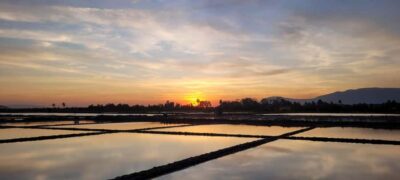
Kampot Countryside include Pepper farm, Salt field & Lake
Read our review →
Kampot’s Countryside & Kayak Tour, Pepper Farm include Lunch
Read our review →
Kampot Private Tour: Pepper Farm, Salt Field & Secret Lake
Read our review →
Kampot Pepper Farm, Salt Fields, Crab Market from Phnom Penh
Read our review →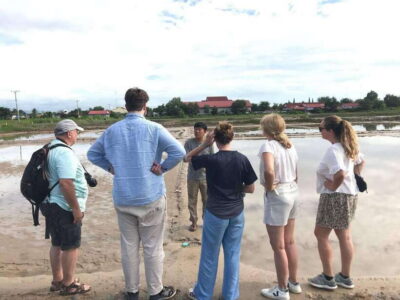
Kampot Pepper Farm Tour: Salt Fields, La Plantation & Cave
Read our review →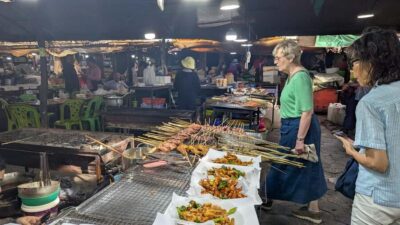
Pepper farm guided tour, Kep/Crab Market, salt & secret lake
Read our review →Browse the lists this tour appears in