
Review · COOKING CLASSES
Cooking Classes Farm to Table Marrakech
Marrakech’s best cooking lesson may begin before anyone turns on the stove. You walk through the medina market with Chef Abdel, choose vegetables, meat, fruit, and spices, then leave the city for a farm kitchen where you cook lunch from scratch. The market stop gives the meal a useful sense of place, while the outdoor setting makes the five-hour class feel like a half-day outing rather than a basic kitchen demonstration.
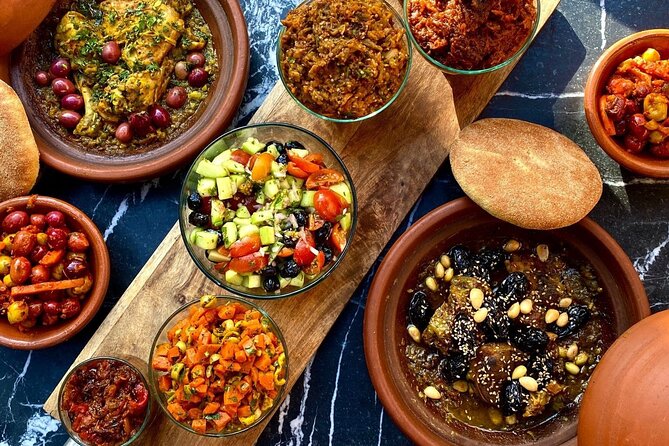
I like two things here: you do the work with your own hands, and the menu can stretch well beyond one tajine. Depending on the group, you may prepare several salads, couscous, bread, meatballs, and a choice of chicken, lamb, beef, vegetable, sweet, or savory tajine. The main consideration is that the class begins at the Koutoubia meeting point, even though pickup is offered, so confirm the transport details before setting out.
Key points at a glance
- Shop before you cook: Walk through a local medina market and select the vegetables, proteins, fruits, and spices used later in the meal.
- Cook in a farm setting: After the market, you head to a peaceful garden and outdoor kitchen for the hands-on part of the day.
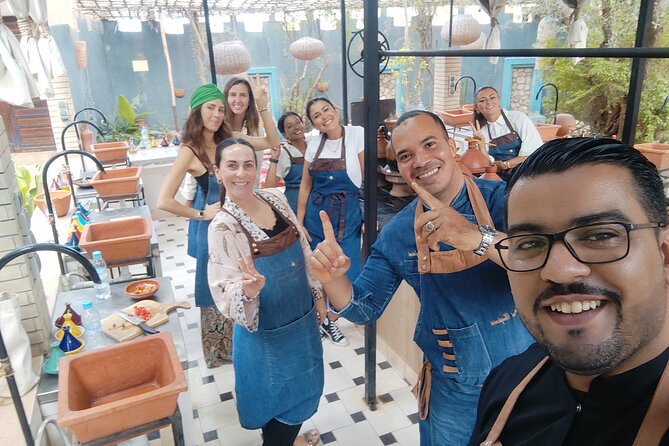
- Small class size: Enrollment is limited to 12 people, which gives you a better chance to ask questions and handle the food yourself.
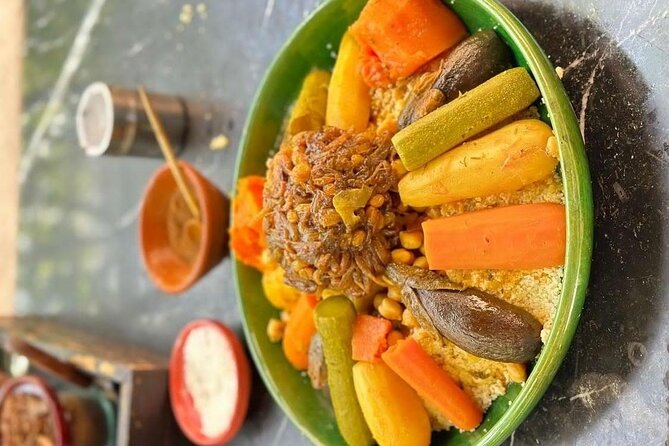
- More than tajine: The class can include Moroccan salads, couscous, fresh bread, meatballs, and several main dishes.
- Chef Abdel leads the lesson: Abdel is described as an engaging English-speaking chef, with Fathima assisting behind the scenes.
- A useful half-day plan: The activity lasts about five hours, leaving the rest of your day open in Marrakech.
From Koutoubia to the medina market
The experience starts at Koutoubia in central Marrakech. The stated meeting point is Koutoubia, Marrakesh 40000, and the activity ends back there. Pickup is offered, but the exact arrangements should be confirmed when you book because the published start point remains the Koutoubia area.
From there, the class moves through the alleys of the old medina toward a local food market. This is not just a quick stop to collect ingredients. You get to see the raw materials of Moroccan cooking before they are washed, chopped, seasoned, and placed over heat.
You may look at fresh vegetables, meat, poultry, fruit, herbs, and spice blends while Abdel explains what each item does in a dish. The market also gives you a chance to take photos and short videos, although you should be polite around shoppers and sellers. The useful part is learning to connect a finished plate with the simple ingredients that went into it.
I especially like this beginning because it removes some of the mystery from Moroccan food. Preserved lemons, spice mixes such as ras el hanout, fresh herbs, and meat all make more sense when you see them in their everyday setting. You are not simply handed a prepared basket of ingredients. You take part in choosing what will become lunch.
The market can also be the most crowded and least predictable part of the outing. The medina’s lanes are busy, and shopping with a group is not the same as browsing at your own pace. If you prefer a quiet, polished cooking studio from the first minute, this experience may feel a little rough around the edges. If you like seeing how food is bought locally, that is part of the appeal.
More Farm-to-Table Meals in the world:
- From Porto: 2 Wine Regions, Farm-to-Table Lunch & Boat
★ 4.9 · 5,724 reviews - Montserrat Full Day Tour with Farmhouse Lunch and Winery Visit
★ 5.0 · 1,068 reviews - Montserrat & Winery Visit Tour with Traditional Farmhouse Lunch
★ 4.5 · 1,035 reviews
The farm kitchen outside the city
After shopping, you travel to the farm cooking site. The change in mood is important. The narrow lanes and market activity give way to trees, plants, and an outdoor kitchen where the group can spread out and begin preparing the meal.
Tea and sweets are served before the cooking gets fully underway. You also take a walk around the farm, seeing the vegetation and garden setting. This pause helps the day feel less rushed, especially after the market visit.
The farm is one of the strongest reasons to choose this class instead of a standard indoor cooking lesson. You are not sitting in rows watching someone else chop onions. You work in an open setting, with cooking taking place over coals according to the descriptions of the class. The surroundings add a calm country break to your Marrakech schedule.
Still, you should keep your expectations practical. This is a working farm kitchen, not a formal restaurant or luxury culinary school. The experience focuses on food, company, and Moroccan methods rather than sleek equipment or a tightly scripted professional production.
Making your own tajine from scratch
The central task is preparing a Moroccan tajine. You receive an apron, then work at your own station with the ingredients bought earlier. The aim is to prepare the food yourself, not simply watch a chef assemble a dish.
The class has included different choices for the main dish. You may be able to select chicken, lamb, beef, or a vegetable version, along with sweet or savory preparations. One especially useful detail is that some sessions have allowed each person to choose an individual dish instead of following one fixed menu.
That flexibility matters if your group has mixed tastes. A child may prefer chicken, another person may want vegetables, and someone else may be keen to try lamb or a sweet tajine. The exact selection can vary, so do not assume every option will appear at every session.
Abdel’s role is part teacher and part host. The information provided about the class describes him as fluent in English, funny, organized, and willing to answer questions about Moroccan cuisine. That is useful for a hands-on lesson. You can ask why a spice is added, how the ingredients are layered, or what changes when the dish cooks slowly.
The pace appears to be leisurely but active. You have time to prepare food and ask questions, yet there is enough happening to keep the five-hour outing from becoming passive. Several cooking sessions have included multiple dishes, so the actual workload may be greater than the simple phrase cooking a tajine suggests.
Salads, couscous, bread, and a full shared meal
Tajine gets top billing, but the class can cover a much wider part of Moroccan home cooking. Some versions have included up to six Moroccan salads, while another detailed menu included nine salads, meatballs, couscous, and individual tajines.
Do not treat those numbers as a guaranteed menu. They show the range of what may be prepared rather than a fixed promise for every date. The appeal is clear, though: you get to see how a Moroccan meal is built around several small plates instead of one main course alone.
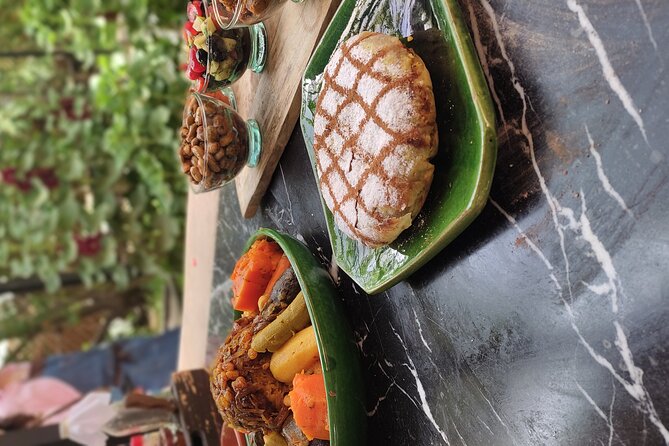
Couscous may also be part of the session, and fresh bread has appeared in the cooking. These additions are valuable because they show techniques and flavors that a restaurant meal does not explain. You can taste the difference between a spice used as a seasoning and one used as the backbone of a dish.
The final meal is generous, based on the information supplied. You eat what you have prepared, along with the shared dishes made during the class. Tea and sweets are part of the hospitality before or around the cooking portion.
This makes the price easier to assess. At $75.60 per person, you are paying for about five hours, a market visit, transport to the farm cooking site, instruction, ingredients, the prepared meal, and a cultural outing. That is not the cheapest way to eat lunch in Marrakech, but it offers much more than lunch. It can replace a separate food tour and provides a meal you helped create.
More Farm Cooking Classes in the world:
- Half-Day Thai Cooking Class at Organic Farm in Chiang Mai
★ 5.0 · 19,087 reviews - Cooking Class and Lunch at a Tuscan Farmhouse with Local Market Tour from Florence
★ 5.0 · 4,831 reviews - Chiang Mai: Authentic Cooking Class with Market & Farm Visit
★ 4.9 · 4,546 reviews - Ubud: Balinese Cooking Class at an Organic Farm
★ 5.0 · 1,786 reviews
What makes the teaching work
The best part of a cooking class is not the recipe card. It is whether the instructor lets you understand the decisions behind the recipe. Here, Abdel is repeatedly described as patient, entertaining, and clear, while Fathima is credited with keeping the operation running behind the scenes.
The small maximum of 12 people helps. A class of 12 is still large enough to have group energy, but it is more manageable than a mass-market demonstration. You should have a better chance to chop, season, stir, shape, and ask questions directly.
The class also seems suited to different skill levels. Experienced home cooks can ask about spice combinations and methods, while beginners can follow the preparation step by step. Families have used the class with children and teenagers from ages 8 to 15, and the activity has worked well for that age range.
The main limitation is that the published information does not give a fixed, detailed recipe list for every date. If you need to know exactly which dishes you will make, ask before booking. You may get a broad cooking session with many dishes, but the final menu can depend on the group and the ingredients available.
Recipe follow-up is another useful point. One cooking session included recipes sent by email afterward. Check your junk folder if you do not see them, since that message may not land in your main inbox.
A good fit for families and food-focused visitors
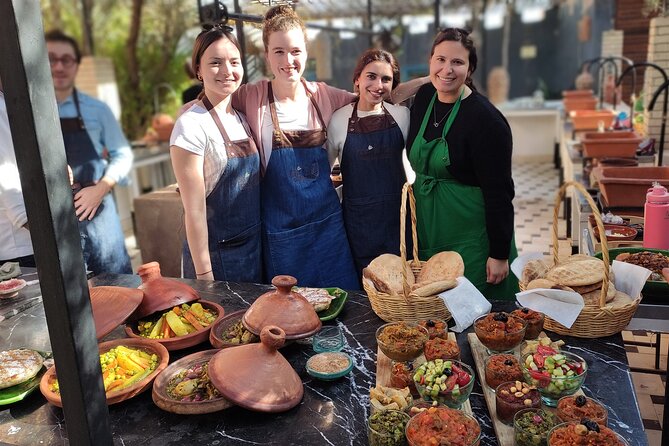
I would put this near the top of the list for anyone who wants an activity that combines food and local life. You get out of central Marrakech, see a market, meet a chef, and sit down to a meal you helped prepare.
It is particularly suitable for:
- First-time visitors to Morocco who want context for the spices and dishes they are eating elsewhere.
- Families with older children and teenagers who prefer an activity with something to do at every stage.
- Couples and small groups who want a social outing rather than another sightseeing stop.
- Home cooks interested in preserved lemons, ras el hanout, Moroccan salads, bread, and traditional cooking methods.
- People with a free half-day who want to keep the rest of the day open for the souks, museums, or a relaxed evening.
You may want to choose another activity if you dislike group cooking, have no interest in markets, or want a tightly timed professional lesson. The food preparation is hands-on, and the class depends on a shared setting. The quiet farm atmosphere helps, but it does not turn the experience into a private chef session unless you arrange and pay for a private option.
Timing, group size, and planning details
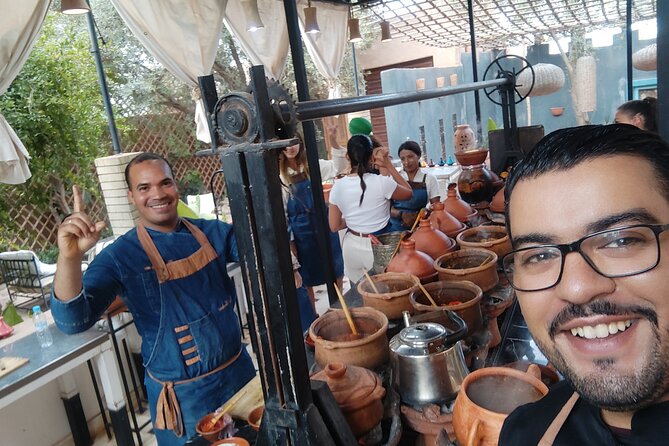
The activity lasts approximately five hours. That is long enough for the market, transport, tea, the farm walk, cooking, and lunch, but short enough to leave the rest of your day available.
It is wise to avoid booking this on a day packed with fixed afternoon plans. Market timing, transport, and cooking can take their natural course, and the value comes partly from not rushing through each stage.
The tour is generally booked well ahead, with an average booking lead time of about 37 days. If your Marrakech dates are fixed, reserving early makes sense. The class accepts a maximum of 12 people, and group discounts are offered.
Confirmation is provided at booking. The activity is near public transportation, and mobile tickets are accepted. Free cancellation is available up to 24 hours before the start time for a full refund. Cancellations or changes inside that 24-hour window are not accepted for a refund. The class also depends on good weather and a minimum number of participants. If either condition causes cancellation, you are offered another date, another experience, or a full refund.
Should you book this Marrakech cooking class?
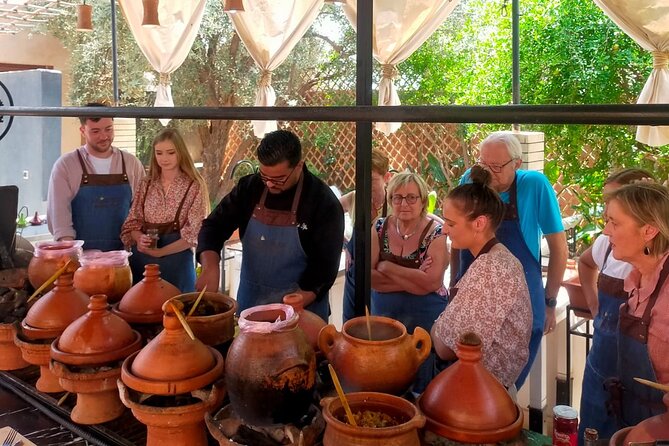
I would book it if you want to do more than eat Moroccan food. The strongest combination is the market visit followed by a hands-on lesson in a quiet farm setting. You see the ingredients, prepare them, and then sit down to share the result.
The $75.60 price is fair for a five-hour experience that includes food, instruction, the market outing, and the farm visit. It becomes better value if you would otherwise book a separate food tour and restaurant lunch.
Before paying, confirm the pickup plan, the expected menu, and whether your preferred tajine choice is available. If you want a personal class, ask about the private option. For most people, though, the small group format provides the right balance of help, conversation, and room to cook.
FAQ
Where does the cooking class begin?
The stated meeting point is Koutoubia, Marrakesh 40000, Morocco. Pickup is offered, so confirm the exact arrangement when booking.
How long does the experience last?
The cooking class lasts approximately five hours.
How many people can join the class?
The activity has a maximum of 12 participants.
What happens during the market visit?
You walk through the old medina to a local market and help select fresh vegetables, proteins, fruits, herbs, and spices for the cooking session.
What food might I prepare?
The class centers on tajine and may also include Moroccan salads, couscous, fresh bread, meatballs, and different chicken, lamb, beef, vegetable, sweet, or savory dishes. The exact menu can vary.
Is the class suitable for children?
A family group with children and teenagers ages 8 to 15 took part successfully. The activity is hands-on, so children should be able to participate in a shared cooking setting.
What happens if the class is canceled?
If poor weather or an insufficient number of participants causes cancellation, you are offered a different date or experience, or a full refund. You can also cancel up to 24 hours before the start time for a full refund.
More Hands-On Workshops in the world
- Florence Pizza or Pasta Class with Gelato Making at a Tuscan Farm
★ 5.0 · 6,801 reviews - Sorrento: Pizza Lesson, Wine, and Limoncello at a Local Farm
★ 5.0 · 1,513 reviews - Florence: Pizza or Pasta Class with Gelato at a Tuscan Farm
★ 4.9 · 1,181 reviews - Chiang Mai: Cooking Class with Organic Farm at Mama Noi
★ 4.9 · 1,151 reviews
Just added around the world
- Ubud Rice terrace,Zip-line and waterfall★ 5.0 · 4 reviews
- Full Day Tour to Water Temples UNESCO Rice Terraces in Bali★ 5.0 · 4 reviews
- Explore Ubud Art Market, Monkey Forest and Rice Terraces★ 5.0 · 16 reviews
- Exploring Munduk Village (Waterfalls, rice terrace, Traditional local house)★ 4.5 · 2 reviews
- Ubud Monkey Forest Rice Terrace Temple Waterfall Private Tour★ 5.0 · 7 reviews
- Jatiluwih Spiritual Journey of Melukat with Rice Terrace View★ 5.0 · 9 reviews
- Private Tour to Sumampan Waterfall, Monkey forest, Rice terraces and Swing★ 5.0 · 30 reviews
- Discover Hidden Waterfall, Unesco Rice Terraces and Mountain Temple★ 5.0 · 17 reviews
Cooking Classes, compared.
Half-Day Thai Cooking Class at Organic Farm in Chiang Mai
Read our review →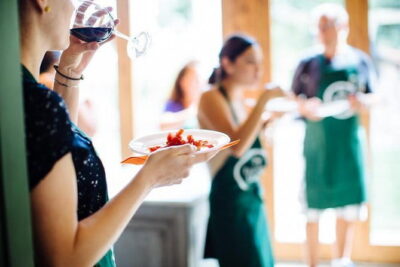
Cooking Class and Lunch at a Tuscan Farmhouse with Local Market Tour from Florence
Read our review →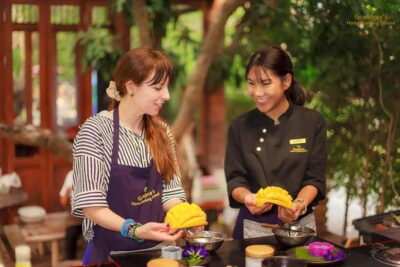
Authentic Cooking Class with Market & Farm Visit
Read our review →
Hands-On Cooking Class & Farmhouse Tour on the Amalfi Coast
Read our review →
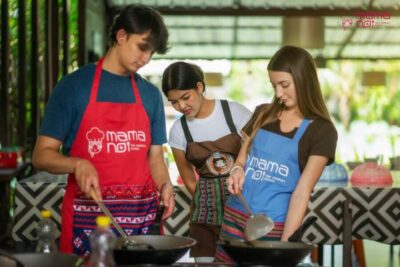
Cooking Class with Organic Farm in Chiang Mai at Mama Noi
Read our review →Browse the lists this tour appears in