
Review · COOKING CLASSES
Berber Cooking Class at a Farm in the Countryside & shopping at a rural Souk.
The best part of this outing happens before the cooking begins: you visit a rural souk and choose the fruit, vegetables, meat, eggs, and honey used later at the farm. That simple link between market and meal gives the day a clear sense of place.
I like the hands-on work with barley, stone mills, clay ovens, and traditional pots. I also like the small group limit of eight, which should make it easier to follow the cooking and ask questions. The main drawback is the long seven-hour commitment, plus a 35-kilometer drive each way from Essaouira.
Key points to know before booking
- A market-to-table day: Shop at a local souk, then cook with the ingredients you have seen and selected.
- Two local cooks: Khadija and Khadija demonstrate barley roasting, grinding, bread baking, couscous steaming, and tagine preparation.
- A real Berber kitchen: The class uses a clay oven, stone mill, traditional clay pot, fire, and farm-grown olive oil.
- A countryside meal: Lunch may be served outdoors, followed by tea made with fresh herbs from the garden.
- Optional argan stop: You can visit an argan oil cooperative and taste products made from this local oil.
- Small-group format: The maximum is eight people, with a 9:00 am start and return to the original meeting point.
From Essaouira to the Haha region
This is not a cooking class tucked inside Essaouira’s medina. You begin at Labo Abdelkrim Khatabi d’Analyses Médicales, at 287 Rue Oued El Makhazine, at 9:00 am, then head about 35 kilometers south into the Haha region.
The drive matters. The Haha hills are home to Morocco’s Amazigh, or Berber, communities. Farming here centers on crops and animals, especially goats and sheep. As you leave the coastal city, the experience shifts from sightseeing to a closer look at rural daily life.
The tour ends back at the same meeting point. Since the day lasts about seven hours, plan to keep the morning and afternoon free. This is best treated as a full excursion, not a quick add-on between visits to Essaouira’s port and medina.
The exact transport arrangement is not detailed, so confirm the pickup plan when your booking is confirmed. The published meeting point is clear, but you should not assume hotel pickup unless the provider tells you so.
More Farm Cooking Classes in the world:
- Half-Day Thai Cooking Class at Organic Farm in Chiang Mai
★ 5.0 · 19,087 reviews - Cooking Class and Lunch at a Tuscan Farmhouse with Local Market Tour from Florence
★ 5.0 · 4,831 reviews - Chiang Mai: Authentic Cooking Class with Market & Farm Visit
★ 4.9 · 4,546 reviews
Shopping for lunch at a rural souk
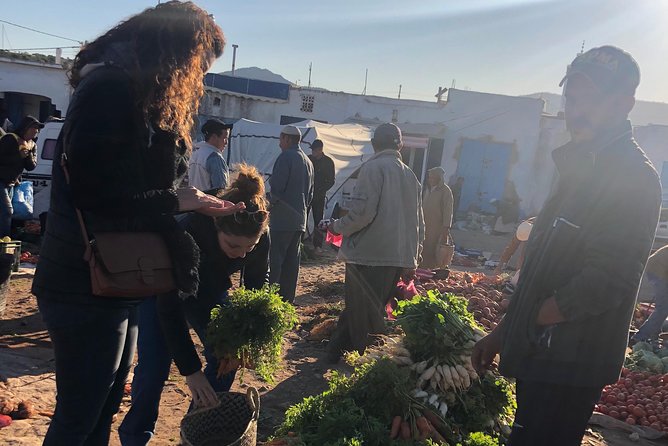
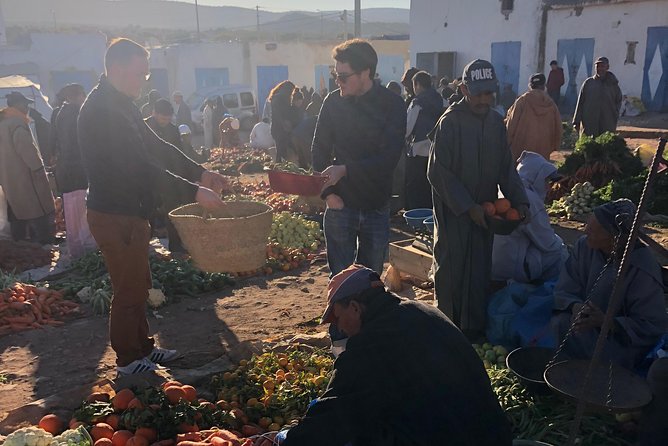
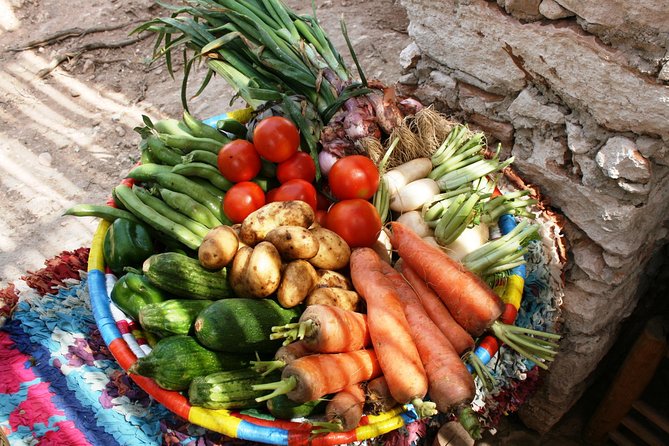
The souk is the first major stop, and it gives the cooking class a useful foundation. You see freshly harvested fruit and vegetables alongside meat, eggs, and honey. These are not decorative market displays. They are the basic foods used in homes across the region.
I like this part because it puts the later meal in context. Instead of arriving at a farm with ingredients already portioned and waiting on a table, you first see the kind of food people buy for everyday cooking. The souk also adds a bit of uncertainty and energy to the day. A rural market is practical, local, and less polished than a food tour built for visitors.
The information provided does not say exactly how much shopping each person does or if purchases are included in the tour price. Think of the stop primarily as part of the cooking experience, not as a dedicated shopping trip for souvenirs. If you want to buy something, ask your guide how the market works and what is appropriate.
This stop may be less comfortable for anyone who prefers a quiet, highly organized itinerary. Markets can involve crowds, unfamiliar products, and quick decisions. That is also what makes the visit useful. You get a better sense of local food culture before sitting down to cook.
Inside the farm’s Berber kitchen
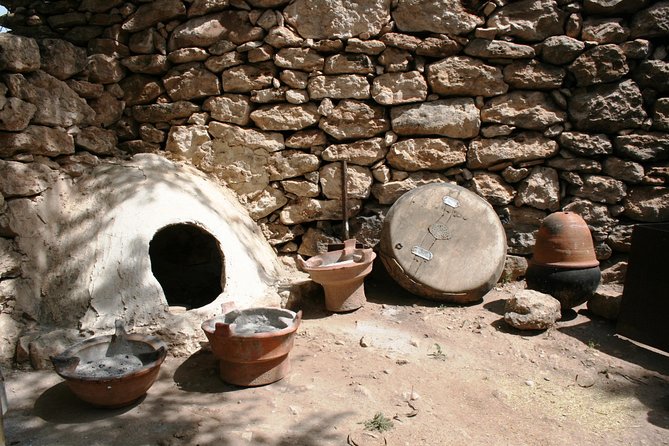
The class takes place at an ecological farm built around an authentic Berber kitchen. The setting is important. You are not simply following a recipe in a modern teaching kitchen. You see the tools and methods that turn basic grain, vegetables, meat, oil, and herbs into a complete meal.
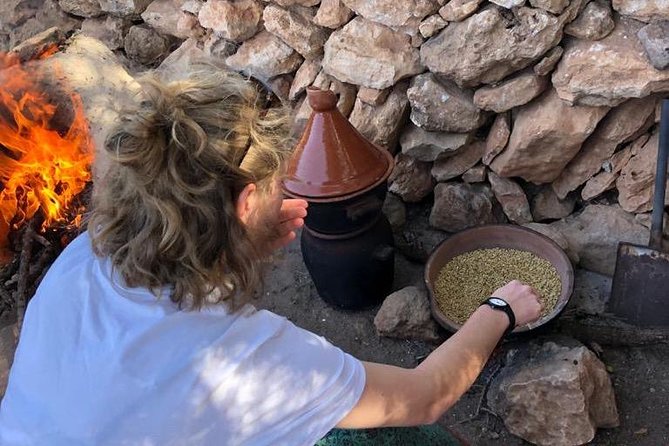
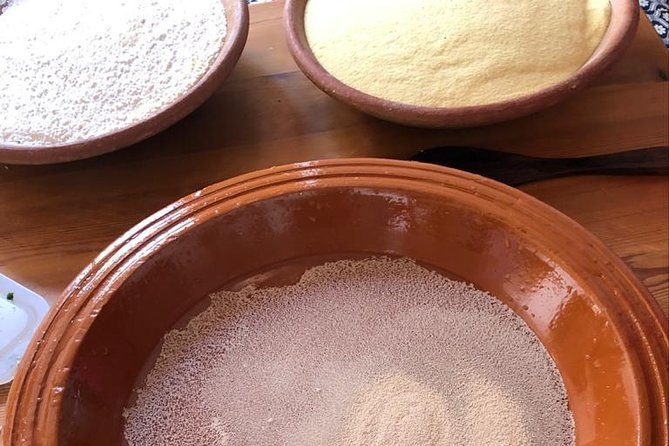
Khadija and Khadija lead the cooking demonstrations. They show you how barley grains are roasted over a fire and then ground in a stone mill. The resulting flour and semolina form the base for flat bread and couscous.
This is the kind of work that explains the food better than a short talk ever could. Roasting changes the grain. Grinding by hand shows the effort behind the flour. The stone mill also gives you a direct connection to older food traditions that are still part of rural cooking.
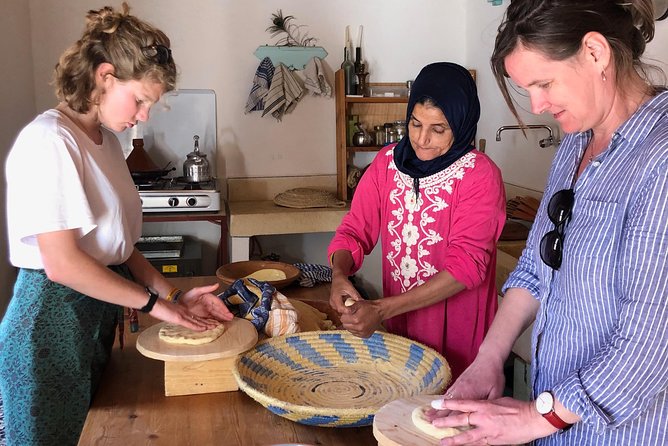
You should expect a participatory class rather than a formal chef demonstration. The supplied details say you bake flat bread, steam couscous, and learn to prepare tagine. They do not specify how much hands-on time each participant receives, so ask the guide if you want to be sure you will handle each step yourself.
The small maximum of eight is a real advantage here. With fewer people around the fire and work surfaces, you should have a better chance to see what is happening. It also makes the experience more suitable for questions and conversation than a large group class.
Flat bread, couscous, and goat tagine
The menu brings together three important parts of the class. First, you make flat bread in a clay oven. The oven is a practical feature, not a stage prop. It changes the rhythm of cooking and shows how bread can be prepared without the equipment found in a city kitchen.
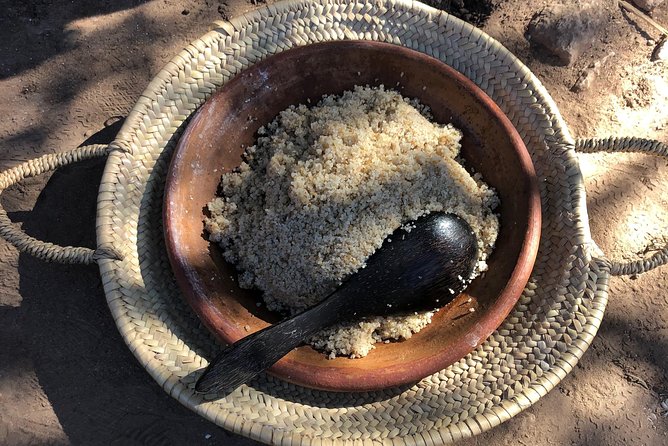
Next comes couscous, steamed in a traditional clay pot. Couscous often appears on Moroccan menus as if it were a single fixed dish, but the preparation itself is worth watching. Here, you see the grain made from barley-based flour or semolina and then steamed in a traditional vessel.
The main dish is a tagine of vegetables and goat meat. Moroccan spices and olive oil provide the seasoning, while the goat connects the meal to the animals raised in the Haha hills. The oil comes from olive trees growing on the farm, giving the meal another local link.
The menu may not suit every diet. Goat is central to the stated dish, and the information does not promise a vegetarian, vegan, gluten-free, or allergy-friendly alternative. If you have dietary restrictions, contact the provider before booking rather than waiting until the morning of the class.
I especially like that the meal is not treated as an afterthought. You have seen the ingredients at the souk, watched grain become flour, and helped prepare the food. By lunchtime, the plate tells the story of the whole day.
A few more farm days around the world worth a look
- Floating & Railway Market and Coconut Farm Tour [Optional Luxury]
★ 5.0 · 835 reviews - Active Volcano, Rice Field, Hot Spring, Fruit market, Tea Plantation with Lunch
★ 5.0 · 513 reviews - Evening Cooking Class in Organic Farm with Local Market Tour
★ 5.0 · 394 reviews - Florence: Cooking Class at a Tuscan Farm & Local Market Tour
★ 4.9 · 354 reviews
Lunch outdoors on the farm
If the weather cooperates, lunch is served outside. The farm setting gives you a quiet break after the cooking work, with the surrounding countryside as part of the meal.
Outdoor dining can be a highlight, but it depends on weather. On a warm, calm day, it should make the meal feel relaxed and memorable. If conditions are poor, lunch may need to move indoors, and the tour can be canceled if the weather is bad enough.
Tea follows the meal, infused with fresh herbs from the garden. This is a small detail, but it gives the visit a satisfying close. The tea is tied to the farm rather than presented as a generic beverage stop.
You should expect a simple rural setting, not restaurant service. That is a strength if you want food prepared in a local style. It may be less appealing if you prefer polished facilities, a fast schedule, or a menu with several choices.
The argan oil stop and goats in the trees
The route passes through Morocco’s argan-growing zone, and you have the option to visit an argan oil cooperative. There, you can learn how the oil is produced and taste products made with it.
Argan oil is closely associated with this part of Morocco, so the stop adds useful regional context. You see why the oil is more than a bottle on a shop shelf. It is linked to local trees, rural work, and food production.
The stop is optional, and the available details do not say how long it lasts or whether products are sold. If you are interested in Moroccan food ingredients or natural oils, it is worth considering. If your priority is spending every possible minute at the farm kitchen, you may prefer to keep the outing focused on cooking.
The drive may also offer one of the region’s most famous sights: goats in argan trees. The wording is careful because sightings cannot be guaranteed. If you see them, enjoy the moment, but do not book the tour solely for that possibility.
What the $98.76 price means
At $98.76 per person, this is not the cheapest way to eat outside Essaouira. The value depends on how much you want from the day.
You are paying for a seven-hour outing that combines a rural souk, a farm visit, instruction from local cooks, traditional food preparation, a meal, and possible argan oil and goat sightings. The small-group limit also matters. A maximum of eight people gives the class a more personal scale than a mass-market food demonstration.
The price makes the most sense if you value time, access, and context. You are not only buying lunch. You are spending much of a day seeing where the ingredients come from and how several traditional dishes are made.
The value is less clear if you only want to learn one recipe or eat a Moroccan meal. Essaouira offers simpler food experiences, and this excursion requires a full morning and afternoon. The cooking techniques are traditional, but the experience is not presented as a professional culinary course with printed recipes or advanced instruction.
Because the description does not spell out every inclusion, confirm what transport, market purchases, and the optional cooperative visit involve. That small check helps you compare the price fairly with other day trips.
Who will enjoy this outing most
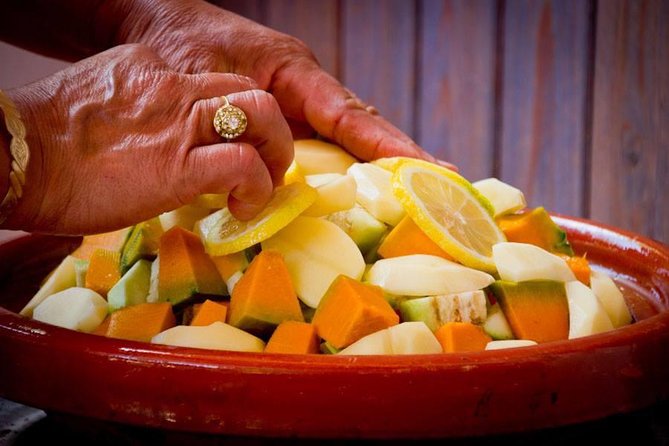
I would choose this experience if you like food with a strong sense of place. It suits people who want to see ingredients before cooking them, work with basic tools, and eat in a farm setting.
It is also a good choice for anyone curious about Amazigh culture and rural life around Essaouira. The focus is not on monuments or formal sightseeing. Instead, the day shows how farming, markets, cooking, and hospitality fit together.
Families may appreciate the variety of the schedule, especially the market, goats, clay oven, and hands-on food preparation. The seven-hour length and open-fire cooking may be tiring for very young children, though the information does not set an age limit.
The outing can also work well for couples and small groups who prefer a slower day outside the city. The maximum of eight helps keep the class from feeling crowded.
I would hesitate if you have strict food restrictions, dislike goat meat, want guaranteed outdoor dining, or need a tightly timed schedule. I would also think twice if you expect a luxury farm lunch or a modern cooking studio. This is a rustic experience built around traditional methods.
Practical details for a smooth day
Your start time is 9:00 am, and the activity returns to the original meeting point. Allow the whole day, since the stated duration is about seven hours.
Confirmation is sent within 48 hours of booking, subject to availability. The tour requires a minimum number of participants, so it may be canceled if that number is not reached. In that case, you can choose another date or experience, or receive a full refund.
Poor weather can also lead to cancellation. You will be offered a different date or a full refund when that happens. For your own plans, keep some flexibility around the excursion rather than scheduling a fixed event immediately afterward.
Free cancellation is available until 24 hours before the start time. Canceling or changing the booking less than 24 hours ahead does not qualify for a refund.
Most people can participate, and service animals are allowed. The small group size is limited to eight people. A mobile ticket is provided, so keep the booking available on your phone.
Nicole is associated with the experience as a German-speaking guide. If language support matters to you, ask whether she will lead your departure, since guide assignment may vary.
Should you book the Berber farm cooking class?
Book it if you want a full countryside day built around food, local markets, and traditional work. The strongest parts are the farm kitchen, the grain-to-bread process, the clay cooking tools, and the connection between the souk and the meal.
The experience offers more than a standard cooking lesson, but it asks for time and flexibility. The goat tagine may not suit every diet, outdoor lunch depends on weather, and the argan cooperative and tree-climbing goats are not the main event.
At $98.76, I see fair value for someone who wants a small-group outing with a meal and several distinct stops. If you prefer a short class in Essaouira itself, spend less time in transit, or want guaranteed menu choices, choose another option. If the idea of grinding barley, baking bread, steaming couscous, and eating under the open sky sounds like your kind of day, this is a strong pick.
FAQ
Where does the cooking class take place?
The class takes place at an ecological farm in the Haha region, about 35 kilometers south of Essaouira.
Where does the tour start and end?
It starts at Labo Abdelkrim Khatabi d’Analyses Médicales, 287 Rue Oued El Makhazine, Essaouira 44000, at 9:00 am. The activity ends back at the same meeting point.
How long does the experience last?
The outing lasts about seven hours.
What food will I prepare?
You will learn to make flat bread, couscous, and a tagine with vegetables and goat meat, Moroccan spices, and olive oil.
Is the argan oil cooperative visit required?
No. The visit to an argan oil cooperative is optional. You can learn about argan oil production and taste products made with it.
Can I cancel for a full refund?
Yes. You can cancel at least 24 hours before the local start time for a full refund. Poor weather or failure to meet the minimum number of participants may also lead to a different date or a full refund.
More Hands-On Workshops in the world
- Florence Pizza or Pasta Class with Gelato Making at a Tuscan Farm
★ 5.0 · 6,801 reviews - Ubud: Balinese Cooking Class at an Organic Farm
★ 5.0 · 1,786 reviews - Sorrento: Pizza Lesson, Wine, and Limoncello at a Local Farm
★ 5.0 · 1,513 reviews - Florence: Pizza or Pasta Class with Gelato at a Tuscan Farm
★ 4.9 · 1,181 reviews
Just added around the world
- Ubud Rice terrace,Zip-line and waterfall★ 5.0 · 4 reviews
- Full Day Tour to Water Temples UNESCO Rice Terraces in Bali★ 5.0 · 4 reviews
- Explore Ubud Art Market, Monkey Forest and Rice Terraces★ 5.0 · 16 reviews
- Exploring Munduk Village (Waterfalls, rice terrace, Traditional local house)★ 4.5 · 2 reviews
- Ubud Monkey Forest Rice Terrace Temple Waterfall Private Tour★ 5.0 · 7 reviews
- Jatiluwih Spiritual Journey of Melukat with Rice Terrace View★ 5.0 · 9 reviews
- Private Tour to Sumampan Waterfall, Monkey forest, Rice terraces and Swing★ 5.0 · 30 reviews
- Discover Hidden Waterfall, Unesco Rice Terraces and Mountain Temple★ 5.0 · 17 reviews
Cooking Classes, compared.
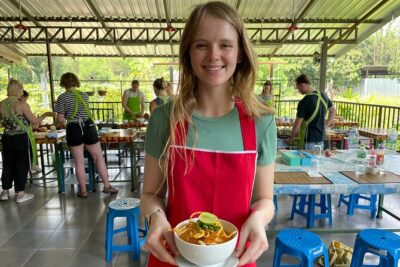
Half-Day Thai Cooking Class at Organic Farm in Chiang Mai
Read our review →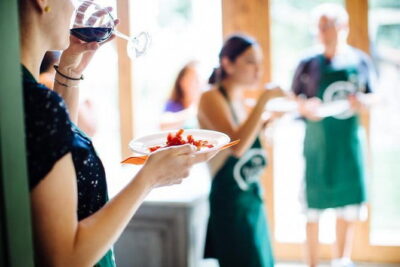
Cooking Class and Lunch at a Tuscan Farmhouse with Local Market Tour from Florence
Read our review →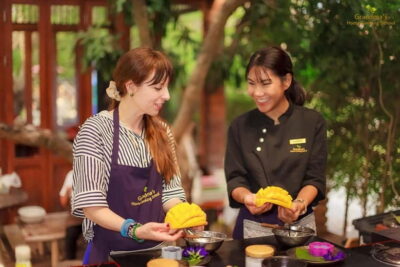
Authentic Cooking Class with Market & Farm Visit
Read our review →
Hands-On Cooking Class & Farmhouse Tour on the Amalfi Coast
Read our review →
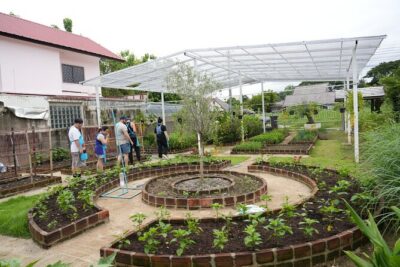
Cooking Class with Organic Farm in Chiang Mai at Mama Noi
Read our review →Browse the lists this tour appears in