
Review · CRETE
Chania Area: Cooking Class at a Farm in Stylos Village (organic)
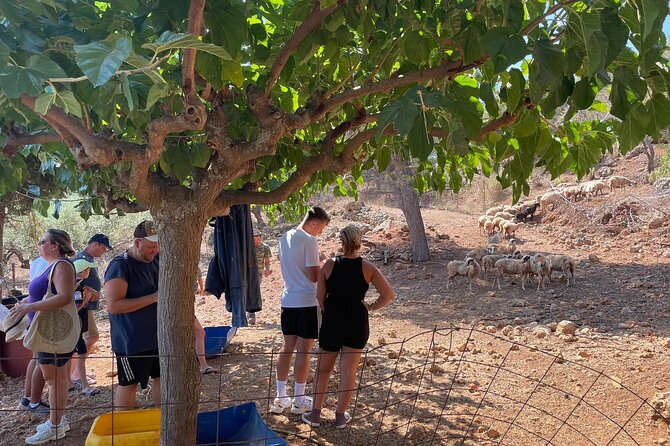
The best part of this Stylos Village farm experience is that cooking is only one piece of the day. You walk among free-range sheep, try goat milking, see how local cheese is made, and learn how olives, grapes, herbs, and vegetables feed a Cretan household. Sofia leads the cooking, while Nikos shows you around the village and farm.
I like the small group size, capped at eight, and the meal built around ingredients from the family’s own farm. I also like the easy pace: coffee or water, a farm visit, a cooking session, time for photos, and a long meal with wine, raki, stories, music, and perhaps dancing. The main consideration is that this is less a tightly timed class than a generous family visit, so it may run longer than the advertised five hours.
Key points to know before booking
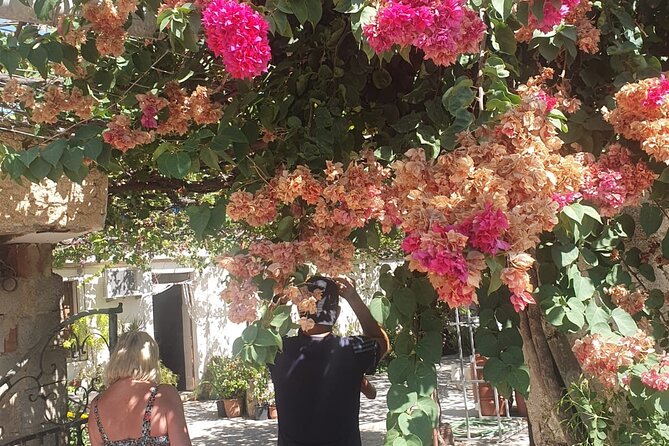
- Hands-on Cretan cooking: Prepare lunch with Sofia using vegetables, olive oil, local meat, homemade cheese, and other farm ingredients.
- Farm activities included: Walk among sheep, try goat milking, learn about cheese making, and see the family’s olive and vineyard traditions.
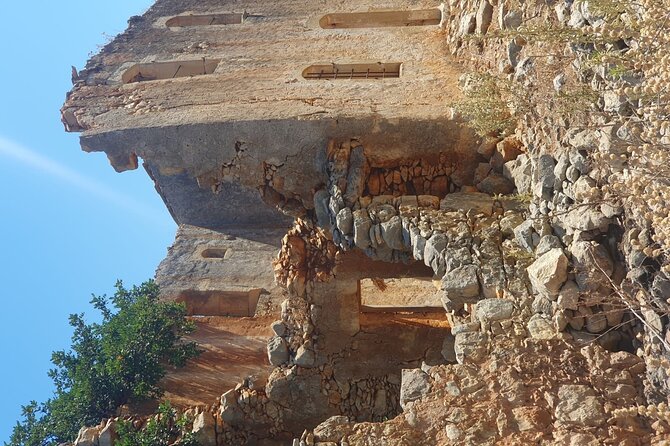
- A real village setting: You visit the farm, the threshing floor, and the grandmother’s home rather than staying in a staged cooking studio.
- Food and drink are central: Expect a full homemade meal with wine, homemade lemonade, and the chance to try raki.
- Small, social group: The maximum is eight people, which gives you room to ask questions and take part.
- Simple logistics: Meet at Veggera in Stylos, near the Diktamos Gorge stop, and finish back at the same meeting point.
From Veggera to a Cretan farm kitchen
You meet at Veggera, listed at C4PC+4G in Stylos, a village in the Chania area. The activity ends back at this same meeting point, so you do not need to arrange a second pickup point at the end.
The setting matters. This is not a cooking demonstration in a city restaurant. The visit takes place around a working family farm and village community, where food connects directly to animals, gardens, olive trees, grapevines, and family life. That gives the meal a useful context. You see where many of the ingredients come from before sitting down to eat them.
The experience is offered in English. The group limit of eight keeps it personal, though the actual number can be smaller. One account describes just two couples taking part, while another group of seven found the pace comfortable. If you prefer a quiet class with plenty of individual attention, this format should suit you better than a large bus tour.
More Farm Cooking Classes in Greece
- Naxos Perivoli Farm Experience & Wood-fire Cooking Class
★ 5.0 · 339 reviews - Cretan Cooking Class and Olive Oil Tasting
★ 5.0 · 178 reviews - Melanes: Naxos Perivoli Farm & Cooking Class with Wood Fire
★ 5.0 · 177 reviews
Sheep, goats, olives, and the threshing floor
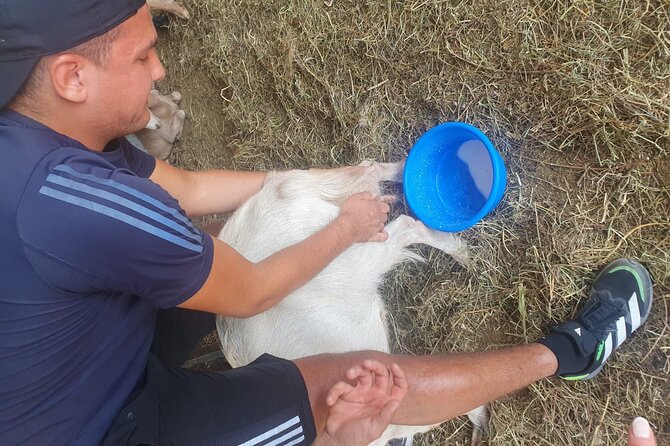
The outdoor portion gives you a look at everyday farm work in Crete. You walk through the free-range sheep and have the chance to milk goats. These are short, practical activities, not a livestock show. You get close to the animals and see how dairy fits into the family’s food traditions.
Cheese making is another highlight. The class connects the finished food on your plate with the work that produces it. Homemade cheese appears in the meal, and one account singled out a dakos made with tomato and homemade myzithra cheese. Dakos is a simple Cretan staple, usually made with a crisp barley rusk, tomato, cheese, and olive oil. Here, its appeal comes from the freshness of the ingredients rather than a complicated recipe.
You also walk on the threshing floor and learn about olives and the vineyard. The threshing floor links the farm to older grain-growing practices, while the olive trees and vines explain two of the most important parts of Cretan cooking and hospitality. The visit is strongest when you are curious and willing to ask questions. The schedule leaves room for conversation, so you can learn more about how the family produces its oil, wine, raki, vegetables, herbs, and cheese.
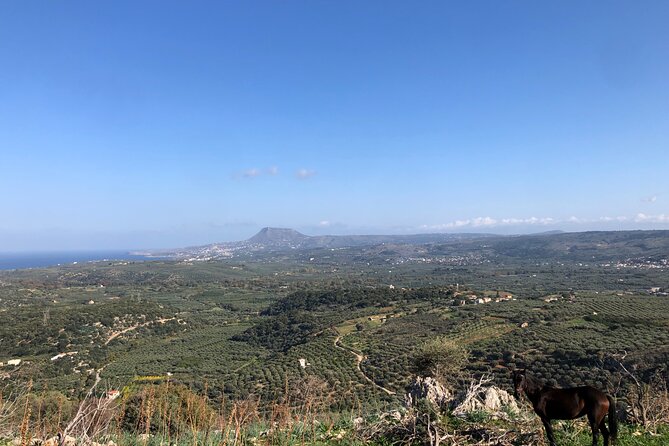
A short break includes homemade lemonade and time to take photographs. The views are described as impressive, but the experience does not provide a detailed scenic itinerary. Think of the photo stop as a pause in the farm visit, not as a dedicated sightseeing overlook.
Cooking lunch with Sofia
After the farm walk, you return to the kitchen and prepare lunch with Sofia. The food centers on hearty Cretan ingredients: extra virgin olive oil, fresh vegetables, local meat, homemade cheese, and herbs. One account describes the supplies as coming from the family’s herb garden, and the family’s wider food production includes beekeeping, wine, raki, vegetables, cheeses, and olive oil.
That range is important. You are not simply learning one recipe and leaving. You get a picture of how Cretan meals are built from what a household grows, raises, presses, ferments, or makes itself. The class also gives you a chance to work with your hands. You help prepare the food instead of watching Sofia do everything.
The exact menu is not specified in the available details, so do not book this expecting a named dish or a fixed restaurant-style course list. The ingredients and the cooking session are clear, but the final menu may depend on the season and what the family has available.
Sofia’s role is one of the most praised parts of the experience. She is described as a fabulous chef who teaches the group to make an impressive dinner, but the mood is informal rather than classroom-like. You cook together, talk as you go, and learn through the family’s own habits.
Nikos takes visitors around the village and farm. His part of the day adds local context to the kitchen work. Instead of hearing only about food, you see the places and people tied to it, including the grandmother’s home and family friends.
A long lunch with wine, raki, and stories
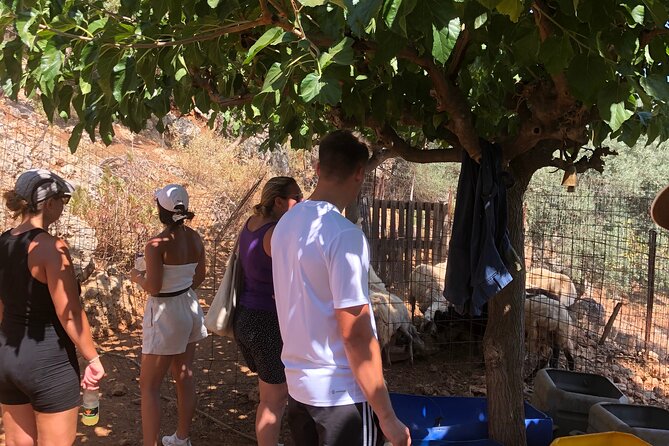
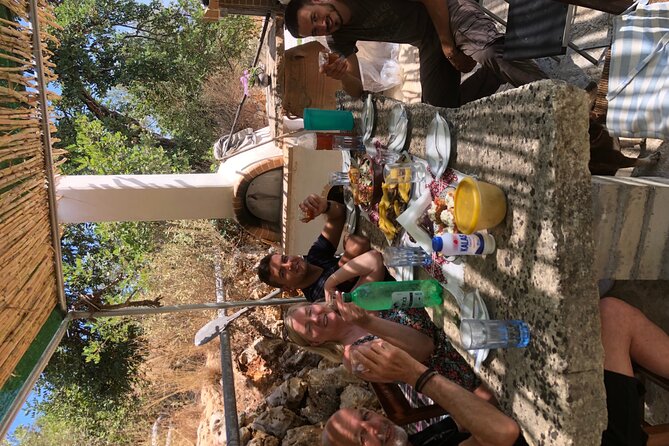
Once the food is ready, you sit down to eat. Wine accompanies the meal, and raki, Crete’s well-known grape spirit, is part of the hospitality. Homemade lemonade comes earlier in the day, while the meal itself brings together the food you helped prepare and the family’s own products.
The drink service is generous, so pace yourself. Raki is strong, and the food arrives in a social setting where another small glass may appear when you think the meal is finished. The relaxed attitude is part of the welcome, but you never need to match the pace of the hosts. You can enjoy the meal without treating the afternoon like a drinking session.
This lunch is also the cultural heart of the experience. The family shares stories about Cretan life, and traditional music may lead to singing and dancing. The gathering can include relatives, neighbors, and friends. That means the day can feel more like being brought into a local social circle than attending a standard tourism activity.
That warmth is a major reason to choose this experience. The hosts are described as treating participants like family, offering fruit, dessert, or another raki when it seems time to leave. This can be wonderful if you enjoy conversation and informal hospitality. If you prefer a predictable schedule and a quick meal, the same generosity may feel like a delay.
One useful point is that the listed duration is about five hours, but some participants spent closer to six hours with the family. Plan your day with breathing room, especially if you have a dinner reservation, ferry, airport transfer, or another timed activity afterward.
More Organic Farm Tours in Greece:
- Aegina: Organic Pistachio Orchard Tour with Factory Visit
★ 4.6 · 22 reviews - Corfu: Organic Olive Oil Farm Tour with Transfer and Tasting
★ 5.0 · 8 reviews - Corfu Organic Olive Oil Tasting at Family Farm
★ 5.0 · 5 reviews - Santorini: Private Agri-Educational Visit to an Organic Farm
★ 4.7 · 3 reviews
What the Diktamos Gorge stop means
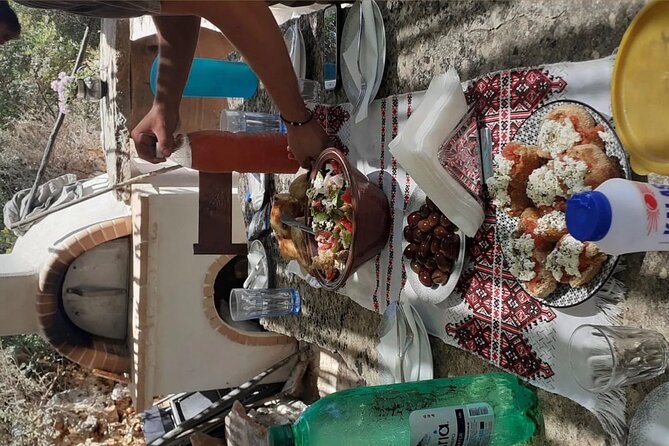
The itinerary names Diktamos Gorge as the first stop. The available details do not explain the length of a gorge walk, the route, or the amount of hiking involved, so I would not book this as a dedicated gorge trek.
The main description focuses on the farm, village, and cooking activities. If you want a full hiking day, this is not the right choice based on the information provided. If the gorge stop is part of your route or orientation around the area, it adds local scenery before the food and family visit, but the class itself is the clear focus.
Ask about the exact order of stops if the gorge matters to your plans. The published schedule identifies it, but it does not give enough detail to judge the trail, walking distance, or footwear needs.
Why the $145.99 price can make sense
At $145.99 per person, this is not a cheap cooking lesson. The value depends on what you want from your time in Crete.
You are paying for about five hours, a small group, a guided farm visit, hands-on cooking, a homemade meal, drinks, and personal contact with a multigenerational family. The day also includes activities that would be difficult to arrange separately, such as goat milking, cheese making, the farm walk, and a look at the family’s food production.
I think the price is easier to justify for people who want a cultural experience rather than only a meal. A restaurant can give you Cretan flavors for less, but it cannot give you the same connection between sheep, goats, olive oil, cheese, the vineyard, and the food on your table.
The value is less clear if you mainly want formal cooking instruction. The class is social and flexible, and the available information does not promise a recipe booklet, a particular menu, or a structured lesson with measured techniques. You are buying time with a family and a place, as much as you are buying lunch.
The activity is often booked well in advance, with an average of 49 days. That suggests planning ahead is sensible, especially if your dates in Chania are limited. It does not guarantee that every date will sell out, but a small group of eight has less room than a large tour.
Who will enjoy this most
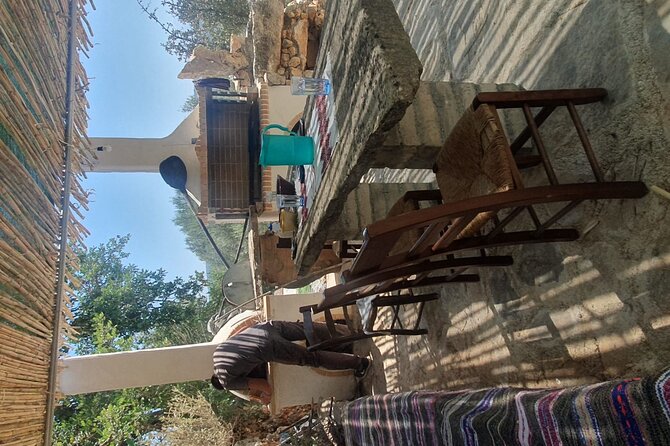
I would choose this for you if you like food with a story attached. It suits people who want to meet local hosts, take part in farm tasks, eat homemade food, and let a day unfold through conversation.
It is especially good for:
- Couples and families who enjoy shared activities
- Small groups looking for a personal day near Chania
- People interested in olive oil, cheese, wine, vegetables, and traditional cooking
- Visitors who prefer village life to a polished culinary studio
- Anyone happy to join music, stories, and possibly dancing
- Food lovers who want to understand Cretan ingredients at their source
It may be less suitable if you need a strict schedule, dislike animal contact, or want a technical cooking course. The sheep, goats, farm setting, and informal family gathering are not side details. They are the point of the day.
The activity is listed as suitable for most people, and service animals are allowed. Specific mobility information is not provided, so ask the provider if you have concerns about the farm, threshing floor, or walking route.
Practical details that affect your day
Confirmation arrives when you book, and the ticket is mobile. The meeting point is Veggera in Stylos, and the activity finishes there.
The maximum group size is eight. English is the offered language. Free cancellation is available if you cancel at least 24 hours before the local start time. Cancellations or changes made less than 24 hours ahead are not accepted for a refund.
Bring an appetite and a relaxed attitude. The food and drink are central, and the day may run beyond five hours. Since you will be around animals and a working farm, comfortable clothing and shoes make sense, though the supplied details do not set a dress code.
Do not expect a quick class followed by a standard transfer. The family may continue offering food, fruit, dessert, wine, or raki after the planned meal. That is a pleasure for some people and a scheduling issue for others.
Should you book the Stylos Village cooking class?
Book it if your ideal day in Crete includes fresh food, a family table, farm animals, homemade cheese, olive oil, village stories, and a little music after lunch. The strongest part is the connection between the farm and the meal, with Sofia guiding the cooking and Nikos helping you understand the village.
Think twice if you want a precise five-hour timetable, a named menu, or a serious culinary certification. For most people seeking personal contact and local food culture near Chania, the $145.99 cost is reasonable because it covers far more than cooking. Just keep the rest of your day open and let the visit take its natural pace.
FAQ
Where does the cooking class take place?
The experience takes place at Veggera in Stylos Village, in the Chania area of Crete.
How long does the activity last?
The stated duration is approximately five hours. Some participants spent about six hours with the family, so allow extra time.
What language is offered?
The activity is offered in English.
What is the maximum group size?
The maximum group size is eight participants.
What food will be used in the cooking class?
The meal uses Cretan ingredients such as extra virgin olive oil, fresh vegetables, local meat, homemade cheese, and herbs. The exact menu is not specified.
Can I try goat milking?
Yes. Goat milking is included as one of the possible local farm activities.
Will I learn about cheese making?
Yes. The experience includes an introduction to cheese making, along with a visit around the farm.
Are wine and raki included?
Wine accompanies the meal, and raki is also part of the experience. Homemade lemonade is served during the break.
Where does the activity end?
The activity ends back at the Veggera meeting point in Stylos.
More Hands-On Workshops in Greece
- Santorini Family Farm Food & Wine Tour with Cooking Class
★ 5.0 · 107 reviews - Moires: Cooking Class and Olive Oil Tasting at a Family Farm
★ 5.0 · 93 reviews - Mykonian Farm and Bakery Class with Brunch in Greece
★ 4.5 · 39 reviews - From Mykonos: Mykonian Farm Baking Class with Brunch
★ 4.7 · 29 reviews
Just added around Greece
- Visit a Farm and Horseback Riding in Nature★ 5.0 · 10 reviews
- Insightful Pistachio Orchard and Factory Tour★ 4.5 · 27 reviews
- Santorinian Agriculture, Food, Wine, Beer, and Spirits★ 5.0 · 6 reviews
- Private Olive Oil tasting & Liqueur experience★ 5.0 · 17 reviews
- Flavors of Santorini: Farm-to-Table Meal Wine & Authentic Village★ 5.0 · 12 reviews
- Santorini 5 Hour Private Oia Tour & Lunch/Dinner at a Local Farm★ 5.0 · 40 reviews
- Honey production &Tasting experience ” Areti Honey “★ 5.0 · 4 reviews
- Cooking Class Sunset Dinner and Tour in Paros Farm★ 5.0 · 5 reviews
Crete Farm Tours, compared.
Road-trip to Lasithi, Zeus Cave & Olive Mill Farm
Read our review →
Moires: Cooking Class and Olive Oil Tasting at a Family Farm
Read our review →
Kleanthi Olive Farm: Guided Tour with Local Delicacies Tasting
Read our review →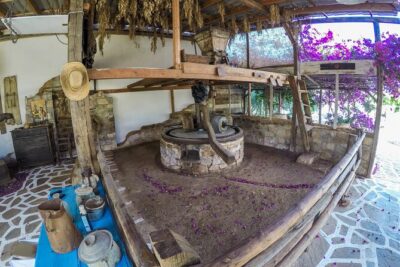
Cretan Farm Tour with Cheese-Making, Olive Oil Tasting & Picnic
Read our review →
Traditional Olive Oil Making at Spiridi Olive Oil Farm – Crete
Read our review →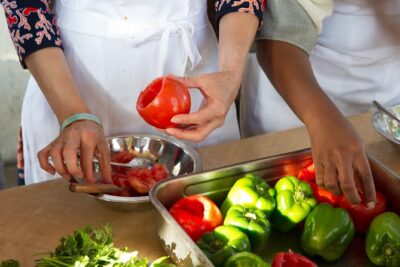
Cretan Cooking Class at a Farm with Hotel Pickup and Drop-Off
Read our review →Browse the lists this tour appears in