
Review · CRETE
Traditional Olive Oil Making at Spiridi Olive Oil Farm – Crete
The best part of this Cretan experience is that you do not just watch olive oil being made. You push the stone mill, fill sacks with crushed olives, and work a manual wooden press with your own hands. At the end, you taste the result and take home a small bottle of the family’s oil.
I like the small group limit of 10, which gives everyone a real turn at the equipment. I also like the setting: a 130-year-old olive oil factory, not a modern display built only for tourists. The main drawback is the short length. At about 90 minutes, this is a focused workshop rather than a full-day farm visit, and food beyond drinking water is not included.
Key points to know before you book
- Hands-on from start to finish: You weigh olives, crush them with a stone mill, move the paste into sacks, and use a wooden press.
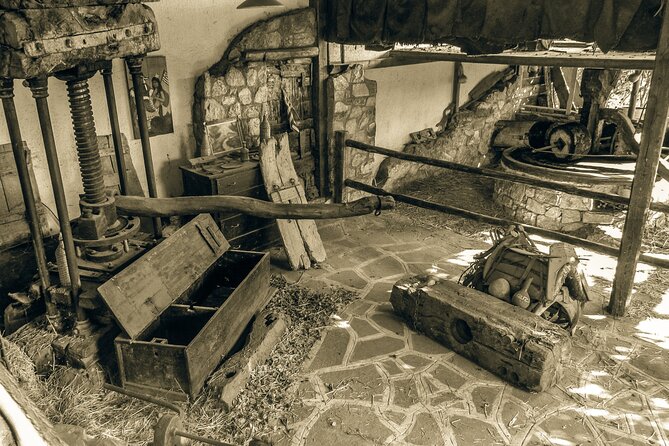
- A 130-year-old working setting: The old factory gives the workshop a clear link to Cretan food traditions.
- Limited to 10 people: The small group makes it easier for children and adults to take a turn.
- English guidance throughout: The family explains and supervises each stage of the process.
- Oil tasting and a 100ml gift bottle: You finish with a tasting and a useful edible souvenir.
- Easy timing near Agios Nikolaos: The visit starts at 10:30 a.m. and ends back at the farm after about 90 minutes.
Why this old Cretan olive mill is worth your time
Olive oil is not a side note in Crete. It is part of everyday cooking, family work, village life, and local identity. This workshop gives you a practical look at that tradition without asking you to spend half a day listening to a lecture.
The appeal is the physical work. You start by weighing olives, then help crush them in a stone mill by pushing it yourself. The pace is simple and clear. You can see how fruit becomes paste, and how pressure separates the oil from the rest.
That direct connection matters. A bottle of oil on a shop shelf tells you very little about the labor behind it. Here, you handle the olives and see the old tools in use. The process may look basic, but it gives you a better sense of why olive oil has always required time, effort, and cooperation.
The family guides you through every step. English is offered, and the activity is designed for participation rather than passive viewing. Children can take part too, as long as an adult helps them follow the instructions and handle the equipment safely.
More Olive Farm Tours in Greece
- Crete: Road-trip to Lasithi, Zeus Cave & Olive Mill Farm
★ 4.4 · 451 reviews - Heraklion: Olive Farm Tour with Tasting of Local Delicacies
★ 4.9 · 411 reviews - Lassithi, Zeus Cave, Olive Mill Farm & Knossos Combo Tour
★ 4.6 · 404 reviews
Entering the 130-year-old factory at Spiridi Olive Oil Farm
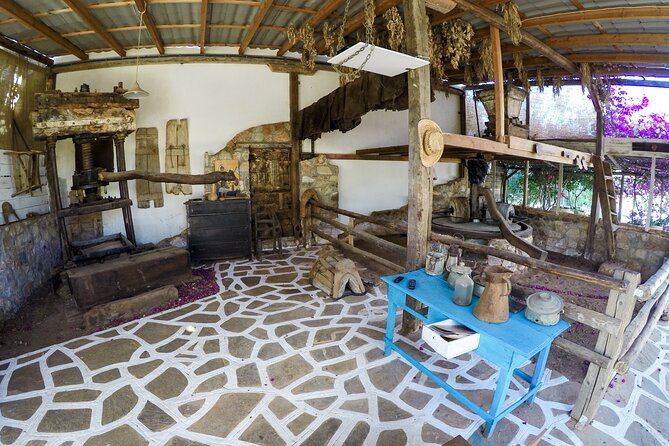
The entire visit takes place at Spiridi Olive Oil Farm, listed at Cretan Olive Oil Farm in Agios Nikolaos, Crete. This is both the meeting point and the end point, so you do not need to arrange a separate transfer between parts of the activity.
The old factory is the main attraction before the work even begins. Its age gives the workshop a sense of place that a new demonstration room could not match. You are seeing equipment and methods connected with earlier generations of olive growers.
Do not expect a large museum or a long historical tour. The emphasis is on using the stone mill and manual press. If you want a detailed account of every period in Cretan olive production, this may feel brief. If you want to understand the traditional method by doing it, the setting works well.
A small shop is also available after the activity. It offers items to buy and products to taste, so you can browse without having to add a separate shopping stop to your day.
Weighing olives and pushing the stone mill
The first active stage is weighing the olives. This sounds minor, but it helps show that oil production begins with a measurable amount of fruit, not with a mysterious machine that produces a bottle at the other end.
You then crush the olives with a stone mill. This is the part that gives the workshop its character. You push the mill yourself, working in the same basic manner used by earlier generations.
The mill provides a better lesson than a simple demonstration. You feel the effort involved, and you see the olives change under pressure. The work is suitable for adults and children, though the group format means each person gets a turn rather than unlimited time at the mill.
The group cap of 10 is important here. With a larger crowd, the hands-on element could become a quick photo opportunity. With fewer people, the family can supervise the work and make sure each participant has a chance to help.
Moving the olive paste into sacks
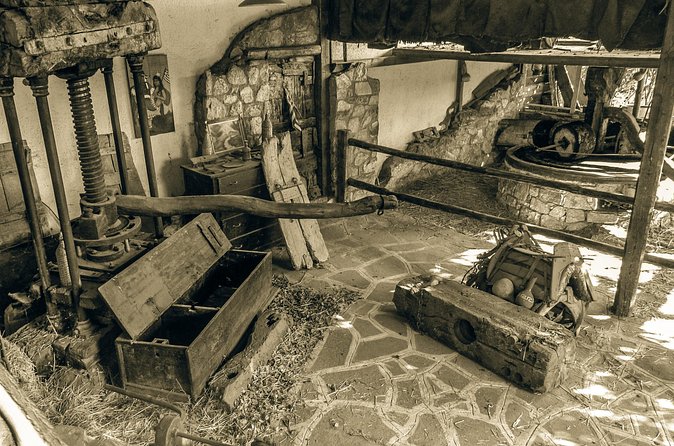
Once the olives have been crushed, you transfer the paste into large sacks. This is another small but useful step because it shows how the material moves from crushing to pressing.
The workshop does not hide the untidy parts of the process. You are handling the olive paste and taking part in the work, so comfortable clothing makes sense. The information provided does not specify a dress code or special equipment, but this is not a sit-down tasting where you remain clean and hands-off.
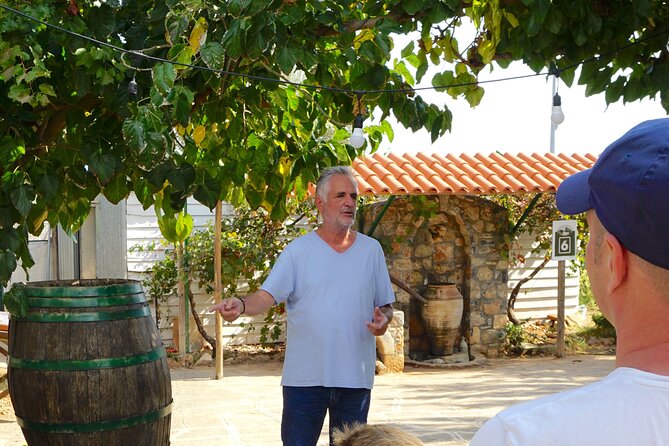
The family provides help throughout. That makes the activity suitable for people with no knowledge of oil production. You do not need to arrive with technical terms or farming experience. The value is in seeing the sequence clearly and taking part at each stage.
Same fields, a different sort of day out:
- Mykonos: Farm, Ano Mera Village, and Beaches Guided Tour
★ 4.4 · 1,283 reviews - Naxos Perivoli Farm Experience & Wood-fire Cooking Class
★ 5.0 · 339 reviews - Cretan Cooking Class and Olive Oil Tasting
★ 5.0 · 178 reviews - Melanes: Naxos Perivoli Farm & Cooking Class with Wood Fire
★ 5.0 · 177 reviews
Using the wooden press and tasting the finished oil
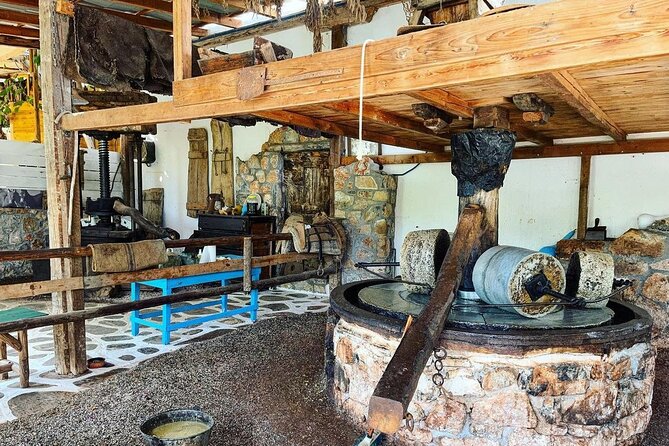
The paste goes into a manual wooden press, where you help press it into oil. This is the final working stage and the moment when the earlier steps come together.
A hand press cannot match the speed or volume of a modern commercial mill. That is precisely why it works as a teaching tool. You see how much effort sits behind a small amount of oil, and you understand why traditional olive making was a shared household task.
The session finishes with an olive oil tasting. The tasting gives you a chance to pay attention to the oil as a food, not just as a souvenir. The supplied details do not specify the number of samples or the tasting format, so do not book this expecting a large tasting flight.
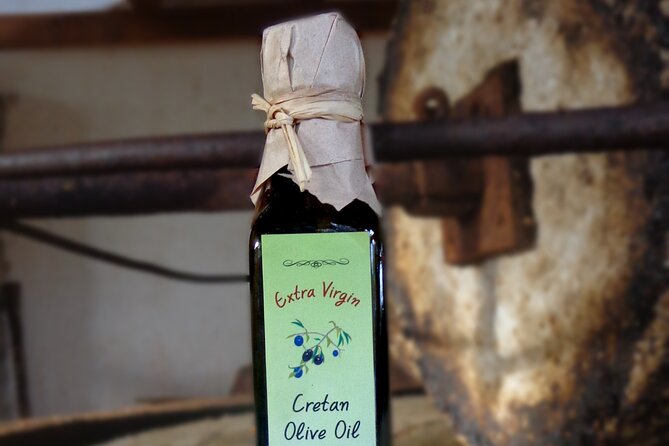
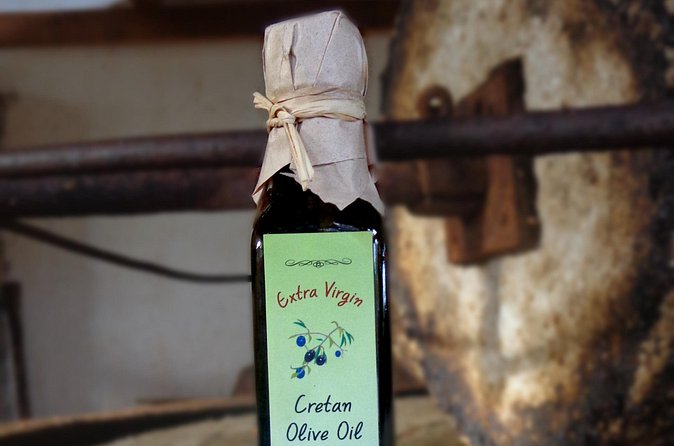
You also receive a 100ml bottle of the family’s extra virgin handmade olive oil. It is a modest-sized gift, but a practical one. You can carry it home more easily than a large bottle, and it connects directly with the work you just completed.
What the 90-minute schedule really means
The experience starts at 10:30 a.m. and lasts about one hour and 30 minutes. That makes it easy to fit into a morning near Agios Nikolaos, with time left for lunch or another activity.
The short schedule is a strength if you want one focused cultural stop. You get a clear beginning, middle, and end: weigh, crush, transfer, press, taste. There is little risk of the activity dragging once the work is finished.
It is also a limitation. The visit does not include a full meal, and food and drinks other than water are not included. It also does not promise a broader farm program during this particular booking. The farm offers other experiences, including wine tasting, cheese making, honey activities, cooking, and an electronic tour, but those should not be assumed to form part of this olive oil workshop.
One useful detail from the wider farm experience is that visitors can sometimes use provided tablets for a more extensive electronic tour after the main demonstration. Treat that as an optional possibility rather than a guaranteed part of this booking, since the olive oil activity itself is described as the 90-minute workshop.
The small group makes the hands-on work better
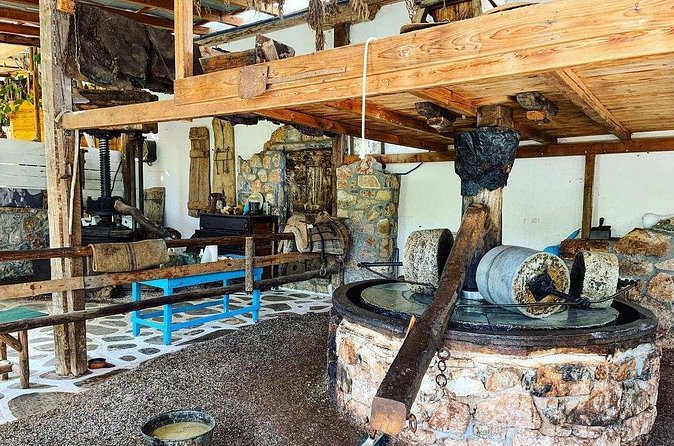
A maximum of 10 people is one of the strongest practical features. Traditional equipment is not very useful if 30 people are standing around it. A smaller group gives the family space to explain, supervise, and pass the work along.
This setup suits families especially well. Children can help push the mill and take part in the pressing, turning the visit into a physical activity rather than a talk aimed only at adults. Parents should still expect to stay involved, since the work uses old equipment and the family’s guidance matters.
It also suits couples and small groups of friends who want a local food experience without committing to a cooking class. The workshop is more active than a tasting, but less demanding than a full farm day.
The group size does not guarantee private attention at every second. Ten people may still need to share turns. But it is small enough that the central promise of hands-on participation makes sense.
Price and value at $78.60 per person
At $78.60 per person, this is not the cheapest olive oil tasting in Crete. You are paying for more than a sample and a short explanation, though. The price includes access to the old factory, the guided production workshop, use of the stone mill and manual press, the tasting, water, and a 100ml bottle of handmade extra virgin oil.
I see the value in the participation. If you only want to taste Cretan oil, a shop or restaurant will cost less. If you want to understand how the traditional method works and take part in it, the old equipment and family-led instruction make the price easier to justify.
The bottle helps, but it should not be the reason you book. A 100ml gift is a pleasant reminder, not a major financial return. The real purchase is the time spent learning through your hands.
For a couple, the total price is about $157.20 before any changes in local pricing or booking fees. That is a fairer comparison than looking at the individual rate alone. If your budget is tight, choose this only if the olive-making process interests you. If you already plan to buy olive oil and want a meaningful farm visit, the combined experience has stronger value.
A good stop near Agios Nikolaos
The meeting point is at Cretan Olive Oil Farm in Agios Nikolaos, postal code 721 00. The activity begins and ends there, which keeps the plan simple.
One practical option after the workshop is to continue toward town. A short downhill walk toward Agios Nikolaos and the archaeological museum was used as part of a wider visit to the farm. That walk is not listed as part of the paid activity, so consider it a possible follow-on rather than an included tour feature.
Because the activity begins at 10:30 a.m., check your route before booking and allow enough time to reach the farm. The information provided does not include hotel pickup or transport, so you should plan to arrive at the stated meeting point on your own.
Mobile tickets are accepted, and confirmation is provided at booking. Service animals are allowed. These details make the visit fairly easy to arrange, but they do not replace checking your own transport plan.
Who will enjoy this olive oil workshop most
I would choose this experience for:
- Families who want children to take part in a food tradition
- Couples looking for a short, local activity near Agios Nikolaos
- Anyone interested in how olive oil is produced before it reaches the kitchen
- Small groups that prefer doing a task together instead of sitting through a lecture
- Food-focused visitors who want to taste oil and bring home a small bottle
I would think twice if you want a full meal, a long farm tour, or a large range of tastings. None of those is promised here.
The activity also works best if you enjoy old methods for their human scale. Modern production is faster and more efficient, but the stone mill and wooden press make the work visible. That is the point of the visit.
Booking, cancellation, and timing details
You can cancel for a full refund up to 24 hours before the start time. Changes made less than 24 hours before the activity are not accepted, and cancellations inside that window are not refunded.
The experience needs a minimum number of participants. If that minimum is not reached and the activity is canceled, you will be offered another date or experience, or a full refund.
The activity is offered in English and accepts mobile tickets. It is usually booked about 18 days ahead, so I would reserve early if your Cretan schedule is fixed. The group maximum is 10, and the small size is part of what makes the hands-on format worthwhile.
Should you book this Cretan olive oil experience?
Book it if you want to work with traditional tools, not just hear about them. The stone mill, sack filling, wooden press, tasting, and small bottle create a complete little story in about 90 minutes.
I especially recommend it for families and food-minded visitors staying around Agios Nikolaos. The old factory, English guidance, and small group make the visit easy to follow, while the physical work gives children and adults something real to do.
Skip it if your main goal is a full meal, extensive tasting, or all-day farm program. For everyone else, this is a clear and hands-on way to connect Cretan olive oil with the people, tools, and effort behind it.
FAQ
Where does the olive oil workshop take place?
It takes place at Spiridi Olive Oil Farm, listed at Cretan Olive Oil Farm, in Agios Nikolaos, Crete, Greece.
What time does the activity start?
The workshop starts at 10:30 a.m.
How long does the experience last?
It lasts approximately one hour and 30 minutes.
What language is offered?
The activity is offered in English.
How many people can join?
The maximum group size is 10 participants.
What will I do during the workshop?
You will weigh olives, crush them by pushing a stone mill, transfer the crushed olives into large sacks, and press the olive paste with a manual wooden press.
Is olive oil tasting included?
Yes. An olive oil tasting is included at the end of the workshop.
Do I receive olive oil to take home?
Yes. Each participant receives a 100ml bottle of the family’s extra virgin handmade olive oil.
Are food and drinks included?
Drinking water is included. Other food and drinks are not included.
Can I cancel for a refund?
Yes. You can cancel at least 24 hours before the start time for a full refund. Cancellations made less than 24 hours before the start time are not refunded.
Just added around Greece
- Visit a Farm and Horseback Riding in Nature★ 5.0 · 10 reviews
- Insightful Pistachio Orchard and Factory Tour★ 4.5 · 27 reviews
- Santorinian Agriculture, Food, Wine, Beer, and Spirits★ 5.0 · 6 reviews
- Private Olive Oil tasting & Liqueur experience★ 5.0 · 17 reviews
- Santorini 5 Hour Private Oia Tour & Lunch/Dinner at a Local Farm★ 5.0 · 40 reviews
- Flavors of Santorini: Farm-to-Table Meal Wine & Authentic Village★ 5.0 · 12 reviews
- Honey production &Tasting experience ” Areti Honey “★ 5.0 · 4 reviews
- Cooking Class Sunset Dinner and Tour in Paros Farm★ 5.0 · 5 reviews
Crete Farm Tours, compared.
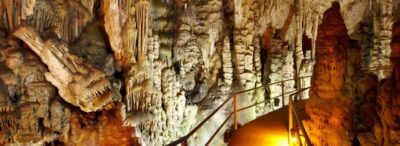
Road-trip to Lasithi, Zeus Cave & Olive Mill Farm
Read our review →
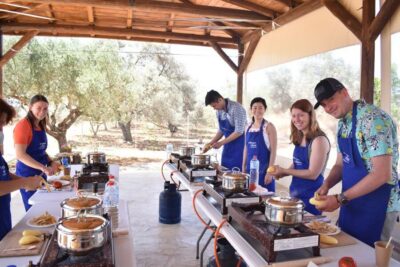
Moires: Cooking Class and Olive Oil Tasting at a Family Farm
Read our review →
Kleanthi Olive Farm: Guided Tour with Local Delicacies Tasting
Read our review →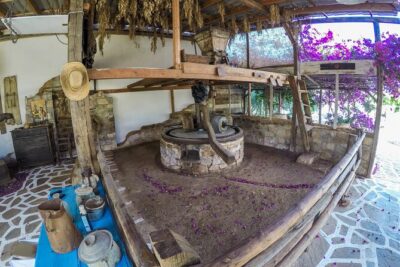
Chania Area: Cooking Class at a Farm in Stylos Village (organic)
Read our review →
Cretan Farm Tour with Cheese-Making, Olive Oil Tasting & Picnic
Read our review →
Cretan Cooking Class at a Farm with Hotel Pickup and Drop-Off
Read our review →Browse the lists this tour appears in