
Review · PHILIPPINES
Bohol Chocolate Making and Farm Tour
Bohol’s Chocolate Making and Farm Tour takes you past the usual sweet-shop stop and into the full tree-to-treats process. You’ll see how cacao grows, taste the fresh fruit around the beans, and follow the crop through harvesting, fermentation, drying, roasting, and moulding.
I like the hands-on chocolate making, since you do not just watch a demonstration. I also like the private format, which gives your own group the transport and equipment rather than placing you in a large shared class. The main drawback is time: the farm visit is about three hours, and the full outing runs five to six hours, so it needs a solid half-day in your Bohol plans.
Key points at a glance
- About 30 minutes from the Chocolate Hills: The farm is close enough to pair with a Chocolate Hills visit.
- A full cacao-to-chocolate lesson: You follow the crop from growing and harvesting through fermentation, drying, roasting, and moulding.
- You make chocolate yourself: Equipment is provided, and you can taste the products you prepare.
- Fresh tropical tastes may be included: The farm tour may include fresh cacao fruit and other tropical fruit tasting.
- Private transportation and a private group: Only your booking party participates in the activity.
- A useful half-day outing: The tour lasts about five to six hours overall, with roughly three hours at the farm.
A closer look at Bohol’s cacao country
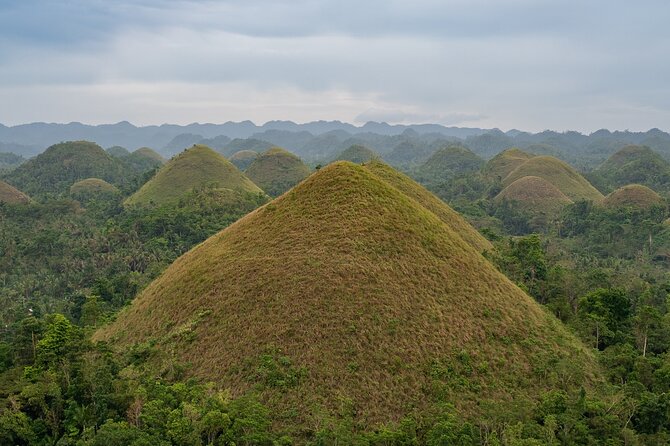
This tour gives you a different way to understand Bohol. Many visitors know the island for the Chocolate Hills, beaches, and countryside drives. Here, chocolate is not simply a finished product on a souvenir shelf. You see the agricultural work that comes first.
The farm is located just a few minutes from the Chocolate Hills complex, with the transfer from the hills listed at about 30 minutes. That makes the location practical if you are already visiting the famous viewpoint or building a day around inland Bohol.
The setting is a cacao farm that grows fine-flavour cacao in a biodynamic environment. The supplied information does not spell out every farming method used, so I would not expect a technical agriculture class. Instead, you can expect a guided introduction to how cacao moves from the tree into the chocolate you eat.
That basic connection is valuable. Chocolate often arrives in a neat bar with no clue about the fruit, seeds, heat, time, and work behind it. This visit gives you the missing steps.
A few more farm days around the Philippines worth a look
- Bohol Chocolate Making and Farm Tour
★ 5.0 · 2 reviews - Amazing Yarra Valley Wine Tour + Chocolate, Farm Fresh, Gin
★ 5.0 · 1,566 reviews - Kauai Chocolate Farm Tasting Tour
★ 5.0 · 666 reviews
What happens during the three-hour farm visit
The farm portion lasts about three hours, which is long enough to move beyond a quick explanation and into practical work. The exact order may vary, but the lesson covers the main stages of cacao production.
You begin with the cacao tree and the fruit itself. One of the most interesting parts is tasting fresh cacao fruit. The white pulp around the beans gives you a taste that is quite different from finished chocolate, and it helps explain why the beans need processing before they become the familiar food you know.
From there, the guide explains harvesting. You learn that the chocolate-making process begins in the orchard, not in a kitchen. The farm setting gives this part more meaning than a simple talk indoors because the crop is growing around you.
The next stages are fermentation and sun drying. These steps may sound less exciting than moulding chocolate, but they are essential to the final flavour. The visit connects those early steps to what happens later, showing why cacao beans cannot simply be picked and eaten as a chocolate bar.
You then move toward roasting. Roasting changes the beans and prepares them for chocolate making. The activity is educational, but it is not only a lecture. You have the chance to work with the provided equipment and take part in the preparation.
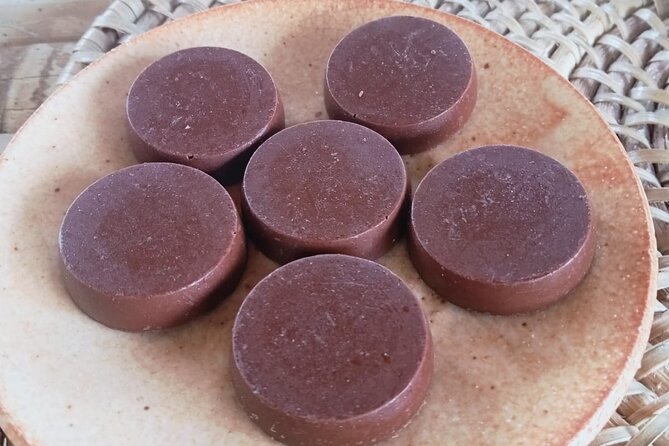
The final stage is moulding your own chocolate. This is where the lesson becomes something you can handle, taste, and remember. You get to enjoy the products you make, and the chocolate you prepare is something you can take home.
The best part: making chocolate yourself
I like tours that let you do one real task rather than watch several staged demonstrations. Here, the equipment is included, so you do not need to bring supplies or arrange a separate workshop.
The hands-on format also makes the farming lesson easier to remember. You may forget a few technical terms about fermentation or drying, but you are less likely to forget the point after handling the ingredients and making your own moulded chocolate.
This is especially useful for families. Children can connect the cacao tree to the snack they already know, while adults get a clearer look at the production process. The experience is described as suitable for most participants, and it is private, so your group can share the activity without strangers joining in.
The tasting is another strong feature. You may taste fresh cacao fruit and possibly other fresh tropical fruits, then compare those flavours with the finished chocolate. That contrast gives the tour more range than a simple confectionery class.
Do keep expectations sensible. The available details do not specify the exact recipes, mould shapes, chocolate styles, or amount of chocolate each person takes home. The clear promise is that you will make chocolate, taste what you produce, and take your creation with you.
Why the Chocolate Hills location works well
The tour fits naturally into a day focused on inland Bohol. After visiting the Chocolate Hills complex, you travel around 30 minutes to the farm. That short connection means you can add a food and farming activity without crossing the island for hours.
The name Chocolate Hills creates an easy link to the subject, even though the hills and cacao are different attractions. One is a famous geological sight, and the other is a working agricultural experience. Together, they give you two very different ways to see the central part of Bohol.
Private transportation is included, which adds value if you do not want to arrange a separate ride between stops. It also makes the timing easier for your own group. The information does not give a detailed pickup map or list every pickup area, so confirm the pickup arrangement when booking.
The full outing takes approximately five to six hours. The farm stop itself is about three hours, while the remaining time allows for transport and the wider schedule. Plan this as a half-day activity rather than a quick add-on before an appointment.
Same fields, a different sort of day out:
- Immerse in Culture: Villa Escudero Coconut Plantation Experience
★ 5.0 · 60 reviews - From Manila: 4-Day Sagada and Banaue Rice Terraces Tour
★ 4.9 · 29 reviews - Skip the Line: Villa Escudero Plantation & Resort Day Pass Ticket
★ 4.5 · 11 reviews - Cebu: Private Twin City Tour +Temple of Leah + Sirao Flower Farm
★ 4.5 · 10 reviews
What the private format means for you
This is a private tour and only your group participates. That matters most if you are traveling with family or friends and want the activity to move at your own pace within the planned schedule.
A private group can also make a hands-on class feel less awkward. You can ask questions, work through the chocolate-making steps, and taste the results without being part of a large public demonstration.
The private format does not mean the tour is completely flexible in every detail. The farm has listed operating hours from 7:30 a.m. to 3:30 p.m., daily, for the stated operating period. Your booking still needs to fit within that window.
Group discounts are offered, which may improve the value for a larger party. Since the listed price is $88 per person, ask about the group rate if several people are booking together. The price is easier to justify for a group that values private transport, a guided farm lesson, snacks, and hands-on chocolate making.
Is the $88 price fair?
At $88 per person, this is not a bargain-priced tasting stop. The value depends on what you want from your Bohol day.
You are paying for more than a sample of chocolate. The package includes private transportation, the farm visit, use of chocolate-making equipment, snacks, and a guided lesson covering the cacao process from tree to finished treat. The activity also takes five to six hours, so it fills a meaningful part of the day.
For a couple or family that wants a private outing with an activity at its center, the price can make sense. You are not simply being driven to a shop, given a sample, and sent on your way. You take part in the process and have a finished product to enjoy.
The value is weaker if you only want to see the Chocolate Hills or only want a quick food stop. In that case, three hours at a cacao farm may feel too long, and the extra transport may not fit your plans.
Group discounts could change the calculation for larger parties. Ask about the available rate before deciding, especially if you are traveling with several relatives or friends.
Snacks and tropical fruit tasting
Snacks are included, which is useful during a half-day outing. The tour may also include fresh tropical fruit tasting, though the information does not promise a fixed fruit menu.
The fresh cacao fruit is the key tasting detail. It gives you a direct link to the farm and shows that the bean and the fruit around it are only the starting point for chocolate.
Do not book this expecting a large meal. Snacks are included, but no full lunch is listed. If you need a substantial meal, plan around the tour rather than assuming the farm food will cover it.
The lack of a fixed menu is worth keeping in mind if you have dietary restrictions or strong food preferences. The available information does not list specific ingredients, so ask the operator for current details before arrival.
Who will enjoy this most?
This tour suits chocolate lovers who want to know how their food is made. It also works well for families, since the subject is easy to understand and the final activity is practical rather than purely observational.
It is a good choice for visitors who have already planned the Chocolate Hills and want to add a local food experience nearby. The short transfer helps you link two inland Bohol attractions without creating a separate full-day journey.
I would also recommend it to travelers who prefer private activities. You get private transport and a group reserved for your own party, which can be more comfortable than a shared class.
It may be less suitable for someone with only a few free hours. The overall schedule is about five to six hours, and the farm session takes around three hours. It is also not the right pick if you want a highly technical cacao course, since the supplied details describe a broad educational farm tour rather than advanced confectionery training.
Most travelers can participate, according to the booking information. Still, the specific physical setup, seating, walking surfaces, and accessibility arrangements are not described. If someone in your group has mobility needs, confirm those details ahead of time.
Practical planning for the day
The farm is open from 7:30 a.m. to 3:30 p.m., Monday through Sunday, during the stated operating period. That gives you morning and early afternoon options, but not a late-day farm visit.
The experience can be booked with mobile tickets, and confirmation is received at the time of booking. Pickup is offered, though you should confirm the exact pickup point and timing because the available details do not list every collection location.
The tour is booked, on average, 31 days ahead. That does not guarantee that every date sells out, but it is a useful sign that you should not leave a preferred date until the last minute, especially if you are traveling during a busy period.
The cancellation terms are straightforward. You can cancel at least 24 hours before the start time for a full refund. Cancellations and changes made less than 24 hours before the start are not accepted for a refund, and cut-off times use local Bohol time.
A good alternative to another viewpoint
Bohol has no shortage of scenic stops. The chocolate farm offers a different reward: you leave with an understanding of a local crop and a treat you helped prepare.
That makes the tour a good change of pace after sightseeing. Instead of spending another few hours looking out from a viewpoint, you handle ingredients, taste fresh produce, and learn how a farm product becomes a finished food.
The strongest reason to book is the complete sequence. You are not only tasting the final chocolate. You are tracing the route from cacao tree to harvest, fermentation, sun drying, roasting, and moulding.
The main caution is that the tour’s appeal depends on your interest in the process. If you are not keen on a farm lesson or hands-on food activity, the three-hour stop may feel long. If that sounds like your kind of afternoon, the private setting and practical work make it a well-rounded choice.
Should you book the Bohol Chocolate Farm Tour?
Book it if you want a private, family-friendly activity that explains cacao from tree to treat and lets you make chocolate yourself. The location near the Chocolate Hills, included transport, snacks, and equipment make it easy to fit into an inland Bohol day.
Think twice if your schedule is tight, you only want a short tasting, or you expect a full meal and a detailed professional chocolatier class. For everyone else, the $88 price is most convincing when you value the whole package: transport, a three-hour farm visit, guided learning, tasting, and chocolate to take home.
FAQ
How long does the Bohol Chocolate Making and Farm Tour last?
The complete experience takes approximately five to six hours. The farm visit itself lasts about three hours.
How far is the cacao farm from the Chocolate Hills?
The transfer from the Chocolate Hills complex to the farm takes about 30 minutes.
Is transportation included?
Yes. Private transportation is included, and pickup is offered.
Is the tour private?
Yes. This is a private activity, and only your own group participates.
What is included in the price?
The tour includes private transportation, use of equipment for chocolate making, and snacks. The activity also includes the guided farm and chocolate-making experience.
Can I cancel for a full refund?
Yes. You can cancel at least 24 hours before the experience start time for a full refund. Cancellations or changes made less than 24 hours before the start are not accepted for a refund.
Just added around the Philippines
- Iloilo City Tour (Garin Farm, Molo Mansion/Church, Vanishing Mansion)★ 3.0 · 3 reviews
- A Day in Paradise at Villa Escudero Coconut Plantation Adventure★ 5.0 · 2 reviews
- Banaue Rice Terraces Escape: 3 Days, 2 Nights with Transfers★ 5.0 · 4 reviews
- 3 Days Private Tour in Banaue Ifugao visiting Batad Rice Terraces★ 3.5 · 3 reviews
- Skip the Line: Villa Escudero Plantation & Resort Day Pass Ticket★ 4.5 · 11 reviews
- Villa Escudero Coconut Plantation Day Trip from Manila★ 3.5 · 9 reviews
- Sagada and Banaue Rice Terraces 4-Day Tour★ 5.0 · 4 reviews
- Banaue Rice terraces adventure (3 days 2 nights) from Manila***★ 3.0 · 2 reviews
Philippines Farm Tours, compared.
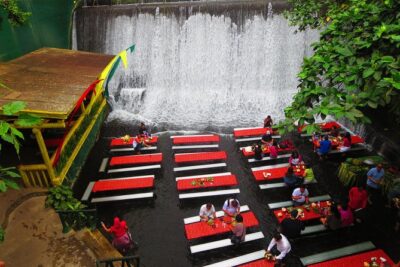
Immerse in Culture: Villa Escudero Coconut Plantation Experience
Read our review →
Skip the Line: Villa Escudero Plantation & Resort Day Pass Ticket
Read our review →
3-Day Sagada, Baguio, & Banaue Rice Terraces Tour
Read our review →
Private Twin City Tour +Temple of Leah + Sirao Flower Farm
Read our review →
Villa Escudero Coconut Plantation Day Trip from Manila
Read our review →
Banaue-Hapao Rice Terraces (Car Rental W/ Manila Tourist Driver)
Read our review →
Browse the lists this tour appears in