
Review · YOGYAKARTA
Yogyakarta: Selogriyo Temple, Rice Terraces & Waterfall Tour
Selogriyo Temple is the sort of place that rewards you for leaving Yogyakarta’s busy streets. The road ends in quiet countryside, then you walk through rice terraces to a small hilltop shrine surrounded by open views and very few people. I especially like the chance to see working farmland up close and the friendly, personal guiding from people such as Haidar, Atok, Kin, and Yuni.
I also like that the day finishes at Kedung Kayang Waterfall, where you can cool off beneath the falls and see a volcano in the distance. The main drawback is physical: muddy sections lead to Selogriyo, and the waterfall requires a steep walk down and back up, so good shoes and a moderate level of fitness matter.
Key points before you book
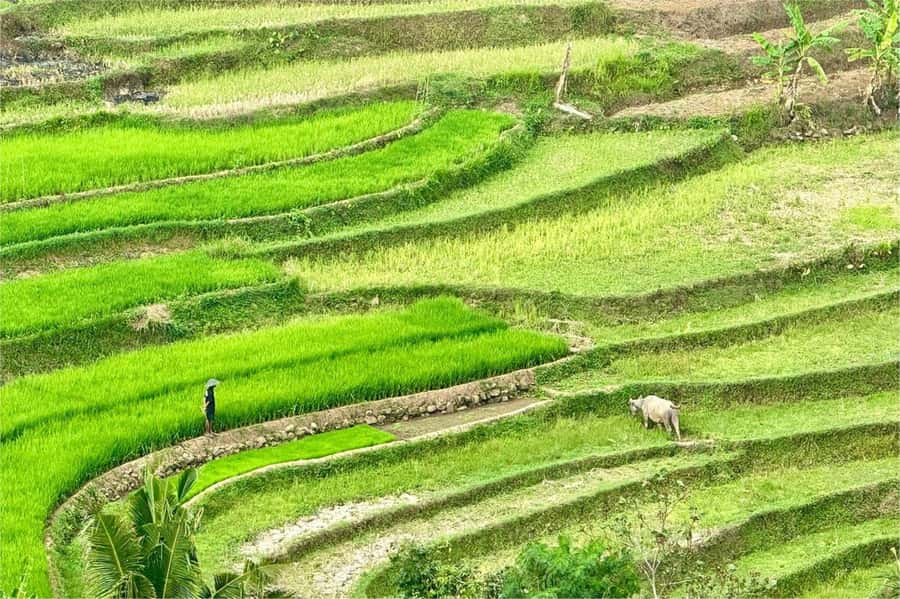
- Walk through real rice terraces: See paddy, beans, corn, plants, and farming methods rather than simply viewing fields from a car.
- Visit a quiet hilltop temple: Selogriyo is small, peaceful, and far removed from the busiest sights around Yogyakarta.
- Learn from a strong local guide: Haidar, Atok, Kin, and Yuni are praised for clear English, cultural explanations, humor, and careful pacing.
- Swim at Kedung Kayang Waterfall: The falls offer a refreshing finish, but the path down and up is steep.
- Travel in a small group: The maximum group size is eight, with hotel pickup and drop-off included.
- Plan for an active eight-hour day: Bring suitable footwear, water, and a little patience for rural roads and uneven paths.
Leaving Yogyakarta for Java’s quiet side
This eight-hour trip is built around contrast. You begin with pickup at your accommodation in Yogyakarta or the Borobudur area, then trade city traffic and crowded attractions for farm roads, hills, and open countryside.
I like this change of pace. Yogyakarta has plenty of major cultural sights, but it is easy to spend your whole visit moving between famous monuments and busy streets. Selogriyo gives you a look at a slower rural setting, where the walk itself matters as much as the temple at the end.
The tour is limited to eight participants, though smaller bookings can feel almost private. One pair had the entire day with their guide, while other groups enjoyed a compact outing that still allowed room for questions and stops. The listed price is $65 per person, and it includes transport from your hotel, entrance fees, an English-speaking guide, and parking.
That is not the cheapest way to see a temple and waterfall in Java. Still, the value improves if you want a driver, a guide, entry costs, and local interpretation bundled together. You are paying for access to a remote area as well as for the sights themselves. Food and drinks are not included, and pickup from the Yogyakarta airport area costs an additional IDR300,000.
More Rice Terrace Tours in Indonesia
- Ubud: Monkey Forest, Jungle Swing, Rice Terrace, and Water Temple
★ 5.0 · 7,160 reviews - Ubud: Waterfalls, Water Temple & Rice Terraces Private Tour
★ 5.0 · 5,484 reviews - Ubud: Waterfall, Rice Terraces & Monkey Forest Private Tour
★ 4.9 · 4,894 reviews
The walk to Selogriyo Temple
The approach to Selogriyo is one of the best parts of the day. Rather than stepping out of a vehicle directly at a monument, you walk through the countryside and watch the setting change as the temple comes closer.
Expect a moderate amount of walking. The path passes rice terraces where farmers grow paddy, beans, corn, and other crops. Depending on recent weather, some sections may be muddy. This is not a technical hike, but it is not a paved sightseeing stroll either.
I would wear shoes with a firm grip, or sturdy sandals that can handle wet ground. Flip-flops are a poor choice here, especially if you plan to continue to the waterfall. A moderate level of fitness is recommended, and you should be comfortable walking on uneven ground for part of the day.
The farming side of the walk gives the experience its character. Haidar is especially good at explaining how local farmers use different plants and methods to manage pests and improve soil nutrients. You may learn about crops, insects, and the practical work behind the neat green terraces.
Your guide can also help turn casual meetings into useful cultural encounters. The day includes opportunities to meet local people, hear about village life, and see how the countryside works beyond the postcard view. That human element is easy to miss if you only stop for photographs.
A small temple with a peaceful setting
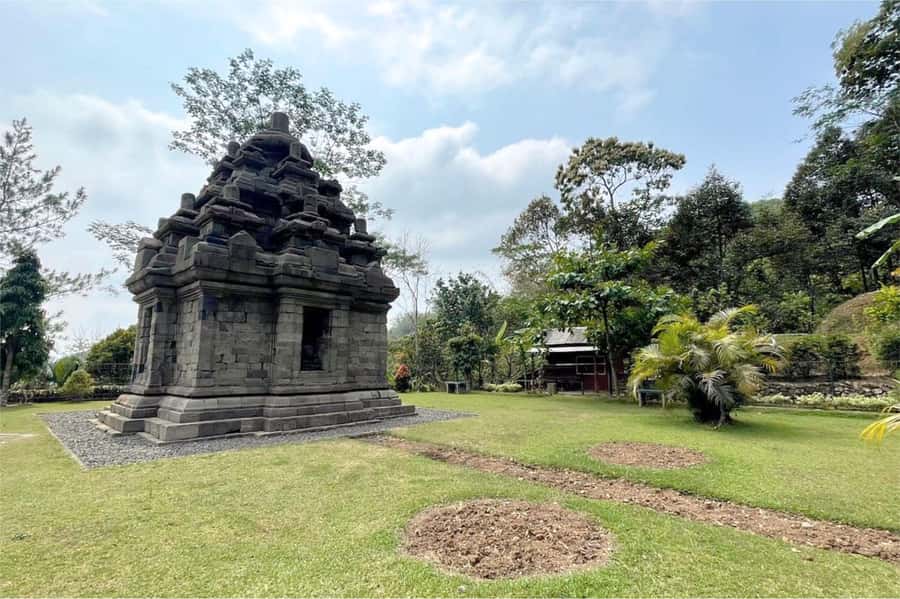
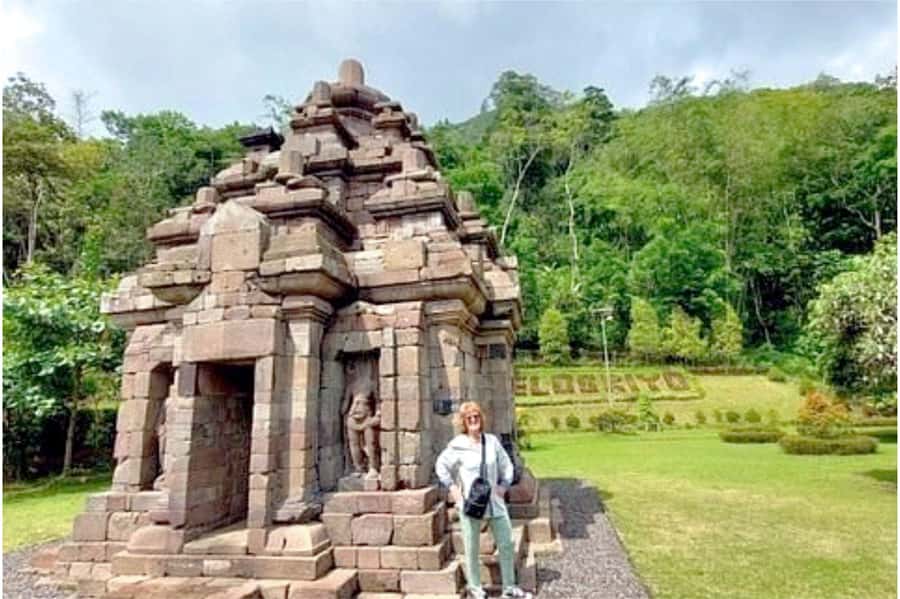
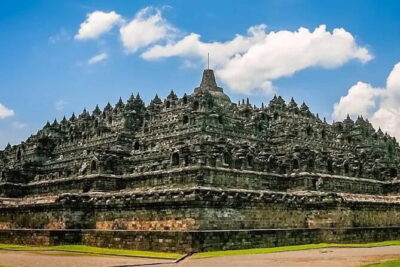
Selogriyo Temple is modest in size. You should not arrive expecting a vast complex on the scale of Borobudur or Prambanan. Its appeal comes from the setting, the quiet approach, and the feeling of reaching a place away from the main sightseeing circuit.
The temple sits in a secluded hilltop environment, with rice terraces and Java’s countryside spreading around it. The scale is part of the charm. You have room to pause, look around, and enjoy the calm without being pushed along by a large crowd.
The temple also offers a chance to learn about Hindu worship in Java. Your guide can explain the site and answer questions about local religion and culture. If you enjoy understanding why a place matters, rather than simply photographing it, this part of the tour should be rewarding.
I would keep your expectations realistic. The temple itself is small, and the most memorable views may come from the approach and the surrounding hills rather than from the structure alone. The attraction works best as a complete experience: countryside walk, local farming, temple, and quiet time.
Coffee and a break above the fields
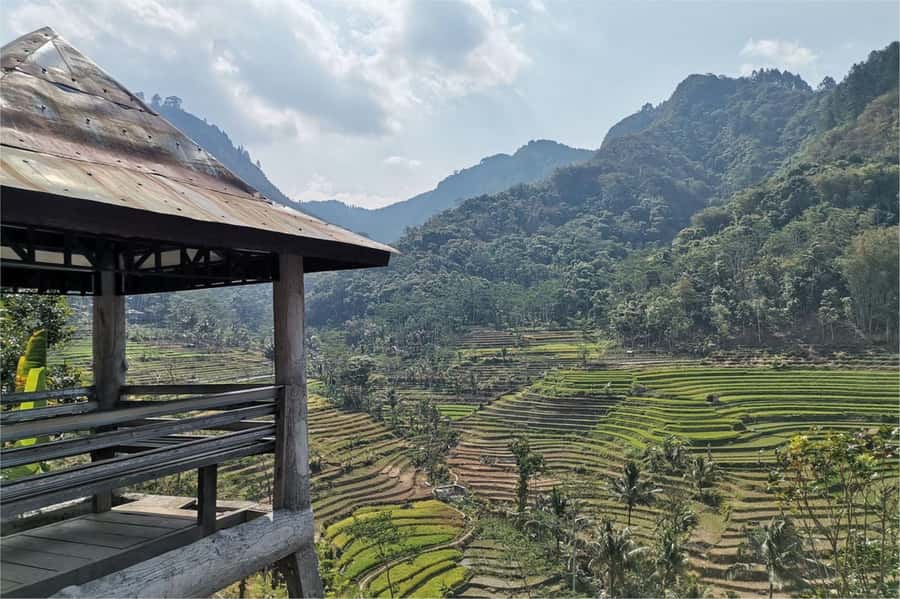
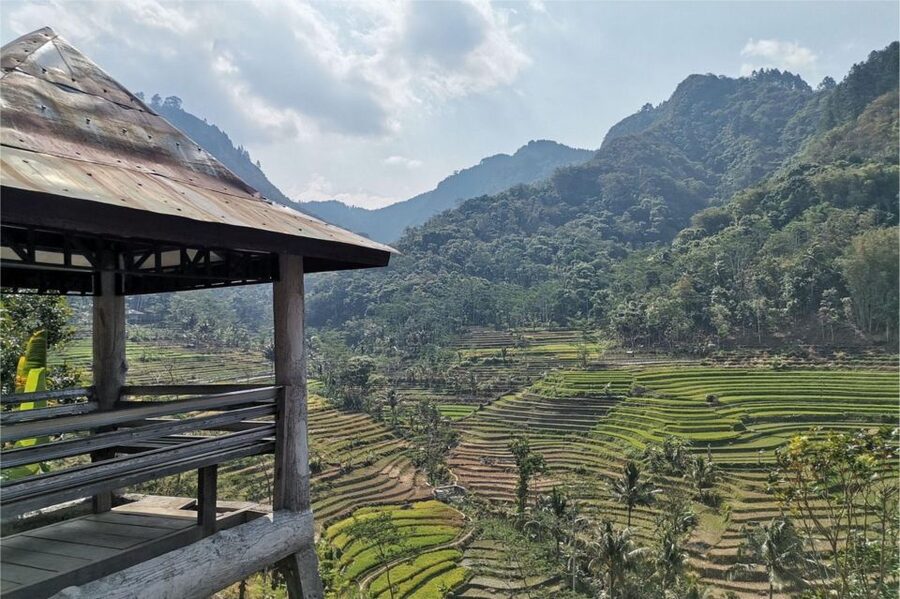
A stop at a small cafe adds a welcome pause to the walking portion. The cafe overlooks the rice terraces, and visitors have enjoyed local coffee, purple tea, and other drinks there.
Some guides may also introduce you to unusual local flavors, including cat-poo coffee. That is an optional taste for the curious, not a reason to book the tour by itself. The important point is that the stop lets you sit down, take in the view, and recover before the waterfall section.
This is also a good moment to tell your guide what pace suits you. Kin, for example, is described as taking care to offer water and breaks when needed, while other guides have been praised for adjusting the day to suit their group. The tour is active, but it should not feel like a race.
Food and drinks are not included in the price, so bring some cash for anything you want along the way. The provided details do not specify a meal stop, so I would not book this expecting lunch to be part of the plan. A simple snack and water are sensible additions to your day bag.
Same fields, a different sort of day out:
- Ubud: Full-Day Rice Terrace, Monkey Forest & Waterfall
★ 5.0 · 2,634 reviews - Full-Day Tour to Water Temples and UNESCO Rice Terraces in Bali
★ 5.0 · 2,539 reviews - Ubud: Balinese Cooking Class at an Organic Farm
★ 5.0 · 1,786 reviews - Ubud: Monkey Forest, Ceking Rice Terraces and More– Full Day
★ 4.7 · 917 reviews
Kedung Kayang Waterfall and the steep return
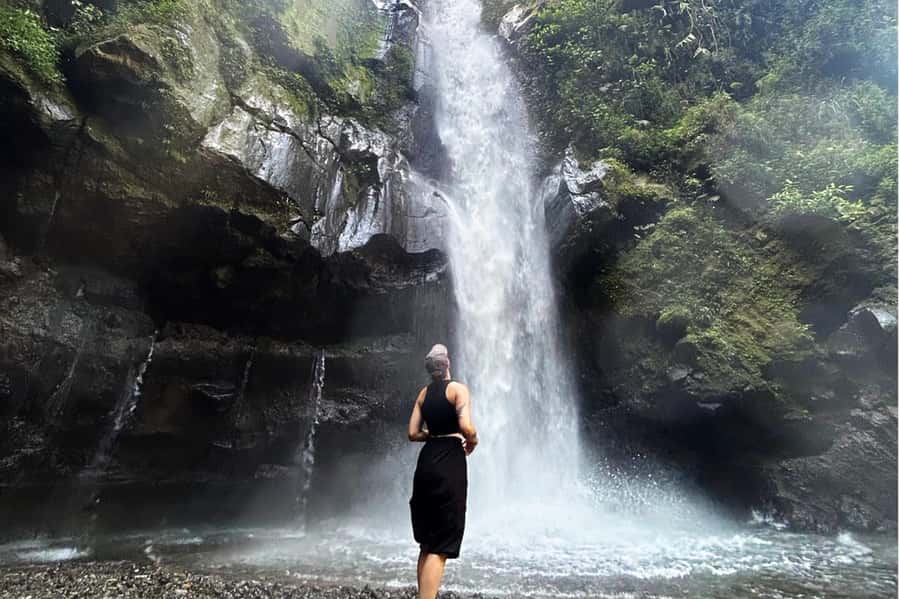
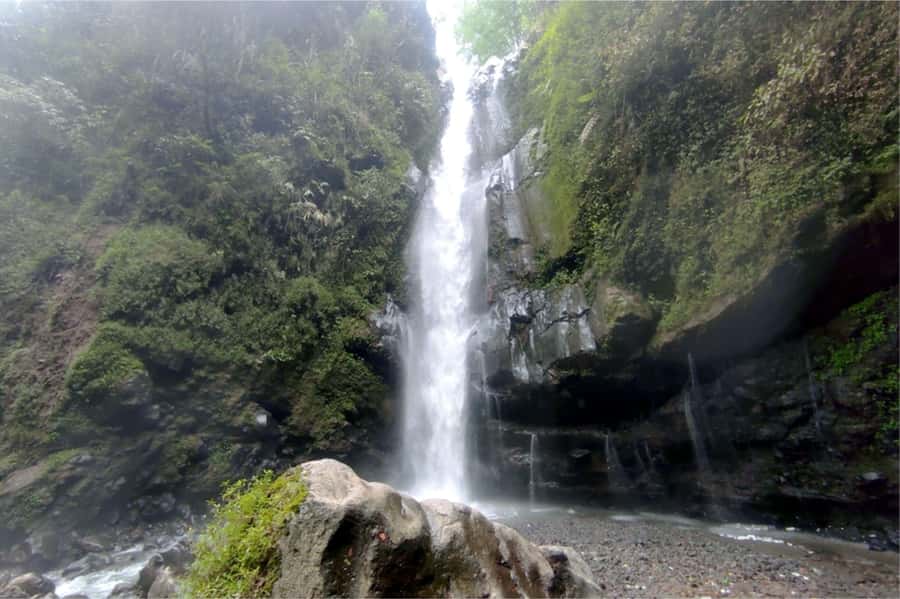
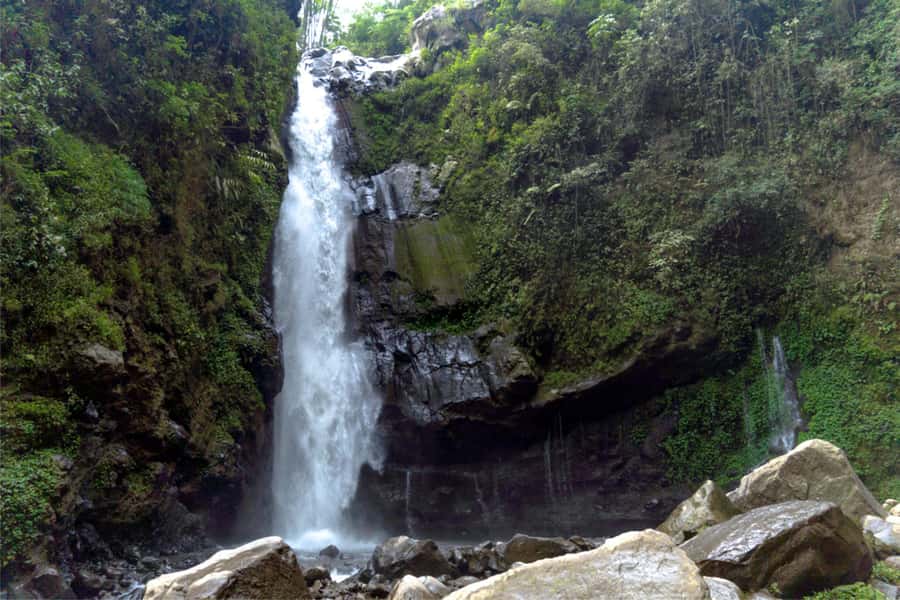
The final major stop is Kedung Kayang Waterfall. It is a scenic place to cool off, with water dropping into a natural pool and a broad view that can include a volcano in the background.
You can swim beneath the waterfall if conditions suit you. Bring swimwear and a small towel if you want to get in, and protect your phone if you plan to take photos near the water. The waterfall is beautiful from above, but getting closer gives the stop more value after a warm walk through the terraces.
The main caution is the route. The walk down to the falls is steep, and you must climb back up to the starting point. One useful description of the route is a steep hike down and up from the start point, with good shoes or sandals strongly advised. If your knees are sensitive or you are not comfortable on inclines, you may prefer to admire the falls without going all the way down.
Water shoes would be especially useful because the transition from the path to the base of the falls may be slow and awkward. You do not need specialist hiking equipment, but you do need footwear that grips and can get wet.
The waterfall section also depends on weather and personal comfort. The tour information promises a stop and the chance to swim, but you should treat swimming as an option rather than an obligation. You can still enjoy the view if you decide the rocks or current are not for you.
Guides who shape the experience
The guide can make a major difference on a day like this. The attractions are appealing, but the farming walk becomes much more interesting when someone can explain the crops, insects, religion, and local customs in clear English.
Haidar has led many of the most praised outings. He is described as friendly, patient, and willing to answer questions throughout the day. His explanations cover farming techniques, plants, bugs, village life, and the wider culture of Indonesia. He also takes photographs for visitors, which is useful when you are traveling alone or want a few pictures with the scenery.
Atok is another guide associated with this tour. He is praised for strong English, lively explanations, and good company. He has also taken groups to a cafe for unusual drinks and helped keep the day relaxed.
Kin has been praised for support and pacing, including making sure visitors had water and breaks. Yuni is described as particularly warm and funny, with a talent for making the day feel personal. Imam has also led the experience, including a private outing for a small booking.
Guide assignments can change, so you should not assume a specific person is guaranteed unless the operator confirms it. Still, the repeated strength of the guiding matters. This is not simply a transfer with a driver waiting in a car. The best part of the service is the interpretation along the walking route.
How the timing and group size affect your day
The full experience lasts about eight hours, including transport from your accommodation, the rural walk, the temple visit, the cafe break, and the waterfall. The exact starting time depends on availability, so check before booking.
An eight-hour schedule gives the day room to breathe. You can stop for photographs, talk with local people, ask questions, and take breaks without reducing the temple visit to a quick look. That slower rhythm is important because the countryside is the main attraction.
The small-group limit of eight is another practical advantage. A group this size can usually move along a narrow path more easily than a large coach party, and the guide can respond to individual needs. If only one or two people book, the experience may feel close to private.
Pickup is included from accommodations in Yogyakarta or the Borobudur area. Airport-area pickup costs an additional IDR300,000, so check the pickup zone carefully before you commit. After the waterfall, your driver takes you back to your accommodation, giving you a simple end to an active day.
Free cancellation is available up to 24 hours before the activity for a full refund, and you can reserve now and pay later. Those terms are useful if your Java plans are still moving around, but they do not change the need to check weather, footwear, and your own fitness.
Is $65 fair for this outing?
At $65 per person, I would call this a fair convenience price rather than a budget excursion. You receive hotel pickup and drop-off, parking, entrance fees, an English-speaking guide, and transport into an area that is less simple to reach independently.
The price makes the most sense if you value explanation and ease. A driver who knows the route, a guide who can discuss farming and culture, and a planned connection between temple and waterfall save you from arranging several separate pieces.
It may feel expensive if you mainly want a quick temple visit or a waterfall photograph. Selogriyo is small, and Kedung Kayang is not an all-day attraction on its own. The value comes from the combined day: rural walking, farming insight, temple atmosphere, coffee, waterfall, and return transport.
I would also remember that food and drinks are extra. Budget for snacks or cafe purchases, and add the airport-area pickup charge if it applies. With those details clear, you can judge the total cost honestly.
Who should book this tour?
I would recommend it to you if you want to get beyond Yogyakarta’s city sights and enjoy nature at a moderate pace. It suits people who like walking, photography, local food and drinks, cultural questions, and quieter places.
It is particularly good for couples, solo visitors, families with older children, and small groups who want a guide rather than a self-guided outing. The small-group format also works well if you prefer a personal conversation to a large tour with fixed commentary.
I would think twice if you dislike uneven paths, mud, steep descents, or wet footwear. The waterfall is not a simple roadside stop, and the return climb can be tiring. You should also avoid booking it as a relaxed sightseeing day if you want very little walking.
For the best experience, wear shoes with grip, carry water, bring swimwear if you want to enter the pool, and leave space in your schedule for the guide’s explanations. You may also want to keep your phone ready for photographs, since the terraces and waterfall provide the strongest visual moments of the day.
Should you book the Selogriyo and waterfall tour?
Book it if your priority is a quiet, active day in the countryside, with a guide who can explain how people live and farm in Java. The rice terrace walk is the heart of the experience, while Selogriyo adds a calm cultural stop and Kedung Kayang provides a refreshing finish.
Skip it if you want grand monuments, a short itinerary, or a completely easy walk. The temple is small, the waterfall route is steep, and the $65 price is best justified by the transport and guiding rather than by the size of the sights.
For me, this is a strong choice for seeing a less visited side of the Yogyakarta region. It gives you scenery, local contact, a little exercise, and useful cultural context in one well-shaped day.
FAQ
How long does the Selogriyo Temple and waterfall tour last?
The tour lasts eight hours, including pickup, transport, the walk to Selogriyo Temple, time in the rice terraces, the cafe stop, the waterfall visit, and return to your accommodation.
Where is hotel pickup available?
Pickup and drop-off are available from accommodations in Yogyakarta or the Borobudur area. Pickup from the Yogyakarta airport area costs an additional IDR300,000.
Is the tour suitable for people with limited fitness?
A moderate level of fitness is recommended because the tour involves a fair amount of walking. The rice terrace route can be muddy, and the path to Kedung Kayang Waterfall is steep down and back up.
Is swimming possible at Kedung Kayang Waterfall?
Yes, the tour includes the chance to take a refreshing swim beneath Kedung Kayang Waterfall. Bring suitable swimwear and footwear that can handle wet ground if you want to enter the water.
What is included in the $65 price?
The price includes hotel pickup and drop-off, entrance fees, an English-speaking guide, and parking. Food, drinks, and a tip for the guide are not included.
How large is the tour group?
The tour is limited to eight participants. Smaller bookings may operate as a private outing, depending on the number of people who reserve.
Just added around Indonesia
- Ubud Rice terrace,Zip-line and waterfall★ 5.0 · 4 reviews
- Full Day Tour to Water Temples UNESCO Rice Terraces in Bali★ 5.0 · 4 reviews
- Explore Ubud Art Market, Monkey Forest and Rice Terraces★ 5.0 · 16 reviews
- Exploring Munduk Village (Waterfalls, rice terrace, Traditional local house)★ 4.5 · 2 reviews
- Ubud Monkey Forest Rice Terrace Temple Waterfall Private Tour★ 5.0 · 7 reviews
- Jatiluwih Spiritual Journey of Melukat with Rice Terrace View★ 5.0 · 9 reviews
- Private Tour to Sumampan Waterfall, Monkey forest, Rice terraces and Swing★ 5.0 · 30 reviews
- Discover Hidden Waterfall, Unesco Rice Terraces and Mountain Temple★ 5.0 · 17 reviews
Yogyakarta Farm Tours, compared.

Selogriyo Temple and Trekking Java Rice Terraces, hidden waterfall -Nature Java
Read our review →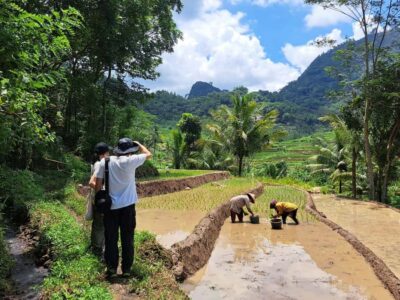
Borobudur Climb Up and Selogriyo Temple Rice Terraces Trekking
Read our review →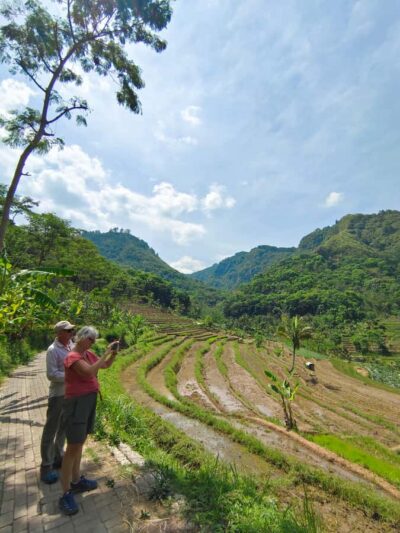
Selogriyo Temple, treking Java Rice Terrace & waterfall
Read our review →Browse the lists this tour appears in