
Review · GREECE
Traditional Greek Cooking Class @ Lefkada Micro Farm
The best part of this Lefkada experience is that you start with the soil, not a shopping list. At Lefkada Micro Farm, Andreas introduces you to regenerative farming before you gather ingredients and cook them in an open-air kitchen. I like the farm-first approach and the unhurried wood-oven cooking.
I also like the small group limit of 10, which should give you a more personal meal than a large cooking school can offer. The food is simple but deeply tied to the farm: bread, tzatziki, Greek salad, and briam. The main drawback is the price, $152.58 per person, and the fact that the experience depends on good weather.
Key points at a glance
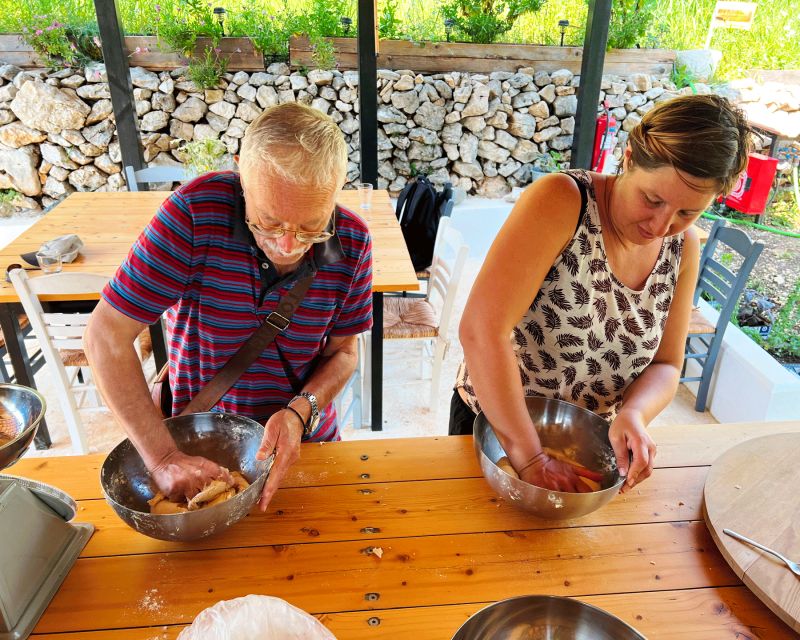
- Meet Andreas and his family: The host’s personal connection to the farm is a major part of the experience.
- Start with regenerative farming: You learn how the land is cared for before cooking with its produce.
- Use a traditional wood-burning oven: Bread and briam are prepared at a gentle, traditional pace.
- Cook a classic Greek meal: The menu includes bread, tzatziki, Greek salad, and mixed-vegetable briam.
- Eat at the Farmer’s Table: The meal is shared family-style after everyone has helped prepare it.
- Plan for a small, weather-dependent outing: The class lasts about four hours, accepts up to 10 people, and offers free cancellation up to 24 hours before departure.
Arriving at Lefkada Micro Farm near Nidri
The meeting point is Lefkada Micro Farm on the road between Nidri and Vafkeri, at E.O. Nydriou Vavkeris Rachi, Nidri 311 00. The activity begins and ends at the farm, so you will need to arrange your own way there unless separate transport has been arranged outside this experience.
That start and finish make the outing easy to fit into a day around Nidri, but you should allow enough time to reach the farm without rushing. This is not a quick cooking demonstration squeezed between sightseeing stops. The experience lasts about four hours, and its appeal depends on letting the day move at a slower pace.
The farm is described as an open-air museum, which gives you a clue about the setting. You are not simply entering a kitchen and waiting for ingredients to appear. You begin in the place where the food is grown, then follow it through preparation and cooking to the shared table.
If you arrive a little early, the hosts may offer coffee, fresh fruit, and cakes. You may also have the chance to feed the animals before the formal farm visit begins. These details are not the main event, but they help set a relaxed tone from the start.
More Farm Cooking Classes in Greece
- Naxos Perivoli Farm Experience & Wood-fire Cooking Class
★ 5.0 · 339 reviews - Cretan Cooking Class and Olive Oil Tasting
★ 5.0 · 178 reviews - Melanes: Naxos Perivoli Farm & Cooking Class with Wood Fire
★ 5.0 · 177 reviews
Learning the farm’s slow-living idea
Andreas leads the farm introduction, with help from his mother and a chef. The focus is on regenerative farming, meaning the farm’s methods aim to support the health of the soil and the wider ecosystem rather than simply produce food as quickly as possible.
You will learn about the farm’s approach before harvesting seasonal, organic ingredients for the meal. That order matters. Instead of treating vegetables as anonymous items from a market, the class connects them to the place where they grow and the work needed to care for them.
I like this part because it gives the cooking class a clear purpose. Greek food often looks simple on the plate, but simplicity only works when the ingredients are fresh and good. A tomato, cucumber, onion, herb, or vegetable needs little decoration when it has been grown well and used at the right time.
The lesson is also a useful fit for anyone interested in food systems, not only people who want to master recipes. You will get a look at how farming choices shape flavor, texture, and the way a meal comes together.
The setting may be less appealing to you if you want a polished indoor cooking school with formal workstations and a tightly timed demonstration. This is a working farm experience, and the open-air format is part of its character.
Cooking in the open-air kitchen
After the farm visit and harvest, the group moves to the open-air kitchen. The cooking centers on the basic principles of Greek gastronomy: freshness, seasonality, and simplicity.
You should not expect a long list of complicated techniques. The class is built around direct preparation, shared tasks, and the natural flavor of the ingredients. That makes it approachable for beginners and still worthwhile for confident home cooks who want to understand the logic behind everyday Greek food.
The chef helps guide the preparation, while Andreas and his family bring the farm’s point of view to the meal. The small group limit of 10 should make it easier to take part rather than stand at the edge of a crowded demonstration.
The class includes several familiar dishes, but each has a useful lesson behind it:
- Wood-oven bread: You see how bread is baked in the traditional oven rather than relying on a modern electric range.
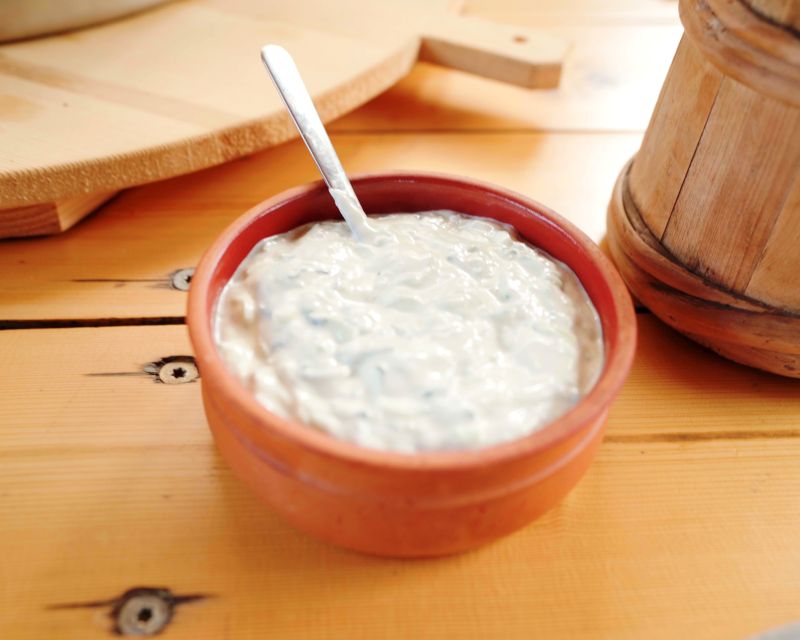
- Tzatziki: Farm vegetables are combined with sheep’s yoghurt, giving the familiar dip a local character.
- Greek salad: Seasonal vegetables are paired with goat cheese, farm-grown oregano, and the farm’s own extra virgin olive oil.
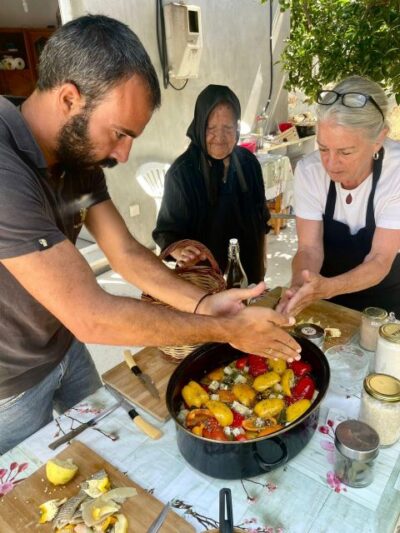
- Briam: Mixed vegetables are roasted in the wood-burning oven until they form a warm, generous main course.
This is a vegetable-led menu. If you are hoping for grilled meat, seafood, or a broad tasting menu, this class may not match your expectations. The listed meal is focused on produce, bread, yoghurt, cheese, herbs, and olive oil.
Why the wood-burning oven matters
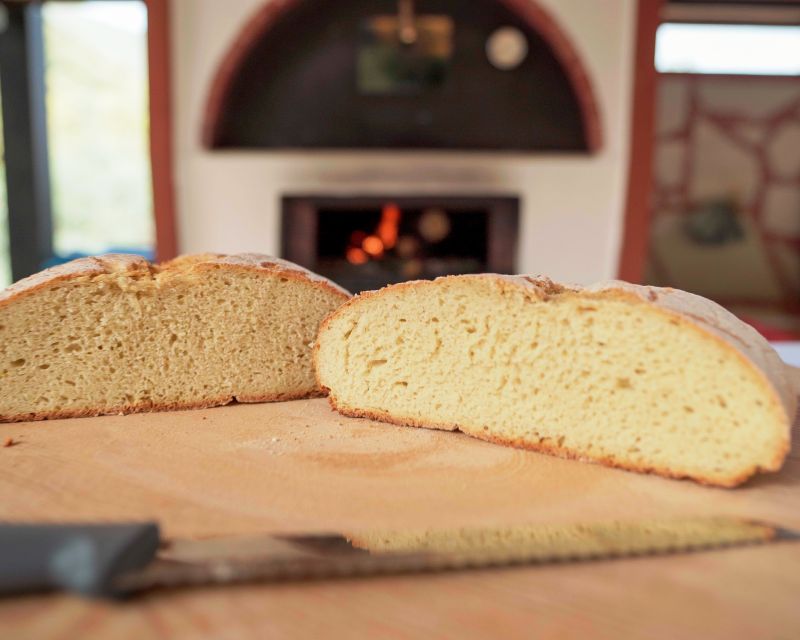
The wood-burning oven is more than a rustic backdrop. It shapes the pace of the class and gives the meal a clear connection to older Greek cooking methods.
Bread is baked there, and the briam is roasted there as well. Briam is a mixed-vegetable dish, usually valued for the way slow roasting allows the vegetables to soften and share their flavors. Here, the oven links the bread and main course while keeping the cooking process tied to the farm setting.
You will not be rushing from one recipe to another. The wood oven asks for patience, and that fits the farm’s slow-living theme. The class is less about producing restaurant-style dishes in record time and more about understanding how a few good ingredients can become a complete meal.
This pace is one of the strongest reasons to book. It gives you time to talk, watch the cooking, and take part without feeling as if you are in a timed exam. It can also be a drawback if your holiday schedule is packed. Four hours is a real half-day commitment, not a brief activity.
Same fields, a different sort of day out:
- Mykonos: Farm, Ano Mera Village, and Beaches Guided Tour
★ 4.4 · 1,283 reviews - Crete: Road-trip to Lasithi, Zeus Cave & Olive Mill Farm
★ 4.4 · 451 reviews - Heraklion: Olive Farm Tour with Tasting of Local Delicacies
★ 4.9 · 411 reviews - Lassithi, Zeus Cave, Olive Mill Farm & Knossos Combo Tour
★ 4.6 · 404 reviews
The menu, from bread to briam
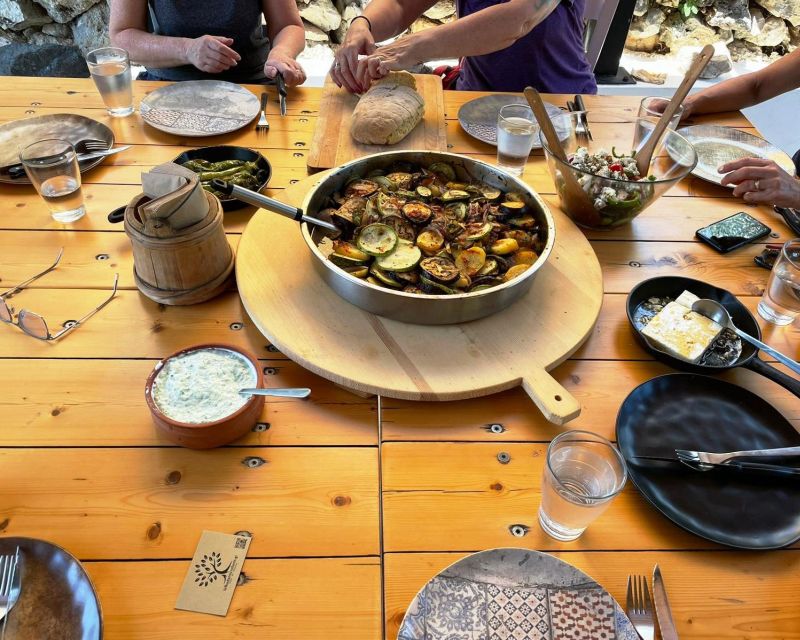
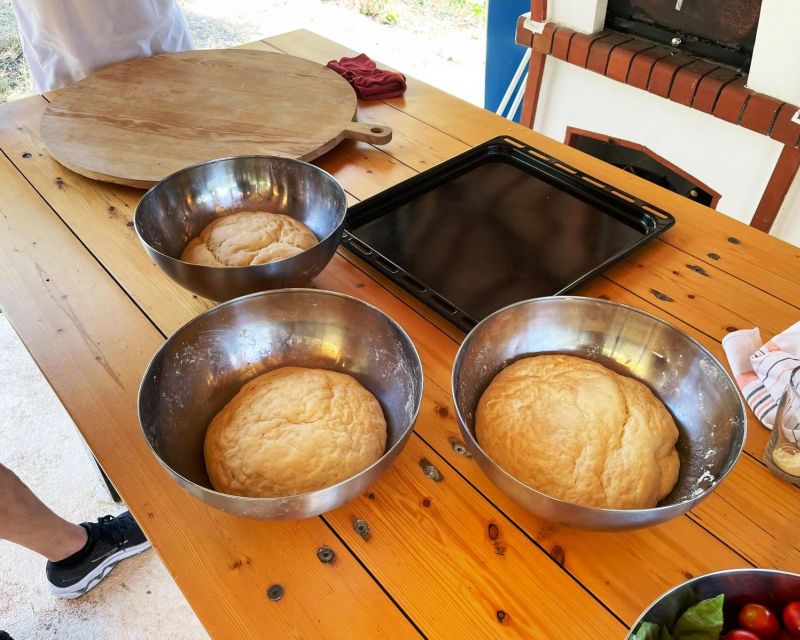
The meal begins with bread baked in the wood-burning oven. Fresh bread gives the group an early taste of what the oven can do and provides something to share while the rest of the food is prepared.
Tzatziki follows, made with farm vegetables and sheep’s yoghurt. The use of sheep’s yoghurt is a small but important detail. It gives the dish a stronger sense of place than a standard version made with ordinary supermarket yoghurt.
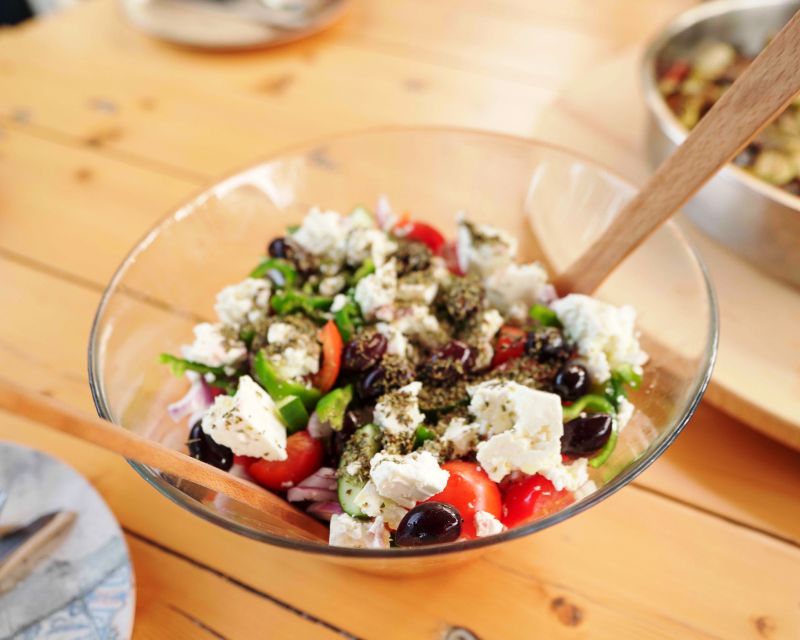
The Greek salad brings together farm vegetables, goat cheese, oregano grown at the farm, and the farm’s original extra virgin olive oil. This is where the class’s food philosophy becomes especially clear. The dish is not built around a complicated dressing or elaborate presentation. Its quality depends on the ingredients.
The meal’s main dish is briam, a mixture of vegetables roasted in the wood-burning oven. It is a practical Greek home-style dish, generous enough to anchor the meal and suited to a farm that wants to show off its seasonal produce rather than hide it behind heavy sauces.
You should tell the farm about allergies or dietary restrictions when booking. The provided information specifically asks you to do so, but it does not promise that every request can be accommodated. If you need a strict dietary arrangement, contact the provider before you commit.
Sharing the Farmer’s Table
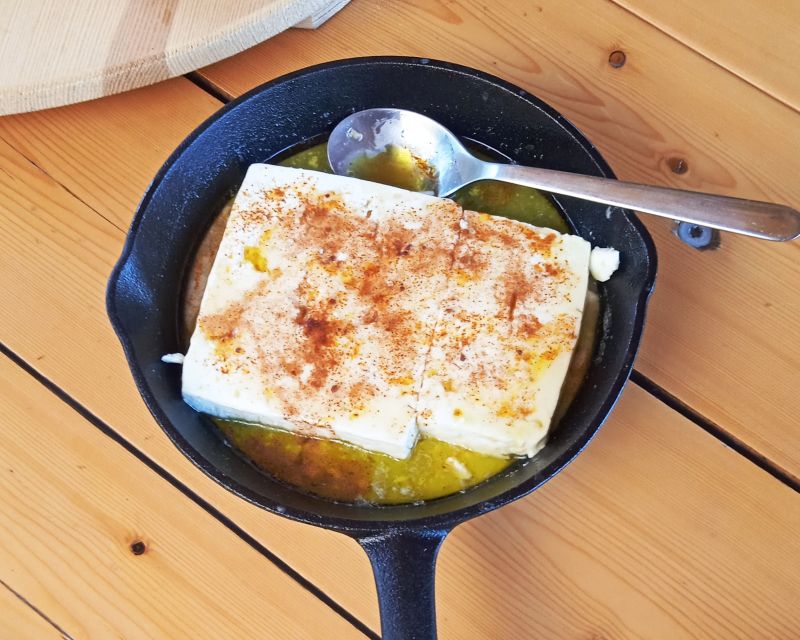
Once the food is ready, everyone gathers to eat together at the Farmer’s Table. This communal ending is important because the class is designed as a shared activity, not a series of private cooking stations followed by a rushed plate of food.
Andreas, his mother, and the chef are part of the experience, so the meal has a family-style feel. The focus is on sitting down with the food you helped prepare and seeing how the separate tasks become one meal.
I especially like this format for couples, friends, and solo visitors who want a social experience without joining a large group. The maximum of 10 people keeps the setting relatively intimate, although the actual group size can vary.
The meal also gives you a chance to understand the ingredients in a practical way. You have seen the vegetables in the soil, handled them in the kitchen, and then tasted them at the table. That simple sequence is more memorable than a food lecture on its own.
One highly praised part of the experience is the host’s passion for the environment and the farm. That matters because the class would be much less distinctive if it were only a collection of recipes. The farm story gives the meal its shape.
What the $152.58 price includes in value
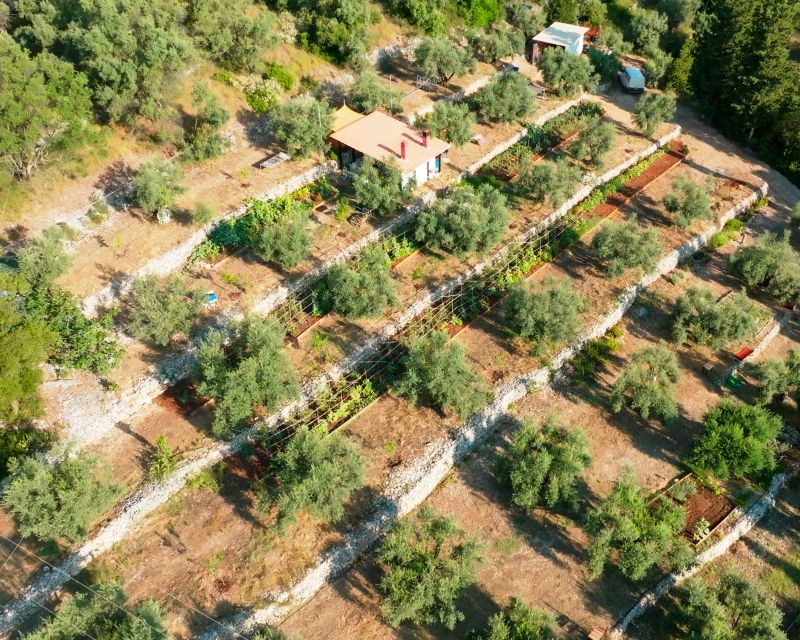
At $152.58 per person, this is not a bargain meal or a low-cost cooking lesson. You are paying for roughly four hours, a farm visit, an introduction to regenerative agriculture, seasonal ingredients, instruction, the cooking experience, and the finished meal.
The value depends on what you want from a food activity. If your goal is simply to eat Greek food, you can do that for much less at a taverna. If you want a formal chef-led class with many dishes and advanced skills, you may also find other formats better suited to you.
I think the price makes more sense if you value the full setting. You are not only learning how to mix tzatziki or assemble a salad. You are spending time on a working farm, gathering ingredients, using a wood-burning oven, and eating with the people who run the place.
The menu is modest, so do not judge the price by the number of dishes alone. Bread, tzatziki, salad, and briam are not luxury items. The value lies in the setting, the personal hosting, the farm practices, and the time spent taking part.
The five-star average from 28 ratings and a 100 percent recommendation rate point to a consistently strong experience, especially in the areas that matter most here: the hosts, the relaxed pace, the farm tour, and the flavor of the food. Still, those figures cannot remove the practical question of budget. For some people, this will be a special holiday outing. For others, the cost will be too high for a vegetable-focused meal.
Who will enjoy this class most
I would suggest this experience to you if you:
- Like food with a clear connection to its source
- Want to learn about organic and regenerative farming
- Prefer a relaxed activity over a tightly scheduled cooking school
- Enjoy Greek home cooking and vegetable-based dishes
- Appreciate small groups and personal hosting
- Have about four hours to give to one activity
- Are interested in slow living, traditional cooking, and shared meals
It is less suitable if you want a meat-heavy menu, a large number of recipes, advanced culinary training, or a quick activity that takes only an hour or two.
Families may find the farm setting appealing, but the supplied information does not give a minimum age or confirm which parts are designed for children. Ask the provider before booking if that point matters to you.
The experience is offered in English, and mobile tickets are accepted. Service animals are allowed. Because the activity takes place outdoors and requires good weather, bring a flexible attitude about the schedule.
Weather, cancellations, and useful planning tips
You can cancel for a full refund if you do so at least 24 hours before the local start time. Changes made within 24 hours are not accepted, and cancellations inside that window are not refunded.
If poor weather forces the farm to cancel, you will be offered another date or a full refund. That policy is worth noting because the outdoor kitchen and farm visit are central to the experience, not minor extras.
The activity is often booked about 15 days ahead. If you have fixed dates in Lefkada, booking early is sensible, especially since the group is limited to 10 people. Confirmation is normally sent at booking. If you book within 10 hours of departure, confirmation comes as soon as possible and depends on availability.
Bring any allergy or dietary information to the provider’s attention before the day. Also remember that this is a food-and-farm outing, so comfortable clothing suited to being outdoors will make the experience easier, even though no specific dress code is given.
Should you book Lefkada Micro Farm?
Book it if you want to understand Greek food from the ground up. The strongest parts are the farm connection, Andreas and his family’s personal hosting, the traditional wood-burning oven, and the shared meal at the end.
Think twice if $152.58 feels high for a meal based on vegetables and simple recipes, or if your schedule cannot spare four relaxed hours. This is not a fast culinary attraction. It is a small, personal farm day built around food, place, and conversation.
For the right visitor, that is exactly the point. You leave with recipes, but also with a clearer sense of how soil, seasons, olive oil, herbs, and patient cooking shape Greek food.
FAQ
Where does the cooking class take place?
It takes place at Lefkada Micro Farm at E.O. Nydriou Vavkeris Rachi, Nidri 311 00, Greece.
How long does the experience last?
The class lasts approximately four hours.
What time does the activity end?
It ends back at the Lefkada Micro Farm meeting point.
What language is the class offered in?
The experience is offered in English.
How many people can join the class?
The maximum group size is 10 people.
What food will be prepared?
The menu includes bread baked in a wood-burning oven, tzatziki with farm vegetables and sheep’s yoghurt, Greek salad with goat cheese, oregano, and extra virgin olive oil, plus briam made from mixed vegetables.
Does the class include a farm visit?
Yes. The experience begins with an introduction to the farm’s regenerative farming practices, followed by harvesting seasonal organic ingredients.
Is the activity suitable for someone with food allergies?
You should tell the provider about allergies or dietary restrictions. The available information does not guarantee that every request can be accommodated.
Are service animals allowed?
Yes, service animals are allowed.
What is the cancellation policy?
You can receive a full refund if you cancel at least 24 hours before the local start time. Cancellations or changes made less than 24 hours before the experience are not accepted for a refund. If poor weather causes the provider to cancel, you will be offered another date or a full refund.
More Hands-On Workshops in Greece
- Santorini Family Farm Food & Wine Tour with Cooking Class
★ 5.0 · 107 reviews - Moires: Cooking Class and Olive Oil Tasting at a Family Farm
★ 5.0 · 93 reviews - Mykonian Farm and Bakery Class with Brunch in Greece
★ 4.5 · 39 reviews - From Mykonos: Mykonian Farm Baking Class with Brunch
★ 4.7 · 29 reviews
Just added around Greece
- Visit a Farm and Horseback Riding in Nature★ 5.0 · 10 reviews
- Insightful Pistachio Orchard and Factory Tour★ 4.5 · 27 reviews
- Santorinian Agriculture, Food, Wine, Beer, and Spirits★ 5.0 · 6 reviews
- Private Olive Oil tasting & Liqueur experience★ 5.0 · 17 reviews
- Santorini 5 Hour Private Oia Tour & Lunch/Dinner at a Local Farm★ 5.0 · 40 reviews
- Flavors of Santorini: Farm-to-Table Meal Wine & Authentic Village★ 5.0 · 12 reviews
- Honey production &Tasting experience ” Areti Honey “★ 5.0 · 4 reviews
- Cooking Class Sunset Dinner and Tour in Paros Farm★ 5.0 · 5 reviews
Greece Farm Tours, compared.
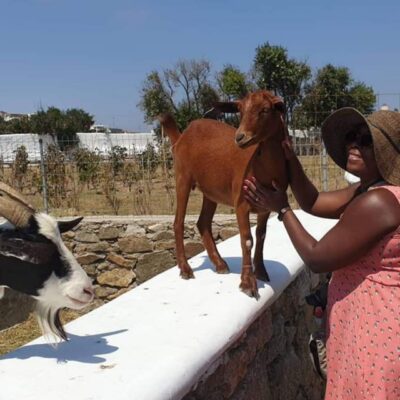
Farm, Ano Mera Village, and Beaches Guided Tour
Read our review →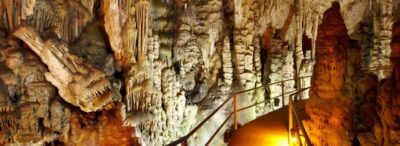
Road-trip to Lasithi, Zeus Cave & Olive Mill Farm
Read our review →
Olive Farm Tour with Tasting of Local Delicacies
Read our review →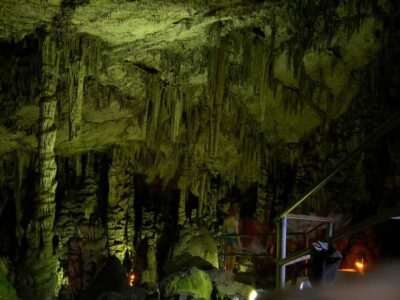
Lassithi, Zeus Cave, Olive Mill Farm & Knossos Combo Tour
Read our review →
Naxos Perivoli Farm Experience & Wood-fire Cooking Class
Read our review →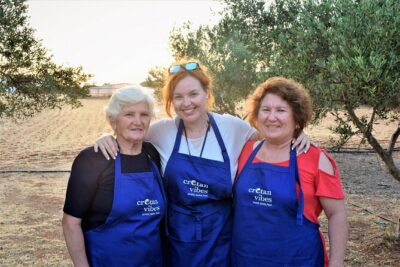
Melanes: Naxos Perivoli Farm & Cooking Class with Wood Fire
Read our review →
Wine Tasting Tour at a traditional farm in Mykonos
Read our review →Browse the lists this tour appears in