
Review · SPAIN
La Rioja: Jamon Iberico Farm Tour and Tasting with Wine
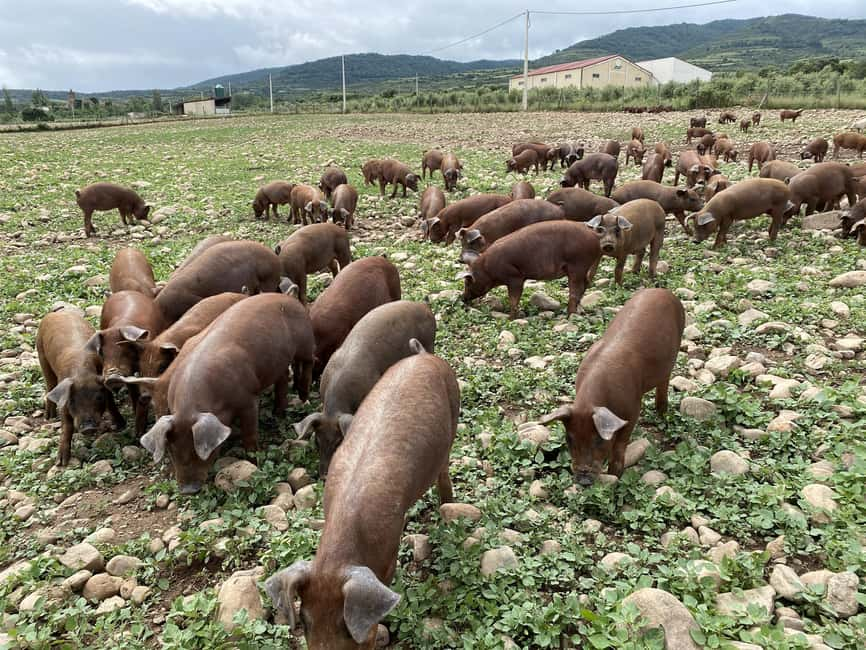
The best part of this La Rioja outing is seeing Iberian ham production at farm level, not just meeting a plate of sliced jamón at a bar. You walk among the piglets, learn how the animals grow, visit the processing facilities, and see the feed mill that supports the operation.
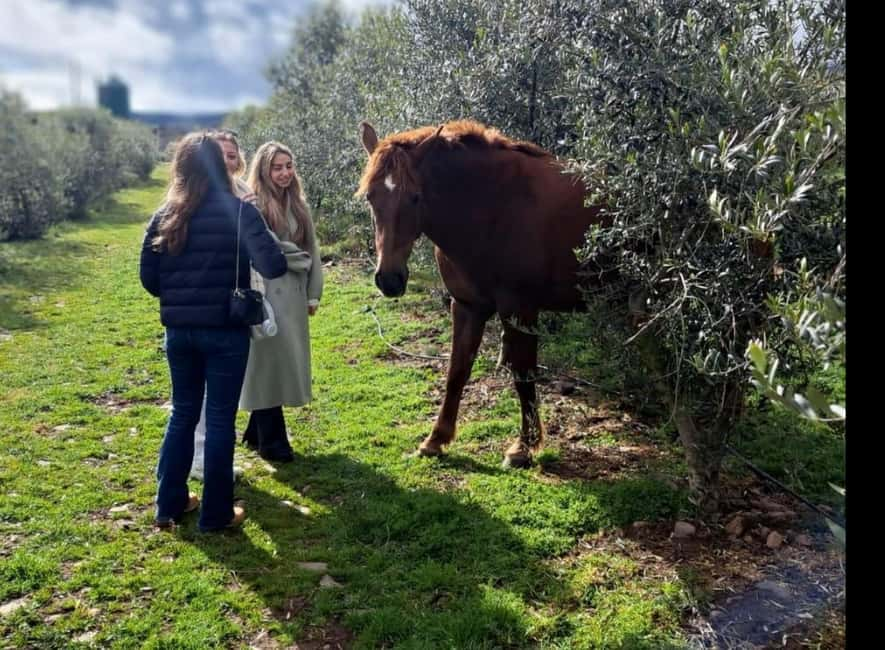
I like the mix of working farm and open countryside, especially the visit to the pure Spanish horses living in freedom. I also like the generous tasting, which includes ecological jamón, acorn-fed ham, other pork products, and Rioja wine. The main caution is value: the advertised visit lasts three hours, but one booking ended after about two hours and included a bottle of wine rather than a clearly guided wine tasting.
Key points to know before booking
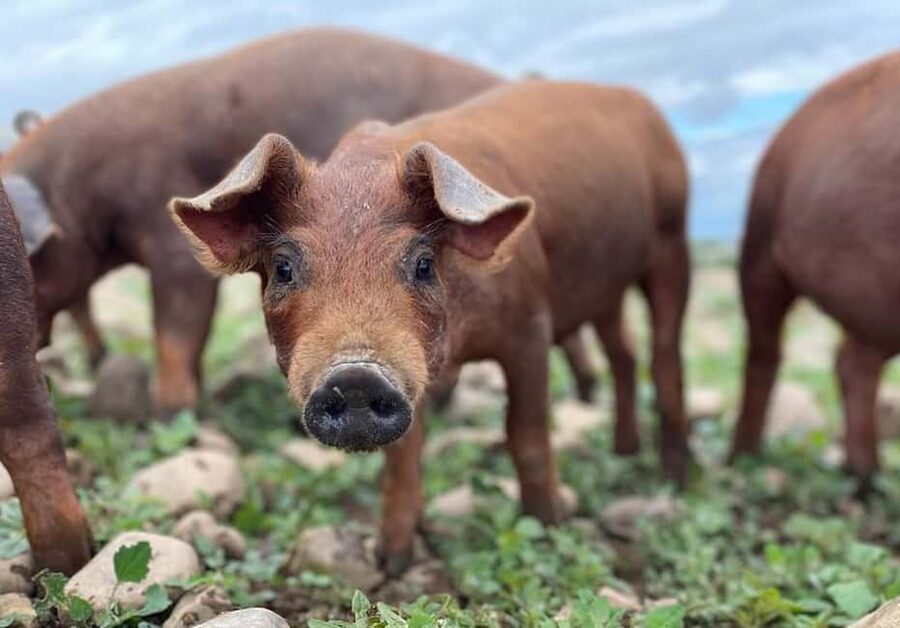
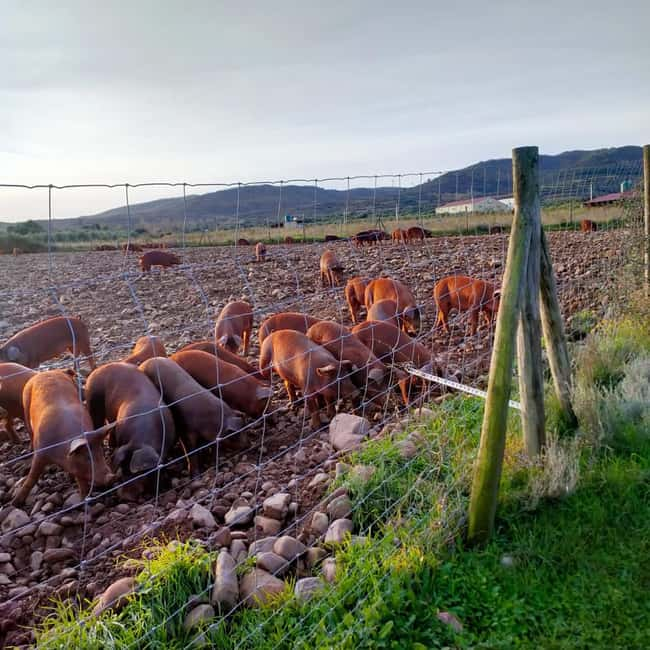
- The pigs live outdoors: You visit the organic El Encinar farm and see the piglets during different stages of growth.
- The tour explains production: You visit the meat facilities and learn how Iberian ham and artisan sausages are made.
- The tasting is substantial: Expect ecological jamón, acorn-fed ham, chorizo or other pork products, plus one red and one white Rioja wine.
- Horses are part of the visit: The schedule includes a farm of pure Spanish horses living in freedom.
- The setting is rural La Rioja: Olive groves, cereal fields, and the Ocón Valley add a strong countryside element.
- Allow for some timing uncertainty: The advertised duration is three hours, but the actual visit may be shorter.
Meeting the pigs in La Rioja’s Ocón Valley
This experience begins at El Encinar, an organic farm in the Ocón Valley of La Rioja. The farm is part of a Duroc piglet breeding project, and the animals are raised with access to sun, open air, and the surrounding countryside.
That matters because jamón can seem like a finished product with no visible connection to the animal or the land. Here, you get to see the early stages. The walk covers different growth phases, so the guide can explain how the pigs develop and how the farm’s organic method works.
I would come prepared for a proper farm walk rather than a polished food museum. The appeal is the working setting: piglets, fields, feed production, and farm buildings. You may find mud, uneven ground, or ordinary agricultural activity, though the experience is listed as wheelchair accessible.
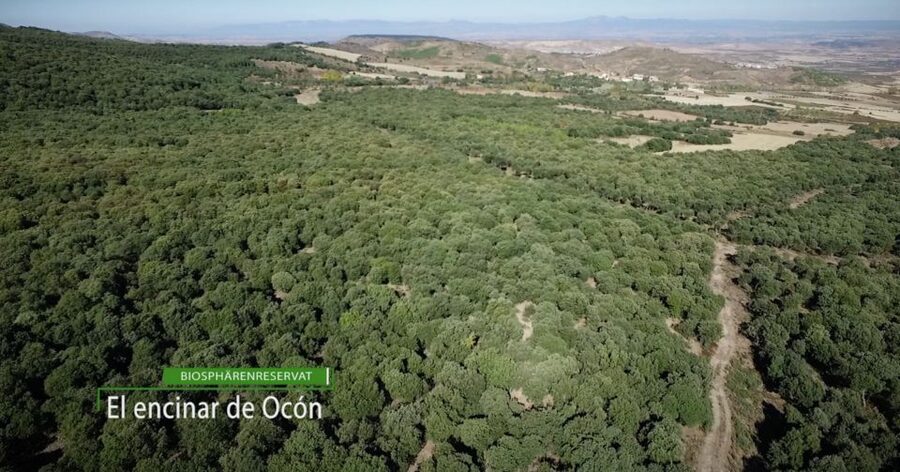
The farm sits in the heart of the Biosphere Reserve in the Ocón Valley, according to the tour information. You should not expect a grand scenic lookout or a long nature hike. The countryside visit is more useful than dramatic, giving you context for how local agriculture supports the food on your plate.
More Winery Visits in Spain:
- Montserrat Lunch & Wine at Farmhouse Small Group from Barcelona
★ 5.0 · 2,368 reviews - Montserrat Full Day Tour with Farmhouse Lunch and Winery Visit
★ 5.0 · 1,068 reviews - Montserrat & Winery Visit Tour with Traditional Farmhouse Lunch
★ 4.5 · 1,035 reviews
How Duroc pigs become artisan ham
The guide explains the animals’ life cycle and the differences among types of pigs. This is one of the most useful parts of the visit because terms such as Iberian, Duroc, ecological, and acorn-fed can become confusing quickly.
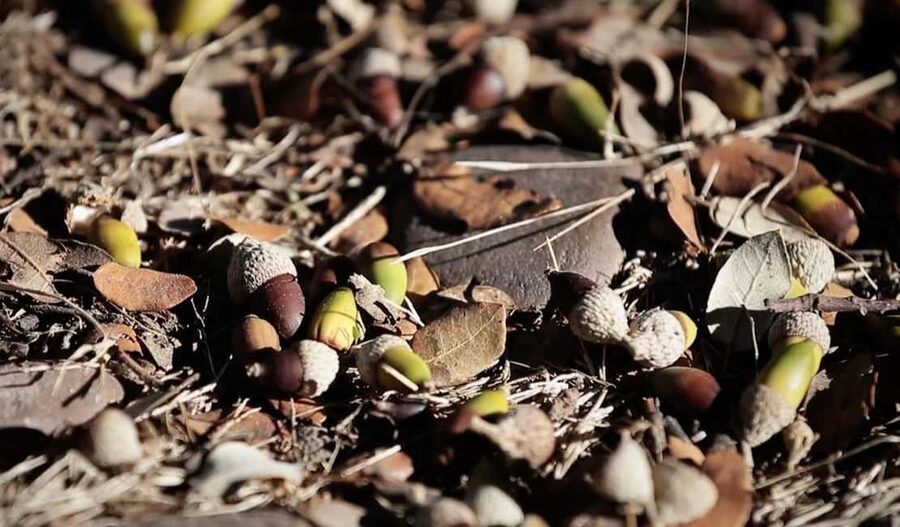
The farm’s project centers on Duroc piglets, while the tasting includes ecological Iberian ham and ecological acorn-fed ham. Those labels are not interchangeable, so pay attention when the guide explains the categories. You will get more from the tasting if you understand what separates one ham from another before taking your first bite.
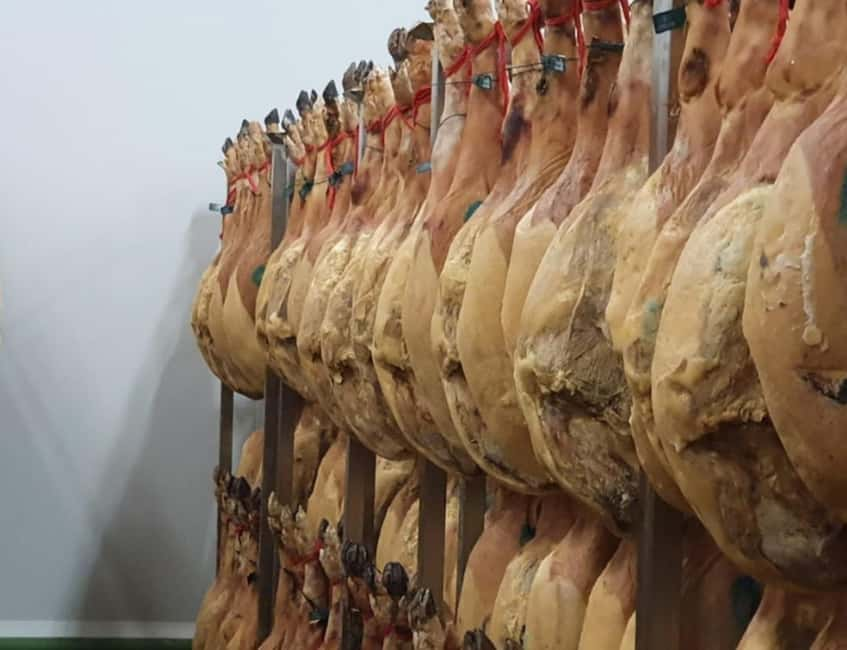
The tour then moves to the facilities where the farm makes artisan meats and sausages. You can see how the operation handles the process rather than hearing only a general story about Spanish food. That makes this a good choice if you want to understand production, not simply sample a famous dish.
The explanation focuses on how Jamón Ibérico de Bellota is created. This is the top-end product featured in the experience, and the guide connects it to the animals, the farm system, and the finished curing process. The supplied details do not state how long the ham is cured or show every curing room, so do not book this expecting a full technical course in ham aging.
The feed mill, olive groves, and cereal fields
A stop at the feed mill gives the farm walk a practical edge. You see how animal feed is handled and hear how the operation supports the pigs’ growth.
This detail may sound small, but it helps you understand the farm as a complete system. The visit is not only about animals posing for photographs. It includes the machinery and agricultural work behind the food, including the olive groves and cereal fields around the property.
The rural setting also breaks up the indoor explanations. You move between farm areas, fields, and facilities instead of spending the full visit in one tasting room. If you enjoy food experiences with a strong sense of place, this combination is more rewarding than a city-center ham demonstration.
Still, the pace may feel quick if you want long stops for photography or detailed questions at every stage. The tour is scheduled for three hours, so the guide has several elements to cover: pigs, feed, horses, facilities, countryside, and tasting.
Visiting the free-roaming Spanish horses
The itinerary includes a visit to a farm of pure Spanish horses living in freedom. This is an unusual addition to a ham tour and gives the experience another working-farm angle.
The horse visit is not described as a riding lesson, show, or training session. You should think of it as a chance to see the animals in an open farm setting and learn about that part of the property. If you like animals, this will likely be one of the most memorable stops.
It also gives families and mixed-interest groups a reason to consider the tour. Someone who is less focused on ham still has pigs, horses, fields, and farm machinery to see. The outing remains food-centered, but it is not limited to a tasting table.
The information does not specify how much time you spend with the horses or how close you can get. Keep expectations sensible. This is a farm visit, not a dedicated equestrian experience.
More Food and Drink Trips in Spain:
- Ría de Arousa: Boat Ride to Mussel Farm with Tasting
★ 4.7 · 845 reviews - La Palma : Tour of an ecological farm w/ animals & tasting
★ 4.9 · 65 reviews - Olive Oil Farm Tour with Tasting from Seville
★ 4.5 · 61 reviews - Tenerife: Avocado Farm Tour with Tasting Menu & Wine
★ 4.9 · 61 reviews
Tasting ecological jamón and acorn-fed ham
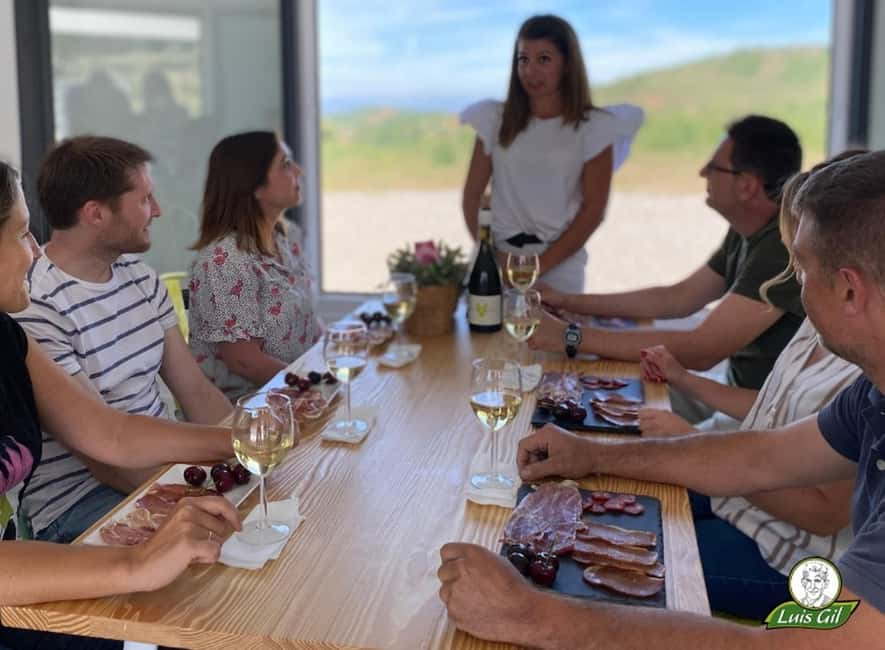
The tasting comes at the end, after you have seen where the animals live and how the farm operates. You sample ecological jamón and ecological acorn-fed hams, along with other pork products such as chorizo.
One of the strongest points is the quantity. The tasting is described as generous, and the food can make this feel closer to a light meal than a tiny sample. If you have a strong appetite, that is useful. If you are planning a large lunch immediately afterward, you may not need one.
Try to compare the products rather than rushing through them. Notice the difference in aroma, fat, salt, and texture. The guide can explain the characteristics of each type, and the earlier farm walk gives you a better framework for understanding what you are eating.
The phrase ecological appears throughout the experience, so this is a good tour for you if organic farming and animal-rearing methods matter when you choose food activities. At the same time, the supplied details do not provide a full certification explanation. Ask the guide if you want the precise meaning of the farm’s ecological labels.
Rioja wine with the ham
The tasting includes one red wine and one white wine from Rioja. In theory, this gives you a simple way to compare how different wines work with cured pork.
The red may suit the deeper, saltier flavors of the ham, while the white offers a lighter contrast. I would treat this as a pairing sample rather than a full Rioja wine tour. The main focus is the farm and its products, not vineyard visits, winemaking, or cellar techniques.
There is an important practical distinction here. The tour includes wine to drink, but the experience may not provide a formal, guided wine tasting with detailed notes on each bottle. One booking received a bottle of wine rather than an actual wine presentation. If wine education is your main goal, this may feel limited.
You are getting a food tasting in a wine region, not a dedicated winery visit. That can still work well if you want ham first and wine second. It is less suitable if you expect a sommelier-led tasting or a close look at Rioja production.
Is $146 a fair price?
At $146 per person, this is not a cheap snack stop. The price makes the most sense if you value the complete farm visit: piglets, production facilities, feed mill, olive groves, cereal fields, Spanish horses, a generous food tasting, and two Rioja wines.
The outing also saves you from arranging separate rural visits. You get a guided explanation in English and a meal-sized tasting in one booking. For someone staying nearby and looking for a regional food experience, that package can be worthwhile.
The value weakens if the visit runs closer to two hours than three. One booking reported a shorter tour and felt the cost was high as a result. Since the published duration is three hours, I would confirm the expected schedule when booking and allow enough time for the full program, but keep in mind that timing may vary.
The wine portion also affects your calculation. If you want a serious wine tasting, you may prefer to spend $146 on a more specialized winery visit. If your priority is learning about ham production and seeing a real farm, the price has a stronger case.
Who will enjoy this farm experience?
I would recommend this to you if you enjoy food with a clear connection to its source. The farm setting, animal visits, and production explanation give you more context than a standard restaurant tasting.
It also suits families and groups with mixed interests. The pigs and horses offer visual appeal, while the ham, chorizo, wine, and rural setting keep the visit interesting for adults.
You should be comfortable with a countryside visit and a schedule that moves between several parts of a working farm. This is not the right pick if you want a sleek urban food tour, a long formal wine seminar, or a guaranteed three-hour program packed with technical detail.
English is the listed tour language, and the experience is described as wheelchair accessible. The activity lasts three hours on the schedule, with starting times dependent on availability. Free cancellation up to 24 hours before the visit and reserve-now, pay-later booking add some flexibility.
Should you book the Jamón Ibérico farm tour?
Book it if you want to connect the ham on your plate with pigs, feed, fields, and farm work. The horse visit and generous tasting add variety, and the English-language guide makes the production process easier to follow.
Think twice if you are paying mainly for a formal wine tasting or if a shorter-than-advertised visit would bother you. At $146, the experience needs to deliver the full farm walk, facility visit, animal stops, and substantial tasting to feel like good value.
My practical advice is to book this as a farm and food experience, not as a pure wine tour. Ask about the day’s timing, expect a generous selection of pork products, and leave room in your plans for the possibility that the visit finishes earlier than the listed three hours.
FAQ
Where does the jamón farm tour take place?
The experience takes place in La Rioja’s Ocón Valley, in the Basque Country area of Spain as listed for the activity. The farm is in the heart of a Biosphere Reserve.
How long does the tour last?
The advertised duration is three hours. The actual visit may be shorter, with one booking reporting a tour of about two hours.
What language is the tour offered in?
The live tour guide speaks English. English is the listed tour language.
What animals will I see?
You will see Duroc piglets at different stages of growth and visit a farm with pure Spanish horses living in freedom.
What food and drinks are included?
The tasting includes ecological Iberian ham, ecological acorn-fed ham, and other pork products such as chorizo. You also receive one red Rioja wine and one white Rioja wine.
Is the experience wheelchair accessible?
Yes. The activity is listed as wheelchair accessible.
Can I cancel the booking?
You can cancel up to 24 hours in advance for a full refund.
Can I reserve now and pay later?
Yes. The booking option allows you to reserve your place and pay later, keeping your plans flexible.
Just added around Spain
- Animal farm park with free hotel pickup★ 5.0 · 2 reviews
- From Seville: Pig Farm private day tour and old villages visit★ 4.5 · 4 reviews
- Bull Breeding Farm: Guided Half-Day Tour from Seville★ 4.5 · 24 reviews
- ” Basque Farm House & Cider house” tour + meal from San Sebastian★ 5.0 · 9 reviews
- Fuerteventura Villages Caves and Farm Tour with Lunch from North★ 3.0 · 9 reviews
- Menorca: Cheesemaking and Farm-Fresh Product Tasting★ 5.0 · 29 reviews
- Chefcooking Paella from our Andalusian Grandmother at a Family Farm★ 5.0 · 49 reviews
- Eastern Majorca Tour with Arta Caves and Aloe Plantation★ 4.5 · 2 reviews
Spain Farm Tours, compared.
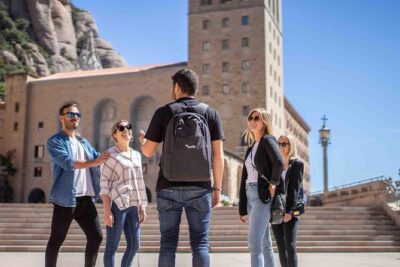
Montserrat Lunch & Wine at Farmhouse Small Group from Barcelona
Read our review →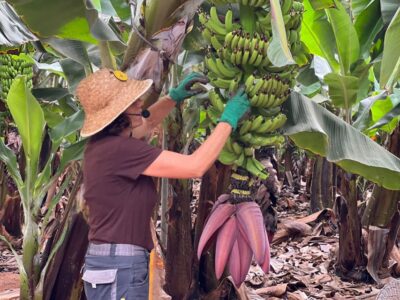
Finca Las Margaritas Banana Plantation Experience
Read our review →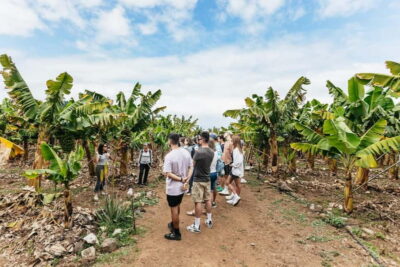
La Orotava: Eco Banana Plantation Tour with Banana Liquor
Read our review →
La Herradura Coffee Farm: tour in Europe’s only plantation
Read our review →
Alicante : E-Bike Coast Tour, Roman Fish Farm and Snorkeling
Read our review →
Montserrat with Winery Visit and Farmhouse Lunch
Read our review →
Browse the lists this tour appears in