
Review · GRAN CANARIA
Gran Canaria historical house with mango plantation in Mogan
The best part of this Mogán outing is the way it links Canarian home life with local farming and a new island drink. You move from a 200-year-old farmhouse to cactus paths, mango trees, and Gran Canaria’s first vermouth production, then finish with a sweet mango dessert.
I like the small group limit of 10 and the personal guiding from people such as Katarina and Tatiana. I also like the tasting itself: two vermouth styles, red and white, plus Gazpachuelo de mango, a cold mango and yogurt soup with chocolate cubes. The main caution is the farm path. The walk down to the mango plantation is not suitable for people with mobility problems, baby carriages, heart conditions, high blood pressure, or anyone over 95.
Key points
- A 200-year-old farmhouse: See a carefully restored complex built in the traditional style of the Canary Islands.
- Mogán valley views: The rural setting gives you a quieter side of Gran Canaria, with time for photographs.
- Cactus, mango, avocado, and soursop: Learn how these plants grow and how local cooks use them.
- Gran Canaria vermouth: Taste both red and white Lolito, made at the farm.
- A memorable dessert: Gazpachuelo de mango combines cold mango, yogurt, and chocolate.
- Optional local meal: Add lunch or dinner at Valle de Mogán if you want to turn the visit into a longer food outing.
A farmhouse that explains old Mogán
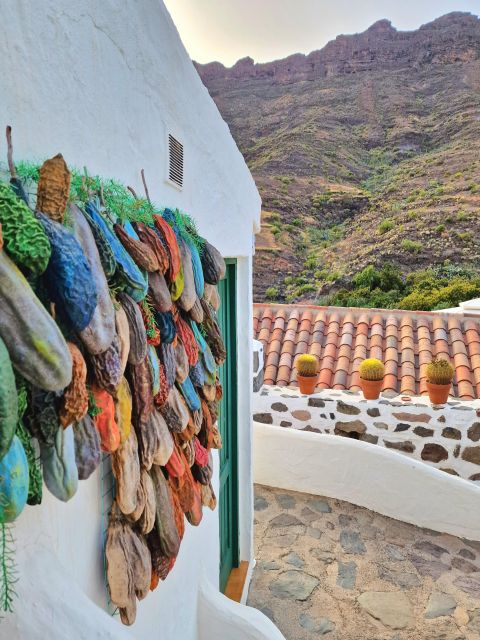
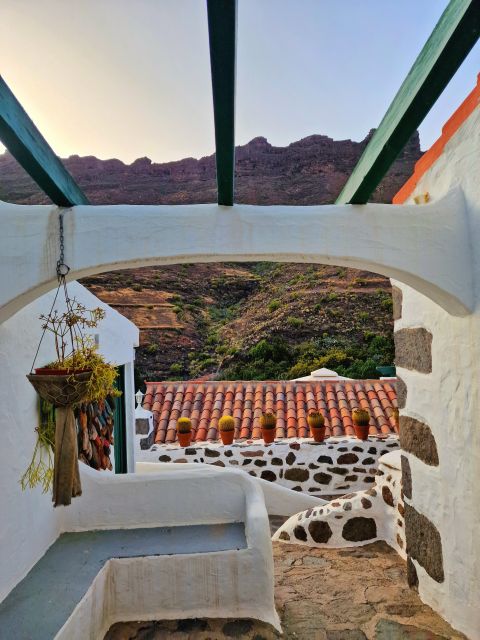
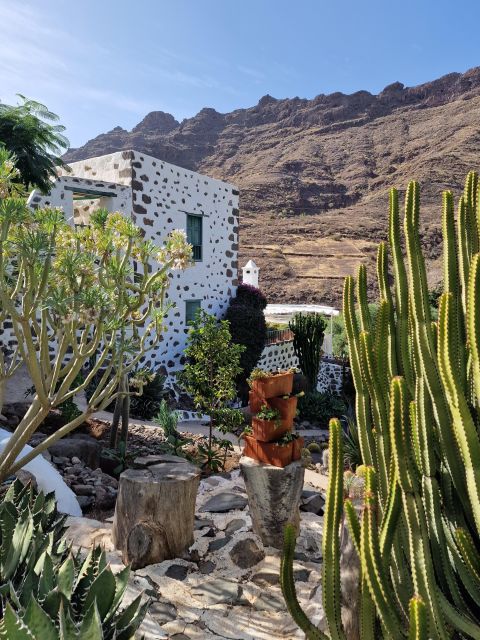
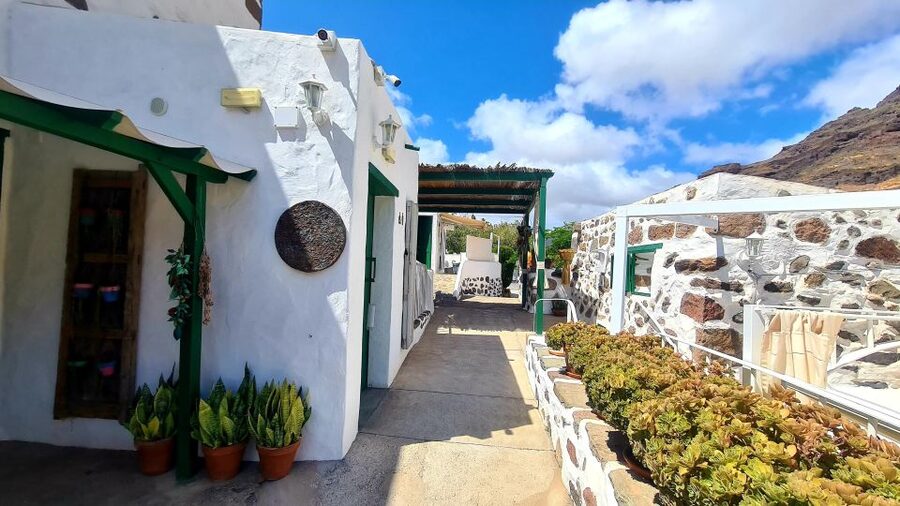
This experience begins at the Valle de Mogán restaurant parking area, at Los Pasitos, 2. Look for the guide wearing a black jacket. From there, the visit moves into an old Canarian farmhouse complex that is about two centuries old.
The buildings have been restored according to traditional Canarian design. That matters because this is not simply an old shell used as a photo stop. The farmhouse helps you picture how people in Mogán lived and worked before modern tourism changed the island.
You will have a guide throughout the visit, with English, Spanish, and Russian available. The guides named in recent bookings include Katarina, Katrina, and Tatiana. The exact guide depends on the day, but the format is personal and small rather than a large group being moved from stop to stop.
I would allow yourself time to look at the setting before rushing inside. The farmhouse sits among native plants with views across the Mogán valley. The combination of the restored buildings and the surrounding countryside gives the first part of the tour a clear sense of place.
The farmhouse visit lasts within the roughly 75-minute Mogán portion of the outing. That section includes the old house, the cactus garden, the fruit-growing area, scenic views, photographs, and explanations of local life. It is a good fit if you want cultural context but do not want a full museum visit.
More Plantation Tours in Spain
- Tenerife: Finca Las Margaritas Banana Plantation Experience
★ 4.7 · 1,442 reviews - La Orotava: Eco Banana Plantation Tour with Banana Liquor
★ 4.7 · 863 reviews - La Herradura Coffee Farm: tour in Europe’s only plantation
★ 4.8 · 430 reviews
Cactus paths with a useful local angle
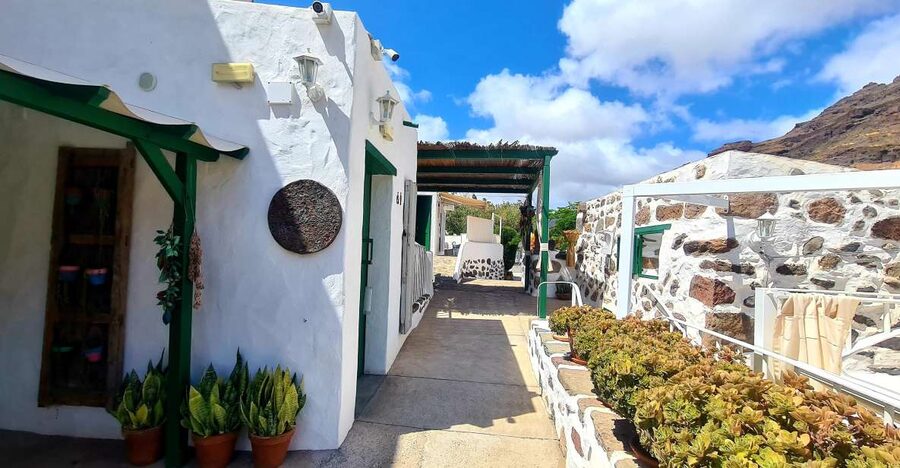
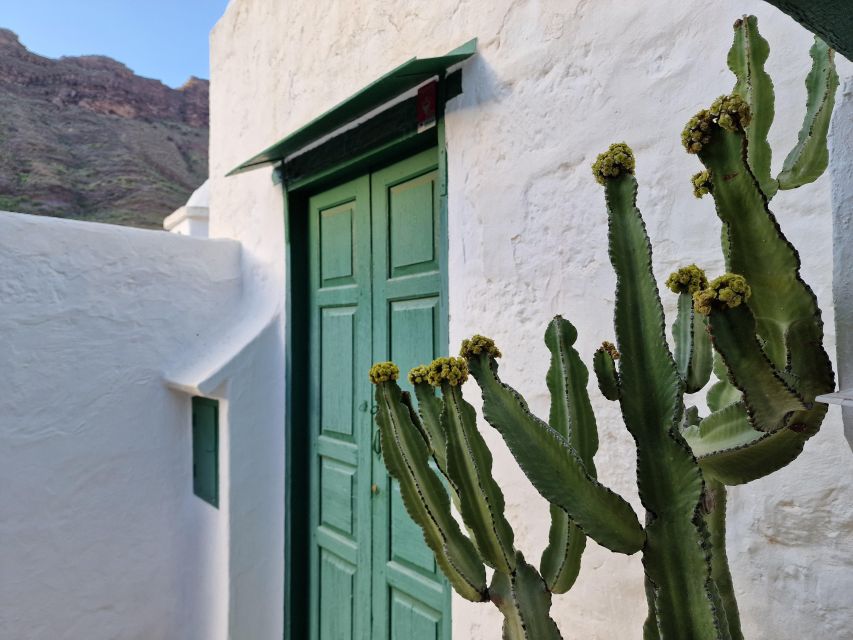
After the farmhouse, you walk through a cactus garden. The garden has a broad mix of plants and picturesque trails, so this is more than a quick look at one or two familiar prickly plants.
The guide also explains the use of cactus, called tunera, in Canarian cuisine. That is one of the useful details here. You are not only hearing plant names. You are learning how a dry-climate crop fits into local food traditions.
The paths add a visual change after the old house. Bring a camera if you enjoy plant photography, because the garden and valley views give you several natural photo stops. The tour information does not promise a long botanical lecture, so expect a guided introduction rather than a specialist garden course.
The pace should suit most visitors who can walk comfortably on uneven outdoor paths. Still, this is not the right outing for anyone who needs a completely step-free route. The experience is described as wheelchair accessible in general, but the descent toward the mango plantation is specifically unsuitable for people with mobility impairments and baby carriages.
That distinction is important. You should confirm which sections you can comfortably reach before booking if access is a concern. The farmhouse and some areas may be manageable, but the full visit includes an outdoor route that is not fully accessible.
Seeing mangoes, avocados, and soursops on the farm
The plantation section gives the tour its strongest connection to everyday agriculture. You will see mangoes, avocados, and soursops growing, then hear how these fruits are used in Canarian cooking.
For many people, this will be more interesting than simply buying fruit at a market. You can see the plants in their growing setting and connect them with the dessert served later. The mango is especially important because it appears both in the farm visit and in the final dish.
Soursop may be unfamiliar to many visitors, and the guide explains its place among the fruit grown here. The tour does not present the farm as a huge commercial operation, so expect an intimate look at cultivation rather than a long agricultural production tour.
The walk down to the plantation is the key physical issue. People with heart problems or high blood pressure are advised not to take part, and the activity is not suitable for anyone over 95. You should also think about footwear, though no formal dress code is given. A comfortable pair of shoes is the sensible choice for a rural route.
The valley setting adds plenty of value. You are not confined to a tasting room. You see the plants, look across the Mogán area, and get a better sense of how fruit growing fits into the island’s food culture.
Tasting Lolito, Gran Canaria’s first vermouth
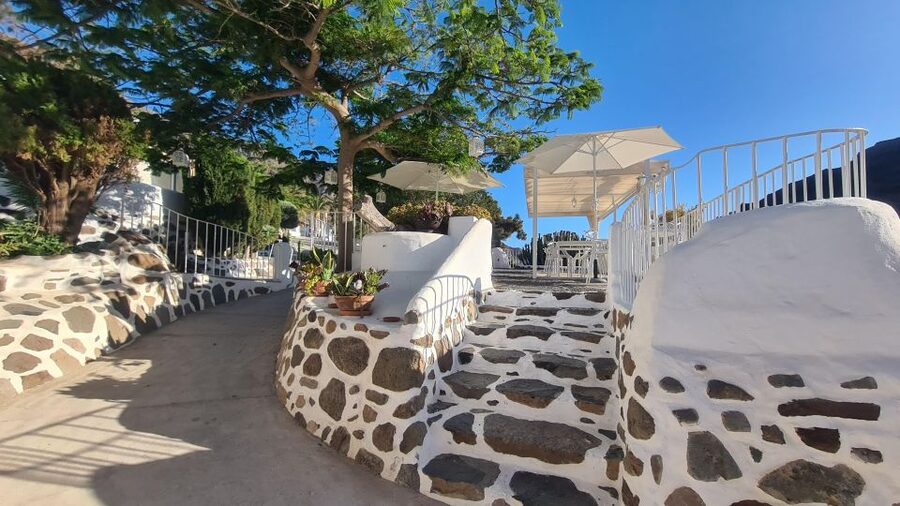
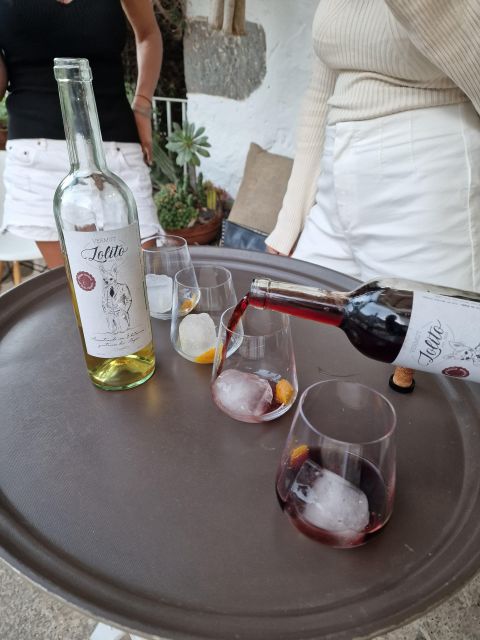
The final indoor food and drink portion takes place at the farm’s vermouth production area. This is where the experience becomes distinctly local. The farm produces Lolito, described as the first vermouth made in Gran Canaria.
You taste both red and white vermouth. They give you two different styles to compare, and the tasting is included in the standard price. The red was the preferred choice for one booking, while another person favored the white, so expect the tasting to come down to personal taste rather than one obvious winner.
The vermouth is described as different and interesting, which is a fair expectation. This is not a major winery visit with a long cellar tour. It is a compact introduction to a local product, paired with an explanation of how it is made at the farm.
The tasting portion lasts about 30 minutes. That is enough time for a relaxed sample and food pairing, but not enough for an extended drinks seminar. If you are looking for a quick, regional tasting with a story behind it, the length works well.
Water is included, along with toilet facilities. A 13-year-old received a special non-alcoholic drink during one visit, which suggests the hosts can make a thoughtful adjustment for younger participants. However, you should not assume that every special drink or dietary request is guaranteed unless you arrange it in advance.
Same fields, a different sort of day out:
- Montserrat Lunch & Wine at Farmhouse Small Group from Barcelona
★ 5.0 · 2,368 reviews - Barcelona: Montserrat Visit & Lunch at Farmhouse Small Group
★ 4.7 · 1,313 reviews - Montserrat Full Day Tour with Farmhouse Lunch and Winery Visit
★ 5.0 · 1,068 reviews - Montserrat & Winery Visit Tour with Traditional Farmhouse Lunch
★ 4.5 · 1,035 reviews
Gazpachuelo de mango is the clever finish
The dessert is called Gazpachuelo de mango. It is a cold mango and yogurt soup served with chocolate cubes.
The name may sound savory, but the dish is a dessert. The cold mango gives it a fresh, fruit-based character, while the yogurt adds a creamy edge and the chocolate provides a small contrast in texture and flavor. It is an original way to use the farm’s main crop without turning the tasting into a heavy meal.
I like this part because it ties the whole visit together. You have seen the mangoes growing, heard how local fruit is used, and then tasted mango in a prepared dish. That connection makes the food stop more meaningful than a standard drink sample with an unrelated snack.
Do not treat the included dessert as a replacement for lunch. It is a tasting portion, and the standard package includes vermouth and dessert rather than a full meal. If you want something more substantial, you can add lunch or dinner at the Valle de Mogán restaurant.
What the $64 price really covers
At $64 per person, this is not the cheapest short activity in Gran Canaria. The visit lasts two hours, so the cost comes from the private guiding, small group size, restored farmhouse, farm access, and included tasting rather than from a full-day excursion.
The value is strongest if you care about local food, rural buildings, and a small group. You get a guide rather than a self-guided walk, and the group is limited to 10 people. That should make it easier to ask questions and hear explanations than on a large coach tour.
The price also includes water, use of the toilet, the mango dessert, and both red and white Lolito vermouth. Since lunch and dinner are not included, budget extra if you want to stay for a meal at Valle de Mogán.
I would compare this with what you want from a two-hour outing. If you mainly want dramatic scenery or a long food tour, this may feel brief. If you want several connected experiences in one compact visit, the price is easier to justify: architecture, plants, agriculture, a local drink, and dessert all fit into one morning or afternoon.
There is also a practical money advantage in the flexible booking terms. You can reserve and pay later, and cancellation is allowed up to 24 hours before the activity for a full refund. Starting times vary, so check availability when choosing your date.
Who will enjoy this Mogán experience
I would recommend this outing to you if you enjoy seeing how a place lived before modern resorts, especially when that history is paired with local produce. It is also a good choice for food-minded visitors who prefer a small farm tasting to a large commercial attraction.
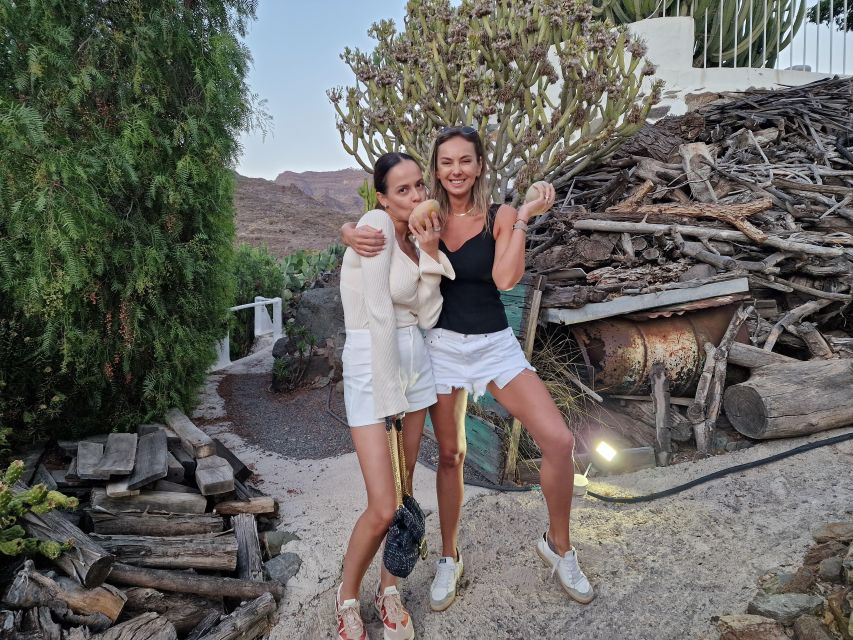
The experience suits couples, small family groups, and anyone interested in photography. The farmhouse, cactus trails, valley views, fruit trees, and tasting room give you several kinds of subjects without requiring a full day.
It can also work well for mixed-age groups, provided everyone can manage the outdoor route. A younger person who does not drink alcohol may still enjoy the fruit farm and dessert, and a non-alcoholic drink was prepared for one teenager during a visit.
I would not choose it for a visitor who wants a completely flat route, a large meal, or a long specialist tour of vermouth production. The path to the mango plantation is a real limitation, not a minor note. If anyone in your party has reduced mobility, heart problems, or high blood pressure, check carefully before booking.
The activity is described as wheelchair accessible, but that should not be read as full access to every part. The plantation descent is not suitable for people with mobility impairments. This is one of those cases where you should ask about the exact route rather than rely on a general accessibility label.
Making the most of the two hours
Arrive at the parking area of Valle de Mogán restaurant and look for the guide in a black jacket. Because hotel pickup and drop-off are not included, arrange your own way to Los Pasitos, 2.
Keep the schedule in mind. Around 75 minutes are used for the farmhouse, cactus garden, plantation, views, and explanations. About 30 minutes are reserved for the vermouth and food tasting, leaving a little room for transitions and photographs.
I would avoid planning another tightly timed activity immediately afterward. The tour is short, but the optional restaurant meal can extend your visit, and rural routes do not always move with the speed of a city sightseeing stop.
Ask questions as you go. The most useful parts are the links between the buildings, plants, and food. Ask about how the farmhouse was used, how tunera appears in cooking, and how the mango is used in the dessert. The small group format should make that easy.
Should you book the farmhouse and mango plantation tour?
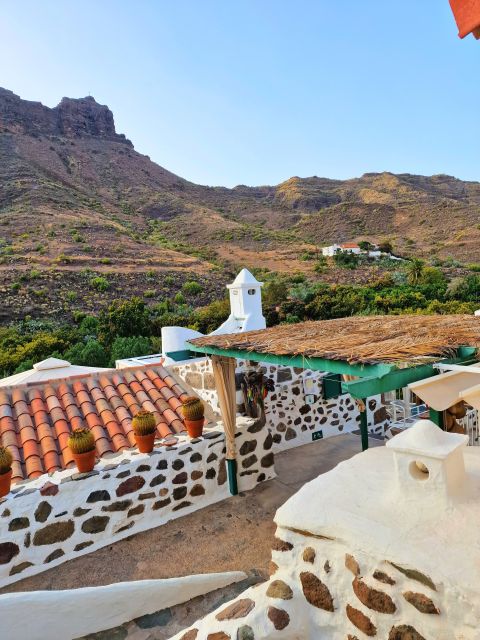
I would book this for a compact, personal introduction to rural Gran Canaria. The restored farmhouse gives the visit a clear historical center, while the cactus garden and fruit plantation keep it from becoming a simple house tour. The vermouth tasting and Gazpachuelo de mango add a food story that feels specific to the place.
The strongest reasons to go are the small group, the valley setting, the two vermouth tastings, and the way the mango appears in both the farm visit and dessert. Guides such as Katarina and Tatiana have been warm and attentive, and the experience allows room for personal questions.
Think twice if you need fully accessible paths or want a substantial meal included. For everyone else, the $64 cost is reasonable when you value a guide-led visit with several distinct stops rather than a single tasting. Add lunch or dinner at Valle de Mogán if you want a fuller food outing.
FAQ
Where does the tour begin?
The meeting point is the parking area of the Valle de Mogán restaurant at Los Pasitos, 2. The guide wears a black jacket.
How long does the experience last?
The experience lasts about two hours. The Mogán visit takes around 75 minutes, followed by about 30 minutes for vermouth and food tasting.
Which languages are available?
The live guide can conduct the experience in English, Spanish, or Russian.
What drinks are included?
The standard package includes tastings of both red and white Lolito vermouth, made at the farm.
What food is included?
You receive Gazpachuelo de mango, a cold mango and yogurt soup served with chocolate cubes. Lunch or dinner at Valle de Mogán is not included.
Is the tour suitable for people with mobility impairments?
The full route is not suitable for people with mobility impairments because the walk down to the mango plantation is not accessible. It is also not suitable for baby carriages.
Can I cancel the booking?
You can cancel up to 24 hours before the experience for a full refund. Reserve now and pay later is also available.
More History Trips in Spain
- Full-Day Tour Exploring History, Nature and Aloe Vera Farm
★ 4.5 · 40 reviews - Tromsø: Reindeer Camp and Sami Cultural Tour with Lunch
★ 4.7 · 3,326 reviews - Charleston: Historic City Tour & Magnolia Plantation Combo
★ 4.4 · 187 reviews - Kona Tour: Bee Farm, Kona Coffee, and National Historical Parks
★ 4.5 · 78 reviews
Just added around Spain
- Animal farm park with free hotel pickup★ 5.0 · 2 reviews
- From Seville: Pig Farm private day tour and old villages visit★ 4.5 · 4 reviews
- Bull Breeding Farm: Guided Half-Day Tour from Seville★ 4.5 · 24 reviews
- ” Basque Farm House & Cider house” tour + meal from San Sebastian★ 5.0 · 9 reviews
- Fuerteventura Villages Caves and Farm Tour with Lunch from North★ 3.0 · 9 reviews
- Menorca: Cheesemaking and Farm-Fresh Product Tasting★ 5.0 · 29 reviews
- Chefcooking Paella from our Andalusian Grandmother at a Family Farm★ 5.0 · 49 reviews
- Eastern Majorca Tour with Arta Caves and Aloe Plantation★ 4.5 · 2 reviews
Gran Canaria Farm Tours, compared.
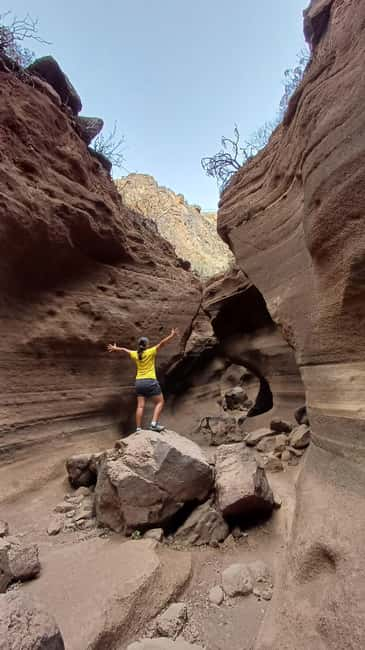
Maspalomas: Barranco de las Vacas, Caves, Farmhouse Tour
Read our review →
Finca Los Castaños: Agaete Valley Coffee Tour & Tasting
Read our review →
Full-Day Tour Exploring History, Nature and Aloe Vera Farm
Read our review →
Agüimes : Be a farmer for the day at La Jaira de Ana
Read our review →
Tour to Arucas, Teror, Aloe Vera farm – Highlights
Read our review →
Explore Gran Canaria’s Coffee at Finca Los Castaños
Read our review →
Canarian farmhouse in Mogan, mango farm and vermouth factory
Read our review →Browse the lists this tour appears in