
Review · THAILAND
From Chiang Rai: 3 Temples, Golden Triangle Tour, Tea Plantation
Chiang Rai’s best-known sights are spread far beyond town, and this full-day trip links them in one big loop. You’ll see three very different temples, the Mekong meeting point known as the Golden Triangle, a tea plantation, and several cultural stops without arranging separate transport.
I like the small group of up to 12 people, which makes a long day more manageable than a packed coach tour. I also like the practical package: hotel pickup and return, an air-conditioned vehicle, lunch, drinking water, an English-speaking guide, insurance, and most entry fees.
The catch is the schedule. Seven major stops in about 10 hours means this is a fast survey, not a slow, reflective visit. The Golden Triangle boat trip costs an extra THB300, and admission to the Black House is listed separately as not included.
Key points at a glance
- Three strikingly different temples: Compare the White Temple’s bright modern design, the Blue Temple’s intense color, and the Black House’s dark teak buildings.
- A real full-day route: Expect roughly 10 hours, including mountain roads and transfers between Chiang Rai and the far northern sights.
- Golden Triangle context: Visit the meeting point of Thailand, Myanmar, and Laos, then spend time at the Hall of Opium Museum.
- Small-group transport: The vehicle carries no more than 12 people, with pickup and drop-off at your Chiang Rai hotel.
- Good guide support: Ping, Fido, Yolk, M, and other guides are praised for clear explanations, humor, patience, and practical help.
- Tea country finale: Chui Fong Tea Plantation gives you open views and a change of pace after the temples and museums.
Why this Chiang Rai day works
I see this as a greatest-hits day for first-time visitors based in Chiang Rai. It does not focus on one theme. Instead, it moves from contemporary Buddhist art to the opium trade, ethnic culture, border geography, and northern agriculture.
That variety is the main reason to book it. You can spend one day getting your bearings and deciding which places deserve a longer return visit. The trade-off is that each stop receives about an hour, so you need to keep an eye on the meeting time.
The tour begins at 8:00 am with pickup from your Chiang Rai hotel. The exact driving time between stops is not given, but the remaining duration includes going up and down the mountain. Bring water, wear comfortable shoes, and keep your day flexible. This is not a quick city outing.
More Tea Plantation Tours in Thailand:
- Chiang Rai: 7 Major Sites, Golden Triangle & Tea Plantation
★ 4.9 · 141 reviews - Best Places in Chiang Rai White, Blue, Big Buddha, Tea Plantation
★ 4.0 · 70 reviews - Chiang Mai Private Tour with Tea Plantation, Karen Village, Doi Suthep
★ 5.0 · 36 reviews
The White Temple sets the tone
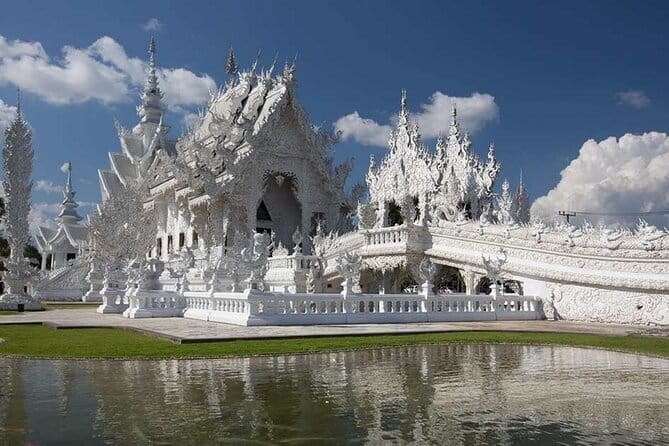
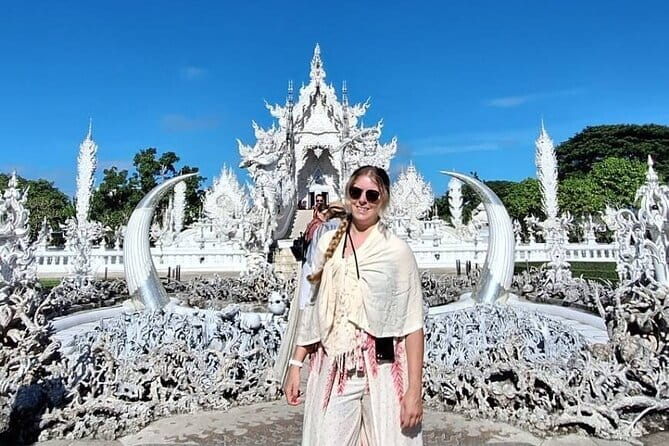
Wat Rong Khun, better known as the White Temple, is the most famous stop on the route. Its bright white surfaces and detailed decoration give it a very different feel from the older temple styles you may have seen elsewhere in Thailand.
You have about an hour here, with admission included. That is enough for a first look, photographs, and a walk through the temple grounds, but not enough for a leisurely study of every detail.
The White Temple is in Pa O Don Chai, outside central Chiang Rai. Its highly designed appearance makes it feel closer to modern art than a quiet, old religious monument. I would make this your first visual reference point for the day: the Blue Temple and Black House make more sense as part of Chiang Rai’s modern art scene after you have seen this place.
Dress respectfully at all temple stops. Even when a building feels artistic or theatrical, it remains a religious site.
Blue Temple brings color and local artistry
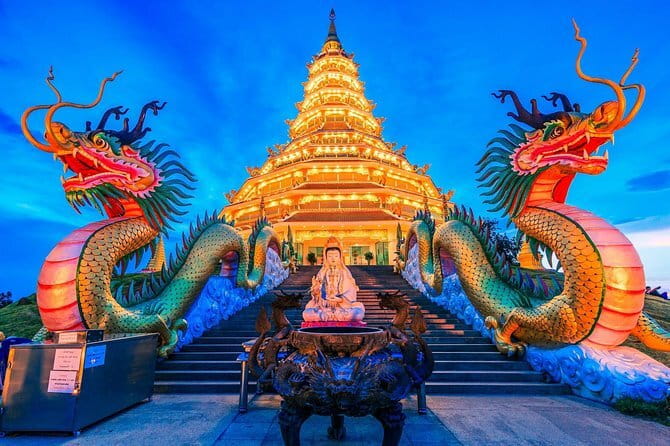
Wat Rong Seur Ten, usually called the Blue Temple, is in the Rong Suea Ten community. The temple was restored by local artist Phutta Kabkaew, also known as Sala Nok, who studied under Chalermchai Kositpipat, the artist associated with the White Temple.
That link gives the two sites a useful connection, though they look nothing alike. The Blue Temple uses strong blue tones and ornate decoration, creating a more unified and dramatic interior and exterior. You get about an hour here with admission included.
I like the pairing because it stops the temple visits from becoming repetitive. You are not seeing three similar religious compounds. You are comparing different artistic ideas from the same northern Thai cultural setting.
Still, the one-hour limit matters. If you want quiet time for prayer, careful photography, or a detailed look at the art, this schedule may feel brisk.
The Black House is the day’s strangest stop
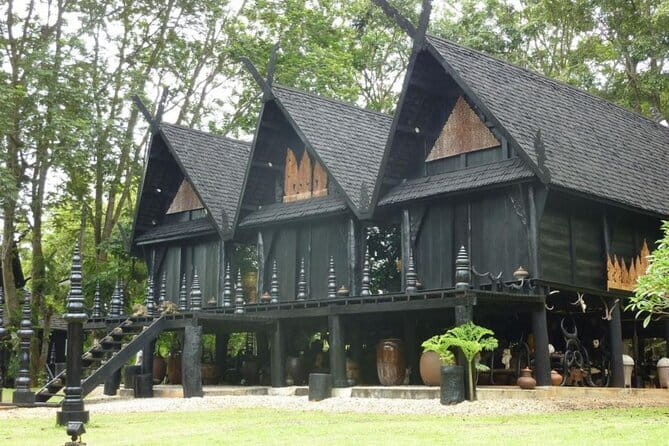
Baan Dam Museum, known as the Black House, is a group of around 40 buildings, many made from dark teak wood. The buildings sit in gardens and contain a collection of art and unusual objects.
This is not a conventional temple. It is an art complex with a darker, more mysterious mood, and it gives the itinerary a needed change of rhythm after the White and Blue temples. You get about an hour to walk through the grounds and buildings.
Admission is listed as not included, so budget for a separate ticket here. That detail is worth checking before departure because the tour includes standard fees or tickets at other stops, but the Black House is specifically marked differently.
I would not treat this as a minor photo stop. It is one of the more unusual places on the route, and the hour gives you enough time to see why it is included. The gardens and separate buildings also make it less like a single temple visit.
More Plantation Tours in Thailand:
- Doi Inthanon Day Trip:Twin Pagodas,Soft Hiking,Coffee Plantation
★ 4.5 · 22 reviews - Chiang Mai : Thep Sadet & Coffee Plantation Full Day Hiking
★ 5.0 · 2 reviews - Monkeyland and Plantation Safari Tour from Punta Cana
★ 5.0 · 3,805 reviews - Swamp Boat Ride and Oak Alley Plantation Tour from New Orleans
★ 5.0 · 3,303 reviews
The Hall of Opium adds needed context
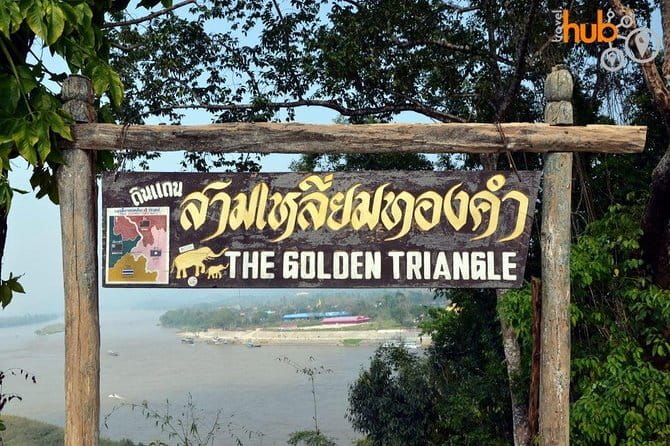
At the Golden Triangle Park, the Hall of Opium Museum explains the region’s opium trade through exhibits and multimedia displays. You have about an hour here, and admission is included.
The museum gives meaning to the border scenery. Without it, the Golden Triangle can feel like a quick photograph at a famous point on the map. The Hall of Opium helps explain why this corner of Southeast Asia became widely known for opium production and trade.
This is also the most museum-focused part of the day. If you prefer outdoor stops, you may find the hour indoors less exciting than the temples or tea plantation. I still think it earns its place because it turns a name you have heard many times into a subject you can understand more clearly.
The display includes several sections and multimedia material. Give yourself time to read and watch rather than rushing straight through for photographs.
Standing where three countries meet
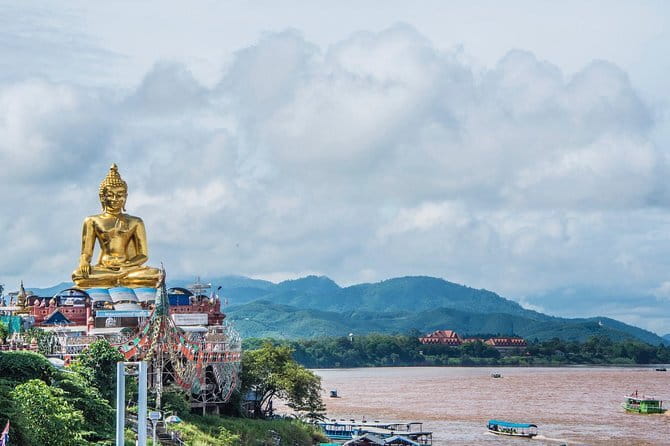
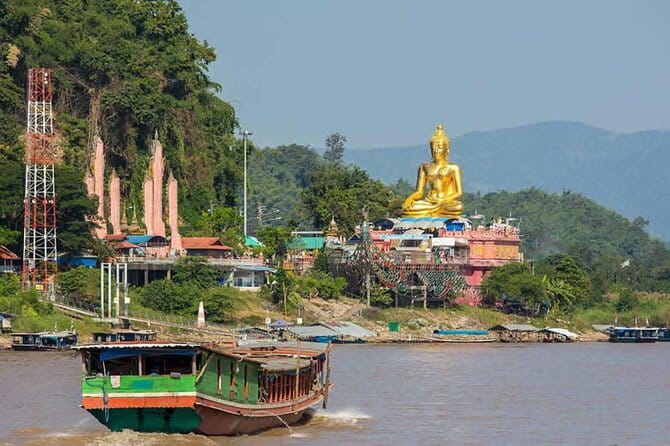
The Golden Triangle is at Sop Ruak, about nine kilometers north of Chiang Saen along the Mekong riverside road. This is where Thailand, Myanmar, and Laos meet, making it one of the most recognizable viewpoints in northern Thailand.
You have about an hour at the stop. The appeal is geographical as much as scenic. You are looking across an international border area and seeing how the Mekong shapes the region.
A boat ride is available for an additional THB300 per person. It is not part of the stated price, so decide before you arrive if you want to spend extra time on the river. If you skip the boat, you can still visit the Golden Triangle viewpoint and take photographs.
I would keep expectations sensible. This is a border meeting point, not a full day in three countries. The tour lets you see the location from Thailand. It does not turn the stop into a cross-border exploration.
The Long Neck Karen village requires thought
The Long Neck Karen Village is included as a one-hour stop. The Padaung are one of the Karen groups, and the supplied background notes describe their earlier connection with Yunnan in central China and later movement in the region.
This visit introduces you to a culture that many people know only through photographs. The best approach is to listen carefully to the guide, behave respectfully, and remember that you are entering a lived community rather than a simple display.
The schedule gives you enough time for an introduction, but not an extended cultural exchange. If this is the stop that interests you most, you may want to ask the guide questions while you are there. The guide’s role matters here, and several guides on this route are praised for being approachable and helpful.
Because the tour covers many places, this stop is necessarily brief. Think of it as an introduction, not a complete account of Karen life.
Chui Fong Tea Plantation changes the pace
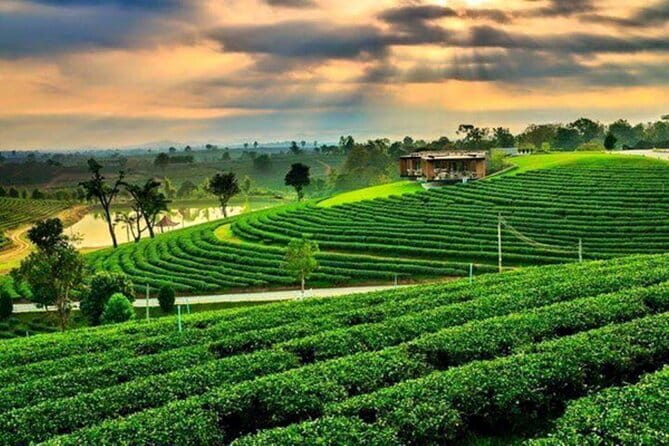
The final major stop is Chui Fong Tea Plantation, one of northern Thailand’s well-known tea-growing attractions. The plantation is especially scenic around the end of the rainy season and the start of winter.
After temples, museum displays, a village, and border views, tea fields provide a calmer final chapter. You can look across the growing areas, take photographs, and learn about a product strongly linked with northern Thailand.
Admission is included. The tour description does not give a tea-tasting schedule or a set amount of time beyond roughly one hour, so do not assume a formal tasting unless the guide confirms it.
This is also where weather can make a real difference. The tour requires good weather, and the plantation’s appearance changes with the season. The late rainy season and early winter are identified as particularly attractive periods.
Guides can make or break a long day
The guides are a major part of the value here. Ping is described as organized, friendly, and well informed, with a knack for making a small group feel comfortable. Fido is praised for humor, energy, practical help, and a warm approach. Yolk is described as caring, positive, and willing to go beyond the basic schedule.
Other named staff include M, who is described as a strong source of information, and guides who work closely with drivers such as Tony and Mr. A. One guide used WhatsApp to provide information to people who spoke little English, which is a useful touch if communication is a concern.
You should not assume a particular guide will lead your departure. But the repeated praise for the guiding and driving team tells you what to value when choosing this trip: clear timing, useful explanations, and help during a packed day.
The vehicle is air-conditioned, and the maximum group size is 12. That is small enough for a more personal feel, though it is still a shared tour, not a private one.
What the $82.61 price really covers
At $82.61 per person, the price is reasonable for the amount of ground covered. You are paying for about 10 hours of transport, hotel pickup and return, a professional English-speaking guide, air conditioning, lunch, drinking water, insurance, and standard tickets.
Lunch is a buffet, and it is served at a pleasant place according to the tour details. The food is described as good, but the menu is not specified, so people with dietary needs should ask before booking.
The value is strongest if you would otherwise need to arrange a private car and pay separate admissions. The tour combines the White Temple, Blue Temple, Black House, Hall of Opium, Golden Triangle, Long Neck Karen village, and tea plantation in one day.
Remember the extras. Tips are not included, other personal expenses are separate, the Golden Triangle boat ride costs THB300, and Black House admission is listed as not included. Those costs do not ruin the value, but they should be part of your budget.
Who should book this day
I would choose this tour if you are staying in Chiang Rai for a short time and want a broad introduction. It suits first-time visitors, photographers who want several distinct settings, and anyone who prefers having transport and tickets handled in one package.
It also works well for people who like variety. You will not spend the whole day looking at temples. The route includes art, museums, border scenery, a cultural village, and tea-growing country.
I would hesitate if you want a slow pace, long meals, or extended time at one site. Seven stops in one day is ambitious, even with about an hour at each. A private tour would give you more control, but this experience is specifically a shared trip.
Most participants can take part, and the tour includes walking and mountain travel. The description notes that some of the remaining time is spent going up and down the mountain, so anyone sensitive to long road transfers should keep that in mind.
Booking, weather, and cancellation details
Pickup begins at 8:00 am, and the tour returns to Chiang Rai. Confirmation is provided at booking, and mobile tickets are supported.
You can cancel for a full refund if you do so at least 24 hours before the start time. Changes or cancellations made within 24 hours are not accepted for a refund. The experience depends on good weather. If poor conditions cancel it, you are offered another date or a full refund.
Should you book this Chiang Rai tour?
Book it if you want to see the main sights beyond Chiang Rai without hiring a private vehicle. The combination of three temples, the Hall of Opium, Golden Triangle, Long Neck Karen village, and Chui Fong Tea Plantation gives you a useful picture of the region in one long day.
The best reason to choose it is the balance of coverage and cost. The main caution is the pace. Go in ready for a full schedule, keep your expectations clear about the optional boat ride and Black House fee, and you should get strong value from the day.
FAQ
How long is the tour?
The experience lasts approximately 10 hours.
Where does the tour begin and end?
It starts from Chiang Rai with hotel pickup and returns to your hotel in Chiang Rai.
What time does pickup begin?
The stated start time is 8:00 am.
Is this a private tour?
No. It is a shared tour with a maximum of 12 participants.
Which temples are included?
The tour visits Wat Rong Khun, also called the White Temple, Wat Rong Seur Ten, also called the Blue Temple, and Baan Dam Museum, also called the Black House.
Is lunch included?
Yes. A buffet lunch is included.
Is the Golden Triangle boat ride included?
No. The boat ride costs an additional THB300 per person.
Is admission to every attraction included?
Standard fees or tickets are included, but admission to the Black House is listed as not included. Other listed stops have admission included.
What happens if bad weather cancels the tour?
You are offered a different date or a full refund if the experience is canceled because of poor weather.
Just added around Thailand
- Phuket Lookouts Tour with Lunch at Organic Farm★ 5.0 · 17 reviews
- Old Phuket Farm Ticket – Countryside Local Life Culture★ 5.0 · 13 reviews
- Pattaya sheep Farm Entrance Tickets★ 4.5 · 2 reviews
- Chiangmai Coffee Farm Tour★ 5.0 · 34 reviews
- Plough to Plate: Be A Rice Farmer in Phetchaburi from Hua Hin★ 5.0 · 4 reviews
- Aroidee’s Farm-Fresh Thai Cooking Experience★ 5.0 · 8 reviews
- One Day Tour Doi Suthep Temple, Palad Temple, Orchid Farm, Longneck hill tribe village (Private tour)★ 5.0 · 7 reviews
- Doi Inthanon Day Trip:Twin Pagodas,Soft Hiking,Coffee Plantation★ 4.5 · 22 reviews
Thailand Farm Tours, compared.
Half-Day Thai Cooking Class at Organic Farm in Chiang Mai
Read our review →
Authentic Cooking Class with Market & Farm Visit
Read our review →
2-Day Jungle Trek with Elephant Farm & Raft Ride
Read our review →
Floating & Railway Market and Coconut Farm Tour [Optional Luxury]
Read our review →
Cooking Class with Organic Farm in Chiang Mai at Mama Noi
Read our review →Browse the lists this tour appears in