
Review · KUTA
eBike Ubud Rice Terraces and Traditional Villages Cycling
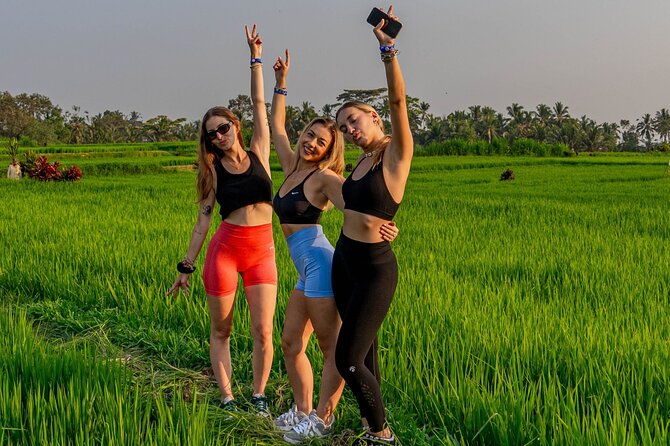
Ubud’s rice fields are best understood from a narrow village lane, not through a car window. This private three-hour e-bike ride takes you past paddies, Subak irrigation channels, temples, and traditional homes, with room to pause and notice how Bali’s farming life still works.
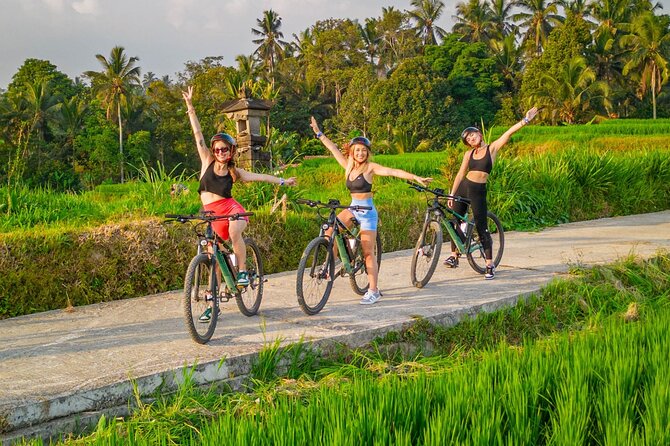
I like the easy reach of the electric bikes and the chance to visit places cars cannot use. I also like the small private format, where a guide such as Eddie can focus on your group and keep an eye on safety. The main consideration is pace: one rider found the route a little fast and wished for more relaxed cycling.
Key points at a glance
- Rice paddies and Subak channels: See the centuries-old irrigation system that keeps Bali’s fields productive.
- Village roads away from cars: Ride through quieter rural areas instead of staying on Ubud’s main roads.
- Electric assistance: The bikes make the route manageable for a broad range of fitness levels.
- Personal guiding: Guides including Eddie are described as friendly, attentive, and careful about safety.
- Private group format: Only your party participates, which makes stops and riding speed easier to manage.
- Simple value: At $26 per person, the price is low for a private, guided outdoor activity lasting about three hours.
Why this ride shows you a different Ubud
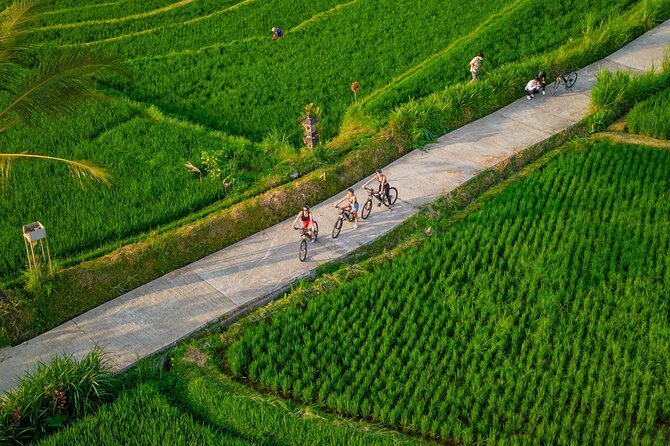
Many Ubud excursions focus on viewpoints, temples, or restaurants. This one gives you a moving view of daily rural life. You are not simply looking at a rice terrace from a platform. You are riding beside the fields, crossing village lanes, and seeing the channels that carry water through the Subak system.
Subak is more than a practical irrigation method. It is a long-running community system that connects farmers, water sources, and religious customs. You do not need a lecture to appreciate it. Seeing the channels beside the paddies makes the idea clear in a way a quick roadside photo cannot.
The route also aims beyond the best-known Ubud stops. You may pass craftsmen and artisans at work, learn about village life, and see how homes and farms fit together. The experience is strongest for anyone who wants Bali to feel like a lived-in place rather than a series of photo stops.
More Rice Terrace Tours in Indonesia
- Bali: Horse Riding on Pigstone Beach and in the Rice Fields
★ 4.7 · 220 reviews - Ubud Day Tour: Sacred Monkey Forest, Tegenungan Waterfall, Rice Terrace
★ 5.0 · 190 reviews - Ubud Monkey Forest – Rice Terrace – Jungle Swing – Water Temple
★ 5.0 · 90 reviews
Starting at Cretya Sunset in Bresela
The stated meeting point is Cretya Sunset, at Jl. Raya Bresela No. 8, Bresela, Payangan, Gianyar, Bali 80572. The tour begins and ends there, although pickup is offered as a feature of the activity. Confirm the pickup arrangement and timing when you book, since the meeting point is in the Payangan area rather than central Kuta.
The location matters because your cycling begins near the rural setting you came to see. You avoid spending the full three hours in transit from one attraction to another. A driver may bring you to the meeting point, and past tours have included drivers named Bagus and Made.
Once you arrive, expect the practical start of any bike outing: getting fitted to an e-bike and helmet, meeting your guide, and receiving safety instructions. The bikes have been described as being in good condition, but you should still check the saddle height, brakes, and controls before setting off.
How the electric bikes change the ride
The e-bike is the central reason this tour can suit people with mixed fitness levels. Bali’s rural roads are not presented as a demanding athletic course, but cycling through rice country can still include uneven surfaces, turns, and changes in pace. Electric assistance lets you enjoy the scenery without treating the ride as a test of endurance.
The stated limits are important. Participants must be between 6 and 65 years old, at least 160 centimeters tall, no taller than 195 centimeters, and no heavier than 120 kilograms. Most people can participate if they meet those conditions, but the height requirement may exclude some younger children.
You still pedal, so this is not a motorized sightseeing trip. The electric help reduces effort rather than removing it. If you want a hard workout, you may find the assistance too generous. If you want to cover rural ground without arriving exhausted, it is a sensible choice.
One point deserves honest attention: pace. A past rider found the group moved faster than preferred. Tell your guide at the start if you want frequent pauses or a gentler rhythm. Because this is a private tour, your group should have more room to discuss that than it would on a large shared outing.
Riding through Ubud’s rice terraces
The rice terraces are the visual heart of the route. From the saddle, you can watch the fields change shape as paths bend around them. The attraction is not one single lookout. It is the sequence of paddies, greenery, water channels, farm work, and small roads that gradually explains how the area fits together.
The Subak irrigation system gives the ride a useful sense of place. You are seeing why the fields exist where they do, not just admiring a green view. Farming practices passed down over centuries remain part of the setting, and the guide can connect what you see with local agricultural life.
The route is also promoted as reaching areas inaccessible by car. That does not mean every section is wild or empty. It means a bicycle can use smaller lanes and paths that keep you closer to the fields. You should expect a more immediate view of village life, along with the possibility of uneven riding conditions.
Bring your attention, not just your camera. Look for the water running beside the fields, the pattern of planted plots, and the way village buildings appear near the farmland. The scenery changes slowly enough to reward curiosity, but the ride is not designed as a long stop-and-study tour at every terrace.
More Rice Terrace Tours in Kuta
- Ubud yoga, rice terrace walk and floating Breakfast tour
★ 5.0 · 85 reviews - Ubud Small Group Tour: Monkey Forest, Tegalalang Rice Terraces and more
★ 5.0 · 78 reviews - Ubud: Swing – Monkey Forest – Waterfall – Temple – Rice Terraces – Art Crafts
★ 5.0 · 57 reviews - Ubud Experience ; Swing, Waterfalls, Art Market, Rice Terrace
★ 5.0 · 56 reviews
Traditional villages and local craft
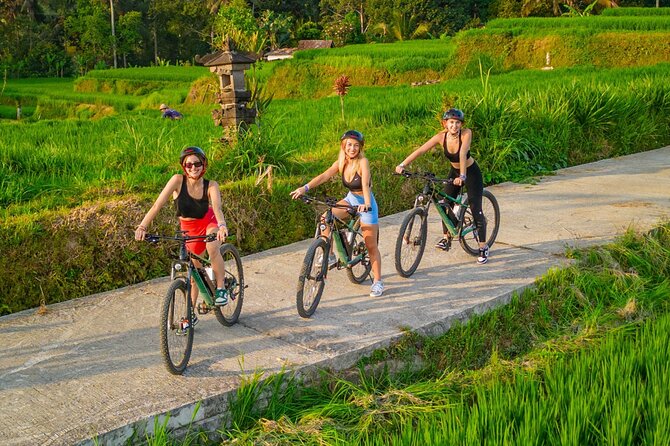
The village portion adds the human side of the trip. You may meet local craftsmen and artisans, hear about their daily routines, and learn how Balinese cultural practices continue outside the main tourist centers. This is where the tour can feel more personal than a viewpoint visit.
The word traditional can be overused in Bali, so keep your expectations sensible. You are not entering a museum frozen in time. You are visiting working communities, where people live and make things. Courtesy matters. Listen when the guide explains what is appropriate, and ask before photographing people or their work.
This section is valuable because it breaks up the cycling. You get a chance to stand, look around, and connect the rice fields with the people who maintain them. It also gives the guide a chance to explain details that are easy to miss when you are simply pedaling past.
The available information does not specify the names of the villages or the exact artisans you will meet. That is worth knowing before you book. The appeal is the rural setting and local contact, but the exact stops may vary.
What the guide adds to the outing
A good guide matters on a route like this because the scenery needs context. Eddie has been singled out as enthusiastic, friendly, helpful, and careful about safety. Those qualities fit the needs of this ride: you want someone who can explain the area without turning every stop into a long speech, and who notices when a rider needs help.
A driver also supports the experience when pickup is arranged. Bagus and Made have handled transfers on past outings. Their role is practical rather than part of the cycling itself, but dependable transport can make the start and finish much easier.
The private format is a major advantage. You are not placed with a large crowd, and only your own group participates. That can make it easier to ask questions, stop for photos, or discuss a slower pace. It does not guarantee a completely custom route, but it gives the outing a more personal feel than a mass tour.
Food, timing, and what is not guaranteed
One past account describes a meal in the rice fields at the end of the ride. Treat that as a possible feature rather than a confirmed part of every departure, because the formal tour details do not specify a meal or menu. If food matters to your plans, ask the operator before booking.
The advertised duration is about three hours. That is enough time for a compact look at the rice country and villages, but not enough for a full-day exploration of Ubud. You will likely spend part of the time riding and part stopping at cultural or scenic points.
The activity ends back at the meeting point. Pickup is offered, but the supplied details do not give a list of hotel zones or an exact pickup schedule. If you are staying in Kuta, allow time for the transfer to Bresela and confirm the arrangements rather than assuming the ride begins at your hotel.
Is $26 a good price?
At $26 per person, this is inexpensive for a private guided activity with an electric bike, helmet, village route, and roughly three hours of time. The value is strongest if you want a guided introduction to rural Ubud without paying for a full-day excursion.
Group size affects the calculation. Since only your party participates, the price can be particularly attractive for couples, families, or friends who would otherwise pay for several separate activities. Group discounts are also offered, though the exact discount is not stated.
You are paying for access and interpretation as much as for the bike. A self-guided ride might cost less, but it would not necessarily take you through the same small lanes or explain Subak farming and village life. On the other hand, anyone seeking a long, athletic ride may prefer a specialist cycling trip with more distance and a stronger physical focus.
The value also depends on your transport needs. If your pickup requires a long transfer, the outing takes more of your day than the three-hour ride suggests. Still, for a short cultural activity that combines exercise, scenery, and local contact, the price is fair.
Who should book this e-bike tour?
I would choose this ride for someone visiting Ubud for the first time who wants to see beyond the main streets. It is also a good fit for families and mixed-ability groups, provided everyone meets the age, height, and weight limits.
It suits you if you like:
- Seeing working farmland rather than only famous viewpoints
- Light outdoor activity with electric assistance
- Small-group or private guiding
- Meeting local artisans and learning about village life
- A short activity that can fit around other Bali plans
I would think twice if you dislike bicycles, need a very slow pace, or want a fully predictable list of named stops. The tour is not presented as a demanding cycling challenge, but you will still be on a bike for much of the outing. And because the route details are broad, the exact village encounters may depend on the day.
You should also be comfortable with the possibility that the guide sets a brisk pace. Speak up early. A private group gives you a better chance of shaping the rhythm, but it is still wise to make your preference clear before riding out.
Booking details that matter
Confirmation is provided when you book, and mobile tickets are available. Free cancellation applies if you cancel at least 24 hours before the local start time. Cancellations or changes made inside that window are not refunded or accepted.
The activity is listed in Kuta, but the cycling meeting point is Cretya Sunset in Bresela, Payangan, Gianyar. The distinction matters when planning your morning or afternoon. Pickup is offered, yet you should confirm exactly where and when you will be collected.
The tour is private, and most people can take part if they meet the stated limits. Children as young as 6 are allowed, but the minimum height is 160 centimeters, so age alone does not determine eligibility.
Should you book it?
Book this tour if you want a friendly, low-cost way to see Ubud’s rice country from ground level. The electric bike removes much of the strain, the private format gives you flexibility, and the mix of Subak irrigation, villages, artisans, and small roads offers more substance than a quick scenic stop.
Skip it if you want a long-distance cycling workout or a tightly scheduled route with every stop guaranteed in advance. For most visitors who want rural Bali, gentle activity, and a personal guide in about three hours, this is a strong-value choice. Just confirm pickup, ask about the pace, and check that every rider meets the height and weight requirements.
FAQ
Where does the e-bike tour start?
It starts at Cretya Sunset, Jl. Raya Bresela No. 8, Bresela, Payangan, Gianyar, Bali 80572, Indonesia.
Where does the activity end?
The tour ends back at the meeting point at Cretya Sunset.
Is pickup available?
Yes, pickup is offered. The available details do not specify the exact pickup areas or schedule, so confirm those arrangements when booking.
How long does the tour last?
The tour lasts approximately three hours.
How much does the tour cost?
The listed price is $26 per person.
Is this a private tour?
Yes. Only your group participates.
What age range can participate?
The stated age range is 6 to 65 years old.
Are there height and weight limits?
Yes. Riders must be at least 160 centimeters tall, no taller than 195 centimeters, and no heavier than 120 kilograms.
What will I see during the ride?
You will cycle through Ubud rice paddies, see the Subak irrigation system, visit traditional villages, and may meet local craftsmen and artisans.
Can I cancel for a full refund?
Yes, if you cancel at least 24 hours before the experience start time. Cancellations made less than 24 hours in advance are not refunded.
More E-Bikes in Kuta
- Ubud eBikes Tour to Tegallalang Rice Terrace
★ 5.0 · 507 reviews - Alicante : E-Bike Coast Tour, Roman Fish Farm and Snorkeling
★ 4.8 · 250 reviews - Kualoa Ranch: Novice E-Bike
★ 4.5 · 128 reviews - Stellenbosch: Wine Farm E-Bike Guided Tour
★ 4.6 · 88 reviews
More Cycling Trips in Kuta
- Ubud ATV Quad Bike, Monkey Forest and Rice Terrace
★ 5.0 · 9 reviews - From Ubud: Downhill Bike Tour with Rice Terraces and Meal
★ 4.9 · 664 reviews - Ubud: Rice Terraces & Villages Half-Day Fat Tire E-Bike Tour
★ 4.9 · 602 reviews - Ubud: Downhill Cycling with Volcano, Rice Terraces and Meal
★ 5.0 · 536 reviews
Just added around Kuta
- Ubud Iconic Full Day Tour Monkey Forest Rice Terraces Waterfalls★ 5.0 · 5 reviews
- Water Temples and UNESCO Rice Terraces Private Bali Tour★ 5.0 · 2 reviews
- Bali: Ubud (Temple, Spring, Rice Terraces, & Waterfall)★ 5.0 · 3 reviews
- Swing Bali-Ubud Rice Terrace_Elephant Cave & Ubud Waterfall★ 5.0 · 2 reviews
- Ubud Hidden Gems Waterfall, Temple and Rice Terraces Private Tour★ 5.0 · 31 reviews
- Private Tour from Leke-Leke Waterfall to Jatiluwih Rice Terrace★ 5.0 · 2 reviews
- Private Ubud Day Tour Waterfalls Sacred Monkeys and Rice Fields★ 5.0 · 5 reviews
- Private Tour: Campuhan Ridge Walk, Ubud Rice Terrace & Ubud Palace★ 5.0 · 15 reviews
Kuta Farm Tours, compared.
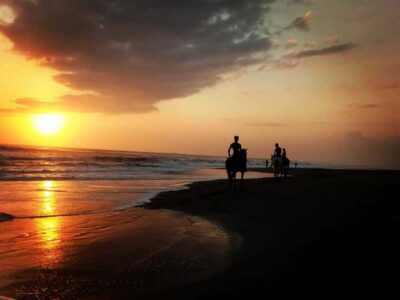
Horse Riding on Pigstone Beach and in the Rice Fields
Read our review →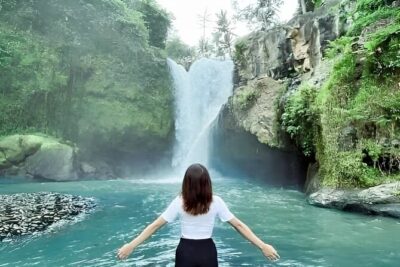
Ubud Day Tour: Sacred Monkey Forest, Tegenungan Waterfall, Rice Terrace
Read our review →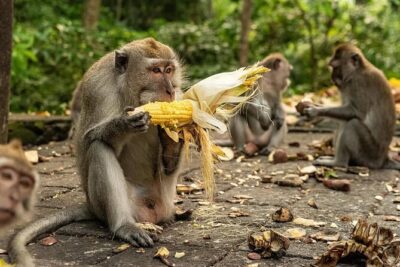
Ubud Monkey Forest – Rice Terrace – Jungle Swing – Water Temple
Read our review →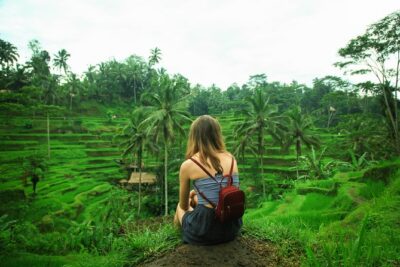
Ubud yoga, rice terrace walk and floating Breakfast tour
Read our review →
Ubud Small Group Tour: Monkey Forest, Tegalalang Rice Terraces and more
Read our review →
Swing – Monkey Forest – Waterfall – Temple – Rice Terraces – Art Crafts
Read our review →
Ubud Experience ; Swing, Waterfalls, Art Market, Rice Terrace
Read our review →
Bali Tour : Best Attractions in Ubud with Rice Terrace
Read our review →Browse the lists this tour appears in