

Review · SPAIN
La Herradura Coffee Farm: tour in Europe’s only plantation
Europe’s only coffee plantation is not in the tropics. It is in La Herradura, a short distance from Nerja, where a warm coastal microclimate lets coffee, mangoes, avocados, dragon fruit, lychees, bananas, and other unusual crops grow side by side. That makes this 70-minute farm walk one of the Costa del Sol’s more unexpected outings.
I like two things right away: the owner-led storytelling, usually with Manuel, and the farm’s mix of coffee with more than 30 types of exotic fruit. I also like that you see real working agriculture rather than a polished show garden. The main drawback is the terrain. Two steep sections make this a poor choice for wheelchair users, people with limited mobility, or anyone who finds uphill walking difficult.
Key points to know before you book
- Europe’s only coffee farm: See productive coffee plants growing near the Mediterranean, then learn how the beans are harvested and roasted.
- More than coffee: Mangoes, avocados, dragon fruit, lychees, sugar cane, bananas, papayas, and other crops fill the farm.
- A personal family story: Manuel, also called Manolo in some tour details, leads many visits and explains how his family developed the land.
- Organic farming in a dry climate: The walk covers water saving, soil renewal, permaculture, and the hard work behind pesticide-free cultivation.
- A scenic finish: The route ends at a 300-year-old Andalusian cortijo with views toward La Herradura and farm products for sale.
- Bring proper shoes: The path includes steep stretches, and the meeting point is not the same as the ending point.
Why coffee grows beside the Mediterranean
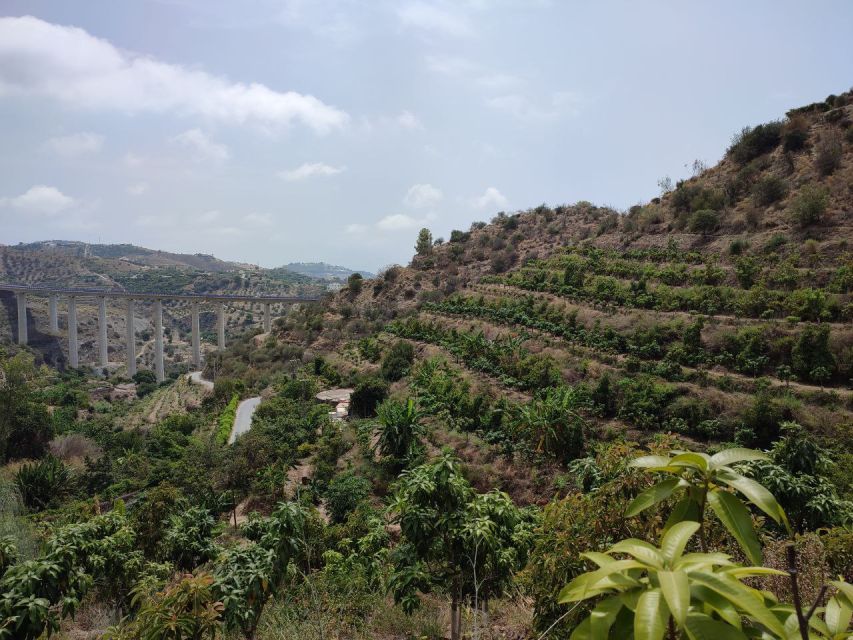
The headline is easy to understand: this is a coffee farm in Europe. The more interesting story is why it works at all.
La Herradura has a warm coastal climate, sea air, hills, and sheltered growing conditions. That special mix allows coffee plants to produce fruit while tropical crops grow nearby. You are not looking at a single neat row of coffee trees. You are walking through a mixed farm where many plants share the same ground.
That matters because the visit is about farming as much as coffee. Manuel explains the work behind planting, pruning, harvesting, and caring for crops in a place that is warm enough for tropical fruit but still short on water. You get a clearer idea of how much patience and trial and error go into producing food in southern Spain.
The farm is organic, and the guide talks openly about the problems that come with that choice. Water use, soil condition, pests, and crop variety all matter. The farm’s approach includes permaculture, soil regeneration, and efforts to avoid relying on one crop alone.
I find that mix more useful than a simple coffee tasting. You learn how a farm functions, not just how a bean ends up in your cup.
More Plantation Tours in Spain
- Tenerife: Finca Las Margaritas Banana Plantation Experience
★ 4.7 · 1,442 reviews - La Orotava: Eco Banana Plantation Tour with Banana Liquor
★ 4.7 · 863 reviews - Tour Visiting banana plantation and winery in Tenerife
★ 4.5 · 17 reviews
The walk through coffee, mango, and dragon fruit
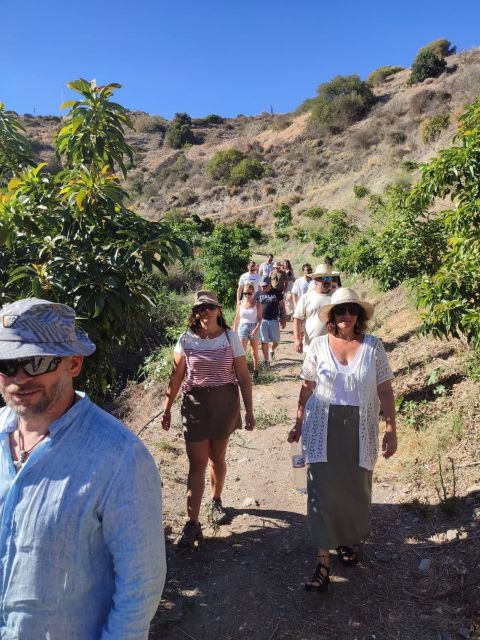
The tour begins at the farm meeting point. Confirm the exact location before setting out because the starting point can differ from the finishing point. The farm is within walking distance of La Herradura beach, and it is only a few minutes from Nerja by car, but the route from town is not necessarily a flat or effortless stroll.
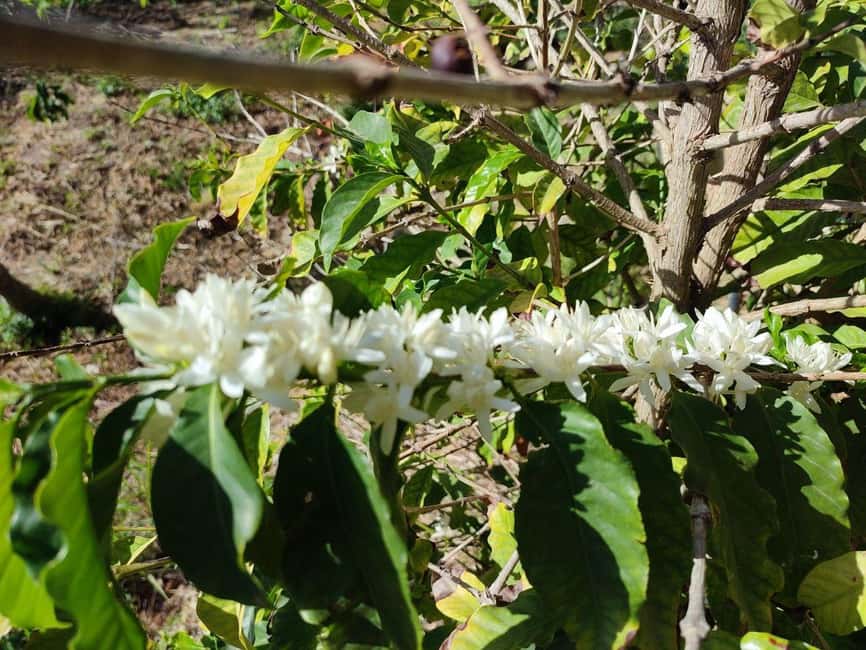
Once the group sets off, the guide introduces the coffee plants and explains their place in the farm. You can see productive plants rather than a few decorative specimens. The coffee grows among other crops, giving the walk a lively, slightly untidy working-farm feel.
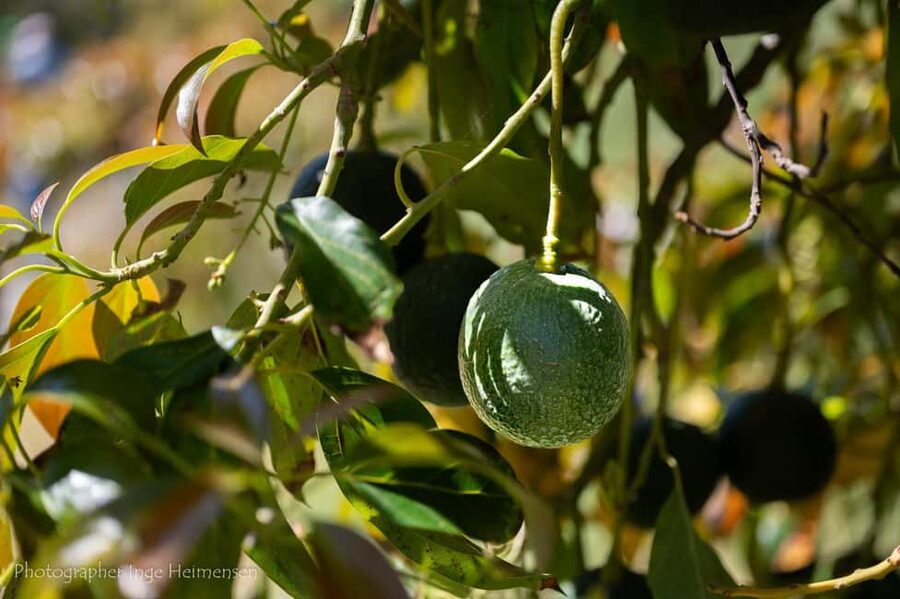
The variety is the real surprise. Depending on the season, you may see mangoes, avocados, bananas, papayas, lychees, sugar cane, dragon fruit, and different types of tropical fruit. The farm also includes Spain’s oldest mango tree and century-old cherimoya trees, along with a low-water avocado plantation.
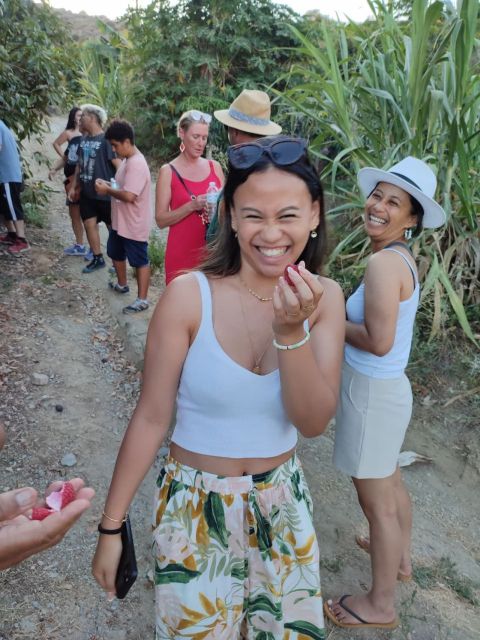
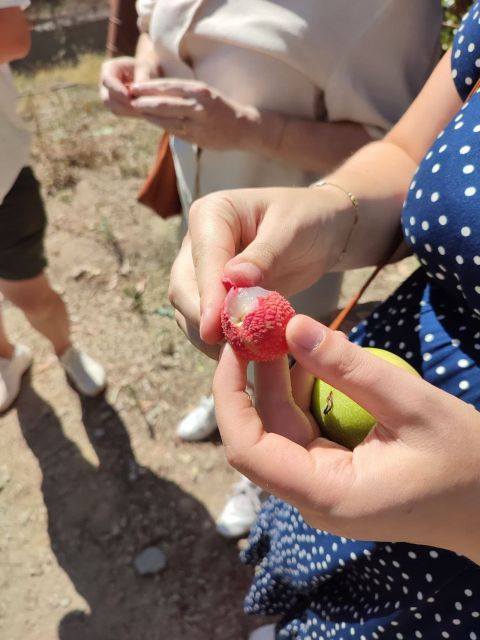
Some of the best moments come when the guide points out how a plant grows rather than simply naming it. You may see fruit, flowers, leaves, or the structure of a plant that you normally encounter only in a market. Fruit and leaves may be offered to smell or taste, and seasonal fruit can be available at the end.
The timing of the harvest matters. Mangoes may not be ripe during your visit, even in warm weather. That is normal for a working farm, but it means you should not book solely on the promise of tasting a particular fruit.
Manuel’s farm story gives the tour its character
The guide makes a big difference here. Manuel, often referred to as Manolo, is the owner and the person most frequently associated with the tour. He explains the family connection to the land, the history of the farm, and the plans for its future.
His style is informal and funny. He uses jokes, questions, and small surprises to keep the walk moving. Families especially benefit from this approach because children are not expected to listen to a long technical lecture. They can look at unfamiliar plants, ask questions, and take part in the conversation.
The guide’s enthusiasm also gives the farm a human scale. This is not a large commercial attraction with a scripted presentation. You are seeing a family project that is still being developed. The explanations include successes, experiments, and setbacks, which makes the coffee-growing story feel more real.
Several guide names appear in the tour information, including Manuel, Manolo, Sonia, and Carlos. Your guide may therefore vary by date or booking, but the experience is presented in English and Spanish, with English, French, Spanish, and German listed as available languages. Check the language option when booking if that matters to you.
Organic farming, water use, and the cost of dry-climate agriculture
The farm’s strongest educational point is its approach to sustainability. Organic farming here is not treated as a fashionable label. It is presented as a daily challenge.
The guide explains how the farm tries to reduce water use and improve the soil. That is especially relevant in Andalusia, where heat and dry conditions put pressure on agriculture. Growing coffee and tropical fruit requires careful planning, and a mixed farm can help spread risk across different crops.
You also hear about soil regeneration and permaculture. The practical value is clear: healthy soil supports plants, holds water better, and can reduce the need for outside inputs. A diverse farm also gives you more to see than a single-crop plantation.
I appreciate that the tour does not pretend organic farming is simple. The farm is still working out what thrives, what needs extra care, and how best to manage the land. That honesty makes the visit useful for anyone interested in gardening, food production, or environmental choices.
Do not expect a formal agricultural course. The depth depends on your questions and on the guide’s talk that day. Still, the chance to ask directly about water, soil, coffee, and tropical fruit is one of the main reasons this tour offers more value than its low price suggests.
More Coffee Farm Tours in Spain:
- Guided Tour to the only coffee farm in Europe
★ 5.0 · 174 reviews - Finca Los Castaños: Agaete Valley Coffee Tour & Tasting
★ 4.4 · 57 reviews - Big Island: Volcanoes, Waterfalls, & Coffee Farm Day-Trip
★ 4.9 · 414 reviews - Small-Group Big Island Tour: Hawaii Volcanoes National Park and Kona Coffee Farm
★ 5.0 · 343 reviews
Sea views and the old Andalusian cortijo
The farm is set against the hills around La Herradura, with views toward the coast. The scenery adds variety to the walk. One minute you are looking closely at a coffee plant or fruit tree, and the next you are seeing the Mediterranean setting that helps make the farm possible.
The route ends at a 300-year-old Andalusian cortijo. This old rural building provides a fitting finish because it connects the modern coffee project with the area’s farming past. It is also where you can buy seasonal fruit, local products, and the farm’s roasted coffee.
The ending is practical as well as atmospheric. You can take home coffee grown in Europe, along with produce that reflects the season. Fresh fruit may be offered during the visit, but food and drinks are not generally included as a formal part of the booking. Coffee tasting is not guaranteed, so ask if sampling is important to you.
The finish point differs from the starting point. Plan your return before you arrive. One useful local tip is that a taxi or ride service may bring you to the farm but be less reliable for the return journey. A local taxi can be the safer plan, especially if you are not walking back to La Herradura.
How difficult is the 70-minute walk?

The advertised duration is 70 minutes, although the detailed tour description and some experiences put the visit closer to 90 minutes or even a couple of hours. Allow extra time rather than scheduling a tight connection afterward.
There are two steep areas. Chairs are available, and the guide makes pauses, but this remains a walking tour over uneven and sloping ground. Comfortable shoes are essential. In summer, add sun protection and water, since parts of the farm can feel hot.
This outing is not suitable for wheelchair users or people with mobility impairments. It is also a poor fit if you have a low level of fitness, heart problems, or a serious insect allergy. Those limits are worth taking seriously because the setting is a working plantation, not a fully paved visitor center.
For families, the tour can work very well if children enjoy plants, animals, fruit, and hands-on questions. Teenagers may appreciate the unusual setting and the guide’s humor. Young children may need help on the steeper sections.
What $17 buys you
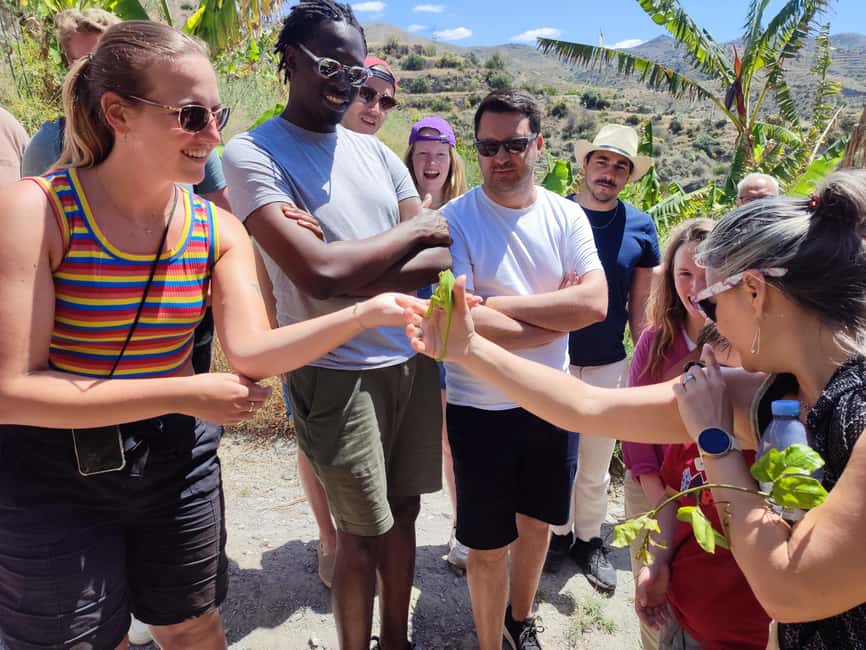
At $17 per person, the tour is inexpensive for a guided activity near Nerja and La Herradura. You get a personal walk through a working organic farm, an explanation of coffee cultivation, tropical fruit knowledge, local history, and access to a rare agricultural setting.
The value is strongest if you are curious about how food grows. You are paying for the guide’s time and experience, not for a large tasting menu or a polished coffee museum. The farm visit is simple, personal, and educational.
You should budget separately for anything you buy at the cortijo. Roasted coffee, seasonal fruit, and local products are available for purchase, while hotel transport, food, drinks, and a paella workshop are not included.
Free cancellation up to 24 hours before the activity and a reserve-now, pay-later option make it easier to fit into a changing schedule. Still, check availability, language, meeting point, and duration before confirming.
The best time and the right expectations
Each season changes what you see. Fruit may be flowering, growing, or ready to pick, and not every crop will be available to taste on every date. If you have your heart set on fresh mangoes, ask about the season rather than assuming they will be ripe.
The farm can still be worthwhile outside the main fruit season because coffee plants, leaves, trunks, flowers, soil, and irrigation methods remain part of the visit. The guide’s family story also does not depend on harvest timing.
Rain does not necessarily cancel the experience, but wet weather can make walking more awkward. Wear shoes with a good grip and bring suitable clothing. In hot weather, protect yourself from the sun and carry water.
Who should book this farm visit?
I would choose this tour if you want an unusual half-day idea near Nerja, especially if you have already spent time on the beach and want something tied to local food and land. It suits curious couples, families, gardeners, coffee fans, and anyone who enjoys meeting the person behind a small business.
It is also a good option if you prefer a personal tour to a major attraction. Manuel’s involvement gives the visit warmth and a sense that your money supports a family-run project.
I would skip it if you want a flat path, a long professional coffee tasting, or a highly structured museum-style presentation. The coffee is the hook, but the full experience is really about tropical farming, family history, and sustainable land use.
FAQ
Where is La Herradura Coffee Farm?
The farm is in La Herradura, Andalusia, near the beach and a few minutes from Nerja by car.
How long does the tour last?
The stated duration is 70 minutes. The detailed tour information and some descriptions indicate that the visit may run closer to 90 minutes, so allow extra time.
What is the price?
The listed price is $17 per person.
Is this really Europe’s only coffee farm?
The experience is presented as a visit to Europe’s only coffee farm.
What crops can I see?
You may see coffee, mangoes, avocados, dragon fruit, lychees, sugar cane, bananas, papayas, cherimoyas, and other tropical fruit. The farm has up to 30 types of exotic fruit.
Is fruit tasting included?
The experience describes opportunities to sample seasonal tropical fruit, and fresh fruit may be offered during the visit. Specific fruit availability depends on the season.
Is coffee tasting included?
A coffee tasting is not guaranteed. Roasted farm coffee is available to buy at the end, and food and drinks are not included as standard.
What languages are available?
The tour is available in English and Spanish. English, French, Spanish, and German are listed among the available guide languages.
Where does the tour finish?
The tour ends at a 300-year-old Andalusian cortijo at Finca La Herradura, where you can buy seasonal fruit, local products, and roasted coffee.
Is the tour suitable for people with limited mobility?
No. The route includes two steep sections and is not suitable for wheelchair users or people with mobility impairments. It is also not recommended for people with heart problems, a low level of fitness, or insect allergies.
Should you book La Herradura Coffee Farm?
For $17, I think this is a smart choice if you want to see a working side of the Costa del Sol that has little to do with resorts. The coffee plants are unusual, the fruit collection is impressive, and the sea views give the farm a memorable setting.
Book it for the personal guide, the family story, and the chance to understand organic farming in a hot, water-conscious climate. Just wear sturdy shoes, confirm the meeting point, allow more than 70 minutes if your schedule is tight, and do not expect every fruit to be ripe. If those conditions suit you, this small farm visit offers both good value and a genuinely local experience.
Just added around Spain
- Animal farm park with free hotel pickup★ 5.0 · 2 reviews
- From Seville: Pig Farm private day tour and old villages visit★ 4.5 · 4 reviews
- Bull Breeding Farm: Guided Half-Day Tour from Seville★ 4.5 · 24 reviews
- ” Basque Farm House & Cider house” tour + meal from San Sebastian★ 5.0 · 9 reviews
- Fuerteventura Villages Caves and Farm Tour with Lunch from North★ 3.0 · 9 reviews
- Menorca: Cheesemaking and Farm-Fresh Product Tasting★ 5.0 · 29 reviews
- Chefcooking Paella from our Andalusian Grandmother at a Family Farm★ 5.0 · 49 reviews
- Eastern Majorca Tour with Arta Caves and Aloe Plantation★ 4.5 · 2 reviews
Spain Farm Tours, compared.

Montserrat Lunch & Wine at Farmhouse Small Group from Barcelona
Read our review →
Finca Las Margaritas Banana Plantation Experience
Read our review →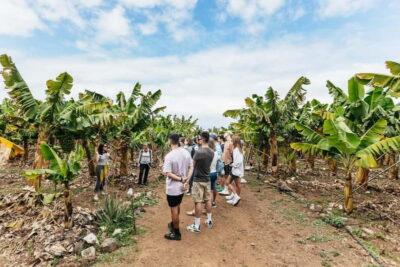
La Orotava: Eco Banana Plantation Tour with Banana Liquor
Read our review →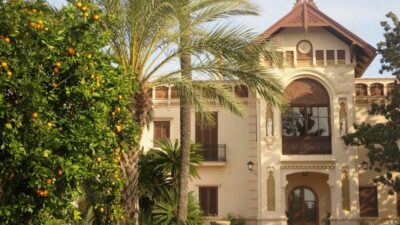
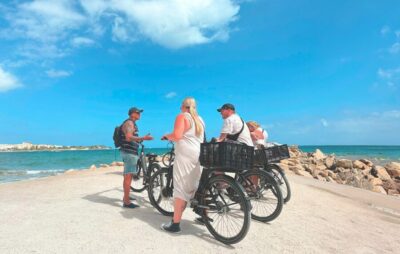
Alicante : E-Bike Coast Tour, Roman Fish Farm and Snorkeling
Read our review →
Montserrat with Winery Visit and Farmhouse Lunch
Read our review →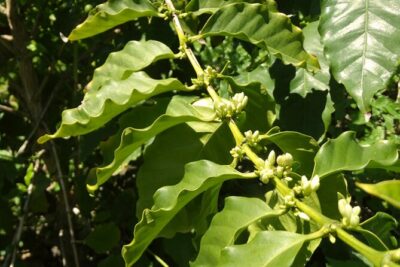
Browse the lists this tour appears in