Review · CHIANG MAI
Chiang Mai: Cooking Class with Organic Farm at Mama Noi
The best part of Mama Noi is that it connects Thai food to its ingredients. You begin at a local market, then see herbs and vegetables growing at the school before cooking at your own station. It feels more useful than a class that simply hands you premeasured bowls.
I like the freedom to choose your menu, and I like how much food you actually prepare. Depending on the available menu, you can make a soup, stir-fry, curry, mango sticky rice, and Thai milk tea. The setting is attractive, the staff keep the class lively, and guides such as Nook, Pam, Tida, Mai, and Blue have earned praise for their humor and patience.
The one catch is pace. Mama Noi runs many classes, and the four-hour schedule packs in a market visit, garden walk, several dishes, and a full meal. You learn practical methods, but you may not get a long lesson on the deeper principles of Thai cooking.
Key points at a glance
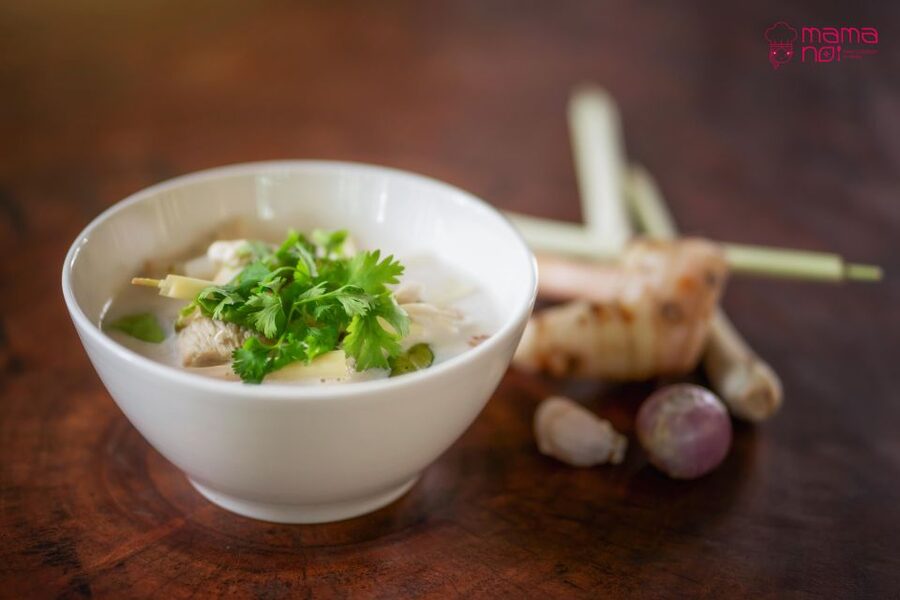
- Choose your own dishes: Pick from several options for soup, stir-fry, and curry, with mango sticky rice and Thai milk tea also included in commonly offered menus.
- Start at a real local market: See ordinary Thai ingredients where they are sold and learn what to look for before reaching the school.
- Walk through an organic garden: Taste and identify herbs and vegetables used in the kitchen, with staff explaining how they fit into Thai dishes.
- Cook a full meal: You chop, prepare, and cook several dishes at your own station, then sit down to eat the results.
- Leave with useful souvenirs: The recipe booklet includes the dishes you made, and a cooking certificate is provided after class.
- Expect a full four hours: Hotel pickup and drop-off from Chiang Mai city make the experience easy to fit into a day, but the schedule is active.
Why the market visit improves the cooking class
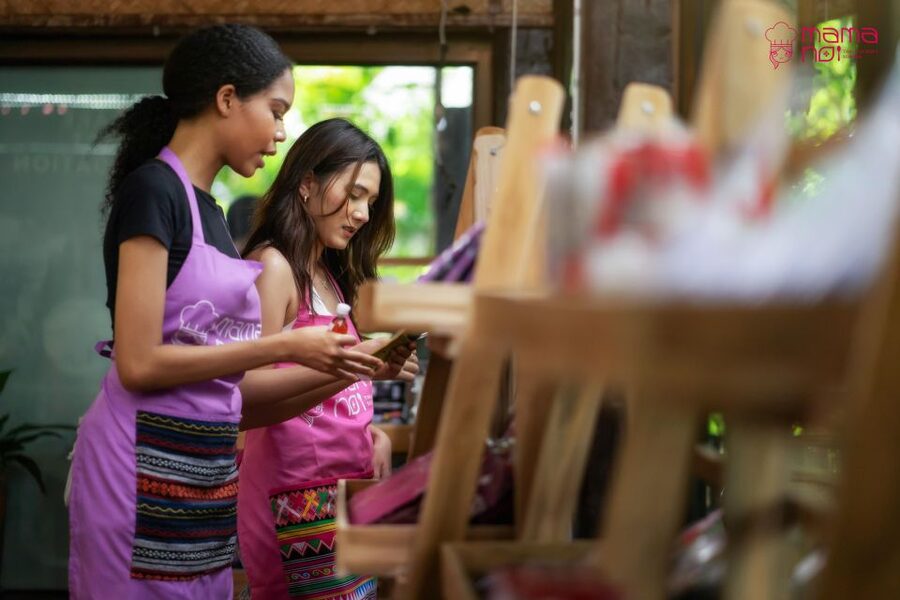
Mama Noi does not begin with a classroom lecture. A driver collects you from your Chiang Mai city hotel or hostel, and the first stop is a local market. That small change in order matters. You see the raw ingredients before you handle them in the kitchen.
The market is not presented as a polished sightseeing stop. It is a place where local food is sold, and the experience can feel more ordinary and direct than a market designed mainly for sightseeing. Your guide introduces the ingredients used later in class, giving you a first look at the colors, shapes, herbs, spices, and produce that form the base of Thai cooking.
You also get time to look around. One schedule allows roughly 15 minutes of free time, so you are not simply marched through the stalls. Use it to notice unfamiliar vegetables, ask questions, or watch how shoppers choose produce.
I like this part because it gives the dishes a setting. Pad Thai, curry, or soup can seem like a list of ingredients when you eat them in a restaurant. Seeing those ingredients at a market helps you understand that Thai cooking begins with shopping and selection, not just a recipe card.
The market can also feel eye-opening. You may encounter ingredients and food displays that are less familiar than those in a tourist-oriented market. That is useful, but it is worth knowing that this stop is about food education rather than souvenir shopping.
More Farm Cooking Classes in Chiang Mai
- Half-Day Thai Cooking Class at Organic Farm in Chiang Mai
★ 5.0 · 19,087 reviews - Chiang Mai: Authentic Cooking Class with Market & Farm Visit
★ 4.9 · 4,546 reviews - Chiang Mai: HALF-DAY COOKING COURSE at a Thai Cooking Farm
★ 4.9 · 705 reviews
A garden walk with herbs you can taste
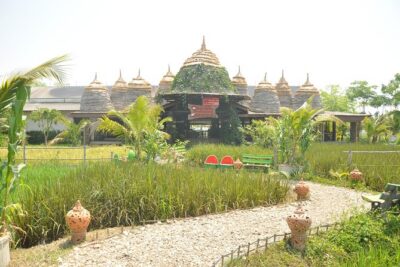
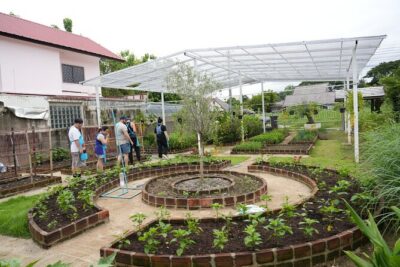
After the market, the group continues to Mama Noi’s cooking school and organic garden. The school is larger than some people expect, with a dedicated garden, cooking spaces, and a team used to running classes throughout the day.
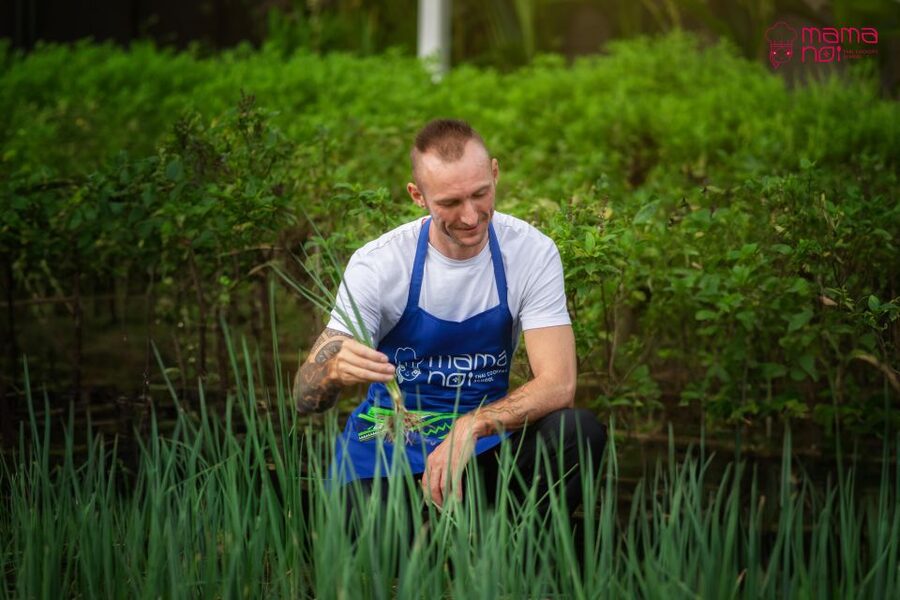
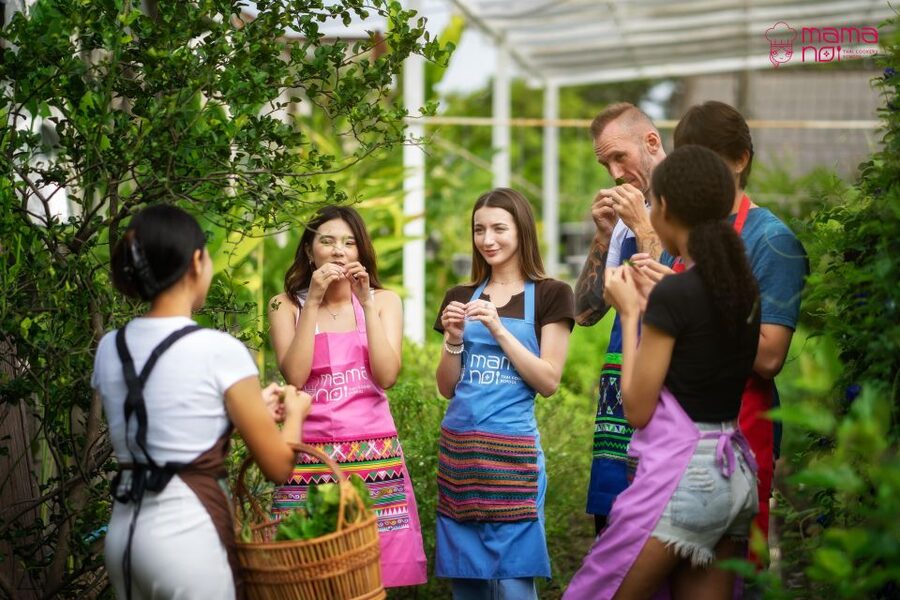
The garden is one of the most praised parts of the experience. Staff explain how the plants are grown and how they are used in the school’s menus. You can see, smell, and in some cases taste herbs and vegetables directly from the garden rather than meeting them only after they have been chopped.
That simple contact makes a difference. Thai food often depends on fresh herbs, aromatics, and sharp contrasts. The garden helps you connect the finished flavor with the plant itself. It also gives you a quiet pause before the busier kitchen session.
The garden is not just a photo stop. The teaching continues outdoors, with explanations about ingredients and their place in Thai meals. The grounds are described as beautiful and well kept, and the setting helps make the class feel like more than an indoor demonstration.
One small extra detail adds charm: the school has two pet tortoises. They are not a major reason to book, but they can be a fun surprise, especially for families with older children.
Cooking several Thai dishes at your own station
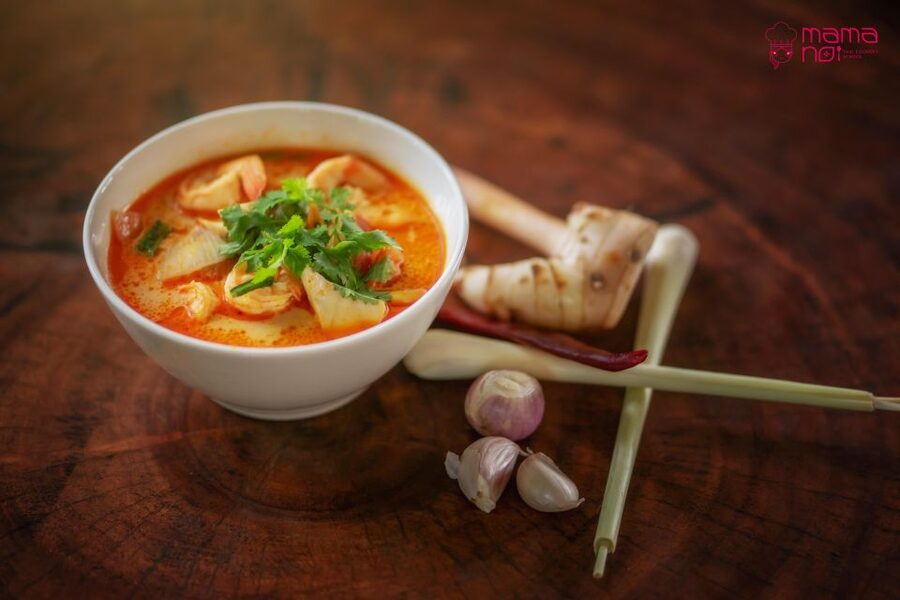
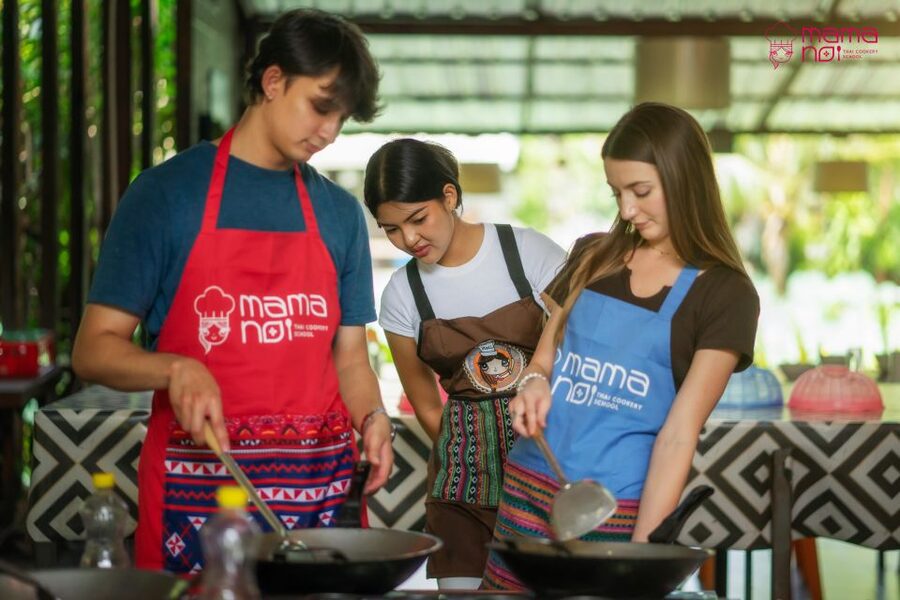
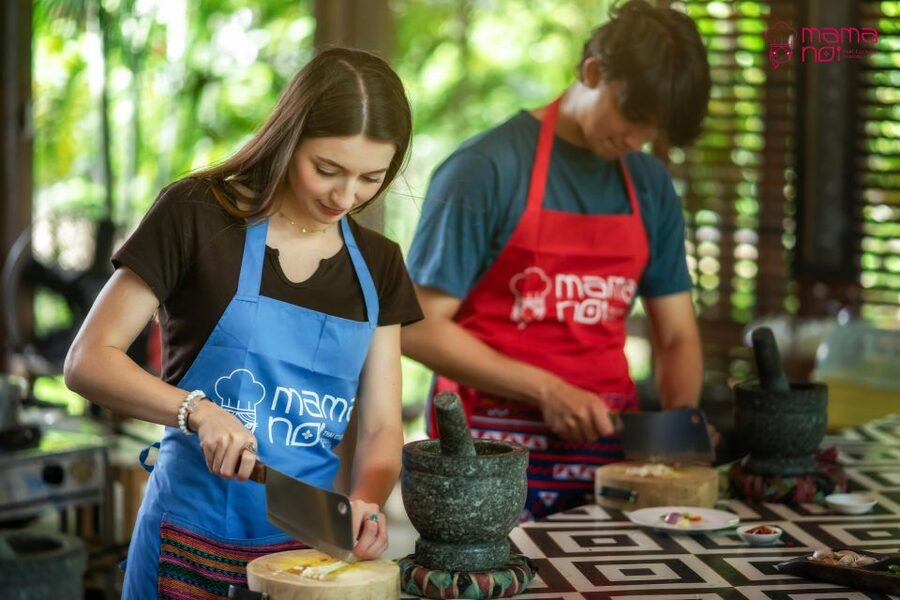
The main class is practical. You work at your own cooking station and follow an English-speaking chef through the preparation of several dishes. You chop ingredients, mix sauces and pastes, and cook the food yourself rather than watching the instructor do everything.
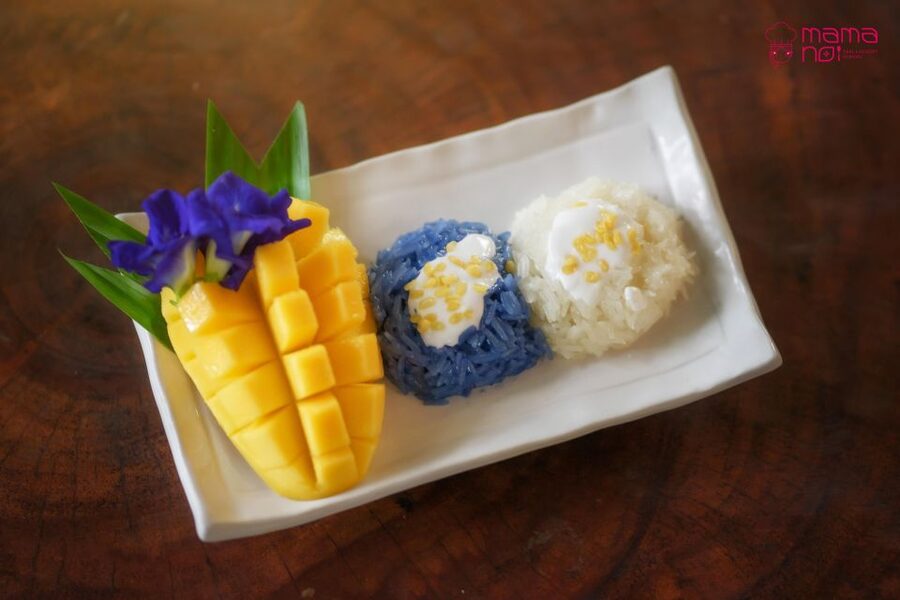
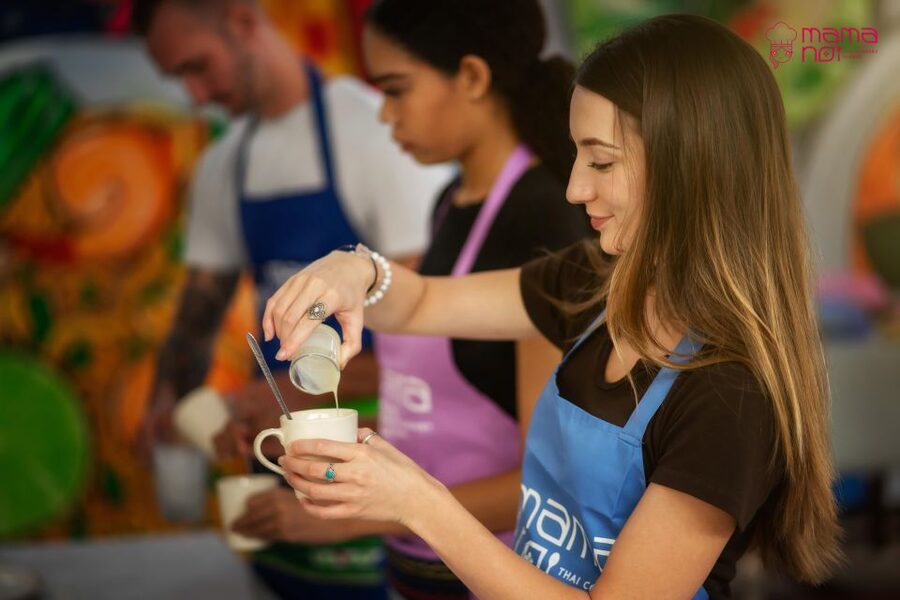
The exact menu can vary, but the structure is clear. You generally select one soup, one stir-fry, and one curry from a set of choices. Mango sticky rice is included, and some sessions also prepare Thai milk tea. Past menus have included dishes such as Tom Som, Pad Thai, Khao Soi, and other familiar Thai favorites.
The choice is a strong feature. It lets you avoid a dish you dislike and choose food you are more likely to cook again at home. It also makes the class work well for couples or friends with different tastes, since each person can select a different combination.
Khao Soi is a particularly good choice in Chiang Mai. This northern Thai curry noodle dish is closely linked to the region, so learning to make it here gives the class a local connection rather than focusing only on international Thai restaurant standards.
Your instructor demonstrates each step, then gives you time to follow along. Staff assistants clear used woks and utensils quickly, allowing the class to move from one dish to the next. That organization keeps the kitchen from becoming clogged with equipment.
The cooking is designed for beginners. Guides such as Nook, Pam, Tida, Mai, Blue, Fern, and Ray have been praised for keeping instructions clear, repeating steps when needed, and making nervous cooks feel comfortable. Their personalities are part of the experience. Expect jokes, energy, and plenty of encouragement.
That lively approach has a tradeoff. You will cook a lot in four hours, but you may move quickly between dishes. The class teaches you how to prepare the selected recipes, yet it may not spend much time explaining broad ideas such as balancing salty, sour, sweet, spicy, and bitter flavors across an entire Thai meal.
If you want a formal culinary lesson with long demonstrations and detailed theory, this may feel fast. If you want to cook several dishes, eat a large meal, and leave with recipes you can try at home, the pace works well.
The meal is part of the lesson
At the end, you sit down and eat what you prepared. This is more satisfying than receiving a small tasting plate after doing the work. The portions are generous, and several people have found the meal so filling that they wished they had eaten less beforehand.
Plan accordingly. A light breakfast or lunch makes sense if you book an afternoon or evening session. You may prepare three main dishes plus dessert and a drink, so this is not a small snack between sightseeing stops.
Eating your own food also gives you a clear test of the instruction. If the curry is too spicy, the stir-fry is just right, or the sticky rice turns out better than expected, you can connect the result to the steps you followed. The class lets you adjust your choices around the menu, but you should tell the staff about dietary needs before cooking so they can accommodate you when possible. One participant specifically found the class suitable for dietary requirements.
Spice is worth keeping in mind. Thai food can be hot, and one evening class found some dishes a little spicy. Ask your instructor about heat levels and request adjustments if needed. The cooking team is described as attentive, but it is better to speak up before the chilies go into the wok.
If you cannot finish everything, take-away boxes have sometimes been available, though they should not be assumed. The safest plan is to arrive hungry and expect a substantial meal rather than counting on leftovers to take away.
More Farm Cooking Classes in Thailand
- Cooking Class with Organic Farm in Chiang Mai at Mama Noi
★ 5.0 · 502 reviews - Evening Cooking Class in Organic Farm with Local Market Tour
★ 5.0 · 394 reviews - Morning Cooking Class in Organic Farm with Local Market Tour
★ 5.0 · 157 reviews - Chiang Mai: Half Day Cooking Class at Organic Farm
★ 4.8 · 96 reviews
What the $32 price really covers
At $32 per person, this is strong value for a four-hour activity. The price includes city-area hotel pickup and drop-off, a local driver, the market visit, the garden tour, the cooking class, organic farm ingredients, and a recipe book. You also receive a certificate after completing the class.
The value comes from combining several separate activities into one organized outing. A market visit, garden tour, cooking lesson, and full meal could easily take most of a day if arranged independently. Here, transportation links the pieces and removes the need to find Mama Noi on your own.
The recipe booklet adds practical value. It contains the dishes prepared during your class, so it is more useful than a generic souvenir. You can use it to recreate the meal at home, although your local ingredients and equipment may differ from those in Thailand.
Luggage storage is available as an add-on, which may help if you are moving between accommodations. Alcoholic drinks are not included, but can be purchased. Personal expenses and unspecified food or drinks are also outside the price.
You can reserve now and pay later, and cancellation is free up to 24 hours before the activity for a full refund. Those terms are useful if your Chiang Mai plans are still changing.
Transport, group size, and the four-hour schedule
Pickup and drop-off from the Chiang Mai city area make this easier than arranging taxis to a school outside the center. The driver handles the route, while the guide takes over the food discussion at the market and school.
The exact timing depends on the selected session. Availability should be checked for starting times, and the full experience lasts about four hours including transport. Morning and afternoon or evening options appear in the available schedules, so choose based on your appetite and other plans.
Small groups are available. Group size matters here because cooking requires access to ingredients, work surfaces, and instructor attention. A smaller group should give you more chances to ask questions, though the school is set up to handle organized classes with several stations.
The class runs like a well practiced operation. That is good news if you value clear timing and clean work areas. Assistants move used equipment out of the way, and the instructors keep everyone progressing.
You may find the efficient rhythm slightly less personal than a tiny home kitchen class. The school is large, and several groups may be active. Still, the setup gives you a proper cooking station and a reliable sequence from market to garden to meal.
Who will enjoy Mama Noi most
I would recommend this for first-time cooks, couples, families with older children, and anyone who wants an edible souvenir from Chiang Mai. You do not need advanced cooking skills, and the instructors are used to explaining steps clearly.
It also suits people who want to try several dishes in one sitting. The ability to choose a soup, stir-fry, and curry is useful if you want to compare different Thai cooking methods instead of spending the whole class on one recipe.
Food-focused visitors will get the most from the market and garden sections. Those stops explain where the ingredients come from and how they appear before preparation. If you are interested only in eating and not in chopping, stirring, and cleaning around your station, the class may feel like work.
Children under 10 are not suitable for participation. A noncooking child can sometimes join as an accompanying visitor, with one visitor allowed per student. They may join the market tour, meal, and transport, but cannot take part in cooking. The child category is for a visitor who will not cook, not for a young student.
Practical tips for a better class
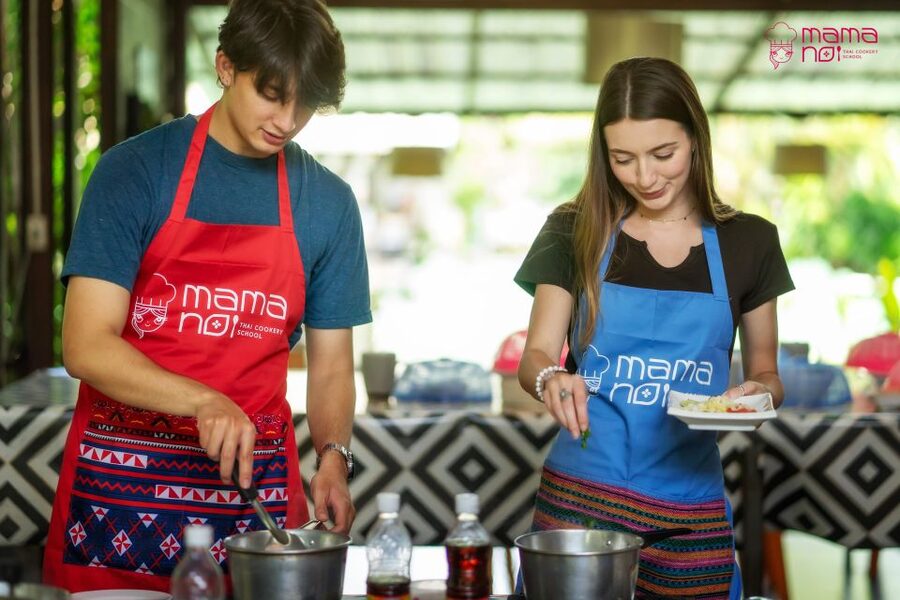
Arrive hungry, but not starved. You will eat a substantial meal, and the cooking itself takes concentration.
Choose a menu that includes something you already enjoy and something new. Pad Thai is familiar, while Khao Soi or a regional soup gives you a stronger Chiang Mai connection.
Ask about spice before cooking. The instructors can explain the dishes and may be able to adjust heat for dietary needs.
Keep the recipe booklet. It is the part of the experience most likely to remain useful after your holiday, especially if you mark the dishes you want to repeat.
Wear clothing suited to a working kitchen and garden visit. The supplied information does not specify a dress code, but you will be walking through the garden, chopping, and cooking at a hot station.
Should you book Mama Noi?
Book this class if you want a busy, cheerful half-day that combines a local market, an organic garden, hands-on cooking, and a large Thai meal. At $32, the included transport, food, instruction, booklet, and certificate make it an easy value choice.
Skip it if you want a slow, highly technical lesson focused on Thai culinary theory. Mama Noi’s strength is practical action and variety. The schedule can feel rushed, and the school’s larger operation may not offer the intimate feel of a tiny private class.
For most visitors, I would choose it, especially if you are new to Thai cooking. Select Khao Soi if available, ask for a comfortable spice level, and leave room for the mango sticky rice.
FAQ
How long does the Mama Noi cooking class last?
The activity lasts about four hours, including the market visit, garden tour, cooking lesson, meal, and transportation.
What does the $32 price include?
The price includes hotel pickup and drop-off from the Chiang Mai city area, a local driver, the local market visit, the cooking class, organic farm ingredients, a recipe book, and a cooking certificate after completion.
How many dishes will I cook?
You will prepare several Thai dishes from scratch. The usual structure lets you choose one soup, one stir-fry, and one curry from available options, along with mango sticky rice and sometimes Thai milk tea.
Is the class taught in English?
Yes. The listed teaching language is English.
Can children join the cooking class?
Children under 10 are not suitable for the cooking class. One accompanying visitor may join each student for the market, meal, and transportation, but visitors cannot take part in the cooking activities.
Can I cancel or pay later?
You can reserve now and pay later. Free cancellation is available up to 24 hours in advance for a full refund.
More Organic Farm Tours in Thailand
- Phuket Lookouts Tour with Lunch at Organic Farm
★ 5.0 · 17 reviews
More Organic Farm Tours in Chiang Mai
- Cooking Class with Organic Farm in Chiang Mai
★ 5.0 · 4 reviews - Full Day Thai Cooking Class in Organic Farm and Market
★ 5.0 · 3 reviews
Just added around Chiang Mai
- One Day Tour Doi Suthep Temple, Palad Temple, Orchid Farm, Longneck hill tribe village (Private tour)★ 5.0 · 7 reviews
- Aroidee’s Farm-Fresh Thai Cooking Experience★ 5.0 · 8 reviews
- Full-Day Thai Cooking Class with Grandma – Market and Farm Tour★ 5.0 · 48 reviews
- Doi Inthanon Day Trip:Twin Pagodas,Soft Hiking,Coffee Plantation★ 4.5 · 22 reviews
- Local Farming Experience in Chiang Mai, Thailand★ 5.0 · 3 reviews
- Cooking Class with Organic Farm in Chiang Mai★ 5.0 · 4 reviews
- Doi Inthanon Waterfalls Rice Fields Tour from Chiang Mai★ 4.5 · 2 reviews
- Doi Suthep Temple, Pha Lat Temple, Sticky Waterfall, Orchid farm★ 5.0 · 31 reviews
Chiang Mai Farm Tours, compared.
Half-Day Thai Cooking Class at Organic Farm in Chiang Mai
Read our review →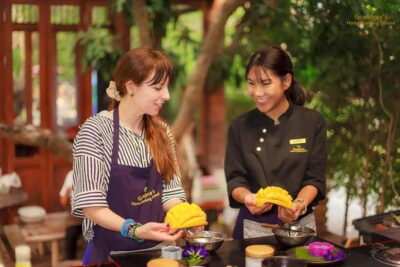
Authentic Cooking Class with Market & Farm Visit
Read our review →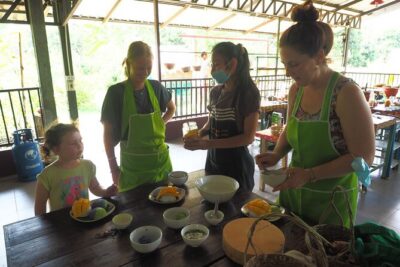
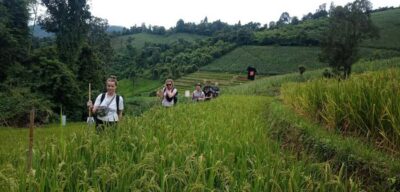
2-Day Jungle Trek with Elephant Farm & Raft Ride
Read our review →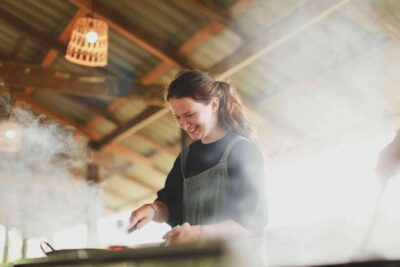
Cooking Class with Organic Farm in Chiang Mai at Mama Noi
Read our review →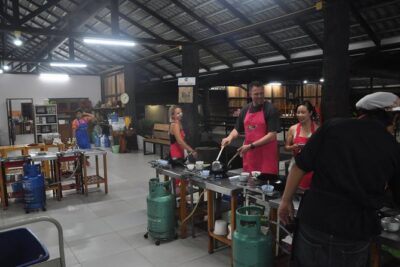
Evening Cooking Class in Organic Farm with Local Market Tour
Read our review →