
Review · NEW ORLEANS
Two Plantation Tour: Oak Alley and Laura or Whitney
Louisiana’s plantation story is not confined to one grand house. This tour lets you pair Oak Alley’s famous oak-lined approach with either Laura’s Creole culture or Whitney’s direct focus on enslavement. I like that the long drive from New Orleans becomes part of the lesson, with stops and sights tied to films, revolt, and local history.
I also like the practical two-site format. You get more context for one price, air-conditioned transport, and pickup from many downtown hotels. The tradeoff is a long day with limited control over timing, and the second plantation may be Laura or Whitney, so confirm your choice before booking.
Key points to know before booking
- Two plantations in one day: Visit Oak Alley plus Laura or Whitney, depending on the selected tour option.
- The drive has a purpose: Pass Lake Pontchartrain, plantation country, film locations, and the site linked to the 1811 German Coast revolt.
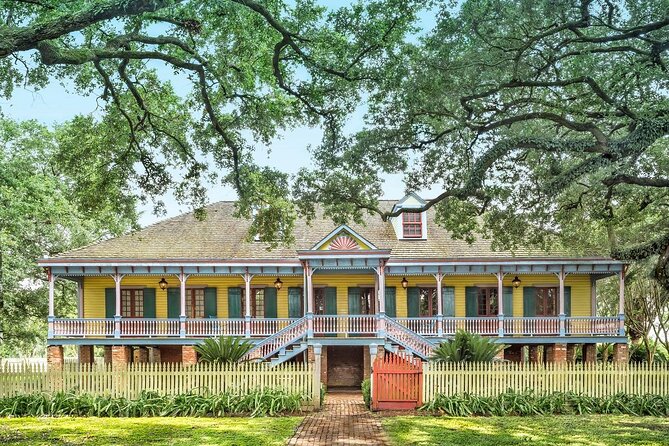
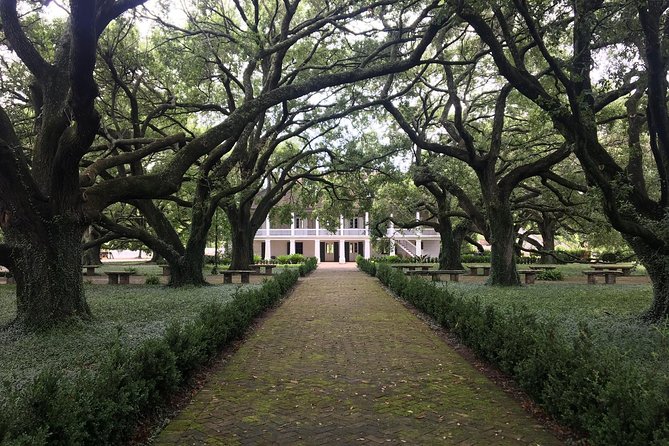
- Oak Alley is the visual highlight: Its grand house, gardens, and enormous live oaks make it especially strong for photographs.
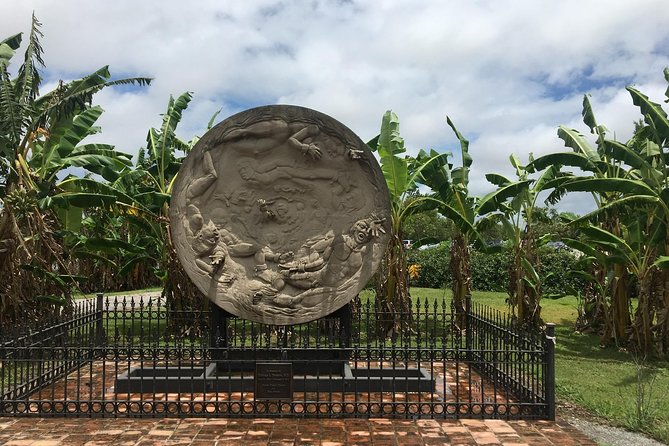
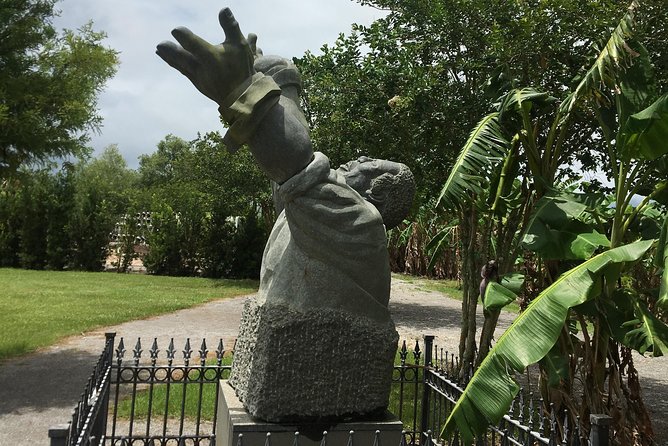
- Whitney provides the clearest focus on slavery: Its exhibits honor the people forced into slavery and explain the plantation system through their experience.
- Pickup is built in: Collection from many downtown New Orleans hotels runs between 8:30 and 9:00 a.m.
- Plan for food: Snacks are not included, and lunch at Oak Alley costs extra.
Why seeing two plantations makes sense

Plantation sites along the Mississippi River are roughly an hour from New Orleans, so visiting only one can leave you with a narrow view of Louisiana’s past. This tour uses the long journey to fit two different approaches into one day.
Oak Alley presents the image many people associate with plantation country: a large house, formal grounds, and a long row of live oaks leading toward the entrance. Laura offers a Creole plantation setting, while Whitney is built around the history of enslaved people and the brutal system that supported plantation wealth.
That contrast matters. A grand house can show architecture and social status, but it cannot explain the full plantation economy by itself. Pairing Oak Alley with Laura gives you more about Creole life and plantation culture. Pairing Oak Alley with Whitney gives you a sharper focus on slavery and the people whose labor made the plantation system possible.
The experience costs $152 per person and lasts about seven hours. I see the price as reasonable if you want two plantation admissions, round-trip transportation, and a guide or driver who adds context along the road. It is less attractive if you prefer a slow, private visit at one property or want to choose every stop yourself.
More Plantation Tours in New Orleans
- Swamp Boat Ride and Oak Alley Plantation Tour from New Orleans
★ 5.0 · 3,303 reviews - Oak Alley Plantation Tour with Transportation from New Orleans
★ 4.5 · 1,747 reviews - Whitney Plantation Tour with Transportation from New Orleans
★ 4.5 · 1,351 reviews
Leaving New Orleans between 8:30 and 9 a.m.
The listed meeting point is the Wyndham Garden Baronne Plaza at 201 Baronne Street. Pickup is also offered from most downtown hotels, with collection scheduled between 8:30 and 9:00 a.m. That time window matters, so I would be ready early rather than waiting until the end of the range.
The vehicle is air-conditioned, a welcome detail in Louisiana’s heat and humidity. The tour is offered in English, and confirmation is sent when you book.
This is a road-based tour, not a short transfer between nearby attractions. You will spend a good part of the day in the vehicle, so bring water and any food you need. Snacks are not included. Lunch may be available at Oak Alley, but you pay separately, and the exact meal timing can depend on the day’s plantation schedule.
One practical point needs clarification before you reserve: the tour is described as a small-group experience limited to 12, while the additional information gives a maximum of 24. I would ask Crescent City Tours & Transportation which limit applies to your date. Either way, it is not presented as a large coach excursion.
The road to plantation country
The drive is more than dead time. Your route includes Lake Pontchartrain, one of the world’s largest saltwater lakes, and the marsh around this huge body of water. Crossing this open stretch gives you a quick sense of how water shapes southern Louisiana.
The route also points out sites connected with the region’s difficult past and its place in popular culture. Evergreen Plantation is associated with filming for Django Unchained and the television miniseries Queen Sugar. Saint Joseph Plantation was used for scenes in 12 Years a Slave.
These film connections may appeal to movie fans, but they should remain a side note rather than the main reason to book. The more meaningful context comes from Destrehan and the 1811 German Coast slave revolt, identified as the largest recorded slave revolt in American history. You may pass the area rather than take a full guided visit there, so think of it as an important reference point along the route, not a separate plantation tour.
As you travel, you also get to see Laura’s Creole Plantation from the road or as part of the selected plantation visit. The exact arrangement depends on which two-site version you book. Read the option carefully so you know if Laura is your main stop or simply part of the route.
The operator asks you to observe silence during transfer or travel time out of respect for fellow passengers. That request may feel strict, especially on a long ride, but it signals that the company wants the vehicle to remain calm. You should not expect a constant stream of commentary during every mile.
Oak Alley and the power of first impressions
Oak Alley is the most immediately photogenic stop. Its live oaks form a dramatic approach to the big house, with huge trunks and branches that reach down toward the ground. The trees are the main event here, not just decoration around the building.
The house tour is guided, while other parts of the property can be explored on your own. That split gives you some structure without turning the entire visit into a tightly managed walk. You can hear the story of the house, then spend time with the grounds and former work areas at your own pace.
I like Oak Alley for architecture, photographs, and a clear sense of plantation scale. If you want the classic Louisiana image, this is the stop most likely to deliver it. The tradeoff is that beauty can soften the harder truth of plantation life if you look only at the mansion and trees.
Make time for the slave quarters and grounds, not just the front approach. Those areas help you connect the grand house to the labor system behind it. The property can feel polished and scenic, so you need to pay attention to the full site rather than treating it as a backdrop for pictures.
Oak Alley has a restaurant, and the day’s schedule may place lunch there before the house tour. Food is not included in the $152 price. If you want to save time, ask your driver about the expected meal break. On one outing, driver Brian Webber adjusted the timing for a very small party that wanted to skip lunch and join an earlier house tour. That kind of flexibility may be possible, but I would not count on it every day.
More Plantation Tours in the USA
- Laura Creole Plantation Guided Tour
★ 5.0 · 1,279 reviews - Airboat and Plantations Tour with Gourmet Lunch from New Orleans
★ 4.5 · 1,246 reviews - New Orleans: Bayou Swamp Tour and Oak Alley Plantation Tour
★ 4.7 · 1,147 reviews - New Orleans: Oak Alley Plantation & Airboat Swamp Combo Tour
★ 4.7 · 906 reviews
Laura’s Creole setting
Laura Plantation offers a different view from Oak Alley. It is known as a Creole plantation, and seeing it alongside Oak Alley helps you compare two cultural and architectural settings rather than looking at two nearly identical properties.
The tour information does not promise a separate detailed breakdown of Laura’s buildings or tour format, so I would keep expectations focused on comparison. You can expect Laura to add a Creole perspective to the day, while Oak Alley supplies the grand avenue and formal plantation image.
If you are deciding between Laura and Whitney, Laura may suit you if architecture, family stories, and Creole plantation culture are your main interests. It still belongs within the larger history of slavery and plantation economics, but the emphasis is not described as directly memorial-based as Whitney’s.
Whitney Plantation and the people forced into slavery
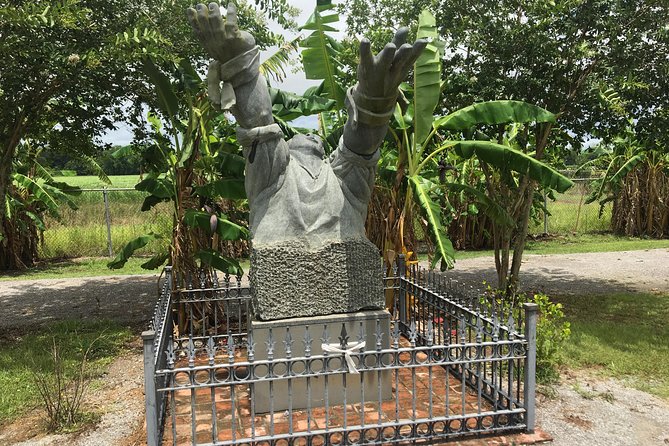
Whitney is the stronger choice if you want the day to center on slavery rather than plantation elegance. The site has been developed as an educational memorial to the people forced into slavery, with displays explaining the violence and workings of the system.
This is an important balance to Oak Alley. The grand house shows what plantation wealth looked like at the top. Whitney asks you to consider who produced that wealth, how slavery shaped daily life, and what was taken from the people held there.
The Whitney portion is described as unguided, with about two hours at the plantation. That gives you time to read the displays and move at your own pace, but you will need to manage your own attention and timing. If you prefer a docent explaining every stop, this may feel less directed than Oak Alley’s big-house tour.
I would choose Whitney if you want the most direct historical treatment of enslavement. It may also be the more emotionally demanding choice. That is not a reason to avoid it, but you should allow space to process what you are seeing rather than rushing through for photographs.
What the guides add on the drive
The driver is an important part of this experience because the road time is substantial. Brian Webber is specifically associated with several outings and is described as friendly, helpful, and willing to explain the sites along the route.
His role appears to be more than simply getting you from New Orleans to the plantations. He can point out historical places passed on the way and add context before you reach the houses. Still, the plantation properties themselves have their own docent-led or site-led interpretation, so do not assume your driver replaces the official guide at each stop.
The tour is offered in English. If you need another language, this experience may not be suitable because no other language option is provided.
Timing, group size, and the pace of the day
Seven hours sounds generous, but it goes quickly once you include hotel pickup, the drive in both directions, two plantation visits, and possible lunch. You should expect a full outing rather than a relaxed half-day trip.
The schedule also requires some flexibility. The operator may arrange lunch before an Oak Alley tour, and the order or timing can change based on the day’s groups. A small party may have more room to adjust, while a fuller vehicle will likely follow the planned schedule closely.
The published details contain two group-size figures: a small group limited to 12 and a maximum of 24. I would treat this as a small-to-mid-size vehicle tour rather than assume a private ride. If avoiding a larger group is important to you, confirm the number before paying.
The request for quiet during transfers is worth noting. If you want lively conversation throughout the drive, this may not be your ideal outing. If you prefer a calm ride, it could be a welcome rule.
Is $152 a fair price?
For $152, you are paying for transportation from New Orleans, an air-conditioned vehicle, the chance to visit two plantation sites, and the convenience of not arranging a rental car or navigating rural roads. Because the plantations are about an hour from the city, the transport alone has real value.
The price makes the most sense when you choose two contrasting properties. Oak Alley and Whitney give you architecture, grounds, and a serious discussion of enslavement in one day. Oak Alley and Laura provide a broader look at plantation culture and Creole identity.
The value drops if you only want to see one big house or if you dislike fixed schedules. Lunch and snacks are extra, and the price does not cover every personal expense during the day. Bring money for food and plan around the scheduled stops.
Who should book this plantation tour?
I would recommend this tour to you if you have one full day in New Orleans and want a practical way to reach plantation country without driving. It is especially useful if you cannot decide among Oak Alley, Laura, and Whitney, since the two-site format gives you a stronger comparison.
Choose the Whitney version if you want slavery and the lives of enslaved people to receive serious attention. Choose Laura if Creole culture and plantation architecture interest you more. Oak Alley is included in the strongest combinations because its grounds and oak-lined approach provide a memorable visual counterpoint.
I would hesitate if you need a private itinerary, dislike several hours in a vehicle, or want every stop to be fully guided. I would also verify the exact second plantation, group size, and lunch plan before booking, since those details affect the day’s feel.
Free cancellation is available until 24 hours before the start time. Within 24 hours, the payment is not refunded. Poor weather or failure to meet the minimum number of participants can lead to a different date, another experience, or a full refund.
FAQ
How long does the plantation tour last?
The experience lasts approximately seven hours.
What time does pickup begin?
Pickup runs between 8:30 and 9:00 a.m. The listed meeting point is the Wyndham Garden Baronne Plaza at 201 Baronne Street.
Is hotel pickup available?
Yes. Pickup is offered from most hotels in the downtown New Orleans area. If your hotel is not listed, you should select the nearest available hotel.
Which plantations does the tour visit?
The tour includes Oak Alley and either Laura or Whitney, depending on the option selected when you book.
Is the tour offered in English?
Yes. English is the stated language for the experience.
Is transportation included?
Yes. Transportation is provided in an air-conditioned vehicle.
Are snacks included?
No. Snacks are not included, and lunch is also not included in the listed price.
How many people can join the tour?
The experience is described as a small group limited to 12, while the additional booking information lists a maximum of 24. Confirm the expected group size for your date before booking.
Can I cancel for a full refund?
Yes, if you cancel at least 24 hours before the experience begins. Cancellations within 24 hours are not refunded.
What happens if bad weather cancels the tour?
If poor weather causes cancellation, you will be offered a different date or a full refund. A cancellation caused by the minimum number of participants not being met also qualifies for another date, another experience, or a full refund.
Just added around New Orleans
- Whitney Plantation Tour with Transportation★ 4.0 · 29 reviews
- Whitney Plantation and Soul of New Orleans City Tour Combo★ 5.0 · 13 reviews
- St. Joseph and Felicity Plantation Combo Tour★ 5.0 · 4 reviews
- St. Joseph Plantation Tour★ 4.5 · 30 reviews
- Small Airboat and Oak Alley Plantation Tour from New Orleans★ 4.5 · 23 reviews
- N’awlins Luxury: Laura, Oak Alley or Whitney Plantation Tour w/Transportation★ 4.5 · 46 reviews
- Private Airboat Ride and Plantations Tour with Gourmet Lunch from New Orleans★ 5.0 · 50 reviews
- New Orleans Plantation Tour with Transportation★ 5.0 · 9 reviews
New Orleans Farm Tours, compared.

Swamp Boat Ride and Oak Alley Plantation Tour from New Orleans
Read our review →
Oak Alley Plantation Tour with Transportation from New Orleans
Read our review →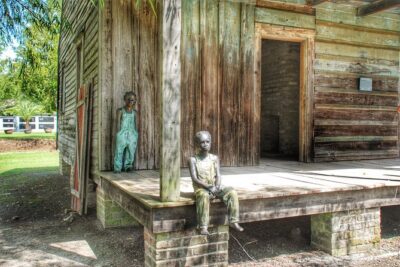
Whitney Plantation Tour with Transportation from New Orleans
Read our review →
Airboat and Plantations Tour with Gourmet Lunch from New Orleans
Read our review →
Bayou Swamp Tour and Oak Alley Plantation Tour
Read our review →
Oak Alley Plantation and Large Airboat Swamp Tour from New Orleans
Read our review →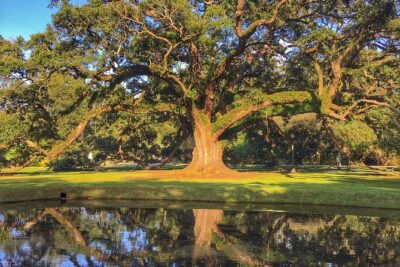
Browse the lists this tour appears in