Review · RICE TERRACE TOURS
Living Land Rice Farming Experience
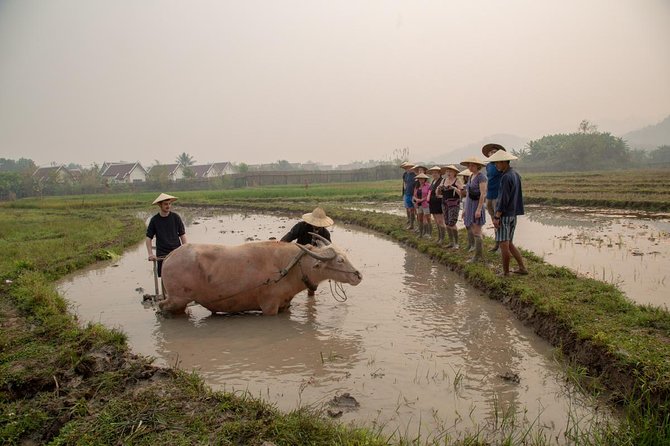
Rice farming is the star here, and you do not just watch it from a path. At Living Land Farm, you may remove your shoes, step into the mud, guide a water buffalo, plant rice, harvest it, and learn how the grain reaches the cooking pot. The farm sits beside rice fields with mountain views, a short drive from Luang Prabang.
I especially like two things: the work explains a daily part of Lao life that is easy to overlook, and the money supports more than 60 students and free English classes for the village. Guides including Johnny, Kham, Sai, and Geo have been praised for turning the many steps into a clear, friendly lesson. The main drawback is simple: this is real farm work, so expect mud, heat, and some physical effort.
- Fourteen stages of rice production: Follow rice from planting and field work to harvesting, processing, cooking, and eating.
- A real working farm: Use traditional tools, help with a water buffalo, and try hands-on tasks rather than only taking photographs.
- More than rice: Bamboo weaving, sugar cane pressing, and blacksmithing add useful local context.
- A community purpose: Proceeds help support student education and free village English classes.
- Lunch can matter: A meal of Luang Prabang dishes and fruit is available with the lunch option, while other bookings may include only snacks.
- Plan for a muddy morning: Shorts and clothes that can get dirty are sensible, especially if you choose the most hands-on participation.
Why Rice Farming Makes a Better Cultural Lesson
A bowl of rice looks simple. Getting it to the table is not. This experience lays out the work in a way that makes the effort visible, from preparing the soil to handling the harvested grain.
You will not be expected to master every task. The point is to try each stage at a basic level and understand how the parts connect. That makes the morning useful for curious adults, families, and anyone who wants more than a standard sightseeing loop around Luang Prabang.
The setting helps. Living Land Farm is just outside town, with rice fields and mountains around it. You get a rural view without committing to a full day in the countryside.
The program is advertised as roughly five hours, with the farm portion lasting about three hours and 20 minutes. The morning begins around 8:00 or 8:30 a.m., depending on the booking details, so confirm your pickup time before you leave your hotel.
Starting in the Rice Fields
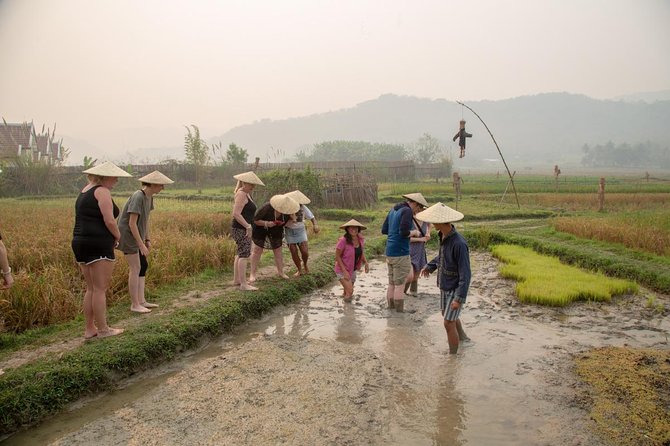
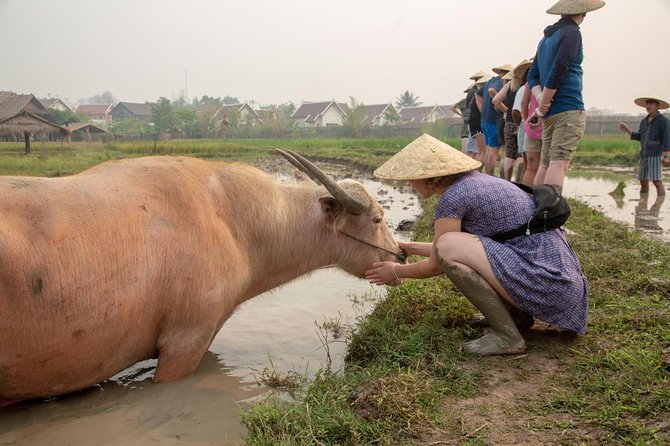
The central lesson takes place in the paddy. You may begin by seeing how a field is prepared, including work with a water buffalo. One account names the animal Suzanne, while another refers to Bentley, so the animal available may vary. Either way, the buffalo is part of the traditional farming demonstration, not a decorative photo prop.
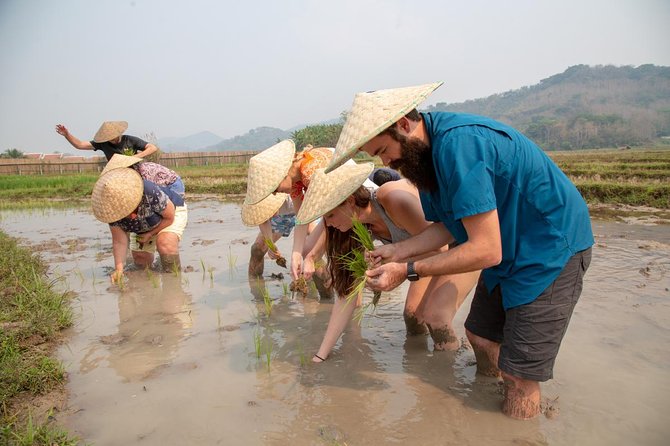
You can expect to work with your feet and hands. Plowing, digging a planting trench, planting seeds, and transplanting rice are among the activities described. The mud is not a minor detail. If you want the full hands-on version, you may end up knee-deep in it.
That physical contact is what gives the activity its value. You begin to understand why rice farming takes time and labor, rather than seeing it as a single act of planting and harvesting. It also gives the guide plenty of room to explain family farming practices and the role of rice in local life.
The pace appears suited to a mixed group, with most people able to take part. A maximum of 20 people keeps the group from becoming enormous, though the experience will feel more personal with fewer participants.
More Rice Terrace Tours in the world:
- Ubud: Monkey Forest, Jungle Swing, Rice Terrace, and Water Temple
★ 5.0 · 7,160 reviews - Ubud: Waterfalls, Water Temple & Rice Terraces Private Tour
★ 5.0 · 5,484 reviews - Ubud: Waterfall, Rice Terraces & Monkey Forest Private Tour
★ 4.9 · 4,894 reviews
From Seed to Harvest and Cooking
The program presents the rice cycle as a series of steps. You may see or try planting, growing, harvesting, and preparing the grain. The exact farm activity can depend on the season, since rice is planted throughout the year.
The final stages are especially useful. Rice must be harvested, processed, and prepared before it becomes food. At the end of the farm session, you taste rice-based snacks, which gives you a quick reward before lunch or departure.
This is also where the experience becomes more than a photo opportunity. Working through the process helps you understand why rice remains central to meals and rural economies in Laos. It is a practical lesson, not a museum display.
Guides such as Johnny, Kham, Sai, and Geo are singled out for explaining the work clearly and adding family stories. Names may depend on the date and group, but you should expect a guide to lead the tasks and explain what you are doing.
Bamboo, Sugar Cane, and Blacksmithing
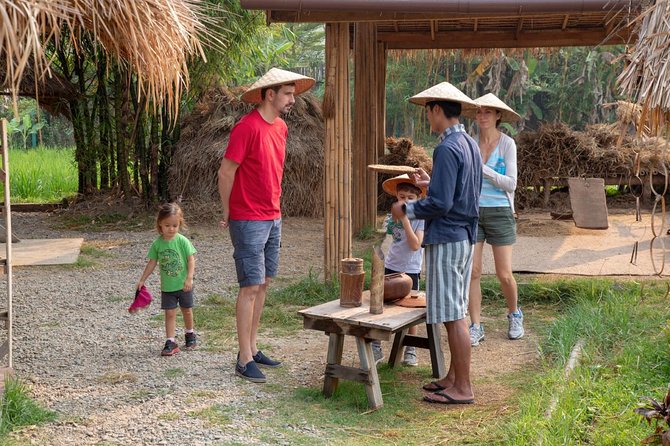
Rice gets most of the attention, but the other demonstrations widen the picture. Bamboo weaving shows how a common local material becomes useful household goods. It is a quieter activity than field work, and it gives you a chance to sit down and focus on hand skills.
Sugar cane pressing adds another tactile stop. You can see how cane is handled and pressed, linking farm crops with drinks and food. The blacksmithing element offers a look at another traditional trade, with heat, metal, and hand tools replacing the softer work of bamboo and rice.
These activities are valuable because village life is not built around one crop alone. They also break up the physical work in the paddy. If you are visiting with children, the change of tasks may help keep the morning moving.
One account found an interaction involving an animal named Bentley unnecessary. That is a useful reminder that not every part of a group program will appeal equally to everyone. The main rice lesson is the strongest reason to book, while the extra demonstrations are supporting pieces.
Lunch at the Farm, If You Choose the Right Option
Lunch is described as a selection of typical Luang Prabang dishes and fruit. The meal is an important part of the experience because it connects the morning’s work with the food on your plate.
There is a catch: lunch is not included in every booking choice. Some descriptions present lunch as part of the program, while the inclusion details specify that it comes only with the option that includes lunch. Check the exact choice before paying, especially if the price difference matters.
Several accounts describe the meal as excellent, while others left after the farm session and had the provided snacks instead. You can therefore treat lunch as an optional upgrade rather than assume it is automatic.
I would choose the lunch option if your schedule allows. After working in the fields, a local meal at the farm makes more sense than rushing back to town. It also supports the farm’s community work along with the broader proceeds from the rice experience.
A few more farm days around the world worth a look
- Half-Day Thai Cooking Class at Organic Farm in Chiang Mai
★ 5.0 · 19,087 reviews - Florence Pizza or Pasta Class with Gelato Making at a Tuscan Farm
★ 5.0 · 6,801 reviews - From Porto: 2 Wine Regions, Farm-to-Table Lunch & Boat
★ 4.9 · 5,724 reviews - Cooking Class and Lunch at a Tuscan Farmhouse with Local Market Tour from Florence
★ 5.0 · 4,831 reviews
The Community Benefit Behind the Farm
The farm directs proceeds toward studies for more than 60 students. It also provides free English classes for the whole village. That gives the entry fee a purpose beyond admission to a half-day activity.
This does not mean you should ignore the price. The listed rate is $64.17 per person, and one account says a booking intermediary charged a family more than the direct farm price. The exact direct price is not provided here, so compare the total carefully before booking, including lunch, transport, and any added excursion.
For you, the value comes from three parts: the amount of time spent in actual activities, the food and demonstrations included in your chosen option, and the social benefit. If you only want a quick look at a rice field, the cost may feel high. If you want a guided, hands-on cultural activity with a clear local purpose, it is easier to justify.
Group discounts are offered, which may help families or friends. The group limit is 20 people, and mobile tickets are available.
Adding Waterfalls or Caves
The rice program can be combined with extra outings such as waterfalls or caves. That may suit you if you want to fill a whole day, but it also creates a logistics issue.
Be very clear about the order of the day. One poor experience involved a group being taken back to town after lunch, then made to wait before driving back past the farm toward the waterfall. That added about two hours of wasted time.
If you book an extension, ask the operator to confirm that the vehicle will go directly from the farm to the waterfall or cave. Do not assume the transfer plan is obvious. The farm experience itself and the added excursion may be handled differently, especially when transport is arranged through Manifa Travel.
For the best morning, I would treat the farm as the main event. Add a waterfall or cave only after confirming the route, waiting time, and return arrangements in writing.
What to Wear and Bring
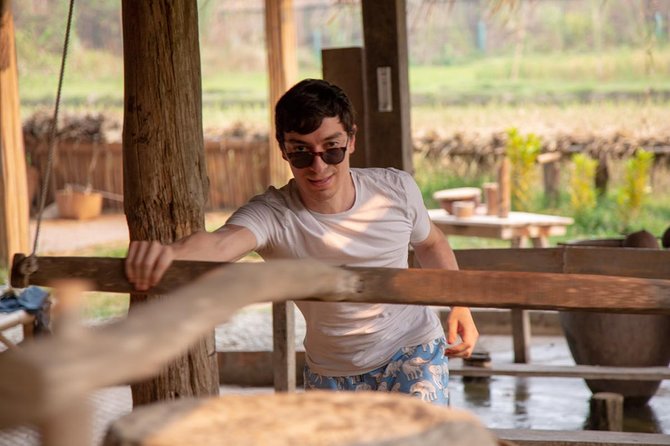
Wear shorts or other clothing that can handle mud. You may work barefoot in the paddy, and one account specifically warns that you can get very dirty. Do not wear clothes you need for a nice dinner later that day.
The provided information does not list a packing checklist, so keep your preparation simple. Bring whatever you normally need for a five-hour outdoor activity, but do not count on every booking including lunch. Most people can participate, though the physical nature of the work is worth considering before you reserve.
Good weather is required. If poor weather cancels the activity, you are offered another date or a full refund. The same applies if the minimum number of participants is not reached.
The cancellation rule is otherwise strict: the experience is non-refundable and cannot be changed for any reason after booking. Read the exact terms before paying, particularly if your Luang Prabang plans are still moving around.
Who Will Get the Most From This Experience
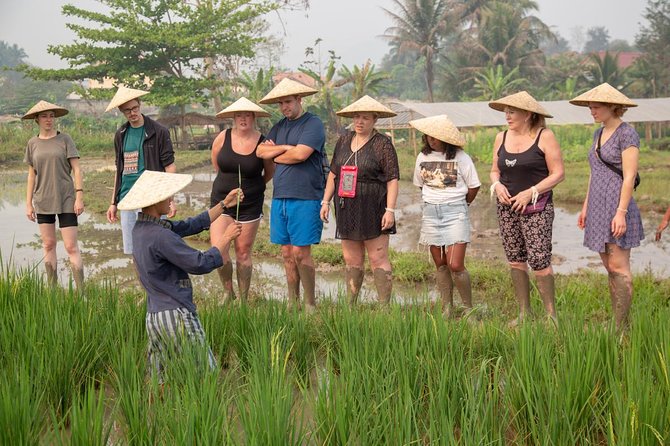
I would recommend Living Land Farm to you if you like learning by doing. It suits people who want local context, families looking for an activity with a clear purpose, and visitors who are happy to trade clean shoes for a better understanding of rural work.
It is also a good choice if you have already seen Luang Prabang’s temples and want a change of setting. The farm is close enough to town for a half-day visit, yet different enough to show another side of the area.
You may want to skip it if you dislike mud, outdoor labor, or group activities. It is not a polished cooking class or a passive countryside drive. The best parts require you to take part.
The experience may also disappoint if you expect every guide and transfer detail to be perfectly coordinated. The farm program itself receives the strongest praise, while the added transport and excursion arrangements need more attention from you.
Is Living Land Farm Worth $64.17?
For the right visitor, yes, with conditions. The price is reasonable when it covers the full hands-on program, community contribution, and lunch, but less attractive if lunch is extra and you are mainly watching demonstrations.
The strongest value is the chance to try the farming process yourself. Planting rice, working behind a water buffalo, handling the harvest, and learning how rice is prepared will stay with you longer than another quick temple stop.
Book it if you want an active cultural lesson and are willing to get muddy. Confirm the lunch option, pickup time, direct or intermediary pricing, and any waterfall transfer before you pay. Those few checks can turn a worthwhile morning into a much smoother one.
FAQ
Where is the Living Land Rice Farming Experience?
It takes place at Living Land Farm just outside Luang Prabang, overlooking rice fields and mountains.
How long does the experience last?
The full activity is approximately five hours. The farm program itself is listed as about three hours and 20 minutes.
What time does the experience start?
The listed meeting start time is 8:00 a.m. The farm program is also described as beginning at 8:30 a.m., so confirm the exact pickup time for your booking.
Is pickup available?
Yes. Pickup is offered, but the provided information does not specify every pickup location or route.
Is lunch included?
Lunch is included only when you select the option that includes lunch. That meal consists of typical Luang Prabang dishes and fruit. Some bookings provide rice-based snacks instead.
Will I get muddy?
You should expect to get muddy if you take part fully in the rice-field work. The activity may involve working barefoot and being knee-deep in mud.
What farming activities can I try?
Activities may include preparing a field, digging a planting trench, working with a water buffalo, planting and transplanting rice, harvesting, processing, and cooking rice.
What other activities are offered at the farm?
The program includes or demonstrates bamboo weaving, sugar cane pressing, and blacksmithing, along with rice farming.
How many people can join the activity?
The maximum group size is 20 people.
Can I cancel for a refund?
The experience is normally non-refundable and cannot be changed. If poor weather or insufficient participation causes the operator to cancel, you are offered another date or a full refund.
Just added around the world
- Ubud Rice terrace,Zip-line and waterfall★ 5.0 · 4 reviews
- Full Day Tour to Water Temples UNESCO Rice Terraces in Bali★ 5.0 · 4 reviews
- Explore Ubud Art Market, Monkey Forest and Rice Terraces★ 5.0 · 16 reviews
- Exploring Munduk Village (Waterfalls, rice terrace, Traditional local house)★ 4.5 · 2 reviews
- Ubud Monkey Forest Rice Terrace Temple Waterfall Private Tour★ 5.0 · 7 reviews
- Jatiluwih Spiritual Journey of Melukat with Rice Terrace View★ 5.0 · 9 reviews
- Private Tour to Sumampan Waterfall, Monkey forest, Rice terraces and Swing★ 5.0 · 30 reviews
- Discover Hidden Waterfall, Unesco Rice Terraces and Mountain Temple★ 5.0 · 17 reviews
Rice Terrace Tours, compared.
Monkey Forest, Jungle Swing, Rice Terrace, and Water Temple
Read our review →
Waterfalls, Water Temple & Rice Terraces Private Tour
Read our review →
Waterfall, Rice Terraces & Monkey Forest Private Tour
Read our review →
Full-Day Rice Terrace, Monkey Forest & Waterfall
Read our review →
Full-Day Tour to Water Temples and UNESCO Rice Terraces in Bali
Read our review →
Monkey Forest, Ceking Rice Terraces and More– Full Day
Read our review →