
Review · BIG ISLAND
Private 2-Hour Beekeeping Classroom Tour in Honokaa
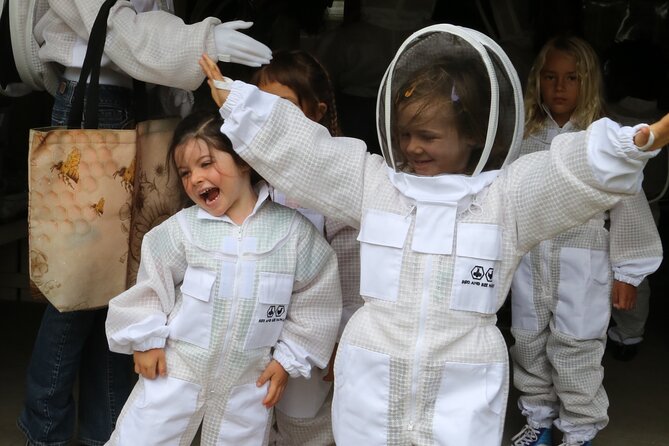
The best part of this Honokaa experience is that you do not just hear about beekeeping. You put on real protective gear, stand beside active hives, and handle frames covered with living bees. Susan Collins begins with a classroom lesson, then adjusts the talk to your level before taking you into the apiary.
I like the small private format, which gives you room to ask basic questions without feeling rushed. I also like the direct connection between the hives and the tasting: you sample honey from the colonies you have just studied. The main consideration is the drive. From the Kona Coast, it can take a little over an hour, with narrow roads and single-lane bridges along Old Mamalahoa Highway.
Key points to know before booking
- You handle live frames: After a classroom introduction, you learn to recognize different parts of a working colony.
- Susan Collins leads the tour: Her teaching covers bee biology, hive care, queen identification, drones, workers, and long-term colony checks.
- The tasting follows the apiary visit: You sample honey connected to the hives you visited, along with examples of different honey types.
- Your group stays together: This is a private activity, so only your party takes part.
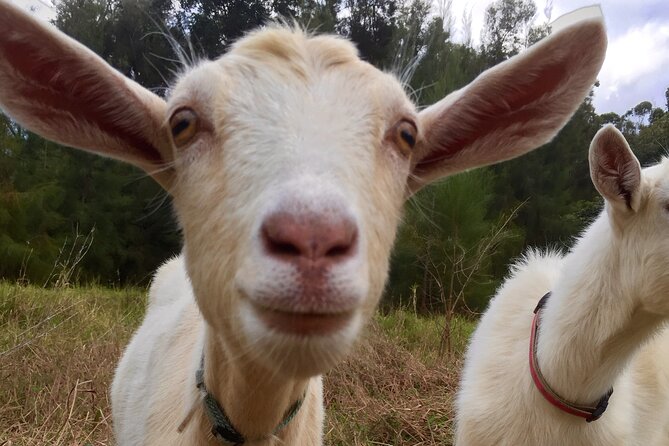
- The farm has rescued animals: You might also meet a turkey, goat, tortoise, or rescue puppy.
- Plan for the North Hawaii drive: The meeting point is in Honokaa, and you must arrange your own transportation.
A classroom lesson that makes the hive visit easier to understand
Bird and Bee Hawaii begins with a classroom tour into the life of a honey bee. That order matters. You first learn what you are looking at, then you go outside and see those ideas in action.
Susan Collins covers the basics of bee biology and colony management. You learn how workers, drones, and the queen fit into the colony, and how the hive functions as a tightly organized community. The lesson is designed for people starting at different points, so you can ask simple questions or build on what you already know.
I like this approach because a hive can look like a busy mass of insects if you have no guide. After the classroom session, the movement has meaning. You can begin to look for the queen, understand the work of the smaller bees, and recognize the stages of a colony’s life cycle.
The setting also adds a pleasant local touch. The farm is in a quiet, leafy part of Honokaa, away from the busy resort areas of the Kona and Kohala coasts. Coffee or tea with honey may be offered before or during the introduction, which gives the visit a relaxed start.
Do not expect a polished visitor center or a large attraction with exhibits. This is a working bee farm. That makes the experience more personal, but it also means the focus stays on instruction, animal care, and the hives rather than entertainment.
More Beekeeping and Honey Farms in Big Island:
- Experience Our Honey Farm And Beekeeping Tour
★ 5.0 · 167 reviews - Bee Farm Ecotour and Honey Tasting in Waialua, North Shore Oahu
★ 5.0 · 72 reviews - Olympia Shore Ex: Olympic site, Honey Farm & Olive Oil Tasting
★ 4.5 · 57 reviews
Putting on a beesuit and entering the apiary
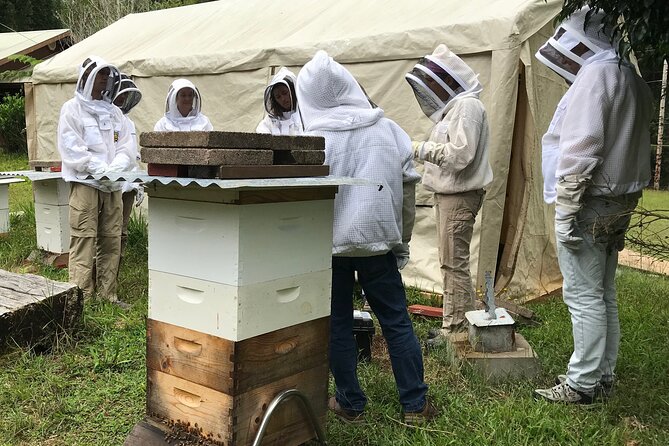
Once you understand the basics, you are fitted with bee equipment and taken to the hives. The protective clothing is included, so you do not need to bring your own suit.
The field portion is hands-on. You handle frames from active colonies and learn how to study them safely. Susan helps you identify the queen, workers, and drones, and points out the different parts of the colony. You may see bees at several stages of their life cycle, from early development through mature working bees.
This is the moment that sets the tour apart from a standard honey tasting. You are not simply told that bees are important. You see the labor inside a colony and watch how many jobs keep the hive running. Worker bees carry out different tasks as part of the colony’s daily operation, while the queen and drones have separate roles.
The handling is supervised, which is important for first-time beekeepers. You can study the frames without having to guess how to hold them or where to look. Susan also makes sure the protective gear is in place and helps you stay comfortable around the hives.
Still, this is a live-animal experience, not a museum display. Bees can sting, and the activity is not recommended for anyone with a confirmed allergy to stings. If you are uneasy around insects, the classroom section may be more comfortable than the fieldwork, but the tour is built around visiting the hives.
Service animals are allowed, and most people can take part. Because the activity involves protective clothing, live colonies, and walking around a farm apiary, you should consider your own comfort and mobility before booking.
What you can learn from a working colony
The strongest educational value comes from seeing how a hive operates as a whole. Rather than treating honey as a simple farm product, the tour shows you the chain of work behind it.
You may learn to spot the queen and see how she differs from the other bees. You can examine drones, which have a separate role in the colony, and observe workers carrying out the routine tasks that keep the hive functioning. You also get a look at comb, developing bees, honey, and the frames that hold these parts of the colony.
Susan’s teaching can go beyond a first introduction. The farm also offers further classes and training for people who want to continue learning beekeeping. That makes this two-hour activity useful as a starting point for a larger interest, but it does not pretend to replace a full beekeeping course.
I would choose this tour if you want practical understanding rather than a quick photo stop. You leave with a clearer idea of what beekeepers inspect, why the queen matters, and what healthy colony activity can look like.
The private setup helps here. With only your group, you can spend more time on the parts that interest you. A family may want a simple introduction to bee life, while someone considering a hive of their own can ask about equipment and colony checks.
Fresh honey from the hives you visit
After the apiary visit, you return to the classroom for a honey tasting. The timing makes the tasting more meaningful because you have just seen the colonies and the frames that produce the honey.
You can taste honey from the hives you visited and compare different types. Susan also explains that honey varies and discusses the difference between local honey and imported blended or clonal products. That conversation adds useful context to what is on the table.
I like this part because the tasting is not treated as a separate shopping stop. It connects the flavor in the jar to the bees, the farm, and the work of managing a colony. Fresh honey can be a simple pleasure, but here it also becomes a lesson in how honey reaches you.
Do not expect a large food spread or a full meal. The experience is about tasting honey after the hive visit. If you need food beyond that, plan accordingly.
More Two-Hour Trips in Big Island:
- Scenic Scottsdale E-Bike Tour – 2 Hours
★ 5.0 · 47 reviews - Bali ATV Ride On the Beach, Rice Field and Village Tour 2 Hour
★ 5.0 · 15 reviews - 2-Hour Alpaca Farm Experience in Kenilworth
★ 4.5 · 14 reviews - 2-hour horse riding tour at Palomino Ranch Near Tbilisi
★ 5.0 · 10 reviews
The Honokaa setting and the drive from Kona
The meeting point is Bird and Bee Hawaii at 46-3991 Old Mamalahoa Highway in Honokaa. The tour starts at 9:30 a.m. and returns to the same meeting point.
Honokaa is on the North Hawaii side of the island, so this is not a convenient stop if your plans are limited to Waikiki-style resort time or the immediate Kona waterfront. From the Kona Coast, the drive can take a little over an hour. The route is part of the appeal, with green countryside and old-style roads, but you should allow enough time and drive carefully.
Old Mamalahoa Highway includes single-lane bridges. You may need to slow down, yield, and take the road patiently. Private transportation is not included, so a rental car or another way to reach the meeting point is necessary.
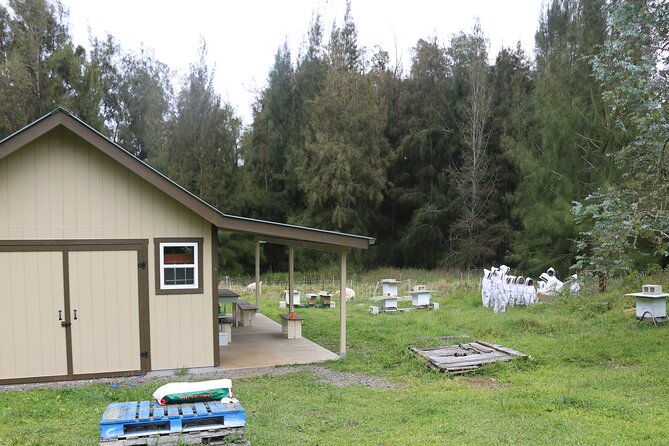
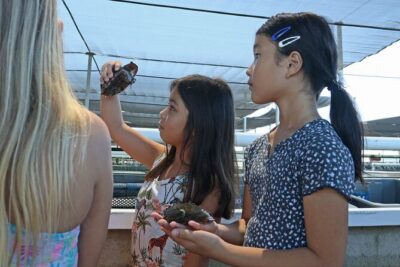
The farm itself has a quiet, rural feel. The bee buildings and hives sit among foliage, and rescued farm animals may be nearby. A turkey, goat, tortoise, or rescue puppy may become part of your visit, though animal encounters are not the main activity and are not guaranteed.
This location suits you if you enjoy adding a small agricultural experience to a Big Island day. It is less suitable if you want an activity close to the major hotel areas or prefer not to drive rural roads.
Who will get the most from two hours here
This is a good choice for curious first-timers, families with an interest in nature, and anyone who has wondered how honey is made. It also suits people thinking about keeping bees and wanting a supervised introduction before committing to more training.
The private format is helpful for mixed groups. One person may know nothing about bees, while another may already understand basic hive terms. Susan can shape the classroom talk around the group instead of delivering a fixed lecture to a large crowd.
The tour is also a good fit for lifelong learners who want to understand a local working farm. You see the practical side of beekeeping, including inspection and colony care, rather than only hearing broad facts about pollination.
I would be more cautious about booking if you have a confirmed allergy to stings, strong anxiety around insects, or no way to reach Honokaa. The activity is designed for participation, and the hive visit is not an optional decorative extra.
At $70 per person, the value depends on how much you want the hands-on portion. For two hours of private instruction, protective equipment, live hive handling, and honey tasting, the price is fair for someone who wants a focused lesson. It is less compelling if you only want to sample honey or take a quick farm photograph.
The fact that the activity is often booked about 50 days ahead is useful to know. If your Big Island dates are fixed, reserve early rather than assuming you can add it at the last minute.
Timing, weather, and cancellation details
The experience lasts about two hours and begins at 9:30 a.m. Since it requires suitable weather, poor conditions can lead to a different date or a full refund.
You can cancel for a full refund if you do so at least 24 hours before the local start time. Cancellations or changes made within 24 hours are not refunded or accepted. The activity also requires a minimum number of people, and if that minimum is not met, you can receive a different date or experience, or a full refund.
The mobile ticket and English-language instruction keep the booking simple. You should still check your confirmation for the meeting details and arrive at the Honokaa address on time.
Should you book Bird and Bee Hawaii?
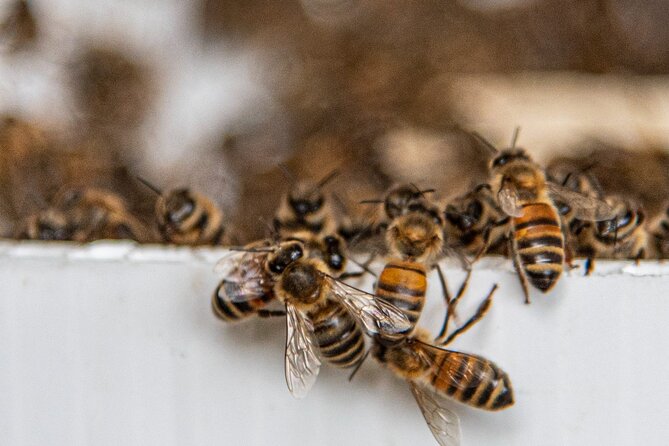
Book this tour if you want to do more than taste honey. The real value is the combination of classroom teaching, protective gear, supervised frame handling, and a tasting tied to the hives you have just seen.
I especially recommend it for anyone who likes working farms, animal care, and practical lessons. Susan Collins brings years of hands-on beekeeping into a small setting, and the private format gives you the time to ask questions and learn at your own pace.
Skip it if you have a confirmed sting allergy, dislike being close to insects, or are unwilling to make the drive to Honokaa. For everyone else, this is a focused and memorable way to spend a Big Island morning, with a useful lesson and a sweet finish.
FAQ
Where does the beekeeping tour begin?
It begins at Bird and Bee Hawaii, located at 46-3991 Old Mamalahoa Highway, Honokaa, Hawaii 96727.
What time does the tour start?
The tour starts at 9:30 a.m.
How long does the activity last?
The experience lasts approximately two hours.
Is transportation included?
No. Private transportation is not included, so you must arrange your own way to the meeting point.
Is the tour private?
Yes. Only your group takes part in this private activity.
Is protective bee equipment provided?
Yes. Bee equipment is included, and you wear a beesuit for the hive visit.
Will I handle bees and hive frames?
Yes. The activity includes handling frames of bees and learning to identify different parts of a honey bee colony.
Is honey tasting part of the experience?
Yes. After visiting the hives, you can taste honey from the colonies you visited.
Can I cancel for a refund?
You can cancel at least 24 hours before the local start time for a full refund. Cancellations and changes within 24 hours are not refunded or accepted. If poor weather or an insufficient minimum causes the operator to cancel, you are offered another date or experience, or a full refund.
Just added around Big Island
- Sunset Kona Salt Farm Tour★ 5.0 · 55 reviews
- Farm to Table Cooking Class at Kulaniapia Falls★ 4.5 · 36 reviews
- Edible Hibiscus Guided Farm Tour (Big Island)★ 5.0 · 31 reviews
- Hamakua Coast Farm Small-Group Walking and Tasting Tour★ 5.0 · 4 reviews
- Hala Tree Coffee Farm Tour★ 5.0 · 44 reviews
- Big Island Family Off Road Farm Adventure at Ohana Ranch★ 5.0 · 43 reviews
- Big Island Farms Tour in Hawaii★ 5.0 · 18 reviews
- Bottle Feed & Cuddle Baby Goats at Ohana Ranch (Big Island)★ 5.0 · 29 reviews
Big Island Farm Tours, compared.
Award Winning Farm Tour: Coffee, Chocolate and Unique Gifts
Read our review →
Small-Group Big Island Tour: Hawaii Volcanoes National Park and Kona Coffee Farm
Read our review →
Waipi’o on Horseback: Mountain Ocean Views Working Cattle Ranch
Read our review →
Browse the lists this tour appears in