
Review · CHIANG MAI
Pa Pong Piang Rice Terraces & Doi Inthanon National Park
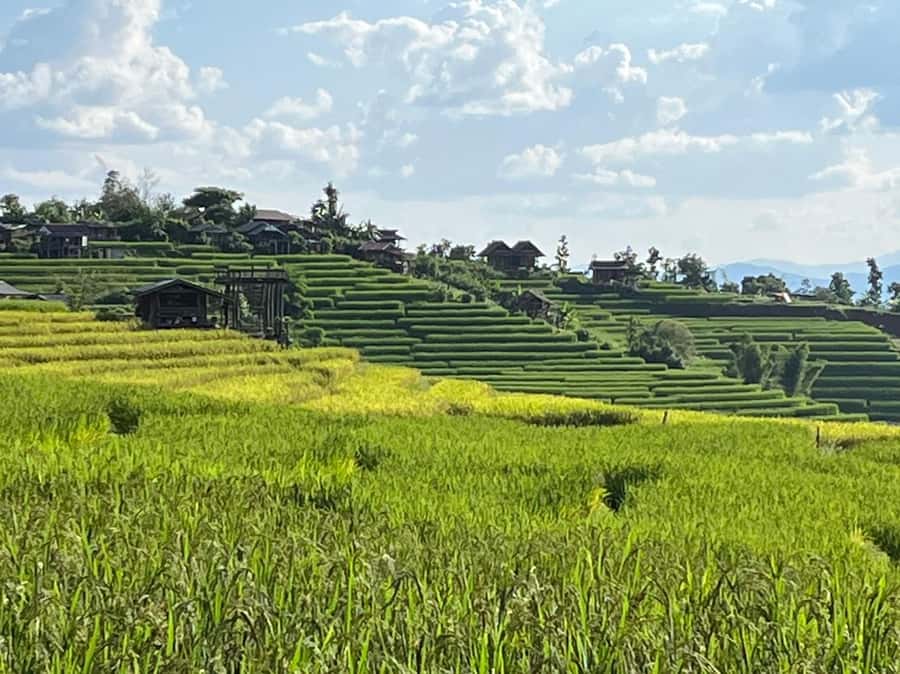
Pa Pong Piang is the star of this long day from Chiang Mai. Its stepped rice fields run through a small mountain hamlet, and from July to mid-October the plants are at their greenest and fullest. I like that you also reach Thailand’s highest point, where the air is cool, damp, and noticeably different from Chiang Mai.
I also like the mix of scenery and local life. You visit a White Karen community at Ban Mae Klang Luang, see rice fields, and drink locally grown coffee rather than spending the whole day at viewpoints. Guides such as Bird and Austin have been praised for clear English, careful driving, local knowledge, and adapting the day to your interests.
The main drawback is the price, $147 per person, especially outside rice season. This is a nine-and-a-half-hour private excursion with transport, lunch, entrance fees, water, and a guide included, but the terraces can be green, golden, or recently harvested depending on your date.
Key points at a glance
- Pa Pong Piang is seasonal: The fields are fullest and greenest from July to mid-October, turn golden afterward, and are generally harvested in November.
- The day is private: You travel by air-conditioned car with an English-speaking guide and hotel pickup in central Chiang Mai.
- Doi Inthanon brings cooler weather: At 2,565 meters, Thailand’s highest point is humid and cold all year.
- Ban Mae Klang Luang adds local flavor: You see White Karen terrace fields and have a cup of freshly ground local coffee.
- The route has several strong stops: Wachirathan Waterfall, Ang Ka trail, and the King and Queen’s pagodas break up the long drive.
- Plan for a full day: The tour lasts 570 minutes, or about nine and a half hours, and is not suitable for wheelchair users.
Why Pa Pong Piang deserves the long ride
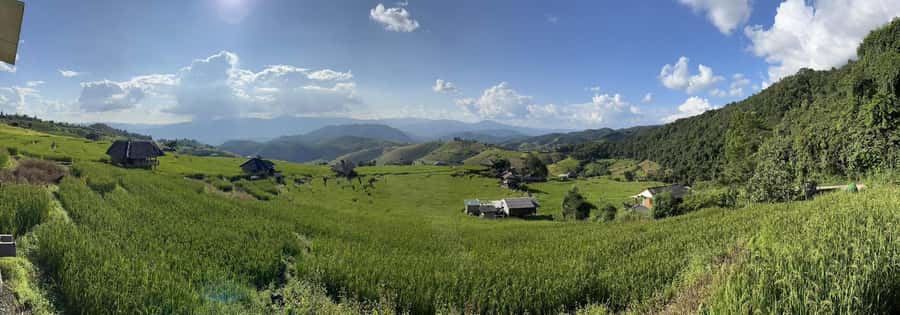
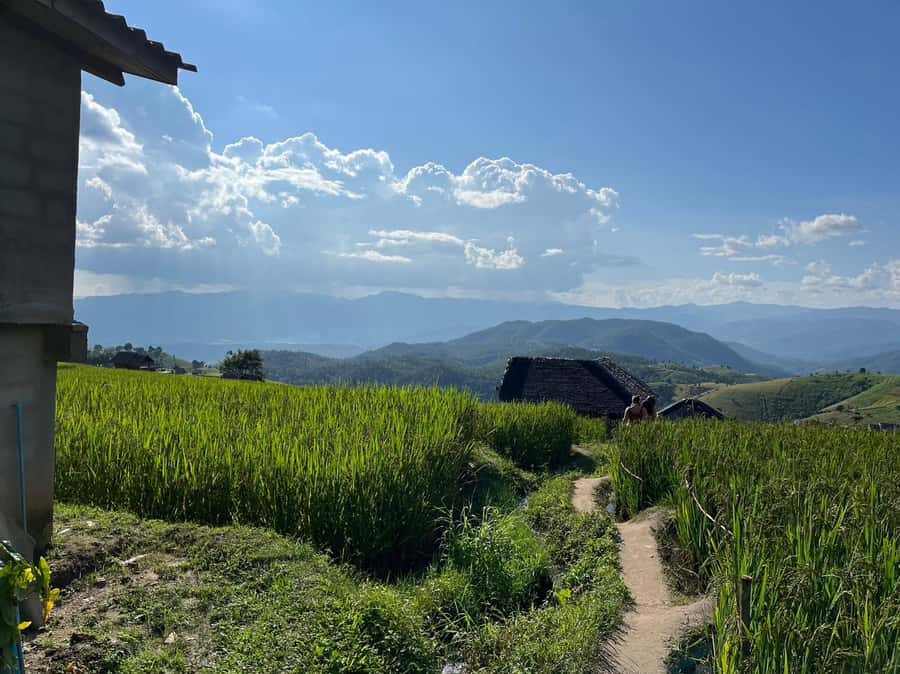
Pa Pong Piang is not just a photo stop beside a road. It is a small mountain hamlet within Doi Inthanon National Park, with rice terraces shaped into the steep hillsides. The appeal comes from the layers: water or rice plants in the lower plots, forested slopes above, and simple rural homes tucked into the folds of the mountains.
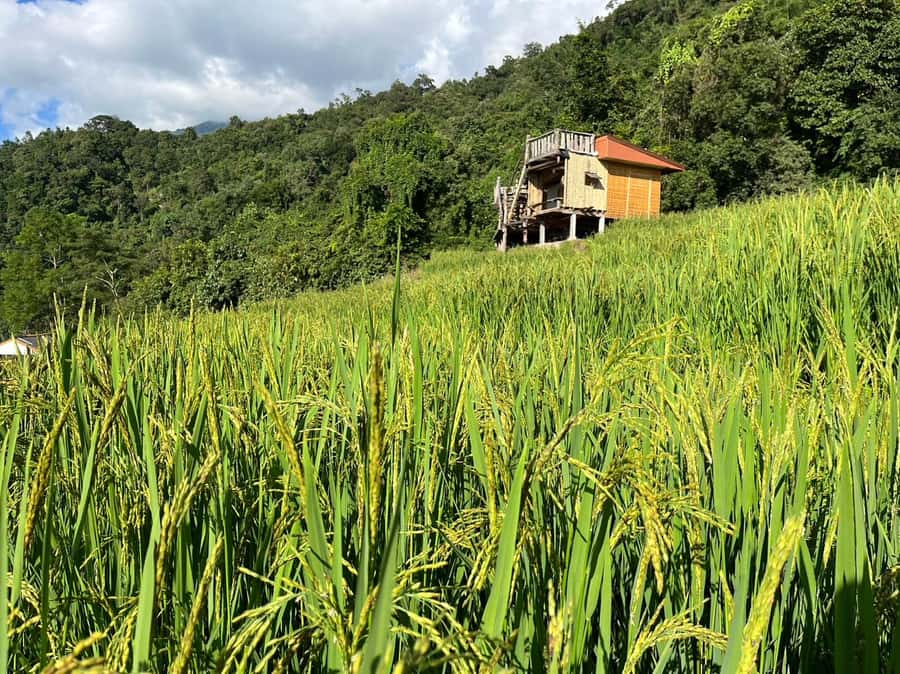
The timing matters more here than on many sightseeing trips. From early or mid-July through mid-October, the rice plants reach their full length and brightest green. After that, the fields shift toward a yellow-golden color, with harvesting generally taking place in November.
If you want the classic green terrace photographs, aim for July through mid-October. A November visit can still be attractive, but you should expect a different scene, with golden fields or plots already cut. In January, the rice may not provide the visual payoff that justifies the price, a point worth considering when comparing dates.
The visit involves sightseeing around the terraces, and the supplied details indicate that the fields are an important walking and viewing stop. Bring comfortable shoes. Paths through working rice country can be uneven, and the day includes other walks as well.
More Rice Terrace Tours in Chiang Mai
- Chiang Mai : Pa Bong Piang Rice Terraces & Doi Inthanon
★ 4.7 · 108 reviews - Chiangmai : Doi Inthanon unseen spot , Rice terrace & temple
★ 4.8 · 4 reviews - Private Tour to Chiang Mai Rice Terraces and National Park
★ 5.0 · 4 reviews
The long private drive from Chiang Mai
Pickup is offered from your hotel in Chiang Mai downtown and within five kilometers of downtown. You wait in the hotel lobby, then travel in a private, air-conditioned car with your guide. If your accommodation is farther than five kilometers from central Chiang Mai, an extra transportation charge applies.
A private vehicle makes this route easier than trying to connect separate public transport services. You can keep your group together, ask questions along the way, and adjust the pace within the tour’s flexible hours. The trade-off is that this is a long day in the car, so people who dislike road time may find the schedule tiring.
The private format also helps explain the cost. At $147 per person, this is not a bargain day trip for a large group, but the price includes transport, an English-speaking guide, park entrance, lunch, drinking water, and accident insurance. For two people, the per-person price feels less forgiving. For a small private group that values comfort and a guide’s attention, the package is easier to justify.
Guide quality can shape this experience. Bird has been praised for careful driving, strong English, patience, and a friendly manner. Austin has been described as attentive to personal interests while still allowing time to explore independently. The guide you receive may differ, but those details show what to look for: a good guide should help connect the park, farming communities, and mountain ecology without rushing every stop.
Ban Pa Pong Piang and the rice terraces
The first major destination is Ban Pa Pong Piang. This is where the trip earns its name, so give it your full attention rather than treating it as a quick stop before the national park highlights.
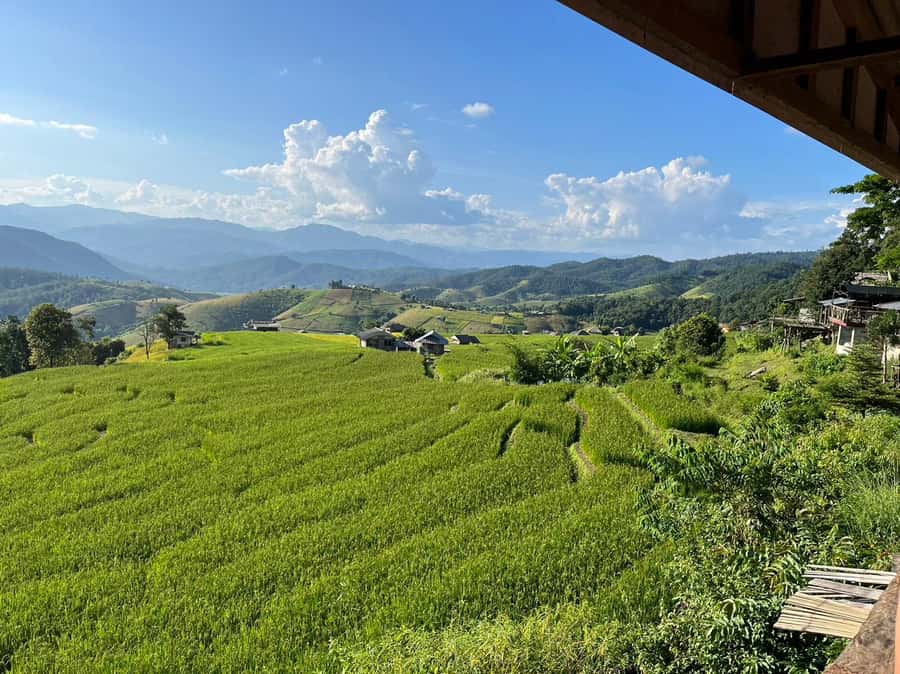
The terraces are most attractive when the rice is tall and green. Their shape follows the mountain rather than a neat flat grid, giving you changing views as you walk and look across the fields. The scenery is strongest in the wet growing season, when the plants are full and the area has its freshest appearance.
Still, the terraces are working farmland, not a theme park. Conditions vary with the agricultural calendar. You may see green shoots, mature rice, golden fields, or recently harvested plots. The tour information is refreshingly clear about this, so do not book a January date expecting the same view shown in a peak-season photograph.
This stop is best for people who enjoy slow scenery, rural settings, and photography. It is less suited to anyone seeking constant action. Wear long pants and comfortable shoes, both for the terrain and for visiting village and religious sites respectfully.
Wachirathan Waterfall brings sound and movement
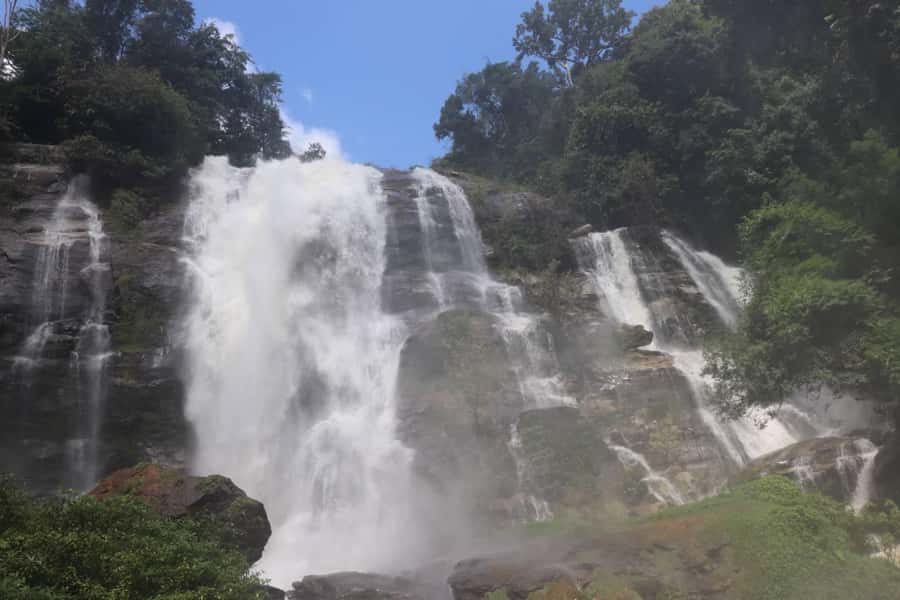
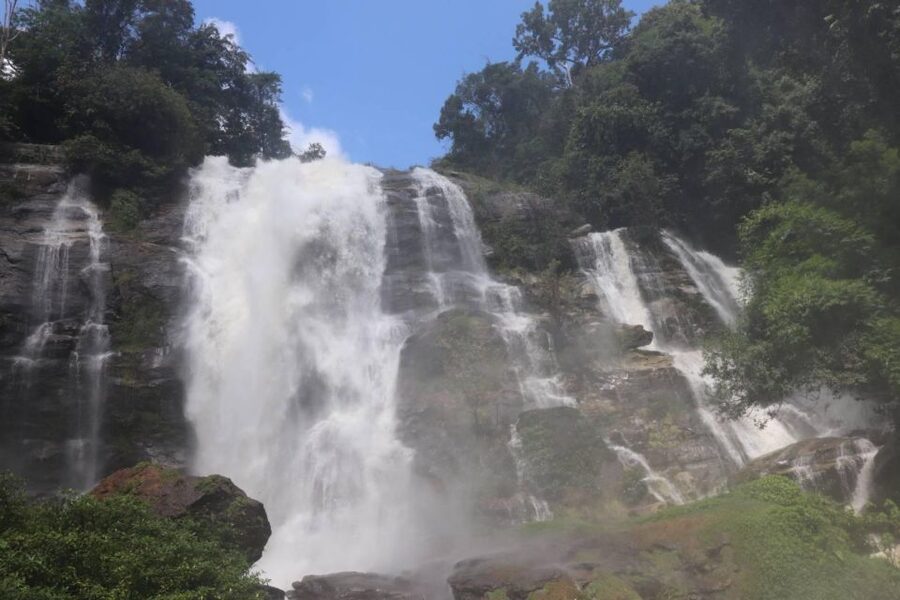
Wachirathan Waterfall provides a useful change after the stillness of the terraces. Instead of wide views over rice fields, you get falling water, spray, and the sound of the cascade. It is described as one of the beautiful waterfalls in Thailand, and its place in the route gives the day a welcome shift in mood.
The stop is sightseeing rather than a swimming outing. No swimming activity is listed, so bring your camera and enjoy the view without assuming you will have time or permission for water activities.
A waterfall stop also helps break up the driving. On a private tour, your guide can explain the area and give you time to look around, although exact stop lengths are not specified. Keep your shoes practical, since you will later walk on the Ang Ka trail and visit the pagodas.
More Rice Terrace Tours in Thailand
- Doi Inthanon Waterfalls Rice Fields Tour from Chiang Mai
★ 4.5 · 2 reviews - Chiang Mai Rice Fields Biking Tour
★ 3.0 · 2 reviews - Chiang Mai: Half-Day Rice Farming Experience
★ 5.0 · 2 reviews - Ban Pa Pong Pieng Rice Terraces Private Guided Tour
★ 5.0 · 2 reviews
Ban Mae Klang Luang and White Karen life
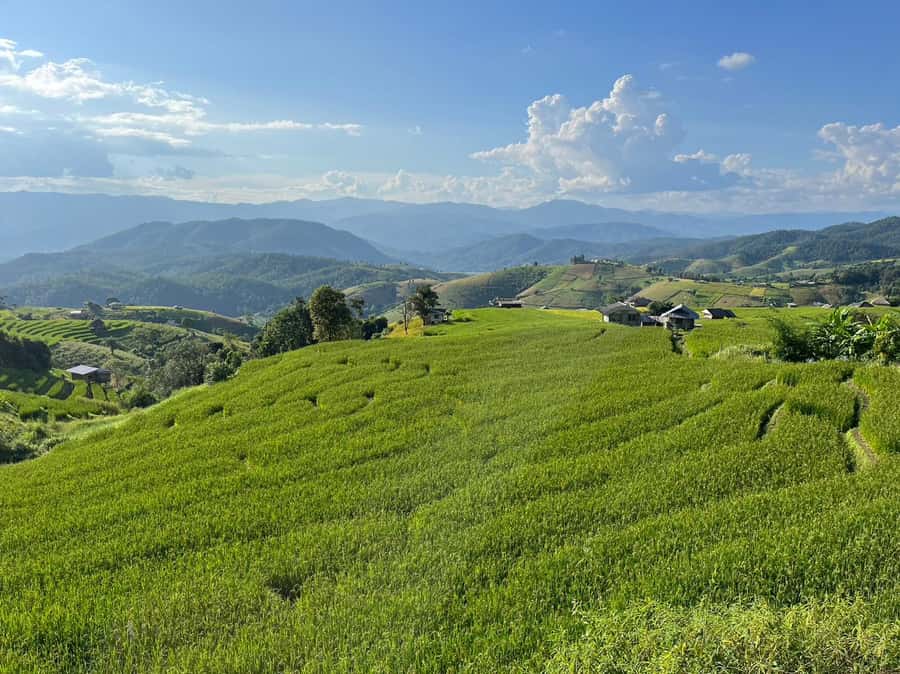
At Ban Mae Klang Luang, you visit a White Karen hill tribe community and see terrace rice fields when the season allows. This is an important part of the day because it links the scenery to the people who farm it.
The rice fields here depend on the season. That qualification matters. You should not expect every plot to be green on every departure date. The village visit remains part of the route, but the agricultural view can change with the planting, growing, golden, and harvest periods.
You also receive a cup of freshly ground coffee made from locally grown beans. It is a small detail, but a good one. Rather than simply looking at a rural community from a vehicle, you get a direct taste of something produced in the area.
I like this stop because it gives context to the terraces. Rice fields are not just scenic shapes on a hillside. They require planting, water management, and harvest work, and the visit places that farming setting at the center of the day. Keep your expectations respectful and modest. This is a community visit, not a staged cultural performance listed as entertainment.
Lunch and the cool summit of Doi Inthanon
Lunch is included during the Doi Inthanon portion of the tour. The supplied details do not specify the menu or restaurant, so you should treat it as a convenient included meal rather than choose the tour for a particular culinary experience.
Doi Inthanon is Thailand’s highest point, at 2,565 meters above sea level. The park is described as humid and cold all year, which can surprise people arriving from hot Chiang Mai. Pack a jacket even if the morning in the city feels warm. Long pants are also recommended.
The summit stop is less about a single dramatic panorama and more about the change in climate and forest setting. The high elevation gives you cooler air and a different feel from the lowlands. For many people, that contrast is one of the day’s pleasures.
You should also allow for damp conditions. The park’s high humidity and cool weather make suitable clothing practical rather than optional. A light jacket can make the walking and waiting periods much more comfortable.
A 25-minute walk on the Ang Ka trail
The Ang Ka trail takes about 25 minutes and leads through lush forest near the high point. It is a short walk, not a major trek, but it adds depth to the national park visit.
The trail gives you a close view of the forest rather than another distant lookout. That makes comfortable shoes important, especially if the path is wet. The route is short enough for many people who can manage ordinary walking, but this is not a wheelchair-accessible experience.
I like the way this walk balances the rice terraces. Pa Pong Piang shows cultivated mountain slopes, while Ang Ka shows the forest at high elevation. Together, they make the park feel like more than a string of unrelated stops.
The walking time is modest, so do not book this tour expecting a full-day hike. It suits you if you want a taste of the highland forest without committing to a strenuous trail.
The King and Queen’s pagodas
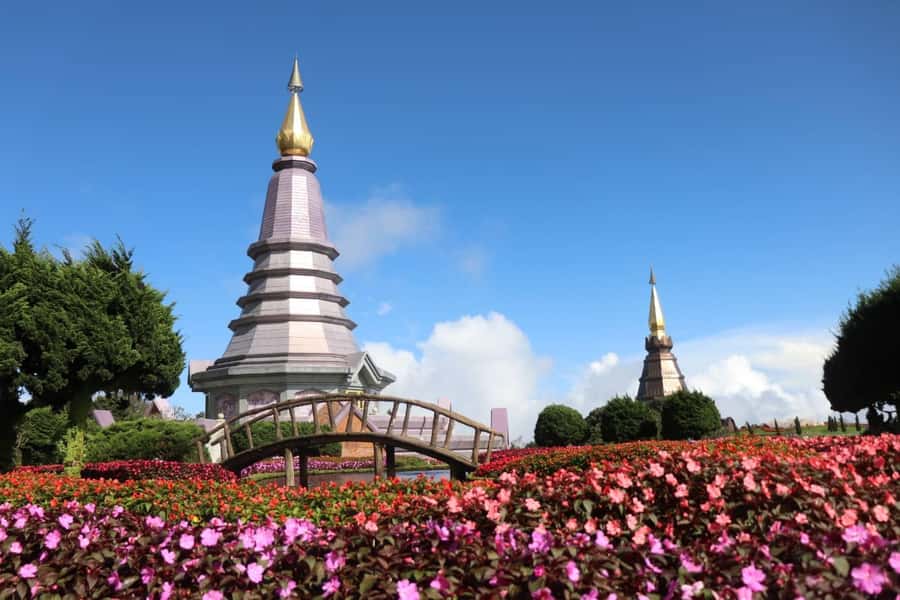
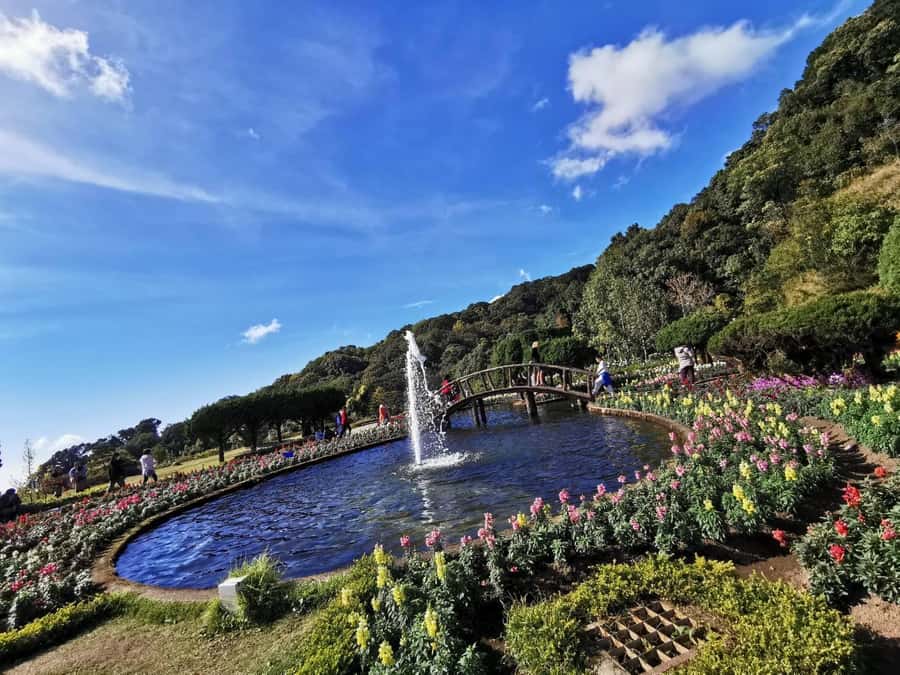
The tour continues to the King and Queen’s pagodas, officially known as Phra Mahathat Naphamethanidon and its companion royal pagoda. The visit includes sightseeing and walking through pleasant gardens with views over the surrounding area.
These pagodas provide one of the more polished stops of the day. The gardens offer a change from farm paths and forest trails, while the elevated setting supports broad views. Bring clothing that feels respectful in a religious setting, and long pants are already recommended for the day.
The pagodas are worth keeping in the schedule even if your main goal is Pa Pong Piang. They offer a different kind of beauty and make the route feel varied: village, waterfall, forest, high point, gardens, and mountain views.
Is $147 good value?
At $147 per person, this is a premium day trip by Chiang Mai standards. The value depends on what you would otherwise need to arrange yourself.
You receive a private air-conditioned vehicle, hotel pickup and drop-off, an English-speaking guide, entrance fees, lunch, drinking water, and accident insurance. You also avoid organizing transport to several widely separated sites. The private format is particularly useful if you want to ask questions, stop for photos, or keep the day focused on your group.
The price is harder to defend if your only goal is seeing green rice terraces. Those fields are seasonal, and the tour costs the same kind of money even when the rice is golden or already harvested. If you are booking from November through the wetter or cooler months, confirm what kind of terrace view you are likely to see before paying.
The strong 4.8 rating from 32 ratings and a 94 percent perfect score for transport point to reliable organization, but they do not erase the seasonal issue. I would pay the price for a private, full-day visit combining terraces, national park sites, and village time. I would hesitate if I had a tight budget or limited interest in rural scenery.
What to bring and who should book
Pack comfortable walking shoes, a jacket, and long pants. You need clothing that works for a cool, humid summit, a short forest walk, village visits, and pagoda gardens.
This tour suits you best if you:
- Want a private day rather than a large shared group
- Care most about rice terraces, mountain scenery, and rural communities
- Are visiting during July to mid-October and want green fields
- Prefer a guide who can explain the area and adjust attention to your interests
- Can manage a full 570-minute day with road travel and walking
It is less suitable if you use a wheelchair, want a short outing, or need guaranteed green rice fields outside the main growing season. It also may not fit a strict budget.
Cancellation is flexible, with a full refund available if you cancel up to 24 hours ahead. You can also reserve and pay later, which helps when your Chiang Mai plans are still shifting.
Should you book this Doi Inthanon tour?
Book it if Pa Pong Piang is high on your Chiang Mai wish list and you want the convenience of a private car, guide, lunch, and park access bundled into one long day. The best timing is July through mid-October for the fullest green rice plants.
Choose it with more caution outside that period. The terraces may be golden or harvested, and the $147 price can feel high if the fields are your only reason for going. If you value the full combination of Karen village, local coffee, waterfall, high-elevation forest, pagodas, and Thailand’s highest point, the day offers enough variety to make the cost more reasonable.
FAQ
How long does the tour last?
The experience lasts 570 minutes, which is about nine and a half hours.
Where does pickup take place?
Pickup is available from accommodation in Chiang Mai downtown and within a five-kilometer radius of downtown. You should wait in the hotel lobby.
Is transportation included?
Yes. The tour includes a private air-conditioned car and drop-off after the tour. Locations more than five kilometers from downtown may require an extra transportation payment.
Is the tour private?
Yes. The group type is private, with an English-speaking live guide.
When are the Pa Pong Piang rice terraces greenest?
The rice plants generally reach their fullest length and brightest green from July to mid-October.
What happens to the rice fields after October?
After the green period, the rice usually turns a yellow-golden color and is generally harvested in November.
Is lunch included?
Yes. Lunch is included, although the meal details are not specified.
Is the entrance fee included?
Yes. Entrance fees are included in the tour price.
What should I bring?
Bring comfortable shoes, a jacket, and long pants.
Is the tour suitable for wheelchair users?
No. The experience is not suitable for wheelchair users.
More National Park Trips in Chiang Mai
- Small-Group Big Island Tour: Hawaii Volcanoes National Park and Kona Coffee Farm
★ 5.0 · 343 reviews - Can Tho: Floating Market, Canals, Nature Reserve & Forest
★ 5.0 · 42 reviews - Ho Coc Beach, Nature Reserve & Dragon Fruit Farm Day Tour
★ 4.8 · 11 reviews - Private Desa Dairy Farm, Kinabalu National Park, Hot Spring & Canopy Walk Tour
★ 5.0 · 9 reviews
Just added around Chiang Mai
- Aroidee’s Farm-Fresh Thai Cooking Experience★ 5.0 · 8 reviews
- One Day Tour Doi Suthep Temple, Palad Temple, Orchid Farm, Longneck hill tribe village (Private tour)★ 5.0 · 7 reviews
- Doi Inthanon Day Trip:Twin Pagodas,Soft Hiking,Coffee Plantation★ 4.5 · 22 reviews
- Local Farming Experience in Chiang Mai, Thailand★ 5.0 · 3 reviews
- Full-Day Thai Cooking Class with Grandma – Market and Farm Tour★ 5.0 · 48 reviews
- Cooking Class with Organic Farm in Chiang Mai★ 5.0 · 4 reviews
- Doi Inthanon Waterfalls Rice Fields Tour from Chiang Mai★ 4.5 · 2 reviews
- Doi Suthep Temple, Pha Lat Temple, Sticky Waterfall, Orchid farm★ 5.0 · 31 reviews
Chiang Mai Farm Tours, compared.
Half-Day Thai Cooking Class at Organic Farm in Chiang Mai
Read our review →
Authentic Cooking Class with Market & Farm Visit
Read our review →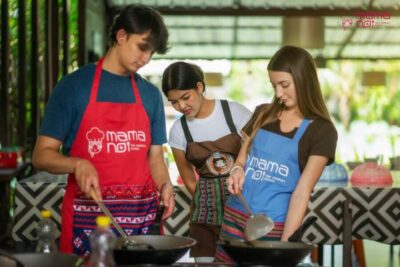
2-Day Jungle Trek with Elephant Farm & Raft Ride
Read our review →
Cooking Class with Organic Farm in Chiang Mai at Mama Noi
Read our review →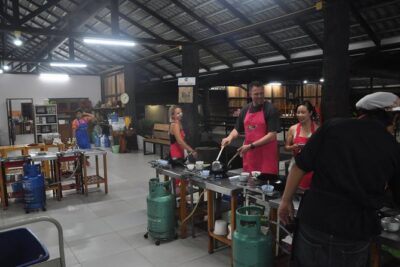
Evening Cooking Class in Organic Farm with Local Market Tour
Read our review →Browse the lists this tour appears in