
Review · UK
Makars Mushroom Farm Summerhall Tour with DIY Block Making
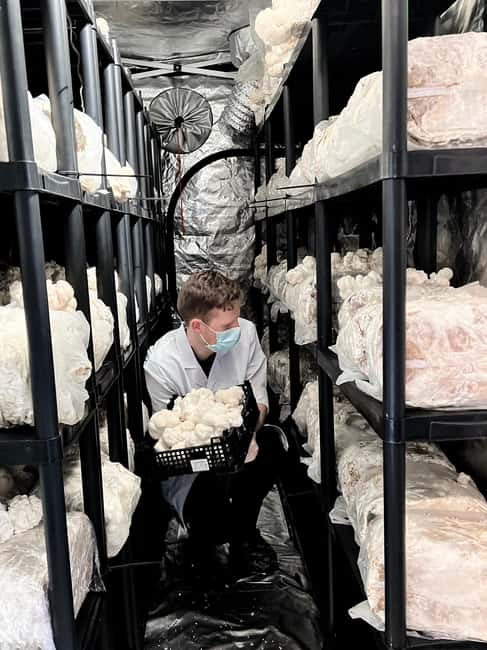
Edinburgh’s Summerhall hides an unusual working farm below ground: Makars grows Lion’s Mane mushrooms in a disused basement beneath the arts venue. You’ll see the sterile growing rooms, check the fruiting tents, and learn why oxygen, water, and nutrients all matter. The best part is the hands-on finish: you inoculate your own block and take it home to fruit in roughly three weeks.
I like two things right away. First, this is a real production space, not a polished display built only for tourists. Second, the tour gives you something useful to take home, so the lesson continues after your hour underground. At $13 per person, that practical element makes the price especially fair.
The main drawback is the setting. The farm is in an underground basement with stairs and no accessible access, so it will not work for wheelchair users and may feel uncomfortable if you are claustrophobic. Children under 10 cannot join, either.
Key points before you book
- Lion’s Mane from grain to fruiting: Follow the crop through production, incubation, and harvest preparation.
- A small group of up to eight: You can ask questions without shouting across a crowd.
- Your own mushroom block: Inoculate a block during the visit and take it home to watch it fruit.
- A working farm under Summerhall: The unusual basement setting is part of the experience, not just a meeting room.
- One hour and English-speaking: It fits neatly into an Edinburgh sightseeing day.
- Three-week home project: The crop should begin fruiting in about three weeks, giving the visit a useful follow-up.
A mushroom farm below Edinburgh’s Summerhall
Start at Summerhall’s main entrance, then walk toward the back door where the stairs are located. Follow the signs for the machine room, go down, turn left, and continue to the end of the corridor.
That route tells you something about the visit. You are not entering a conventional farm shop or a bright visitor center. Makars Mushroom Farm uses a disused underground basement inside an arts venue, and the setting gives the tour a slightly odd, memorable edge.
It also means you should allow a few minutes to find the farm. Summerhall has several corridors and rooms, so follow the signs rather than assuming the farm is near the main entrance. Wear something comfortable for walking and stairs.
The basement is worth keeping in mind before you reserve. There is no accessible access, and the space may not suit anyone with claustrophobia. The tour is also not open to children under 10. For everyone else, the unusual location adds character and gives you a look at how food production can fit into an urban building.
A few more farm days around the UK worth a look
- Farm Attraction – Highland Cows, Animal Feeding, Wholesome fun!
★ 5.0 · 101 reviews - Liverpool Music Icons Tour led by a member of 90s band The Farm
★ 5.0 · 51 reviews - Guided Hebridean Farm Hike near Tobermory, Isle of Mull, Scotland
★ 5.0 · 25 reviews
Why Lion’s Mane makes a good first mushroom
The focus is Lion’s Mane, an exotic-looking mushroom with pale, shaggy growth. You do not need prior gardening or science knowledge to follow the tour. The guide explains the basic process in plain terms, and the small group makes it easy to stop and ask questions.
The introduction places fungi in a broader food story. Fungi are presented as a third branch in evolution, with the potential to provide nutritious food that has qualities associated with both meat and plants. You will not need to know the science beforehand, but the idea gives the tour a wider purpose than simply learning how to grow one unusual crop.
I like this opening because it connects the mushroom in front of you with questions about food production and nutrition. It also helps explain why a small urban farm is worth visiting. You are looking at a crop that can be grown indoors, in a controlled space, rather than a field or large rural property.
The guide keeps the tone informal and friendly. The experience is aimed at all interest levels, so a serious mushroom fan and a curious first-timer can share the same hour. Expect an explanation of the growing cycle rather than a technical lecture packed with hard-to-follow terms.
From grain production to a sterile growing block
The first major part of the tour follows Lion’s Mane from grain production through incubation and fruiting. This is where you see why mushroom farming calls for care and consistency.
The crop must be grown in sterile conditions. The guide explains the techniques Makars uses to reduce contamination and grow these mushrooms reliably. You will learn that the process is not simply a matter of putting a mushroom in soil, adding water, and waiting. The growing material, the clean conditions, and the timing all matter.
This section is especially useful if you have tried growing mushrooms at home and found the result unpredictable. The tour shows the controlled side of cultivation and gives you a clearer picture of what a commercial grower has to manage.
The farm’s basement location also becomes more interesting here. Instead of seeing a large open field, you see how a crop can be produced inside a repurposed urban space. That does not make the setting comfortable for everyone, but it does make the farm feel practical and inventive.
You will not leave as a professional grower after one hour. You will, however, understand the main stages and the reasons behind them. That is the right level for a short tour.
Inside the fruiting tents
The fruiting tents are the most visual part of the visit. Here, the mushrooms are close to the stage where you might recognize them as food, and the guide explains how to monitor the crop before harvest.
Pay attention to the three factors highlighted during the tour: oxygen, water, and nutrients. The balance between them affects how the crop develops. You will learn what to watch for and what signs suggest the mushrooms are ready for the next stage.
This is where the farm tour moves beyond general information. Instead of only hearing that mushrooms need the right conditions, you see the growing environment and discuss how those conditions are checked. The guide also covers what to look for before harvesting.
The fruiting tents may be the part children over 10 and families find easiest to grasp, but the age limit still applies to younger children. Adults who enjoy food production, gardening, sustainability, or odd corners of Edinburgh will find plenty to hold their attention.
The group limit of eight is helpful here. In a larger group, you might only get a quick look at the growing area. With a small party, you have a better chance to ask about the crop and get an answer that relates to what you are seeing.
Same fields, a different sort of day out:
- Guided Scenic Alpaca Trekking Experience Northern Ireland
★ 5.0 · 126 reviews - Alpaca & Donkey Trekking Experience at Wetley Moor Common
★ 5.0 · 28 reviews - 2-Hour Alpaca Farm Experience in Kenilworth
★ 4.5 · 14 reviews - Fun and Educational Alpaca Experience in the Scottish Borders
★ 5.0 · 13 reviews
The hands-on finish: inoculating your own block
The tour ends with the most useful activity. You inoculate your own mushroom block and take it home.
This is not just a small souvenir handed to you at the door. You take part in one of the steps needed to begin a crop, then have a home project to follow after the visit. The block should fruit in around three weeks, so you can watch the process develop rather than treating the tour as a one-hour lesson that ends underground.
The timing is a good reason to book early in your Edinburgh stay if you want to see progress before leaving the city. The block is taken home, so the exact place and conditions for looking after it matter, but the supplied information does not give detailed home-care instructions. Ask the guide any practical questions before you leave.
The activity works well for beginners because you do not need to arrive with equipment or prior experience. You follow the instructions and leave with your own inoculated block. It also gives the tour a clear purpose: you see how Makars works, then try a small part of the process yourself.
Several visitors have specifically enjoyed this practical finish, including a parent who brought two sons aged 18 and 12. Both enjoyed the visit, and the family left hoping to grow Lion’s Mane at home. That age range suggests the activity can suit older children and teenagers, but remember that the minimum age is 10.
Timelapse videos bring the growing cycle to life
The tour includes timelapse videos showing the fruiting process. These are useful because mushroom growth can be slow to watch in real time. A one-hour visit cannot show every stage as it happens, but the videos let you see the change in a compact format.
This part helps connect the block in your hands with the fruiting tents you have just visited. You can picture what may happen at home over the following weeks. It also makes the process easier to understand if you are new to mushroom cultivation.
The videos add a bit of fun without turning the tour into a gimmick. The main value remains the farm visit and the practical activity, but the timelapse gives you a clear visual record of how quickly the crop can change.
A friendly guide and an informal pace
The tour is led in English, and the tone is relaxed rather than formal. The guide explains the work in an approachable way and makes room for questions. You should expect a conversation as much as a presentation.
That style suits the subject. Mushroom growing can sound technical, but the informal approach keeps the information easy to follow. The tour also works for mixed groups, since the guide can answer simple beginner questions without making more experienced visitors feel ignored.
The small group size matters here. With no more than eight people, you get a better chance to see inside the growing areas and take part in the block-making activity. It also means the tour is less likely to feel rushed when someone asks about sterile conditions, fruiting, or home care.
The experience has earned a 4.9 rating from 12 reviews, with repeated praise for the friendly host, the clear explanations, and the practical session. One visit even included handmade mushrooms as a Valentine’s surprise. That is a charming extra, but I would treat it as an occasional gesture rather than a standard part of the booking.
Is $13 good value for an hour?
At $13, this is one of the easier Edinburgh activities to justify if you like unusual food experiences. The price includes the farm tour, the growing explanation, the fruiting-tent visit, the timelapse viewing, and your own block to take home.
The block matters when judging value. You are not paying only for access to a basement and a short talk. You receive a hands-on introduction to cultivation and a small crop project that may fruit in three weeks.
The hour is short, but it is focused. You will not spend half the visit waiting for a large group to move along, since the maximum group size is eight. If you want a long workshop with detailed home-growing instruction, this may feel brief. If you want a compact, unusual activity that fits between Edinburgh sights, the length works well.
Free cancellation up to 24 hours before the start gives you some flexibility, and you can reserve now and pay later. Check available start times when planning your day, since the tour lasts one hour but the exact schedule can vary.
Getting to Summerhall without a car
Summerhall is easy to reach on foot through the Meadows, making the tour a good add-on to a day spent around central Edinburgh. Bikes can be brought inside or left in the racks, and buses serve the venue.
Lothian Bus routes 3, 5, 7, 8, 29, 31, 47, and 49 stop on South Clerk Street, a short walk from Summerhall. Routes 42 and 67 stop directly outside the main entrance.
Driving is less convenient. Some street meter parking is available, but spaces are limited. I would use public transport or walk if that fits your plans, rather than building your day around finding a nearby parking space.
Once inside, follow the signs to the machine room and then along the corridor. The meeting instructions are specific for a reason, so do not wait by the front desk expecting the farm to be immediately visible.
Who will enjoy this tour most?
You should consider booking if you enjoy food production, gardening, science, sustainability, or small-scale urban projects. It also suits couples, families with children aged 10 or older, and visitors who want an Edinburgh activity that feels different from a standard museum or historic-site visit.
The tour is a good choice for curious beginners. You do not need to be a mushroom enthusiast, and the guide explains the process from the start. The take-home block also makes it more memorable for teenagers and adults who like practical activities.
It is less suitable if you need step-free access, dislike underground spaces, or want a longer workshop. The basement setting has stairs, and wheelchair access is not available. Younger children cannot join.
You should also remember that the home crop is part of the appeal. If you are not interested in caring for a block and watching it develop, some of the value will be lost. If that sounds fun, the visit gives you a simple reason to keep thinking about mushrooms after you leave Summerhall.
Should you book Makars Mushroom Farm?
Book it if you want a short, affordable Edinburgh experience with a real working setting, a friendly English-speaking guide, and something practical to take home. The small group and hands-on block-making session make this more personal than a basic farm talk, while the fruiting tents and timelapse videos give you a clear view of the full growing cycle.
Skip it if stairs, basement rooms, or limited accessibility will cause problems. Otherwise, $13 is a fair price for an hour of unusual food education and a three-week home project. Plan to walk or take the bus to Summerhall, leave time to follow the signs downstairs, and ask questions before you take your block away.
FAQ
How long does the Makars Mushroom Farm tour last?
The tour lasts one hour.
How much does the tour cost?
The listed price is $13 per person.
What type of mushroom will I learn about?
The tour focuses on growing Lion’s Mane mushrooms.
Can I take something home from the tour?
Yes. You inoculate your own mushroom block and take it home. It should fruit in about three weeks.
Is the tour suitable for beginners?
Yes. The tour is suitable for all interest levels, including people who are not already interested in mushrooms.
Is the tour accessible for wheelchair users?
No. The tour takes place in an underground basement and does not have accessible access.
Can children join the tour?
Children under 10 cannot join. Older children can attend, provided they meet the tour requirements.
How do I reach the farm inside Summerhall?
Enter through the main entrance, walk to the back door where the stairs are, go downstairs, and follow signs for the machine room. Turn left and follow the signs to the end of the corridor.
Just added around the UK
- Guided Hebridean Farm Hike near Tobermory, Isle of Mull, Scotland★ 5.0 · 25 reviews
- Fun and Educational Alpaca Experience in the Scottish Borders★ 5.0 · 13 reviews
- Private Downton Abbey Tour, including Bampton, Cogges Farm, and Highclere★ 5.0 · 10 reviews
- Highland Cows, Walk Alpacas & Visit a Scottish Wildlife Centre★ 5.0 · 2 reviews
- Halloween Pumpkin Patch and Alpaca Adventure★ 4.5 · 9 reviews
- Highland Cows, Walk Alpacas & Scottish Wildlife Centre from Edin.★ 5.0 · 4 reviews
- 2-Hour Alpaca Farm Experience in Kenilworth★ 4.5 · 14 reviews
- Errichel Farm Tour★ 5.0 · 9 reviews
UK Farm Tours, compared.
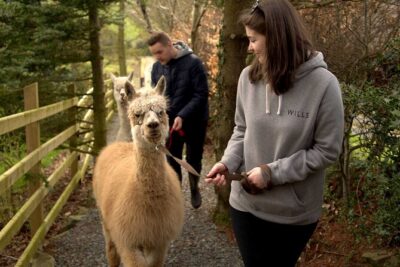
Guided Scenic Alpaca Trekking Experience Northern Ireland
Read our review →
Farm Attraction – Highland Cows, Animal Feeding, Wholesome fun!
Read our review →
Liverpool Music Icons Tour led by a member of 90s band The Farm
Read our review →
Alpaca & Donkey Trekking Experience at Wetley Moor Common
Read our review →
Guided Hebridean Farm Hike near Tobermory, Isle of Mull, Scotland
Read our review →
Fun and Educational Alpaca Experience in the Scottish Borders
Read our review →
Browse the lists this tour appears in