
Review · PORTUGAL
Madeira: Banana Plantation Guided Tour with Tasting
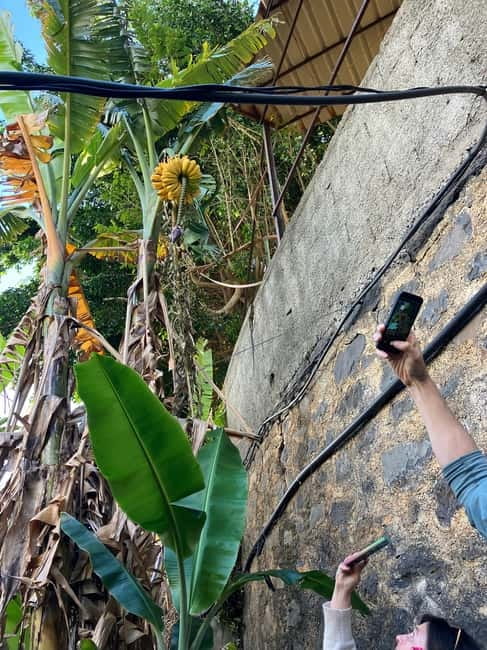
Madeira’s banana country is best understood on foot, where narrow paths wind between huge plants and farmers still work the steep ground. This tour takes you through one of the island’s larger plantations near Ponta do Sol, with a local guide explaining how the crop shaped village life, trade, and daily work.
I like the small group of no more than seven people, which gives you room to ask questions. I also like the mix of farming, local stories, tropical fruit, and views. The main drawback is that this is a real walk on uneven paths, so it is not suitable for wheelchair users or anyone with limited mobility.
Key points to know before you book
- The route takes about five hours: The schedule includes roughly 2.67 hours around Ponta do Sol and another 2.5 hours on foot.
- You learn how bananas are grown: The guide covers varieties, cultivation methods, production work, and the crop’s economic role.
- The fruit tasting is simple and local: Bananas and other tropical fruit may be offered, but not every banana is picked straight from the plant.
- The guide adds local memory: The guide grew up in the area and brings in stories about childhood, village customs, Madeira’s past, and farming.
- The meeting point is practical: Meet beside the Lugar de Baixo lagoon, on the sea side of the main road, with free parking nearby.
- You need proper walking shoes: Expect moderate walking, slopes, and uneven plantation paths.
Why banana country tells Madeira’s story
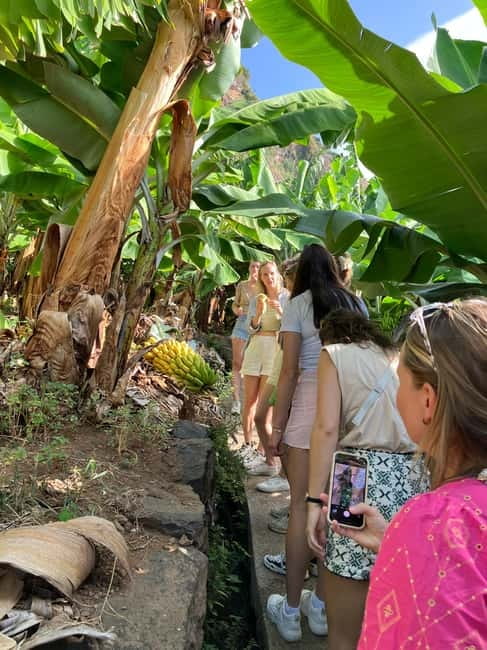
Bananas are not just a snack on Madeira. They are part of the island’s working life, especially along the warmer southern coast. The plantation walk shows you the practical side of that story: how plants are arranged, how farmers care for them, and how much hand work goes into a crop that looks simple in a supermarket.
You will hear about different banana varieties and the methods used to cultivate them. That matters because the tour is not only a photo stop among large leaves. You are shown the production process and the small decisions that help fruit grow on steep ground.
The guide also explains the economic importance of bananas. This gives the walk useful context. You begin to see the plantations as working farms, not just pretty patches of green beside the road.
The tour also touches on typical constructions used by banana farmers. These details help you notice how local people adapted buildings and farm spaces to the island’s climate and terrain. The guide’s connection to the area adds a personal layer, with memories from growing up nearby and stories about local customs.
More Plantation Tours in Portugal
- Furnas: Tea Plantations, Lake and Volcano Guided Tour
★ 4.8 · 511 reviews - São Miguel: Furnas Volcano & Tea Plantation Tour with Lunch
★ 4.9 · 375 reviews - Furnas Volcano & Tea Plantation With Traditional Lunch, East Tour
★ 5.0 · 183 reviews
Meeting at Lugar de Baixo
The tour begins at VE3 30, just in front of the Lugar de Baixo lagoon. The meeting point is on the right side of the main road, on the sea side, and free parking is available nearby.
This is useful if you are driving, but you should check your email and WhatsApp the day before. The meeting instructions may be clarified there, so do not rely only on the broad location shown when you book.
The setting gives you an early sense of southern Madeira. You are close to the ocean, but the plantation country rises inland, where warm conditions and water support banana growing. From here, the experience moves away from ordinary road sightseeing and onto smaller paths.
The guide speaks English, Spanish, and Portuguese. Since the group is limited to seven people, you can ask about farming, local buildings, fruit, or Madeira’s history without trying to compete with a large crowd.
Walking through the Ponta do Sol plantations
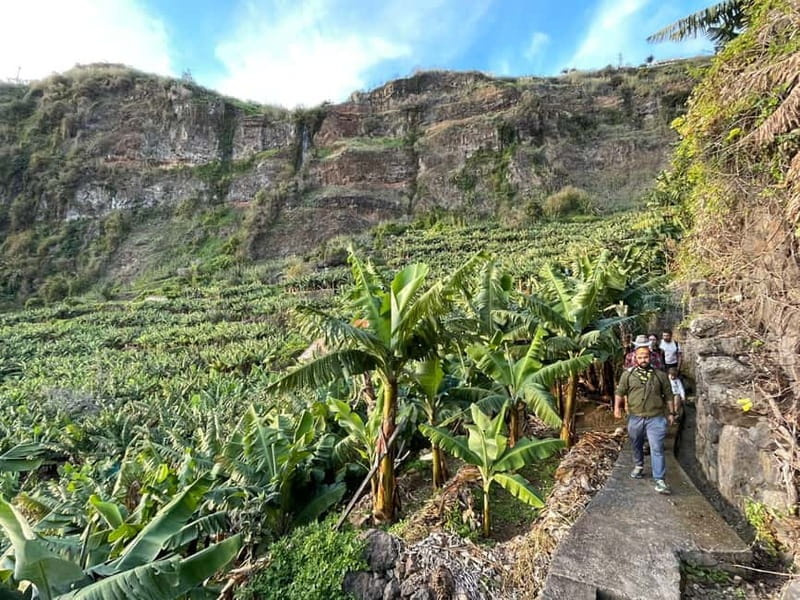
The main part of the experience takes place around Ponta do Sol. You walk along paths through banana plantations, with huge leaves overhead and waterfalls or water channels appearing along the route.
This is not a polished garden tour. The paths can be narrow and uneven, and the walking is moderate. Wear shoes with a firm sole and clothing that lets you move comfortably. Bare feet, bicycles, baby carriages, surfboards, and headphones are not allowed, and you should not touch the plants.
The route includes scenic views along the way and a higher point where you stop for a look around. The view is one of the rewards for making the climb, but the walk up is also why the experience is not suitable for people with mobility impairments.
Take your time with the scenery. Madeira’s banana farms often occupy sloping ground, so the walk shows how farming and village life fit around steep terrain. You may see people working and, with good timing, get a closer look at the rhythm of plantation work.
Learning the varieties and farming methods
A useful part of the tour is learning that bananas are not all the same. The guide identifies different varieties and explains how they are cultivated. You also hear about production secrets and the work needed to bring the fruit from plant to market.
The explanations are intended to be conversational rather than a formal lecture. Previous participants found there was plenty of time for questions, and that the guide kept a relaxed pace. That suits this setting. You can stop to look at a plant, ask about a farming practice, then continue rather than rushing from one point to the next.
The local knowledge is broader than bananas. The guide can also explain aspects of Madeira’s history, nature, and the way the island functions. If you enjoy connecting food with place, this is one of the tour’s strongest features.
Keep your expectations realistic about what you will handle. The tour explains cultivation, but you should not touch the plants. It is also not a promise that every item in the tasting comes directly from a tree on the route.
Same fields, a different sort of day out:
- From Porto: 2 Wine Regions, Farm-to-Table Lunch & Boat
★ 4.9 · 5,724 reviews - From Porto: 2 Wine Regions, Farm Lunch, and Boat Ride
★ 4.8 · 233 reviews - Adventure in the Furnas, with volcanoes, lagoons and tea plantations
★ 5.0 · 161 reviews - Furnas: Volcano Wonders, Tea Plantation & Waterfall Tour
★ 4.7 · 161 reviews
What you actually taste
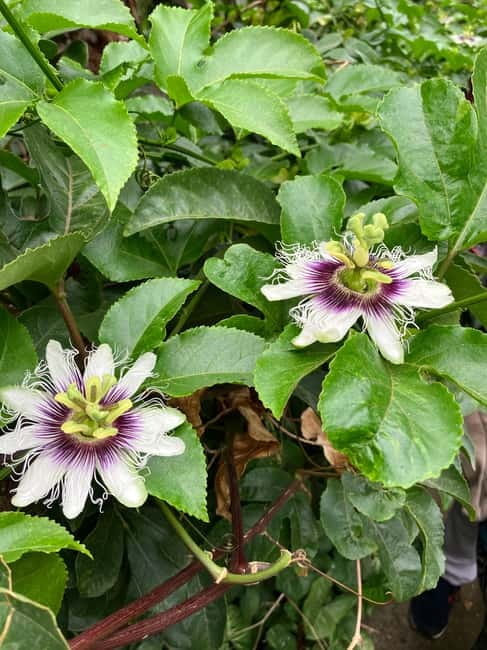
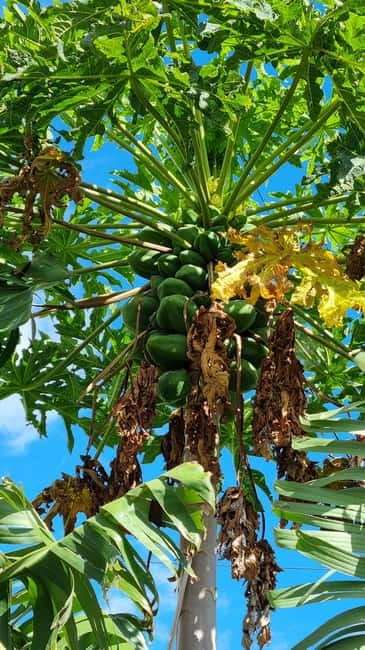
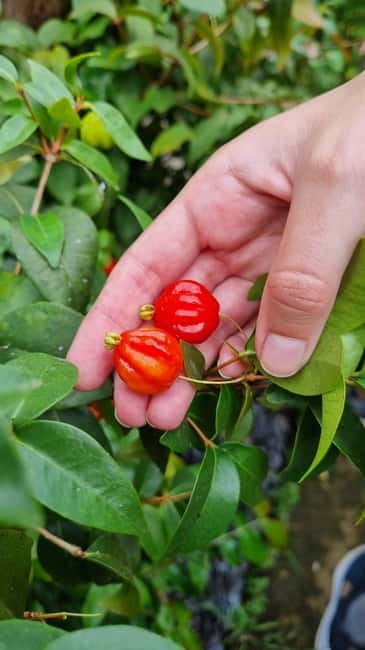
The tasting gives the walk a pleasant finish. You will taste bananas and may get to try other tropical fruits grown on Madeira. Guava can be picked from a tree when available, which makes that part feel especially direct.
There is an important distinction here. The bananas served for tasting may come from the market rather than being picked from the plants during the walk. So book this for the farm story and the chance to sample local fruit, not because you expect to harvest your own banana.
At the highest point of the cultural walk, you stop for a break and taste a banana while taking in the view. It is a modest moment, but it fits the tour well. You have spent time learning how the crop is grown, then you eat the finished product in the middle of the farming area.
Other fruit depends on what is available. The information provided does not promise a fixed menu, so think of the tasting as seasonal and informal rather than a set fruit platter.
The local buildings and working village
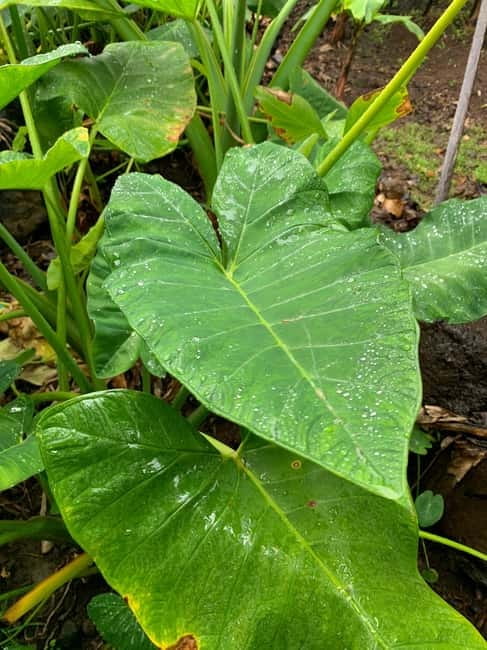
The plantation route also points out typical structures used by banana farmers. These may be easy to miss if you pass through the area by car, but a walking guide gives them meaning.
This part adds value because Madeira’s rural identity is not only about views. It is also in the small buildings, paths, farm boundaries, and practical spaces that support cultivation. The guide’s stories about local life help connect those physical details with the people who use them.
The tour has a cultural purpose as well as a food theme. You are encouraged to notice a folk legacy that deserves to be shared. That makes the experience a good choice if you want something more grounded than a standard scenic stop.
There is no need to expect a museum-style presentation. The Banana Museum ticket, priced at around 10 euros per person, is not included. An optional depot visit in Ponta do Sol can be arranged by previous request. Ask about it before the tour if that extra stop matters to you.
How the timing works
The activity is advertised as valid for one day, but the actual outing is a substantial half-day experience. The schedule gives about 2.67 hours in Ponta do Sol, including the guided visit, walking, market visit, scenic drive, views, and possible wildlife viewing. Another 2.5 hours are listed for the walk.
That adds up to roughly five hours and ten minutes, although the exact pace can vary. Plan around it rather than squeezing in another fixed appointment immediately afterward.
The relaxed tempo is a plus. You have time for questions and for the guide to explain local details. The tradeoff is that people looking for a quick one-hour plantation visit may find this longer than expected.
The highest point of the route includes a break, but you should still bring water and prepare for a moderate amount of walking. Water is not listed as an included item, so carrying your own is sensible.
Is the $35 price fair?
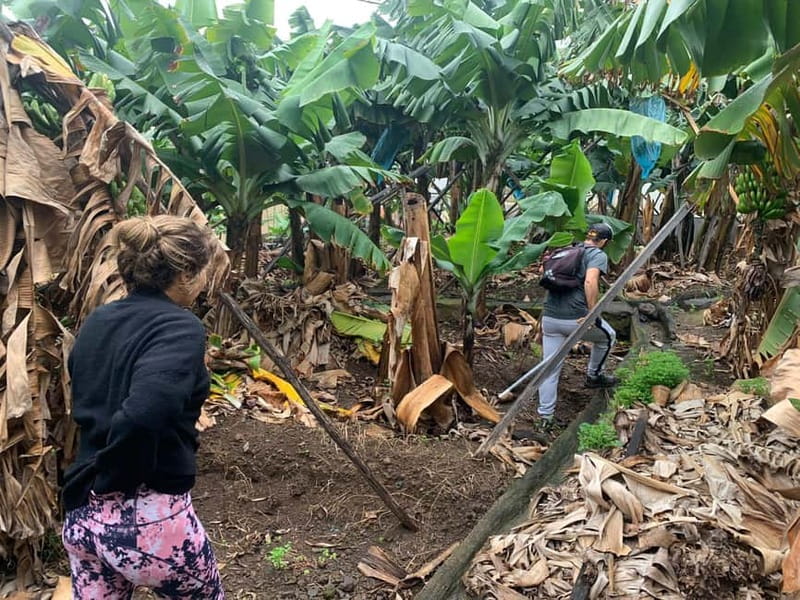
At $35 per person, the value depends on what you want from a Madeira outing. You are paying for a small-group walking tour, a local guide, plantation access, cultural explanations, fruit tasting, and several hours of attention. For that length of experience, the price is reasonable.
The tour is less compelling if your only goal is to see bananas and take a few photographs. You could find plantation scenery in other parts of southern Madeira without booking a guided walk. The added value here is the explanation of varieties, farming methods, local buildings, and the crop’s role in the island economy.
The group size is important. A maximum of seven people gives the guide time to answer questions and adjust the pace. That is more personal than a large coach excursion, and the local stories are easier to appreciate in a small group.
The optional Banana Museum ticket costs around 10 euros per person and is not included. Treat that as a separate choice, not part of the $35 price. The depot visit in Ponta do Sol also requires advance arrangement.
Free cancellation up to 24 hours before the experience and the option to reserve now and pay later make booking less risky. Still, check the available starting time because the activity is offered on selected schedules rather than at any hour.
Who will enjoy this walk
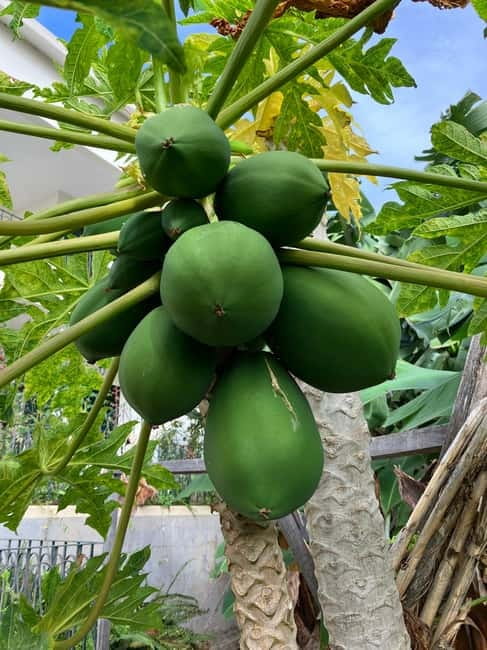
I would recommend this tour to you if you like food, farming, local history, and gentle cultural experiences more than formal sightseeing. It suits people who want to understand how Madeira works, not simply photograph its coastline.
It is also a good fit for curious visitors who enjoy asking questions. The guide takes time to explain things, and the small group makes conversation easier. The English, Spanish, and Portuguese options are helpful for mixed-language parties.
You should think twice if you dislike uneven paths, slopes, or several hours of walking. This is not suitable for wheelchair users or people with mobility impairments. It is also not the right pick if you need a fully accessible route or a stroller-friendly outing.
Bring comfortable shoes and a camera. You may want photographs of the plantation paths, tropical plants, farm buildings, and the view from the highest point. Smoking, littering, intoxication, fires, nudity, and touching plants are not allowed.
A few practical expectations
The tour’s strongest quality is its personal scale. The guide does not simply identify a banana plant and move on. You get time for questions, stories about the area, and explanations that connect farming with the wider life of Madeira.
The most useful tip is to keep the tasting in perspective. You can taste bananas and other tropical fruit, and guava may come directly from a tree. But the bananas may be sourced from the market, so the real attraction is the combination of plantation knowledge and local flavor.
You should also check the meeting details shortly before departure. The meeting point is clear, but the operator specifically asks you to check your email and WhatsApp the day before. That small step can prevent a needless search beside the main road.
Should you book the Madeira banana plantation tour?
Book it if you want a small, local, question-friendly walking tour with a clear connection to Madeira’s food and rural life. The guide’s local background, the plantation paths, the farm buildings, and the fruit tasting give the experience more substance than a simple photo stop.
Skip it if you need accessible terrain, dislike moderate walks, or expect to pick every fruit directly from the plants. For everyone else, $35 is a fair price for several hours of guiding, scenery, cultural context, and a taste of Madeira’s banana country.
FAQ
Where does the banana plantation tour meet?
Meet just in front of the Lugar de Baixo lagoon, on the sea side of the main road at VE3 30. Free parking is available nearby.
How long does the experience last?
The activity is valid for one day, with the scheduled program totaling roughly five hours and ten minutes. About 2.67 hours are listed around Ponta do Sol, followed by about 2.5 hours on foot.
What languages does the guide speak?
The live guide speaks English, Spanish, and Portuguese.
How large is the group?
The tour is limited to seven participants, making it a small-group experience.
Will I pick bananas directly from the trees?
Not necessarily. The bananas used for the tasting may come from the market. Other tropical fruit, including guava when available, may be picked directly from trees.
What should I bring?
Bring comfortable shoes and a camera. You should wear clothing suitable for walking on uneven paths.
Is the tour suitable for wheelchair users?
No. The experience is not suitable for wheelchair users or people with mobility impairments because it includes moderate walking on uneven paths.
Is the Banana Museum included?
No. Banana Museum entry costs around 10 euros per person and is optional. A depot visit in Ponta do Sol can also be arranged by previous request.
More Food and Drink Trips in Portugal
- Régua: Wine Tasting at a Farm, Traditional Lunch, Cruise and Train
★ 4.7 · 18 reviews - Azores Beekeeping Experience and Honey Tasting
★ 5.0 · 6 reviews - Braga/Guimarães: 1 Day with Lunch + farm and wine tasting
★ 5.0 · 3 reviews - Porto: Douro valley 2 farms with wine tasting and lunch
★ 5.0 · 2 reviews
Just added around Portugal
- Half-Day Farm Visit and Cow Milking Experience★ 5.0 · 16 reviews
- Alpaca Farm MamaAdama Meet & Feed★ 5.0 · 39 reviews
- Furnas : Volcano Wonders, Tea Plantation & Waterfall Tour★ 4.5 · 37 reviews
- Bee Inspired: A Journey in São Miguel and a Visit to an Apiary★ 5.0 · 2 reviews
- Waterfalls Hike, Moinho do Felix with tea plantation★ 5.0 · 11 reviews
- Hot Water Pool Bath Inside Pineapple Plantation & Dinner★ 5.0 · 24 reviews
- Culture & Nature – Visit All Center of the Island★ 4.5 · 9 reviews
- Magical World of Beekeeping on São Miguel Azores Private Tour★ 5.0 · 12 reviews
Portugal Farm Tours, compared.
Furnas: Tea Plantations, Lake and Volcano Guided Tour
Read our review →
São Miguel: Furnas Volcano & Tea Plantation Tour with Lunch
Read our review →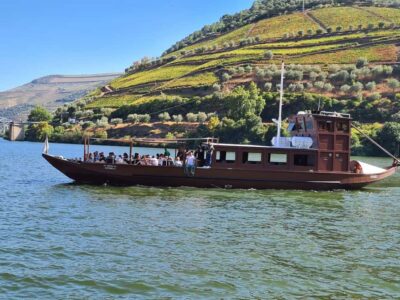
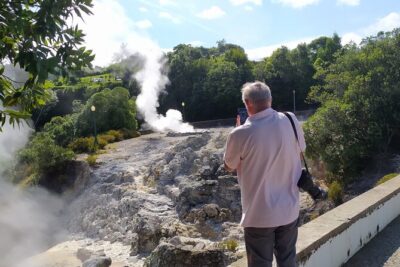
Furnas Volcano & Tea Plantation With Traditional Lunch, East Tour
Read our review →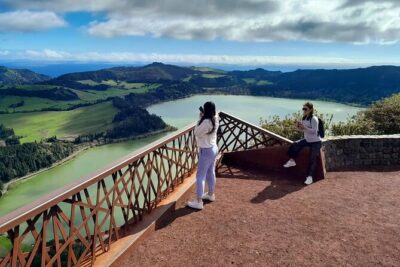
Furnas: Volcano Wonders, Tea Plantation & Waterfall Tour
Read our review →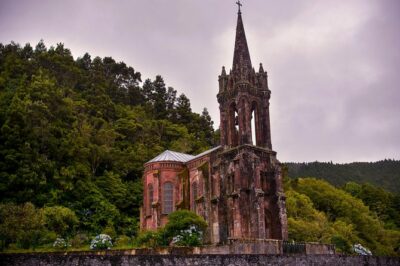
Adventure in the Furnas, with volcanoes, lagoons and tea plantations
Read our review →
São Miguel: 2-Day Island Tour, Tea & Pineapple Plantation
Read our review →Browse the lists this tour appears in