Review · PRIVATE
Kolkhoz: Private visit to the cotton farmers’ village
A former Soviet kolkhoz makes an unusual day trip from Samarkand. You leave the monuments behind and enter a working rural community, where cotton fields, irrigation channels, a dry river basin, family cooking, fish farming, and beekeeping all fit into one long day.
I like the honest look at Central Asia’s water problem, and I like the family lunch, where palov is prepared and shared in a local home. The chance to meet schoolchildren learning French adds a rare human touch, especially if you speak French. The main drawback is the pace: with about 7 kilometers of walking and up to 11 hours on the road, this is not a light half-day outing.
Key points to know before you go
- A former collective farm: See how rural life continues on land once organized under the Soviet kolkhoz system.
- A family palov lunch: Share Uzbekistan’s best-known rice dish in a local home, with time for a welcoming tea and conversation.
- A dry Zeravchan river basin: Walk beside a river whose water is used for irrigation, then see crops and fish farming in the former riverbed.
- Seasonal cotton work: Visit cotton fields in different stages of growth, with planting in April, flowering in early June, and picking in September and October.
- A possible school visit: With advance permission, meet pupils and teachers at a countryside school where French is taught.
- Private transport and guiding: Your group travels privately from Samarkand with a French or English-speaking guide.
From Samarkand to a former Soviet kolkhoz
This experience is less about checking off sights and more about seeing how people live outside Uzbekistan’s famous cities. Samarkand gives you blue-tiled architecture and grand Islamic monuments. This day gives you irrigation canals, farm work, village hospitality, and a direct look at the pressures facing rural Central Asia.
The former kolkhoz setting matters. A Soviet collective farm was not simply a village with fields. Agriculture was organized around shared production, and cotton was one of the major crops. Today, the old system has changed, but the farming economy and its dependence on water remain central to life here.
You travel by private vehicle, which makes the long day easier to manage. The experience is private, so you are not folded into a large coach group or forced to follow strangers’ interests. Your guide speaks French or English, and the guide’s role is especially important because much of the value comes from conversation rather than from formal sightseeing.
Expect a full day of roughly 10 to 11 hours. The exact rhythm depends on driving time, the stops you choose, the school visit, and the season. Wear shoes suitable for uneven paths, and do not treat the walking sections as a minor add-on. The river walk lasts about two and a half hours, and the cotton field and apiary walk adds another two and a half.
A few more farm days around the world worth a look
- Ubud: Waterfalls, Water Temple & Rice Terraces Private Tour
★ 5.0 · 5,484 reviews - Ubud: Waterfall, Rice Terraces & Monkey Forest Private Tour
★ 4.9 · 4,894 reviews - Unique Horse Farm Tours with Insider Access to Private Farms
★ 5.0 · 1,192 reviews
Payshanba Bazaar on a Thursday morning
If your outing falls on a Thursday, you can stop at Payshanba Bazaar, a local market open from about 6 a.m. to 2 p.m. The market sells a broad mix of goods, including livestock, clothing, and food.
This is not a polished market arranged for sightseeing. That is precisely why it can be worthwhile. You get a quick look at the practical business of rural Uzbekistan, where people come to buy, sell, and handle everyday needs. The stop lasts about an hour and has no separate admission charge.
The catch is simple: Payshanba Bazaar takes place on Thursday. On another day, this part of the outing does not apply. If the market matters to you, confirm the day before booking rather than assuming it is part of every departure.
Welcome tea and the first village conversation
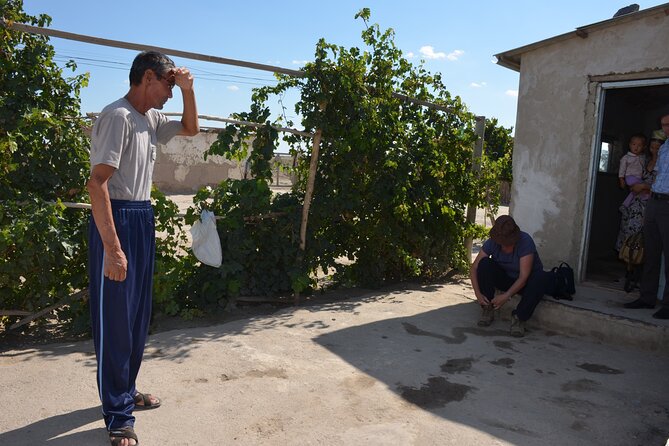
You reach the village at around 10 a.m. and meet a local family over welcome tea. Allow about an hour for this first meeting.
This opening is important because it slows the day down. You are not simply driven to a field, shown a few rows of cotton, and driven away. Tea gives you time to settle in, meet the people who will host you, and begin asking questions about village life.
The simplicity of the setting is part of the point. The people you meet are former kolkhozians and local residents, not professional performers working through a scripted cultural show. Conversation may require help from the guide, especially if you do not speak the local language. That is normal here, and it is one reason a French or English-speaking guide adds real value.
Walking beside the Zeravchan River
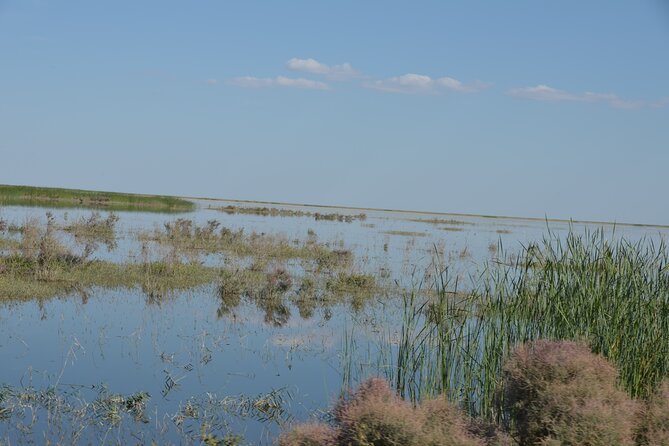
The first major walk heads toward the Zeravchan River. The walk covers about 4.5 kilometers and takes roughly two and a half hours.
The river is central to understanding the day. Its water is used almost entirely for irrigation, so the riverbed you see is not simply a natural feature. It is part of a larger system that supports agriculture in one of the driest parts of the world.
You will see the dry basin and crops grown in the riverbed, along with a fish farm. That combination tells a complicated story. Water supports farming and local production, but heavy use also leaves less water in the natural river course. Instead of hearing a general lecture about water shortages, you see how the issue affects fields, fish farming, and daily rural life.
This section requires a reasonable level of fitness. Two and a half hours on foot can feel long in warm weather, and the route is not described as a paved city walk. Ask your guide about the day’s conditions if the weather is hot or uncertain. The tour requires good weather, and poor conditions can lead to a different date or a refund.
Same fields, a different sort of day out:
- Half-Day Thai Cooking Class at Organic Farm in Chiang Mai
★ 5.0 · 19,087 reviews - Ubud: Monkey Forest, Jungle Swing, Rice Terrace, and Water Temple
★ 5.0 · 7,160 reviews - Florence Pizza or Pasta Class with Gelato Making at a Tuscan Farm
★ 5.0 · 6,801 reviews - From Porto: 2 Wine Regions, Farm-to-Table Lunch & Boat
★ 4.9 · 5,724 reviews
Palov in a local home
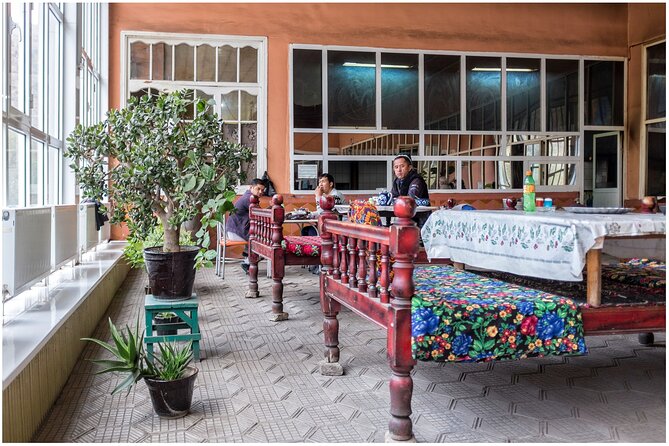
Lunch is served in a family setting and takes about two hours. The main dish is palov, the traditional Uzbek combination of rice, meat, carrots, and other ingredients.
The meal is more than a break between walks. The preparation and sharing of palov are among the strongest parts of the experience. You get to see the dish in its proper social setting, rather than meeting it only as a menu item in a restaurant.
A family meal also gives you time to talk. You might ask about farming, school, village routines, or the changing role of cotton. The available information does not promise that every conversation will be conducted in English or French, so your guide will help bridge the language gap.
Do not plan a separate lunch reservation for this day. The family meal is included, along with the welcoming tea. Personal expenses are not included, so keep some money for anything extra you may want to buy.
Cotton fields from April planting to autumn picking
After lunch, you head into cotton country. This walk covers about 2.5 kilometers and lasts roughly two and a half hours.
The fields look different depending on when you visit. Cotton is sown in April, flowers in early June, and is picked in September and October. A visit in spring shows early growth and farm preparation. A June visit gives you a chance to see the plants flowering. An autumn visit connects the fields to the work of harvesting.
You may be able to assist with farm work, depending on the season and conditions. That possibility should be understood as a chance to take part, not a guaranteed hands-on activity. The main value is seeing the crop at close range and understanding how much land and labor cotton requires.
Cotton is not just a scenic subject here. It connects directly to Uzbekistan’s agricultural economy and to the water questions raised earlier beside the Zeravchan. The day works best when you link these parts together: cotton needs water, irrigation changes the river, and rural families depend on the harvest and related farm work.
Cotton honey, fish farms, and local production
The route includes a stop with a beekeeper who produces cotton honey. You can see the farm and learn about a product tied directly to the nearby crop.
This small visit broadens the picture of village work. The day is not only about cotton picking. Fish farming and beekeeping show how local producers use the available land, water, and flowering crops in different ways.
The fish farm appears during the river walk, while the beekeeper comes during the cotton field section. Neither stop has a separate admission charge. They are useful because they show production at a human scale, with farming connected to household and village economies.
The schedule is long enough that you should expect the day to feel active. There is transport between sections, but the walking itself is a major part of the program. Comfortable footwear, sun protection, and water are sensible choices, even though specific packing requirements are not provided.
A countryside school where French is taught
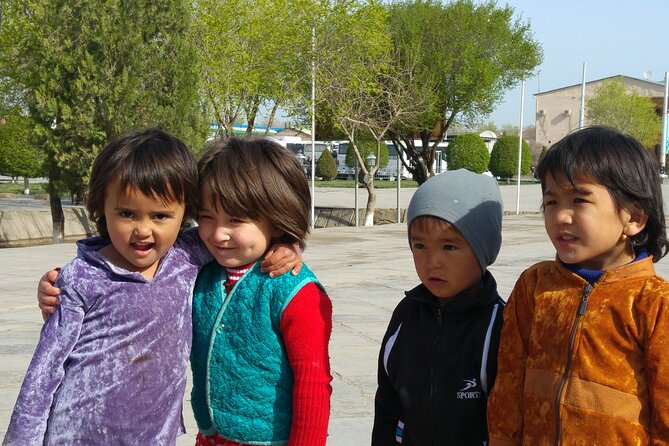
The school visit is optional and requires advance permission from the school administration. It takes place at a rural secondary school where French is taught as a foreign language.
For French-speaking visitors, this may be the most personal part of the day. You can meet pupils and teachers and see a school setting far from the main tourist route. The warm welcome from the children and teachers can make this feel less like a stop and more like a genuine exchange.
There are two important conditions. First, the school must be notified in advance. Second, the visit must not interfere with classes. Do not assume that you can decide on the morning of the tour to walk in and ask for a visit. Request it when booking so the necessary permission can be arranged.
If you do not speak French, the school visit can still be interesting, but the special connection is strongest for French-speaking visitors. The tour description specifically notes the possibility of arranging this meeting for French learners and French-speaking visitors.
What the $90 price gives you
At $90 per person, the value depends on what you want from a day trip. You are paying for private transportation, a French or English-speaking guide, and lunch in a family home. You also receive a full day of access to several rural settings that would be difficult to combine independently.
The private format is important. Only your group participates, so the guide can spend more time explaining the water system, translating conversations, or adjusting the pace of the village visits. A group discount may be available, which could make the price more attractive for families or friends traveling together.
This is not the cheapest way to spend a day outside Samarkand if your only goal is to see cotton fields. It offers better value if you care about contact with local families, a home meal, rural production, and a serious look at irrigation problems.
The booking pattern suggests that people often reserve about two months ahead, with an average of 61 days. That is useful advice if you want the school visit, a particular date, or a French-speaking guide. Confirmation arrives within 48 hours, subject to availability.
Who should book this day?
I would choose this experience if you have already allowed time for Samarkand’s main sights and want to understand the country beyond its monuments. It suits people who enjoy long conversations, local meals, working farms, and social history more than quick photo stops.
It also suits French-speaking visitors who want to meet students learning their language. The school visit must be arranged in advance, but it can add a memorable exchange to a day already built around personal contact.
You should think twice if you dislike walking, hot rural conditions, or a loose village schedule. This is a long outing with two substantial walks, and the most valuable moments depend on patience. It is also not the best choice if you want a tightly timed list of major attractions.
Free cancellation is available up to 24 hours before the start time. Changes or cancellations inside that window are not refunded. Since the outing requires good weather and a minimum number of participants, a cancellation by the operator can lead to another date, another experience, or a full refund.
Should you book the kolkhoz visit?
Book it if you want a human-scale day outside Samarkand, especially one built around a family lunch, cotton farming, and the region’s water crisis. The palov meal and school meeting are likely to be the emotional high points, while the Zeravchan walk gives the day its strongest educational purpose.
Skip it if your schedule is tight or if five hours of walking sounds like work rather than pleasure. For the right visitor, though, this is a rare chance to see rural Uzbekistan as a living place, not just a backdrop between city sights.
FAQ
Where does the experience begin?
The tour begins with pickup in Samarkand and uses private transportation.
How long does the experience last?
The full outing takes approximately 10 to 11 hours.
How much walking is involved?
The itinerary includes about 4.5 kilometers of walking beside the Zeravchan River and about 2.5 kilometers through the cotton fields and to the beekeeper.
Is lunch included?
Yes. Lunch is included and is served in a family setting, with traditional Uzbek palov as the main dish.
Is private transportation included?
Yes. Private transportation is included in the experience.
What language does the guide speak?
The accompanying guide speaks French or English.
Can I visit the countryside school?
You can visit the school only with permission from the school administration. The visit must be arranged in advance so it does not disrupt classes.
Is the Payshanba Bazaar visited every day?
No. Payshanba Bazaar takes place every Thursday, from about 6 a.m. to 2 p.m.
When can I see cotton planting or picking?
Cotton is sown in April, flowers in early June, and harvested in September and October. The activity you see depends on the month of your visit.
Can I cancel for a full refund?
Yes, if you cancel at least 24 hours before the experience starts. Cancellations made less than 24 hours before the start time are not refunded.
Just added around the world
- Ubud Rice terrace,Zip-line and waterfall★ 5.0 · 4 reviews
- Full Day Tour to Water Temples UNESCO Rice Terraces in Bali★ 5.0 · 4 reviews
- Explore Ubud Art Market, Monkey Forest and Rice Terraces★ 5.0 · 16 reviews
- Exploring Munduk Village (Waterfalls, rice terrace, Traditional local house)★ 4.5 · 2 reviews
- Ubud Monkey Forest Rice Terrace Temple Waterfall Private Tour★ 5.0 · 7 reviews
- Private Tour to Sumampan Waterfall, Monkey forest, Rice terraces and Swing★ 5.0 · 30 reviews
- Discover Hidden Waterfall, Unesco Rice Terraces and Mountain Temple★ 5.0 · 17 reviews
- Jatiluwih Spiritual Journey of Melukat with Rice Terrace View★ 5.0 · 9 reviews
Private, compared.

Waterfalls, Water Temple & Rice Terraces Private Tour
Read our review →
Waterfall, Rice Terraces & Monkey Forest Private Tour
Read our review →
Private Scenic Waterfalls and Rice Terraces Tour
Read our review →

Amsterdam private tour to windmills, cheese farm and villages
Read our review →
Private Full-Day Tour: Balinese Temples and Rice Terraces
Read our review →