Review · TOURS
Farm to Bottle Tour at Prosperity Farm Distillery
St. Croix’s only farm-to-bottle distillery turns local sugarcane, old plantation grounds, and small-batch spirits into one compact experience. At Estate Prosperity, you learn how farming and distilling connect, then taste three handcrafted spirits and a premium cocktail.
I like the clear link between the land and the bottle, and I like that the tour brings in St. Croix’s past without making the visit feel like a lecture. Guides such as Tywreh and Amaren add a personal touch, with Tywreh earning special praise for his warmth and passion.
The main point to know is that this is not a rum tour. Prosperity makes gin and liqueurs, including a well-liked banana liqueur, and local laws prevent the distillery from producing rum. The tour lasts about an hour, so it offers a focused introduction rather than a full-day farm visit.
Key points to know before you go
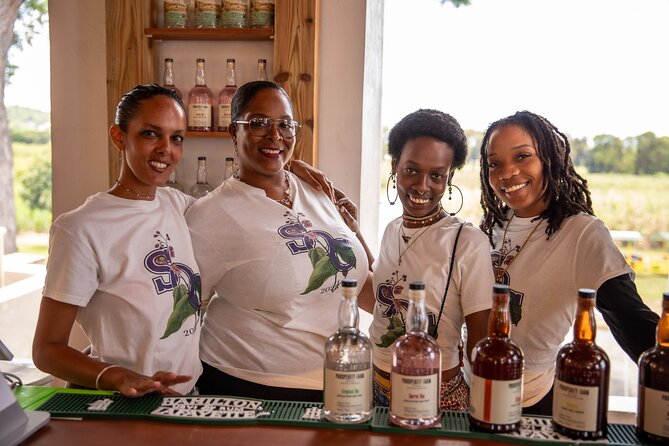
- Farm-to-bottle focus: See how sustainable sugarcane farming, local resources, and distilling fit together at Estate Prosperity.
- Three spirits and one cocktail: Your tasting includes a flight of three handcrafted spirits plus a premium cocktail.
- Gin and liqueur, not rum: Try local products such as banana liqueur, but do not arrive expecting a rum-making demonstration.
- Historic estate setting: The visit connects St. Croix’s cultural past with a modern effort to build community prosperity.
- Air-conditioned tasting room: After time on the grounds, you can cool off while sampling spirits and browsing local goods.
- Small-group scale: The tour accepts no more than 28 people, keeping the experience more manageable than a large bus outing.
A farm-to-bottle visit with a clear sense of place

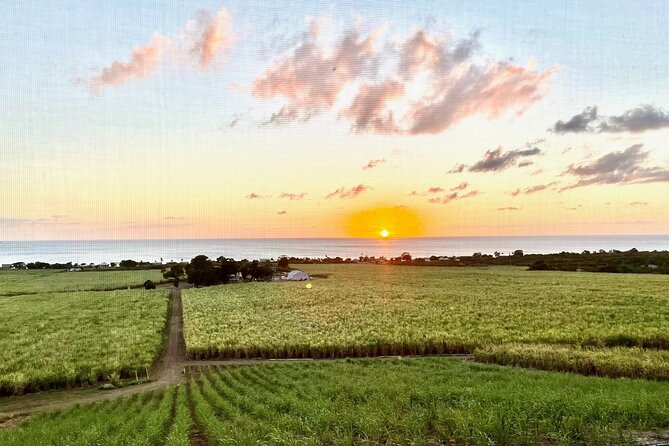
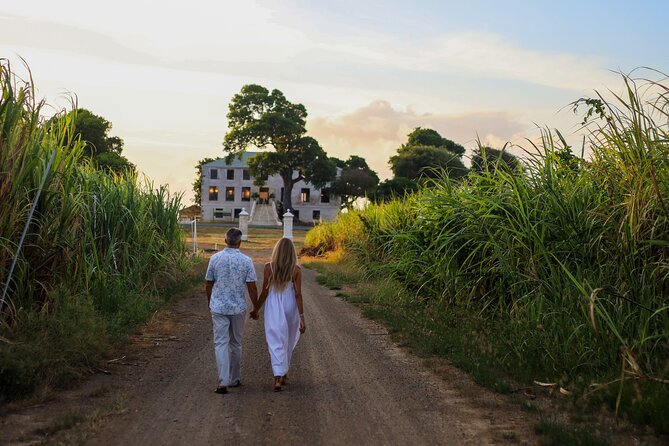
Prosperity Farm Distillery sits on 180 acres at Estate Prosperity, with grounds overlooking the sea. That setting matters because the tour is not only about equipment and alcohol. It gives you a chance to see how agriculture, local identity, and business come together on St. Croix.
The central idea is simple: start with sugarcane and local resources, then follow the work through harvest, distillation, and bottling. You are not just tasting a finished product without context. You are learning why the farm matters, how the estate has changed, and what a modern distillery can contribute to the surrounding community.
I find that kind of connection more useful than a tasting room visit by itself. It helps you understand why a bottle made on St. Croix can feel different from a generic souvenir spirit. The setting and the story give the drinks a local frame.
The experience is also short and focused. At about one hour, it fits well into a day of sightseeing, a stop near Frederiksted, or an itinerary that already includes other parts of the island. You get enough explanation to understand the operation, but you will not spend half a day walking through every acre of the property.
A few more farm days around the world worth a look
- Half-Day Thai Cooking Class at Organic Farm in Chiang Mai
★ 5.0 · 19,087 reviews - Ubud: Monkey Forest, Jungle Swing, Rice Terrace, and Water Temple
★ 5.0 · 7,160 reviews - Florence Pizza or Pasta Class with Gelato Making at a Tuscan Farm
★ 5.0 · 6,801 reviews
Walking through Estate Prosperity
The tour begins at the grounds of Estate Prosperity, reached at P4G9+H3 in Frederiksted, St. Croix. The activity begins and ends at the same meeting point, so you do not need to arrange a separate finish location.
The estate is the first major part of the experience. Your guide introduces its cultural past and explains how the property now supports a social enterprise built around farming, craft distilling, and agritourism. That gives the visit a wider purpose than simply selling bottles.
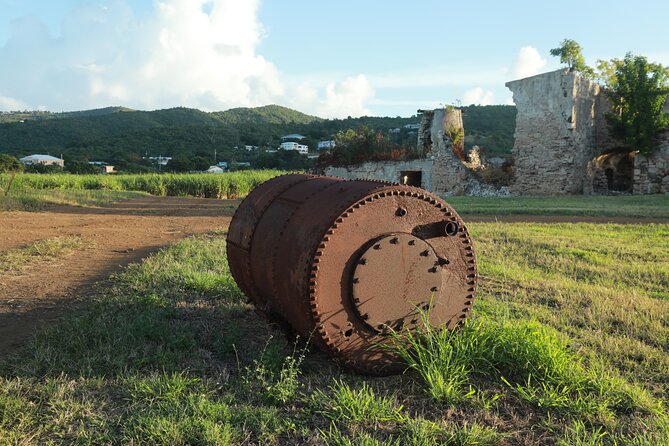
The historic setting can add weight to the tour, especially if you want more than a standard tasting. St. Croix has a complicated agricultural and plantation past, and Estate Prosperity provides a place to discuss how land and labor shaped the island. The tour presents that background alongside a more hopeful present focused on natural resources and community prosperity.
Expect the estate portion to last roughly 30 minutes as part of the overall visit. The exact pace can depend on the group and the guide. Amaren is noted for explaining the plantation background and distilling operation in a personable way. Tywreh is also praised for his energy and passion, which can make the information easier to follow.
Do keep your expectations in check. The available schedule describes about an hour total, not a long walk across all 180 acres. You will learn about the farm and property, but the tour is not presented as an extended agricultural field trip.
From sustainable sugarcane to small-batch spirits
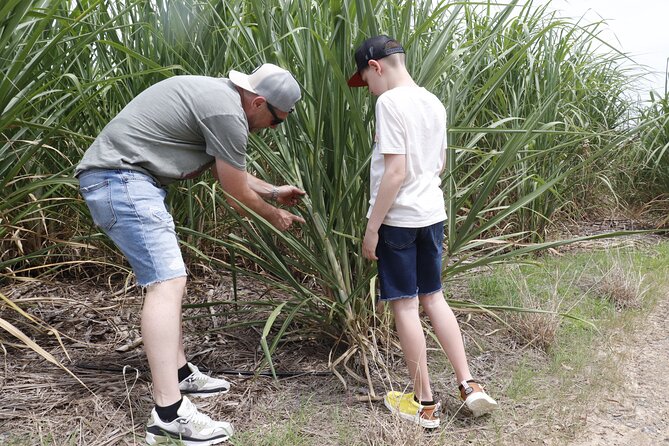
The farm-to-bottle idea becomes clearer as the guide explains the sugarcane operation and production process. You learn about sustainable farming, the role of local natural resources, and the steps that take a crop from harvest to bottle.
This is useful for anyone who enjoys craft drinks but wants to understand the work behind them. Distilling can seem mysterious when you only see a polished bottle on a shelf. Here, the process is placed in the context of a working farm and a specific island.
Prosperity’s products include gin and liqueurs. One particularly interesting flavor to watch for is banana liqueur, which is made locally and has received specific praise. That kind of flavor gives the tasting a clear St. Croix identity rather than copying a familiar mainland spirits menu.
The lack of rum is important. St. Croix is closely associated with rum, so many people will naturally assume that a sugarcane distillery makes it. Prosperity does not produce rum because of local laws. You should treat that as a useful distinction, not a disappointment hidden until the end.
If rum is the single reason you want to visit a distillery, this may not be the right stop. If you are open to gin, liqueurs, and the story of local production, the difference makes the tour more interesting. You get a chance to learn how one St. Croix distillery has built its identity outside the island’s best-known spirit.
The tasting flight and premium cocktail
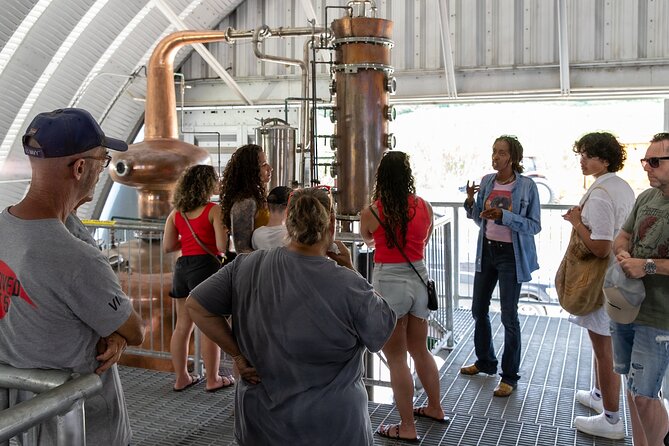
The tasting is the most social part of the experience. Your admission includes three handcrafted spirits, served as a flight, plus a premium cocktail. That combination gives you two ways to taste the products: first in smaller samples, then in a prepared drink.
The flight lets you compare the distillery’s styles without committing to a full bottle. This is especially helpful when you are unsure about flavored liqueurs or local gin. You can try the spirits on their own, note what suits you, and then decide if you want to buy something at the boutique.
The cocktail shows how the products work in a mixed drink. A spirit that seems bold or sweet in a small pour may make more sense once balanced in a cocktail. The included drink also gives the visit a relaxed finish instead of ending with a technical explanation of the still.
The cocktail program has been a strong part of the experience for many people, and one couple even left with three bottles. That does not mean you need to shop heavily. The practical advantage is that you can taste before buying, which is far better than guessing from an attractive label.
Responsible tasting still matters. Three spirits and a cocktail may be modest portions, but they are enough to affect you, especially in a warm climate. Plan your transportation with care, and do not treat the tasting as a reason to drive after drinking. The supplied information does not include a transport service, so you should make your own arrangements.
Same fields, a different sort of day out:
- From Porto: 2 Wine Regions, Farm-to-Table Lunch & Boat
★ 4.9 · 5,724 reviews - Ubud: Waterfalls, Water Temple & Rice Terraces Private Tour
★ 5.0 · 5,484 reviews - Ubud: Waterfall, Rice Terraces & Monkey Forest Private Tour
★ 4.9 · 4,894 reviews - Cooking Class and Lunch at a Tuscan Farmhouse with Local Market Tour from Florence
★ 5.0 · 4,831 reviews
Cooling off in the tasting room
The air-conditioned tasting room is a small but meaningful feature. St. Croix can be warm, and a cool indoor space gives you a break from the sun while you listen, taste, and ask questions.
That setting also makes the tour more comfortable for mixed groups. A spirits enthusiast can focus on the production details, while someone less interested in distilling can enjoy the cocktail, the estate story, or the local shopping.
The group limit is 28 people. That is not an intimate private tour, but it is still a reasonable size for a guided tasting. A smaller group may allow more questions and a closer connection with the guide. A full group could feel less personal, especially during the walking or explanation portion.
The quality of the guide matters here. Tywreh receives especially strong praise for his personality and passion, while Amaren is noted for clear explanations of the plantation and distilling operation. Since guide assignments can vary, you should expect a live, guide-led experience but not assume one particular person will lead every departure.
Shopping for local goods after the tour
The boutique adds a useful final stop. Along with bottles of locally made spirits, it carries local crafts and gifts. That gives you a chance to take home something connected to St. Croix without limiting your purchase to alcohol.
The shop is also practical for anyone who wants a souvenir but does not want to buy a standard tourist item. A bottle of gin or liqueur can serve as a drinkable reminder of the island, while a locally crafted gift may suit friends or family who do not drink.
You should remember that alcohol transport rules can vary by destination, airline, and luggage type. The tour information confirms that people have purchased bottles to take home, but it does not spell out packing or customs rules. Check the requirements that apply to your trip before buying several bottles.
Is the $35 price a good value?
At $35 per person, the tour is priced as a short guided experience rather than a full estate excursion. I consider that fair if you value the combination of education and tasting. You receive a farm and estate introduction, an explanation of distilling, three spirit samples, and a premium cocktail.
The value is strongest for people who would otherwise pay separately for a tasting flight and cocktail. It is also useful if you want a local story attached to the drinks. You are paying for the guide’s time, the setting, the sampling, and the chance to learn how the products are made.
The price may feel less compelling if you are mainly looking for a long walk through the farm or a full production tour with extensive equipment access. The experience lasts about an hour, and the listed itinerary centers on Estate Prosperity rather than a long series of separate stops.
I would compare it with your other St. Croix plans. If you already have a rum distillery visit scheduled, Prosperity adds something different through gin, liqueurs, sugarcane farming, and community-focused agritourism. If your schedule is tight, the one-hour format makes it easier to fit in.
Who will enjoy this experience most?
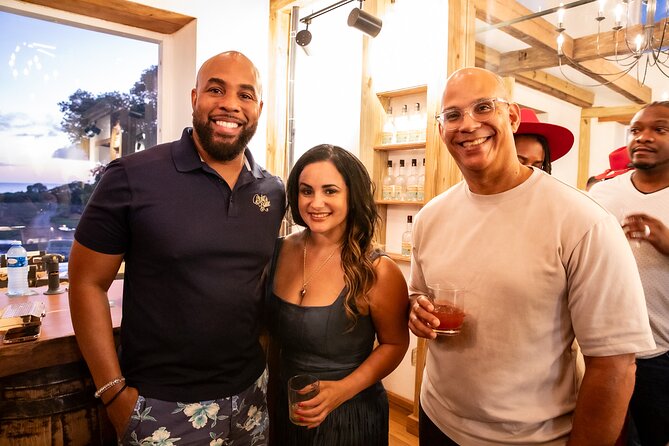
I would recommend the tour to adults who enjoy local food and drink, small-batch products, island history, and short guided outings. It suits couples, friends, and anyone who wants a structured activity with time to browse afterward.
It is also a good choice for people who prefer a personal business with a clear local purpose. The tour presents distilling as part of a broader effort involving farming, natural resources, and community development.
Families or mixed-interest groups may also find enough variety here. Not everyone has to care about the technical side of distillation. The estate, views, cocktail, air-conditioned room, and boutique provide other reasons to enjoy the stop.
I would skip it if you expect a rum-focused tour, a long agricultural walk, or a large production facility with a highly technical presentation. The experience is more about the connection between place, crop, history, and craft spirits.
Timing, meeting point, and cancellation details
The tour starts and finishes at P4G9+H3 Frederiksted, St. Croix, USVI. A mobile ticket is provided, and booking confirmation arrives at the time of booking.
Most people can participate, and the maximum group size is 28. The activity requires good weather and a minimum number of participants. If poor weather or low enrollment cancels the tour, you can choose another date or receive a full refund.
For your own cancellation, you need to cancel at least 24 hours before the local start time for a full refund. Cancellations or changes made inside that 24-hour window are not accepted for a refund. Keep that deadline in mind when planning around flights, ferries, or other island activities.
Should you book the Prosperity Farm Distillery tour?
Book it if you want a compact, local experience that connects St. Croix’s sugarcane agriculture with modern gin and liqueur production. The three-spirit flight and premium cocktail make the $35 price reasonable, while the estate setting and guides such as Tywreh and Amaren add character.
Go in expecting a focused one-hour visit, not a rum tour or an all-day farm expedition. If banana liqueur, local crafts, plantation history, and small-batch distilling appeal to you, this is an easy addition to a St. Croix itinerary. If rum is your only goal, choose a different stop.
FAQ
Where is Prosperity Farm Distillery?
It is located at Estate Prosperity near Frederiksted, St. Croix, USVI. The listed meeting point is P4G9+H3 Frederiksted.
How long does the Farm to Bottle Tour last?
The tour lasts approximately one hour.
What does the tour include?
It includes a guided visit covering sustainable sugarcane farming, the history of Estate Prosperity, and the distillation process. You also receive a flight of three handcrafted spirits and a premium cocktail.
Does Prosperity Farm Distillery make rum?
No. The distillery does not make rum because of local laws. Its products include gin and liqueurs.
What spirit can I try that has a local flavor?
Banana liqueur is one locally made option specifically associated with the tasting experience.
Is the tasting room air-conditioned?
Yes. The experience includes time in an air-conditioned tasting room.
Can I buy gifts at the distillery?
Yes. The boutique carries locally crafted goods, gifts, and bottles of the distillery’s products.
How many people can join the tour?
The maximum group size is 28 people.
Is the tour suitable for most people?
Yes. Most people can participate, according to the activity information.
Can I cancel for a full refund?
Yes, if you cancel at least 24 hours before the experience start time. Cancellations within 24 hours are not refundable. If the distillery cancels because of poor weather or because the minimum number of participants is not reached, you can receive a full refund or choose another option.
Just added around the world
- Ubud Rice terrace,Zip-line and waterfall★ 5.0 · 4 reviews
- Full Day Tour to Water Temples UNESCO Rice Terraces in Bali★ 5.0 · 4 reviews
- Explore Ubud Art Market, Monkey Forest and Rice Terraces★ 5.0 · 16 reviews
- Exploring Munduk Village (Waterfalls, rice terrace, Traditional local house)★ 4.5 · 2 reviews
- Ubud Monkey Forest Rice Terrace Temple Waterfall Private Tour★ 5.0 · 7 reviews
- Jatiluwih Spiritual Journey of Melukat with Rice Terrace View★ 5.0 · 9 reviews
- Private Tour to Sumampan Waterfall, Monkey forest, Rice terraces and Swing★ 5.0 · 30 reviews
- Discover Hidden Waterfall, Unesco Rice Terraces and Mountain Temple★ 5.0 · 17 reviews
Tours, compared.

Waterfalls, Water Temple & Rice Terraces Private Tour
Read our review →
Waterfall, Rice Terraces & Monkey Forest Private Tour
Read our review →
Cooking Class and Lunch at a Tuscan Farmhouse with Local Market Tour from Florence
Read our review →
Monkeyland and Plantation Safari Tour from Punta Cana
Read our review →
Reindeer Camp and Sami Cultural Tour with Lunch
Read our review →
Swamp Boat Ride and Oak Alley Plantation Tour from New Orleans
Read our review →