
Review · PORTUGAL
Évora: Cork Factory and Cork Farm Lunch included
Cork is one of those everyday materials most people barely notice until they see where it comes from. This eight-hour trip from Évora takes you from factory floors to the montado, the open Alentejo country where cork and holm oak trees support farming, wildlife, and local livelihoods. You also get a traditional lunch and a look at prehistoric sites on a working estate.
I like the way the day links industry and rural life, rather than treating cork as a shop souvenir. I also like the personal touch of local guides such as Telma, Pedro, and Zé, plus lunch at a family-run restaurant. The main caution is that the afternoon farm and Neolithic displays may feel more suited to school-age visitors than adults seeking a purely food-and-cork tour.
Key points at a glance
- Cork from tree to finished product: See how harvested cork is handled and turned into useful goods at a working factory.
- A family restaurant lunch: The midday meal is a major part of the day, with traditional Alentejo food served in a local setting. Drinks cost extra.
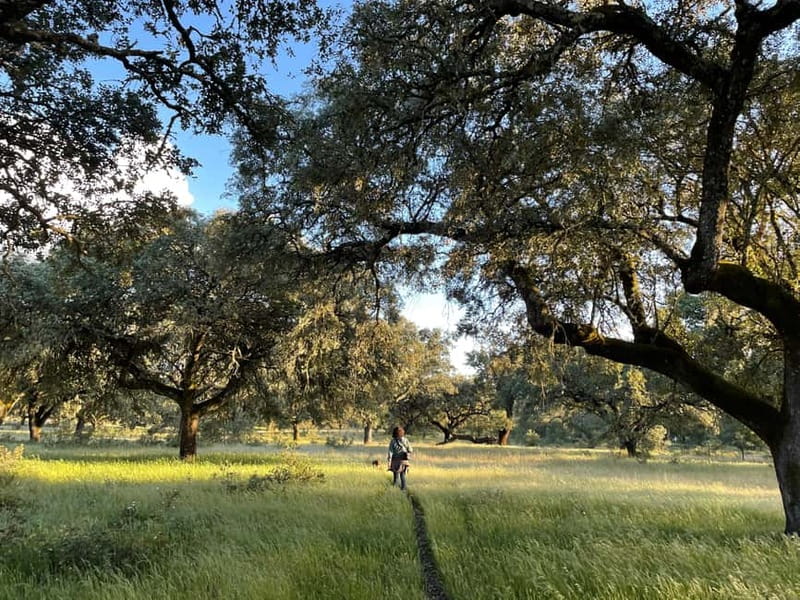
- A real look at the montado: Walk among cork and holm oaks and learn how harvesting fits with farming and nature.
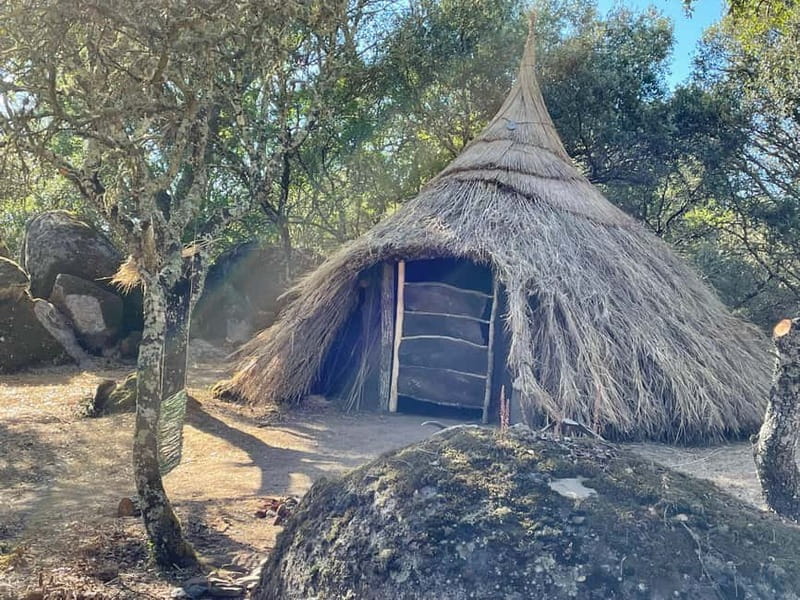
- Prehistoric sites on the estate: Visit a recreated cromlech and a reconstructed Neolithic village.
- Pickup and drop-off included: Transport from your accommodation makes this easy if you are staying in Évora.
- Best for active, curious visitors: Comfortable shoes, water, and sun protection matter, and the tour is not suitable for wheelchair users or people with animal allergies.
Why cork makes Évora worth leaving town
Évora is famous for its Roman temple, medieval streets, and whitewashed old center. This tour gives you a different side of the district, one tied to work, agriculture, and a material Portugal has shipped around the world for generations.
Cork comes from the bark of cork oak trees. The tree remains alive, so harvesting does not mean cutting it down. At the factory, you can follow the material through its transformation into different products. That process gives the souvenir cork you see in Portuguese shops a useful context. You are not simply browsing shelves of coasters and bags. You are seeing the production behind them.
The factory visit is especially good for anyone who likes practical details. It is unusual, hands-on in spirit, and different from the usual monument stop. One thing to keep in mind is that factory tours can vary in how much time is spent explaining the work compared with viewing finished goods. The factory has hundreds of products, so you may see plenty of examples of how flexible cork can be.
More Farm-to-Table Meals in Portugal:
- From Porto: 2 Wine Regions, Farm-to-Table Lunch & Boat
★ 4.9 · 5,724 reviews - From Porto: 2 Wine Regions, Farm Lunch, and Boat Ride
★ 4.8 · 233 reviews - “Re-Canto” Farm-to-Table with Stunning Views at Madeira
★ 5.0 · 87 reviews
The morning factory visit
The day begins with transport from your accommodation, removing the need to arrange a rental car or work out a rural bus connection. That is a real benefit in the Alentejo, where the most interesting rural stops are spread beyond Évora’s city center.
At the factory, your guide explains the full path from raw cork to finished products. You will learn about the material itself and see how it is prepared and used. The factory is not just a retail stop, although there are many products to look at. It gives you a clearer sense of cork as a sustainable local industry.
Pedro is particularly strong on cork production and farming, while Telma brings an energetic, personal style to the day. Zé may also guide the outing. The guide can make a real difference here because the machinery and products mean more when someone connects them to local life.
One practical point: if you are seated in the back row of the van, it may be harder to hear explanations while the vehicle is moving. If you have hearing difficulties, ask to sit closer to the guide when possible.
Lunch in a family-run Alentejo restaurant
After the factory, the group stops for a traditional Alentejo lunch at a typical restaurant. The restaurant is connected to the guide’s family, which gives this part of the day a more personal feel than a standard tourist dining room.
This is one of the strongest reasons to choose the tour. You get a leisurely meal in a local setting, rather than a rushed stop at a roadside café. The food introduces you to the hearty cooking of the region, and the family connection adds warmth to the visit. In particular, the guide’s father is known for making diners feel welcome.
The price of $117 per person includes lunch, transportation, the factory, the farm visit, and the historic sites. That makes the cost reasonable if you want a full day without arranging separate taxis, meals, and admissions. The value depends partly on your interest in all three themes: cork, countryside, and prehistoric archaeology.
Drinks are not included, so budget for them at the restaurant. The tour does not present lunch as an optional add-on, which is useful if you prefer a day with costs settled in advance. If you want a quick meal and more time in Évora, though, the long lunch may feel like too much of the schedule.
Walking through the Alentejo montado
The afternoon moves to an Alentejo estate. Here, cork oak and holm oak trees form the setting for a working rural system known as the montado. This is not simply a pretty country walk. The trees, animals, farming, and cork harvest all connect.
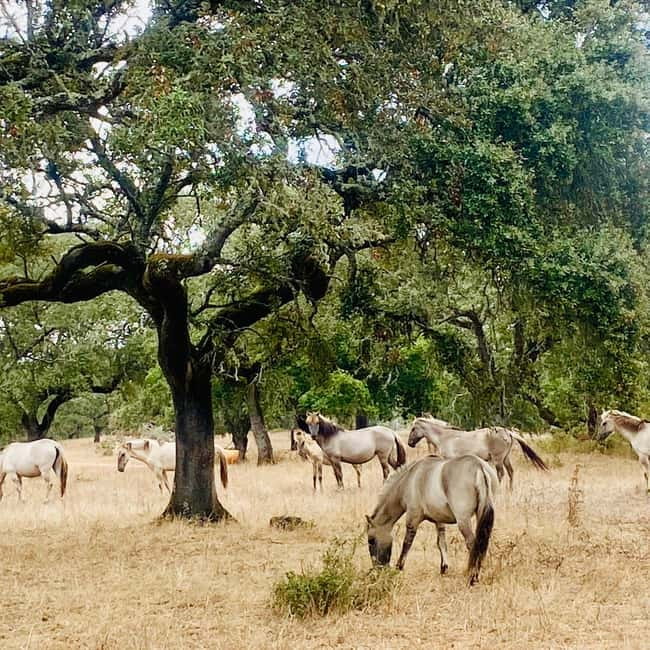
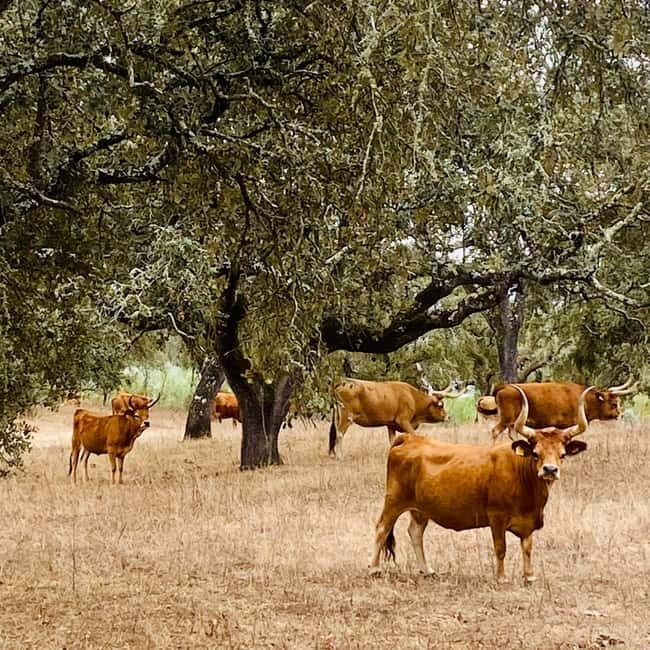
You will learn how cork is harvested and how the estate balances agriculture with the natural setting. You may also see animals on the property. That makes the farm visit useful for understanding why the cork oak matters beyond the factory. The tree supports a local economy while remaining part of a broader farming system.
The open countryside can be exposed to strong sun, especially in summer. Bring water, a hat, and clothing suitable for walking. Comfortable shoes are important because the day includes time outdoors on a working estate, not just paved paths and indoor displays.
This part of the tour is best for you if you enjoy seeing how food, materials, and rural work fit together. It is less suitable if you want a relaxed sightseeing day with minimal walking. People with animal allergies should also choose carefully, since the property has animals.
More Farm Days with Lunch in Portugal:
- São Miguel: Furnas Volcano & Tea Plantation Tour with Lunch
★ 4.9 · 375 reviews - Furnas Volcano & Tea Plantation With Traditional Lunch, East Tour
★ 5.0 · 183 reviews - Furnas: Thermal Springs & Tea Plantation Day Tour with Lunch
★ 4.6 · 55 reviews - Traditional Cooking Class, Farm Tour & Lunch in the Douro Valley
★ 5.0 · 46 reviews
Cromlech stones and a reconstructed Neolithic village
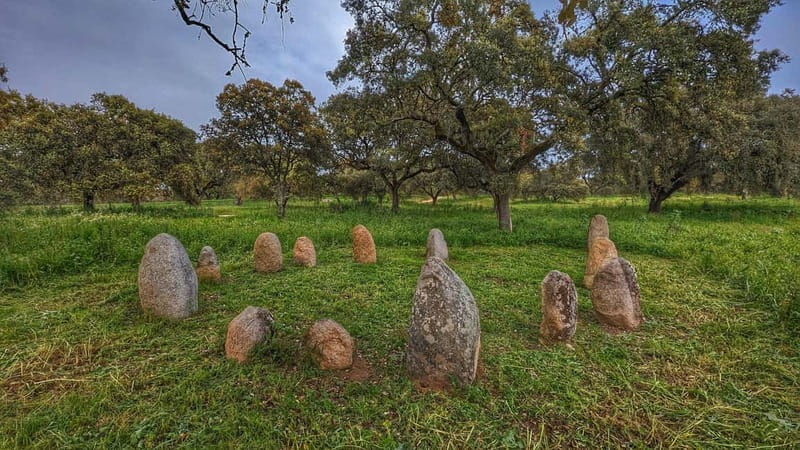
The farm also includes a recreation of a prehistoric cromlech and a reconstruction of a Neolithic village. These stops add an archaeological layer to the day and show that people have used this region for a very long time.
The cromlech gives you a chance to see standing stones in a rural setting rather than only reading about them in a museum. The Neolithic village presents an educational reconstruction of early settlement and daily life. You may also learn about older methods of processing acorns, a detail that connects ancient food practices with the trees still growing around the estate.
I found this combination appealing because it joins natural history, archaeology, and farming in one place. It helps explain why the Alentejo countryside is more than open farmland. At the same time, the presentation may feel basic if you prefer formal archaeological sites or museum-quality interpretation.
The afternoon education area can also feel designed for younger school groups. Adults who enjoy history and hands-on displays should find it worthwhile, but anyone mainly interested in cork and food may feel the tour has already reached its high point after lunch.
How the full eight-hour schedule feels
Eight hours is a full day, but the schedule has a sensible rhythm: transport, factory, lunch, farm, and archaeology. You are not spending the entire day walking through one site, and the change of setting helps keep the outing varied.
Still, this is not a quick excursion. If your time in Évora is limited to one day, think about what you are giving up. The city’s historic center deserves time of its own, so this tour works best when you have at least another day for the Roman temple, cathedral, and old streets.
The vehicle transfer is a major convenience, especially for anyone without a car. The downside is that van comfort and seating can affect how well you hear the guide. Weather may also change the afternoon plan. On a rainy day, the itinerary can be adapted, and the guides have shown flexibility about adjusting outdoor activities.
The tour operates in English and Portuguese. If you need detailed explanations in English, tell the organizer when booking and pay attention to your seating position in the van.
Who will get the most from this tour
I would choose this outing if you want local contact and a rural day rather than another round of monuments. It suits you especially well if you enjoy:
- Sustainable materials and traditional industries
- Family-run restaurants and regional cooking
- Farms, trees, animals, and rural work
- Archaeology presented in an informal setting
- Guided transportation from Évora
- A full day outside the city
Families with older children may like the variety, particularly the reconstructed village and stones. Couples and solo visitors who prefer relaxed, personal tours should also find plenty to enjoy.
I would hesitate if you dislike walking, outdoor heat, farm animals, or educational reconstructions. The activity is not suitable for wheelchair users, and it is not a good choice for anyone with animal allergies. If you want an adults-only cultural tour with a strong focus on architecture, wine, or formal archaeology, another Évora outing may suit you better.
Is $117 a fair price?

At $117, this is not the cheapest way to spend a day near Évora. It is also more than a simple factory tour or a restaurant meal. The price becomes easier to justify because it combines several separate elements: accommodation transport, a cork factory, lunch, an estate visit, a cromlech, and a Neolithic village.
You are also paying for local interpretation. Guides such as Pedro and Telma bring personal knowledge of the area, cork production, farming, and community life. That connection is difficult to reproduce with a rental car and a printed guide.
The value is strongest when you take part in the entire day. If you only want to see cork products, the factory alone may be enough. If you want a taste of Alentejo life, the lunch and farm are what make the price worthwhile.
Practical tips before you go
Wear shoes that can handle uneven outdoor ground and clothing suitable for walking. Bring water, a sun hat, and a camera. The open countryside is especially photogenic, and you will have chances to photograph the cork trees, farm setting, stones, and village reconstruction.
Keep extra money for lunch drinks. Also, tell the provider about any mobility concern or animal allergy before booking. The activity is offered in English and Portuguese, and transportation from your accommodation is included.
Free cancellation is available up to 24 hours before the start for a full refund. You can also reserve now and pay later, which helps if your Évora schedule is still changing.
Should you book this cork and farm day?
Book it if you want to understand how Alentejo works, not just look at its monuments. The factory explains the material, the restaurant brings in local food and family hospitality, and the estate shows how cork trees, animals, farming, and old human settlement share the same ground.
The best parts are the factory and lunch, followed closely by the guide’s personal connection to the region. The farm and Neolithic displays add useful context, though they may feel too elementary if you prefer a more polished archaeological site.
For a full, practical day outside Évora, I think the tour is a strong choice. Just bring water, expect some walking, budget for drinks, and choose it only if the rural and educational parts appeal as much as the cork itself.
FAQ
How long does the cork factory and farm tour last?
The tour lasts eight hours. Starting times depend on availability.
Is transportation included?
Yes. Transportation from your accommodation is included, with pickup and drop-off arrangements available in Évora.
Is lunch included?
Yes. A traditional Alentejo lunch at a typical restaurant is included.
Are drinks included with lunch?
No. Drinks at lunch are not included, so you should budget for them separately.
Which languages are available?
The host or greeter speaks English and Portuguese.
What should I bring?
Bring comfortable shoes, clothing suitable for walking, a sun hat, water, and a camera.
Is the tour suitable for wheelchair users?
No. The activity is not suitable for wheelchair users.
Can I cancel the booking?
Yes. You can cancel up to 24 hours in advance for a full refund. Reserve now and pay later is also available.
Just added around Portugal
- Half-Day Farm Visit and Cow Milking Experience★ 5.0 · 16 reviews
- Alpaca Farm MamaAdama Meet & Feed★ 5.0 · 39 reviews
- Furnas : Volcano Wonders, Tea Plantation & Waterfall Tour★ 4.5 · 37 reviews
- Bee Inspired: A Journey in São Miguel and a Visit to an Apiary★ 5.0 · 2 reviews
- Waterfalls Hike, Moinho do Felix with tea plantation★ 5.0 · 11 reviews
- Hot Water Pool Bath Inside Pineapple Plantation & Dinner★ 5.0 · 24 reviews
- Furnas in a Private Evening – Tea, Cozido Dinner and Hot Springs★ 5.0 · 10 reviews
- Culture & Nature – Visit All Center of the Island★ 4.5 · 9 reviews
Portugal Farm Tours, compared.
Furnas: Tea Plantations, Lake and Volcano Guided Tour
Read our review →
São Miguel: Furnas Volcano & Tea Plantation Tour with Lunch
Read our review →
Furnas Volcano & Tea Plantation With Traditional Lunch, East Tour
Read our review →
Furnas: Volcano Wonders, Tea Plantation & Waterfall Tour
Read our review →
Adventure in the Furnas, with volcanoes, lagoons and tea plantations
Read our review →
São Miguel: 2-Day Island Tour, Tea & Pineapple Plantation
Read our review →Browse the lists this tour appears in