
Review · SAPA
1-Day Sapa Long Trek – Rice Field Terrace, Ethnic Culture
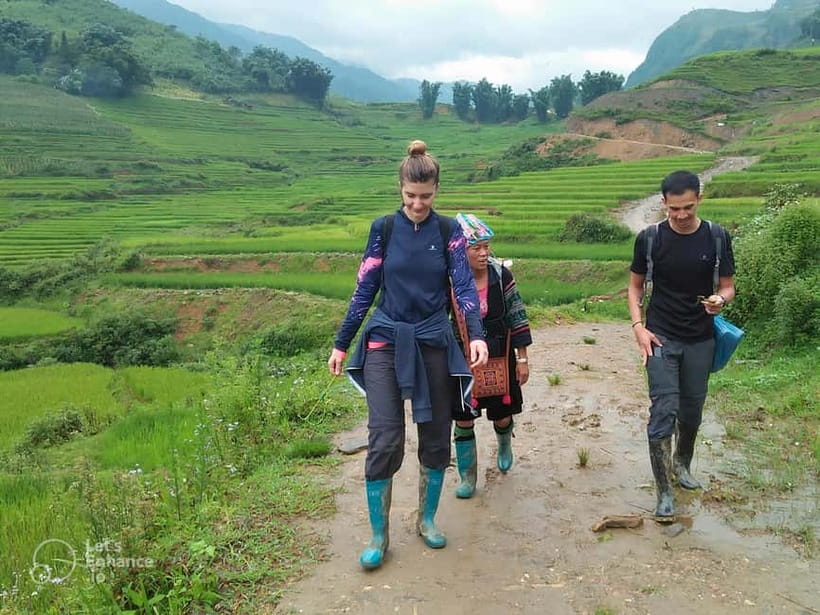
Sapa’s best day walks are not about ticking off viewpoints. They are about following a narrow trail through the Muong Hoa Valley, crossing a wooden bridge near Y Linh Ho, and watching Hmong farmers work among rice terraces that fold down the hillsides. I like the local guides, including Mao, Sung, Chai, and Giang, who explain village life in clear English and adjust the pace when the ground turns slick. I also like the lunch with a Hmong family, where the food is shared at home rather than rushed at a restaurant.
The catch is simple: this is a real mountain walk, not a gentle village stroll. You may cover 12 to 15 kilometers, with steep sections, uneven ground, and serious mud after rain. The $24 price is excellent for the guide, lunch, village access, pickup in Sapa town, and return transport, but you should bring proper shoes and a willing pair of knees.
Key points at a glance
- Fansipan views from the ridge: Begin with a high lookout toward Fansipan, known as the Roof of Indochina, before descending into Muong Hoa Valley.
- Hmong and Giay village life: Walk through Y Linh Ho, Lao Chai, and Ta Van, meeting people and seeing homes, fields, and daily work.
- A generous family lunch: Eat traditional home-cooked food with a Hmong family in Lao Chai Sang, with dietary needs accepted if arranged ahead.
- A guide who shapes the day: Local guides such as Mao, Sung, Chai, Soso, and Giang explain customs, geography, and village life while setting a sensible pace.
- Mud is part of the deal: Wet-season paths can be slippery enough to justify rented rubber boots or sturdy hiking shoes.
- Small-group value: Groups are limited to 10 people, and some departures have only four participants, making conversation and pace easier.
Why this Sapa trek is worth your time
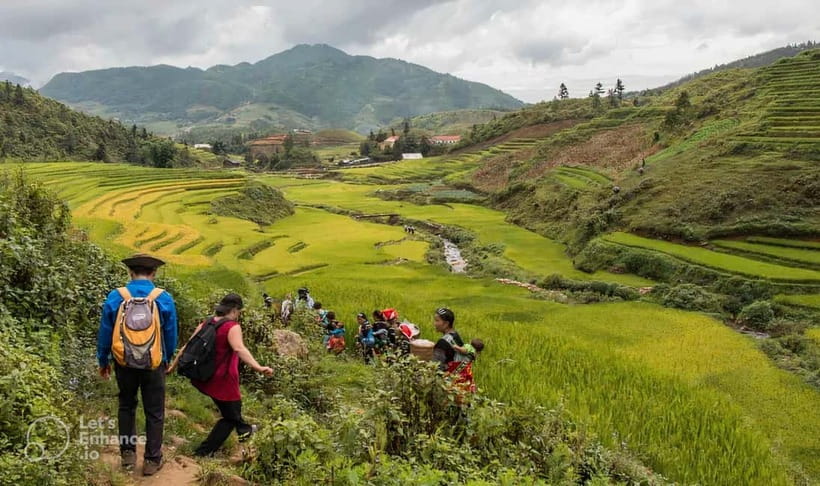
Sapa can feel crowded around its central streets and famous photo stops. This walk gives you a better reason to leave town. The route leads into a valley shaped by farming, streams, mountain paths, and several ethnic communities, so the views come with context.
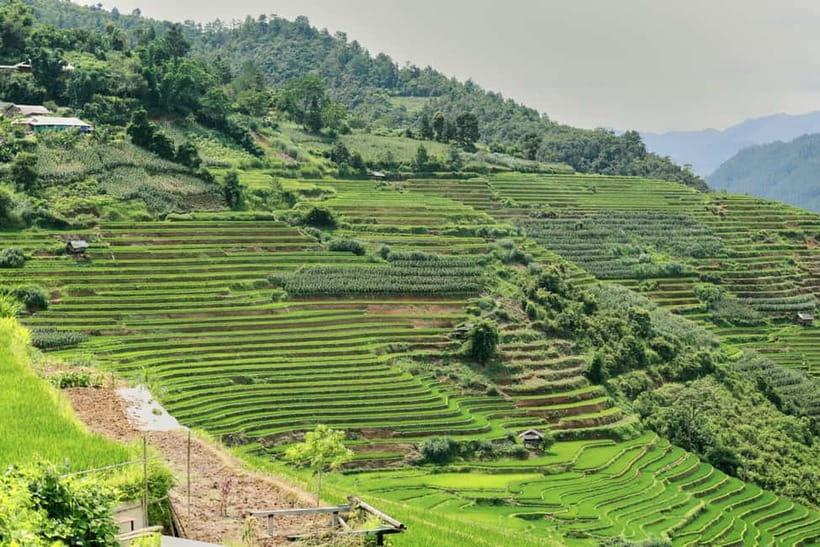
The terraced fields are not just pretty steps cut into a hillside. They are working farmland, built and maintained by generations of Hmong families. Your guide can help you understand how the fields fit into village life, rather than leaving you with only a quick photo stop.
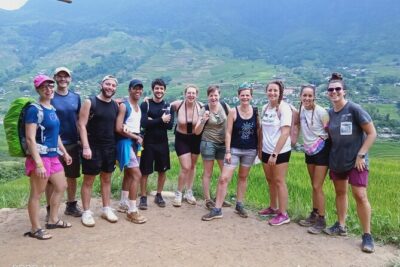
The strongest part of the experience is the combination of scenery and conversation. Guides come from nearby Hmong villages and speak English or Vietnamese. Names vary by departure, but Mao, Sung, Chai, Soso, Giang, Thao, and others are regularly praised for warmth, clear explanations, humor, and care with the group.
That local connection matters. You can ask about farming, clothing, village customs, family life, and changes brought by tourism. One guide, Thao, also talks openly about women’s lives and changing opportunities in the mountain communities. These conversations give the walk more meaning than a simple route between viewpoints.
More Rice Terrace Tours in Sapa
- Explore Sapa by TrekkingAdventures, Mountain,Rice fields
★ 4.9 · 229 reviews - Motorbike 1 Day Off The Beaten Track, Hidden Villages, rice field
★ 5.0 · 203 reviews - Sapa: 2D/1N Trek Rice Terraces & Homestay with Linh
★ 4.8 · 87 reviews
9:00 AM: A ridge above Sapa and the first view of Fansipan
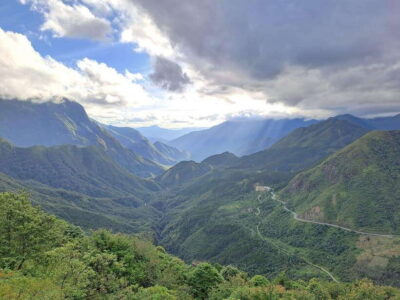
The morning begins around 9:00 AM with pickup at your hotel in Sapa town or at one of the stated meeting points. From there, the trail rises toward a quieter ridge with a broad view of Fansipan and the Hoang Lien Son range.
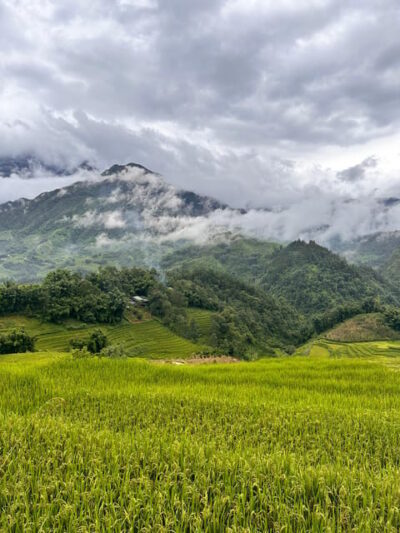
The weather controls this opening scene. On a clear day, Fansipan may appear above the surrounding peaks. On a cloudy day, the mountain can disappear into mist, but the low cloud gives Sapa its cool, moody character. A guide may adjust the route or keep the group lower if the higher view is unlikely to appear.
This is a good place to settle into the pace. Do not burn your energy during the first climb. The full route can be long, and the ground becomes more demanding once you reach the valley paths.
Descending into Muong Hoa Valley
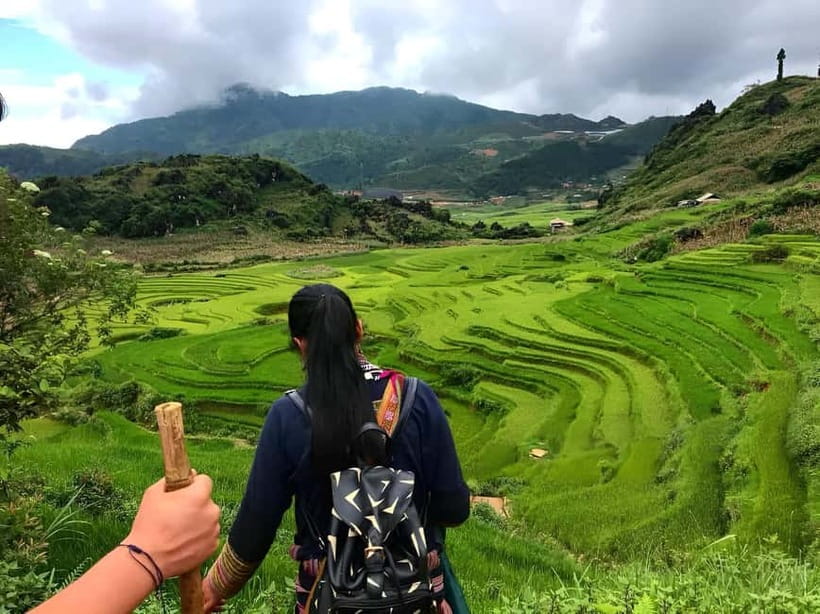
From the ridge, the route drops toward Muong Hoa Valley. The change in scenery is quick. Open mountain views give way to rice terraces, streams, narrow paths, and villages spread across the lower slopes.
The terraces change with the season. Depending on your date, you may see green fields, reflective water, or recently harvested plots. The tour does not promise one fixed color or one perfect view, so keep your expectations tied to the weather and farming calendar.
The descent can be harder than it looks. A downhill path through mud puts pressure on your ankles and requires care. After rain, guides and local women may help with slippery sections. That assistance can be useful, but it also means the walk may feel more active and social than a quiet solo hike.
Y Linh Ho at around 11:00 AM
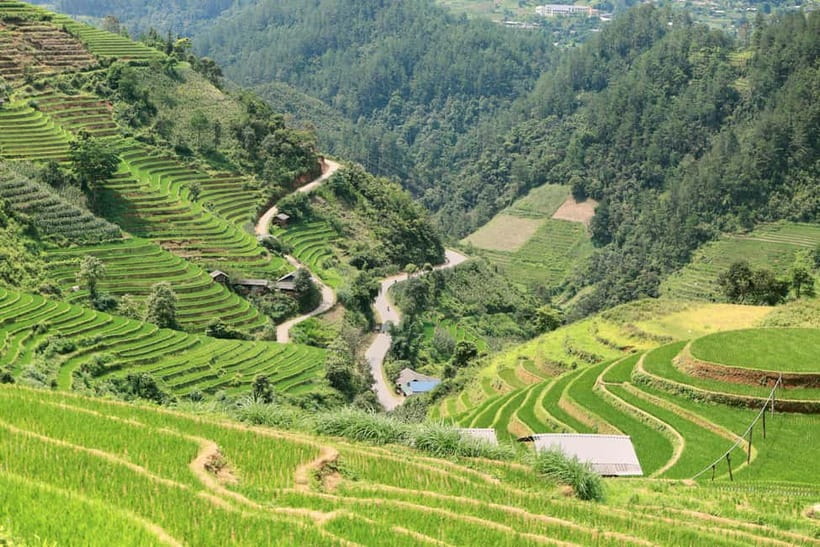
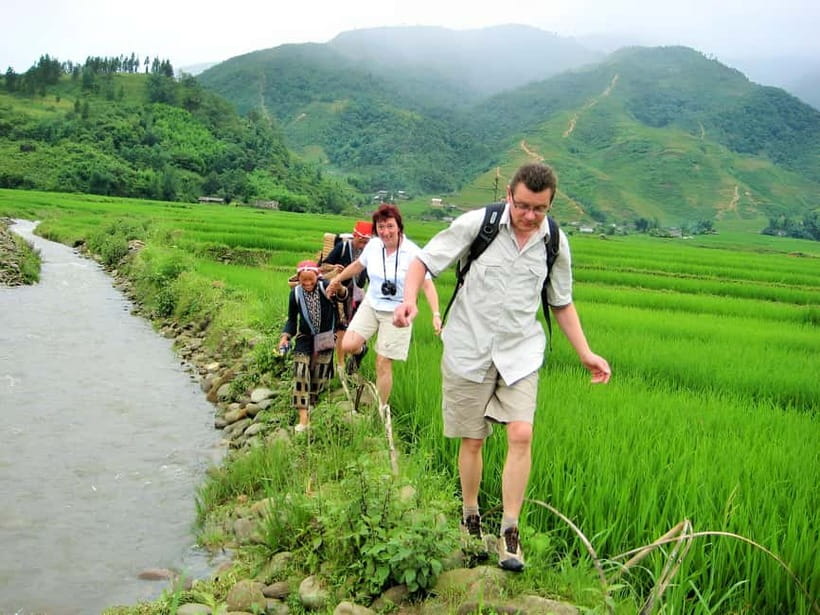
Around 11:00 AM, you reach Y Linh Ho, a peaceful Hmong village beside a clear river. The wooden bridge near the village is a natural pause point and offers a good chance to take photographs without rushing.
From here, the route continues through open fields. Towering peaks surround the valley, but the walk itself stays close to the details: water channels, farm paths, homes, and people working outdoors.
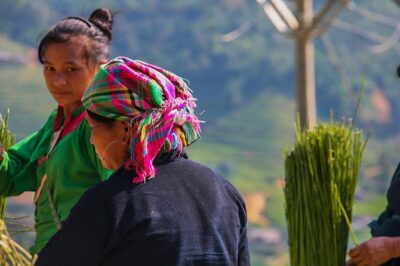
This is one of the better sections for seeing everyday activity. You may encounter Hmong women in the fields or walking along the route. Some may offer handmade scarves or other goods for sale. Buying is optional, but you should expect some sales contact in the villages, particularly along popular sections.
A polite no is enough if you do not want to buy. If you do purchase something, carry small cash and treat it as a direct contribution to a local seller, not as part of the tour price.
More Rice Terrace Tours in Vietnam
- Sapa: Love Silver Waterfall, LonelyTree in Heaven-Rice Field
★ 4.9 · 28 reviews - Sapa Half-Day Motorbike Tour: Villages & Rice Fields
★ 5.0 · 22 reviews - SAPA: 1-DAY TREKKING TOUR WITH LOCALS, LUNCH & RICE FIELDS
★ 4.7 · 18 reviews - From Sapa : 1 Day Amazing Sapa Trek To Terrace rice field
★ 4.6 · 17 reviews
Lao Chai Sang and lunch with a Hmong family
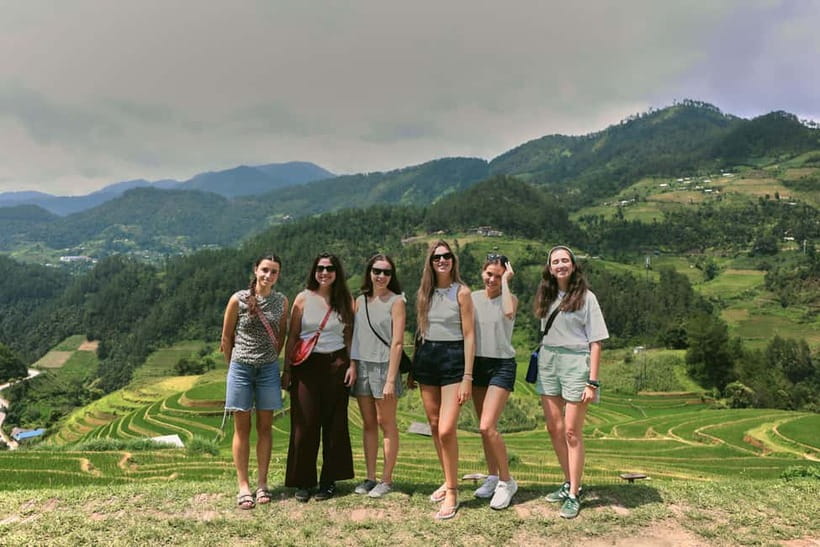
By about 12:30 PM, the group reaches Lao Chai Sang for lunch. The meal is prepared by a local family and served in a simple home setting. Dishes are shared family-style, and portions are described as generous, with more available when needed.
This meal is one of the best value points in the day. You are not only refueling after several hours on foot. You are sitting in a mountain home, seeing how hospitality works in the village, and having time to talk with your guide and fellow walkers.
The food is traditional and home-cooked rather than presented as a formal culinary program. Expect a communal meal, not a menu of individual dishes. Vegetarian meals and other dietary needs can be arranged, but you need to tell the operator in advance about allergies or restrictions.
Lunch also gives you a useful break before the afternoon route. If the morning has been wet, your socks and shoes may need attention. Use the pause to drink water, check your footing, and avoid starting the second half too quickly.
Traditional cloth, natural dye, and village craft
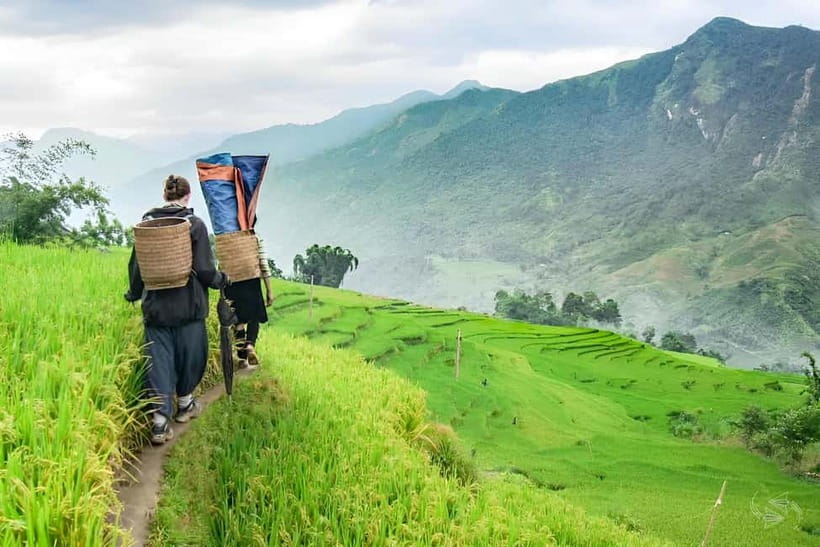
Around 2:00 PM, the route includes a local stop focused on Hmong clothing and textile work. You can learn how handwoven fabric is made and how natural dyes create traditional colors, including the indigo process described by several visitors.
The experience also highlights traditional incense making in Ta Van. The exact craft demonstration may vary, so consider this a chance to learn about local handwork rather than a guaranteed workshop with a fixed format.
This stop adds something the scenery cannot provide. You get to see how clothing carries local identity and how practical skills are passed through families. The craft is not simply a souvenir display. It connects directly to how people present themselves and preserve customs.
You may also see handmade products for sale. Take your time before buying, and remember that the price of an item is separate from the $24 tour fee.
Ta Van and the return to Sapa
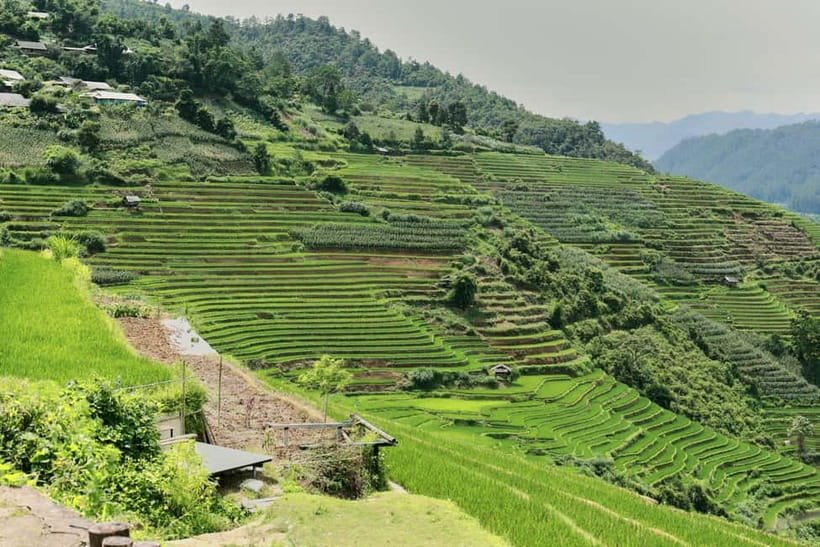
The final major stop is Ta Van, a quiet Giay village reached around 3:00 PM. The route here shifts from Hmong village settings to Giay community life, giving you a useful comparison within one day.
Ta Van is not a grand monument. Its appeal is the setting, the village paths, the surrounding hills, and the chance to see how different communities share the same valley while keeping distinct traditions.
A driver meets the group in Ta Van and takes you back to Sapa. The return ride matters because walking all the way back would make this an even longer day. Drop-off in Sapa town is included, while transport outside town may cost extra.
The full activity lasts about seven hours, though the walking distance can feel closer to a full day than a short half-day outing. Several people have covered more than 13 kilometers, and some routes reach roughly 15 kilometers. Ask about the exact route if distance matters to you.
What the guides add to the route
The guide can make or break a mountain walk, and this format has a real advantage: the guides are local Hmong people from nearby villages. They are not simply leading you from point A to point B.
Mao is described as energetic, proud of her culture, and willing to change the route when mist hides the views. Sung is praised for clear explanations and a friendly manner. Chai brings humor and careful attention to the group. Soso has used quieter paths with small groups, while Giang has helped with cultural questions and even assisted one person with arranging transport from Lao Cai Railway Station.
Do not expect every guide to have identical English or the same personality. Communication levels vary, but the guides speak English or Vietnamese, and the best conversations often come from simple questions asked along the way.
Small groups help. The maximum is 10 people, and some departures have only four. A smaller group makes it easier for the guide to check your footing, answer questions, and keep a shared pace. If you are worried about fitness, ask for a smaller or private arrangement.
Mud, slopes, and the right shoes
The most important practical point is footwear. Wear hiking shoes with strong grip, not smooth-soled trainers. In wet weather, the paths can become slippery enough that rubber boots are the sensible choice. Local wellies may be available to rent, and they have saved more than one pair of shoes.
Bring a raincoat or poncho even if the morning begins bright. Tours operate in rain and sunshine, and mountain weather can change quickly. The operator provides a rain poncho or raincoat and a small bottle of water, but you should still carry extra water for a route that can last many hours.
Pack a sun hat, sunglasses, sunscreen, insect repellent, and basic toiletries. Wear comfortable clothes that can get dirty. Keep your day bag light, since you will carry it up and down uneven paths.
This trek is not suitable for people with mobility limitations, back or heart problems, visual impairment, fear of heights, or other existing medical conditions. Wheelchair access is not available. If you tire easily, tell the guide at the start and ask about easier or steeper path choices.
Is $24 good value for Sapa?
At $24 per person, this is a strong value for a seven-hour outing. The price includes Sapa town pickup and drop-off, a local guide, village entrance fees, a home-cooked lunch, and the return ride from Ta Van.
It also includes access to local homes and conversations about village life, which can cost much more through a private cultural tour. The small-group limit makes the price even more appealing when the departure fills with only a few people.
The price does not cover anything not specifically included. Transport from outside Sapa town may carry a fee, and optional purchases, rented boots, and other personal costs are extra.
The tour has a 4.9 rating from 62 reviews, with transport receiving a 94 percent perfect score. Those figures suggest reliable organization, but they do not remove the main uncertainty: weather and trail conditions. You are paying for a guided mountain day, not guaranteed sunshine.
Who should book this walk?
I would choose this tour if you have one full day in Sapa and want more than a cable car ride or a quick village photo stop. It suits people who enjoy walking, asking questions, eating local food, and accepting a little discomfort for better scenery and contact with village life.
It is also a good fit for solo visitors who want company without committing to a large coach group. The group limit of 10 keeps the social side manageable.
I would think twice if you dislike mud, steep descents, or sales encounters near popular villages. Anyone with a medical condition, poor balance, or limited mobility should choose a different activity.
You can cancel up to 24 hours ahead for a full refund and reserve now while paying later, which helps if your Sapa plans depend on weather. Custom routes are also available by request, so contact the operator before booking if you need a shorter or gentler walk.
FAQ
How long does the Sapa trek last?
The activity lasts about seven hours, beginning around 9:00 AM and returning to Sapa after the visit to Ta Van.
How far do you walk?
The route may cover about 12 to 15 kilometers. One stated route covered more than 13 kilometers and included uphill, downhill, rice-field, and mountain sections.
Where does the trek begin?
Pickup is available from hotels or locations within Sapa town. Meeting points include Sapa TT Homestay at 812 Dien Bien Phu Street and Sapa View Spring Garden Hotel at 61 Muong Hoa Street.
Which villages do you visit?
The route includes Y Linh Ho, Lao Chai or Lao Chai Sang, and Ta Van. You see Hmong and Giay communities during the walk.
Is lunch included?
Yes. A home-cooked lunch with a local family is included. Dietary restrictions and allergies can be accommodated if you notify the operator in advance.
What languages does the guide speak?
Guides speak English or Vietnamese. The trek is led by local Hmong guides from nearby villages.
What should I wear and bring?
Wear proper hiking shoes with good grip and comfortable clothing. Bring water, sunscreen, a hat, sunglasses, insect repellent, and a raincoat or poncho. Rubber boots can be useful in wet conditions.
Is the trek suitable for people with limited mobility?
No. It is not suitable for wheelchair users or people with mobility impairments. It is also not recommended for people with back or heart problems, visual impairment, fear of heights, or other existing medical conditions.
Can I cancel or pay later?
You can cancel up to 24 hours before the activity for a full refund. Reserve now and pay later is available.
Should you book it?
Book this trek if you want Sapa’s rice terraces with a local voice, a generous family lunch, and a real walk through Hmong and Giay communities. The price is hard to fault, especially with lunch, transport, and a small group included.
Choose sturdy footwear, expect mud, and arrive ready for a long day on uneven ground. If that sounds like part of the fun rather than a problem, this is one of the better-value ways to get beyond central Sapa.
More Walking and Hiking Trips in Sa Pa
- Trekking Through Rice Terraced Fields – 1Day
★ 5.0 · 173 reviews - Mountain views & Rice Terraced Fields Hiking – 2D 1N
★ 5.0 · 99 reviews - Sapa Trekking Tour Full Day
★ 5.0 · 65 reviews - Sapa 2-Day Trek & Homestay in Ta Van Village – Be a Local
★ 5.0 · 8 reviews
More Rice Terrace Tours in Sa Pa
- Private Half-Day Tour of Villages, Terrace Rice Fields by Car
★ 5.0 · 16 reviews - Sapa Motorbike Tour 1 Day| See All Of Rice Fields & Valleys in One Day
★ 5.0 · 9 reviews - SaPa: 2-Day Villages,Rice Fields, Love Waterfall Hiking Tour
★ 5.0 · 9 reviews - 1-Day Private Trekking in Sapa through Terraces Rice Fields
★ 5.0 · 8 reviews
Just added around Sa Pa
- Sapa 2-Day Trek & Homestay in Ta Van Village – Be a Local★ 5.0 · 8 reviews
- Sapa Private Trekking Through Rice Terraced Fields – 1Day★ 4.5 · 8 reviews
- 5 Hours Trekking with Terraced Rice Field in Sapa★ 5.0 · 2 reviews
- Sapa Motorbike Tour 1 Day| See All Of Rice Fields & Valleys in One Day★ 5.0 · 9 reviews
- Sapa Private Car Tour – 1 Day Enjoy the Rice Terraced Fields★ 4.5 · 3 reviews
- Private Trekking through Terraces Rice Fields in Sapa★ 5.0 · 3 reviews
- Sapa Half Day Local Farming Experience★ 5.0 · 3 reviews
- Sapa Full Day Trekking Through Rice Fields Terrace★ 4.0 · 2 reviews
Sapa Farm Tours, compared.
Explore Sapa by TrekkingAdventures, Mountain,Rice fields
Read our review →
Motorbike 1 Day Off The Beaten Track, Hidden Villages, rice field
Read our review →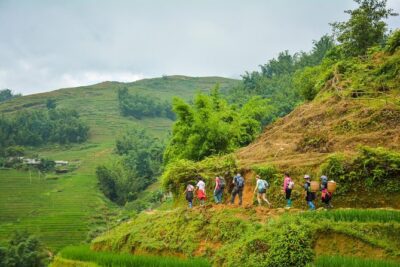
Rice Terraced Fields & Homestay Experience– 2D 1N
Read our review →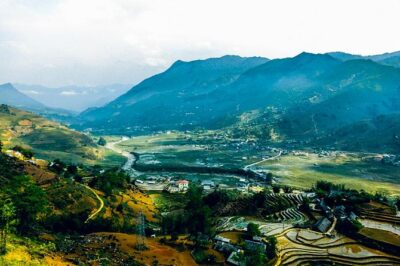
Mountain views & Rice Terraced Fields Hiking – 2D 1N
Read our review →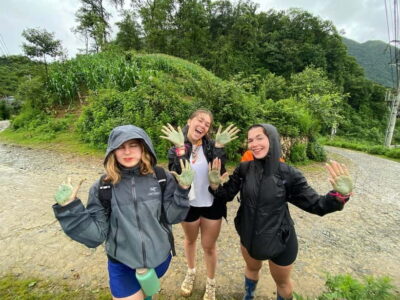
Love Silver Waterfall, LonelyTree in Heaven-Rice Field
Read our review →Browse the lists this tour appears in