
Review · ITALY
Amalfi: Cooking Class and Farmhouse Visit With Meal
The best part of this Amalfi cooking class happens before you reach the kitchen. You walk through terraced lemon, olive, and grape gardens, then pick vegetables and herbs for the meal you are about to prepare. I like that the garden visit gives the food a clear sense of place, and I like the small group size, capped at 10 people. The main catch is the steep, uneven access, which makes this a poor choice if stairs are difficult for you.
I also like the social feel. Hosts such as Francesco, Nicola, Fabio, Edi, Ugo, and Alessandro keep the class lively, while the four-course meal, local wine, limoncello, and Neapolitan coffee make the $157.47 price easier to justify. Just allow extra time to reach the meeting point, since buses can be unpredictable and the walk from central Amalfi is uphill.
Key Points
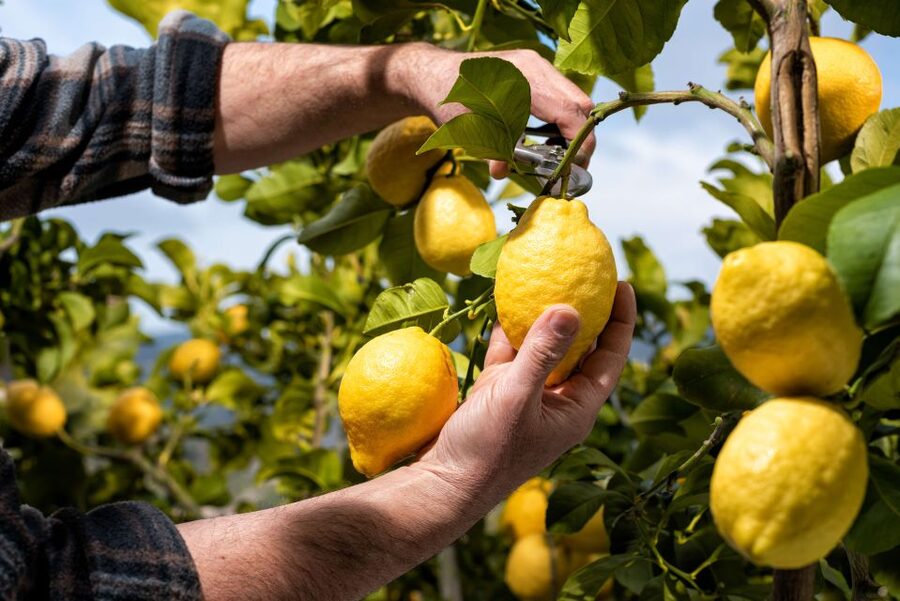
- Pick ingredients in the terraced garden: Collect seasonal vegetables and herbs that go straight into the cooking session.
- Cook four traditional dishes: Past menus have included antipasti, potato gnocchi, sauce, and dessert, though the exact dishes can change.
- Expect a lively small group: The class holds no more than 10 people, with English and Italian instruction.
- Eat with local drinks: Water, wine, Amalfi Coast limoncello, and Neapolitan espresso are included.
- Enjoy a remarkable coastal setting: The cooking area and lemon grove look out toward the Mediterranean.
- Plan carefully for access: Stairs, steep paths, and uneven ground rule out wheelchairs and make the class unsuitable for people with walking difficulties.
A Garden-to-Table Class Above Amalfi
Amalfi Heaven Gardens sits about 1 kilometer from central Amalfi, up the stairs opposite G.A.S. Bar. This is not a polished restaurant tucked beside the waterfront. It is a working, terraced setting where cultivation, cooking, and eating all form one four-hour experience.
You meet the team 15 minutes before the scheduled start. Look for the orange umbrella near the meeting point. The venue cannot be entered before class time because another class may still be underway, so arriving early means waiting nearby rather than wandering in.
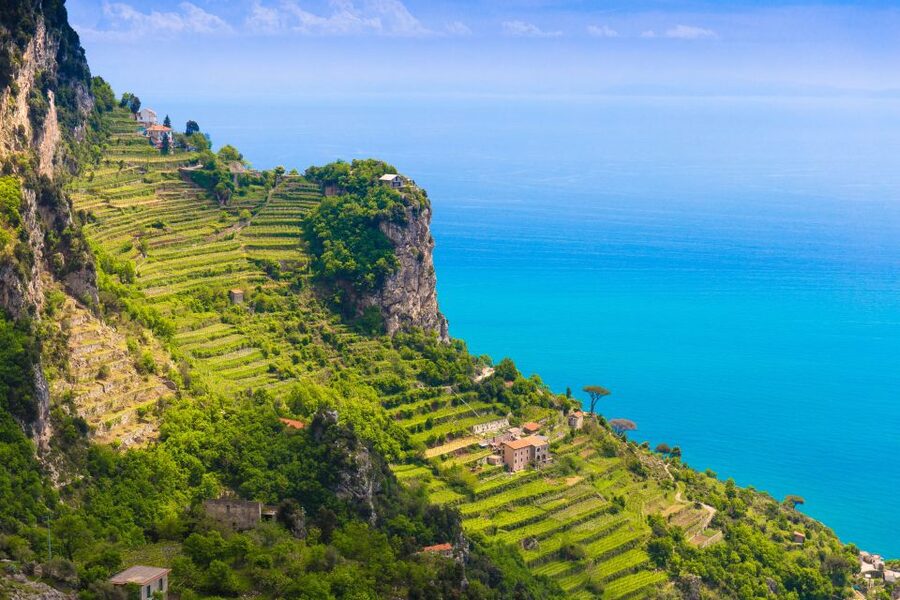
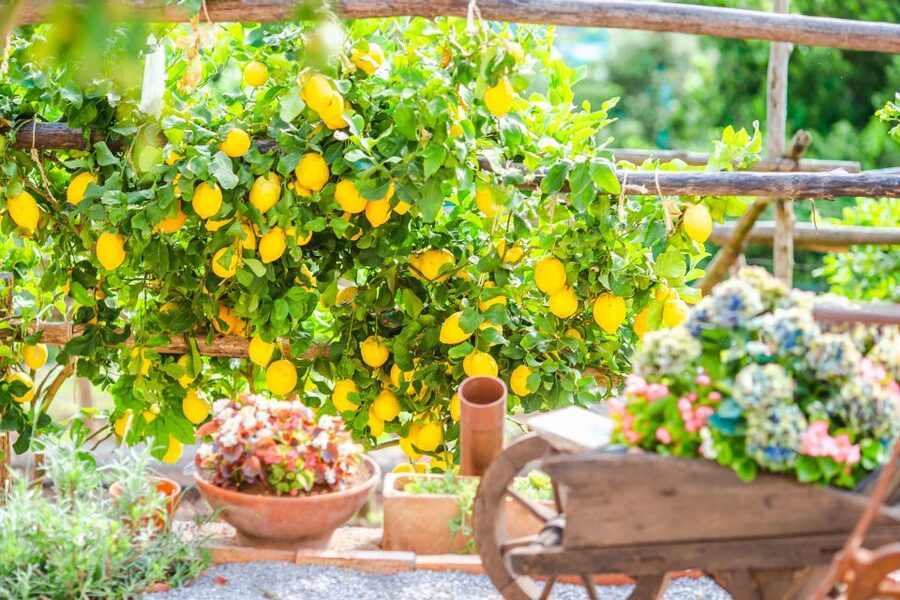
The setting does much of the work. Amalfi’s terraces are practical pieces of mountain agriculture, built to make use of steep ground and protect valuable soil. Here, those terraces hold lemon trees, olive trees, grapevines, vegetables, and herbs. The walk is not just a scenic prelude. It explains why lemon, olive oil, wine, and fresh produce matter so much in Campanian cooking.
More Farm Cooking Classes in Italy
- Cooking Class and Lunch at a Tuscan Farmhouse with Local Market Tour from Florence
★ 5.0 · 4,831 reviews - Hands-On Cooking Class & Farmhouse Tour on the Amalfi Coast
★ 5.0 · 956 reviews - Florence: Cooking Class at a Tuscan Farm & Local Market Tour
★ 4.9 · 354 reviews
The Terraced Garden Sets the Tone
The garden visit begins with a look at the lemon grove, olive grove, and vineyard. You hear how these crops fit into the Mediterranean diet and how local limoncello, olive oil, and wine are produced.
The lemon trees are especially fitting for an Amalfi experience. The coast is closely tied to its large, fragrant lemons, and seeing them growing above the sea gives the later meal a useful local context. You are not simply told that lemon is important here. You see the fruit, the terraces, and the work needed to grow it on a mountainside.
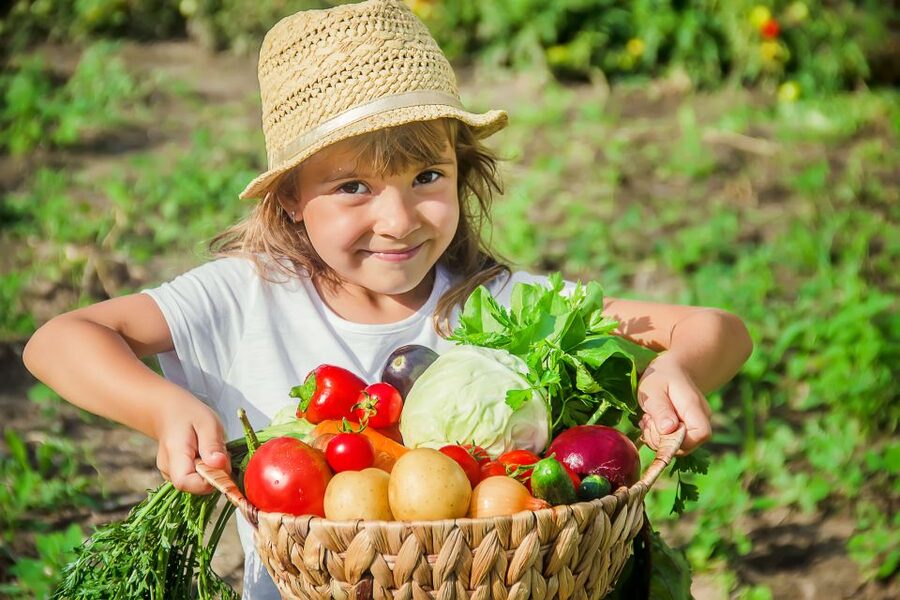
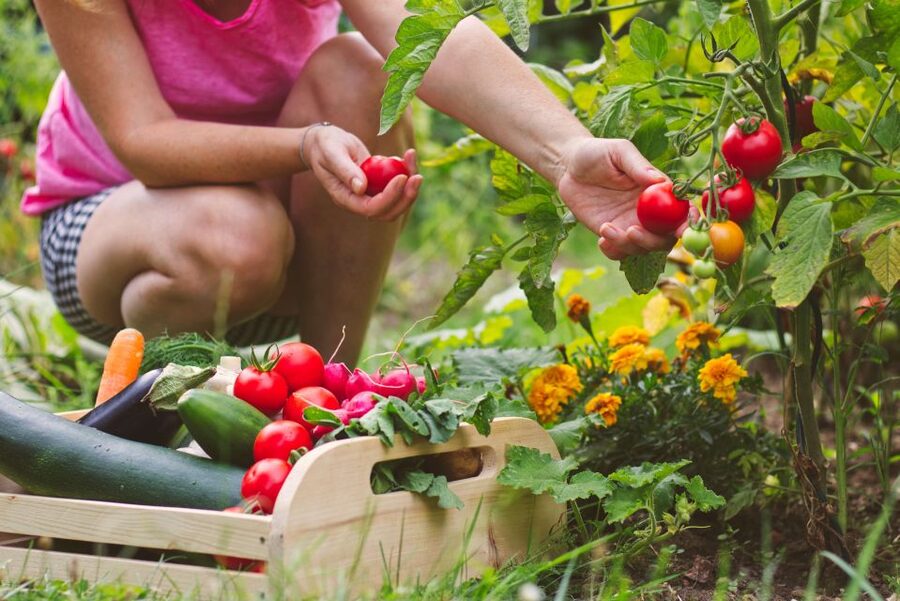
Next comes the vegetable garden. You put on gloves, collect a wicker basket, and pick seasonal vegetables and herbs. The ingredients vary with the time of year, so do not book this expecting one fixed menu. That change is part of the appeal. The meal begins with what is growing rather than with a rigid list of imports.
The farm walk is fairly brief compared with the cooking session. That is good news if you want to spend most of your time making food. If you are looking for a long agricultural tour, this experience may feel more like a useful introduction than a full farm visit.
Cooking Four Courses With the Amalfi Team
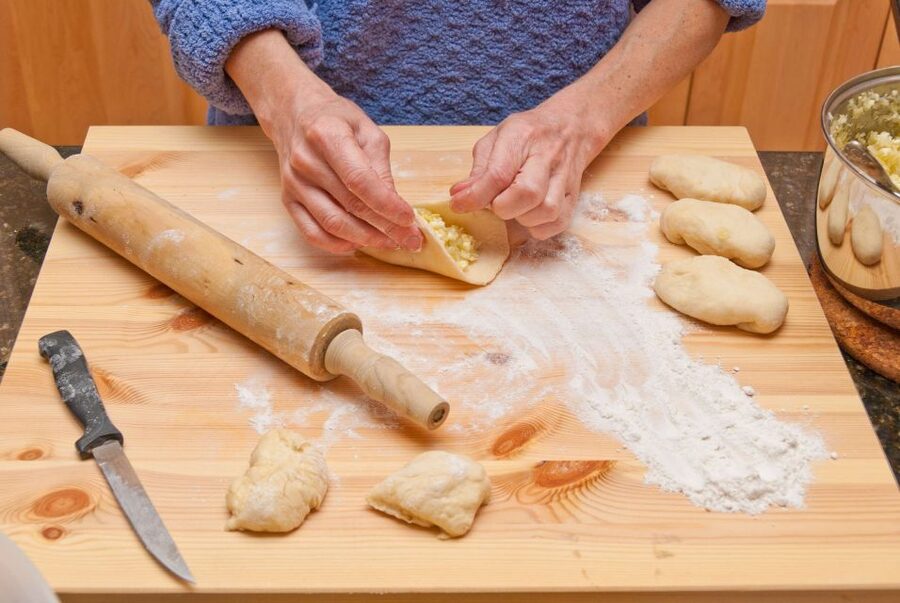
After the garden, you put on an apron and move into the hands-on class. The team leads the preparation of four dishes, using the vegetables and herbs you have just collected.
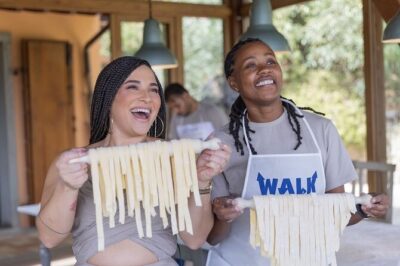
The class is designed for participation, not just watching a chef work. You should expect to mix, shape, season, and help assemble the dishes. Past menus have included a series of fresh antipasti, potato gnocchi, a homemade sauce, and dessert. The exact menu can change with the season and available produce.
The gnocchi has been a particular favorite for many people, and it makes sense as a teaching dish. It is familiar enough to recognize but hands-on enough to show how texture, shaping, and sauce work together. You will not leave with a restaurant-style performance to copy step by step. You will leave with methods you can try in your own kitchen.
The instructors are a major part of the experience. Francesco is often the main host, with Nicola, Fabio, Edi, Ugo, Alessandro, Andrea, Elvira, and others helping with the class. Their style is upbeat and playful. That helps if you are not a confident cook, since the atmosphere is more social than formal.
Instruction is available in English and Italian. English explanations have been praised for being clear, especially when the team discusses ingredients and cooking methods. Still, this is not a technical culinary school. If you want precise professional training, you may find the class light. If you want to cook, laugh, and eat well in a memorable place, the approach fits.
Antipasti, Gnocchi, Wine, and Dessert
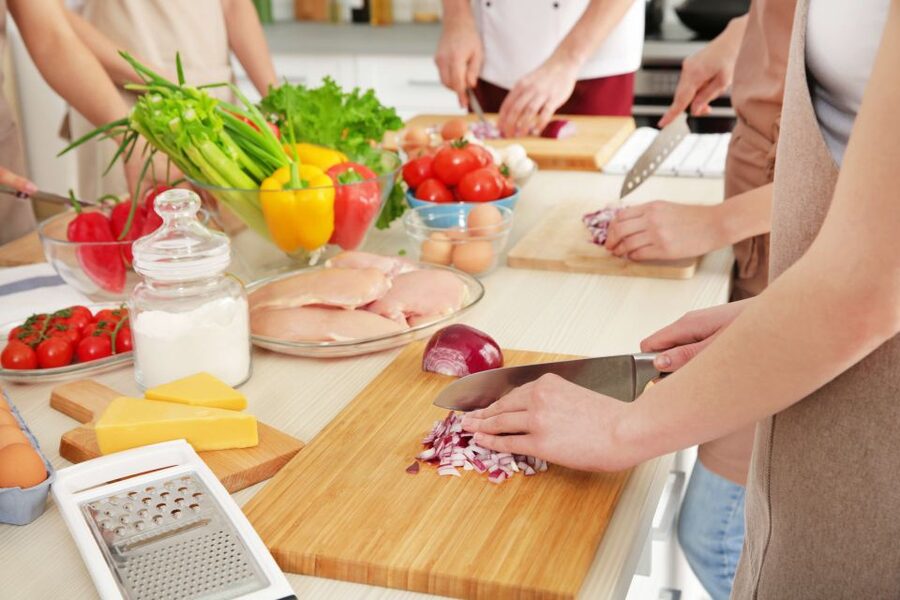
The meal is the payoff, and it is substantial. You sit down to a four-course spread made during the class, with water and local wine included. Amalfi Coast limoncello and Neapolitan coffee finish the meal.
Past menus have included several small antipasti rather than one simple starter. Fresh produce from the garden gives these early dishes their strongest connection to the setting. The food is not presented as a tasting menu with tiny portions. It is intended to feed you after several hours of cooking.
Potato gnocchi has featured in the meal, served with homemade sauce. The combination is simple, traditional, and well suited to a group class. You get to make something that feels distinctly Italian without needing specialist equipment at home.
Local wine is served in ceramic pitchers from Ravello, according to one detailed account of the experience. That small touch matters. It connects the meal to nearby towns and makes the table feel less like a tour stop and more like a shared local lunch.
Limoncello and espresso bring the meal to a proper southern Italian finish. If you are not drinking alcohol, water is included, but the provided description does not list other specific alternatives. Ask the team at the start if you need something beyond the stated drinks.
You may also be offered food to take home if there is extra. That is not a guaranteed part of the package, so treat it as a bonus rather than a reason to book.
Same fields, a different sort of day out:
- Florence Pizza or Pasta Class with Gelato Making at a Tuscan Farm
★ 5.0 · 6,801 reviews - Sorrento Farm and Food Experience including Olive Oil, Limoncello, Wine tasting
★ 5.0 · 2,524 reviews - Sorrento: Pizza Lesson, Wine, and Limoncello at a Local Farm
★ 5.0 · 1,513 reviews - Florence: Pizza or Pasta Class with Gelato at a Tuscan Farm
★ 4.9 · 1,181 reviews
Why the Setting Adds Real Value
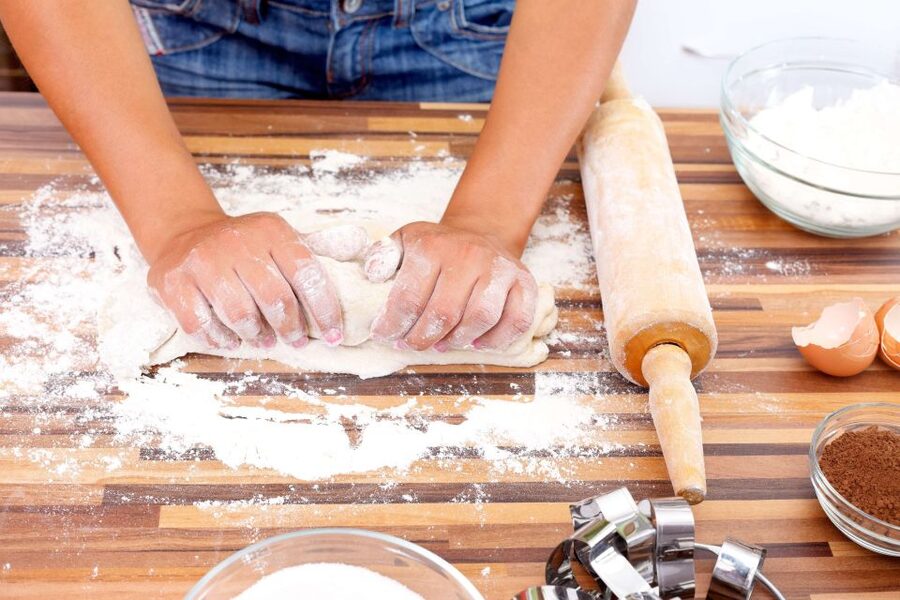
At $157.47 per person, this is not a cheap cooking lesson. The price includes four hours, a garden tour, ingredients, instruction, four courses, wine, limoncello, coffee, recipes, and a cooking diploma. It also includes the setting, which is the part you cannot reproduce at home.
A basic cooking class might cost less, but it may not include a farm visit, a full meal, or drinks. A restaurant meal with a view might also cost a fair amount, but it would not give you the hands-on work or the recipes.
I see the strongest value here for someone who wants one full half-day activity rather than a quick demonstration. You are paying for food, but also for access to the terraced garden, the hosts’ time, the social setting, and the coastal view.
The value is weaker if you are mainly interested in seeing Amalfi’s sights. Four hours is a meaningful block of your day, and you should be happy spending it away from the town center. It is also less useful if you avoid wine, limoncello, or most Italian ingredients, since the food and drink are central to the experience.
Getting There From Amalfi
The meeting point is roughly a 20-minute walk from central Amalfi, though the route includes stairs and an uphill section. You can also use a bus or drive to the area.
Give yourself extra time if you rely on the bus. Service can be unpredictable, and a bus may arrive full. The meeting point is near G.A.S. Bar, which has paid parking, so driving is possible, but parking details and the coastal roads deserve attention.
The class ends back at the same meeting point. Hotel pickup and drop-off are not included, so you are responsible for getting there and returning to your accommodation.
Wear comfortable shoes. A sun hat and sunscreen are sensible because parts of the experience take place outdoors. The terraces have steep and uneven surfaces, and stairs are part of the route. This is not suitable for wheelchair users or people with mobility impairments.
The age information needs a careful reading. One note says all participants must be over 7, while another says the activity is not suitable for children under 8. To avoid a problem at check-in, treat 8 as the practical minimum age. Everyone entering the venue must pay the full class price, even if they are not cooking.
Dietary Limits You Should Know Before Booking
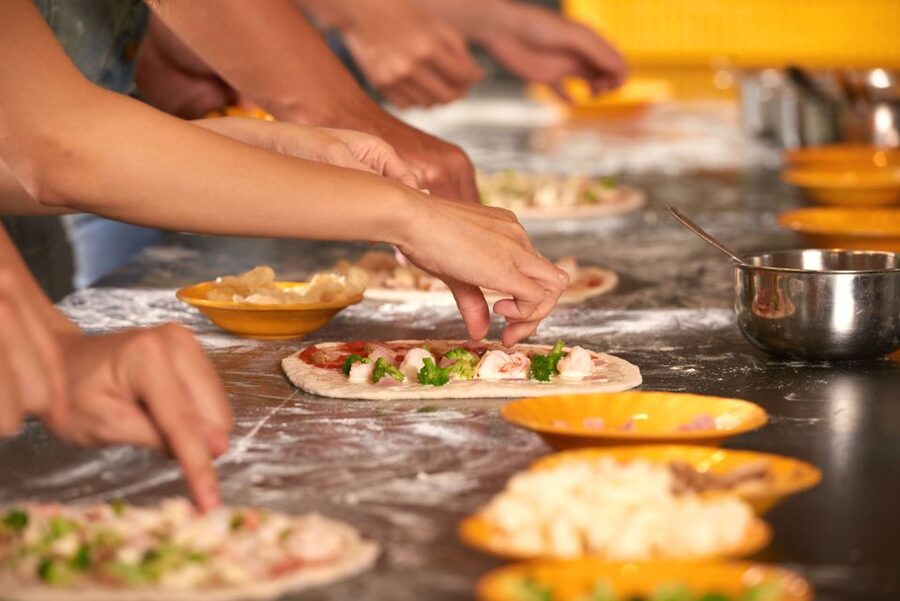
A vegetarian option is available if you request it when booking. That is helpful, but the experience cannot cater to other alternative dietary requirements, including gluten or lactose intolerance.
Do not assume the team can alter the menu on the day. If you have a serious allergy, contact the provider before reserving and ask for a clear answer. One account describes strong accommodation for allergies, but the formal information specifically limits alternative diets, so you should rely on the stated policy rather than hope for a last-minute adjustment.
The class is built around shared preparation and a fixed seasonal menu. That makes it fun and efficient for a small group, but it also limits customization.
Recipes and the Cooking Diploma
You receive recipes and a cooking diploma at the end. The recipes are useful because they give you a way to repeat the meal at home, especially the gnocchi and sauce.
There is one practical detail to check before you leave. The recipe material may arrive through a QR code, and the full collection may include more recipes than the dishes prepared that day. Not every dish made in class has always appeared in the digital recipe selection, so ask the team which recipes correspond to your menu.
The diploma is a cheerful souvenir rather than a professional qualification. It works well as a memory of the day, especially if you are taking the class as part of a honeymoon, family holiday, or special trip.
Who Will Enjoy This Most
This class suits you if you like food, informal instruction, and meeting other people. The group is limited to 10, small enough for hands-on participation without feeling like a large workshop. You do not need to be an experienced cook.
It is also a good choice for someone in your party who does not normally cook. The hosts keep the pace social and entertaining, and the work is shared. You can take part without feeling that every step must be perfect.
The experience is less suitable for a serious culinary student seeking advanced technique. It is also a poor match for anyone who dislikes group activities, cannot manage stairs, or needs a tightly controlled diet.
The coastal view is a major part of the appeal. You relax afterward in the lemon grove, with wine and hammocks available, while looking out toward the sea. That final pause gives the afternoon a slower finish than a class that ends the moment dessert is served.
Should You Book It?
I would book this if you want an active, social half-day in Amalfi and value the connection between local farming and local food. The strongest reasons are the terraced garden, the generous meal, the warm team, and the chance to make dishes you can repeat at home.
I would skip it if steep paths are a problem, if you need gluten-free or lactose-free food, or if your priority is sightseeing in central Amalfi. For everyone else, the $157.47 cost is fair for four hours of instruction, food, drinks, a garden visit, and one of the coast’s most memorable settings.
FAQ
Where does the Amalfi cooking class meet?
The meeting point is at Amalfi Heaven Gardens, just up the stairs opposite G.A.S. Bar. It is about 1 kilometer from central Amalfi, or around 20 minutes on foot.
How do I identify the meeting point?
The hosts wait at the meeting point 15 minutes before the class begins and carry an orange umbrella so you can spot them.
How long does the experience last?
The activity lasts four hours. Starting times vary, so check availability when booking.
Is hotel pickup included?
No. Hotel pickup and drop-off are not included. You must arrange your own transport to and from the meeting point.
What is included in the price?
The price includes local guides and chefs, a garden visit, freshly picked ingredients, the cooking class, a four-course meal, water, local wine, Amalfi Coast limoncello, Neapolitan coffee, recipes, and a cooking diploma.
Is a vegetarian option available?
Yes. Request the vegetarian option when you book.
Can the class accommodate gluten or lactose intolerance?
The stated information says other alternative dietary requirements, including gluten or lactose intolerance, cannot be catered for.
Is the experience suitable for children?
The information gives both over-7 and under-8 wording. To be safe, plan on children being at least 8 years old. Everyone entering the venue must pay the class cost.
Is the venue accessible for wheelchairs?
No. The experience includes stairs, steep paths, and uneven surfaces, and it is not suitable for wheelchair users or people with walking difficulties.
More Hands-On Workshops in Italy
- Sorrento Farm by Tuk Tuk: Cheese, Limoncello & Hands-On Pizza
★ 5.0 · 628 reviews - Sorrento: Farm Tour with Cheese Tasting & Pizza Making Class
★ 5.0 · 503 reviews - Cooking Class on a Family Farm in Chianti with Lunch
★ 5.0 · 165 reviews - Siena: Small group Cooking Class in Chianti Farmhouse
★ 5.0 · 162 reviews
Just added around Italy
- Traditional Farmhouse Cooking Experience in Lucca with Lunch or Dinner★ 5.0 · 34 reviews
- Farm-to-table Food Experience★ 5.0 · 23 reviews
- La Maliosa Farm Experience & Wine Tasting★ 4.5 · 29 reviews
- Sorrento: Authentic Lemon Experience at a Farm with Tastings★ 5.0 · 6 reviews
- Sorrento Half-Day Farm Experience: Pizza, Cheese Making and Wine★ 5.0 · 17 reviews
- Marì Cooking Class in a Family Farm with Amalfi Coast view★ 5.0 · 11 reviews
- Amalfi Coast & Sorrento Cooking Class School at Farmhouse★ 5.0 · 25 reviews
- Paestum and Buffalo Farm Day Tour from Sorrento★ 5.0 · 3 reviews
Italy Farm Tours, compared.
Florence Pizza or Pasta Class with Gelato Making at a Tuscan Farm
Read our review →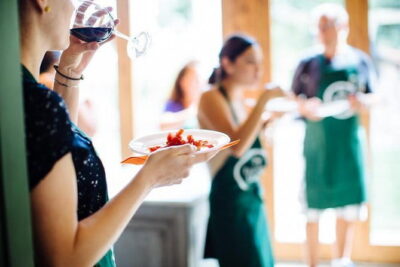
Cooking Class and Lunch at a Tuscan Farmhouse with Local Market Tour from Florence
Read our review →
Sorrento Farm and Food Experience including Olive Oil, Limoncello, Wine tasting
Read our review →
Pizza Lesson, Wine, and Limoncello at a Local Farm
Read our review →
Pizza or Pasta Class with Gelato at a Tuscan Farm
Read our review →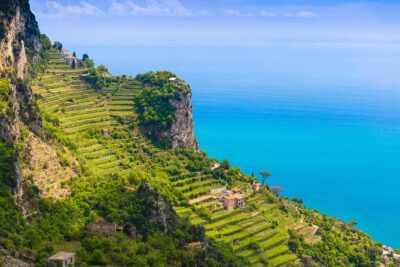
Hands-On Cooking Class & Farmhouse Tour on the Amalfi Coast
Read our review →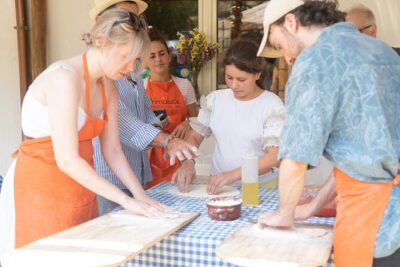
Pizza School with Wine and Limoncello Tasting in a Local Farm
Read our review →
Authentic Farm Tour with Pizza, Cheese, Wine & Limoncello Tasting
Read our review →Browse the lists this tour appears in