
Review · SAPA
Explore Sapa by TrekkingAdventures, Mountain,Rice fields
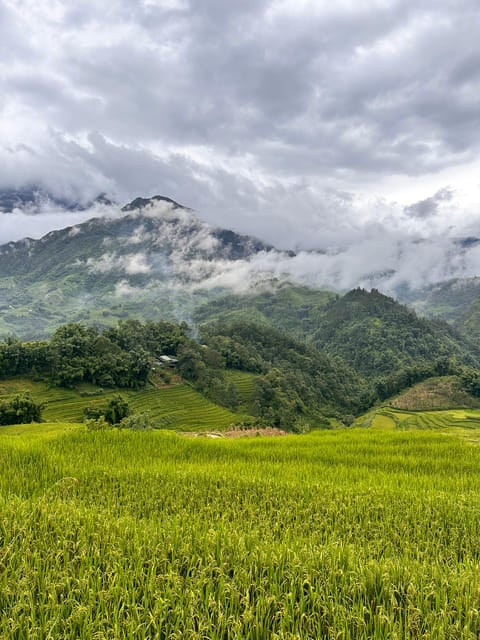
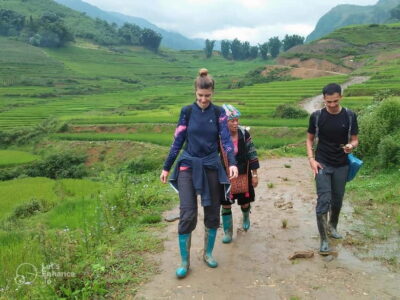
The best part of this Sapa trek is the chance to walk with local Hmong women who know the mountain paths and can explain daily life from personal experience. You move from Sapa town into Y Linh Ho, Lao Chai, and Ta Van, with rice terraces, buffalo, village homes, and mountain views along the way.
I like the choice of routes, since you can take an easier road walk or a rougher trail through the fields. I also like the direct support for the three Hmong sisters who run the tour and help local women find work and children attend school. The main caution is weather: fog can hide the views, and rain can turn the downhill paths into slippery mud.
Key points at a glance
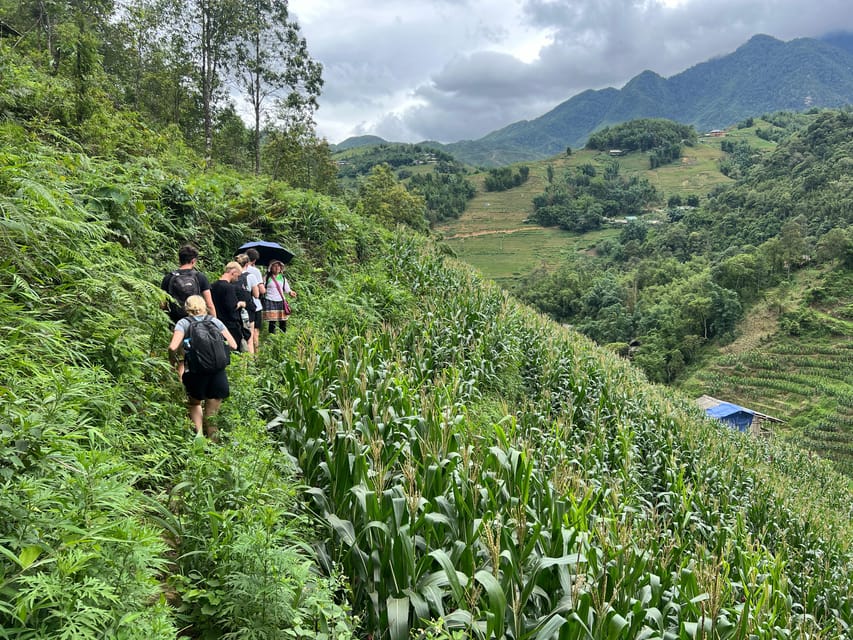
- Walk through three mountain villages: The route links Y Linh Ho, Lao Chai, and Ta Van, giving you a fuller picture of the Sapa valley than a short viewpoint stop.
- Choose your level: Pick an easy to moderate option or a harder trail of roughly 10 kilometers, with some narrow, muddy, rocky, and uneven sections.
- Learn from Hmong women: Guides such as Sun, Dinh, Khu, Chuchu, and Mama Mai share family stories, local customs, and details about Black Hmong life.
- Eat lunch in Lao Chai: A generous local meal is included, with vegetarian and vegan choices available according to the information provided.
- Return transport is included: The walk ends in Ta Van, followed by a private car or van back to Sapa Town.
- Excellent value at $23: The price covers a guide, lunch, water, entry fees, and transport back, though drinks and personal insurance cost extra.
Why this Sapa walk feels different
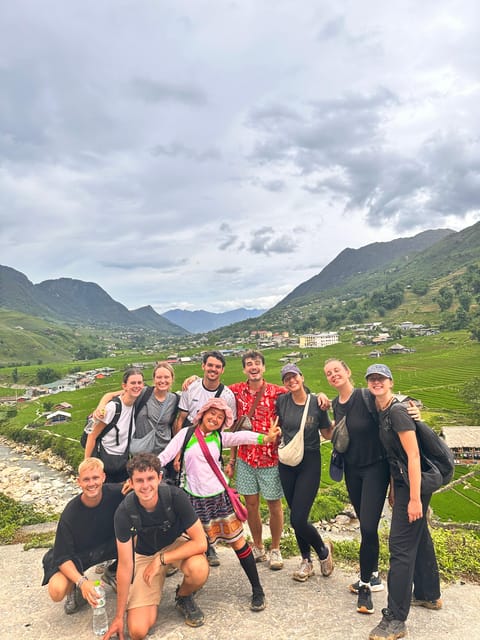
Sapa has plenty of ways to see rice terraces, but this outing is built around walking from one village to the next rather than simply stopping at a viewpoint. That matters. You see the terraces from the paths that connect communities, pass farm animals and homes, and have time to ask questions as the day unfolds.
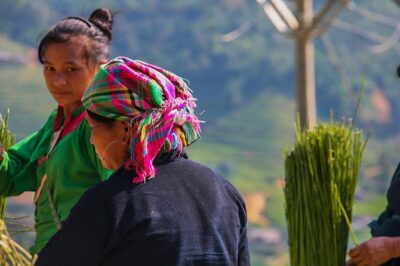
The guides are local Hmong women, not outside commentators reading a script. Sun is frequently praised for her clear English, humor, and energy. Other guides named during the tours include Dinh, Khu, Ko, Chuchu, Ze, Mam, Mama Mai, and Ms Co. Your guide depends on the day, but the common thread is personal knowledge of village life.
The company is run by three sisters. Their story is part of the experience, but it should not replace your attention to the villages themselves. They explain how girls in their community can face early marriage and limited access to school, and how guiding creates work for women. Your $23 booking goes toward a small family business with a stated aim of supporting other women and helping children attend school.
More Rice Terrace Tours in Sapa
- Motorbike 1 Day Off The Beaten Track, Hidden Villages, rice field
★ 5.0 · 203 reviews - Sapa: 2D/1N Trek Rice Terraces & Homestay with Linh
★ 4.8 · 87 reviews - 1-Day Sapa Long Trek – Rice Field Terrace, Ethnic Culture
★ 4.9 · 62 reviews
From Sapa town down to Y Linh Ho
The meeting point is your hotel in Sapa Town or the area in front of Sapa’s main church. The listed start is 9:00 AM, though another time can be arranged if you tell the company ahead of time.
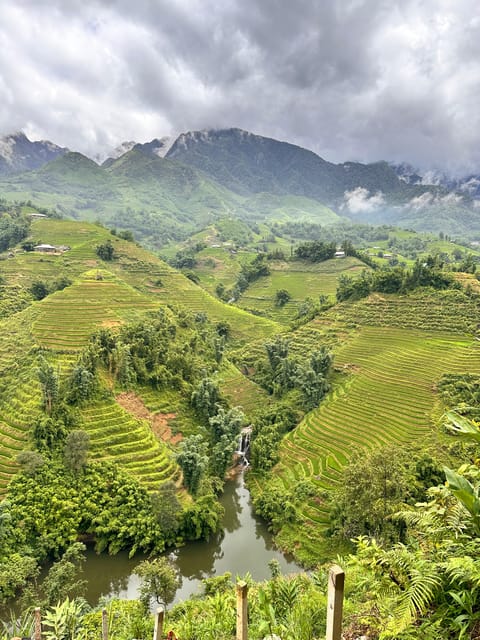
The walk heads downhill from town toward Y Linh Ho, a Black Hmong village. This first section gives you the big change in scenery: Sapa’s town streets give way to mountain paths, open valleys, and layered rice terraces. On the way, you may see buffalo, pigs, and chickens around the farms.
The downhill direction is a mixed blessing. It makes the route feel manageable at first, but steep descents can be harder on your knees and more awkward than a flat walk. Several people describe slippery footing, narrow paths, stream crossings, low fences, and short scrambles. You do not need to be a serious hiker, but you do need steady legs and shoes with a good grip.
In clear weather, this is where the views begin to open. In winter, fog can be thick enough to hide most of the distant scenery. A winter walk can still show you village life and provide good exercise, but you should not book solely for postcard views if the forecast is poor.
Y Linh Ho and the rougher rice-field paths
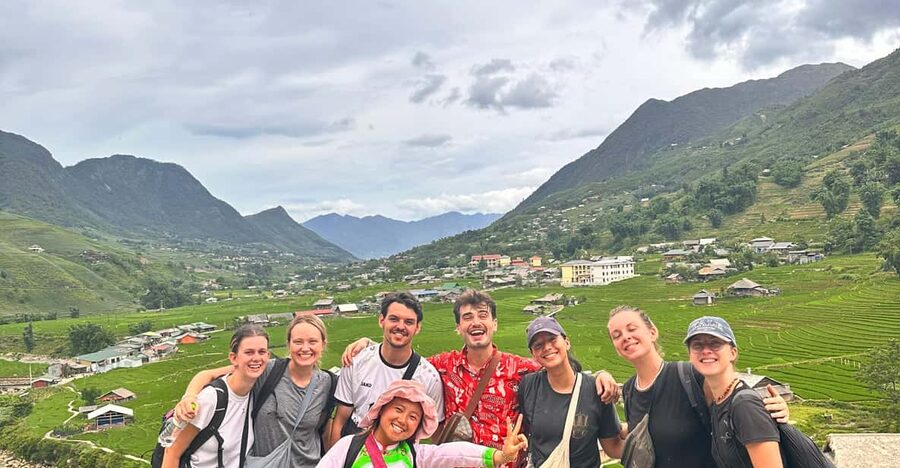
Y Linh Ho is one of the most scenic parts of the route, particularly when the terraces are green or when farmers are planting or harvesting. The exact appearance depends on the season. Rice fields are not always bright green, and in some months you may see muddy paddies, stubble, or bare terraces.
This is also where you can choose how demanding you want the walk to be. The easier option follows a more straightforward road route. The harder option uses rockier or muddier paths closer to the fields. One practical advantage is that the choice can be made during the walk, rather than forcing you to commit before seeing the conditions.
If it has rained, take the guide’s pace seriously. The local women accompanying the group may help people across difficult sections, but that is assistance, not a substitute for proper footwear. The company says boots and trekking sticks are available in wet weather. Still, bring a raincoat and expect mud rather than hoping your shoes stay clean.
Lao Chai, lunch, and Black Hmong life
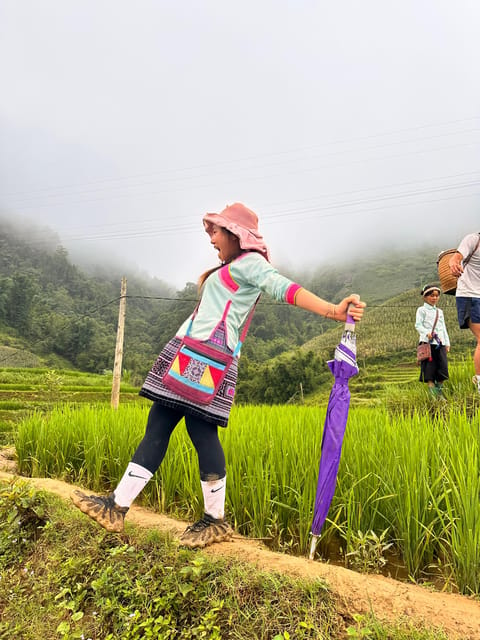
The route continues to Lao Chai, one of the largest and oldest Hmong communities in the area. This is a good point to slow down and look beyond the terraces. You may see traditional homes, farm work, animals, and the practical details of mountain life that disappear when you view the valley from a cable car or roadside platform.
A visit to a traditional Black Hmong house is included. Your guide explains daily routines, family life, and local customs, and may discuss details such as indigo dyeing. The value here comes from being able to ask simple questions: how clothing is made, how farming fits into the year, and how village life differs from life in Sapa Town.
Lunch is served at a local restaurant in Lao Chai, sometimes in a spot overlooking the fields or valley. It is included in the price and is described as plentiful. Vegetarian and vegan meals have been provided, but tell the company in advance so the kitchen can prepare properly. Extra drinks, including bottled water or beer, are not included.
The lunch stop can also affect the day’s rhythm. Some people appreciate a long pause after the downhill section, while others find the breaks and meal make the outing run longer than expected. The advertised duration is five hours, but several itineraries have taken around six hours, depending on the route, weather, group pace, and stops.
More Rice Terrace Tours in Vietnam
- Sapa: Love Silver Waterfall, LonelyTree in Heaven-Rice Field
★ 4.9 · 28 reviews - Sapa Half-Day Motorbike Tour: Villages & Rice Fields
★ 5.0 · 22 reviews - SAPA: 1-DAY TREKKING TOUR WITH LOCALS, LUNCH & RICE FIELDS
★ 4.7 · 18 reviews - From Sapa : 1 Day Amazing Sapa Trek To Terrace rice field
★ 4.6 · 17 reviews
Walking on to Ta Van Village
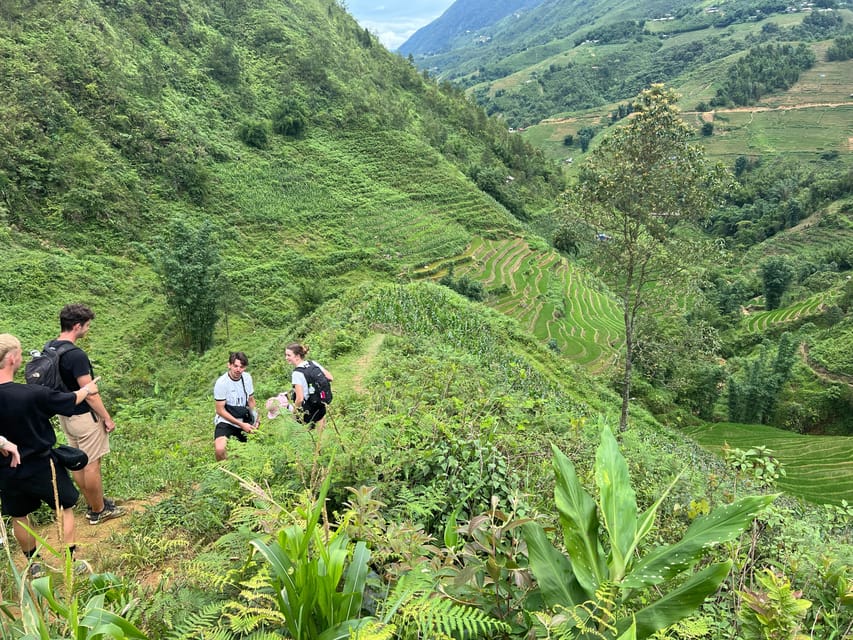
After lunch, the trek continues toward Ta Van, home to the Dzay people. This change of community gives the walk a useful cultural comparison. Your guide can explain differences between ethnic groups in the Sapa area, rather than treating every mountain village as if it had the same customs.
The path remains uneven in places. You may walk on village roads for part of the route, then return to smaller tracks, field edges, or muddy sections. Regular pauses are built into the day, and the guide should explain where you are going and how long each section takes. If you are nervous about the terrain, tell your guide early. The difficulty can be adjusted, but the route is not suitable for someone who cannot manage uneven ground.
The walk may finish around 3:00 PM in Ta Van. A private car or van then takes you back to Sapa Town, usually to the church area or another agreed point. That return ride is important. You do not have to arrange a taxi from a remote village after a tiring walk, and it makes the tour practical for a single day in Sapa.
What the guides add to the day
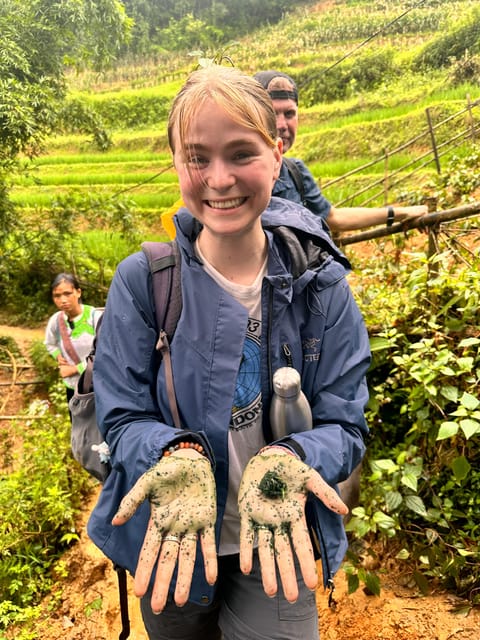
A good local guide changes this from a scenic walk into a conversation. Sun is especially noted for her humor, excellent English, and habit of stopping to explain what you are seeing. Khu is described as friendly, helpful, and entertaining. Other guides bring their own family stories and local knowledge.
The tone is informal. You can ask about marriage customs, clothing, farming, village schools, family life, and the differences between Black Hmong and Dzay communities. The guides also help with pacing and footing, which is useful on wet trails.
At times, other local women may walk with the group, particularly on the more difficult first section. They can help with balance and may later offer handmade goods for sale. This is the one social aspect that can feel uncomfortable. Several people found the sales approach persistent, while others accepted it as part of the local economy. You are not required to buy anything. Set a friendly boundary early, and remember that purchases are separate from the tour price.
Is $23 a fair price?
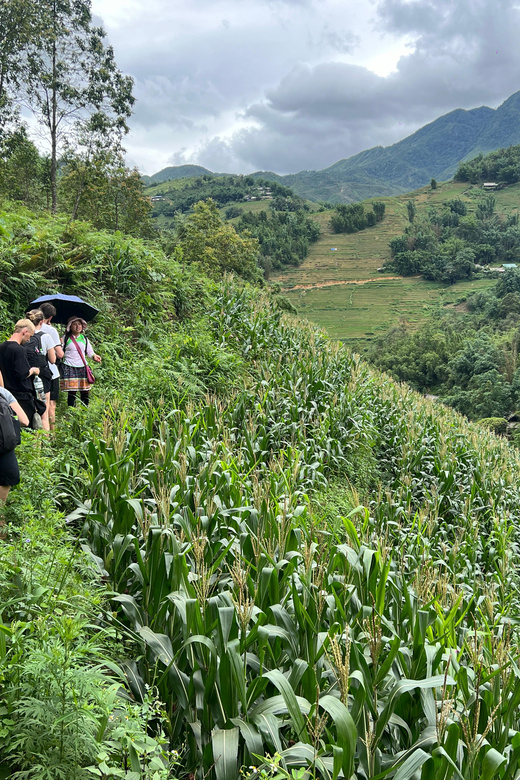
Yes, if you want a guided introduction to rural Sapa without paying for a private full-day trek. The $23 price includes an English-speaking local guide, lunch, water, village entry fees, and transport back to Sapa. That is strong value, especially because the return drive alone saves you the trouble and expense of arranging transport from Ta Van.
The tradeoff is that this is a group tour. You may walk with other visitors, and the pace will be shaped by the slowest person in the group. A private tour is available for an extra fee if you want more control over breaks, route choice, or conversation.
The price does not include personal travel insurance or extra drinks. Bring cash for drinks and for any handmade items you choose to buy. Bring your own water beyond the included supply if you tend to drink heavily while hiking.
Free cancellation is available up to 24 hours before the start for a full refund, and you can reserve now and pay later. The company asks you to book at least two or three hours ahead, although last-minute arrangements have sometimes been possible through direct communication.
Weather, clothing, and physical effort
Your packing list should be simple:
- Comfortable walking shoes with grip
- A raincoat, even if the morning looks clear
- Sun hat, sunglasses, sunscreen, and insect repellent
- Camera
- Cash for drinks and optional purchases
Sapa can be cool, especially in fog, so layers are sensible. In rain, the route can become much more demanding than its easy-to-moderate label suggests. The main challenge is not speed or altitude. It is finding stable footing on steep, muddy, rocky, and sometimes narrow paths.
The tour is not suitable for anyone over 95 according to the listed restrictions, but age alone is not the main issue. Your mobility matters more. If you have trouble with steep downhill walking, uneven ground, stream crossings, or climbing over low fences, choose a gentler activity instead.
Children under three can join free if you inform the company in advance. The information provided does not give a separate child route or stroller arrangements, so this is better for families whose children can manage a mountain walk or be carried safely.
The best season for the terraces
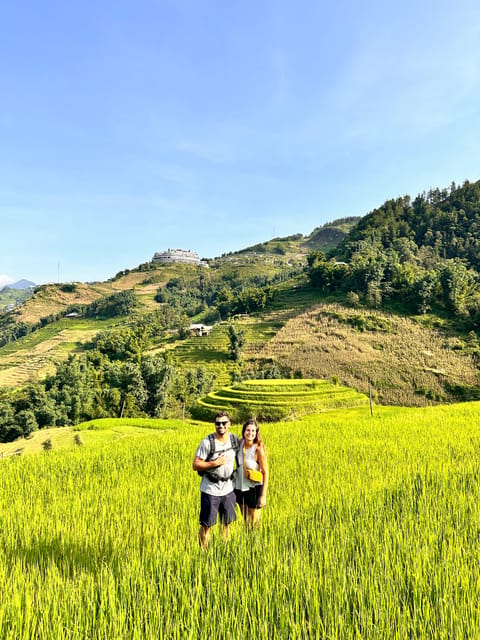
The rice fields change through the year. Planting and harvesting may be visible when the timing is right, while other periods show green terraces or more muted brown and gold tones. Summer can bring clearer views, but it can also bring heavy rain.
Winter has its own risk. Fog may cover the mountains and make the scenery far less impressive, as happened on one February outing. Even then, the villages, food, and conversations remain worthwhile. Check the forecast, but accept that Sapa weather can change quickly.
If views are your top priority, build flexibility into your schedule and avoid placing this trek on the only day you have in town. If village life and cultural contact matter more, poor weather will be an inconvenience rather than a complete failure.
Should you book this Sapa trek?
Book it if you want a low-cost, local-led walk through the valleys south of Sapa, and if you are comfortable with mud, uneven paths, group pacing, and changing weather. It is especially suited to people who want to learn about Hmong and Dzay life while seeing rice terraces from ground level.
Choose the harder route only if you have good balance and proper footwear. Pick the easier route if you want the village experience without as much slippery terrain. If you dislike group tours, persistent souvenir selling, or long meal breaks, pay extra for a private outing or choose a shorter walk.
For $23, the combination of guide, lunch, entry fees, and return transport is hard to fault. The strongest reason to book is not simply the scenery. It is the chance to walk beside women who know these villages as home, ask direct questions, and put your money toward a small local enterprise.
FAQ
How long is the Sapa trekking tour?
The stated duration is five hours, with a planned finish around 3:00 PM. The walking distance can be about 5 to 11 kilometers, although the exact time and distance may change with the chosen route, weather, group pace, and stops.
Which villages does the trek visit?
The route goes from Sapa to Y Linh Ho, then Lao Chai, and finally Ta Van. Y Linh Ho is a Black Hmong village, Lao Chai is a large Hmong community, and Ta Van is home to the Dzay people.
Is lunch included?
Yes. A local lunch in Lao Chai is included. Vegetarian and vegan options have been available, but you should tell the company about dietary needs in advance.
Can I choose an easier walking route?
Yes. You can choose an easy to moderate route or a harder option of about 10 kilometers. The easier route uses more roads, while the harder route includes rougher paths through or near the rice fields.
Where does the tour finish?
The walk finishes in Ta Van Village. A private car or van then takes you back to Sapa Town.
What happens if it rains?
The company says boots and trekking sticks are available in rainy conditions. You should still bring a raincoat and wear shoes suitable for muddy, slippery paths.
Is this a private tour?
The standard option is a group tour with other people. A private tour can be arranged for an additional fee.
More Rice Terrace Tours in Sa Pa
- Private Half-Day Tour of Villages, Terrace Rice Fields by Car
★ 5.0 · 16 reviews - Sapa Motorbike Tour 1 Day| See All Of Rice Fields & Valleys in One Day
★ 5.0 · 9 reviews - SaPa: 2-Day Villages,Rice Fields, Love Waterfall Hiking Tour
★ 5.0 · 9 reviews - 1-Day Private Trekking in Sapa through Terraces Rice Fields
★ 5.0 · 8 reviews
Just added around Sa Pa
- Sapa 2-Day Trek & Homestay in Ta Van Village – Be a Local★ 5.0 · 8 reviews
- Sapa Private Trekking Through Rice Terraced Fields – 1Day★ 4.5 · 8 reviews
- 5 Hours Trekking with Terraced Rice Field in Sapa★ 5.0 · 2 reviews
- Sapa Motorbike Tour 1 Day| See All Of Rice Fields & Valleys in One Day★ 5.0 · 9 reviews
- Sapa Private Car Tour – 1 Day Enjoy the Rice Terraced Fields★ 4.5 · 3 reviews
- Private Trekking through Terraces Rice Fields in Sapa★ 5.0 · 3 reviews
- Sapa Easy Trekking For Seniors -4 Hours- The Stunning Rice Fields★ 5.0 · 2 reviews
- Sapa Half Day Local Farming Experience★ 5.0 · 3 reviews
Sapa Farm Tours, compared.
Motorbike 1 Day Off The Beaten Track, Hidden Villages, rice field
Read our review →
Rice Terraced Fields & Homestay Experience– 2D 1N
Read our review →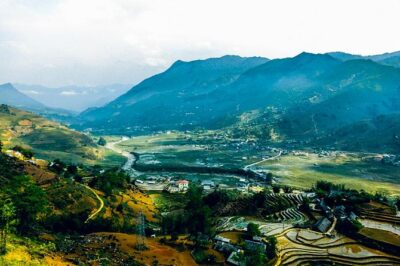
Mountain views & Rice Terraced Fields Hiking – 2D 1N
Read our review →
1-Day Sapa Long Trek – Rice Field Terrace, Ethnic Culture
Read our review →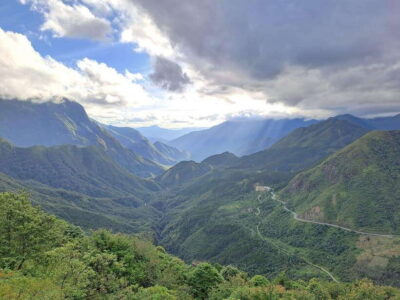
Love Silver Waterfall, LonelyTree in Heaven-Rice Field
Read our review →Browse the lists this tour appears in