
Review · ITALY
Farm to Table Cooking Experience in a small Village
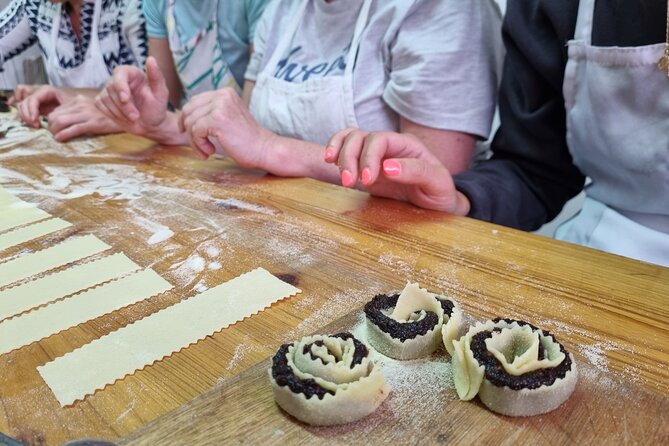
Montresta gives you something most Sardinian day trips cannot: a seat at a family table and a hands-on look at village food traditions. You’ll make pasta with traditional tools, help prepare fresh ricotta and cheese, and eat the results with local products in a real home, not a staged restaurant.
I like the small group size, capped at eight, and Davide’s personal approach as an English-speaking guide from Montresta. I also like the connection between food and place: the cooking comes with stories about farming, village life, local ingredients, and the pressures facing small communities.
The main drawback is the pace. Six hours is a long time for a food activity, and this is not a quick pasta lesson followed by a beach afternoon. The drive from Alghero takes you into the hills, and the day works best if you enjoy conversation, a leisurely meal, and active participation.
Key points to know
- Make several traditional pastas: You may shape ravioli, malloreddus, and other local forms by hand with old-style tools.
- Cook inside a family home: Leonarda and her local helpers welcome you into a working household in Montresta.
- Taste food made on the property: Fresh bread, ricotta, cheese, cakes, honey, wine, and pasta may all feature.
- Travel with a local guide: Davide explains Sardinian history, geology, biology, and mountain life along the route.
- See a lesser-visited village: Montresta has fewer than 400 residents and offers a direct look at rural Sardinia.
- Expect a full half-day: The tour begins at 9:00 a.m., lasts about six hours, and returns to Alghero.
Why Montresta is the heart of the day
This experience is really about Montresta, not simply about learning to make pasta. The village sits inland, above the Bosa area, and feels far removed from Alghero’s seaside streets. With fewer than 400 residents, it offers a useful glimpse of Sardinia’s smaller communities, where food skills and family customs still shape daily life.
The setting also gives the day a social purpose. Small villages across Sardinia face population loss, fewer working farms, and the fading of old skills. A visit that puts money directly into a local household helps support the people who keep these practices going.
That does not mean you should expect a museum presentation. The home and workshop are part of ordinary village life. Ingredients and activities can vary with the season, available produce, and what the family has recently prepared. This makes the experience less polished than a commercial cooking school, but also more genuine.
More Farm-to-Table Meals in Italy
- From Rome: Half-Day Frascati Wine Tour with Farmhouse Lunch
★ 4.9 · 372 reviews - Farm To table Experience on an organic hilltop estate in Tuscany
★ 5.0 · 99 reviews - It’s Wine Time! 2 wineries & farm-to-table lunch—max 8 pp
★ 5.0 · 89 reviews
The road from Alghero through Villanova Monteleone
You meet at Via Lido, 73, in Alghero at 9:00 a.m. Transportation is included, so you do not need to arrange a rental car for the day. The route heads inland on provincial roads, with views of the hills and the changing Sardinian countryside.
Villanova Monteleone is part of the scenic approach. It has its own inland character, and the short stop gives you a sense of how quickly Sardinia changes once you leave the coast. The stop is listed at about 30 minutes and does not require an admission ticket.
The drive matters because Davide uses it to explain the area rather than simply shuttle you from one point to the next. His background includes Sardinian history, biology, and geology, so you can expect context about the places outside the window. The road toward Montresta and later back toward Alghero includes cliffs, canyons, and Mediterranean scenery.
If you are prone to motion sickness, keep the winding mountain roads in mind. The trip is not built around a single famous viewpoint, so the value comes from the whole route and Davide’s explanations rather than from checking off one landmark.
Inside Leonarda’s family kitchen
In Montresta, you meet Leonarda and her local helpers, including family and neighbors who assist with the cooking. The welcome may begin with coffee, homemade cakes, fresh bread, bruschetta, and other small tastes. That opening sets the tone: you are treated as a participant at the table rather than as someone watching a demonstration from the side.
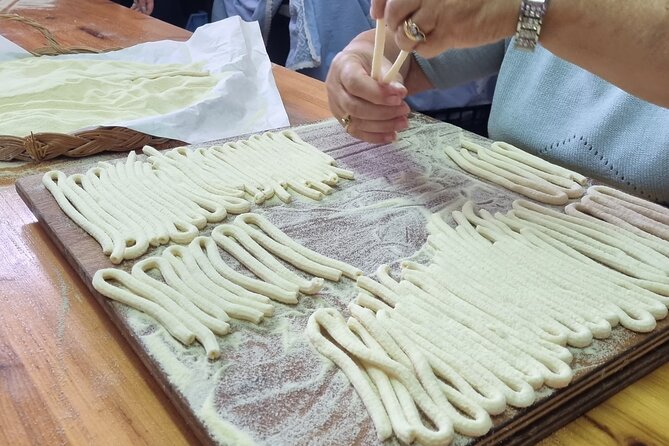
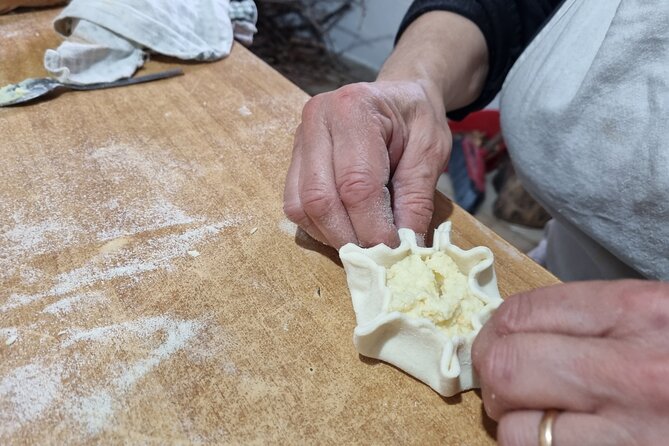
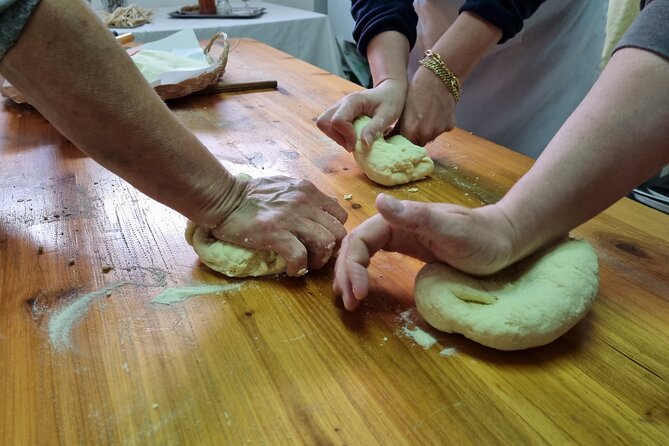
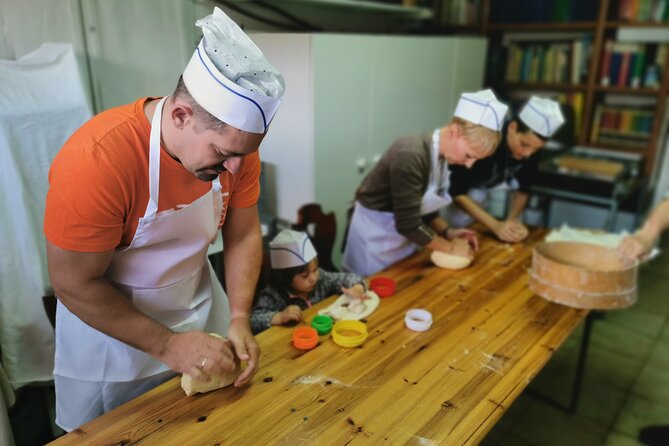
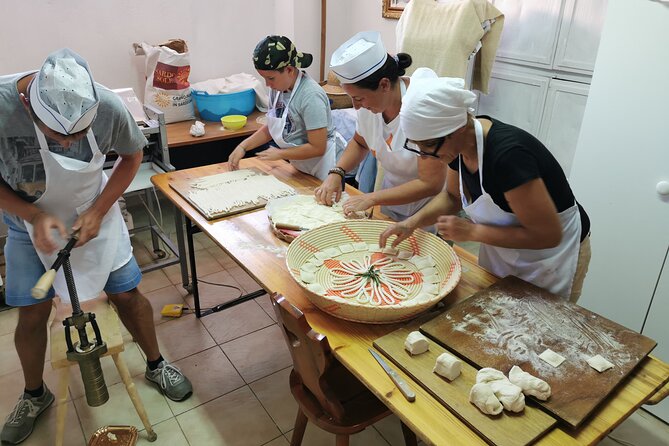
This is a hands-on class. You may mix dough, shape pasta, prepare fillings, and work with ingredients produced or sourced locally. Several pasta styles have been described during the experience, including ravioli and malloreddus. Traditional tools can include a wicker mat, a fork, a butter pat, and a sit-down press called a torchio.
The pasta itself is based on semolina flour, with other ingredients depending on the recipe and season. One preparation includes ravioli filled with eggs, ricotta, and pecorino. The process is simple in principle, but the shapes and tools show how much character can come from a few basic ingredients.
You should be ready to roll up your sleeves. This is not a short lesson where someone else does most of the work. Davide translates and guides the session, while the local cooks show you the methods used in their home.
Fresh ricotta, local cheese, and food with no waste
The cheese-making portion adds another layer to the visit. You may help warm milk and turn it into ricotta and cheese, then taste the ricotta while it is still warm with bread and honey. That is a small but memorable detail because it lets you taste the ingredient at the exact point when it is made.
The process also shows the family’s practical approach to food. The whey can be saved for pigs, and other byproducts may be used rather than thrown away. The point is not to present rural life as perfect or frozen in time. It is to show a system where ingredients, animals, gardens, and cooking are connected.
The food can include pecorino, local wine, honey, almonds, porcini, wild boar, milk, and homemade cakes. The exact spread is not guaranteed, since the menu can change with the season and household production. That is a reason to book this for its character and setting, not for a fixed restaurant-style menu.
Same fields, a different sort of day out:
- Florence Pizza or Pasta Class with Gelato Making at a Tuscan Farm
★ 5.0 · 6,801 reviews - Cooking Class and Lunch at a Tuscan Farmhouse with Local Market Tour from Florence
★ 5.0 · 4,831 reviews - Sorrento Farm and Food Experience including Olive Oil, Limoncello, Wine tasting
★ 5.0 · 2,524 reviews - Sorrento: Pizza Lesson, Wine, and Limoncello at a Local Farm
★ 5.0 · 1,513 reviews
A long lunch made from the morning’s work
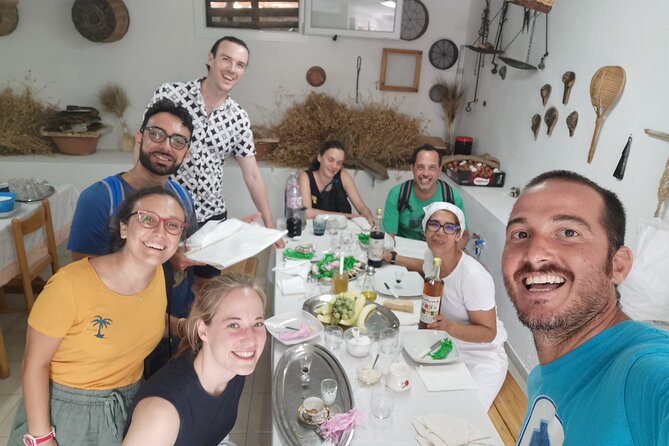
After the cooking, you sit down to eat. The meal may include the pasta you made, served with a ragout, along with bread, cheese, wine, and dessert. Semolina cookies and cakes topped with sugar or local liqueur have been part of the food traditions shown on this experience.
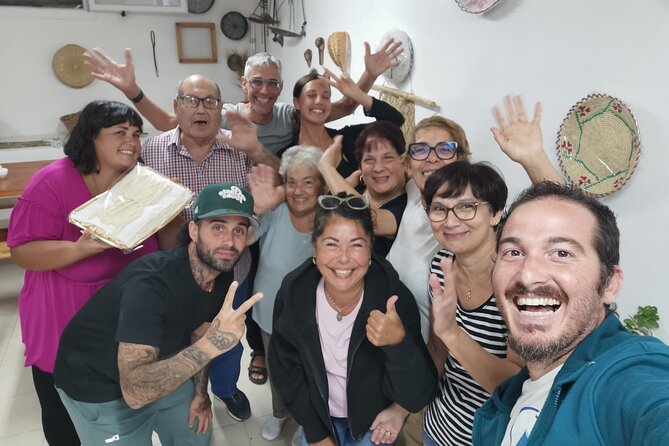
Lunch is included in the price, and it is more than a practical meal between activities. It gives you time to talk with Leonarda, her family, the other participants, and Davide. Conversations can turn to farming, village customs, food production, rural depopulation, and the effort to pass skills on to younger generations.
This is where the tour becomes especially valuable for anyone interested in culture rather than recipes alone. You learn why the family continues to host people, how food fits into community life, and what is at risk when small villages lose their working traditions.
Wine is part of the experience, so plan your day accordingly. The tour includes transportation back to Alghero, but you should still be comfortable with a relaxed meal that may include local wine and grappa.
A walk through Montresta after lunch
The village walk comes after the cooking and meal. It is a good change of pace after several hours in the kitchen, and it gives Davide a chance to explain Montresta’s past and present.
Do not expect a large collection of monuments or a packed sightseeing schedule. Montresta’s appeal is its scale, quiet streets, and connection to the people who live there. The walk helps you understand the setting around the family home instead of treating the house as an isolated cooking venue.
It also provides a useful contrast with coastal Sardinia. If your holiday is centered on beaches, boat trips, and resort towns, this outing shows you a different side of the island. The village is not presented as a tourist attraction detached from real life. It remains a working community, with the challenges that come with a small population.
The return route toward Alghero and Bosa
The itinerary includes a scenic stretch between the Bosa area and Alghero, with cliffs, canyons, and Mediterranean scenery. The route adds variety after the indoor cooking session and makes the transport part of the experience rather than dead time.
The schedule lists about 30 minutes for the final Alghero portion, though the full route and stops make the total activity about six hours. Since road conditions and the pace of the group can affect timing, avoid booking a tight afternoon connection.
You return to the same Alghero meeting point. That makes the outing convenient if you are staying in town and do not want to navigate rural roads yourself.
What the $168.58 price covers
At $168.58 per person, this is not the cheapest food class in Sardinia. The value comes from what is bundled together: transportation, a multilingual local guide, a hands-on cooking session, and lunch based on Sardinian products.
You are also paying for a small group, with no more than eight participants. That matters here. In a larger class, it would be harder to work directly with the dough, ask questions, or have a natural conversation with the family. The small size helps the visit feel more personal.
The price also covers access to a setting that would be difficult to arrange independently. You would need to find the village, manage the drive, locate a family willing to host you, translate the conversation, and organize the meal. If you value local contact and want a day handled from Alghero, the cost is easier to justify.
Still, I would not book it if your main goal is a professional cooking certificate or a tightly timed lesson. The experience is informal, social, and tied to the household’s own rhythm. It is closer to a cultural food day than to a formal culinary school.
Who will enjoy this Sardinian food experience
I would recommend it most strongly to you if you enjoy:
- Cooking with your hands rather than simply watching a chef
- Family-run experiences and local conversation
- Rural communities and traditional food production
- Long lunches with time for questions
- Scenic road trips through inland Sardinia
- Small groups and personal guiding
Families can also enjoy the activity. One group joined with children aged 12 and 13 and found the day suitable for them. Most participants can take part, but you should be comfortable standing, working in a kitchen, walking through the village, and spending several hours away from Alghero.
You may want a different outing if you prefer a short class, a fixed menu, or a busy schedule with many attractions. This tour gives you one main cultural encounter and lets it unfold slowly.
Davide’s role in making the day work
Davide is central to the experience. He drives or accompanies the group, explains the route, translates between English and the local hosts, and adds context about Sardinia. His approach is described as friendly, patient, and enthusiastic, with a clear interest in sharing his home region.
That matters because the cooking is conducted in a local household rather than a standard English-language school. Davide helps bridge the language gap without taking attention away from Leonarda and the family.
The experience is offered in English, with multilingual guiding available. If you want a guide who treats the outing as a personal introduction to Sardinia rather than a checklist of stops, this is a strong match.
Practical details before you book
The tour starts at 9:00 a.m. from Via Lido, 73, in Alghero and finishes back at the same meeting point. A mobile ticket is accepted, and confirmation is provided within 48 hours, subject to availability.
It is usually booked well in advance, around 105 days ahead on average. That is worth noting if you are planning a summer visit or have fixed dates. Group discounts may be available, so check the rate for your party before paying.
Free cancellation is available up to 24 hours before the start time for a full refund. Changes or cancellations inside that 24-hour window are not accepted for a refund. The activity also needs a minimum number of participants, so if that minimum is not met, you will be offered another date or experience, or a full refund.
Should you book the Montresta cooking day?
Book it if you want food to open a door into Sardinian life. You will not just shape pasta and eat lunch. You will meet people who still make cheese, bread, sweets, and pasta in traditional ways, then see the village where those customs belong.
I would choose this over a standard cooking class if you have already seen Alghero’s main sights and want a more personal day in the hills. I would skip it only if you dislike long meals, rural drives, or an itinerary that depends on conversation and participation.
For a small group, a local guide, a substantial meal, transport from Alghero, and a rare chance to spend time inside a Montresta family home, the $168.58 price is fair. Bring an appetite, comfortable clothes, and enough time to let the day unfold.
FAQ
Where does the experience start?
It starts at Via Lido, 73, 07041 Alghero SS, Italy.
What time does the tour begin?
The activity starts at 9:00 a.m.
How long does the experience last?
It lasts approximately six hours.
Where does the tour finish?
The activity ends back at the original meeting point in Alghero.
Is transportation included?
Yes. Transportation is included in the experience.
Is lunch included?
Yes. Lunch featuring typical Sardinian products is included after the cooking activity.
How many people can join?
The group has a maximum of eight participants.
Is the tour offered in English?
Yes. It is offered in English and includes a multilingual local guide.
Can I cancel for a full refund?
Yes. You can cancel at least 24 hours before the start time for a full refund. Cancellations made less than 24 hours before the start time are not refunded.
Just added around Italy
- Traditional Farmhouse Cooking Experience in Lucca with Lunch or Dinner★ 5.0 · 34 reviews
- Farm-to-table Food Experience★ 5.0 · 23 reviews
- La Maliosa Farm Experience & Wine Tasting★ 4.5 · 29 reviews
- Sorrento: Authentic Lemon Experience at a Farm with Tastings★ 5.0 · 6 reviews
- Sorrento Half-Day Farm Experience: Pizza, Cheese Making and Wine★ 5.0 · 17 reviews
- Marì Cooking Class in a Family Farm with Amalfi Coast view★ 5.0 · 11 reviews
- Amalfi Coast & Sorrento Cooking Class School at Farmhouse★ 5.0 · 25 reviews
- Paestum and Buffalo Farm Day Tour from Sorrento★ 5.0 · 3 reviews
Italy Farm Tours, compared.
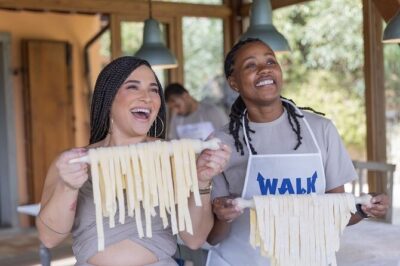
Florence Pizza or Pasta Class with Gelato Making at a Tuscan Farm
Read our review →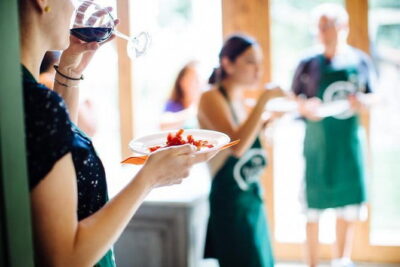
Cooking Class and Lunch at a Tuscan Farmhouse with Local Market Tour from Florence
Read our review →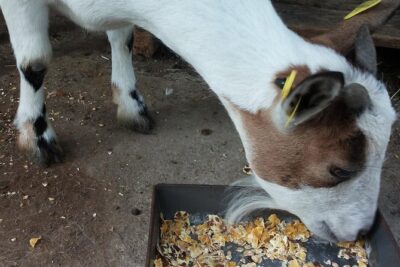
Sorrento Farm and Food Experience including Olive Oil, Limoncello, Wine tasting
Read our review →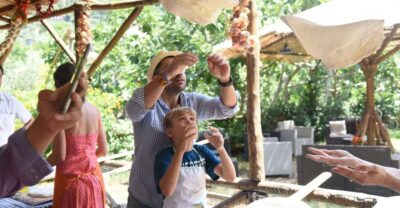
Pizza Lesson, Wine, and Limoncello at a Local Farm
Read our review →
Pizza or Pasta Class with Gelato at a Tuscan Farm
Read our review →
Hands-On Cooking Class & Farmhouse Tour on the Amalfi Coast
Read our review →
Pizza School with Wine and Limoncello Tasting in a Local Farm
Read our review →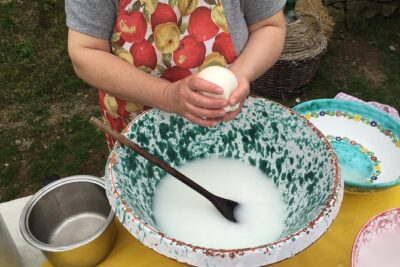
Authentic Farm Tour with Pizza, Cheese, Wine & Limoncello Tasting
Read our review →Browse the lists this tour appears in