
Review · SAPA
Rice Terraced Fields & Homestay Experience– 2D 1N
The best part of this Sapa tour is the change of pace: you leave town on foot, pass Hmong villages and bamboo forest, then spend the night in Ta Van among rice fields and mountain paths. The setting feels far removed from Sapa’s busy center, even though the tour starts right by the main church.
I like the small maximum group of two, which gives you room to walk at your own speed and ask real questions. I also like that the tour includes two days of meals, village entry fees, a local guide, and transport back to Sapa, so the $85 price covers more than just a guided walk.
The main thing to consider is the condition of the homestay. Most of the experience is warmly praised, but one account found the accommodation less clean than expected. Parts of the route also follow a paved road with motorbike traffic, and popular sections may feel crowded.
Key points to know before booking
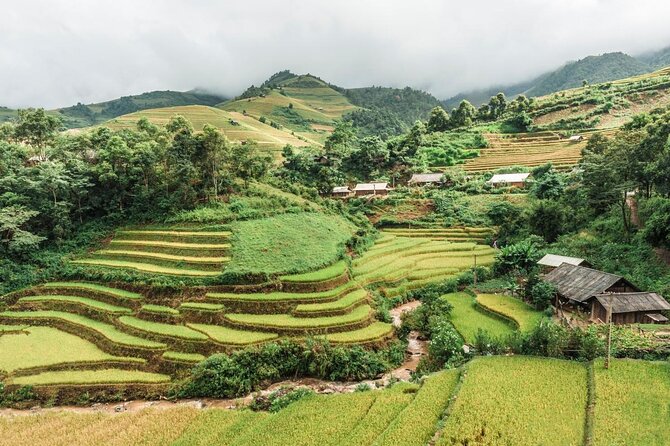
- Sleep in Ta Van Village: Your overnight stay is with a local host family from the Giay community.
- See several sides of Sapa: The route links Cat Cat, Y Linh Ho, Ta Van, and Giang Ta Chai.
- Expect real walking: Moderate physical fitness is required, with hills, terraces, and uneven village paths.
- A very small group: The tour has a maximum of two people, a useful setup for questions and flexible pacing.
- Guides make a big difference: Guides named Sang, Su, Mi, Ly, Soso, and Me have been praised for kindness, care, and cultural explanations.
- Plan for changing scenery: Rice fields may be lush green, freshly planted, or mostly brown depending on the season.
Leaving Sapa at 9 am for the rice terraces
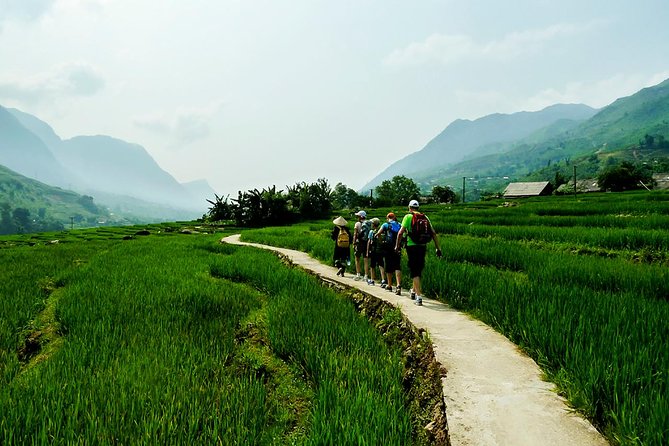
The tour begins at 9 am at Sapa Church, or with pickup from your hotel in Sapa Town. That later morning start is helpful if you arrive in Sapa by overnight train or bus, though you should confirm the exact pickup arrangement when booking.
Your guide first takes you about 2 kilometers down toward Cat Cat’s road. Cat Cat is one of Sapa’s best-known village areas, so this opening section can feel more visited than the later paths. It gives you a quick introduction to the Hmong communities around Sapa before the route moves toward quieter country.
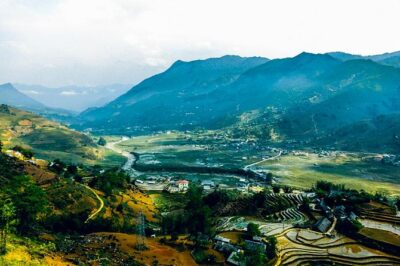
The first listed walking stop is Y Linh Ho, with about an hour set aside and the entry fee included. Here, the attraction is not a single monument. It is the view across steep rice terraces, mountain slopes, village homes, and the Hoang Lien range.
I would not judge the trip only by photographs of bright green terraces. Planting cycles matter. At some times of year, fields may be newly prepared or less colorful, but the layered slopes and mountain views still give the walk its character.
More Two-Day Trips in Sapa:
- Mountain views & Rice Terraced Fields Hiking – 2D 1N
★ 5.0 · 99 reviews - Sapa: 2D/1N Trek Rice Terraces & Homestay with Linh
★ 4.8 · 87 reviews - SaPa: 2-Day Villages,Rice Fields, Love Waterfall Hiking Tour
★ 5.0 · 9 reviews
Y Linh Ho and the route through bamboo forest
The path from the Cat Cat area toward Y Linh Ho is where you begin to understand why a guide is useful. The route is not simply a marked city walk. It moves through village areas, terraces, and mountain scenery, and your guide helps connect the places to local life.
The tour description also places you near bamboo forest and the rice terraces after the early village section. These changes in scenery keep the day from feeling like a single long road walk. You get open mountain views, narrow paths, and cultivated hillsides rather than one repeated view.
Still, you should set realistic expectations. One detailed account found that about half of the route followed a paved road with regular motorbike traffic. There can also be several groups on the same section. This is not a private wilderness hike from start to finish.
The small group helps here. With only two people permitted, your guide can explain what you are seeing without having to manage a large crowd. Guides including Sang, Su, Mi, Ly, Soso, and Me have been praised for being encouraging, friendly, and willing to explain local culture.
Arriving in Ta Van for a Giay homestay
After the terrace walk, you continue to Ta Van Village, home to the Giay minority community. The village section is scheduled for about two hours, although the full walking time naturally depends on your pace and the day’s route.
Ta Van is the emotional center of the trip. Instead of returning to a hotel in Sapa, you stay with a local host family near the rice fields. You have time to rest, take a hot shower, and prepare for dinner.
A homestay here should be understood as a simple local stay, not a resort. That is part of its value, but it also means standards can vary. One account specifically found the accommodation less clean than expected, so pack with a basic, practical stay in mind and do not book this if you need hotel-style consistency.
At its best, the overnight stop gives you time with the community rather than just a quick photograph from a path. The experience is also less rushed than a day trip. You can eat dinner, talk with your guide and hosts, and wake up close to the fields instead of spending the evening back in town.
The accommodation is listed as one homestay night, with dinner and breakfast included. Extra drinks, such as bottled water or beer at the homestay, cost more. A large bottle of water per person is provided, but you may still want to ask how much additional water you should carry for the walking sections.
Morning coffee, rice fields, and Giang Ta Chai
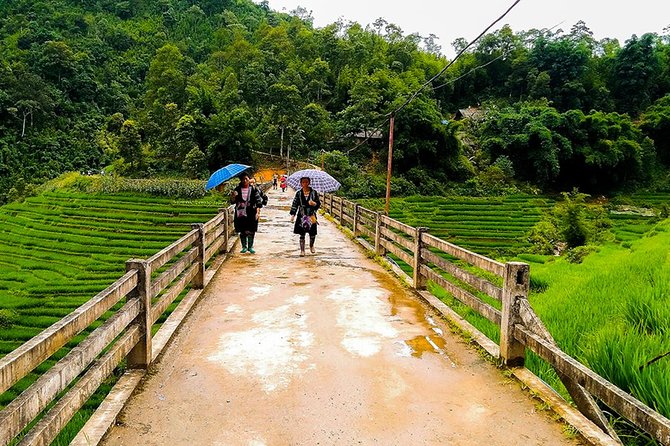
Day two begins with coffee or tea and time to look around the homestay area. This slower start is a good counterpoint to the first day’s longer walk. You can see the nearby rice fields before breakfast and before heading farther into the hills.
After breakfast, the route climbs toward Giang Ta Chai Village and its waterfall. The listed stop lasts about an hour and includes admission. The uphill approach gives you another view of the terraces and mountain paths, while the waterfall provides a clear destination after the open countryside of day one.
The second day is not just an abbreviated return walk. It adds another village and a different type of natural stop. You get forested sections, mountain views, and the sound of running water around the falls, although the exact walking conditions depend on weather and the season.
Good shoes matter. The tour calls for moderate physical fitness, and the route includes uphill walking and uneven paths. In wet weather, terrace trails can be more demanding. The activity requires good weather, so a poor forecast can lead to a changed date or a refund.
Same fields, a different sort of day out:
- Explore Sapa by TrekkingAdventures, Mountain,Rice fields
★ 4.9 · 229 reviews - Motorbike 1 Day Off The Beaten Track, Hidden Villages, rice field
★ 5.0 · 203 reviews - Trekking Through Rice Terraced Fields – 1Day
★ 5.0 · 173 reviews - Sapa Trekking Tour Full Day
★ 5.0 · 65 reviews
What the meals and transport actually cover
The price is $85 per person. For a two-day trip in Sapa, that is a useful value if you want the practical pieces arranged in one booking. The package includes breakfast, dinner, two lunches as listed, village entry fees, one night of homestay accommodation, a guide, an air-conditioned vehicle, and transport back to Sapa after the village portion ends.
That combination matters because Sapa’s rural routes are spread out. You are not paying only for someone to walk beside you. The price also covers the overnight stay, food, admission charges, and the return ride.
The tour provides one large bottle of water per person. Extra drinks are not included, and tips are separate. Personal travel insurance is also not included, so arrange that yourself if you want cover for a walking activity.
The transport details are slightly uneven in the description. You are collected in Sapa Town or at the church, but much of the experience is on foot. The air-conditioned vehicle is most useful for the transfers, especially the return to Sapa after hiking in the villages.
How much local contact should you expect?
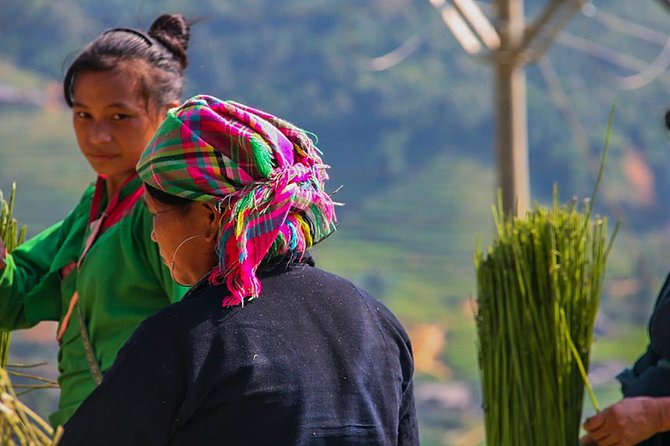
This is a good choice if you want a guide who can explain daily life in the villages rather than simply point toward the best views. The people guiding this route are from the local Hmong community, and the tour is built around village access, a local homestay, and walking between rural communities.
The guide names associated with especially warm feedback include Sang, Su, Mi, Ly, Soso, and Me. You cannot assume you will receive a particular guide unless the operator confirms it, but the pattern is useful: the guide’s role is central to the experience.
Guides have been praised for kindness, encouragement, cultural explanations, and practical care on the trail. That matters on a walk where the views are easy to appreciate but the local details are harder to understand on your own.
The village visit should still be approached with respect. You are walking through working communities, not visiting a staged museum. Listen when your guide explains local customs, ask before photographing people, and remember that the homestay is someone’s home.
The route’s weak points
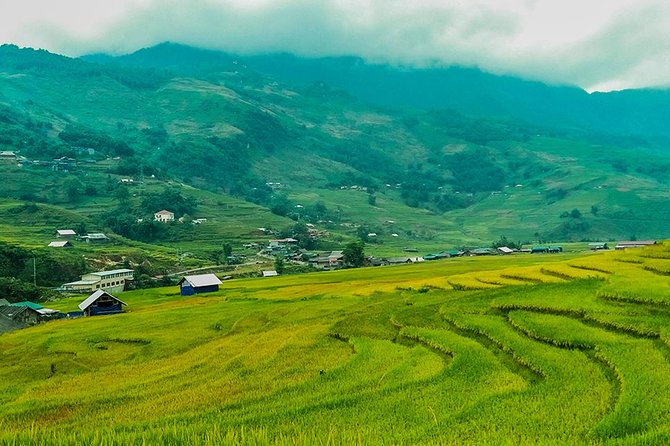
The most important drawback is that the walking route is not consistently remote. Paved roads, motorbikes, and other groups appear on parts of the trail. If you want a quiet, fully off-road trek, this may feel too developed in places.
The second concern is the homestay. The overnight stay can be the most memorable part, but the standard is not guaranteed to match a conventional hotel. Cleanliness was a clear concern in one account, so you should bring a small towel and personal toiletries if that makes you more comfortable. The tour confirms a hot shower is available, but it does not provide detailed room or bedding information.
Weather can change the character of the trip. Rain may make walking harder, while dry-season fields may not have the bright green appearance shown in many Sapa images. The scenery remains worthwhile, but you should choose the season with care if vivid rice terraces are your main goal.
The start time is another small consideration. A 9 am departure is convenient, but it leaves less time on the first day than an early-morning trek. The tour makes up for that with an overnight stay and a second morning on the trail.
Who will get the most from this Sapa trek?
I would choose this tour if you want a compact introduction to Sapa that combines scenery, villages, and a night outside town. It suits people who prefer walking and local contact to a schedule built around viewpoints and vehicle stops.
It is also a strong fit if you are traveling alone or as a pair. The maximum group size of two gives the experience a more personal feel than a large bus excursion. You can ask your guide about Hmong and Giay culture, stop for views, and discuss the walking pace without waiting for a full group.
You should be comfortable with moderate exercise and a simple homestay. If you need polished accommodation, private facilities, or a fully quiet trail, choose carefully or ask the provider for more details before paying.
The tour has a 4.9 rating from 118 ratings, with 99 percent recommending it. That high score matches the strongest parts of the experience: impressive mountain views, caring guides, and the chance to sleep near the rice fields.
Practical details before you reserve
Confirmation is provided when you book. The meeting point is Sapa Church on P. Ham Rong in Sapa, and the activity ends back at the meeting point after transport returns you to town.
Free cancellation is available up to 24 hours before the 9 am start time. Changes or cancellations inside that window are not refunded, and late changes are not accepted. The tour can also be changed or refunded if bad weather prevents the activity or if the minimum number of people is not reached.
Because the maximum is two people, availability can be limited. The experience is booked on average 35 days ahead, so reserve early if your Sapa dates are fixed.
Should you book this two-day Sapa experience?
Book it if you want a guide-led walk through several villages, a night in Ta Van, and a practical package that includes meals, admission, and return transport. The views are the main reward, but the personal guide contact and overnight stay give the trip more substance than a short terrace viewpoint visit.
Think twice if you dislike uneven walking, motorbike traffic, crowds on popular paths, or basic accommodation. At $85, the tour offers solid value for the two-day format, but its strengths are scenery, local access, and guide support rather than comfort or solitude.
FAQ
Where does the tour start?
The tour starts at 9 am at Sapa Church on P. Ham Rong in Sapa, Vietnam. Pickup is also offered from hotels in Sapa Town.
Where does the tour end?
The activity ends back at the meeting point after transport returns you to Sapa.
How long is the experience?
The tour lasts approximately two days and includes one night at a homestay.
Which villages are included?
The route includes Cat Cat, Y Linh Ho, Ta Van, and Giang Ta Chai. Ta Van is the overnight village, and Giang Ta Chai includes a waterfall visit.
What type of accommodation is provided?
One night is provided in a local homestay in Ta Van Village. A hot shower is available before dinner, but the accommodation is simple and standards may vary.
Are meals included?
Breakfast and dinner are included, along with two lunches as listed in the tour details.
Are village entry fees included?
Yes. Village entry fees are included in the price.
Is transportation included?
Yes. The tour includes an air-conditioned vehicle and transport back to Sapa after the village trekking ends.
How difficult is the walking?
You should have a moderate level of physical fitness. The route includes rice terraces, village paths, hills, and an uphill walk toward Giang Ta Chai waterfall.
Can I cancel for a refund?
You can cancel up to 24 hours before the start time for a full refund. Poor weather or failure to reach the minimum number of people may also lead to a different date or a full refund.
Just added around Sapa
- Sapa 2-Day Trek & Homestay in Ta Van Village – Be a Local★ 5.0 · 8 reviews
- Sapa Private Trekking Through Rice Terraced Fields – 1Day★ 4.5 · 8 reviews
- 5 Hours Trekking with Terraced Rice Field in Sapa★ 5.0 · 2 reviews
- Sapa Motorbike Tour 1 Day| See All Of Rice Fields & Valleys in One Day★ 5.0 · 9 reviews
- Sapa Private Car Tour – 1 Day Enjoy the Rice Terraced Fields★ 4.5 · 3 reviews
- Private Trekking through Terraces Rice Fields in Sapa★ 5.0 · 3 reviews
- Sapa Half Day Local Farming Experience★ 5.0 · 3 reviews
- Sapa Full Day Trekking Through Rice Fields Terrace★ 4.0 · 2 reviews
Sapa Farm Tours, compared.
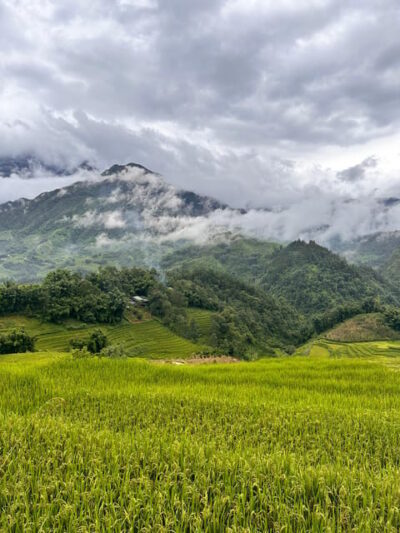
Explore Sapa by TrekkingAdventures, Mountain,Rice fields
Read our review →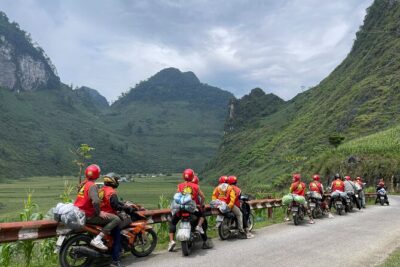
Motorbike 1 Day Off The Beaten Track, Hidden Villages, rice field
Read our review →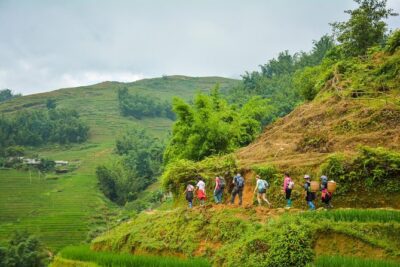
Mountain views & Rice Terraced Fields Hiking – 2D 1N
Read our review →
1-Day Sapa Long Trek – Rice Field Terrace, Ethnic Culture
Read our review →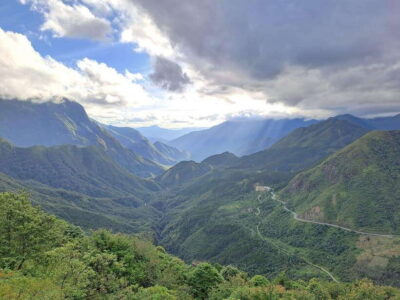
Love Silver Waterfall, LonelyTree in Heaven-Rice Field
Read our review →Browse the lists this tour appears in