
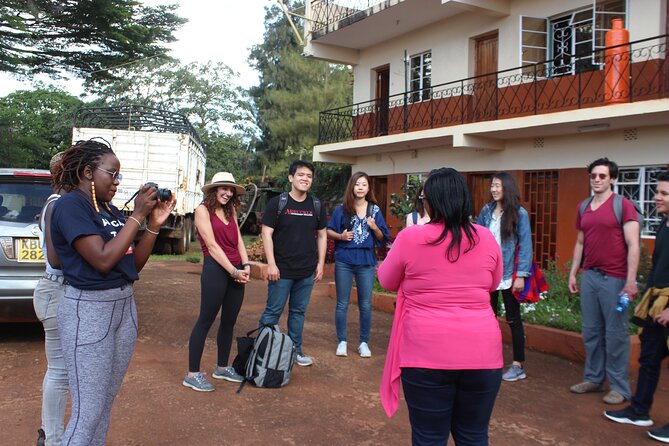
Review · NAIROBI
Coffee farm tour, coffee roasting and tasting experience
Kenya’s coffee story comes alive at All Seasons Coffee, where you walk among working coffee trees, learn how beans move from fruit to cup, and roast some yourself. I like the hands-on roasting and the chance to take your coffee home. I also like the quiet setting and the personal teaching from guides such as Stanley and Duncan.
The main drawback is the final road to the farm, which can be rough and difficult. Check the booking option carefully, too: round-trip transfers from Nairobi may be available, but hotel pickup and transportation are not included unless you choose the appropriate option.
Key points to know before you go

- Roast your own coffee: You prepare beans during the visit and take the roasted coffee home.
- See a working farm: The tour covers coffee trees, farming, processing, roasting, and brewing.
- Small groups: A maximum of 10 people keeps the visit more personal.
- Meet local guides: Stanley and Duncan lead the teaching, with Susan handling tour communication and support.
- Taste fresh Arabica coffee: The visit ends with brewed coffee, snacks, and refreshments.
- Allow for road conditions: The last stretch to the farm may be rough, so transfers can make the journey easier.
Why this two-hour coffee visit is worth your time
Nairobi is often treated as a gateway to safaris, but coffee gives you another way to understand Kenya. This experience takes you outside the city for a close look at one of the country’s best-known exports.
You are not simply handed a cup and told that it is Kenyan coffee. You see the trees, hear how the crop is handled, roast beans yourself, and drink the finished result. That sequence gives the visit a clear purpose. Each stage helps you understand the next.
I like the scale of the experience. With no more than 10 people, the farm visit should feel more like a guided lesson than a large coach stop. You can ask questions, watch the roasting closely, and speak directly with the people leading the tour.
At about two hours, the visit also fits neatly into a Nairobi schedule. It is long enough to cover the main steps without turning into an all-day commitment. The trade-off is that the tour cannot provide an exhaustive account of every coffee-growing region or production method in Kenya. It is a focused introduction, not a full agricultural course.
More Coffee Farm Tours in Kenya
- Nairobi Coffee Farm and Factory Tour
★ 5.0 · 87 reviews - Coffee Farm Village & Factory Half Day Tour with Pick-Up
★ 5.0 · 33 reviews - Nairobi: Guided Coffee Farm Tour with Tastings
★ 5.0 · 24 reviews
Walking among coffee trees at All Seasons Coffee
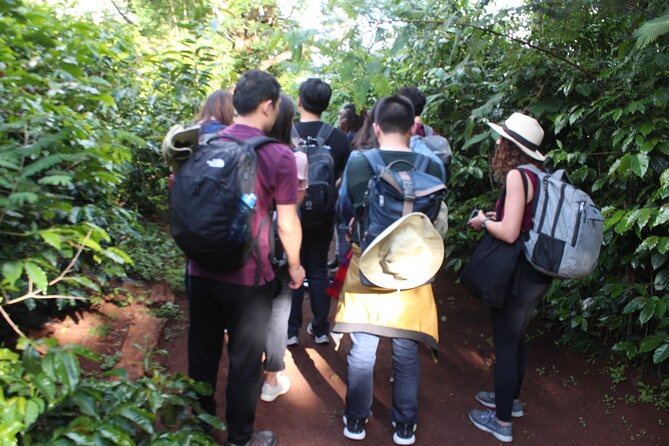
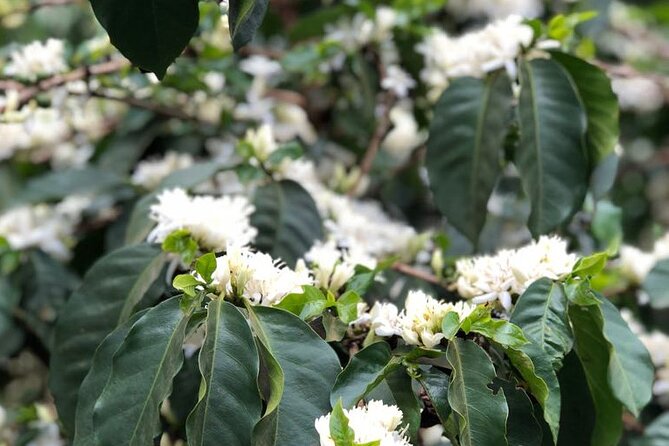
The visit begins with a walk through the farm. This is the part that grounds the rest of the experience. Before hearing about roasting or tasting, you see where the coffee begins.
Your guide explains how coffee trees grow and how the crop is handled on the farm. The setting is described as quiet and attractive, a welcome change from Nairobi’s traffic and noise. You get a chance to slow down and pay attention to the plants rather than rushing through a checklist of city sights.
One detail gives All Seasons Coffee a strong sense of place: it is an old family-run farm, and the coffee trees have reportedly been producing for more than 100 years. That does not mean every tree you see is necessarily that old, but it points to a long connection between the farm and Kenya’s coffee trade.
This family connection is important. You are visiting a working farm with a local story, not a staged coffee display built only for tourism. You can ask about the estate, coffee varieties, and farming practices as you move through the grounds.
The walking portion should be manageable for most people, since the whole activity is designed for general participation. Still, you are visiting a farm rather than a polished indoor attraction. Wear practical shoes and expect outdoor ground conditions.
From coffee fruit to processed bean
After seeing the trees, the tour moves into the processing side of coffee. This is where the visit becomes especially useful for people who enjoy coffee but have never thought much about how it is made.
Your guide talks through the stages between growing and brewing. The exact depth of the discussion may depend on the group and the questions asked, but the experience covers the farm-to-cup process, including growing, harvesting, processing, roasting, and drinking.
The value here is connection. Coffee is often sold as a finished product with a country name on the package. At the farm, you can connect that name with plants, labor, processing decisions, and roasting. The coffee in your cup is no longer an abstract product.
Guides Stanley and Duncan are particularly important to the experience. Stanley is associated with the farm visit and roasting, while Duncan leads much of the teaching for some groups. The strongest descriptions of the visit focus on their ability to explain coffee clearly, add useful context about Kenya, and keep the session friendly rather than stiff.
If you are already a barista or serious coffee fan, you may appreciate the chance to ask more detailed questions. One barista found the experience changed the way they thought about each bean. If you simply drink coffee every morning, you can still follow the process without needing specialist knowledge.
Roasting your own beans to take home
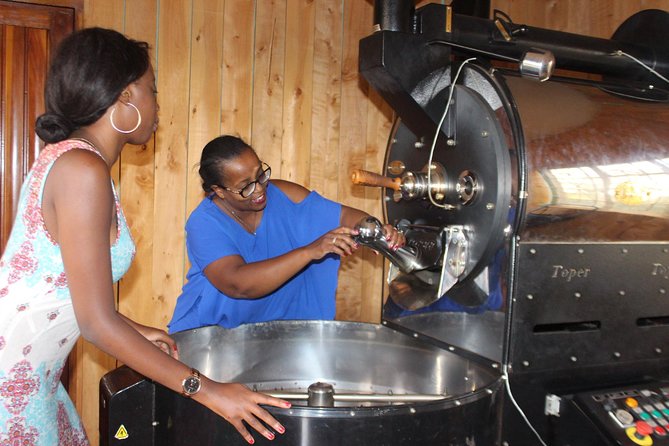
The most distinctive part of the tour is the chance to roast coffee yourself. This turns the visit from a talk into an activity you take part in.
You get to work with the beans during the roasting stage, under guidance. The information provided does not specify the exact equipment or method, so you should not expect a full professional roasting workshop. Think of it as a practical introduction that lets you feel part of the process.
The roasted coffee can be taken home. That is a better souvenir than another piece of generic merchandise because it carries the lesson with it. You can brew it later and remember the farm, the conversation, and the difference between seeing coffee production and simply buying a bag.
The roasting activity also gives the group a natural point of focus. Everyone can watch the beans change and ask questions about flavor, timing, and preparation. Because the group is limited to 10 people, you have a better chance of seeing what is happening and getting a turn.
Keep your expectations sensible. The coffee you roast may not match the consistency of a specialist commercial roastery, and the experience is not presented as a certification course. Its appeal is participation and understanding.
More Coffee Farm Tours in Nairobi:
- Private Half-Day Tour in Fairview Coffee Farm from Nairobi
★ 5.0 · 13 reviews - Coffee Farm Tour (Fairview)
★ 5.0 · 4 reviews - Fairview Estate Coffee Farm Tour With Pick up
★ 5.0 · 2 reviews - Private Tour to Fairview Coffee Farm in Nairobi with Pickup
★ 5.0 · 2 reviews
Fresh coffee, snacks, and a relaxed finish
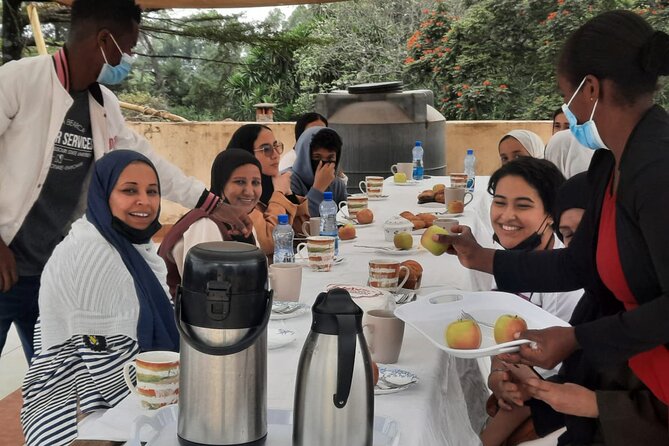
The visit ends with freshly brewed coffee and refreshments. Coffee or tea, bottled water, snacks, and light refreshments are included.
This final tasting matters because it lets you connect the earlier explanations with a finished drink. You have seen the crop and processing, roasted beans, and then tasted coffee prepared for the group. It gives the tour a natural beginning, middle, and end.
The coffee is described as fresh Arabica, and its quality receives the strongest praise throughout the supplied feedback. Even visitors with a professional coffee background found the cup memorable. That is a useful sign, though taste is personal and the final brew can depend on roasting and preparation.
You should also see the tasting as a social pause. The farm setting and small group give you time to talk with the guide and other participants. Snacks and bottled water are modest inclusions, but they are practical, especially if the visit falls between meals.
Do not expect a full meal. The information promises light refreshments and snacks, not lunch. If you need a substantial meal, plan around the two-hour visit.
What makes the small group useful
A maximum of 10 participants is one of the better features here. Small groups do not guarantee a perfect tour, but they usually give you more room to ask questions and take part.
That matters most during the farm walk and roasting session. In a large group, you might hear the basic explanation and struggle to see the activity. With fewer people, the guide can spend more time responding to individual interests.
The group limit also suits the subject. Coffee production involves small details, from the look of the trees to the changes during roasting. A quieter group makes it easier to notice those details.
The experience is also suitable for children, provided they are accompanied by an adult. Since roasting involves heat and farm conditions can be uneven, adults should keep an eye on younger children throughout the visit.
Getting there from Nairobi

The tour is promoted as an escape from Nairobi, with round-trip transfers available from the city when that option is selected. This can make a real difference. You do not have to work out separate transport to a rural farm, and you can focus on the visit itself.
Read the transport option carefully before paying. Hotel pickup and drop-off are not included in every booking, and transportation to and from the attraction is excluded if you do not select the transfer option.
The final road to the farm may be rough. This is the one practical weakness that deserves attention. A difficult last stretch can add time and discomfort, especially after city traffic. It does not make the tour a poor choice, but it is worth knowing before you go.
If you are arranging your own transport, confirm the meeting details in advance. Susan, the tour operator and owner, is described as communicative and helpful, including when a participant was running late. That does not remove the need to plan carefully, but it suggests that clear communication is part of the service.
The mobile ticket is convenient, and confirmation is provided at booking. Keep the ticket accessible on your phone, and allow enough time for Nairobi traffic and the farm road.
The $35 price and what it covers
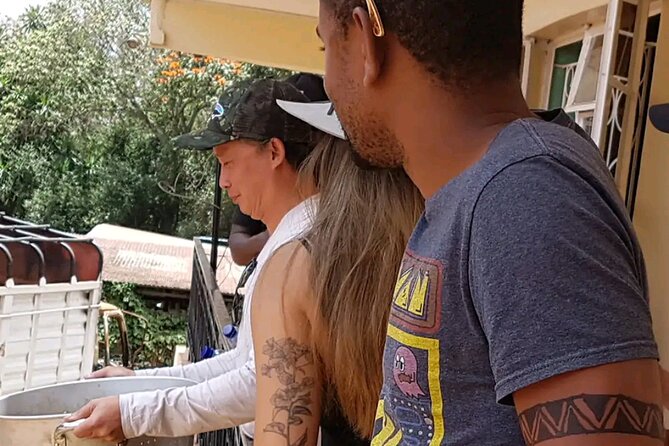
At $35 per person, this is a reasonable price for a two-hour activity that includes a farm visit, guided instruction, coffee roasting, coffee to take home, brewed coffee, bottled water, snacks, and taxes.
The value is strongest if you care about participation rather than sightseeing alone. You are not paying just for a cup of coffee. You are paying for access to a working farm, local instruction, a practical roasting session, and a tasting.
The price also compares well for a small-group activity. A group limit of 10 keeps the experience more personal than a large commercial excursion. If transfers are included in the option you choose, the value improves further because you avoid arranging separate transportation.
The cost is less attractive if you only want to taste Kenyan coffee. Nairobi has cafés and shops where you can buy a cup for less. This tour earns its price through the farm access and the chance to roast your own beans.
Who will enjoy this farm tour most
I would choose this experience for coffee drinkers who want to understand what is behind the final cup. It works especially well for:
- People with a free half-day in Nairobi
- Coffee enthusiasts and home brewers
- Baristas or hospitality workers
- Visitors who want a local experience beyond wildlife attractions
- Families with children who can follow adult supervision
- Anyone interested in Kenyan farming and trade
You do not need specialist coffee knowledge. The guides explain the subject for a general audience, and the practical stages make the process easy to follow.
I would think twice if you dislike rural roads, outdoor walking, or hands-on activities. The tour is short, but it is not simply a comfortable tasting in a city café. The road can be rough, and the farm setting may be less polished than a purpose-built visitor center.
Booking, cancellation, and practical planning
The experience is often booked about 18 days ahead, so I would reserve early if your Nairobi dates are fixed. Confirmation is received at the time of booking, and the mobile ticket makes arrival simple.
Free cancellation is available if you cancel at least 24 hours before the local start time. Cancellations or changes made less than 24 hours ahead are not accepted for a refund.
Most people can participate, and children must be accompanied by an adult. Wear shoes suitable for a farm walk, bring your phone ticket, and verify whether your booking includes the Nairobi transfer.
Should you book the All Seasons Coffee tour?
Yes, if you want more than a quick coffee tasting. The best parts are the working farm, the personal guidance from Stanley or Duncan, the hands-on roasting, and the fresh Arabica coffee at the end.
The rough final road and transport options require planning, but neither issue cancels out the value. At $35, this is a useful, compact way to see another side of Nairobi and leave with coffee you prepared yourself.
If you are choosing between a standard city café stop and a farm visit, I would pick this one for the story behind the cup. If your schedule is tight or you want only a polished tasting, choose a café instead.
FAQ
How long does the coffee farm tour last?
The experience lasts approximately two hours.
Where does the coffee tour take place?
The tour takes place at All Seasons Coffee, a coffee farm outside Nairobi, Kenya.
How many people can join the tour?
The activity has a maximum of 10 participants.
Is transportation from Nairobi included?
Round-trip transfers from Nairobi may be available when that option is selected. Hotel pickup and drop-off, and transportation to the attraction, are not included if the transfer option is not selected.
Can I roast coffee during the visit?
Yes. You get to roast coffee during the tour, and you can take the roasted coffee home.
Is coffee included in the price?
Yes. Coffee and/or tea, brewed coffee, bottled water, snacks, and light refreshments are included.
Are children allowed to join?
Yes. Children can participate, but they must be accompanied by an adult.
What is the cancellation policy?
You can cancel at least 24 hours before the local start time for a full refund. Cancellations or changes made less than 24 hours before the start time are not accepted for a refund.
More Food and Drink Trips in Nairobi
- Purple Tea Farm Tour from Nairobi City – Specialty Tea Tasting
★ 4.5 · 12 reviews - Riara tea farm tour with lunch and tea tasting from Nairobi
★ 5.0 · 3 reviews - Sorrento Farm and Food Experience including Olive Oil, Limoncello, Wine tasting
★ 5.0 · 2,524 reviews - Lahaina: Maui Ku’ia Estate Guided Cacao Farm Tour and Tasting
★ 5.0 · 1,103 reviews
Just added around Nairobi
- Purple Tea Farm Tour from Nairobi City – Specialty Tea Tasting★ 4.5 · 12 reviews
- Riara tea farm tour with lunch and tea tasting from Nairobi★ 5.0 · 3 reviews
- Tea Farm Experience at Riara Tea Farm And Factory Tour★ 5.0 · 11 reviews
- Private Half-Day Tour in Fairview Coffee Farm from Nairobi★ 5.0 · 13 reviews
- Excursion to Kiambethu Tea Farm★ 5.0 · 6 reviews
- Fairview Estate Coffee Farm Tour With Pick up★ 5.0 · 2 reviews
- Private Tour to Fairview Coffee Farm in Nairobi with Pickup★ 5.0 · 2 reviews
- Day tour to Kiambethu tea farm in Limuru from Nairobi★ 4.5 · 2 reviews
Nairobi Farm Tours, compared.
Coffee Farm Village & Factory Half Day Tour with Pick-Up
Read our review →
Private Day Trip to Kiambethu Tea Farm in Limuru from Nairobi
Read our review →
Browse the lists this tour appears in