
Review · JAPAN
Aso Caldera and Farm Experience Tour
The big draw here is the combination of Mt. Aso’s enormous caldera and a hands-on visit to rural Japan. You begin high above the volcanic basin at Daikanbo, then trade the lookout for farm paths, local kitchens, seasonal vegetables, and a shared meal with people who live in the area.
I like two things in particular: the private format gives your group room to ask questions, and the farm visit turns lunch into an activity rather than a restaurant stop. The main consideration is practical: the experience depends on good weather, and the listed timing is inconsistent, with the stop schedule suggesting about four hours while the summary lists 4 to 30 minutes.
Key points at a glance
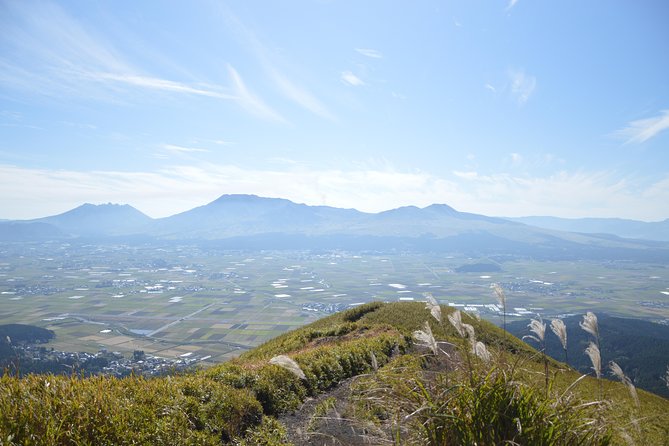
- Daikanbo gives you Aso’s signature view: See the five peaks of Mt. Aso from the highest point of the north caldera wall.
- The farm visit is hands-on: Harvest seasonal vegetables, help prepare local food, and eat lunch made with nearby ingredients.
- You meet rural residents directly: Nuroko and Hiroko are named as hosts connected with the farm meal, while Max is named in the provider’s response.
- The tour is private: Only your group participates, making it easier to ask questions and set the pace within the planned schedule.
- It is a half-day pairing of nature and culture: The first stop explains the volcanic setting, while the second shows how people live around it.
- Weather matters: Poor conditions can lead to a different date or a full refund.
Why this Aso tour works so well
Aso is not simply a mountain viewpoint. It is a huge volcanic basin with communities, grasslands, farms, roads, and daily life spread around the crater area. This tour gives you two useful ways to understand it.
First, you see the scale from above. Then you go down into a small community and take part in ordinary work and food preparation. That change in viewpoint is the real strength of the outing. Many sightseeing stops give you a photograph. This one gives you a photograph, a meal, and a better sense of how the surrounding communities function.
The tour begins at 9:00 am at Daikanbo Lookout. Pickup is offered from the same places served by the operator, so check the pickup arrangement when booking. The stated meeting point is Daikanbo Lookout in Yamada, Aso, Kumamoto.
Because this is a private activity, you will not be added to a large mixed group. That matters at the farm, where the pace may depend on the hosts, the seasonal work, and the amount of conversation your group wants. It also lets you ask more direct questions about local food and life in the countryside.
A few more farm days around Japan worth a look
- Hokkaido Lavender farm & Furano Flower Tour from Sapporo
★ 4.5 · 28 reviews - Mt. Fuji Private Chartered Tour with Nature and Wasabi Farm
★ 5.0 · 24 reviews - Uji and Wazuka Matcha Farm Half Day Private Guided Tour
★ 5.0 · 21 reviews
Daikanbo and the five peaks of Mt. Aso
Daikanbo is the tour’s visual opening act, and it earns that role. From the lookout, you face the wide volcanic caldera and the five peaks of Mt. Aso. Grasslands lie on one side, while the great basin spreads out on the other.
The setting helps you understand the scale of Aso better than a map can. The volcano has shaped the land, and the communities around it exist within that broad volcanic bowl. Your English-speaking guide explains the area’s volcanic past while you walk around the observatory.
Plan on about one hour here. That is enough time for photographs, a short walk, and an explanation of the setting without turning the stop into a long hike. The tour description calls this Aso’s number one view, and it is easy to see why the stop is central to the day.
Bring a camera, but also give yourself a few minutes without it. The best part of Daikanbo is the change in scale as you look from the grass-covered rim across the caldera toward the peaks. Weather can alter the view considerably. Clouds or poor visibility may hide the mountains, which is one reason the operator requires good conditions for the tour.
The physical demand here appears moderate rather than strenuous. You will walk at the overlook and around the grasslands, so comfortable shoes make sense. The tour asks for a moderate level of physical fitness, but it does not describe a demanding mountain climb.
From a famous lookout to rural Aso
After Daikanbo, the experience shifts from scenery to local life. The second stop is Tateiwa Suigen Park, or a similar location, in the rural area near Minamioguni. The exact farm setting can vary, so keep some flexibility in mind.
This change is not just a change of scenery. It is the point of the tour. At the overlook, you learn how the volcano shaped the area. At the farm, you see how people make use of the land today.
You can expect to spend about three hours at the farm experience. That is a generous block of time for harvesting, food preparation, conversation, and lunch. It also means this is not a quick photo stop. You need to be comfortable giving a good part of the day to one local activity.
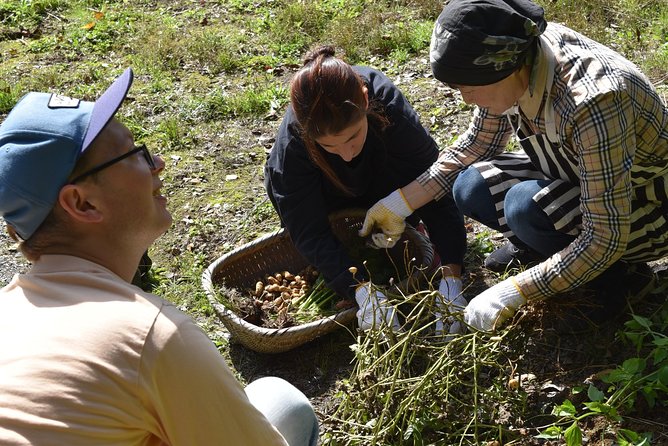
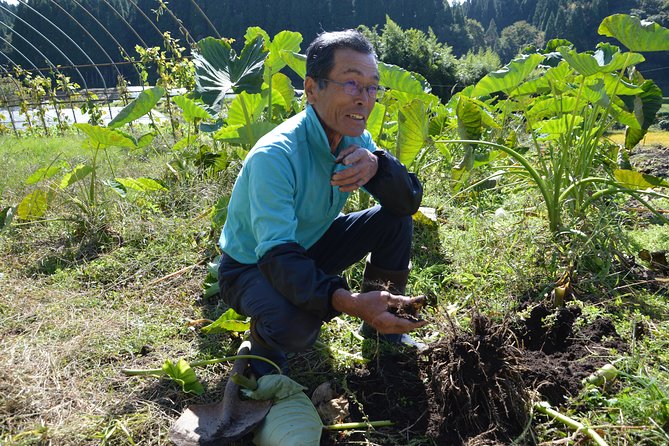
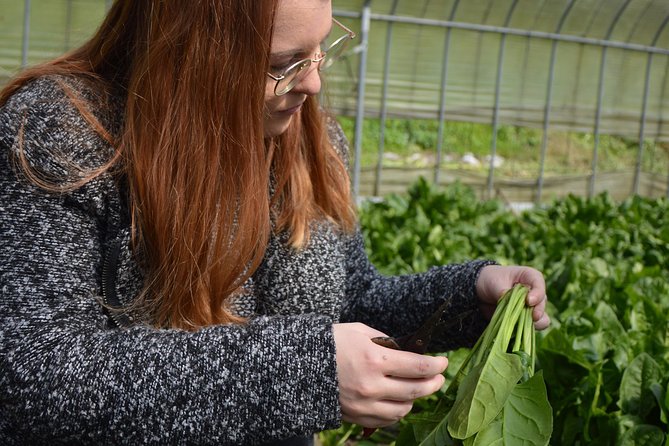
The farm visit takes place with local people who help you understand rural Japanese life and culture. The activities include harvesting seasonal vegetables, preparing local cuisine, and sharing a meal made from locally sourced ingredients.
A review of the experience singled out harvesting yam as a memorable task. That small detail tells you something useful about the outing: the farm work is not just a staged demonstration from a distance. You take part in the work available at the time of your visit, and the exact produce depends on the season.
What lunch adds to the experience
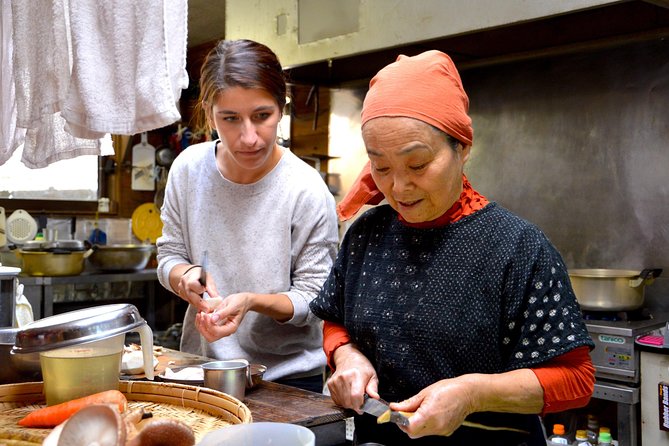
Lunch is more important here than a standard inclusion on a tour menu. You help gather some of the ingredients, take part in preparing the food, and then eat with the people connected to the farm.
Nuroko and Hiroko are named in the experience feedback as the people who prepared the meal. The food was described as simple and very good, which is exactly the right expectation to bring. This is not presented as a formal culinary class or a luxury dining event. It is a home-style meal tied to the farm and the surrounding community.
I like that distinction. The value comes from seeing the connection between land, work, cooking, and hospitality. You may not leave with a long list of elaborate recipes, but you will have a clearer idea of how local ingredients become a shared meal.
The shared table also gives the visit a human scale. You are not only looking at rural Japan through a vehicle window. You are working alongside local residents and eating food prepared with their help. The experience is especially useful for anyone who wants contact with daily life beyond major city centers.
The food itself will vary with the season and the farm location. The tour promises locally sourced ingredients, but it does not provide a fixed menu. If you need details about allergies or dietary restrictions, ask before booking rather than assuming the meal can be changed.
Same fields, a different sort of day out:
- Wasabi Farm Walking Tour & Lunch
★ 4.5 · 20 reviews - Miyajima Guided Tour and Fresh Oyster Farm Tour
★ 5.0 · 20 reviews - Hands-on Pearl Harvesting Workshop!
★ 3.3 · 11 reviews - From Tokyo Mt.Fuji, Lake Kawaguchi, Makaino Farm day tour
★ 5.0 · 8 reviews
A private tour with useful flexibility
The private format is a major advantage for this particular activity. Only your group takes part, so the experience should feel more personal than a large coach excursion. You can ask your guide to explain the volcano, the food, or the farming work in more detail.
The guide is English-speaking, which makes the cultural exchange more accessible. Max is named in the provider’s response to the positive feedback, but the available information does not guarantee that Max leads every departure. Nuroko and Hiroko are associated with the farm meal, so the people you meet may differ depending on the date and location.
Pickup is offered, and free transportation is available to the same places where the operator provides pickup service. The stated start point is Daikanbo, and the stated end point is the farming experience at Tateiwa Suigen, Gonbei Mura, or another similar site.
That arrangement is worth checking carefully. The tour does not clearly promise return transportation to your original pickup point. Since the listed end location is the farm experience, confirm how you will leave at the end if you need to return to a hotel or a particular station.
The booking information says confirmation arrives within 48 hours, subject to availability. The activity is normally booked about 65 days ahead, which suggests you should reserve early if your Aso dates are fixed.
Price and what you receive for $156.09
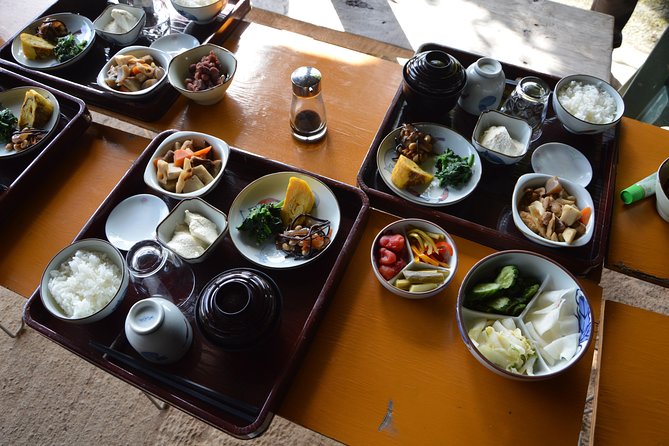
At $156.09 per person, this is not a cheap sightseeing transfer. You are paying for a private half-day activity, an English-speaking guide, transport arrangements, local coordination, farm participation, and lunch.
The value depends on what you want from Aso. If your goal is only a viewpoint photograph, Daikanbo can be visited without committing to a three-hour farm experience. In that case, this tour may feel expensive.
If you want a fuller day with personal guiding and contact with local residents, the price makes more sense. The outing combines two experiences that are usually booked separately: a major scenic stop and a rural food activity. The lunch is not simply something handed to you between stops. You help create it.
Group discounts are available, so the per-person cost may work better for several people traveling together. Since the activity is private, the value also improves when the cost is shared across a small group rather than paid by one person alone.
The strongest value is authenticity with structure. You do not have to figure out how to reach the lookout, locate a rural host, arrange translation, or plan a farm meal on your own. The tradeoff is that the schedule is less independent than renting a car and exploring at your own pace.
Timing, fitness, and weather concerns
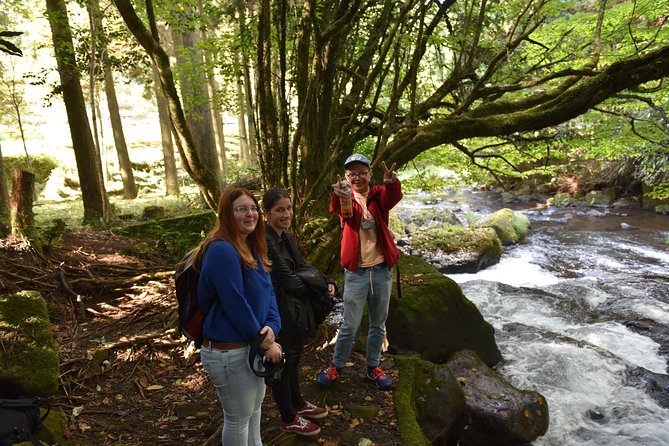
The stop schedule adds up to roughly four hours: one hour at Daikanbo and three hours at the farm. Yet the general duration is listed as 4 to 30 minutes, which does not match those stops. Treat the half-day schedule as the more useful guide, but confirm the exact duration with Satoyama Journey before paying.
A 9:00 am start gives you a full morning at Daikanbo and a substantial farm visit afterward. The schedule may suit you if you want to return to other Aso plans later in the day, though the information does not give a firm finishing time.
You should expect some walking and farm activity. The stated requirement is moderate physical fitness. You do not need to prepare for a strenuous trek, but this is not a purely seated tour. Wear shoes you can use outdoors and clothing suitable for hands-on work.
Weather is a real factor, not a minor footnote. The lookout depends on visibility, and the farm portion depends on workable outdoor conditions. If poor weather cancels the activity, you can receive a different date or a full refund.
Free cancellation is available up to 24 hours before the start time. Cancellations or changes made less than 24 hours before departure are not accepted for a refund, so watch the local cutoff time.
Who will enjoy this experience most
I would choose this tour for someone visiting Aso who wants more than scenery. It suits people who like food, farming, conversation, and a slower look at local life.
It is also a good fit for a couple, family, or small group that values privacy. Parents should consider the moderate activity level and the three-hour farm visit, but the hands-on format may work well for children who enjoy helping with food or vegetables. The available information does not specify a minimum age, so confirm that point if you are traveling with young children.
Food-minded visitors will appreciate the farm-to-table connection. You get to see ingredients in the ground, help prepare them, and eat the finished meal. The experience is also useful for anyone who wants to understand Japan outside its famous temples, shopping streets, and rail stations.
You may want to skip it if you prefer a tightly timed sightseeing circuit, dislike outdoor work, or need a guaranteed return to your starting point. You may also find the price hard to justify if the farm visit does not interest you.
Should you book the Aso Caldera and Farm Experience Tour?
Book it if you want Aso to be more than a scenic stop. The best reason to go is the pairing of Daikanbo’s grand volcanic view with a small-community meal and farm activity. The view gives you scale. The farm gives you connection.
Before booking, confirm three details: the exact total duration, the pickup and end-of-day transport plan, and the farm location for your date. Those points matter because the published timing is unclear and the farm site may be Tateiwa Suigen, Gonbei Mura, or another similar place.
For the right visitor, $156.09 buys a personal introduction to both the land and the people of Aso. That is a fair price for a private, half-day experience that includes food, guiding, and genuine participation rather than sightseeing from behind glass.
FAQ
Where does the tour start?
The stated meeting point is Daikanbo Lookout in Yamada, Aso, Kumamoto, at 9:00 am.
Is pickup available?
Yes. Pickup is offered, and free transportation is available to the same locations where pickup service is provided.
Where does the tour finish?
The listed end point is the farming experience at Tateiwa Suigen, Gonbei Mura, or another similar location. The information does not promise transport back to the original pickup point.
How long does the experience last?
The stop schedule describes one hour at Daikanbo and three hours at the farm, or about four hours total. The general duration is also listed as 4 to 30 minutes, so confirm the exact timing with the provider.
Is the tour private?
Yes. Only your group participates in the activity.
Is the guide English-speaking?
Yes. The tour includes an English-speaking guide.
What will I do at the farm?
You can explore the rural area, harvest seasonal vegetables, prepare local food, and share a lunch made with locally sourced ingredients.
Is the tour suitable for people with limited fitness?
The activity requires a moderate level of physical fitness. It includes walking at Daikanbo and hands-on farm work.
What happens if bad weather cancels the tour?
You will be offered a different date or a full refund if poor weather causes the cancellation.
Just added around Japan
- From Tokyo Mt.Fuji, Lake Kawaguchi, Makaino Farm day tour★ 5.0 · 8 reviews
- Hida Private E-Bike Tour with Premium Lunch and Farm Experience★ 5.0 · 7 reviews
- Guided Bike Tour to a Green Tea Farm in Shizuoka (not e-bikes)★ 5.0 · 5 reviews
- Hokkaido Farm Tomita Shikisai Hill Waterfall& Blue Pond Day Tour★ 3.5 · 6 reviews
- Autumn Leaves in AutumnSkiing in winterLet’s go to Hoheikyo Onsen by private car (from Sapporo)★ 4.5 · 8 reviews
- E Bike in Yuzawa Mountain Views Lake Daigenta and Rice Terraces★ 5.0 · 2 reviews
- Wasabi Farm Walking Tour & Lunch★ 4.5 · 20 reviews
- 7hr Private Wazuka True Hidden Kyoto Matcha Farm Experience★ 5.0 · 3 reviews
Japan Farm Tours, compared.
Hokkaido Lavender farm & Furano Flower Tour from Sapporo
Read our review →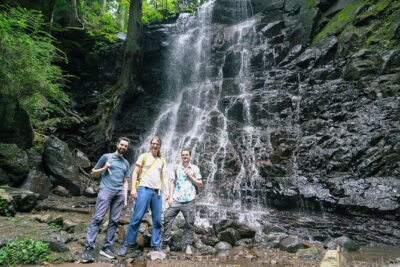
Mt. Fuji Private Chartered Tour with Nature and Wasabi Farm
Read our review →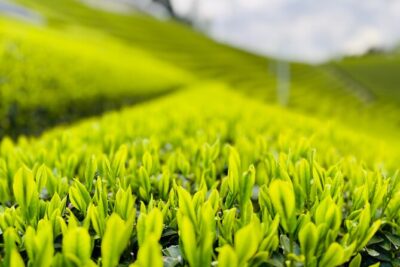
Uji and Wazuka Matcha Farm Half Day Private Guided Tour
Read our review →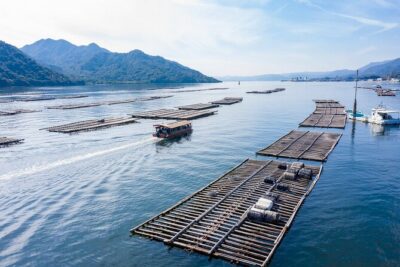
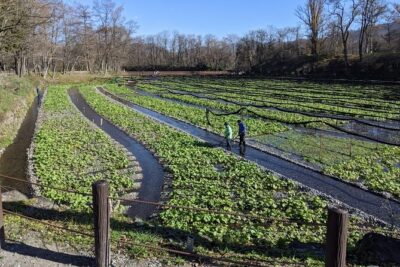
From Tokyo Mt.Fuji, Lake Kawaguchi, Makaino Farm day tour
Read our review →Browse the lists this tour appears in